Hermès Collier de Chien Bracelet: Sizes, Prices and What to Check Before Buying
The CDC in One Answer
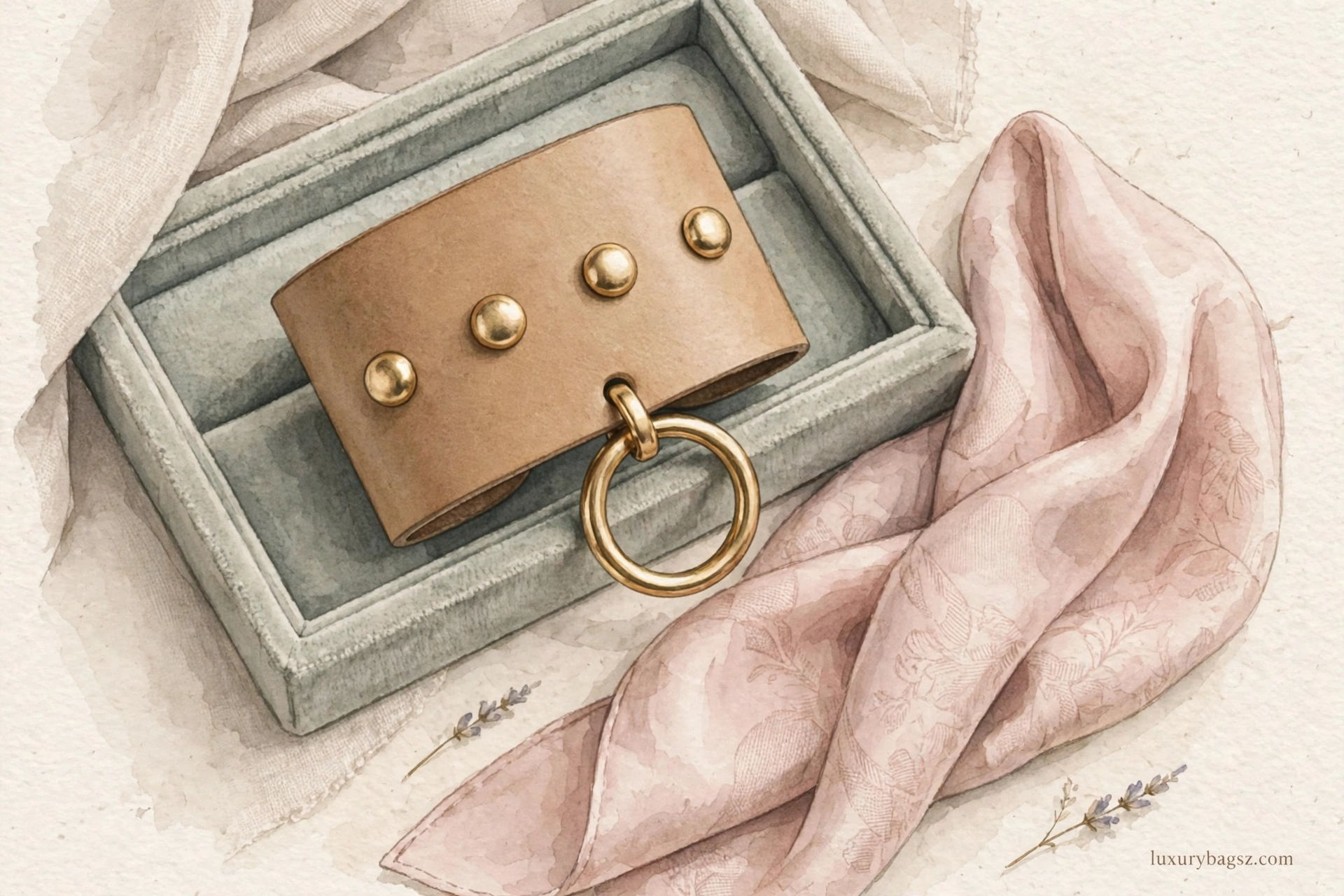
The Collier de Chien, or CDC, is Hermès' studded icon: a wide leather cuff set with pyramid studs and a ring, born from a dog-collar design of the 1920s. Beside it sits a family of all-metal versions in silver and gold.
Leather versions typically cost around $1,300 to $1,600 in the US depending on skin, while silver sits higher and gold versions run into five figures. The leather cuff is sized by wrist, commonly in T1 to T3 style bands.
This guide covers both families, how the cuff should fit, what each version costs, how it wears day to day, and the checks that separate a good buy from an expensive mistake.
Key Takeaways
- The CDC began as a dog collar design in the 1920s and became a bracelet icon.
- Leather cuffs typically cost around $1,300 to $1,600 in the US by skin.
- Silver versions cost more than leather; gold and diamond versions cost far more.
- The cuff should sit snug without spinning; size by wrist measurement, not guesswork.
- Noir with palladium or gold-tone hardware is the classic first CDC.
- Check studs, ring and stitching closely on resale; our fake guide lists the tells.
What the Collier de Chien Is
Collier de chien means dog collar, and the design owns it: a broad strap, four pyramid Médor studs, a central ring and an adjustable stud closure, all scaled from collar hardware to the wrist.
The motif dates to a 1920s Hermès dog collar and a belt that followed, before settling as the bracelet the house still sells today. The collar never left the range: today’s Hermès dog collars come in their own bridle-leather lines. Few jewellery designs can claim a century of near-unchanged form.
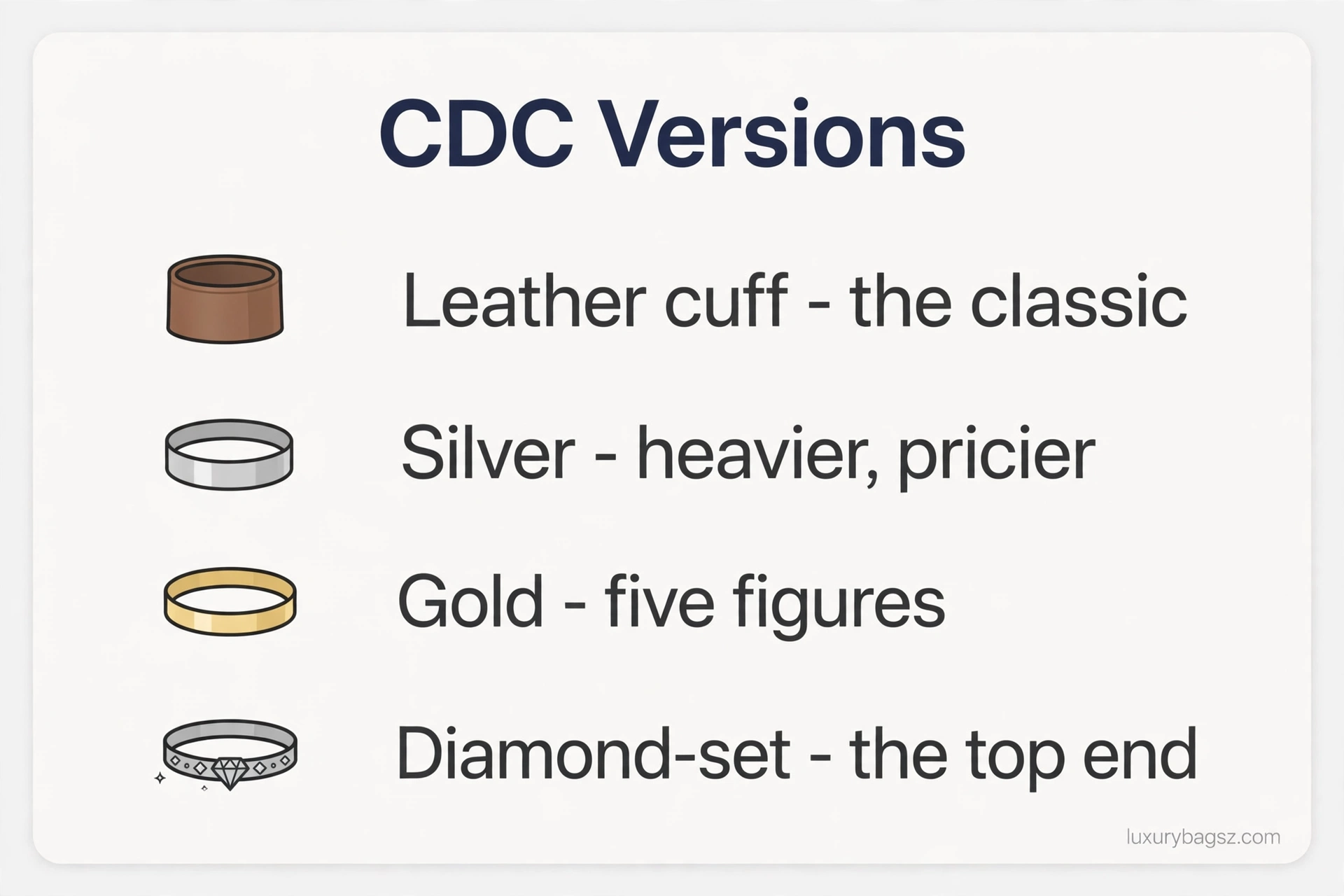
The leather cuff is the famous version, but the family now includes slimmer leather editions and all-metal bracelets in silver and in gold, some set with diamonds.
It wears bold by design. Where a Clic H whispers, the CDC makes the outfit's single statement, which is why it anchors so many collectors' stacks.
The design's longevity is itself a check on fashion risk: a CDC bought today echoes one bought twenty years ago, so the cost spreads over a style life few bracelets can promise.
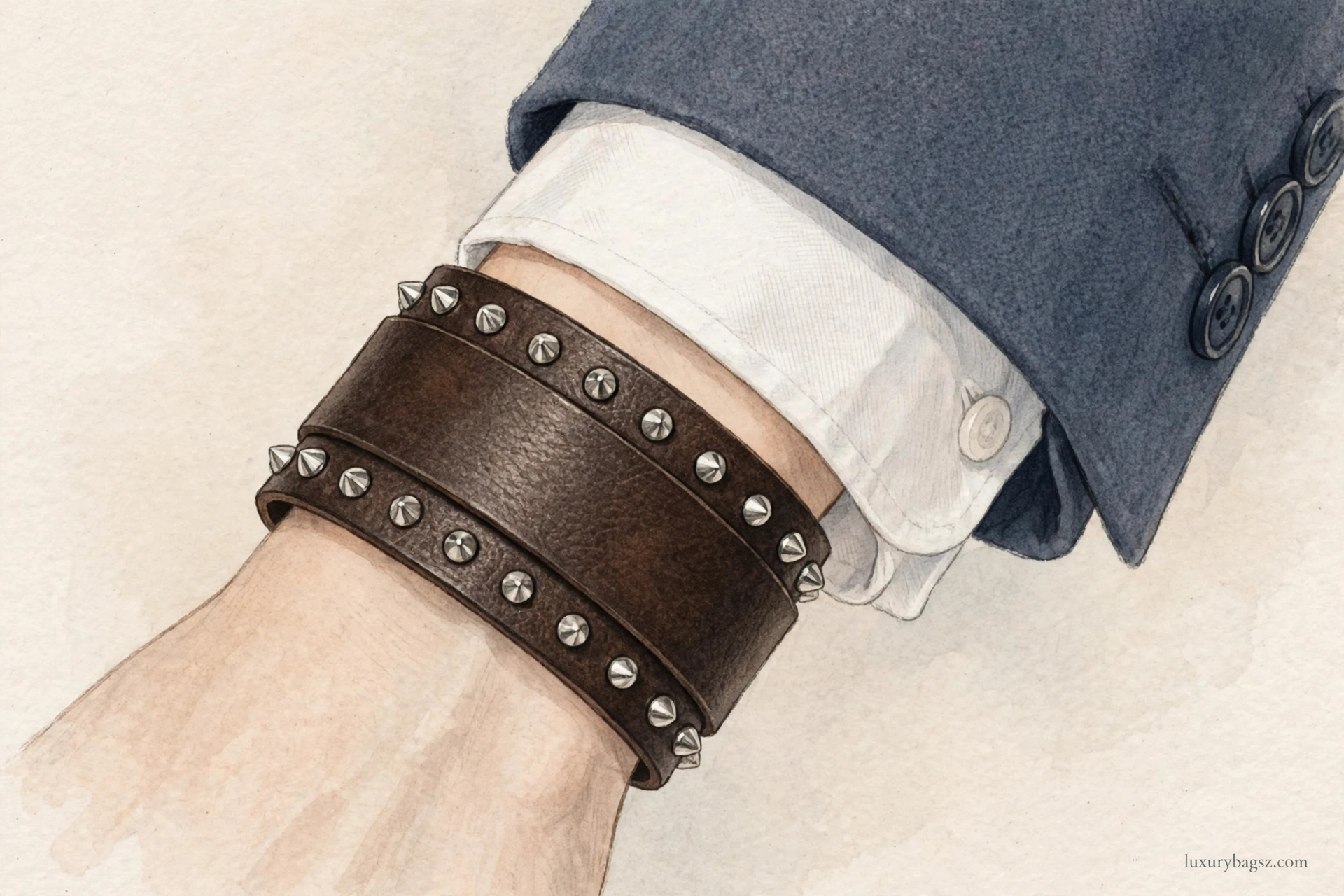
The same design is also sold as a belt. The Collier de Chien belt straps the studded collar around the waist: a leather band with the pyramid Médor studs and the central ring worn at the front, closed by the same adjustable stud system as the cuff.
It comes in women’s and men’s sizing and in smooth and exotic leathers, and reported prices sit well into four figures, rising steeply for alligator. If the cuff feels too bold for your wrist, the belt is the same statement worn differently.
The Leather Cuff Versions
The classic cuff is cut in smooth calfskin such as Barenia or Box, in Swift and in exotic skins including alligator and lizard, each with palladium or gold-tone studs and ring.
Leather choice changes the mood: smooth black calfskin is the rock-classic; natural Barenia ages into a rich tan story; exotics turn the cuff into a collector's piece.
Slimmer descendants, such as the narrower CDC 24 style, keep the studs and ring at a gentler width and price. They suit smaller wrists and quieter outfits better than the full cuff.
Hardware tone is a real decision: palladium reads cool and modern against black leather, while gold-tone hardware warms the cuff and pairs with gold jewellery stacks.
Sizes and How the Cuff Should Fit
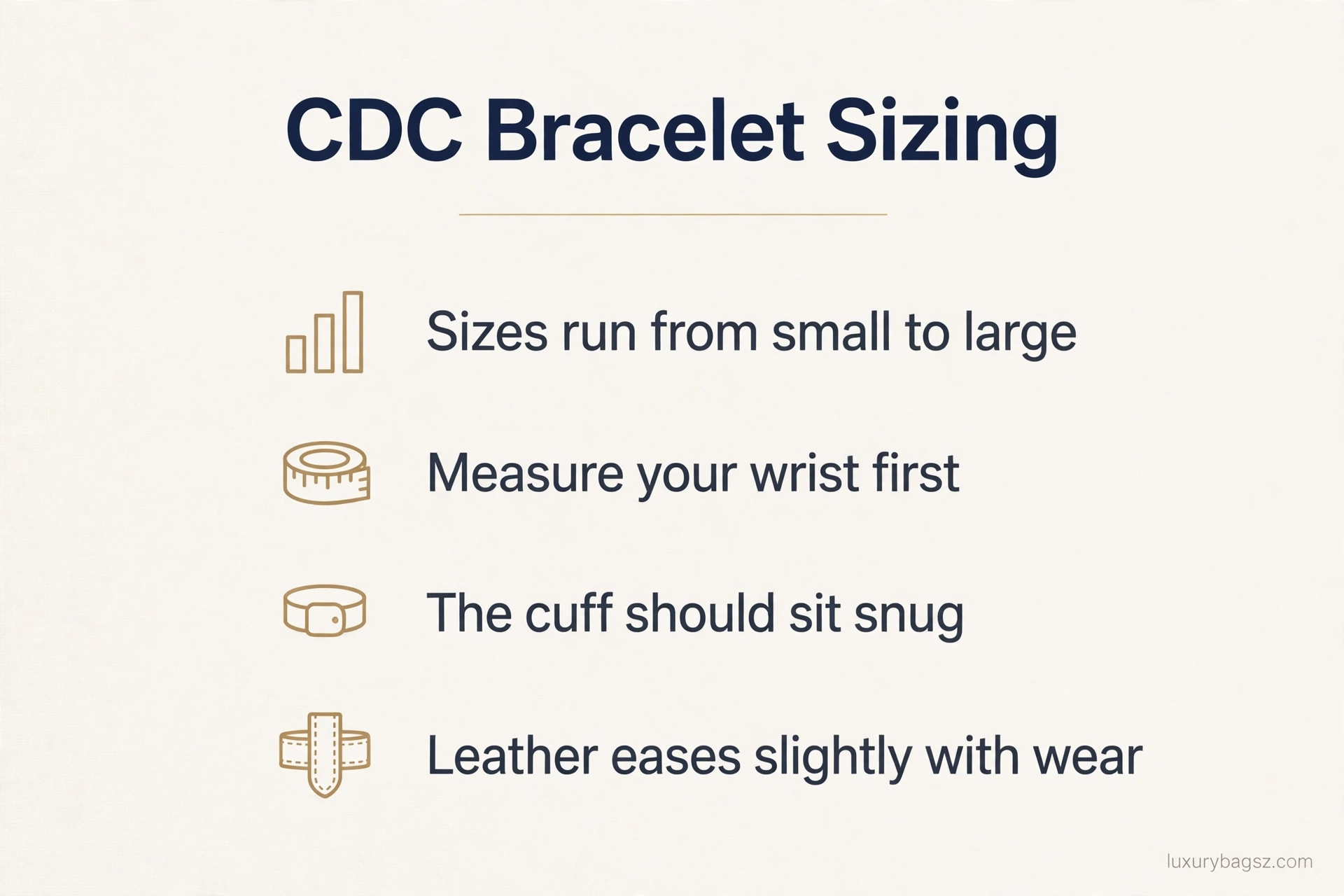
Leather CDCs are sized in bands, commonly labelled T1, T2 and T3, matched to wrist circumference. Measure your wrist snugly with a tape where the cuff will sit, then follow the house size guide.
A CDC should sit close without biting: you should fit a fingertip under the strap, and the cuff should not spin freely or slide over the hand. The stud closure gives small adjustment steps.
Because the cuff is wide, wrist bone shape matters as much as measurement. If the cuff rocks on the bone or gaps at the back, try the neighbouring size before deciding.
All-metal versions use their own size labels, often shown as ST, SH and LG style codes across the jewellery range. Try metal versions on; their rigid shape forgives nothing.

Prices: Leather, Silver and Gold
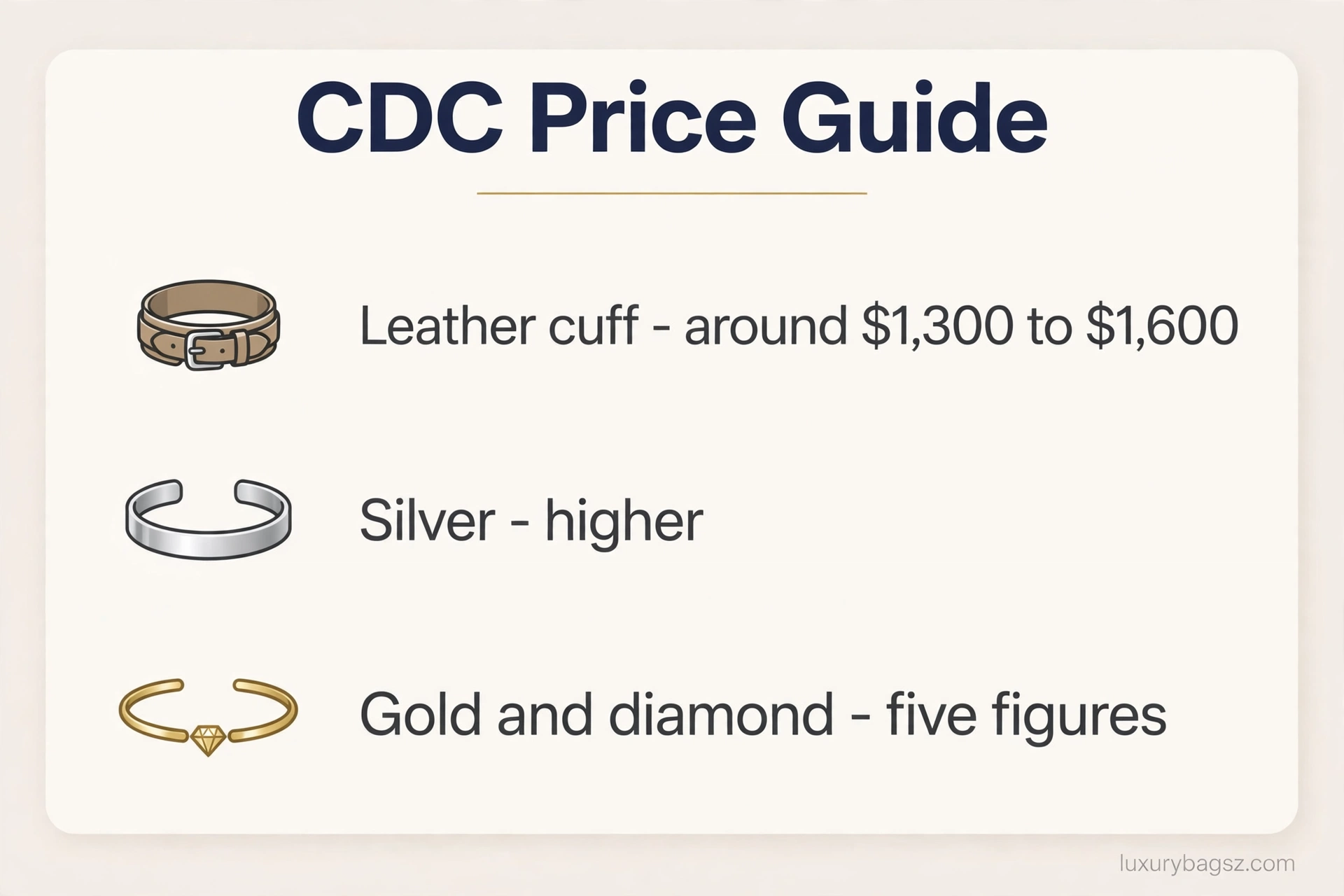
As typical US levels: leather cuffs sit around $1,300 to $1,600 depending on skin, slimmer leather editions below that, and alligator versions several thousand.
The sterling silver CDC bracelet has been listed around $1,300 to $2,000 in recent years depending on size and version, and it carries real weight on the wrist.
Gold versions are fine jewellery: plain gold CDCs run well into five figures, and diamond-set studs or full pavé editions climb far beyond that, past $50,000 at the top.
Prices move with metal markets and house adjustments, so budget by band, not by a memorised figure, and confirm the current boutique price for the exact version you want.
Gift buyers favour the leather cuff because its stud closure adjusts across a small range, forgiving an imperfect guess at wrist size in a way a rigid metal bangle never will.
CDC in a Jewellery Wardrobe
Guides to must-have jewellery pieces for women often place one strong cuff at the centre of a stack, and the CDC is the strongest candidate Hermès offers.
Compare it with the enamel route before you buy: our explainer on what is the Hermès Clic H bracelet shows the lighter, brighter alternative many collectors start with.
Worn alone, the CDC carries a plain shirt, knit or dress. In a stack, keep neighbours simple: a slim bangle or a watch, and let the studs keep their breathing room.
It also crosses seasons and genders more easily than most statement jewellery. The same black cuff sharpens a white shirt in July and a black knit in January.
How the CDC Wears Day to Day
The leather cuff is light for its size, and the strap moulds to the wrist within weeks. The studs sit proud, so expect them to meet desks and door frames before you learn their radius.
Hardware can mark and be marked: studs pick up fine scratches with daily wear, and the ring can tap against a watch worn on the same wrist. Purists stack the CDC solo for this reason.
Leather cuffs dislike water and hand cream. Wipe hands dry before fastening, and keep the cuff off for washing, swimming and workouts, exactly as you would a leather strap watch.
Metal versions wear harder and shrug off more, but their rigid shape is less forgiving over a long day. Many owners keep metal for evenings and the leather cuff for daily wear.
Second-hand leather cuffs deserve a strap-first inspection: bends, water marks and stretched closure holes decide value, while studs polish back more easily than tired leather recovers.
Care and Keeping It Looking Sharp
Wipe the leather with a dry, soft cloth and store the cuff flat or on a bracelet roll, away from sunlight that fades colour and dries the strap.
Our routine for how to clean Hermès fashion jewellery covers the hardware-safe method: dry cloth first, no dips, no sprays, no polishing pastes on plated studs.
Keep the cuff away from perfume and sanitiser, which dull plating and spot calfskin. Put jewellery on last when you dress and take it off first when you undress.
A leather cuff that darkens at the edges is ageing, not failing: Barenia especially is loved for exactly that patina. Judge care by suppleness and stitching, not by showroom shine.
What to Check Before Buying
On any CDC, run your eye over the studs: all four pyramids should match in height, angle and finish, sit firmly, and show no plating bubbles or sharp casting seams.
Check the ring: on genuine pieces it is smooth and seamless in feel, moving freely without grinding. Stitching on leather versions should be even, tight and free of glue.
Ask for clear photos of the stamps inside the strap or on the metal, the closure in action, and the cuff from all sides. Then compare against boutique imagery before paying.
Buy from boutiques or authenticated resale, and if a price looks far below the bands in the prices section, assume there is a reason. Our companion fake-check guide in this run shows why.
Keep the presentation box and pouch even if you never sell: boutiques read a cared-for set as a cared-for bracelet, and after-sales conversations start better from that small evidence.
Frequently Asked Questions
How much does a Collier de Chien bracelet cost?
Leather cuffs typically cost around $1,300 to $1,600 in the US by skin, slimmer editions less, and exotics more. Silver versions sit higher, and gold versions run into five figures.
What does Collier de Chien mean?
It is French for dog collar. The bracelet scales down a 1920s Hermès dog-collar and belt design, keeping the pyramid studs, ring and strap that define it.
How should a CDC bracelet fit?
Snug but not biting: a fingertip should fit under the strap, and the cuff should not spin freely. Measure your wrist and follow the size band, then try the neighbouring size if it rocks.
What sizes does the CDC come in?
Leather cuffs are commonly sized in T1 to T3 bands by wrist circumference. Metal versions use the jewellery range's own size codes, so always try or measure carefully.
Is the CDC bracelet worth it?
As a design icon worn often, yes: it is distinctive, well made and holds resale in classic versions. As a quiet everyday bangle, a Clic H may serve you better.
Can I wear a CDC every day?
The leather cuff suits daily wear if you keep it dry and accept fine marks on the studs. Metal versions are hardier still but rigid, so many owners rotate them.
Does the CDC come in silver and gold?
Yes. Beyond the leather cuff there are all-metal versions in sterling silver and in gold, including diamond-set editions at fine-jewellery prices.
How do I clean a CDC bracelet?
Wipe with a dry, soft cloth, keep leather away from water and creams, and never use dips or polishing pastes on plated hardware. Store it flat, away from sunlight.
Which CDC should I buy first?
The classic leather cuff in Noir with the hardware tone that matches your other jewellery. It is the most versatile, the most recognisable and the easiest to resell.
How can I avoid buying a fake CDC?
Check stud alignment and finish, the seamless ring, stitching, stamps and weight, and buy from boutiques or authenticated resale. Our dedicated fake-CDC guide lists the checks in full.
Final Verdict: The Boldest Bracelet Hermès Makes
The CDC is not subtle, and that is its value: a century-old collar design that still anchors an outfit in one piece. Buy the version your life supports, leather for daily character or metal for permanence.
Size it by measurement, check studs and ring before you pay, and keep it dry. Do that, and the cuff will look as deliberate in ten years as the day it leaves the boutique.