

Cartier Crash Watch Guide: The Real 1967 Story, Models, Rarity and Prices
The Crash in Brief: Designed, Not Damaged
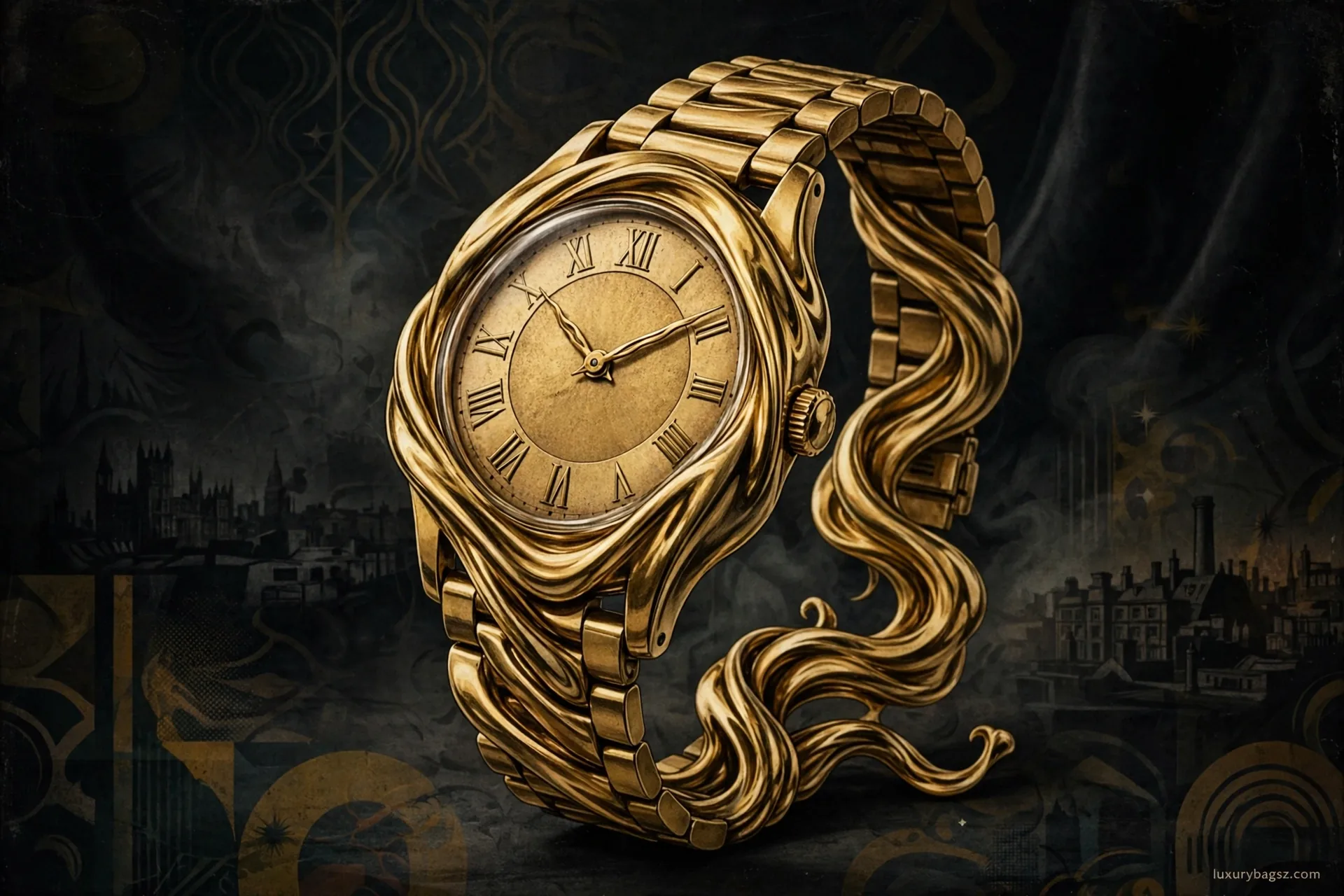
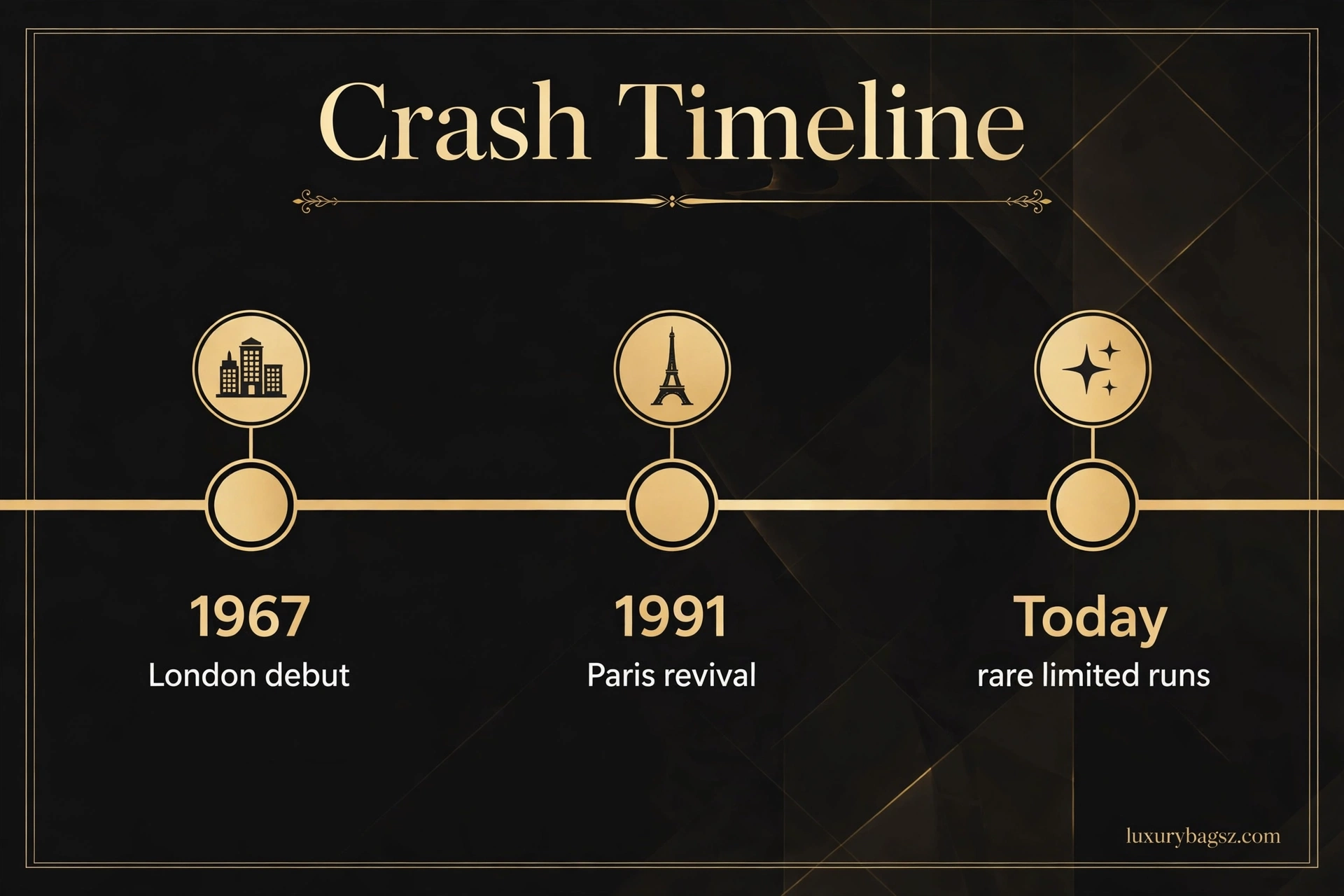
The Cartier Crash is a deliberately distorted watch, created at Cartier London in 1967 by stretching and pinching an oval case into its famous warped shape. It was not copied from a wrecked watch, despite the famous story. It was made in tiny numbers, revived in Paris in 1991, and is now among the most sought-after Cartier watches of all.
Key Takeaways
- The Crash was designed on purpose in Swinging London in 1967.
- The melted-after-a-crash story is a legend, not the documented origin.
- Jean-Jacques Cartier and designer Rupert Emmerson created it from the oval Maxi Oval case.
- Original London production was extremely small, which drives collector demand.
- Paris revivals from 1991 and later skeleton models widened the family.
- Authenticity and case shape are everything; buy only with expert support.
Swinging London, 1967
Cartier London in the 1960s had unusual creative freedom. Under Jean-Jacques Cartier, the workshop made daring watches for a city in love with the new and the strange. The background in our history of Cartier guide shows how the London, Paris and New York houses once worked almost independently. That freedom produced the Crash. It was a watch intended to look as if the rules themselves had melted, at the exact moment London fashion was doing the same. Few were made. The Crash was never a volume model, and that scarcity was there from the very first years, not invented later by marketers.
The Crash also shows how differently Cartier's three historic houses worked. London's freedom was unusual even within Cartier, and the watches it produced remain the most experimental in the company's history.
The Myth, and What Really Happened
The famous tale says a client's oval Cartier was mangled in a car crash, melted by fire, and that its shape inspired the design. It is a wonderful story, and it is not supported. Family history published by Francesca Cartier Brickell tells a calmer version. Jean-Jacques asked Emmerson to pinch the ends of the Maxi Oval and put a kink in the middle. An early idea for a cracked crystal was dropped as a step too far. The aim was a beautiful object that looked crash-damaged, not an actual copy of damage. The Dalí comparison came later and by resemblance only. The Crash shares a mood with melting clocks, but it was a London design brief, not an art collaboration.
Treat retold versions of the crash story as a warning sign in a listing. Sellers who repeat legend as fact may be equally loose with condition, originality and the details that decide value.
Reading the Shape
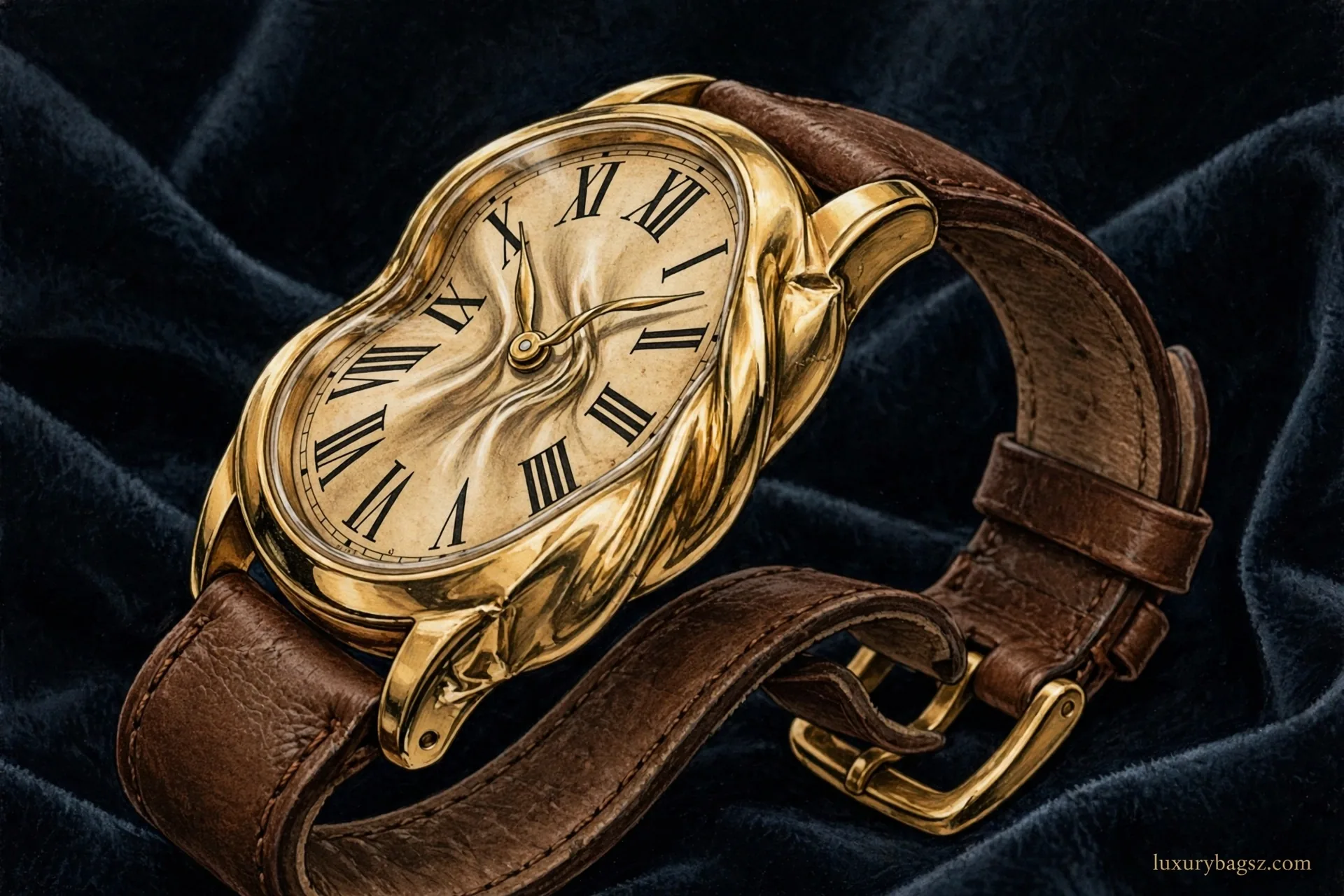
Look at a Crash slowly. The case is pinched at both ends, kinked in the middle, and the Roman numerals stretch and squeeze to follow the curves. The dial is hand-finished to match, which is why the numerals look painted by the shape itself. Nothing on the watch is straight except the hands' job of telling time. Set it beside the disciplined rectangle in our Cartier Tank watch guide and the rebellion becomes obvious. The Tank obeys geometry; the Crash teases it. Cases are typically precious metal, most often yellow gold. The watch wears smaller and more elegantly than photographs of the wild shape suggest.
London Originals and Paris Revivals
The first London watches of the late 1960s and early 1970s are the grail pieces. Numbers were tiny, records vary, and each example needs individual expert study. Cartier Paris revived the Crash in 1991 with limited editions, including a run of 400 in yellow gold that is often quoted by sellers and auction houses. Later versions include platinum pieces, jewel-set editions such as the Tigrée, and skeleton models whose movement bridges form the Roman numerals. Because each era differs in marks, dial signatures and case details, era identification is specialist work. General rules are a starting point, never a verdict.
Dials deserve particular attention by era. Signatures, minute tracks and printing styles differ between London originals and Paris revivals, and those differences are central to correct identification and honest pricing.

Skeleton and Modern Limited Editions
The Crash Skeleton turns the trick inside out. Its hand-wound movement is shaped to the case, and the numeral bridges make the dial part of the mechanism. Modern limited editions appear rarely and sell through quickly. Cartier has kept the Crash scarce on purpose, releasing small runs rather than a standard line. For a contrast in Cartier thinking, our Cartier Santos guide covers a watch built for open, practical production since 1904. Expect modern Crash prices to sit at the very top of the Cartier range when pieces are offered, and expect waiting and relationships to matter more than lists.
Authenticity: Why Experts Are Essential
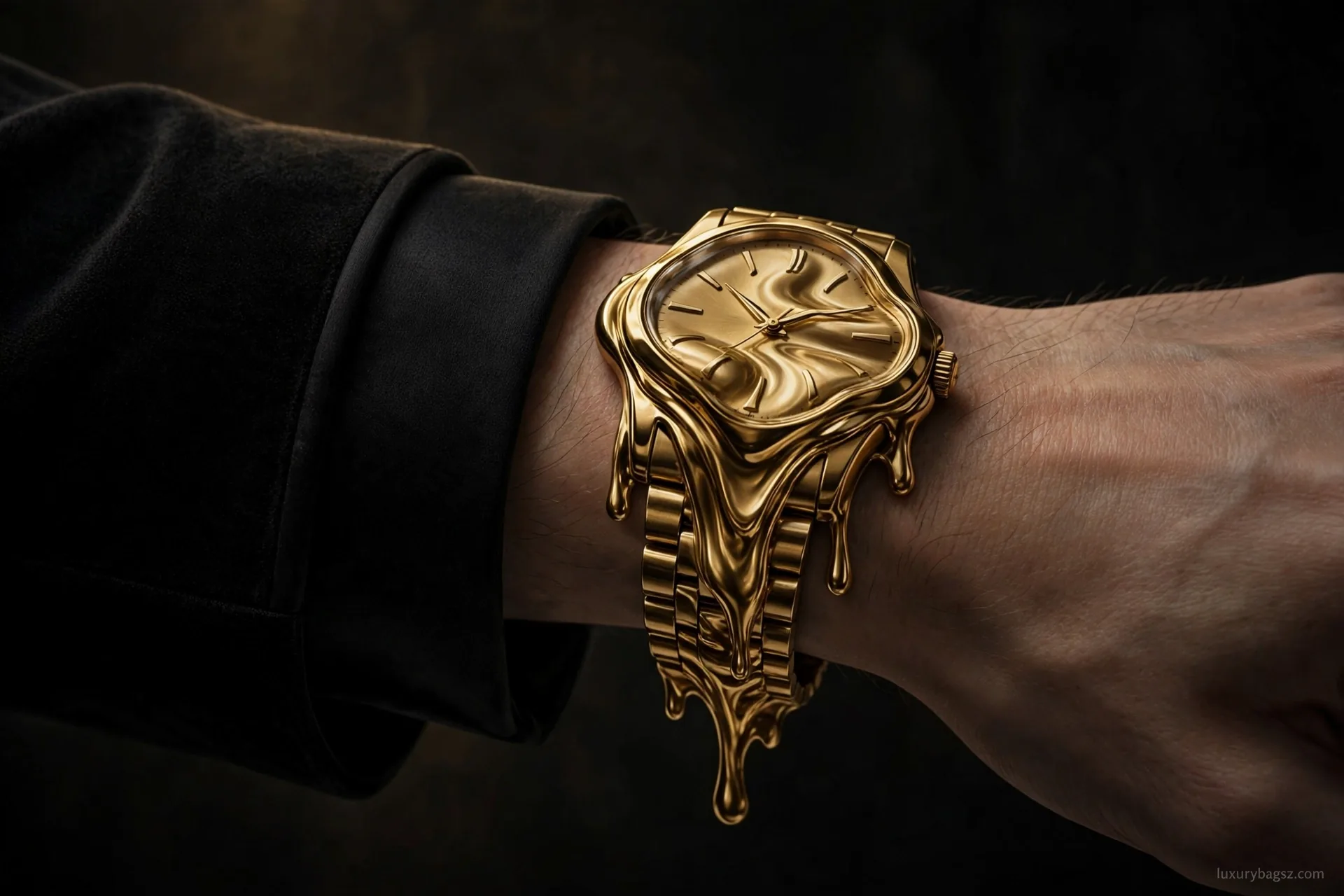
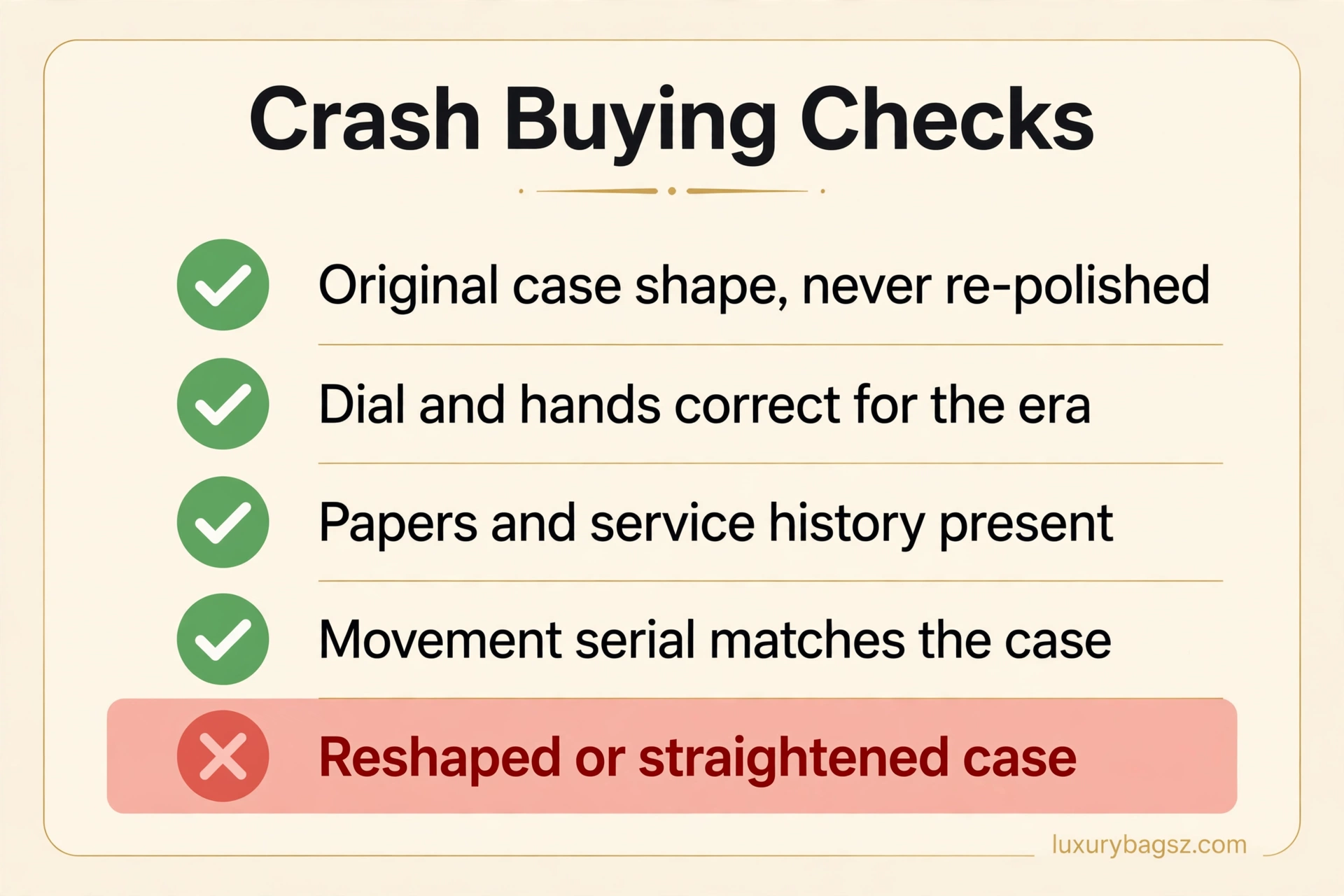
The Crash is faked, copied and, hardest of all, imitated by reshaping lesser oval watches. A converted watch can look convincing in photographs and wrong in the hand. Use the habits in our how to spot a fake Cartier Tank watch guide as a base, then add a Crash specialist. Hallmarks, signatures and case construction all need checking. Original case shape is sacred. Polishing or reshaping that softens the pinch and kink destroys the very thing collectors are paying for. Buy through major auction houses or dealers who guarantee authenticity in writing. At these prices, a private bargain is usually the opposite.
Insurance valuation is part of buying at this level. A specialist valuation, updated as the market moves, protects you far better than a purchase receipt kept in a drawer for a decade.
Why Values Rose So Far
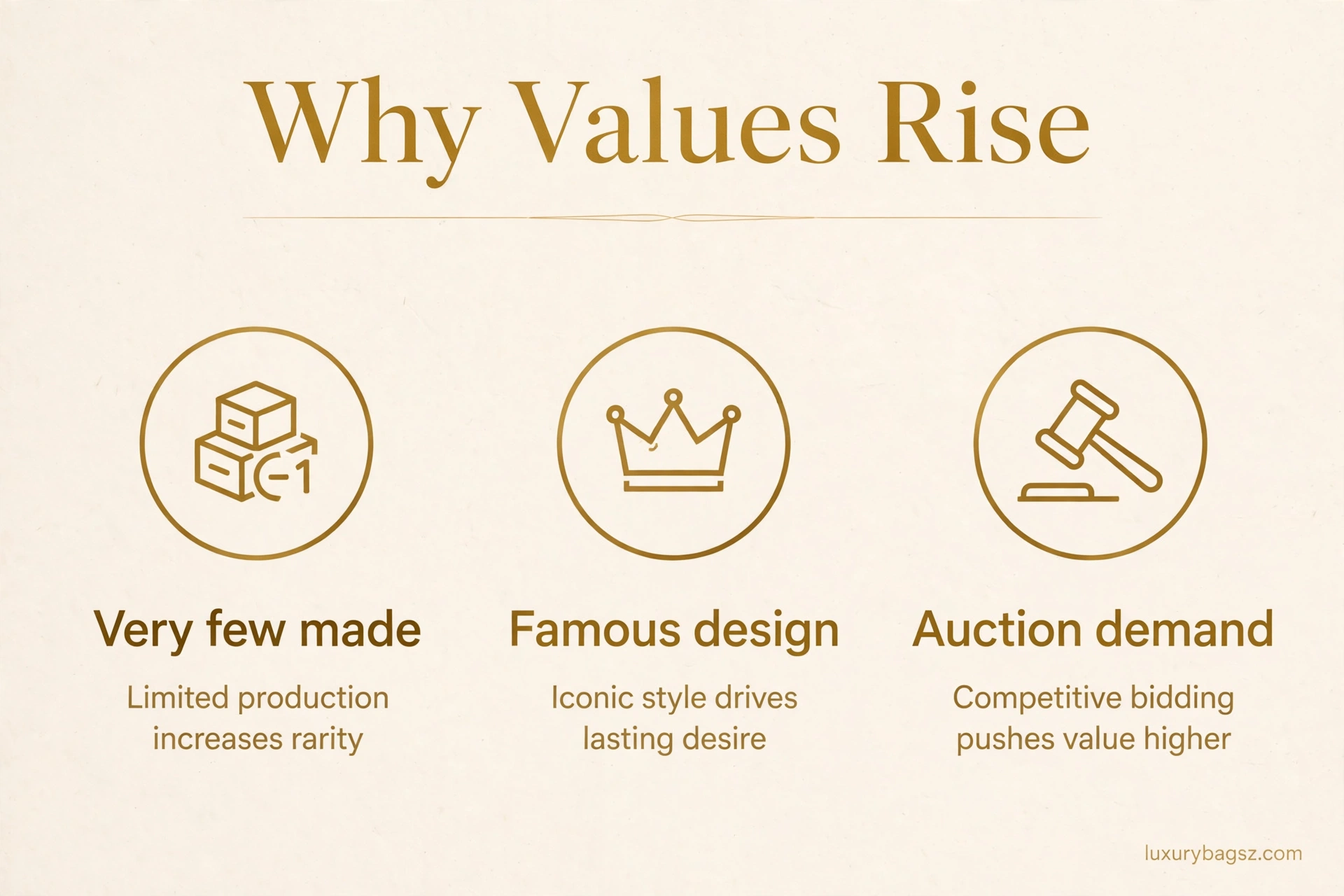
Three forces explain the prices: very few watches, a design everyone recognises, and auction results that made headlines and drew in new bidders. Celebrity sightings widened the audience beyond watch collectors. When a famous wrist wears a Crash, demand meets a supply that cannot grow. Treat any specific auction figure cautiously, including record claims. Results change, exceptional pieces distort averages, and condition decides everything. The honest summary is simple. A genuine, original Crash is a rare piece of design history, and the market prices it that way.
Should You Chase One?
For most readers, the Crash is a watch to admire rather than to hunt. Its prices place it alongside serious art, and the expertise needed to buy safely is real. If you do chase one, slow down. Budget for expert authentication, insurance and proper servicing, and expect the search to take months or longer. Enjoy the design influence at any level meanwhile. The Crash changed what a luxury watch was allowed to look like, and that idea is free to appreciate. Few watches prove that imagination, scarcity and patience can outvalue size, complications and precious weight. The Crash proves it completely.
If ownership is the dream, consider building knowledge at auction viewings. Handling examples under expert supervision teaches the eye faster than any number of photographs, and viewing days are open to the public.
Frequently Asked Questions
Was the Crash really inspired by a car crash?
No, not on the documented evidence. Family history says it was deliberately designed in London by pinching and kinking an oval case to look crash-damaged.
When was the Cartier Crash first made?
It was created at Cartier London in 1967, at the height of the Swinging Sixties, under Jean-Jacques Cartier with designer Rupert Emmerson.
How many original Crash watches were made?
Very few. Exact early numbers are debated and records vary, so treat any precise figure from a seller as a claim to verify, not a fact.
What is the difference between London and Paris Crash models?
London pieces are the 1960s and 1970s originals. Paris models are the 1991 onwards revivals, with different marks, signatures and case details.
Is the Crash connected to Salvador Dalí?
Only by resemblance. Its warped look recalls Dalí's melting clocks, but the design came from a London brief, not from the artist.
Why is the Crash so expensive?
Supply is tiny, the design is famous, and auction demand is strong. Genuine, unpolished, well-documented examples command the highest prices.
Are there skeleton Crash models?
Yes. The Crash Skeleton uses a shaped hand-wound movement whose bridges form the Roman numerals, and it was made in small limited numbers.
Can I buy a new Crash easily?
No. Modern editions are limited and quickly taken. Expect boutique relationships, waiting and very high prices when pieces appear.
How can I tell a real Crash from a conversion?
You often cannot from photographs alone. Converted oval watches exist, so expert in-hand authentication is essential before any purchase.
Is the Crash a good investment?
It has performed strongly, but it is illiquid, expensive to authenticate and condition-sensitive. Buy it as design history, not as a financial plan.
Conclusion: A Deliberate Masterpiece
The Crash needs no invented legend. Designed on purpose in 1967, made in handfuls and revived with care, it is one of the boldest watches ever sold. Admire the myth if you like, but respect the truth more: two men in London decided a watch could bend, and collectors have agreed ever since.






