Wimbledon Whites: The History of the All-White Rule and Spectator Style
Why Everyone Wears White: The Story in Brief
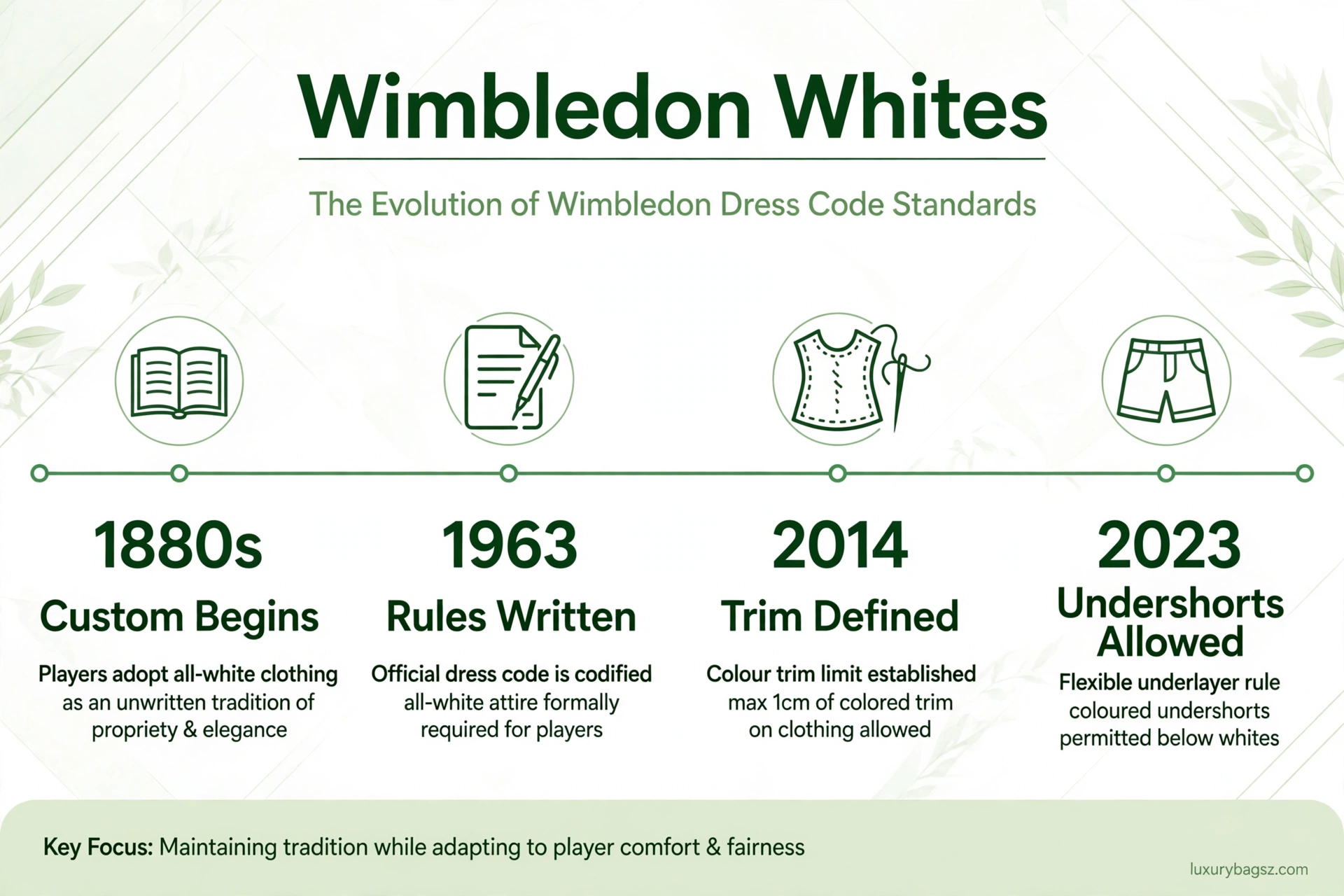
Wimbledon whites began as Victorian good manners. In the 1880s, visible sweat was thought improper, and white showed perspiration least, so lawn tennis settled on white clothing long before it became a written rule. The All England Club later turned custom into one of sport's strictest codes: players must wear almost entirely white, and since 2023 women may wear dark undershorts — the rule's first real softening in generations.
Key Takeaways
- The white tradition dates to the 1880s, when hiding sweat marks was a matter of decorum.
- Modern rules cover everything: trim, undergarments, headbands and even shoe soles.
- White means white at Wimbledon — off-white and cream do not count for players.
- The 2023 change lets women wear mid-to-dark undershorts beneath skirts or shorts.
- Spectators face no all-white rule; smart summer dressing is the real custom.
- The look endures because it levels the field and puts the tennis first.
A Garden-Party Game in the 1800s
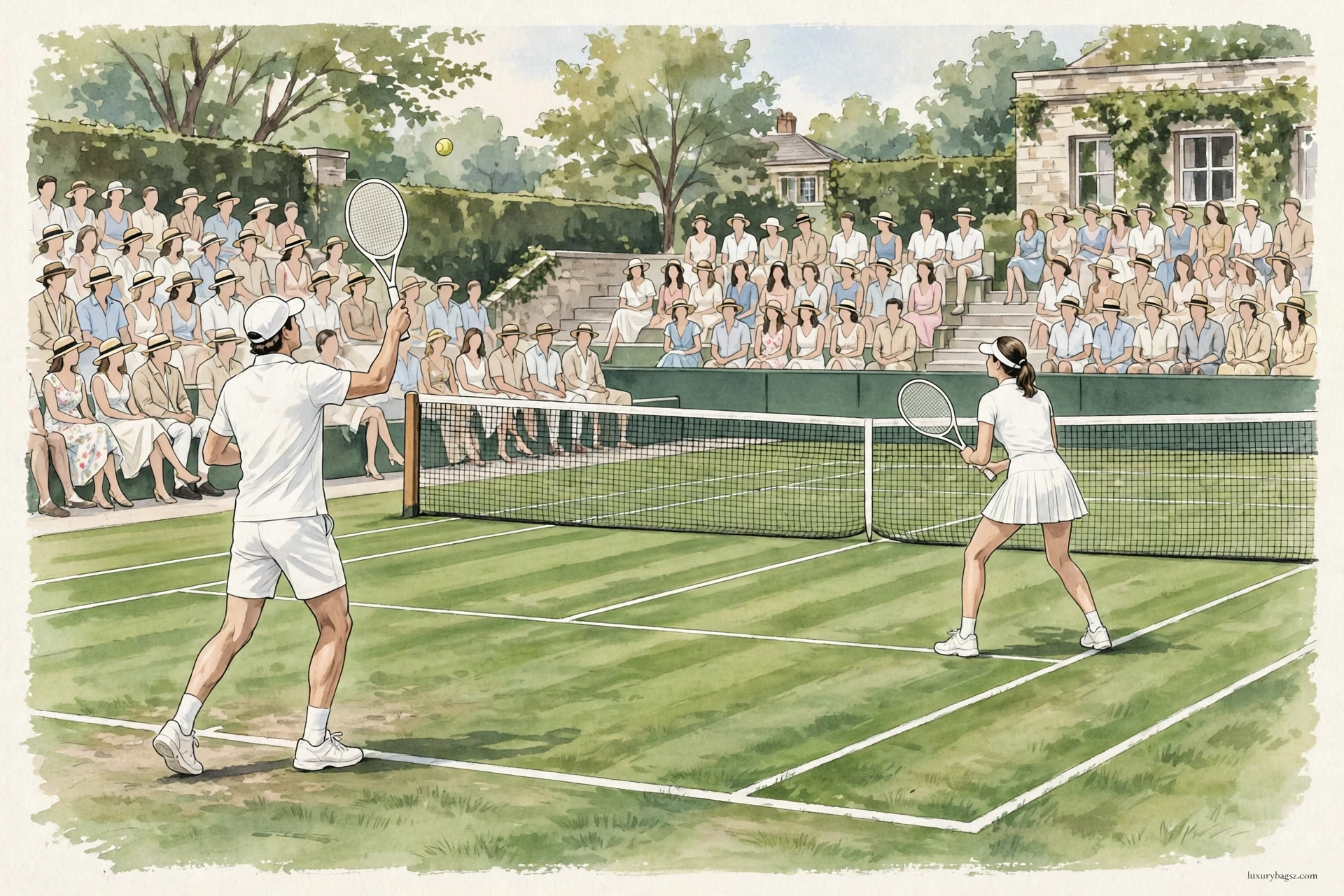
The Championships began in 1877, when lawn tennis was a genteel pastime for people who could afford leisure, servants and laundry. White clothing signalled all three at once. Players wore long trousers, shirts and, for women, full dresses. The game was social as much as sporting, and dressing well on court was part of belonging to the world that played it. White was also practical laundry logic. Grass stains and sweat could be boiled and bleached out of white cloth in a way coloured fabrics of the era simply could not survive.
Sweat, Decorum and the Birth of the Rule
Victorian etiquette treated perspiration as something to hide, not display. White was found to show sweat patches least clearly, so tennis whites became the polite standard in the 1880s. For decades the expectation was custom rather than codified law, enforced by club culture. Everyone understood the dress code because everyone at a club like Wimbledon shared it. The written rules hardened much later, as televised tennis and sponsor logos pushed colour onto kit. Wimbledon's answer was to define white ever more precisely, rather than relax it.
The tightening had a practical driver too. As kit sponsorship grew, every coloured panel became advertising space, and the club chose to protect the look of the courts instead.
Officials check kit against the rules, and players keep approved spare outfits ready. A failed check is solved by changing clothes, not by arguing at the net.
How the Rule Tightened Over Time
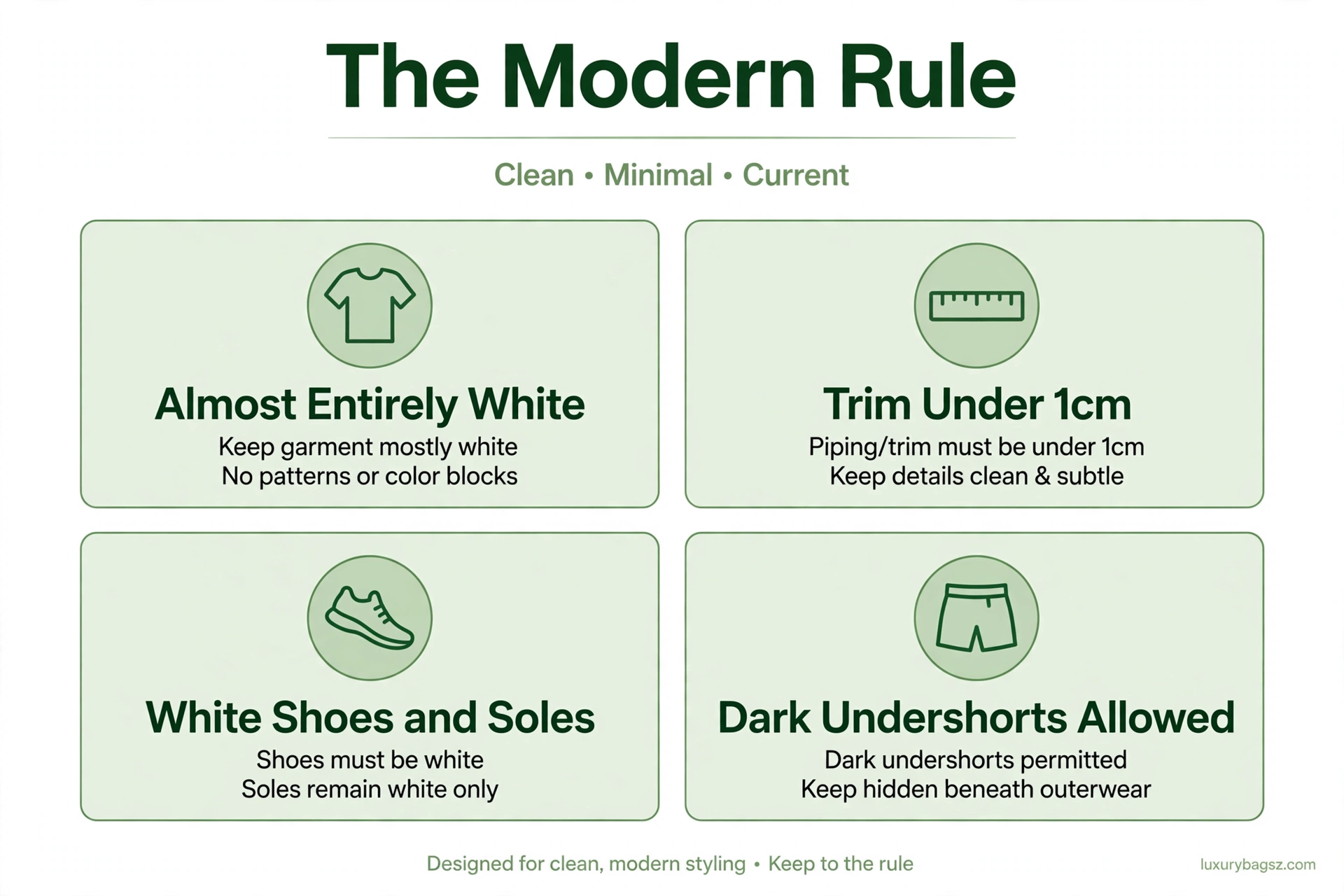
By the modern era, the guidance covered the whole outfit. A single trim of colour no wider than one centimetre is allowed around a neckline or sleeve; solid panels of colour are not. White does not include off-white or cream, a detail that has caught out players and kit makers alike. Undergarments that might show during play were long required to be white too. Even footwear is policed: shoes must be almost entirely white, including soles and laces. In 2013, orange soles on a champion's shoes were famously ordered off court for the next match.
Rebels, Near Misses and Quiet Protest
Players have always tested the edges. Bold dresses, coloured underskirts and statement warm-up jackets have each met officials with tape measures and rule books at the court entrance. Some challenges were fashion; others were practical. Women raised the sharpest point: an all-white rule takes no account of periods, anxiety or simple comfort during a match. That campaign, voiced by players and commentators over several seasons, is what finally moved the club. The debate itself became part of the rule's modern history.
Players welcomed the change publicly, several saying it removed a background worry during matches. Commentators who had campaigned for it treated the moment as overdue, not radical.
The wording was careful: the undershorts must be solid and mid-to-dark in colour, and no longer than the skirt or shorts above them. Even reform, at Wimbledon, arrives measured.

The 2023 Change: Dark Undershorts
From the 2023 Championships, women players may wear solid, mid-to-dark coloured undershorts, provided they are no longer than the shorts or skirt worn over them. It is a small change in wording and a large one in meaning: the first admission that the code serves the players, not the other way round. Everything above the undershorts stays white. The rest of the rulebook was untouched. Trim limits, shoe rules and the ban on cream all remain, which tells you the club sees 2023 as an adjustment, not a retreat.
What Spectators Actually Wear
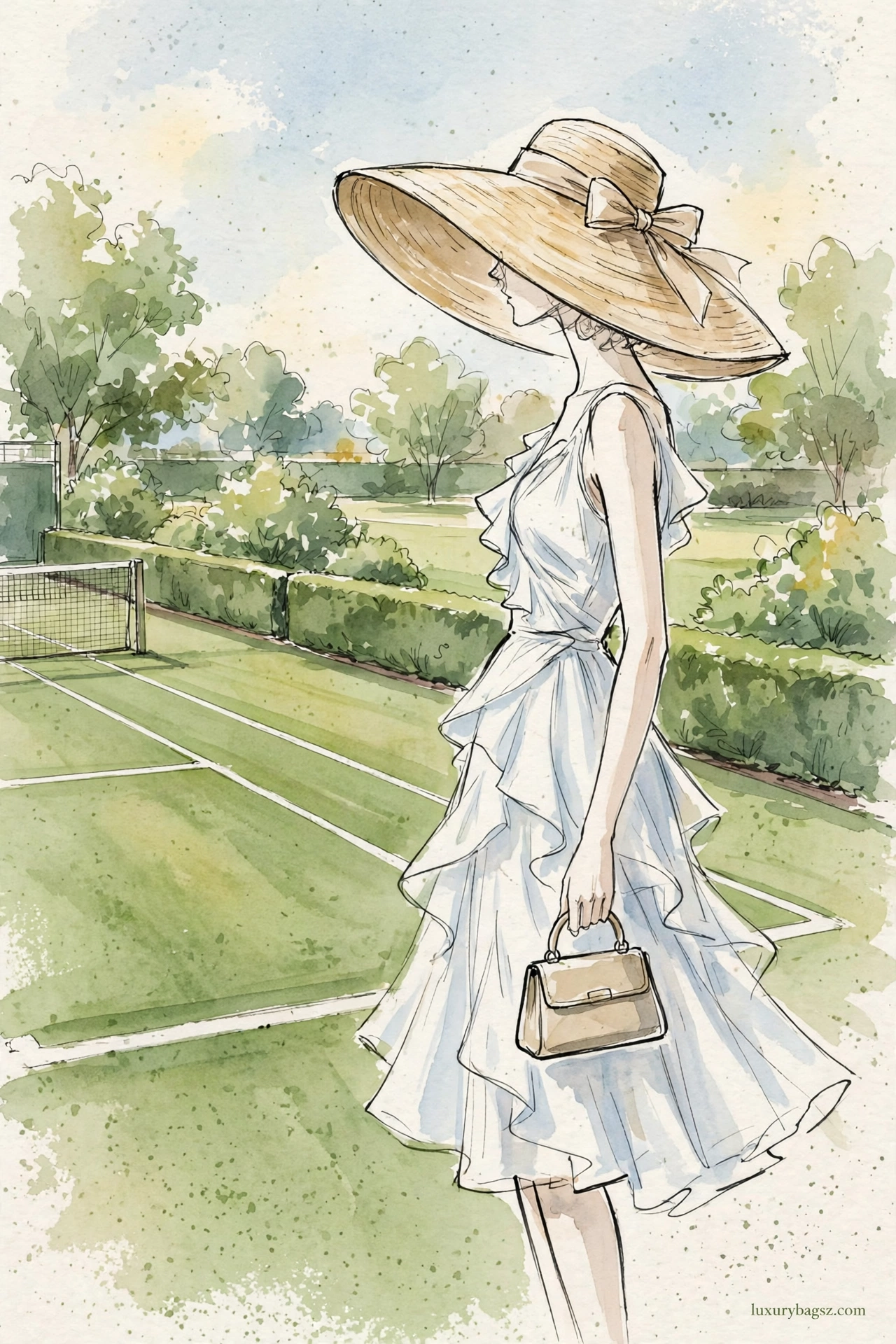
There is no all-white rule for the crowd, and no formal dress code for general tickets. The custom is smart summer dressing: dresses, blazers, linen and good shoes that survive a long day. Our summer dresses guide covers the shapes that suit a day of sitting, queueing and walking between courts in changeable weather. Bags need thought too. A woven or straw style from our edit of designer straw bags suits the garden mood and holds layers, water and the famous strawberries' aftermath.
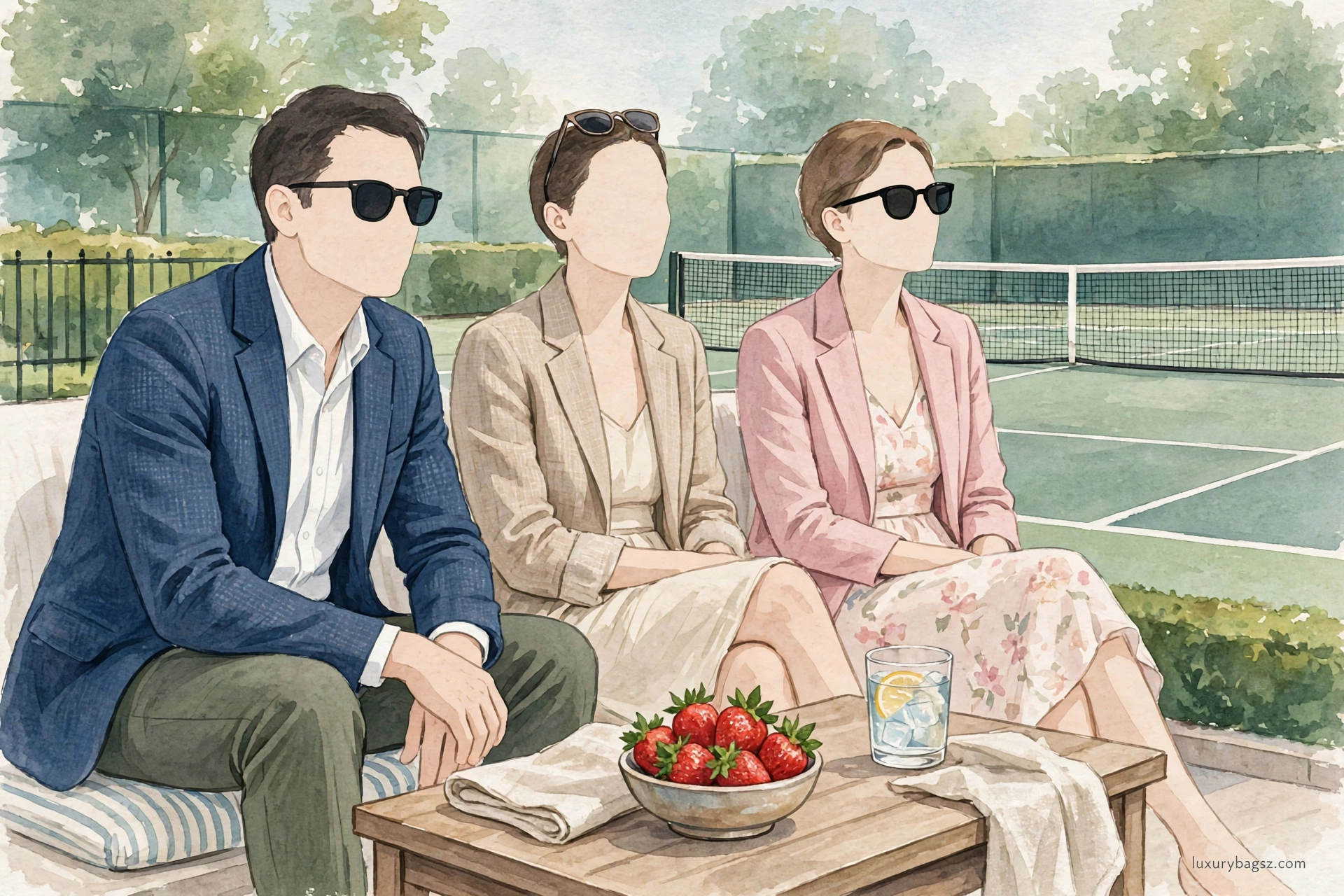
Hospitality and debenture areas dress a step smarter: jackets for men are customary there, and dresses lean longer. Check your ticket type before you choose the outfit.
Weather is the spectator's real opponent. Pale layers, a packable rain cover for your bag and shoes that forgive wet paths will serve you better than any single statement piece.
Building a Spectator Outfit in the Spirit of the Whites
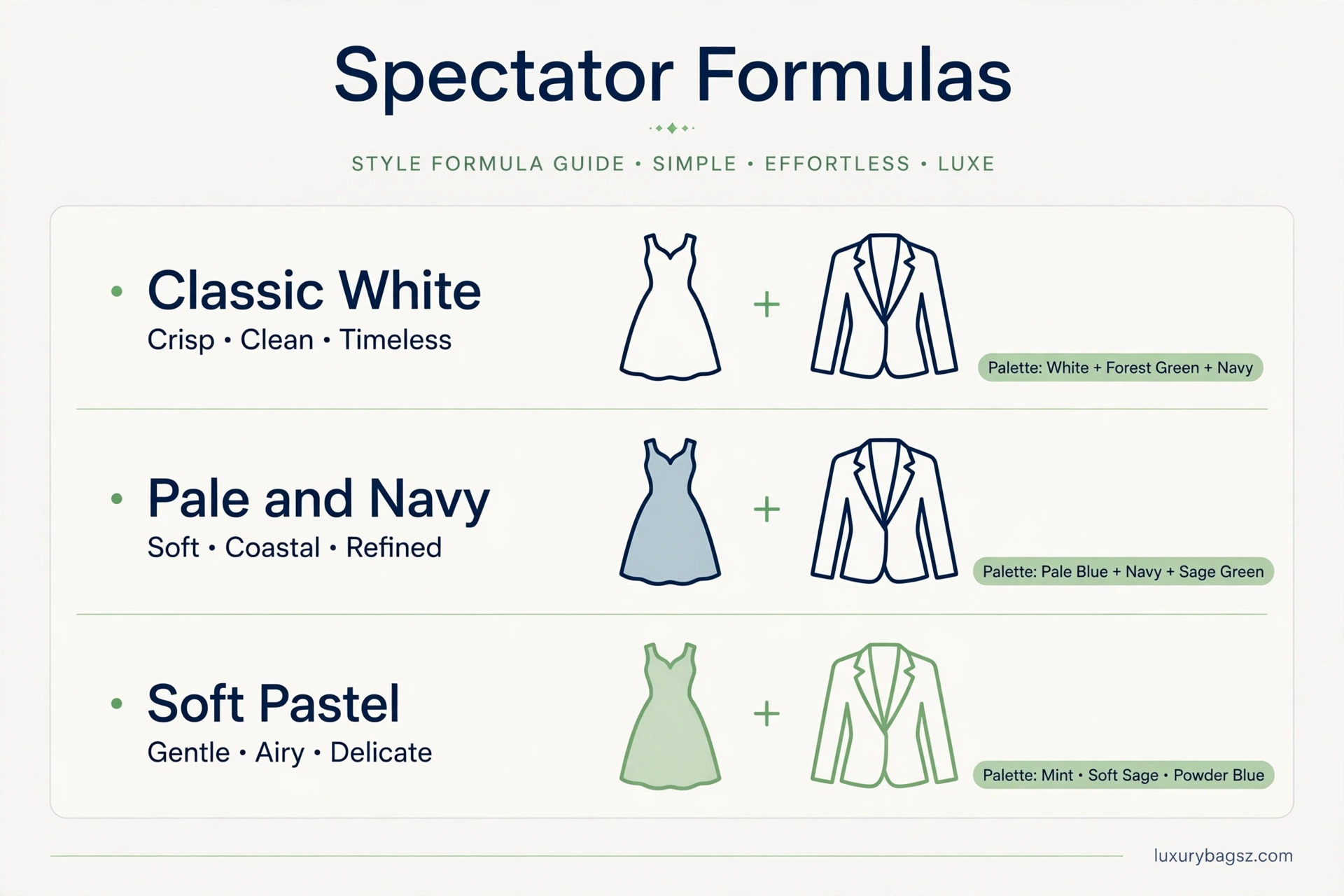
You do not need head-to-toe white, but a pale base nods to the tradition prettily. A white or cream dress with a navy blazer is the classic spectator formula for a reason. Add flat, walkable shoes for the grounds; our guide to summer sandals day to night shows pairs that manage grass, queues and dinner afterwards. If white feels stark, soften it with pastel, pale blue or a fine stripe. Our round-up of flat shoes and summer flats will keep the look polished without a heel sinking into the lawn.
Why the Whites Still Matter
The rule survives because it does quiet work. With every player in white, the eye goes to the ball, the movement and the grass; fashion noise disappears and the sport looks timeless. It also levels appearances. Kit deals and personal brands shrink to a one-centimetre trim, so a qualifier and a champion step out dressed by the same strict, elegant rule. That is why change comes slowly and carefully here. Wimbledon guards the whites the way it guards the grass: as the visible sign that some traditions are kept on purpose.
The whites also shape what we buy each summer. Tennis-inspired white dresses, skirts and knits return to shops every June, a retail echo of a rule written for Victorian manners.
That echo is the tradition's second life: a dress code for twenty-two players at a time that quietly sets the palette of a whole season's summer dressing.
Frequently Asked Questions
When did the Wimbledon all-white rule start?
The custom dates to the 1880s, when white was adopted because it hid sweat marks, which Victorian manners considered improper to show. Formal written rules tightened much later.
Why does white hide sweat better?
Sweat darkens coloured cloth in obvious patches, while on white the damp area shows far less contrast. In an era before modern fabrics, that difference decided the dress code.
Can players wear cream or off-white?
No. The rule states that white does not include off-white or cream. Kit is checked, and players have been asked to change items that fall on the wrong side of the line.
How much colour can a player wear?
Very little: a single trim of colour no wider than one centimetre in defined places. There must be no solid mass or panel of colouring on the playing kit.
What changed for women players in 2023?
Women may now wear solid, mid-to-dark coloured undershorts under their skirt or shorts, no longer than the outer garment. It was introduced to ease anxiety around periods.
Do the rules cover shoes as well?
Yes. Shoes must be almost entirely white, including soles and laces. Coloured soles have been banned mid-tournament before, most famously in 2013.
Is there a dress code for Wimbledon spectators?
No formal code for general admission, beyond ordinary decency and venue rules. Smart summer dress is the strong custom, and debenture and hospitality areas dress smarter still.
Can spectators wear white too?
Of course, and many do. A white dress or pale suit nods to the tradition. Just remember players' rules do not apply to you, so cream and colour are perfectly fine.
Why does Wimbledon keep such a strict rule?
The club treats the whites as identity: they level the field visually, remove branding noise and keep the focus on tennis. Change happens, as 2023 showed, but slowly.
What should I wear as a first-time spectator?
A smart summer dress or linen suit, a light layer for evening, flat walkable shoes and a bag that holds water and a programme. Pale colours suit the setting best.
Conclusion: A Rule Kept on Purpose
Wimbledon whites started as Victorian politeness about sweat, hardened into sport's strictest dress code, and softened just once, in 2023, where players needed it most. As history, it explains the tournament; as style, it still sets the calm, pale standard everyone in the grounds quietly dresses up to.