St George’s Day Style: English Heritage Dressing in Red and White
Red and White, Done the English Way: The Edit in Brief
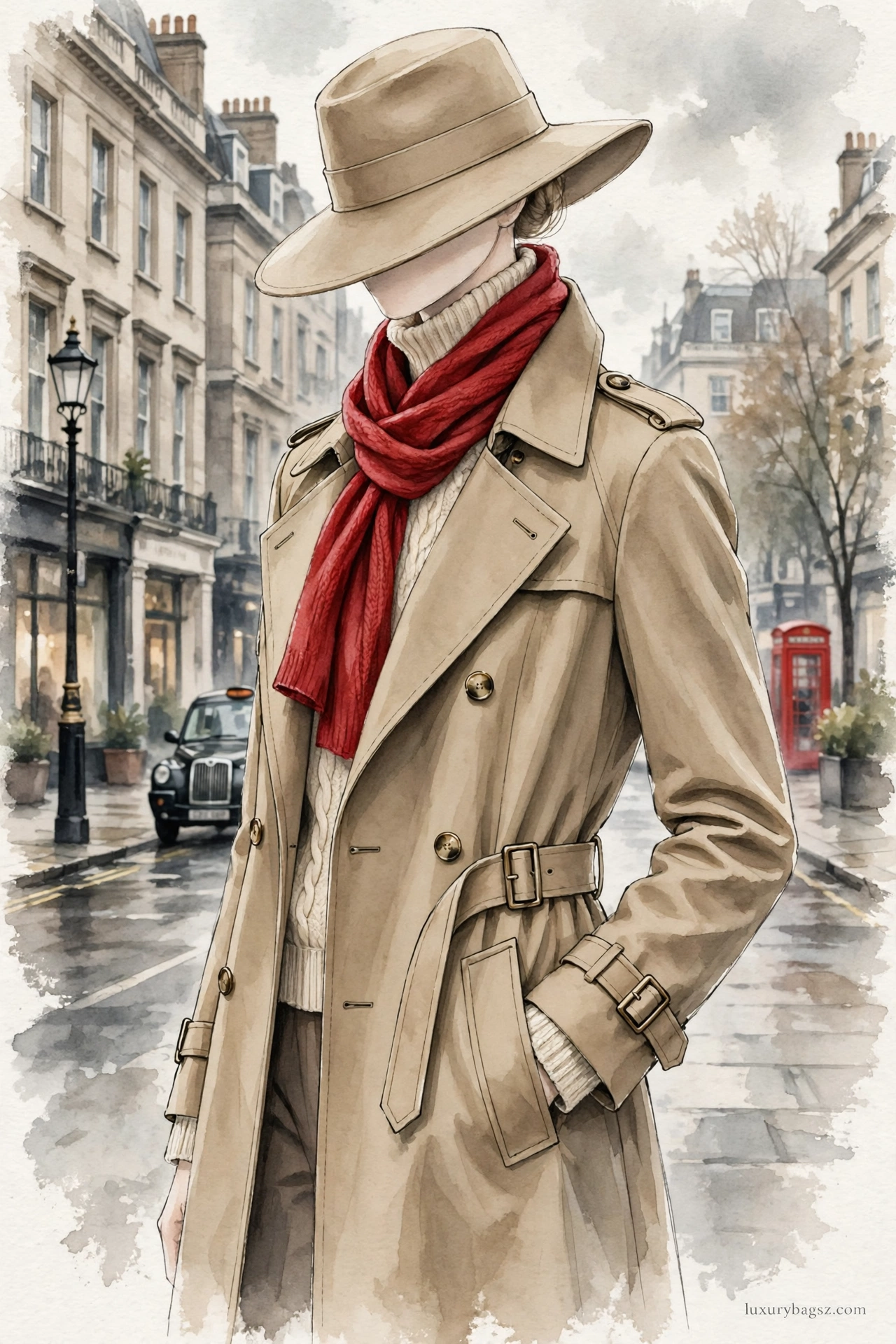
St George's Day style is English heritage dressing with a red-and-white accent, not a costume. Start with tailoring, a trench or good knitwear in cream, navy or grey, then add one clear red note: a scarf, a shoe, a lip or a bag. The day itself, 23 April, sits in changeable spring weather, so layers matter more than slogans. Build the outfit from pieces you would wear anyway, and let the flag colours arrive as punctuation, never as fancy dress.
Key Takeaways
- Heritage first: trench, tailoring, knitwear and polished leather carry the look.
- Red and white work best as accents on a calm base of cream, navy or grey.
- One red piece is elegant; head-to-toe flag colours tip into costume.
- April weather demands layers: a coat you can carry beats a dress you regret.
- Tweed, gabardine and good wool are the honest English fabrics to reach for.
- Keep flags for bunting and tables, not printed across your clothes.
What English Heritage Dressing Actually Means
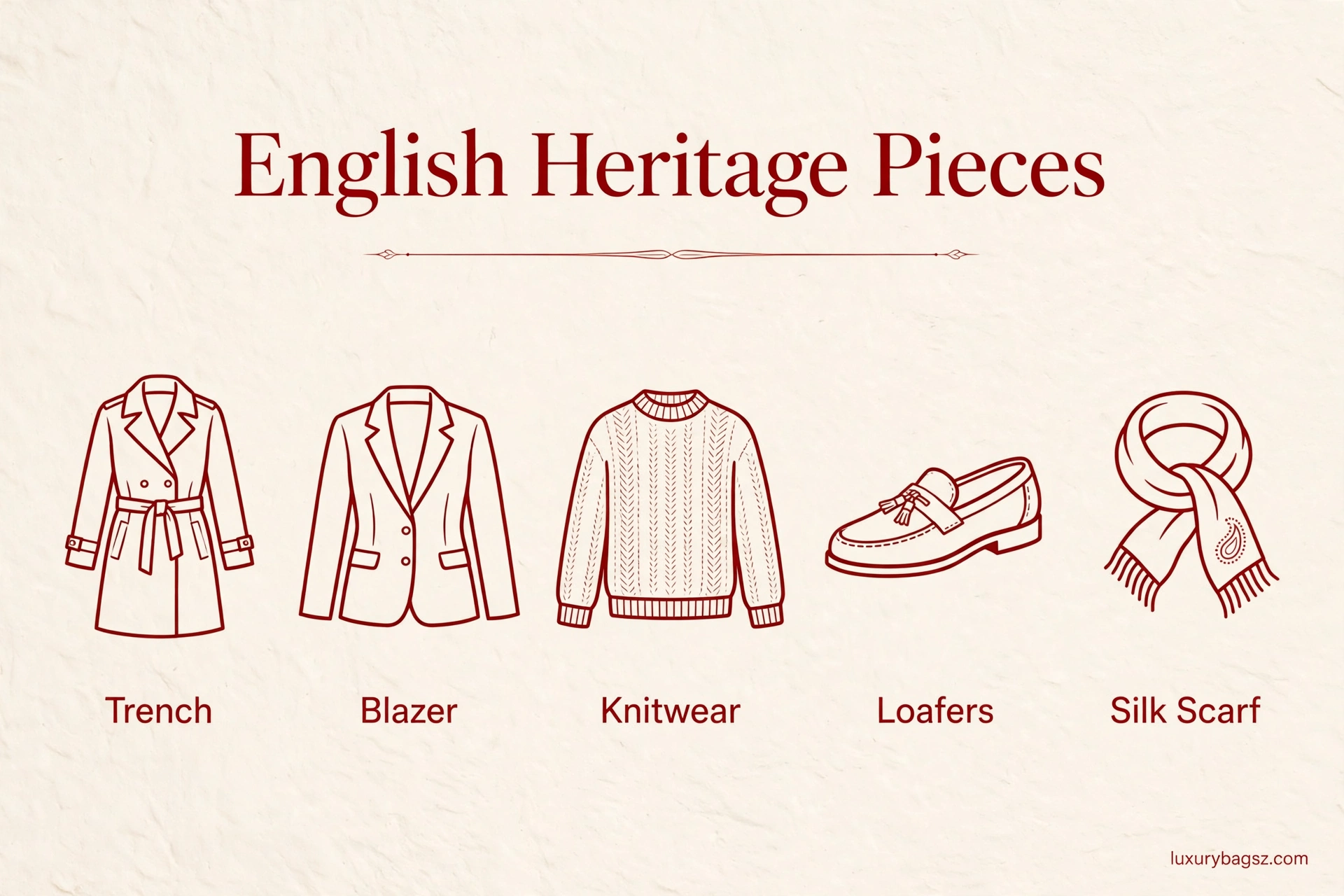
Heritage dressing is a wardrobe of long-lived shapes: the trench coat, the tailored blazer, the crew-neck jumper, the pleated skirt and the leather loafer. None of them chase trends, and all of them suit a spring day in England. The mood is tidy rather than grand. Clothes fit properly, shoes are polished, and colour is used with a light hand. That restraint is exactly why the look photographs so well at lunches, parades and pub gardens. It also flatters most budgets. A well-kept trench and a good knit do the same work as a new outfit, because the style lives in the cut and the cloth, not in logos or novelty prints.
The Core Pieces to Build From
Start with outerwear. A trench in stone or honey is the single most useful piece here, and the story told in our piece on the Burberry check story shows how one coat became the uniform of British dressing. Under it, choose a white or cream shirt, a fine knit in navy or grey, and tailored trousers or a midi skirt. Brogues, loafers or clean white trainers all keep the mood grounded and walkable. Add one heritage texture: tweed, herringbone or a knitted tie-front cardigan. Texture does the quiet work that print does loudly elsewhere, and it suits April light beautifully.
Think of the base as the outfit you would wear to a smart spring lunch anyway. The red accent then needs no explanation, because everything around it already looks considered and calm.
A red rose worn simply, where roses are being handed out at an event, is the lightest touch of all. It costs nothing, photographs kindly and comes off at the door.
Red and White Without the Costume Trap
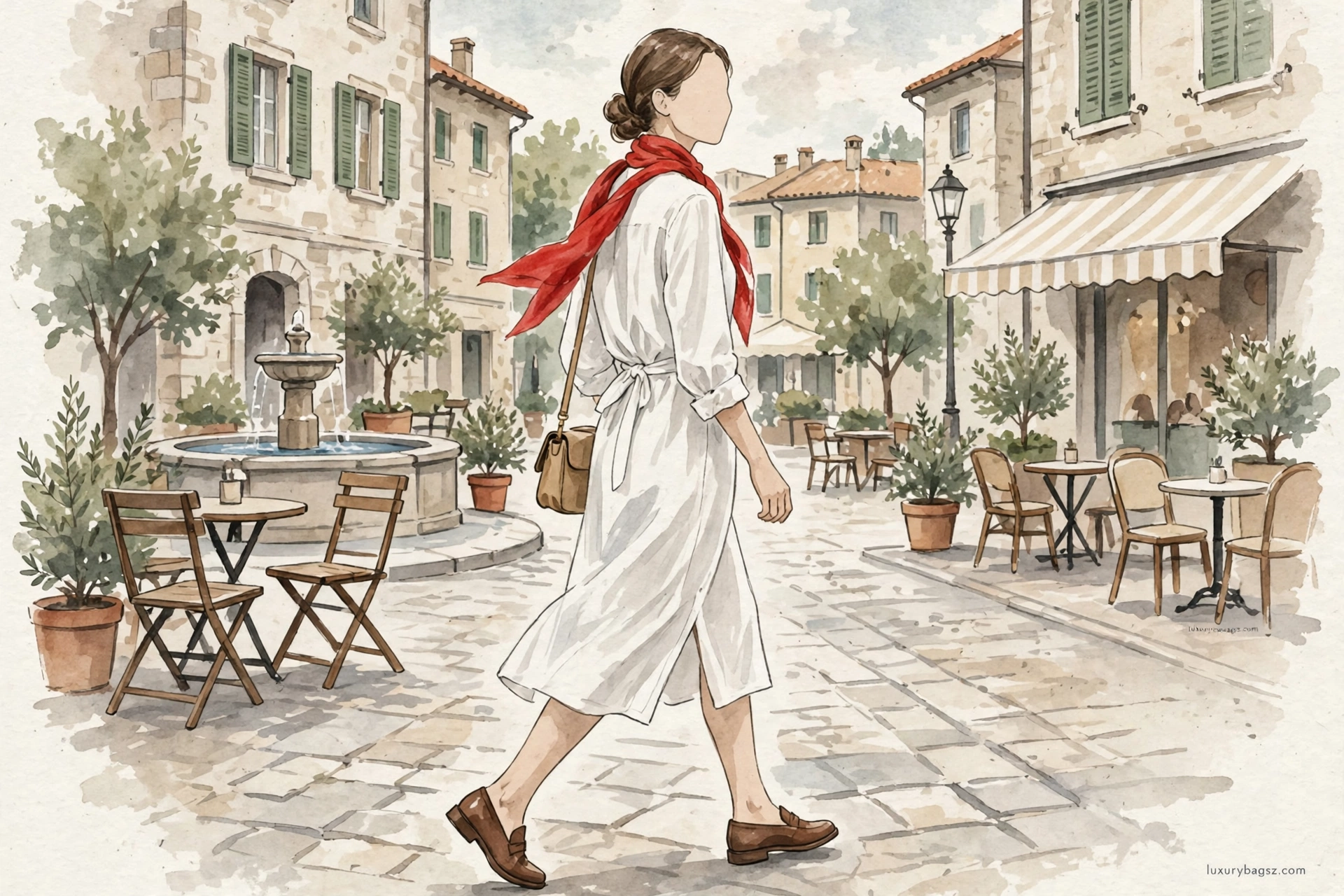
The St George cross is red on white, so the palette is already in your wardrobe. A white dress with a red scarf, or red shoes under navy tailoring, says the day clearly and stays wearable in May. Resist novelty. Flag-print dresses, face paint outside a family fete, and themed jewellery date an outfit instantly. One strong red piece reads as celebration; five read as a stall at a fair. If you want more colour, borrow from the wider heritage palette: racing green, burgundy and tan all sit happily beside red and white and keep the outfit English rather than theatrical.
Dressing for 23 April Weather
Late April can deliver sun, showers and a cold wind in one afternoon. The heritage wardrobe was built for exactly this: gabardine sheds rain, knitwear layers thinly, and a coat carries the day. Wear the trench open over a dress, or belted over trousers and a jumper. Keep a compact umbrella in a structured tote, and choose shoes that survive wet pavements without complaint. Our profile of Queen Elizabeth II style is a masterclass in this logic: a bright coat, sensible shoes and a headscarf ready for whatever the sky decides.

Three Outfit Formulas That Work
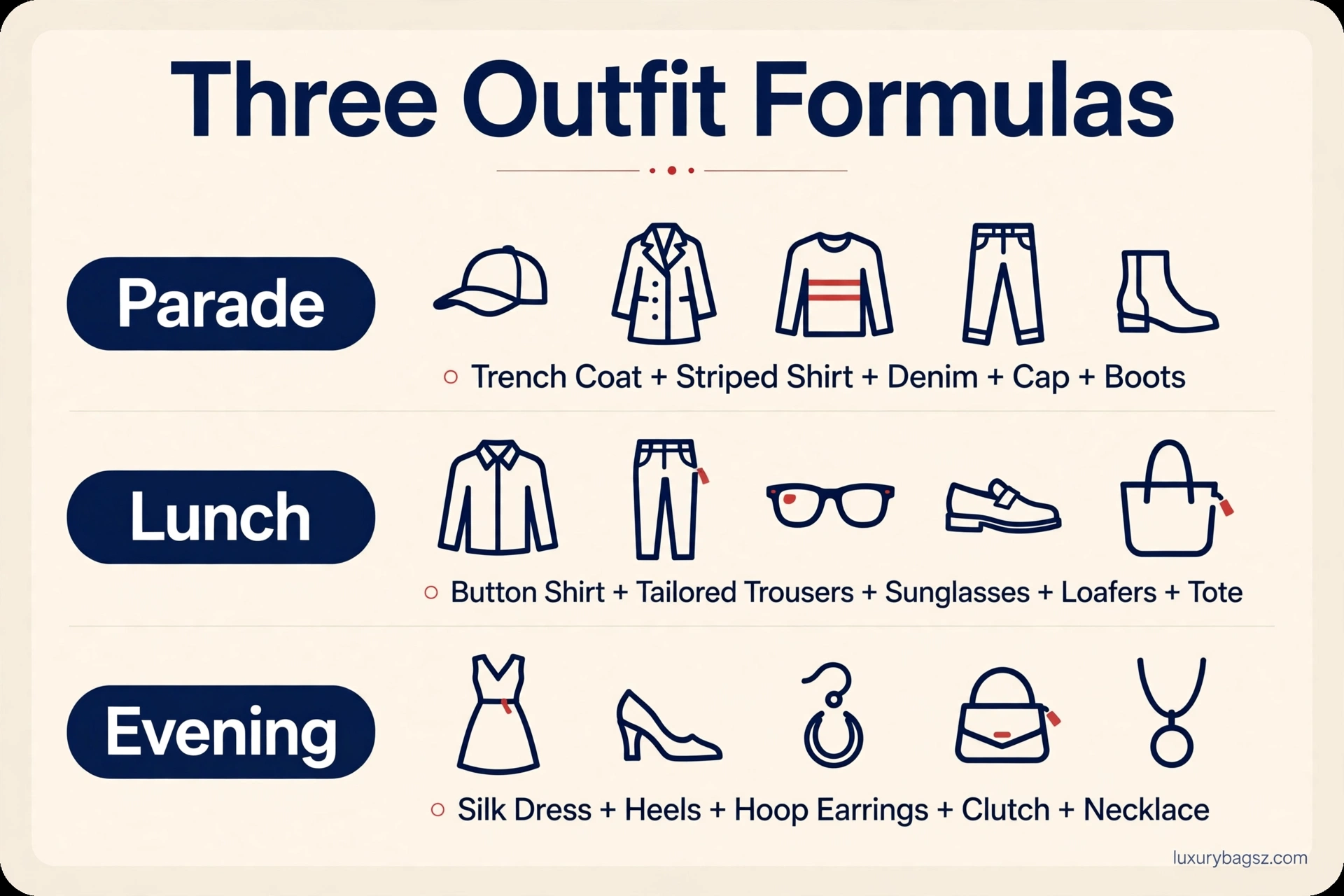
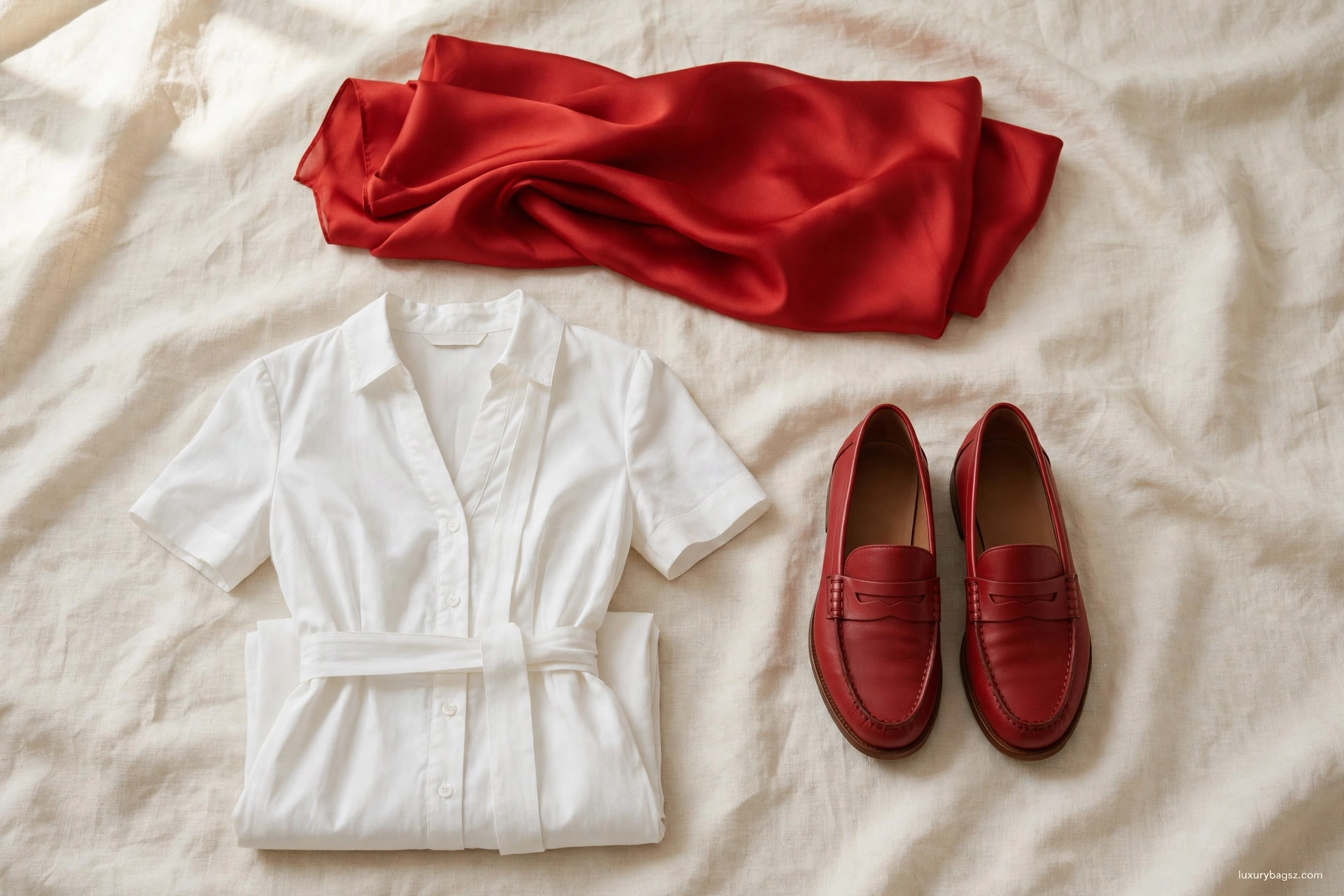
For a parade or town celebration, try tailored cream trousers, a white shirt, a navy blazer and red loafers. It is smart, comfortable for standing, and clear in its colours without shouting. For lunch, a white shirt dress with a tan belt, a trench over the shoulders and a red silk scarf is hard to beat. Swap the scarf for red earrings if scarves are not your thing. For the evening, navy or charcoal tailoring with a white top and one red accessory — a clutch, a shoe or a bold lip — keeps the theme alive after dark in a grown-up way.
Accessories follow the same heritage logic: a leather belt with a plain buckle, a watch on a leather strap, a silk scarf folded rather than knotted into a bow.
Hats are optional for this day, unlike Ascot. A clean flat cap or a simple straw in warm sun is plenty; the outfit should never look like a themed party kit.
Fabrics and Details That Read as English
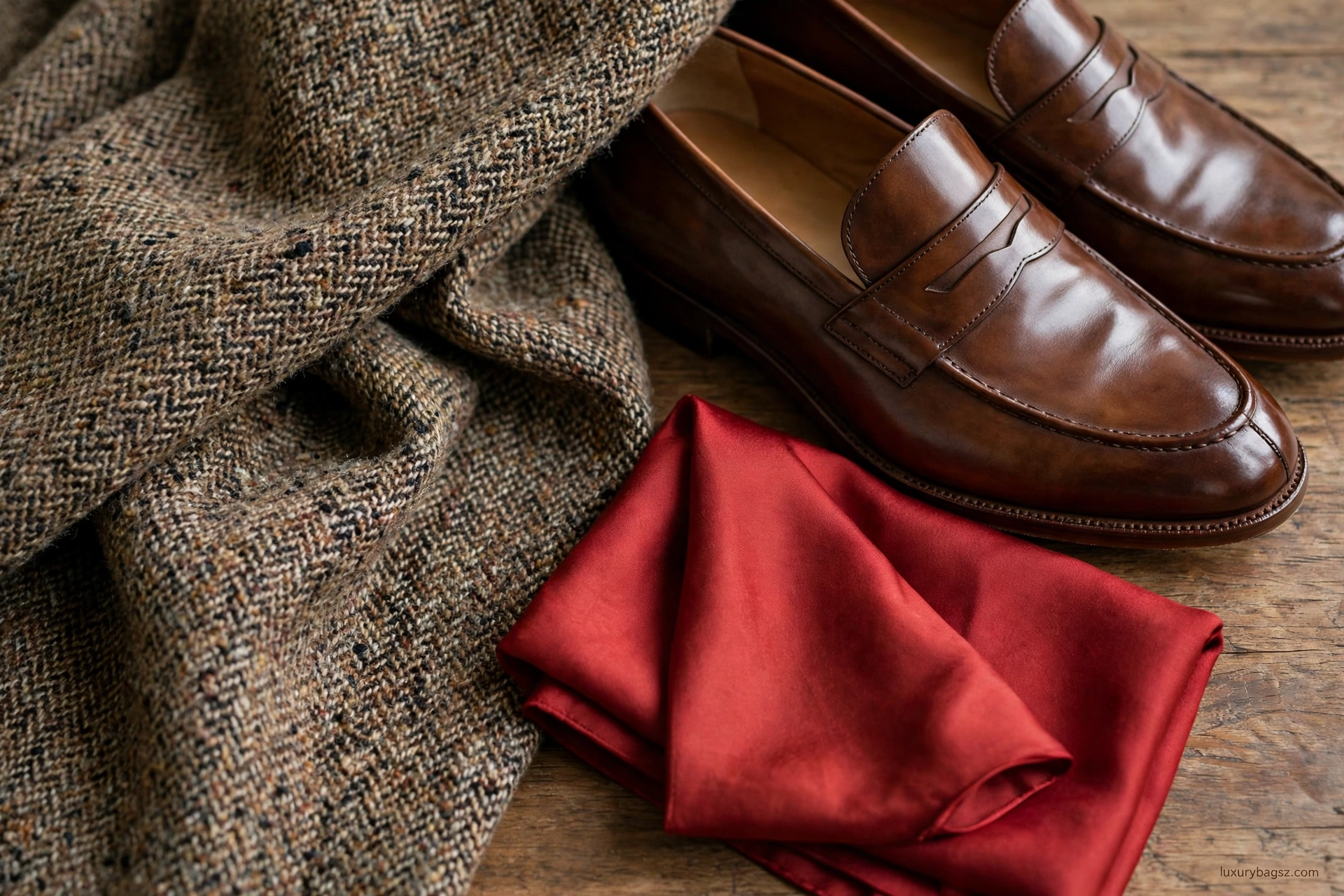
Gabardine, tweed and wool flannel are the classic trio. Cotton poplin shirts, knitted silk and polished calf leather finish the picture, and all of them age gracefully rather than tiring quickly. Details matter at close range: horn-look buttons, neat stitching, a check lining glimpsed inside a coat. Our guide to what to know about Burberry explains how those small signs became shorthand for quality. Avoid shiny synthetics for this look. Heritage dressing depends on matte, natural-feeling cloth; a glossy finish undoes the effect faster than any colour mistake.
Coat or Jacket: Choosing the Top Layer
A trench or longer coat suits dresses and formal lunches; a shorter jacket suits trousers, jeans and pub-garden afternoons. The plain-language explainer on coat versus jacket helps if you are choosing one buy for spring. Length is the practical test. A coat that ends below the knee keeps a dress dry and looks deliberate; a jacket that ends at the hip moves faster and feels younger. Whichever you choose, buy the best cloth you can. This is the piece the whole outfit is judged by, and a good one will serve a decade of Aprils, not just one bank holiday.
What to Avoid, and What to Do Instead
Avoid head-to-toe white in changeable weather; one shower turns it from crisp to troubled. Cream and stone carry the same freshness and forgive splashes far better. Avoid buying a themed outfit you will never wear again. Spend instead on the red scarf, the loafers or the trench, which earn their keep all year in other combinations. And avoid overdressing a daytime fete. Heritage style is deliberately relaxed: polished, yes, but never stiff. If you can sit on the grass in it, you have the level right.
Children join in easily here: a red hair ribbon, a white dress or shirt, and comfortable shoes for fetes and maypoles. Keep their version as wearable as your own.
Finally, photograph the outfit before you leave. Red can flare in bright phone light; if the accent overwhelms the picture, it will overwhelm the room as well.
Frequently Asked Questions
When is St George's Day?
It falls on 23 April each year, marking the feast day of England's patron saint. Town celebrations, parades and pub events usually cluster on the day itself or the nearest weekend.
What colours should I wear for St George's Day?
Red and white are the flag colours, worn best as accents on a calm heritage base of cream, navy, grey or tan. One clear red piece is usually enough to mark the day elegantly.
Can I wear a flag-print outfit?
You can, but it reads as costume rather than style. The heritage approach — tailoring plus a red scarf, shoe or bag — celebrates the same day and leaves you clothes you will wear again.
What is the most useful single piece to buy?
A trench coat in stone or honey. It handles April weather, smartens dresses and trousers alike, and sits at the heart of English heritage dressing for the rest of the year too.
Is tweed too warm for late April?
A light tweed jacket or skirt is usually fine, especially early and late in the day. Pair it with cotton or fine knit layers you can remove if the sun comes out properly.
What shoes work best for a parade day?
Loafers, brogues or clean trainers with a proper sole. You will stand and walk more than you expect, and wet pavements punish thin soles and high heels quickly.
How do I style red without looking themed?
Use red once, in a well-made piece: a silk scarf, leather loafers, a structured bag or a classic lip. Keep everything else neutral and let that single note do the talking.
Can men wear this look too?
Yes. The same logic applies: a trench or tailored jacket, a white or pale shirt, navy or grey trousers, polished shoes, and one red accent such as a knit tie or pocket square.
What bag suits heritage dressing?
A structured leather tote or top-handle bag in tan, black or deep red. It should hold an umbrella and a scarf without bulging, and it improves with age rather than dating.
How formal should I go for a pub celebration?
Smart-casual is the sweet spot: a good knit or shirt, tailored trousers or a midi skirt, and one red accent. Save full tailoring for formal lunches and civic events.
Final Verdict: Heritage First, Flag Second
St George's Day style works when the English wardrobe does the heavy lifting — trench, tailoring, knitwear and polished leather — and red and white arrive as one clear, cheerful accent. Build it from pieces you already rate, dress for April weather, and the result celebrates the day without a single costume note.