

Missoni Legacy and Designs: Zigzags, Knitwear and Italian Colour
Missoni in Brief: How Knitwear Became High Fashion
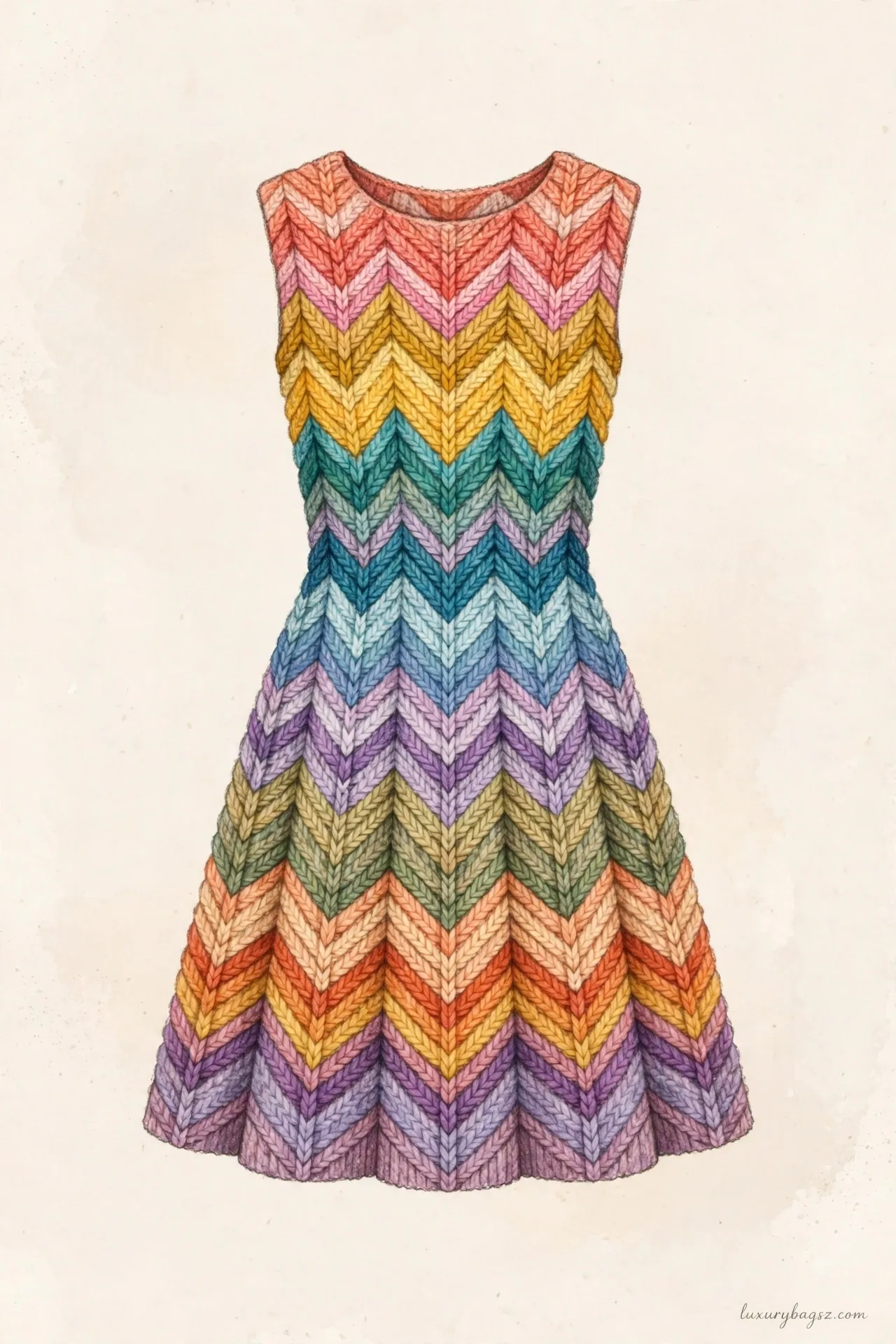
Missoni is an Italian fashion house founded in 1953 by Ottavio and Rosita Missoni, famous for colourful zigzag, stripe and wave knits that turned knitwear into high fashion. Before Missoni, knitted garments were largely practical. After Missoni, they could be couture: light, fluid, patterned in dozens of colours, and instantly recognisable from across a room.
The house began in a small workshop in Gallarate, near Milan, and grew through fashion editors, a famous Florence show and American recognition. Rosita died in 2025 aged 93, closing the founding generation, but the zigzag endures under family leadership. This guide explains the history, the designs that matter, and how to buy and care for Missoni without overpaying.
Key Takeaways
- Missoni was founded in 1953 by Ottavio and Rosita Missoni in Gallarate, Italy.
- Ottavio was an Olympic hurdler who first made tracksuits for the Italian team.
- The signature zigzag came from reworked Raschel knitting machines in the early 1960s.
- Space-dyed yarns, dyed in several colours along one thread, give Missoni knits their depth.
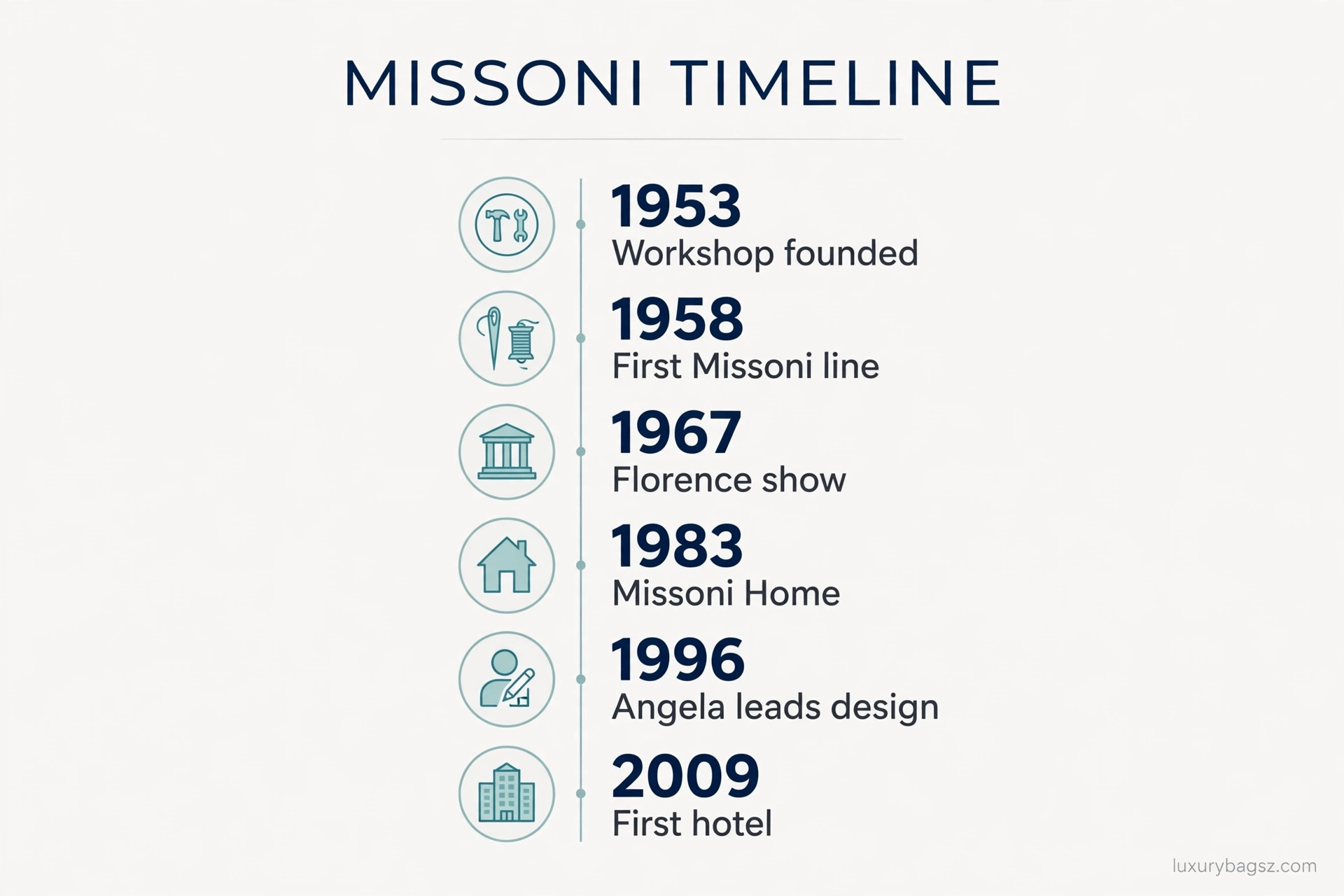
- The first Missoni-named line appeared in 1958; the Florence show in 1967 brought fame.
- Angela Missoni took over design in 1996; Missoni Home launched in 1983.
- Buy classic zigzags and stripes first; care for knits gently to keep shape and colour.
An Athlete, a Textile Family and a Small Workshop
Ottavio Missoni, known as Tai, was born in 1921 in Dubrovnik, then Ragusa, on the Dalmatian coast. He joined the Italian national track team at 16, won national titles, and competed as a hurdler at the 1948 London Olympics. Rosita Jelmini, born in 1931 in Golasecca, Lombardy, came from a textile manufacturing family and understood cloth, shape and production from childhood.
The couple met in London in 1948 and married in 1953. That same year they set up a machine-knitwear workshop in Gallarate and called it Maglificio Jolly. Ottavio brought colour and pattern instinct, shaped by art, textiles and athletic design, while Rosita developed shapes and the practical side of making. Early garments went out unsigned, supplied to boutiques and to La Rinascente in Milan.
Their first product was athletic: tracksuits for the Italian Olympic team, with zipped legs that Ottavio is credited with introducing, so athletes could change without removing shoes. It was a practical detail, but it showed the house's method from the start: solve a real problem, then make the solution beautiful. Knitwear, not tailoring, would become their language.
Raschel Machines, Flame Stitch and the Birth of the Zigzag
The breakthrough came from machines, not marketing. Raschel knitting machines had traditionally been used by Lombard weaving mills for shawls with arabesque designs. The Missonis reworked them to knit light, colourful fabrics at clothing weight, using a flame-stitch technique known as fiammata. The result was a zigzag: sharp or soft chevrons in many colours, with a hand-made, almost embroidered feel.
Sources disagree slightly on the date, and honesty requires saying so. Some histories place the first zigzag in 1962, when the Raschel technique produced the new pattern, while the Missoni archive places the first zigzag pattern in the autumn-winter 1967 collection. The difference likely reflects development versus first collection use, but buyers should not quote a single year as settled fact without that caveat.
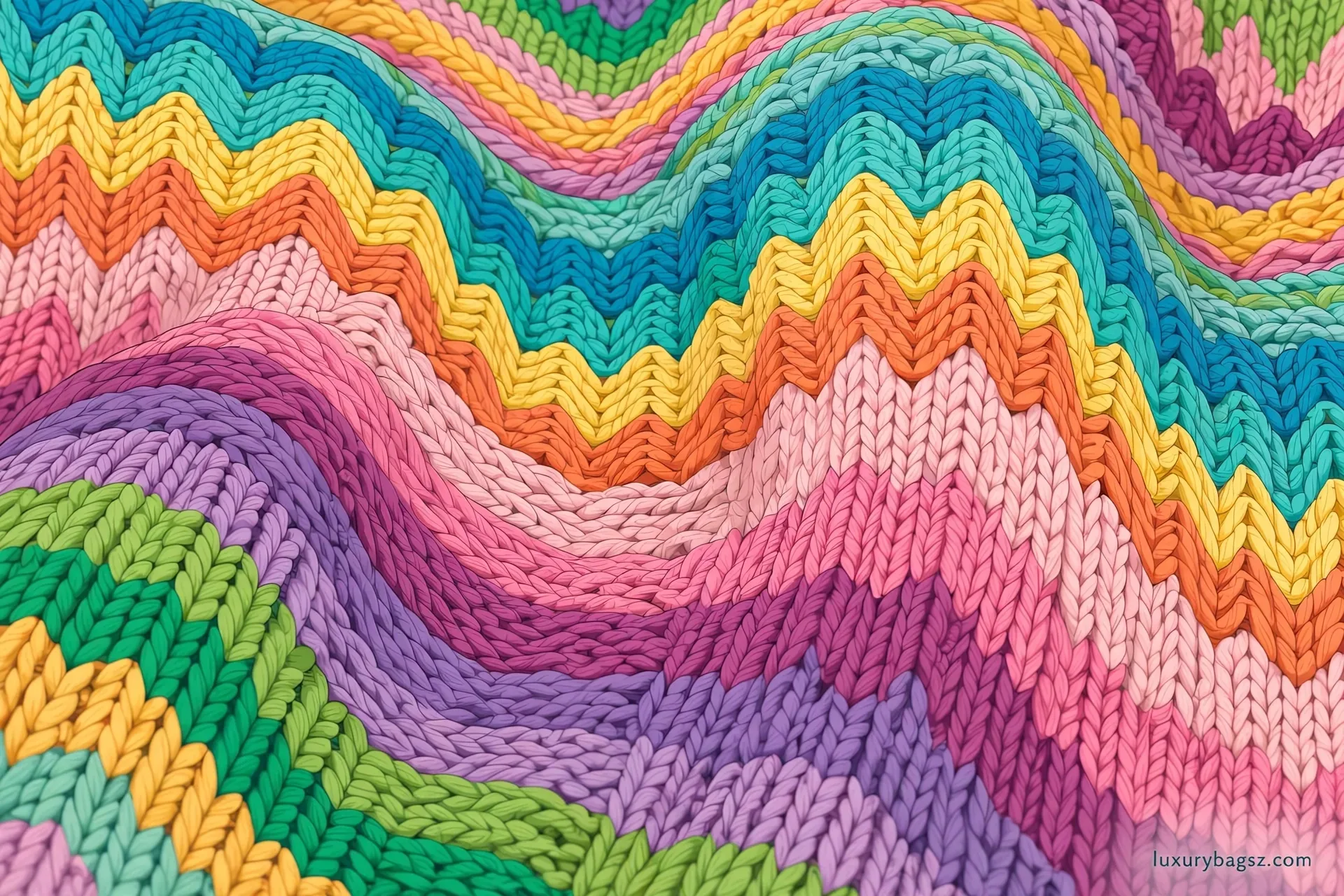
Space-dyed yarns added depth. By dyeing a single thread in several colours along its length, the Missonis created unpredictable, shimmering patterns that no flat print could copy. Stripes, waves, chevrons and mosaics followed, all built from the same knit logic. The pattern was not applied to cloth afterwards; it was the cloth itself, which is why genuine Missoni knits feel different from printed copies.
Florence, Vogue and the Put-Together Look
In 1958 the first pieces carrying the Missoni name appeared in La Rinascente's windows: vertically striped shirtdresses in colour. By the mid-1960s fashion editors were paying attention. Anna Piaggi, then at Arianna magazine, championed the brand, and in 1965 Rosita's meeting with stylist Emmanuelle Khanh in New York led to new collaborations and exposure.
The famous turning point came at the Pitti Palace show in Florence in 1967. Rosita asked models to remove their bras under sheer Lurex blouses, since the bras showed through and clashed in colour. The sheer effect under the lights caused a sensation and, briefly, a scandal, but it also brought international press. Diana Vreeland at American Vogue gave the house her approval, reportedly saying that a rainbow has many shades, not only seven.
By the early 1970s Missoni had a Bloomingdale's boutique in New York, and Vogue described the house's layered, mix-and-match knits as the "put-together" look. In 1972 the New York Times called Missoni knitwear an international status symbol, comparable to Vuitton bags and Gucci shoes. A 1978 retrospective at New York's Whitney Museum confirmed that knitwear had entered the art conversation, not just the fashion pages.

The Designs That Define Missoni
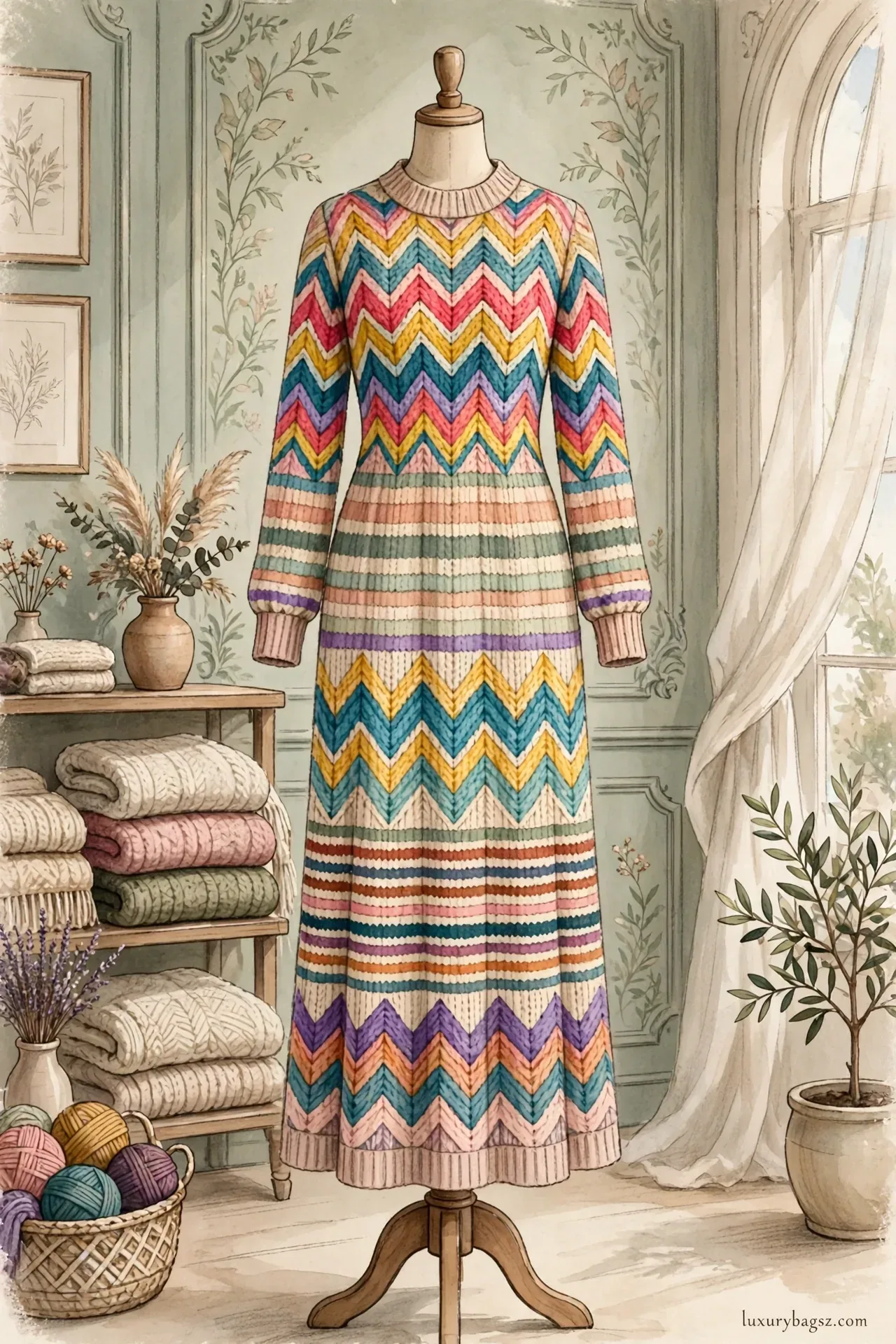
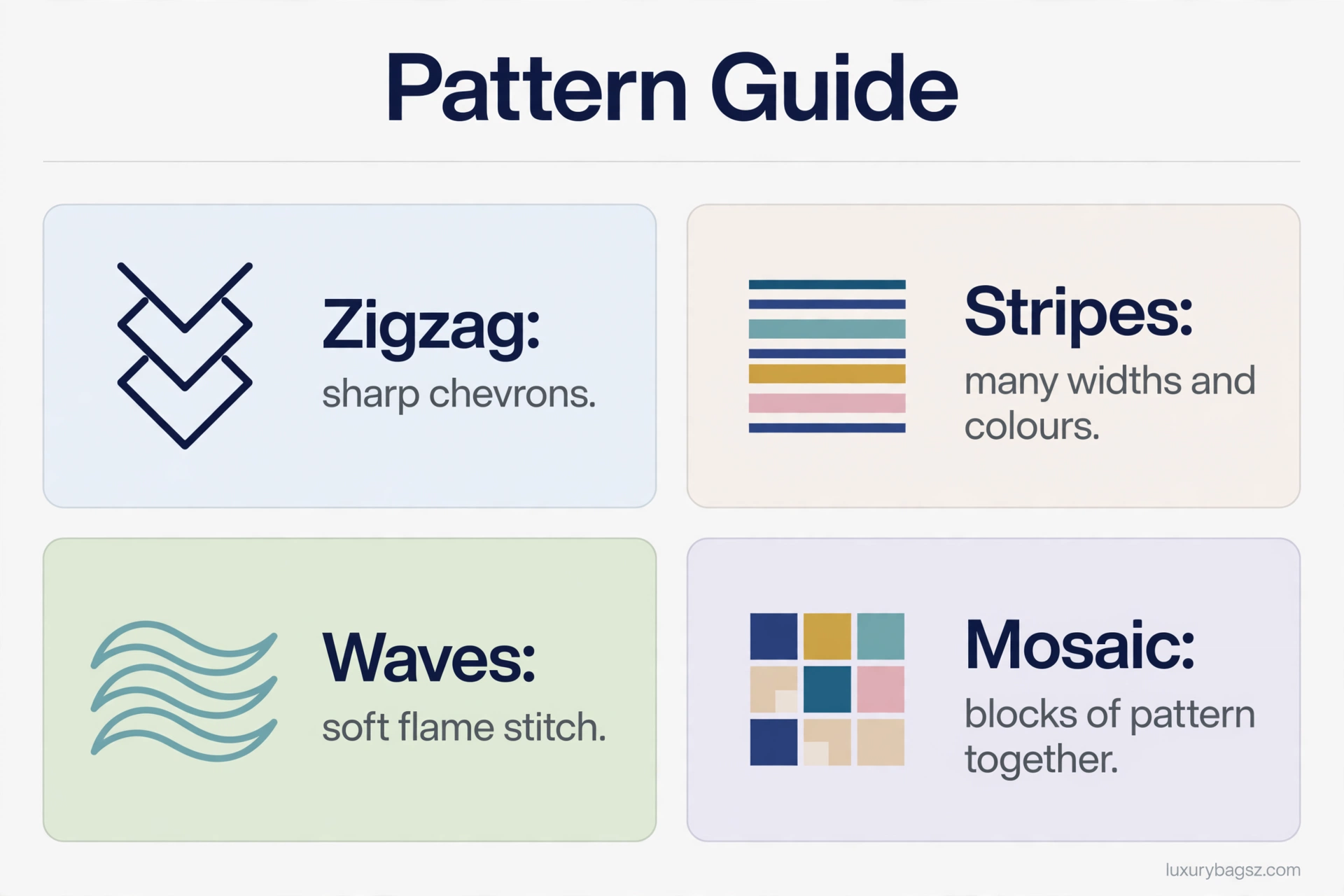
Four design ideas define Missoni, and recognising them helps you shop well. First, the zigzag, in sharp or softened chevrons, remains the house signature. Second, stripes, in many widths and colours, often layered with zigzags in a single garment. Third, waves and flame stitches, softer and more fluid than the zigzag, used for dresses and shawls. Fourth, patchwork and mosaic effects, where blocks of pattern sit together like a textile collage.
Colour is the thread through all four. Ottavio compared colour to music: only seven notes, yet endless songs. Missoni garments often use dozens of colours in one piece, but the effect is harmonious rather than chaotic, because the knit structure holds the colours together. Later designers softened the palette at times, with pared-back colours and architectural silhouettes, but the house never abandoned colour entirely, and a Missoni piece without colour would feel like a contradiction.
Beyond clothing, the pattern travelled. The first fragrance arrived in 1982, Missoni Home followed in 1983 under Rosita's direction, and the zigzag appeared on interiors, beachwear, swimwear and even car interiors and La Scala opera costumes, with more than 100 costumes made for Milan's Teatro alla Scala in 1983. The first Hotel Missoni opened in Edinburgh in 2009, taking the pattern from wardrobe to room.
Family Leadership, Home and the House Today
In the 1990s Ottavio and Rosita passed creative leadership to their children. Angela Missoni took over design in 1996 and led the house for more than two decades, while Luca and Vittorio ran the company side. Rosita focused on Missoni Home, bringing zigzag cushions, throws and furniture into interiors, and the family closeness remained part of the brand's public identity.
Rosita died in January 2025 aged 93, and Ottavio had died in 2013. Their passing closed the founding era, but the house continues as a family business with the same codes: knit-led design, Italian making and colour as identity. Recent collections under Alberto Caliri and later designers have balanced heritage zigzags with quieter palettes, aiming to keep the house relevant without turning it into a logo brand.
For shoppers, the practical point is that Missoni is a knitwear house first. A Missoni dress, cardigan or scarf should be judged on knit quality, colour depth and drape, not on hardware or logos. If a piece feels like a printed copy of a zigzag rather than a knitted one, it probably is a copy or a diffusion piece, and the price should reflect that.
Care, Fit and How to Wear Colour Without Fear
Missoni knits need gentle care to keep shape and colour. Hand wash in cool water with a mild detergent, or follow the care label exactly for wool, cotton, linen, rayon and silk blends, since Missoni uses many fibres. A guide to care for designer clothing covers storage, rotation and professional care, while a guide to clean cotton linen silk helps with natural-fibre pieces.
Dry knits flat, never on a hanger while wet, since wet knit stretches under its own weight. Fold rather than hang heavy knit dresses and cardigans, store with cedar or lavender rather than mothballs, and keep pieces out of direct sunlight, which fades the very colours you paid for. For stains, blot rather than rub, and take valuable pieces to a cleaner experienced with knitwear rather than risking a home remedy.
Fit is fluid by design. Missoni knits drape and stretch, so size by shoulder, length and overall drape rather than by a tight body measurement. Try the piece sitting and standing, since a knit dress that looks perfect standing can ride up or pull when seated. For colour confidence, start with one Missoni piece, such as a scarf or cardigan, worn with neutrals, before committing to a full head-to-toe zigzag outfit.
Buying Pre-Owned Missoni and Avoiding Copies
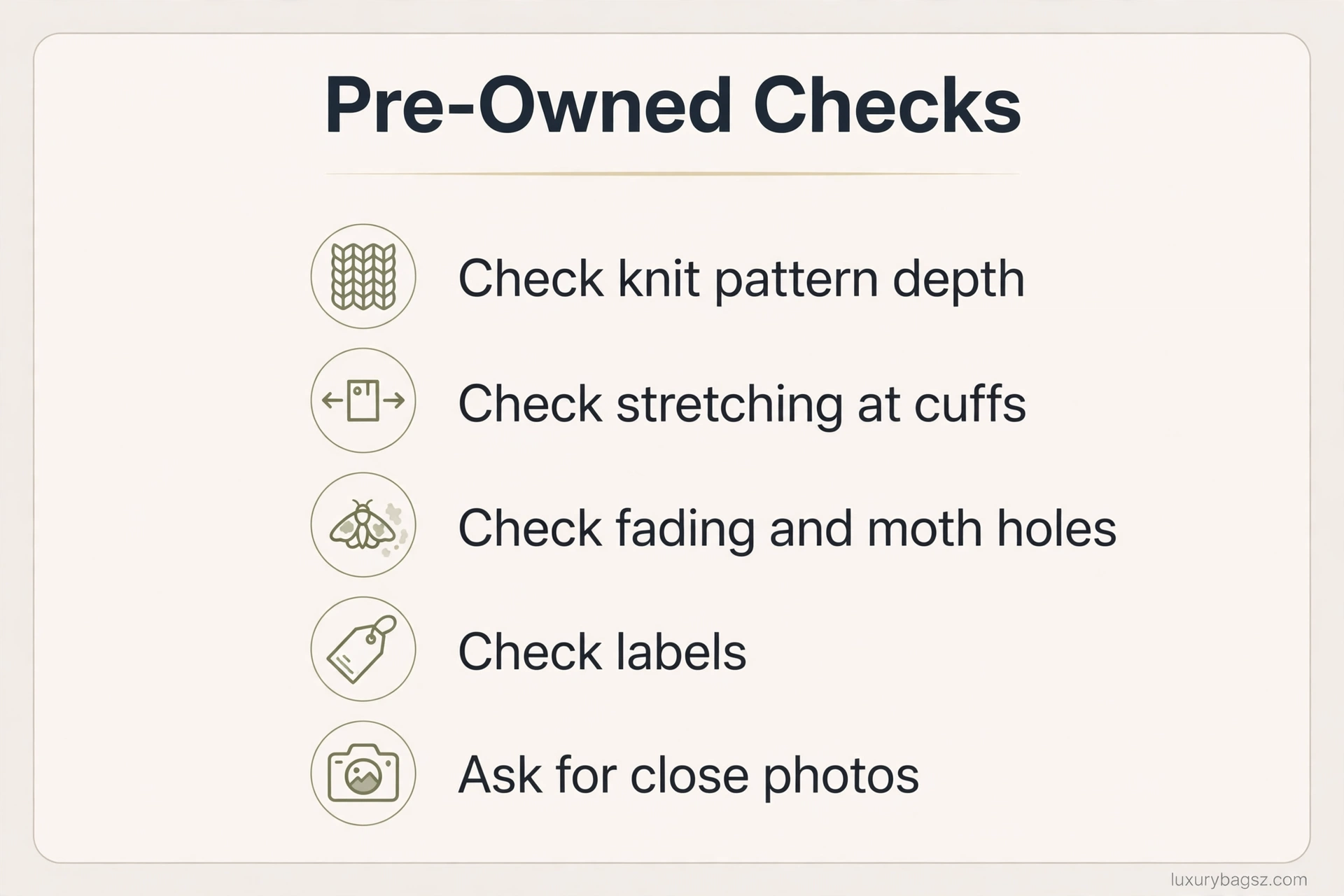
Pre-owned Missoni can be excellent value, especially for classic zigzag dresses, cardigans and scarves. Check the knit first: genuine Missoni knits show pattern woven into the fabric, with depth and slight variation, while printed copies look flat and repeat too perfectly. Check seams, hems and linings, and look for stretching at elbows, cuffs and hems, which is the most common wear on knitwear.
Ask for the label, care label and any dust bag, and for close photos of the pattern, since fakes often get the zigzag rhythm wrong. Check for fading, moth holes, pulls and repairs, especially on light colours and open knits. A small, well-repaired pull may be acceptable at a lower price, but moth damage and heavy fading are hard to reverse and should reduce the price sharply or end the deal.
Be wary of pieces that claim to be Missoni but use only a zigzag print on a non-knit fabric. The house's value lies in knit craft, and a printed zigzag, however bright, is not the same product. Finally, remember the wider fashion context: a guide to quiet luxury explains why loud patterns divide opinion, while a history of fast fashion shows why well-made knitwear, kept for years, is the opposite of disposable fashion. Buy Missoni to keep, not to wear once.
Frequently Asked Questions
When was Missoni founded?
Missoni was founded in 1953 by Ottavio and Rosita Missoni, who set up a knitwear workshop called Maglificio Jolly in Gallarate, Italy.
What is Missoni famous for?
Missoni is famous for colourful zigzag, stripe and wave knitwear, made with space-dyed yarns and Raschel knitting techniques.
When did the zigzag first appear?
Sources differ: some histories give 1962 for the Raschel zigzag technique, while the Missoni archive places the first zigzag pattern in the autumn-winter 1967 collection.
Who were Ottavio and Rosita Missoni?
Ottavio was an Olympic hurdler and pattern colourist; Rosita came from a textile family and developed shapes. Together they built the house from a small workshop.
What are space-dyed yarns?
Yarns dyed in several colours along a single thread, giving Missoni knits unpredictable, shimmering colour depth that flat prints cannot copy.
When did Angela Missoni take over design?
Angela Missoni, the founders' daughter, took over design in 1996 and led the house for more than two decades.
What is Missoni Home?
Missoni Home, launched in 1983 under Rosita's direction, brings the house's patterns into interiors, including cushions, throws and furniture.
How should I wash Missoni knitwear?
Hand wash in cool water with mild detergent where the label allows, dry flat, fold rather than hang heavy knits, and keep pieces out of direct sunlight.
How do I spot a fake Missoni knit?
Genuine Missoni pattern is knitted into the fabric with depth and variation. Printed copies look flat, repeat too perfectly, and often get the zigzag rhythm wrong.
Is pre-owned Missoni worth buying?
Yes, for classic zigzags in good condition. Check knit quality, stretching, fading and moth damage first, and pay less for repaired or faded pieces.
Conclusion: Colour, Knit and Joy That Lasts
Missoni's legacy is not a single dress or a single season. It is a way of making cloth: Raschel machines reworked, yarns dyed in many colours, and patterns knitted into the fabric itself rather than printed on top. That craft turned knitwear from practical clothing into a joyful, artistic language.
Buy the classic zigzag first, care for it gently, and wear it with neutrals while you learn its colour. A Missoni piece kept for years, washed with care and worn with confidence, honours Ottavio and Rosita's original idea far better than any trend purchase: colour, made by hand and machine together, for everyday life.






