

The Gladiator Sandal Comeback: How to Wear the Returning Style
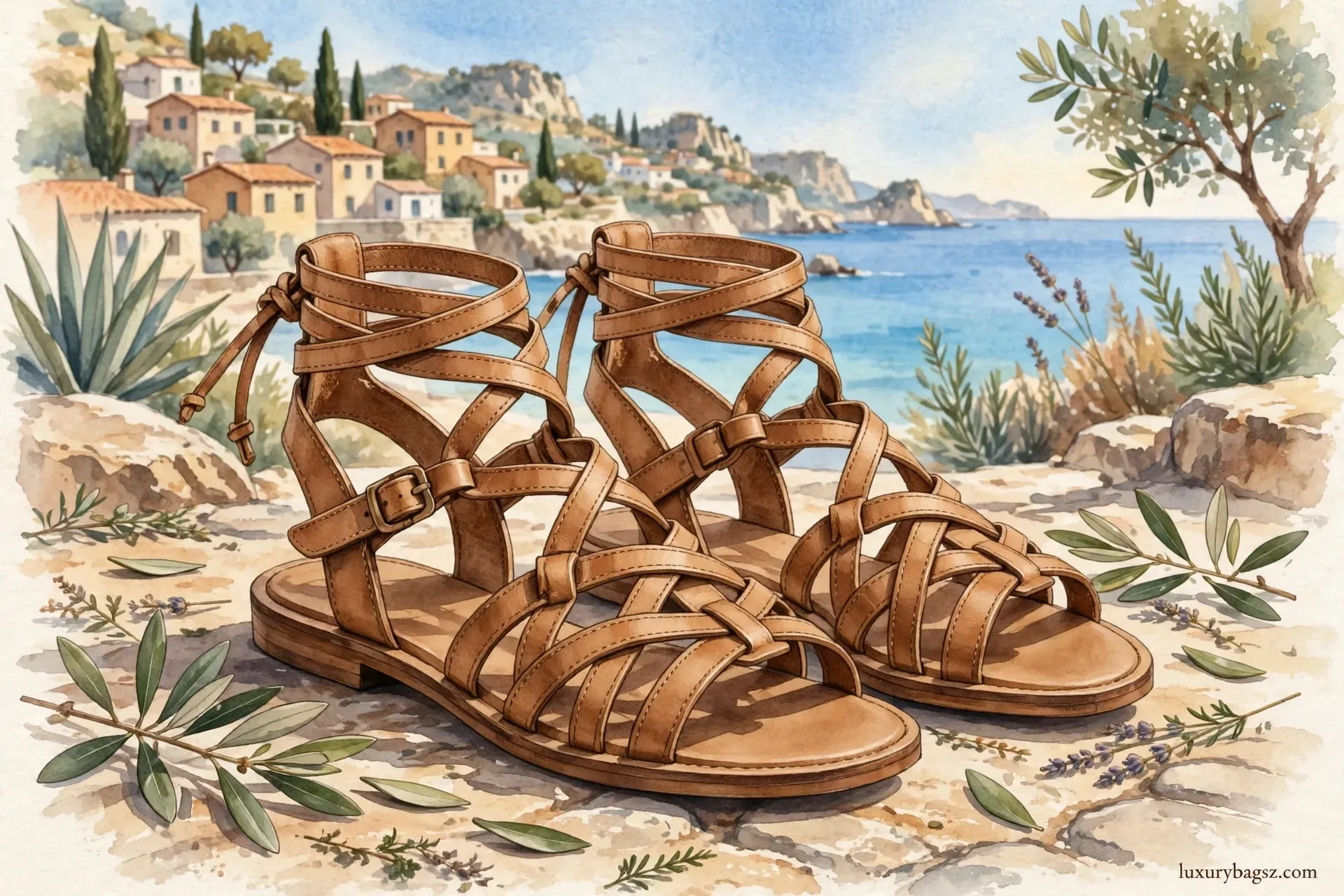
Gladiators Are Back: Softer, Higher and Easier to Wear
Gladiator sandals are back because summer dressing has swung towards statement footwear again, and the modern return is softer than the 2000s version: thinner laces, lower shafts for everyday pairs, metallic and nude leathers, and back zips that make tall styles genuinely easy to put on.
Wear them as the outfit's main event. Short hems, simple dresses and plain tailoring give the lacing room to show; busy patterns and long hems fight it. Flat ankle-height pairs are the everyday buy, knee-high versions the holiday and evening statement.
Key Takeaways

- The comeback version uses finer straps, softer leather and zips for easier wear.
- Ankle and mid-calf heights are the versatile buy; knee-high is the statement.
- Short hems and simple silhouettes show the lacing best.
- Lace from loose at the toes to snug at the top, and tie at the back or side.
- Metallic and tan leathers wear more easily than black at tall heights.
- Store laces untied and loosely coiled so they do not set in knots or kinks.
Why the Style Has Returned
Fashion cycles bring back strong silhouettes once enough time has passed for them to feel new again. Gladiators fit the current mood for visible craftsmanship and shoes that carry an outfit alone.
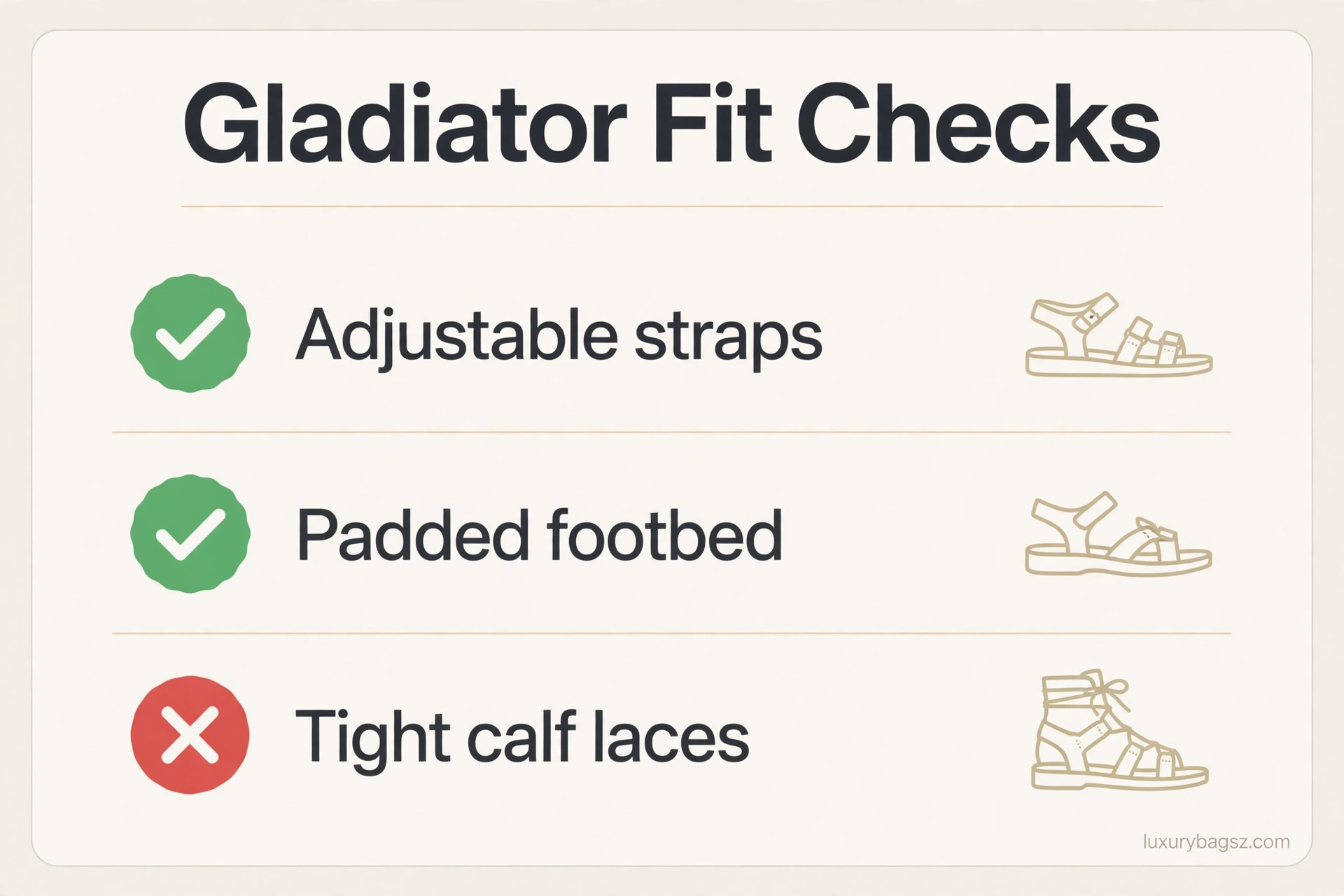
Designers have also fixed the old complaints. Softer leather, padded footbeds and hidden zips answer the rubbing and the ten-minute lacing sessions that put people off last time.
The result is a style that reads as a deliberate throwback rather than a costume, especially in the flatter, finer versions most brands are leading with.
From Ancient Arenas to the 2000s Wave
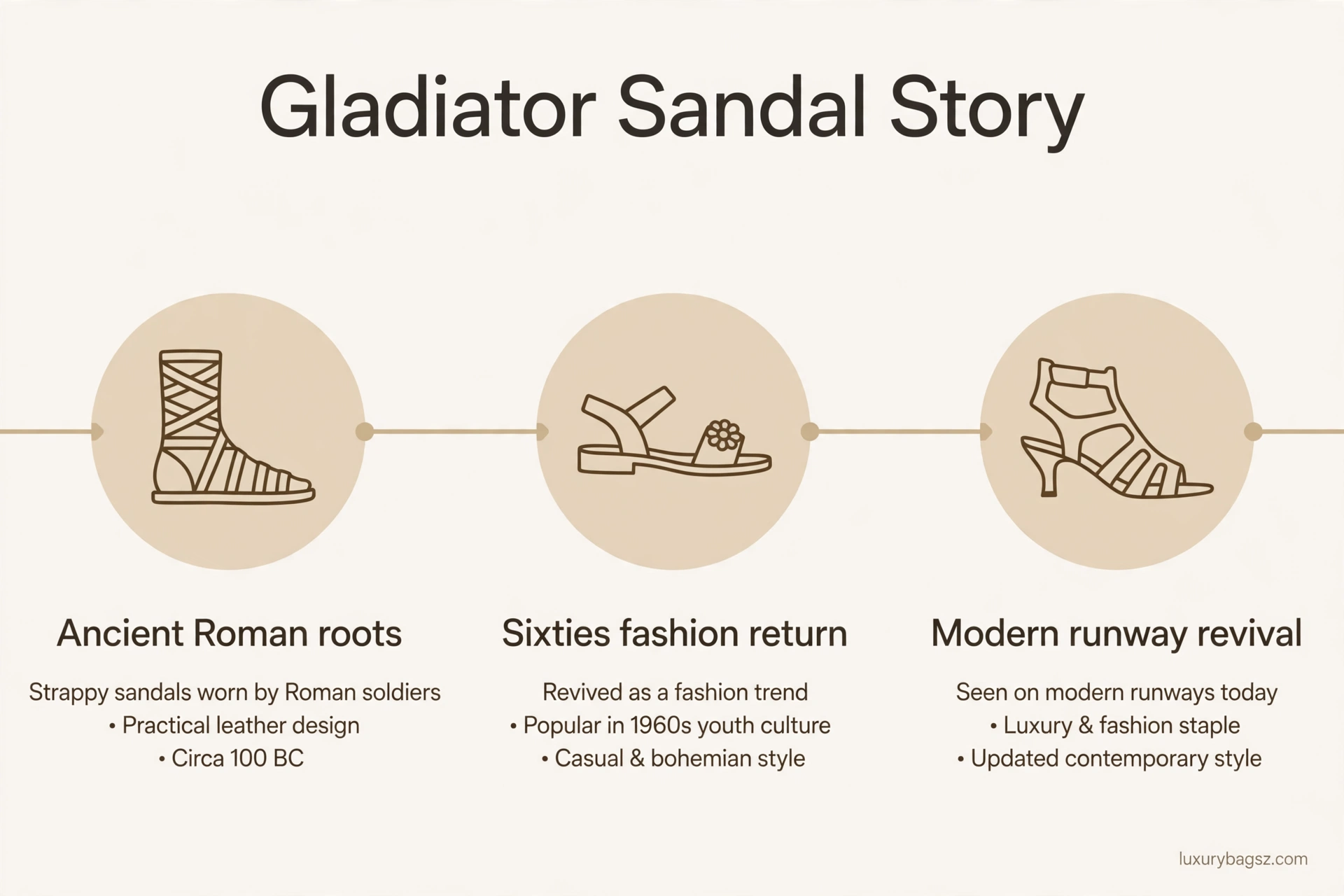
The shape descends from the strapped sandals of ancient Rome, built for soldiers and, yes, arena fighters, which is where the name comes from. Straps were function first: they held a sole on a marching foot.
The modern fashion version arrived in waves, biggest in the 2000s when knee-high laced styles were everywhere, then retreated as minimal sandals took over summer dressing.
This return keeps the drama but softens the execution. Knowing the history helps styling too: the sandal has always been the outfit's focus, never its background.
The Styles in This Comeback
Flat ankle gladiators are the entry point: a few straps, an easy sole, and enough detail to lift shorts, dresses and linen tailoring. Mid-calf versions add presence without the full commitment.
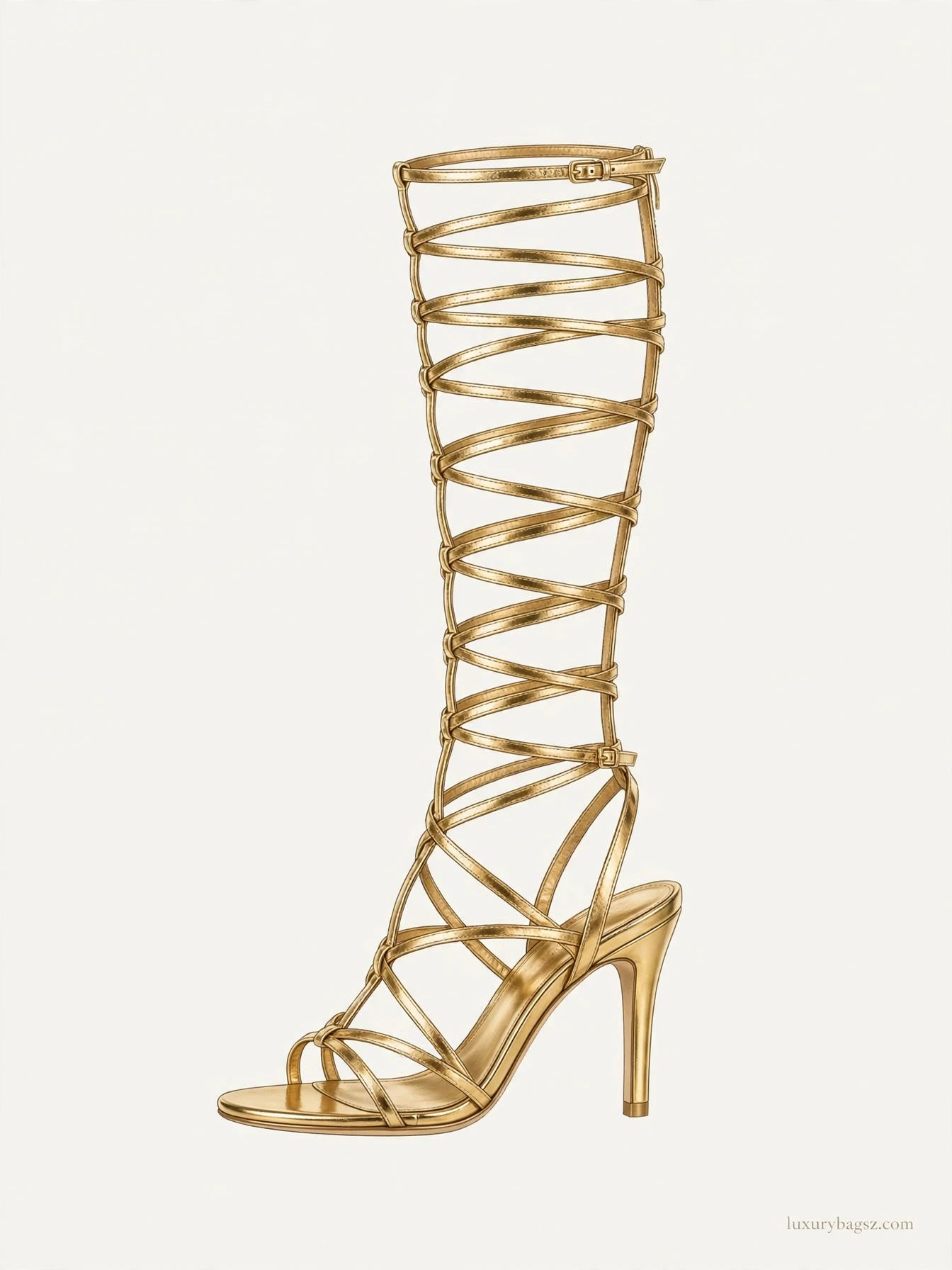
Knee-high flats are the holiday hero, worn with short dresses and swim cover-ups. Heeled gladiators, like those in our fairytale and special-occasion shoes roundup, belong to evenings and events.
Platform and woven variations also appear this cycle. For a different statement-sandal direction entirely, the sculptural straps of saint laurent tribute sandals show how one strong sandal can anchor a wardrobe.
Choosing Height and Colour
Choose shaft height by leg and lifestyle. Ankle styles suit everyone and every day; mid-calf flatters most legs; knee-high makes the strongest statement and asks for shorter hems.
Tan and nude leathers lengthen the leg because the straps blend with skin. Metallics, especially soft gold, turn the sandal into evening wear without extra jewellery.
Black at knee height is the boldest and least forgiving option. It works with pale or very simple outfits, but it can visually shorten the leg on shorter frames.
Styling Formulas That Work
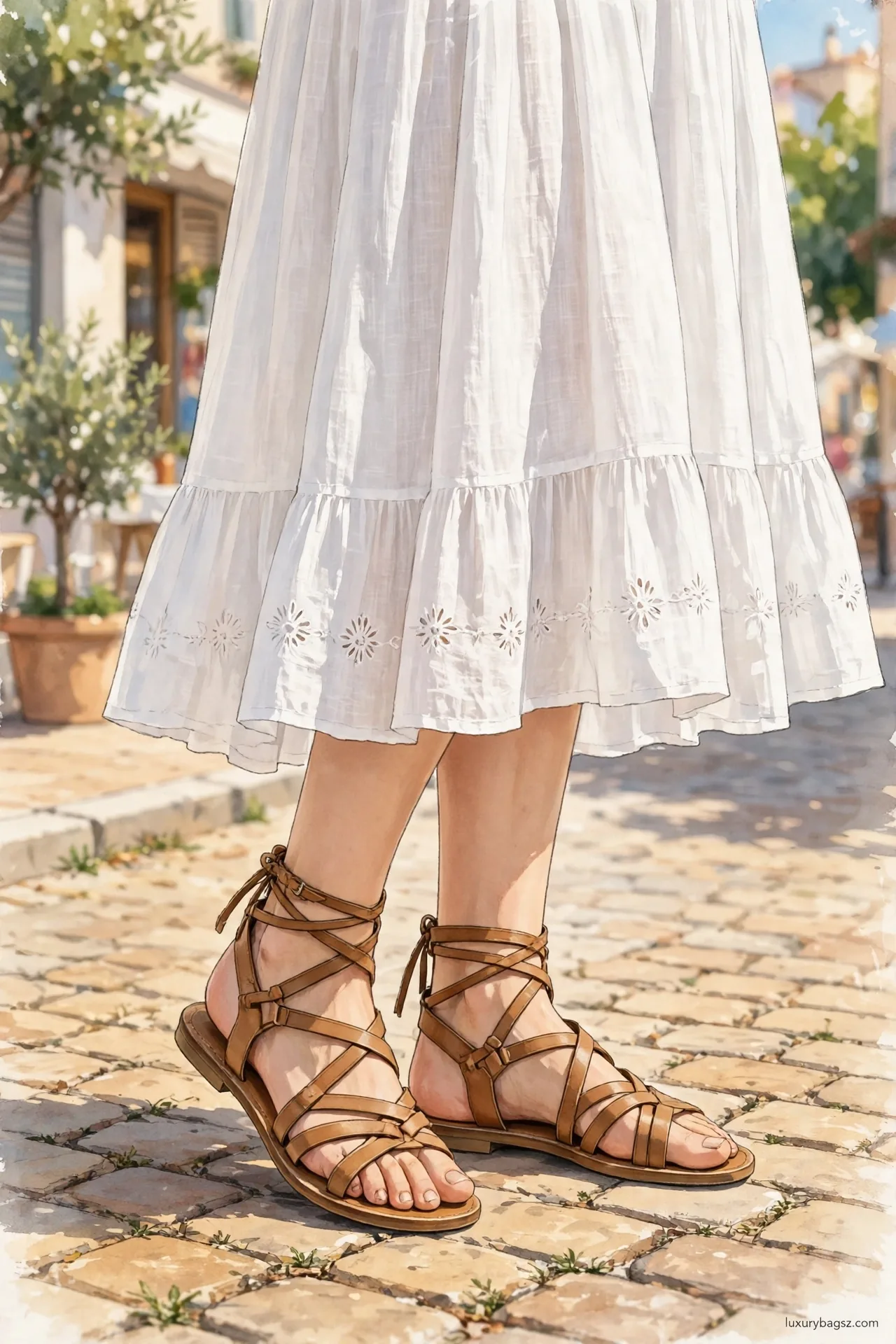
Keep the clothes simple and the hem short: white dresses, denim shorts, plain minis and clean shirt dresses all give the lacing a clear stage. One statement at a time is the rule.
Maxi dresses work with a slit that lets the sandal show as you move. Flat gladiators under a flowing maxi is the classic holiday formula and still the easiest one to wear.
For a modern contrast, pair them with soft tailoring, such as loose linen trousers cropped above the ankle strap. The mesh-and-strap direction of fendi colibri sandals shows the same appetite for detailed summer footwear.
Fit and Lacing, Done Properly
Lace tall styles from the bottom up: loose over the toes and midfoot, gradually snugger towards the top, finishing at the back or side of the calf so the knot does not press the shin.
Feet swell in heat, so fit gladiators in the afternoon and leave a little give in the lacing. If you are between sizes in strappy sandals generally, the method in our hermes oran sandals sizing guide for judging strap fit applies here too.
Zip-back styles are the practical luxury: lace them once to your leg, then use the zip daily. It is the single feature that most improves on the 2000s originals.
Care for Straps and Laces
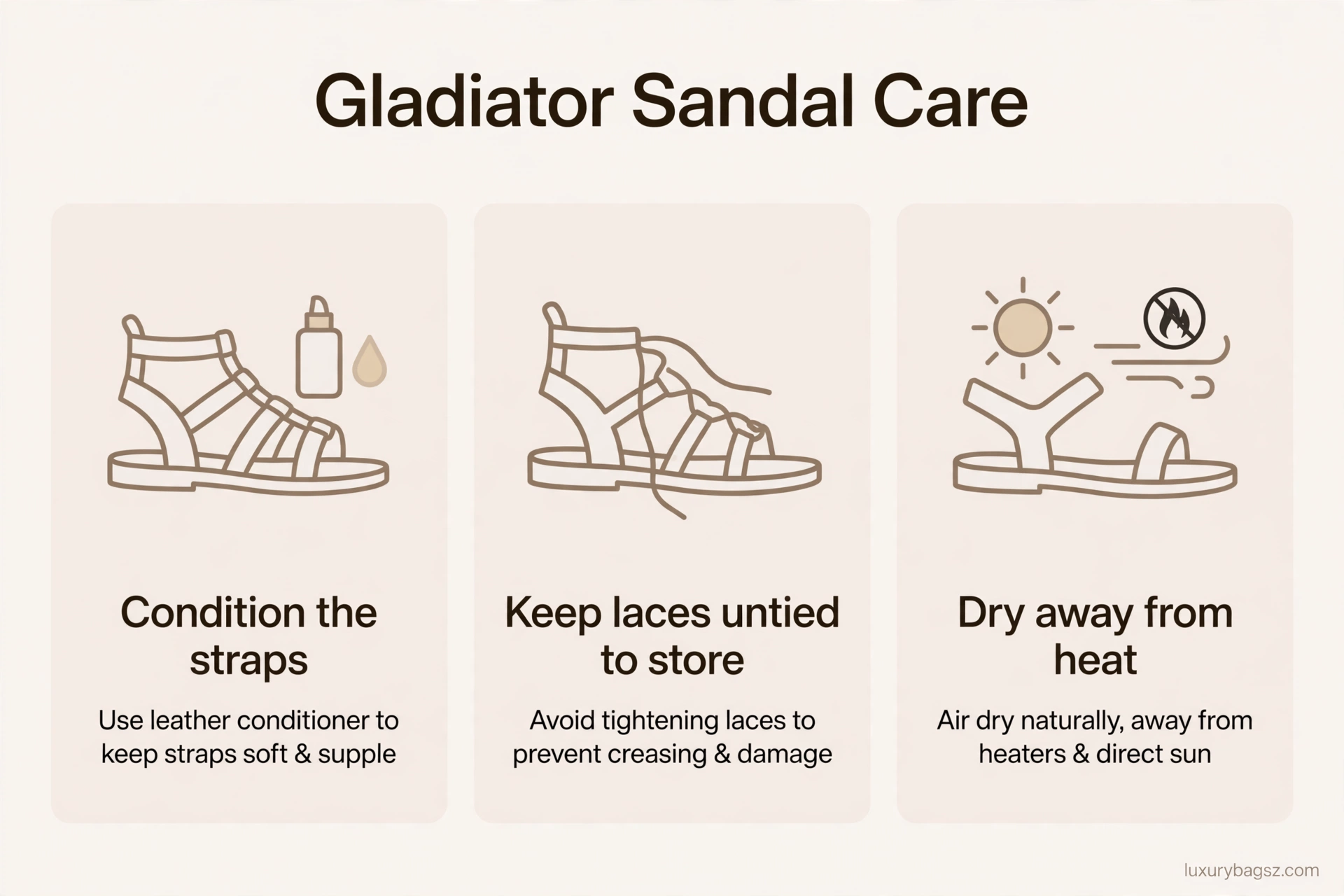
Straps collect sun cream and dust in their creases. Wipe between straps with a soft cloth after wear, and clean leather laces gently rather than soaking them.
Condition thin leather straps sparingly so they stay supple without going floppy. Dry wet sandals slowly and away from direct sun, which cracks fine straps fastest.
Store tall gladiators with laces untied and loosely coiled inside the shaft, or hung by their top strap. Knots left in over winter set into kinks that never quite straighten.
Prices, and the Simpler Alternative
Designer gladiators typically run from around $700 to $1,300, with knee-high and embellished styles at the top. Strong high-street and contemporary versions sit nearer $120 to $350.
Because the style is cyclical, cost per wear depends on choosing a height and colour you will still love in the quieter years between waves. Tan ankle flats age the most gracefully.
If straps prove too much fuss, the flat leather slide is the minimalist cousin; our explainer on what are Hermes Oran sandals covers the most famous version of that simpler summer staple.
Leg Flattery: Strap Placement and Visual Lines
The old fear that gladiators thicken legs comes from specific versions, not the style itself, and the fixes are optical. Thin straps flatter where wide bands cut: several fine lines let the leg read through, while one broad horizontal band at the calf’s widest point draws a line exactly where you least want the eye to stop.
Height placement works the same way. An ankle-height pair ends the visual line at the narrowest point of the leg, which is why this guide calls it the versatile buy. Higher lacing flatters most when the top tie sits just below the knee or at the calf’s narrow point above its swell, never strapped tight across the fullest part.
Colour completes the trick, as the colour advice earlier noted: nude and tan laces extend the leg’s line, metallics distract beautifully, and black knee-highs on shorter legs accept a shortening effect in exchange for drama, a trade to make knowingly rather than discover in photographs.
Petite wearers get the most from the finest straps, the lowest shafts and monochrome dressing, where top and hem share a colour and the sandal becomes the outfit’s single interruption. The style is not off-limits to any leg; it is a dial, and these are its settings.
Studs and Metallics: The Designer Dialects of This Return
This cycle speaks two designer dialects worth recognising. The first is the Roman-stud language, made famous by Valentino’s Rockstud gladiators, which ran from ankle to knee height for years: neat straps punctuated by pyramid studs, equal parts jewellery and armour, and endlessly copied at every price.
The second is the metallic goddess treatment seen across recent runways, gold and silver lacing worn with matching metallic dresses for a full ceremonial effect. At real-life scale it reduces gracefully: one metallic pair turns a plain white or black dress into an evening outfit with no other accessories required.
Studded versions sit between the two, borrowing the 2000s energy this guide’s history covered and the current taste for embellished, feminine footwear after seasons of minimal sportiness. Choose your dialect by wardrobe: studs for denim and boho dressing, plain fine lacing for minimalists, metallics for event dressing.
Copies of the famous studded designs flood the market each cycle, so buy on leather and construction rather than the silhouette alone; a badly made studded sandal sheds its studs and its dignity within a season.
Office Hours and Wedding Aisles: Where Gladiators May Go
Gladiators remain warm-weather casualwear at heart, but the finer versions have earned two formal passports. For offices with relaxed summer codes, a neat ankle gladiator in tan or black leather, worn with tailored trousers or a midi dress, reads as a deliberate sandal rather than beachwear, provided the straps are slim and the sole is finished, not rubber.
Strict dress codes still exclude them, and no sandal survives a truly formal workplace; judge by what your office’s most senior person wears in August rather than by the trend pages.
As a wedding guest, flat or heeled gladiators in metallic or nude leather suit outdoor, garden and destination weddings beautifully, where they also solve the grass problem that stiletto heels cannot. Keep the lacing height moderate for daytime ceremonies, and let knee-high versions belong to evening parties rather than the aisle.
The black-tie boundary stays firm: a closed, elegant shoe remains the correct answer there, and the gladiator’s charm is precisely that it belongs to the freer hours. Worn where it belongs, it never looks like it is trying to be somewhere else.
All-Day Survival: Footbeds, Rubbing and Swelling
A laced sandal’s comfort is decided where straps meet skin across a whole day, not in a shop’s two minutes. Feet swell in heat, so a pair laced perfectly at breakfast can tourniquet by afternoon. Laces are the answer rather than the problem: unlike fixed straps, they can be loosened a notch as the day warms, one of the original military virtues of the design.
Choose footbeds with some padding and a leather top layer for long wear; dead-flat fashion soles transmit every pavement through the ball of the foot by evening. Comfort-focused makers now build gladiators on contoured, supportive soles, and the style survives the engineering intact.
Pre-wear new pairs at home, identify the two or three straps that rub, and condition those spots with a leather softener or a discreet gel strip before the first full day. Blister prevention aimed at specific straps works; hoping does not.
Travel is the style’s examination: one flat gladiator pair covers sightseeing, beach paths and evening dresses in a single suitcase slot. Pack them laced loosely around clothing to hold their shape, and they justify the space better than three lesser sandals combined.
Frequently Asked Questions
Are gladiator sandals in fashion again?
Yes. They have returned in softer, finer versions, with flat ankle styles leading the comeback and knee-high pairs as the statement option for holidays and evenings.
Who suits knee-high gladiator sandals?
They suit most people when the lacing is fine and the colour is tan, nude or metallic. Shorter hems are essential, and softer tones avoid visually shortening the leg.
How do I stop gladiator laces slipping down?
Lace snugly at the top, finish with the knot at the back or side of the calf, and choose styles with a back zip so the lace tension stays set once adjusted.
Can I wear gladiator sandals to a wedding?
Heeled metallic or embellished versions work for summer weddings, especially outdoors. Keep the rest of the outfit plain, and avoid very tall black styles with formal dresses.
Are gladiator sandals comfortable for walking?
Flat versions with padded footbeds can be, once laces are adjusted properly. Very tall lacing can rub on long walks, so save knee-high pairs for shorter distances and events.
What do gladiator sandals go with?
Short dresses, shorts, shirt dresses and slit maxis in plain fabrics. The sandal is the detail of the outfit, so avoid competing patterns and heavy accessories.
How much do designer gladiator sandals cost?
Typically around $700 to $1,300 new, depending on height and embellishment. Contemporary and high-street versions with a similar look run from about $120 to $350.
How do I clean leather gladiator sandals?
Wipe between straps with a soft, slightly damp cloth, condition thin straps sparingly, and dry them slowly away from sun or heat if they get wet.
Gladiator sandals or simple slides?
Gladiators make the statement; slides make the wardrobe work daily. Many women own a tan slide for everyday wear and one gladiator pair for holidays and evenings.
Will gladiator sandals date quickly?
The style moves in cycles, so extreme versions date fastest. Fine-strapped tan or metallic ankle pairs in good leather stay wearable through the quieter years between waves.
Conclusion: The Statement Sandal, Grown Up
This comeback keeps the drama and removes the fuss: finer straps, kinder footbeds and zips that end the lacing battle. Choose ankle height in tan or gold for the pair you will live in, and let one tall pair be the holiday flourish.






