

Coat vs Jacket: The Length Rule, the Exceptions, and Which to Buy First
The One Rule That Settles Most Arguments
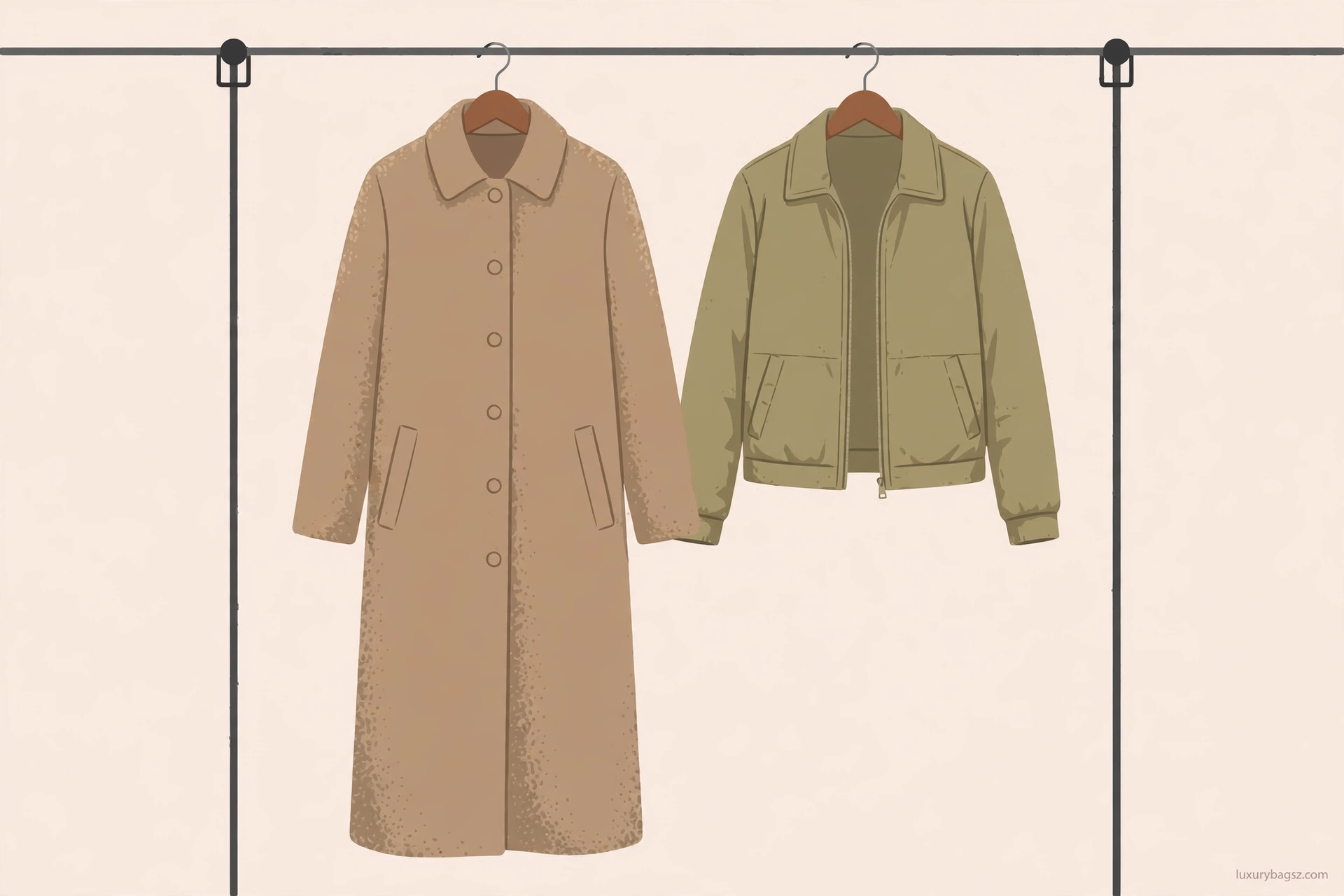
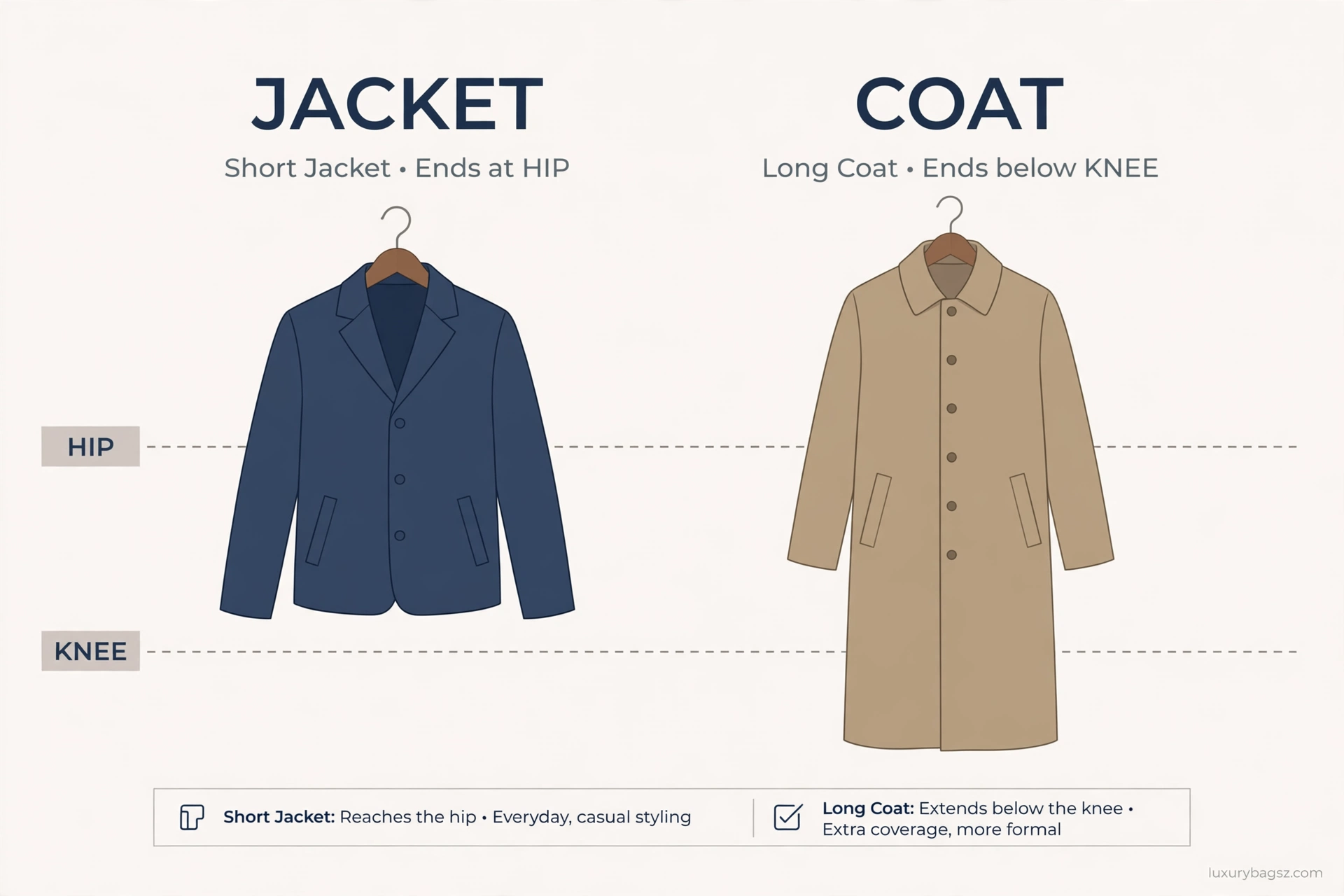
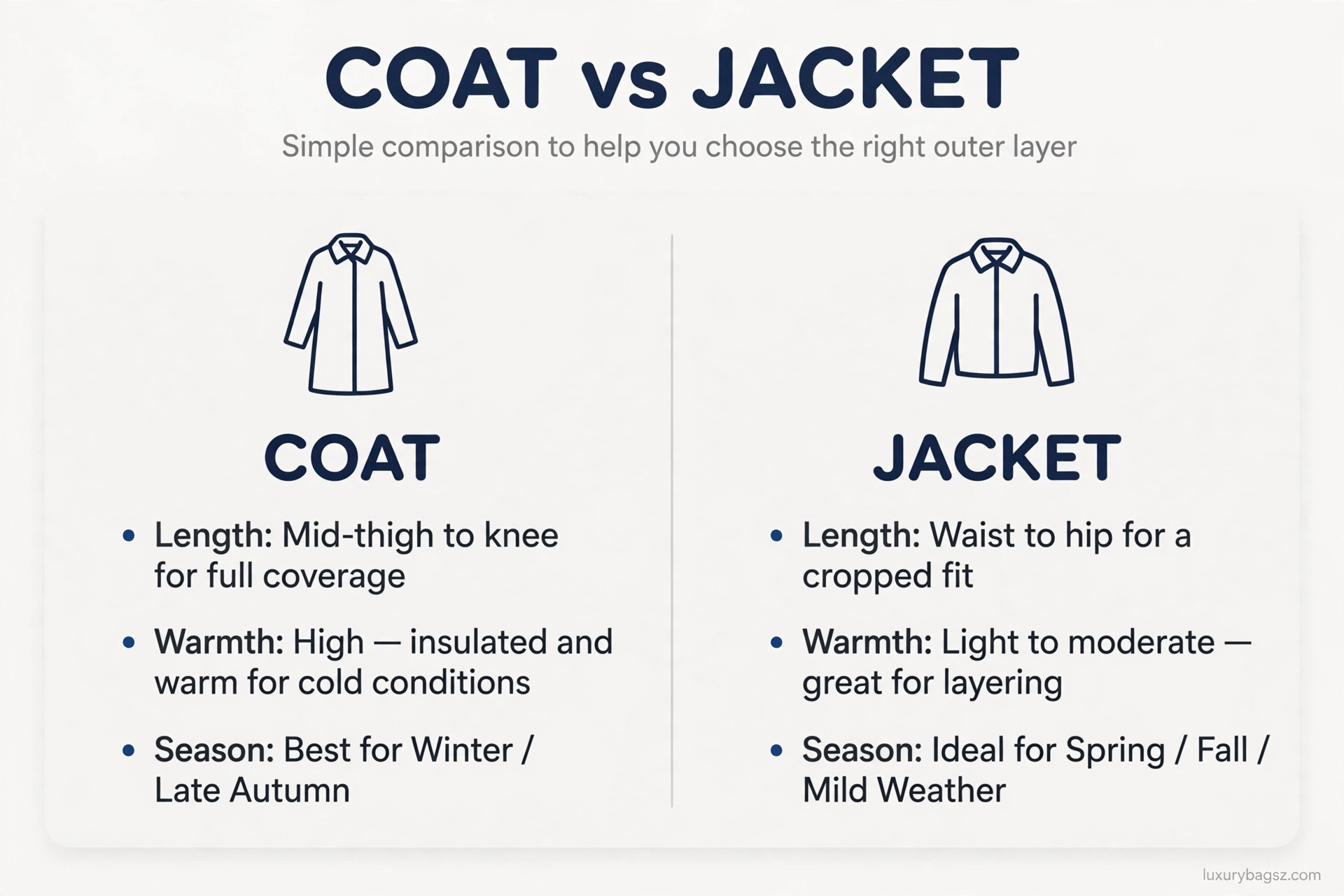
Length is the dividing line most makers use: a jacket ends around the waist or hip, while a coat falls past the hip, usually to mid-thigh, the knee, or lower. If the hem covers your seat and keeps going, you are almost certainly looking at a coat.
That rule also explains the layering rule that follows from it. A coat is made to be worn over other layers, including a jacket, while a jacket is never worn over a coat. If you cannot fit it over a blazer or a chunky knit, it is not doing a coat's job.
Warmth is where the simple rule gets messy, and sources disagree on how much weight to give it. Some guides treat warmth as a second defining feature, while others point out that a down jacket can be warmer than an unlined trench coat. Both views have a point, which is why length should be your first test and warmth your second.
Key Takeaways

- Length first: jackets end at the waist or hip, coats run from mid-thigh to ankle.
- A coat goes over other layers; a jacket does not go over a coat.
- Coats usually use heavier fabrics and fuller linings, but a down jacket can out-warm a light coat.
- Exceptions exist: peacoats and sport coats break the length rule, and trench coats can be light.
- Buy the piece that matches your coldest regular weather first, then fill the milder gap.
What Counts as a Jacket
A jacket is a short outer layer that ends at the waist, hip, or just below the seat. Its job is light to moderate protection, freedom of movement, and style, rather than full winter defence. Think denim jackets, bomber jackets, leather jackets, and suit jackets.
Jackets are built for layering in the other direction: they sit over a shirt or thin knit, and a heavier coat can go over them when the temperature drops. That is why jackets work across spring, autumn, and mild winter, and why they suit active days, driving, and indoor-outdoor routines.
Closures and details vary widely, which is part of the appeal. Zips, buttons, and snaps all appear, and pockets tend to be practical rather than formal. A jacket is also easier to store, carry, and replace, which is why most wardrobes hold several jackets and only one or two coats.
The suit jacket deserves a special note. It belongs to a matching suit, and tailoring language calls the top half of a suit a coat in some traditions, which is where much of the confusion starts. In everyday shopping language, though, a suit jacket is a jacket because it is short.
What Counts as a Coat
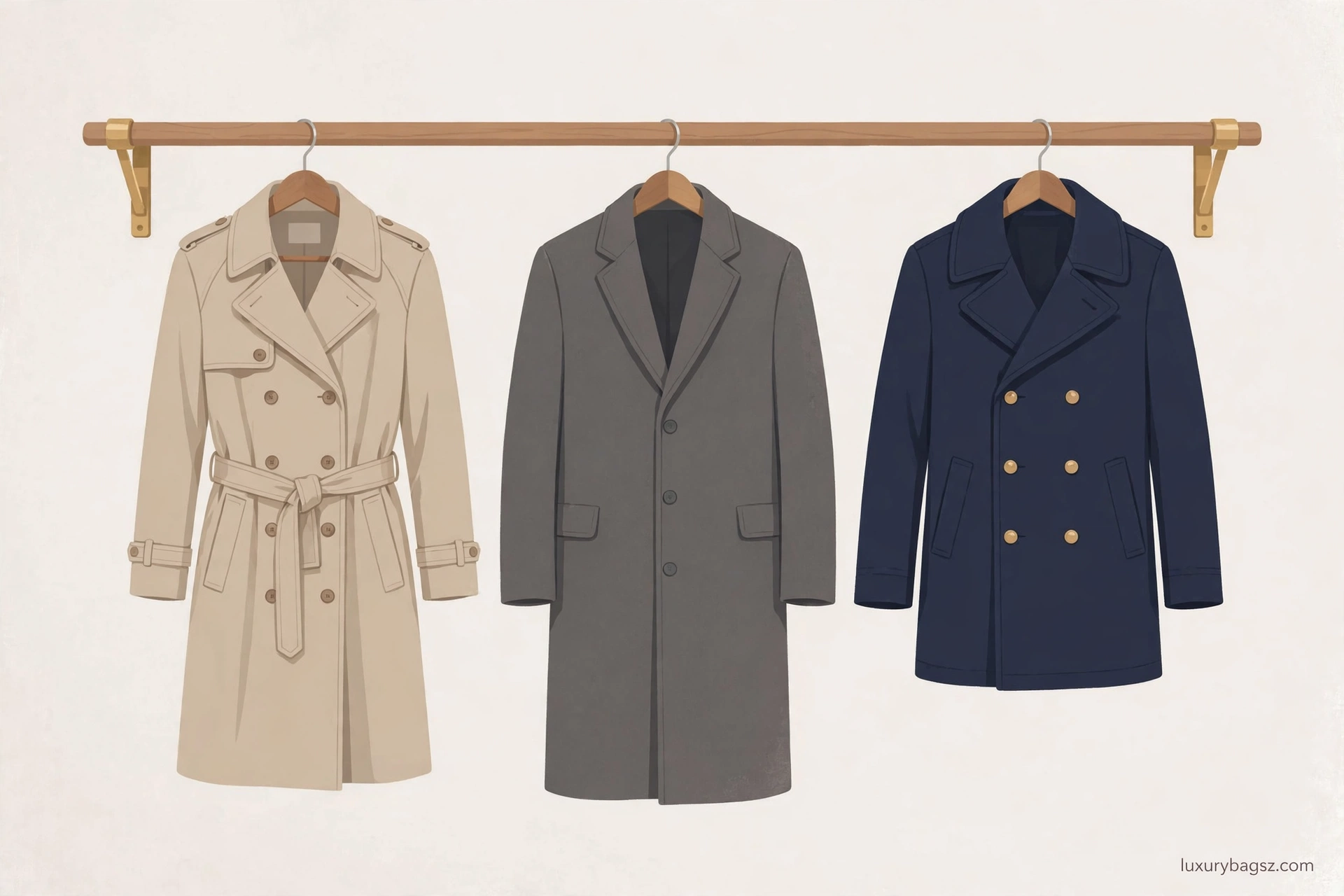
A coat is a long outer garment made to be worn over a full outfit, including a jacket or a suit. Its hem typically falls at mid-thigh at the shortest, and it can run to the knee, calf, or ankle. Trench coats, overcoats, peacoats in their longer forms, parkas, and duffle coats all sit here.
Length brings coverage, and coverage brings warmth, weather protection, and formality. A knee-length coat keeps the wind off your legs, protects a suit beneath it, and reads as polished in a way a cropped jacket rarely does. That is why coats dominate offices, formal evenings, and cold commutes.
Coats usually carry more construction: fuller linings, sometimes interlining for structure, deeper collars, storm flaps, and longer closures. That construction costs more in fabric and tailoring, which is why a good coat tends to be an investment piece rather than a quick purchase.
Not every coat is a winter coat, and that trips people up. A classic cotton trench is a coat by length, yet it is made for rain and mild weather rather than deep cold. Length decides the category; the fabric and lining decide the weather it suits.
Fabrics, Warmth, and Why the Rule Bends
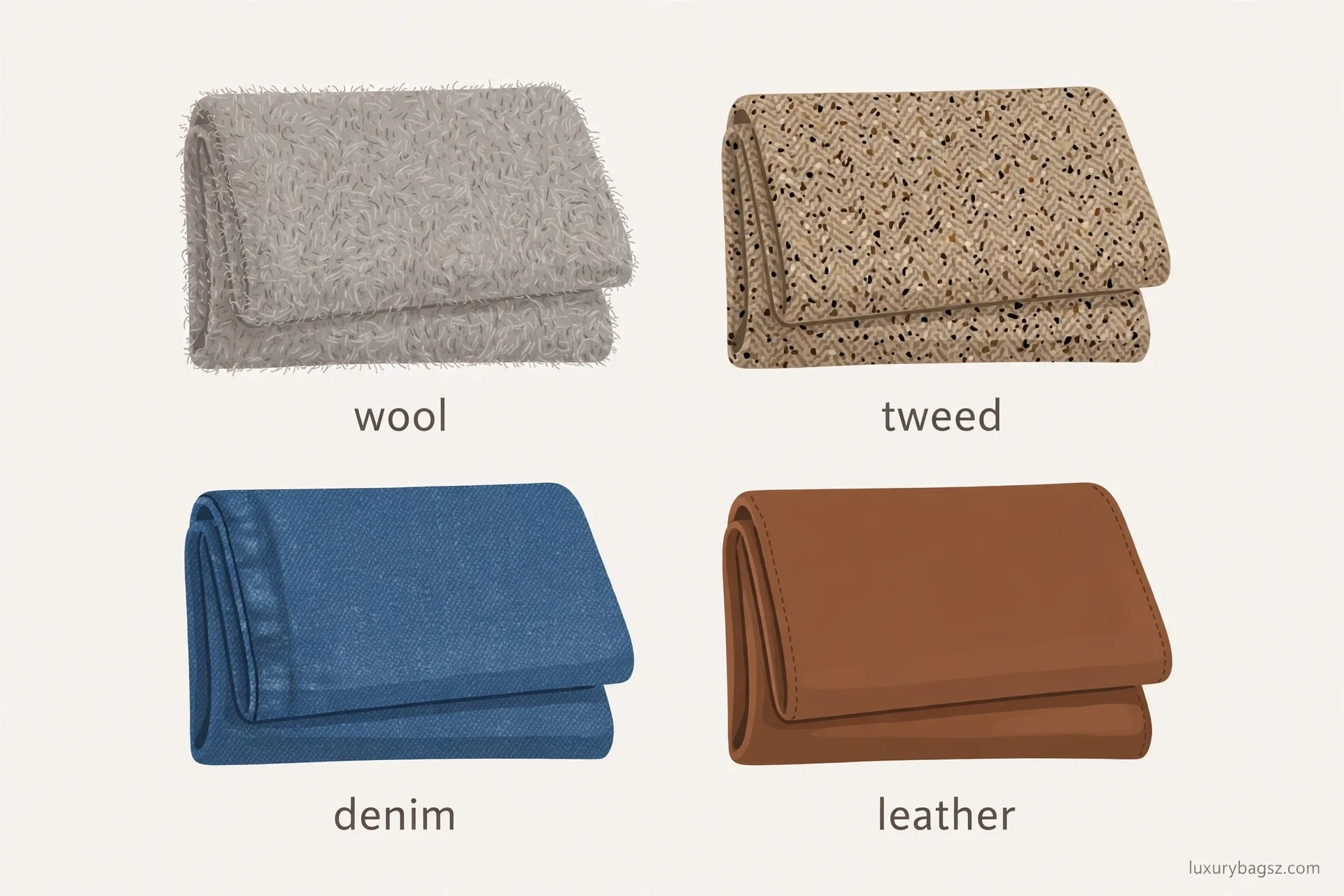
Coat fabrics lean heavy: wool, melton, cashmere blends, tweed, and insulated synthetics. These fabrics hold structure over a long hem, trap heat, and stand up to wind. Many coats add a full lining and sometimes a quilted or padded layer, which is what makes them feel substantial when you put them on.
Jacket fabrics lean lighter and more varied: denim, leather, cotton twill, fleece, nylon, and technical blends. Leather is the interesting case, since a leather jacket can feel warm yet still be a jacket by length. Our guide to whether leather jackets are warm breaks down how lining and fit change the answer.
Warmth, then, is a tendency, not a test. Coats are usually warmer because they cover more of you and use heavier cloth, but a thick down jacket will beat a thin unlined coat on a freezing day. If warmth is your only question, check the fabric weight, lining, and insulation rather than the label on the garment.
Weather resistance follows a similar pattern. Coats more often carry storm flaps, high collars, and windproof construction, while jackets more often prioritise movement and packability. A waterproof jacket can still out-perform a wool coat in rain, so match the piece to the forecast, not just the category.
The Main Jacket Types, at a Glance
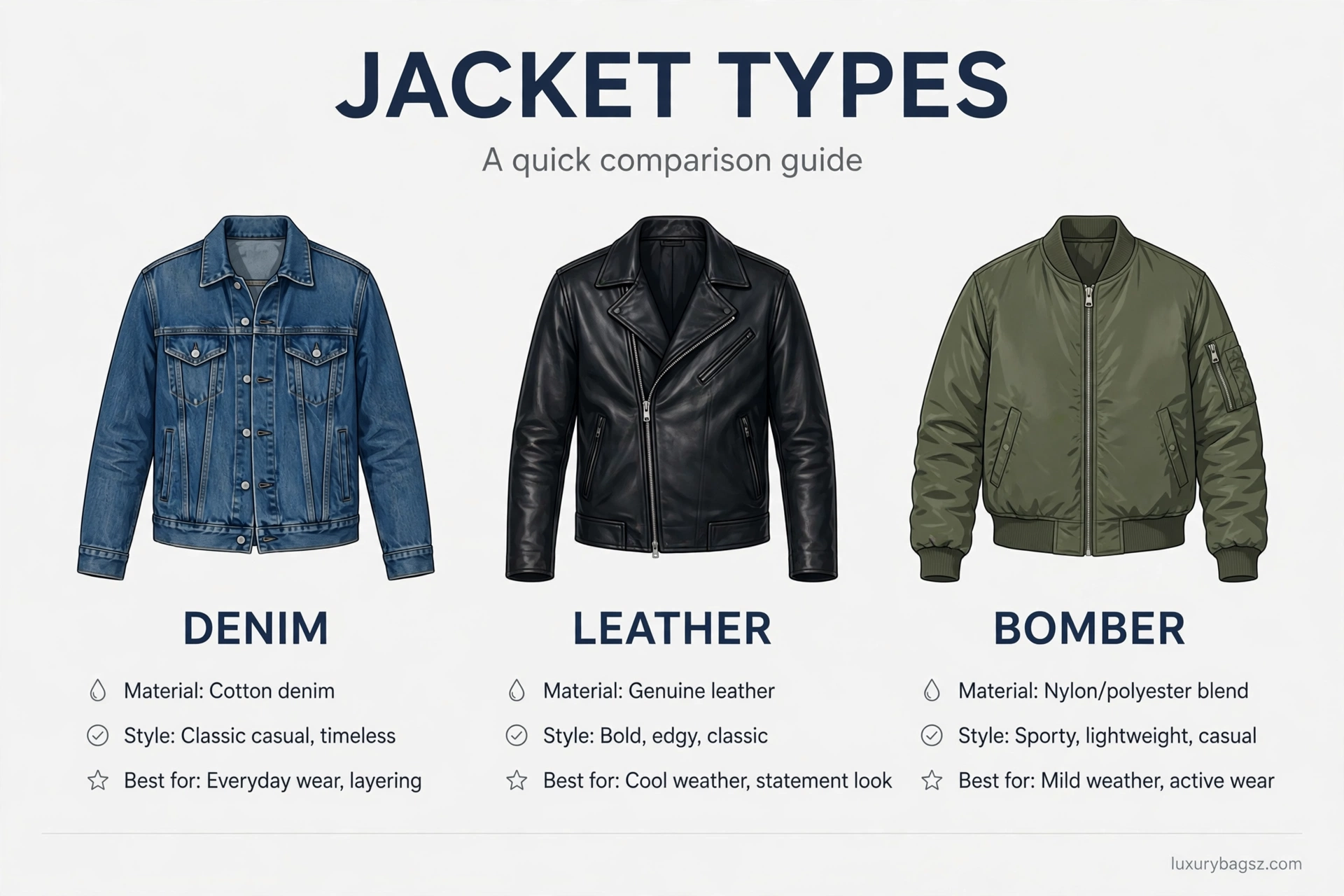
Denim jackets are the casual default: waist-length, sturdy, and easy to layer over tees and under coats. They suit spring and autumn best, and they age well if the fit stays close rather than boxy. A denim jacket under a wool coat is a classic cold-weather layering move.
Leather jackets, including biker and racer styles, bring structure and attitude in a short cut. They work best when the leather is thick enough to hold shape and the fit allows a thin knit beneath but not a bulky one. They are style pieces first and weather pieces second.
Bomber jackets are defined by their ribbed cuffs and hem and their cropped, rounded shape. Originally flight wear, they now read as relaxed and sporty, and they suit jeans and trainers better than tailored trousers. Their short length makes them poor cover for a suit.
Workwear jackets add another branch, and the chore coat is a good example of a jacket that blurs lines. Our guide to what a chore coat is explains its workwear roots and why it stays a jacket despite its boxy, practical cut. Utility, field, and trucker jackets sit in the same family.
The Main Coat Types, at a Glance
The overcoat is the formal benchmark: knee-length, wool, single- or double-breasted, made to go over a suit. It is the coat to buy first if your winters are cold and your working life involves tailoring, since it covers a jacket and trousers cleanly.
The trench coat is the rain specialist: mid-thigh to knee length, belted, with a storm flap and a collar that turns up against wind. Classic versions use cotton gabardine and suit mild, wet weather, while heavier versions add linings for colder days. It is a coat by length even when it is light.
The peacoat is the famous exception. Traditionally a short, double-breasted naval coat ending at the hip, it is called a coat by history and construction even though its length says jacket. When shopping, treat a hip-length peacoat as a jacket-weight piece for mild cold, whatever the label says.
Parkas and duffle coats sit at the practical end: longer, hooded or toggled, built for harsh weather and everyday wear. A parka's length and insulation make it a coat without argument, and it is often the warmest option for the money in very cold climates.
Choosing Between Them: Weather, Occasion, and Fit
Start with your coldest regular weather, not your average day. If winter regularly drops near freezing, a proper coat earns its money first. If your winters are mild and your main need is a layer for spring and autumn, a good jacket plus a knit will serve you better.
Occasion comes next. Coats suit offices, formal dinners, and events where a suit or smart dress sits underneath. Jackets suit casual days, active routines, and outfits where movement matters more than polish. A long coat over jeans can look great, but a short jacket over a full suit rarely does.
Fit checks differ by category. A coat should close comfortably over a blazer or chunky knit without pulling, and the shoulder seam should sit on your shoulder, not beyond it. A jacket should allow a shirt or thin knit beneath, with enough room to move your arms without the hem riding up.
Budget follows construction. Coats cost more because they use more fabric and more tailoring, so it makes sense to buy one good coat and rotate cheaper jackets. If you can only buy one outer layer this year, buy the one that matches the weather you actually face most often.
Exceptions, Tricky Labels, and Pre-Owned Checks
Language is part of the confusion. Sport coats are short jackets despite the word coat, jacket coats are a historical term for short, light coats, and some brands call anything with buttons a coat. When a label and a hem disagree, trust the hem and the layering test.
Regional usage adds another wrinkle. In some places, coat is the everyday word for any outer layer, while in tailoring circles, coat means the long garment worn over a suit. Neither usage is wrong in conversation, but for shopping, the length rule keeps you from buying the wrong piece.
For pre-owned buys, check the hem, lining, and closures first. A coat with a torn lining or a jacket with a failing zip can still be worth it if the price reflects the repair, but factor in tailoring costs before you commit. Smell, stains under the arms, and worn cuffs tell you more about real condition than photos alone.
Finally, watch for altered lengths. A coat shortened by a previous owner can masquerade as a jacket, and a jacket with an added hem can look like a short coat. Check that the lining matches the outer hem and that pockets sit at a natural height; both reveal alterations quickly.
If you are choosing between leather colours for your jacket purchase, our comparison of brown vs black leather jackets covers which colour to buy first and why it matters for the rest of your wardrobe.
Frequently Asked Questions
Is a coat just a longer jacket?
Mostly, yes, but not only. Length is the main dividing line, and coats also tend to be heavier, more lined, and more formal. A long, light trench is still a coat, and a short, heavy down piece is still a jacket.
Can a jacket be warmer than a coat?
Yes. A thick down or insulated jacket can out-warm a thin, unlined coat. Warmth depends on fabric weight, lining, and insulation, so check those details rather than relying on the name alone.
What is a peacoat, a coat or a jacket?
By history and name it is a coat, but by length it is usually hip-length, which is jacket territory. Treat it as a jacket-weight piece for mild cold, whatever the label says.
Can you wear a jacket under a coat?
Yes, and that is exactly how the layering rule works. A coat is made to go over other layers, including a jacket, while a jacket is never worn over a coat.
Is a trench coat a coat or a jacket?
A coat. It falls to mid-thigh or the knee, which puts it firmly on the coat side of the length rule, even though classic cotton versions are light and made for rain rather than deep cold.
Is a blazer a jacket?
Yes, in everyday language. A blazer is a short, tailored jacket, usually in a solid colour with metal buttons. Tailoring tradition sometimes calls it a coat, but shoppers should treat it as a jacket.
Which should you buy first, a coat or a jacket?
Buy for your coldest regular weather. Cold winters call for a proper coat first, while mild climates and spring-autumn needs call for a versatile jacket first, with a coat added later.
Are coats always more formal than jackets?
Usually, but not always. A wool overcoat is more formal than a denim jacket, yet a parka is a coat and reads casual. Length pushes a piece towards formality, but fabric and cut matter too.
What length should a coat be?
Most coats run from mid-thigh to the knee, with some reaching the calf or ankle. Mid-thigh suits everyday wear, knee length suits suits and formal outfits, and longer lengths suit very cold weather.
Can you wear a coat in spring?
Yes, if it is a light coat such as an unlined trench or a light wool style. Heavy winter coats suit cold weather only, so match the fabric and lining to the season, not just the length.
Final Verdict
Use length as your first test, layering as your second, and warmth as a tiebreaker rather than a rule. A jacket ends at the waist or hip and handles mild weather and movement, while a coat runs past the hip and handles cold, formal, and full-outfit days. Keep the peacoat and sport coat exceptions in mind, check fabric and lining before you buy, and choose the piece that matches the weather you actually live in.






