Burberry Check Evolution: From Trench Coat Lining to Global Icon
The Check in Brief
The Burberry Check is a camel, black, white and red tartan-style pattern created in the 1920s as the lining of Burberry trench coats, first used in 1924. It stayed hidden inside coats for four decades, then stepped into the open in 1967 on scarves, umbrellas and luggage, became a status symbol of the 1970s and 1980s, suffered overexposure and a class-based backlash in the early 2000s, and was then reclaimed by the house under Christopher Bailey and later Riccardo Tisci. Today it is sold as the house's most recognisable signature, in classic, oversized and monogram forms, and it remains one of fashion's clearest lessons in how a pattern can make, and nearly break, a brand.
Key Takeaways

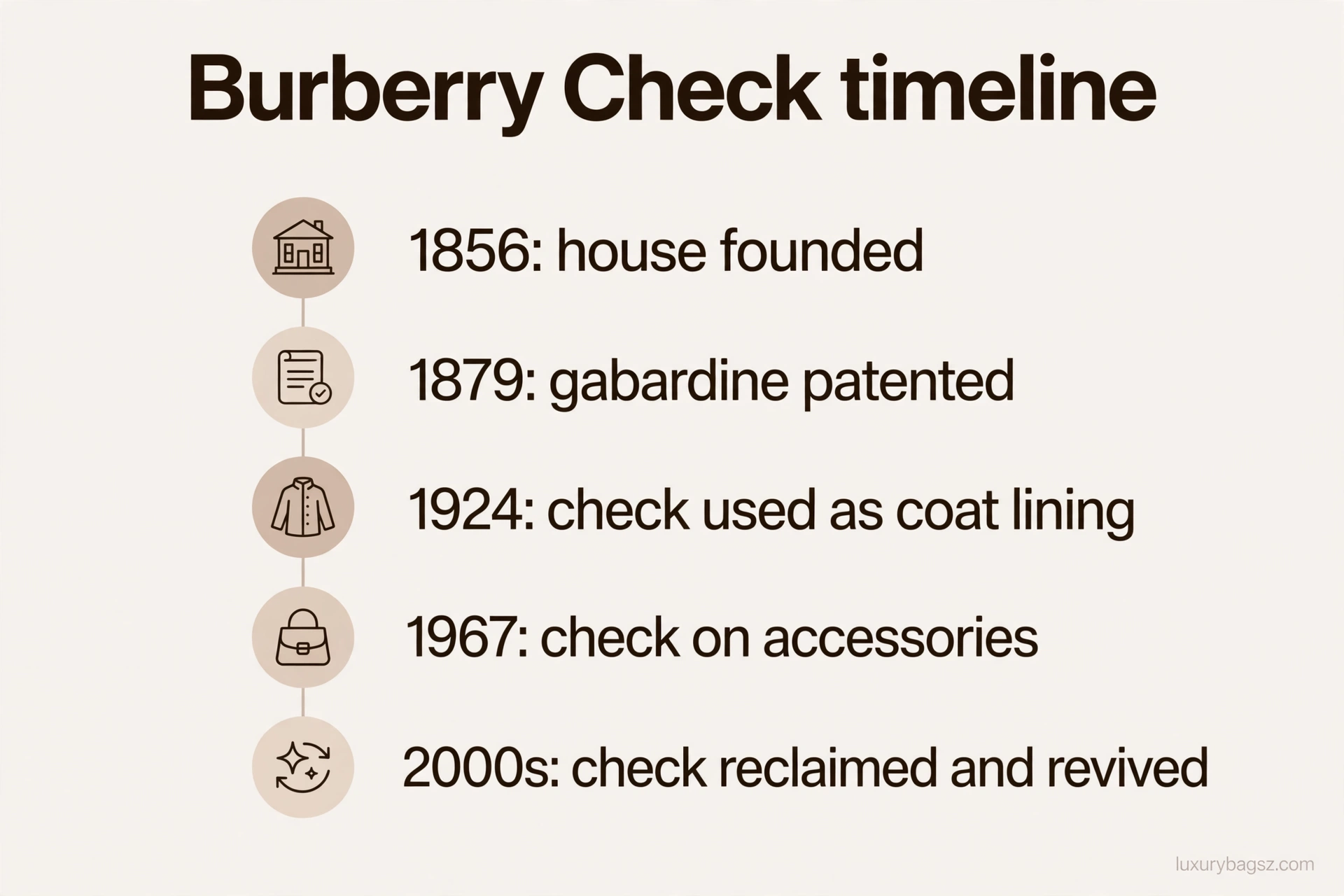
- Thomas Burberry founded the house in 1856 in Basingstoke, and patented gabardine, a breathable waterproof fabric, in 1879.
- The Check was created in the 1920s, dated by most histories to 1924, as a trench coat lining.
- It became visible on accessories from 1967, after a Paris store display turned the lining outward.
- The cashmere scarf made the Check a global status symbol from the late 1960s onward.
- Overexposure and counterfeiting in the late 1990s and early 2000s damaged its luxury image.
- Christopher Bailey, from 2001, cut the Check's share of production and reintroduced it in elevated ways.
- The 2018 collections reclaimed the Check openly, including the TB monogram era under Riccardo Tisci.
A Weatherproofing House Before a Pattern House
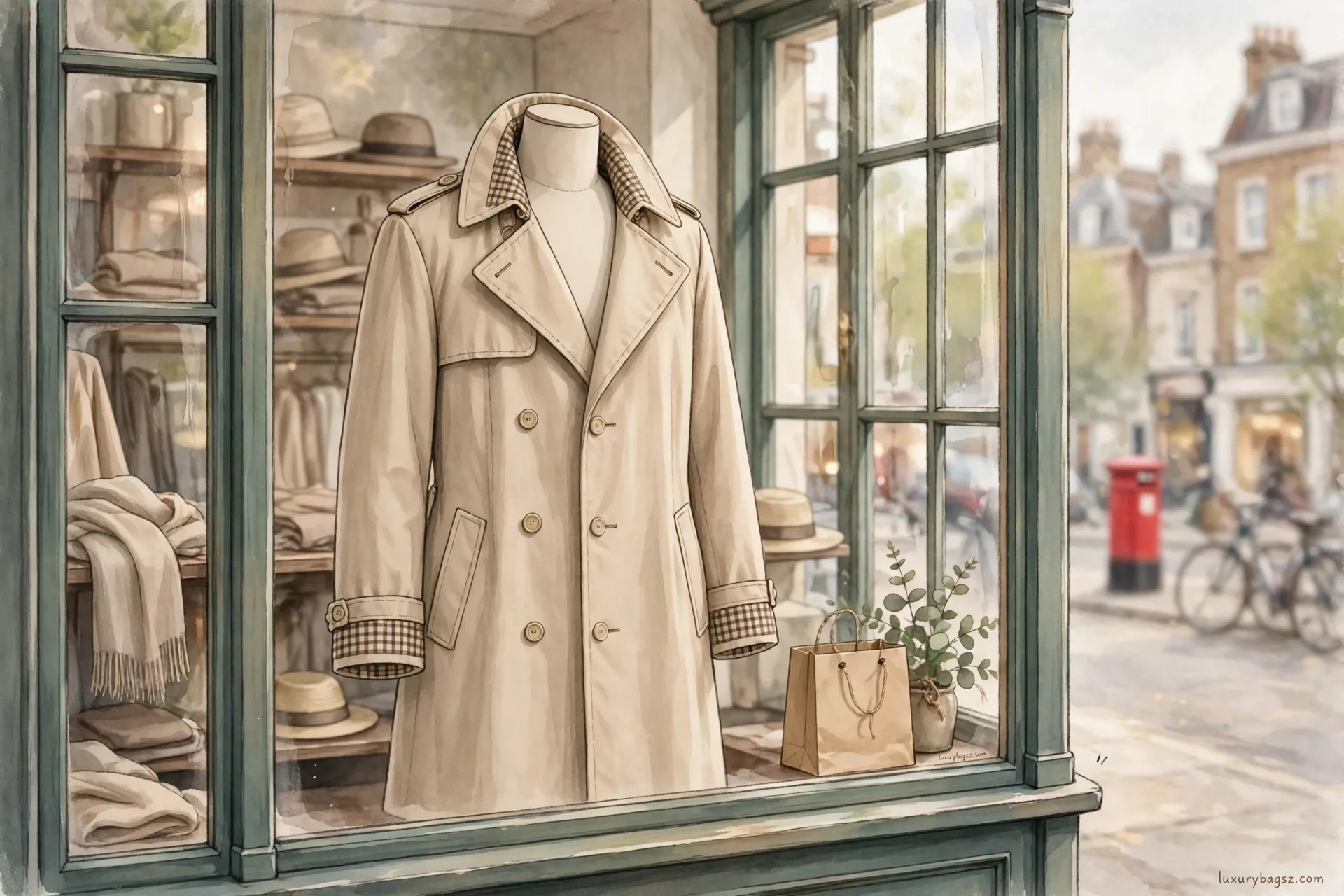
Burberry began as a practical company, not a pattern company. Thomas Burberry was 21 when he founded the business in 1856, and his breakthrough was gabardine, patented in 1879: a tightly woven, weatherproof yet breathable fabric that protected shepherds, explorers and officers from British weather. Polar explorers including Roald Amundsen and Ernest Shackleton wore it, and during the First World War officers wore Burberry's trench coats, which gave the coat its name.
That functional heritage matters, because the Check was born inside that world. It was not designed as a fashion print. It was a lining, chosen to look smart when a coat was opened or a collar turned up, in a house that cared about weather first and decoration second. For the full house story, our Burberry guide covers its history, trench coats, bags and buying advice.
Understanding that order, function first and pattern second, explains why the Check took so long to become famous. For forty years it was a private pleasure for the wearer, glimpsed rather than displayed, and that discretion is exactly what later made its public debut feel like a discovery.
1924: A Lining Is Born
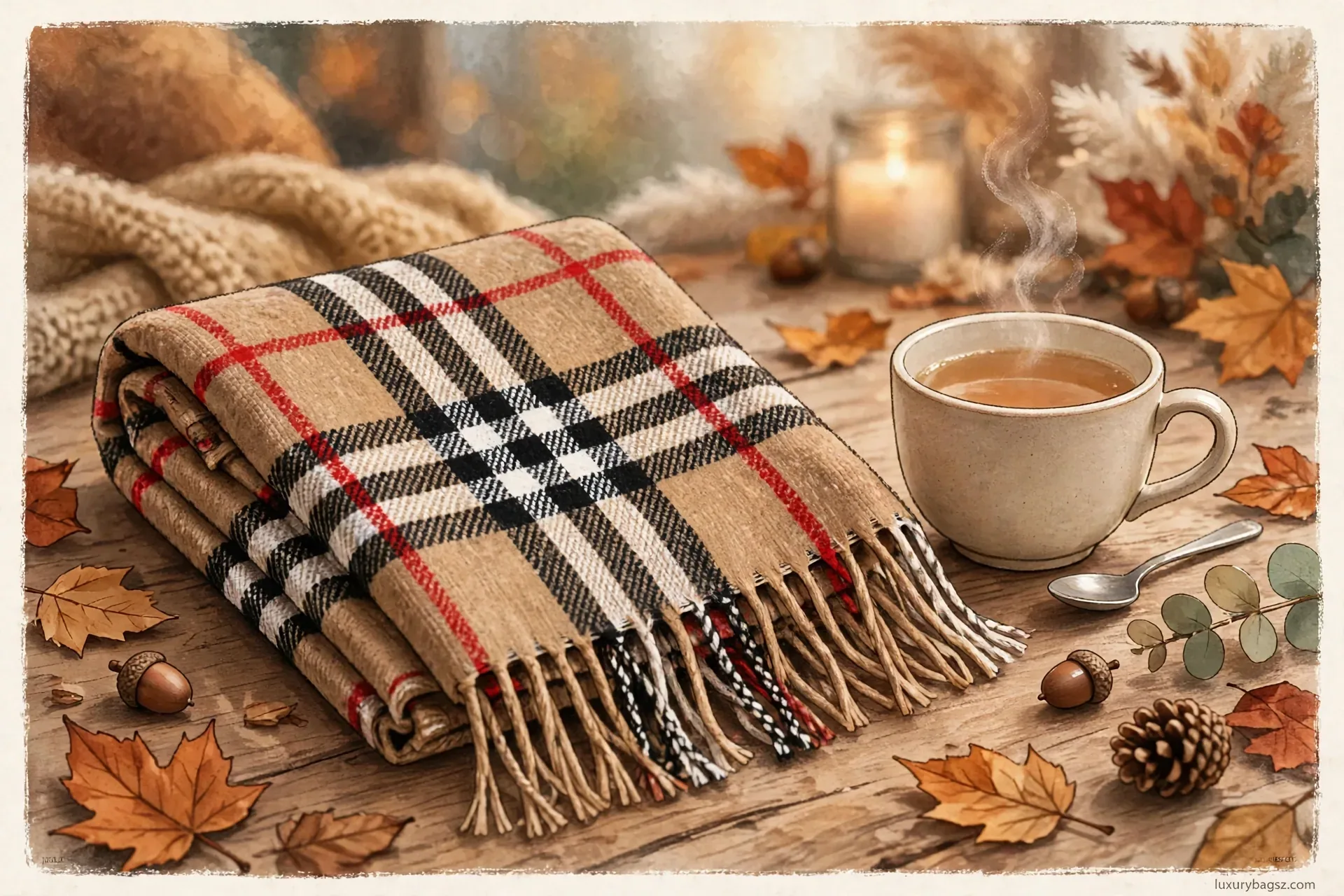
Most histories date the Check to 1924, when it was introduced as the lining of Burberry trench coats. The design is a Scottish-style tartan on a camel or archive beige ground, crossed with black, white and red lines. It was registered as a trademark in the 1920s, which shows the house understood its value even while it kept the pattern inside its coats.
Sources differ slightly on the exact naming. Burberry itself has used several names over the years, including Nova Check for the classic pattern and, more recently, Vintage Check and Classic Check for its variations. The pattern is also widely called the Haymarket Check, after the house's London store location. These names overlap and confuse shoppers, so the safest approach is to describe the pattern by its colours and scale rather than relying on a single name in a listing.
For decades the Check stayed where it started. It lined coats worn by officers, explorers and, increasingly, well-dressed civilians, but it did not appear on the outside of products. That restraint now looks like good brand management, even if it was simply how raincoats were made at the time.
1967: The Lining Steps Outside
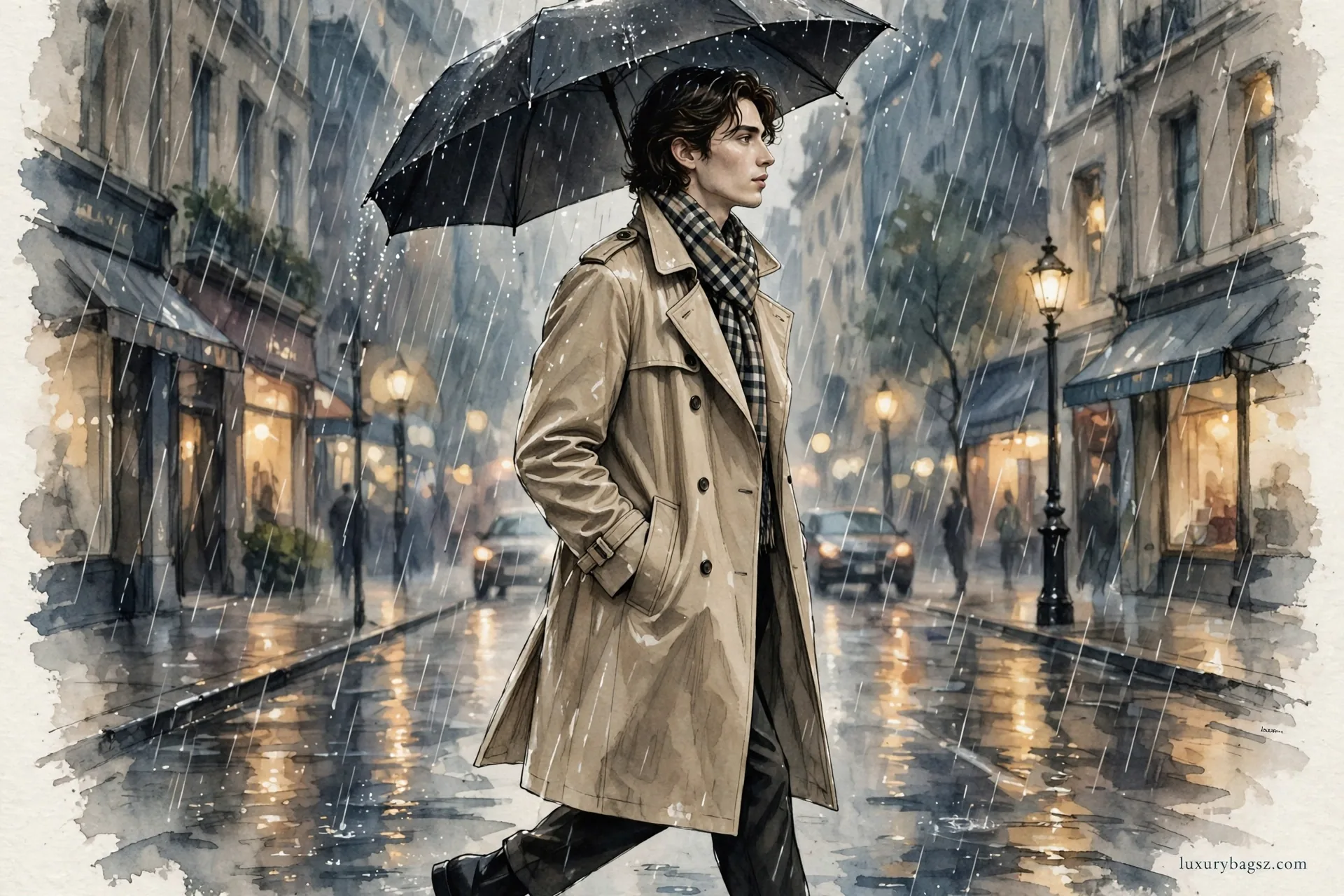
The turning point has a good story, and Burberry's own history supports its broad shape. In 1967, a buyer at the Paris store stripped the check lining from a coat and used it as a wrap for luggage and umbrellas in a presentation, or, in another telling, a coat was hung with its hem facing outward and customers fell in love with the lining. Either way, the result was the same: the Check left the inside of the coat and became a product in its own right.
Scarves led the way. The cashmere scarf in the classic Check became the house's most famous accessory, followed by umbrellas, luggage and, gradually, ready-to-wear. By the 1970s and 1980s the Check was a badge of the British upper class, photographed on country pursuits and in Sloane Square, and it appeared in the Sloane Ranger Handbook as shorthand for a certain kind of polished British wealth.
That success planted the seeds of the next chapter. A pattern that signals status will always attract imitation, and the Check, being a simple repeating tartan, was easier to copy than a complex logo. By the 1990s, cheap copies were everywhere, and the real thing began to share the streets with fakes.
The 2000s: Overexposure, Backlash, and the Fight Back
The late 1990s and early 2000s were the Check's hardest years. Full-check looks, especially the checked cap, became associated in the British tabloid press with football casual culture and with the label "chav", a class-loaded insult that stuck to the pattern in the United Kingdom even as it stayed glamorous abroad. Celebrities photographed in head-to-toe Check, most famously Daniella Westbrook, became tabloid shorthand for the problem.
The house's response is often simplified, and the numbers in different accounts vary. Christopher Bailey, who joined in 2001, worked with chief executive Angela Ahrendts to pull licences, discontinue the cap, and cut the Check from around a fifth of production to a small single-digit share. One Guardian report from 2004 noted that the Check featured on only 8 percent of products yet still greeted visitors to the company website. The point was not to kill the pattern but to make it scarce again.
That strategy worked slowly. By the 2010s the Check was reappearing in elevated forms: on fine tailoring, on limited accessories and in runway collections that treated it as heritage rather than ubiquity. The pattern had survived its own popularity, which is rarer than it sounds.
The Revival: Nova Check, TB Monogram, and Y2K Nostalgia
The revival took two forms. First came the Nova Check itself, softer and warmer in tone, which became the Check of the late 1990s and early 2000s revival and of the Y2K nostalgia wave that followed. It appeared on caps worn at a tilt, on shoulder bags and on scarves thrown on with ease, and it was carried into culture by figures including Kate Moss, Victoria Beckham and Aaliyah.
Then came the monogram era. When Riccardo Tisci arrived in 2018, he introduced a TB monogram, interlacing the initials of founder Thomas Burberry, and put the Check back at the centre of the runway in a deliberate act of reclamation. The Autumn Winter 2018 collection leaned heavily into Nova Check on caps, blousons, socks and accessories, and framed the early 2000s era as working-class chic revival rather than something to disown. It was a bold choice: instead of running from the difficult years, the house claimed them.
Today the Check exists in several registers at once. The classic Check remains the heritage pattern, oversized versions suit scarves and outerwear, and the TB monogram offers a logo-led alternative. That range lets the house sell the Check to different customers without flooding the market with one identical pattern, which is the lesson the 2000s taught it.
For shoppers sorting old from new, our vintage vs retro guide explains how to tell a genuinely old piece from a newer revival. A 1990s Check scarf and a 2020s reissue can look alike in a photo, but their labels, fabric and finishing usually tell them apart.
Know Your Check: Classic, Nova, Oversized, and Monogram
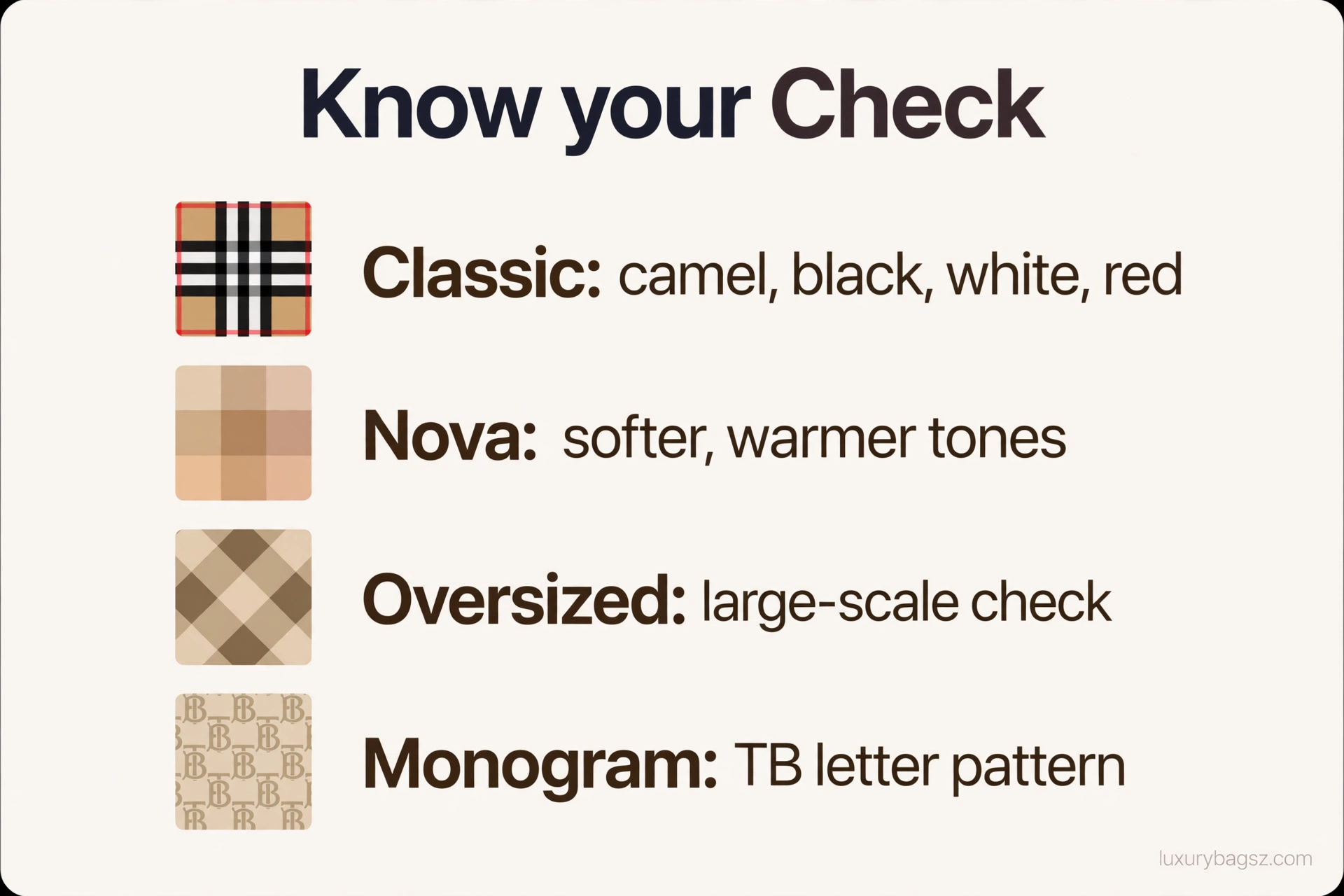
Telling Check versions apart saves money and embarrassment. The classic Check, sometimes called Vintage Check, is the camel ground with black, white and red lines in the original proportions. It is the version most people picture, and the one on the classic cashmere scarf. Nova Check is a softer, slightly warmer reworking that became the popular face of the pattern in the late 1990s and 2000s, though retailers and fans use the two names loosely, so colour and scale matter more than the label.
Oversized Check enlarges the pattern dramatically, which suits scarves, coats and bags because the large squares read clearly from a distance. It is a modern fashion choice rather than a heritage exactness, and it photographs strikingly. The TB monogram is a different idea altogether: a repeating letter pattern in white and orange-brown tones, introduced in 2018, which replaced the Check on some products during Tisci's tenure. It is not a Check, even though it is often sold alongside Check pieces.
When buying, match the version to the piece. A classic scarf in the original proportions is the safest heritage buy. An oversized Check coat is a fashion statement that will date faster. A TB monogram bag belongs to a specific era of the house, which matters for resale, because buyers of that era want it precisely, while heritage buyers may not.
Buying and Caring for Check Pieces
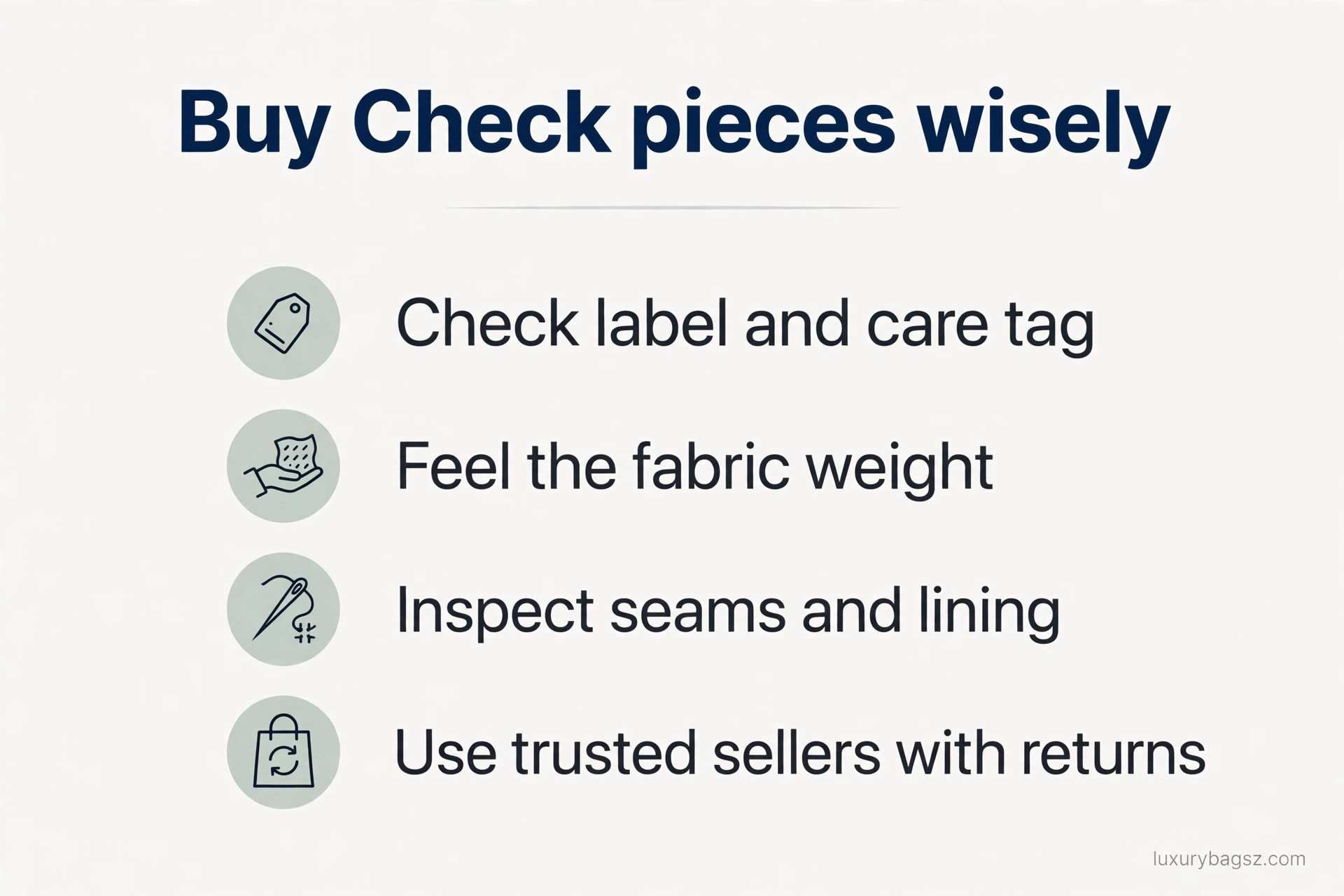
Check pieces reward careful buying, because the pattern is so widely copied. On a genuine scarf, the cashmere should feel soft and substantial, the fringe should be even, the pattern should align neatly, and the label and care tag should match the era of the piece. On a genuine trench, the gabardine should feel dense and smooth, the stitching should be even, and the lining Check should be crisp rather than blurry.
Our designer clothing care guide covers storage, rotation and professional care in full, but the short version for Check is this. Dry-clean cashmere scarves rather than machine-washing them, store them folded with cedar or lavender rather than hanging, and keep trench coats on wide wooden hangers in breathable garment bags. Never iron a Check scarf on high heat, and never store a damp trench in a sealed bag.
Pre-owned prices vary hugely by piece, condition and era. A classic cashmere scarf in good condition holds value well because it is the icon, while a fashion-led Check cap or a heavily worn bag does not. Compare several listings for the exact piece and version, ask for label and lining photos, and use sellers with returns. A bargain Check piece with a blurry pattern and a vague label is usually a copy, not a find.
What the Check Teaches About Luxury
The Check's story is a warning and a triumph in one pattern. It shows how a functional detail can become a global symbol, how success can curdle into overexposure, and how restraint, rather than abandonment, can restore luxury. Burberry did not survive the 2000s by hiding the Check. It survived by using less of it, using it better, and then reclaiming it on its own terms.
That is why the Check still matters. It is not just a pretty tartan. It is a case study in brand stewardship, class, nostalgia and design, woven into a scarf you can wear. Few patterns carry that much history in so few lines.
Frequently Asked Questions
What is the Burberry Check called? It is called the Burberry Check, also known as Nova Check, Vintage Check or Classic Check, and sometimes Haymarket Check. The names overlap, so describe the pattern by colour and scale when buying.
When was the Burberry Check created? It was created in the 1920s, dated by most histories to 1924, as the lining of Burberry trench coats.
What colours are in the Burberry Check? The classic pattern is a camel or archive beige ground crossed with black, white and red lines.
When did the Check first appear on accessories? In 1967, when the lining was used on scarves, umbrellas and luggage after a Paris store display turned it outward.
Why did Burberry cut back on the Check in the 2000s? Overexposure, widespread counterfeiting and a class-based tabloid backlash in Britain damaged its luxury image, so the house reduced its share of production and reintroduced it in elevated ways.
What is Nova Check? Nova Check is the softer, warmer version of the classic pattern that became popular in the late 1990s and 2000s, and the name is often used loosely for the classic pattern itself.
What is the TB monogram? It is a repeating Thomas Burberry initials pattern introduced under Riccardo Tisci in 2018, distinct from the Check, though sold alongside it.
Is Burberry Check a tartan? It is tartan-style rather than a registered Scottish clan tartan. It borrows the tartan form but was designed as a house pattern.
How do I spot a fake Burberry Check scarf? Check cashmere feel, even fringe, crisp pattern alignment, and a label and care tag that match the era, and buy from trusted sellers with returns.
Is a Burberry Check scarf worth buying? The classic cashmere scarf is the safest Check buy, holds value well in good condition, and works across seasons, provided you buy the genuine piece in a version you will actually wear.
Final Verdict
The Burberry Check earned its icon status the hard way: forty years hidden inside coats, a dazzling public debut, a decade of overexposure, and a disciplined comeback. It is now both heritage and fashion, classic and oversized, Check and monogram, and that range is its strength.
Buy the classic if you want the piece that will still look right in ten years. Choose oversized or monogram only if you love that specific look, and always check the label, the fabric and the pattern alignment before paying. Worn well, the Check is not a shout about wealth. It is a quiet statement of British craft that survived its own fame, and that is a rarer achievement than most luxury patterns can claim.