Self-Portrait Dresses: Lace, Fit, Sizing and What to Buy First
Self-Portrait in Brief: Occasion Dresses That Do the Work
Self-Portrait, founded in London in 2013 by Han Chong, built its name on one idea: a dress that looks like an event all by itself, at a contemporary rather than couture price. The signature is guipure lace, sculpted bodices and a nipped waist, usually in midi lengths made for weddings, races and parties. Sizing can run neat, so fit checks matter more here than the label's pretty photos suggest.
Key Takeaways
- Self-Portrait is a contemporary label: designer-level detail at roughly £250 to £500 for most dresses.
- Guipure lace is the house fabric; it is structured, not stretchy, and shapes the fit.
- Many styles run small at the bust and waist, so check measurements rather than guessing.
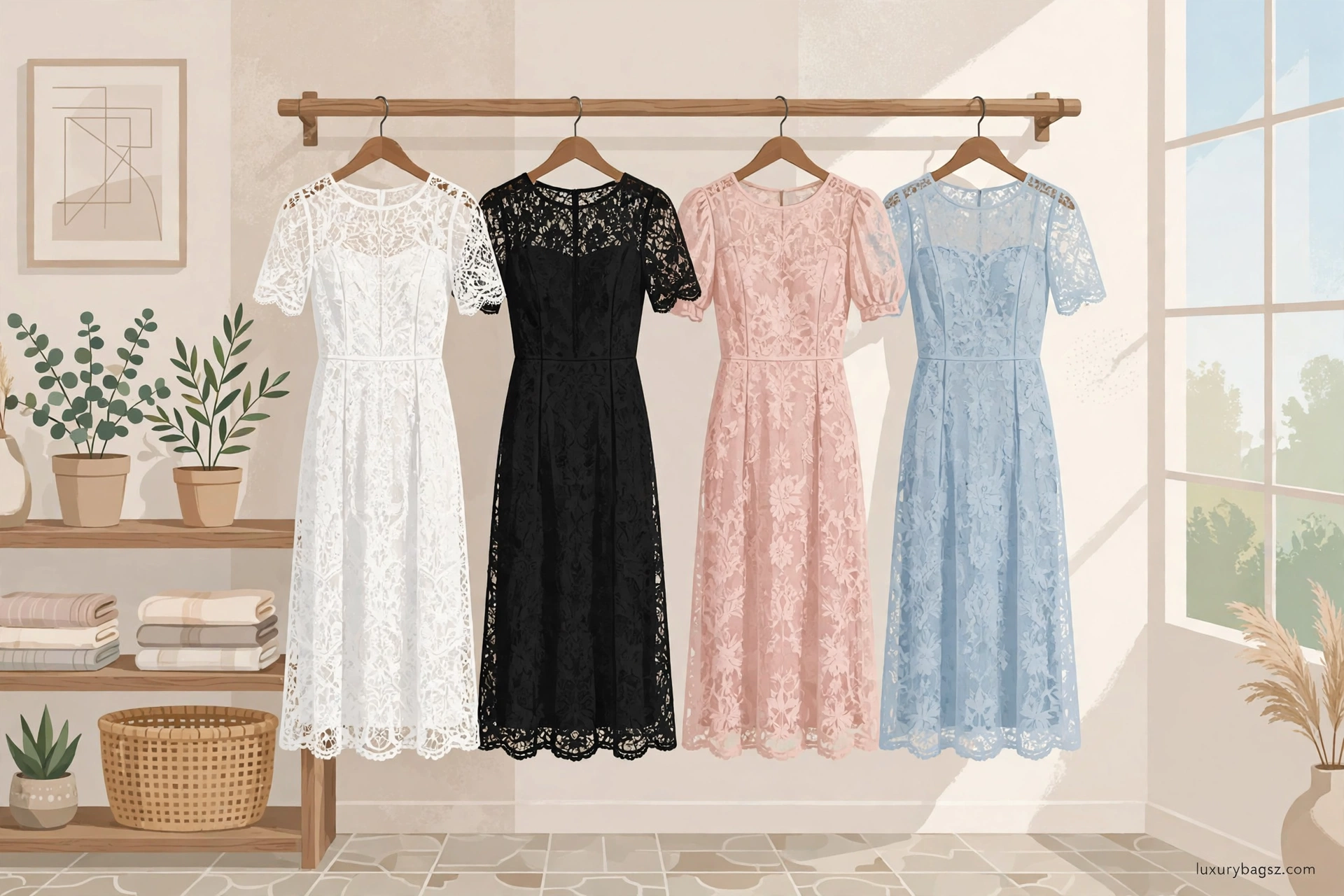
- White and ivory lace midis are the wedding-guest staples; black versions work year-round.
- The brand's own sales and past-season stock make pre-owned and outlet buys genuinely worthwhile.
- Dry-clean sparingly, store flat or padded, and lace will stay crisp for years of events.
The Brand in Short
Han Chong studied at Central Saint Martins and launched Self-Portrait in 2013. Within a few seasons its lace dresses were everywhere at weddings, worn by guests who wanted polish without a four-figure spend. The formula has widened since: knit dresses, tailoring, sequins and bridal-adjacent white styles now sit beside the lace. But the lace midi remains the piece the label is judged by. Prices place it firmly in the contemporary tier, above the high street and below the heritage houses. You pay for pattern cutting, heavy lace and finishing, not for a famous name alone. That middle position is the appeal. A Self-Portrait dress photographs like a luxury piece, yet its price allows buying for a specific event without a season of saving.
The Signature Fabrics and Shapes
Guipure lace is a bold, raised lace with no net backing; motifs are joined by bars of thread. It holds its own shape, which is why these dresses look sculpted even on a hanger. Alongside it sit crochet-style laces, broderie anglaise, chiffon, crepe and sequinned mesh. Our piece on black lace dress style and history shows how lace moved from mourning cloth to party staple. Shapes repeat with variations: the fit-and-flare midi, the column dress with lace panels, the mini with a full skirt, and off-shoulder or one-shoulder bodices with grosgrain waistbands. Expect structure inside, too. Many bodices are boned or firmly lined, which gives support but leaves little room for error on size, a point we return to below.
Which Dress for Which Occasion
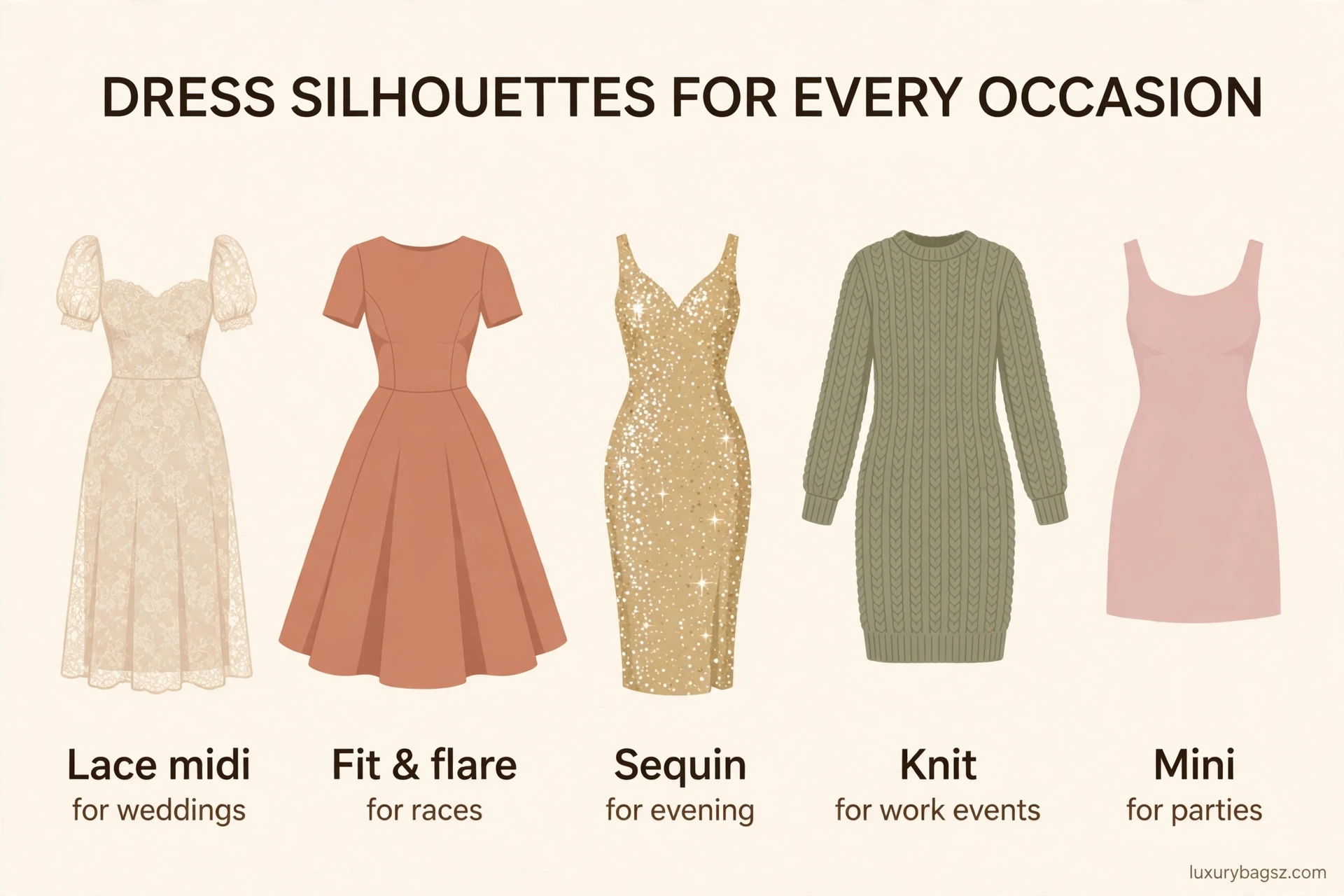
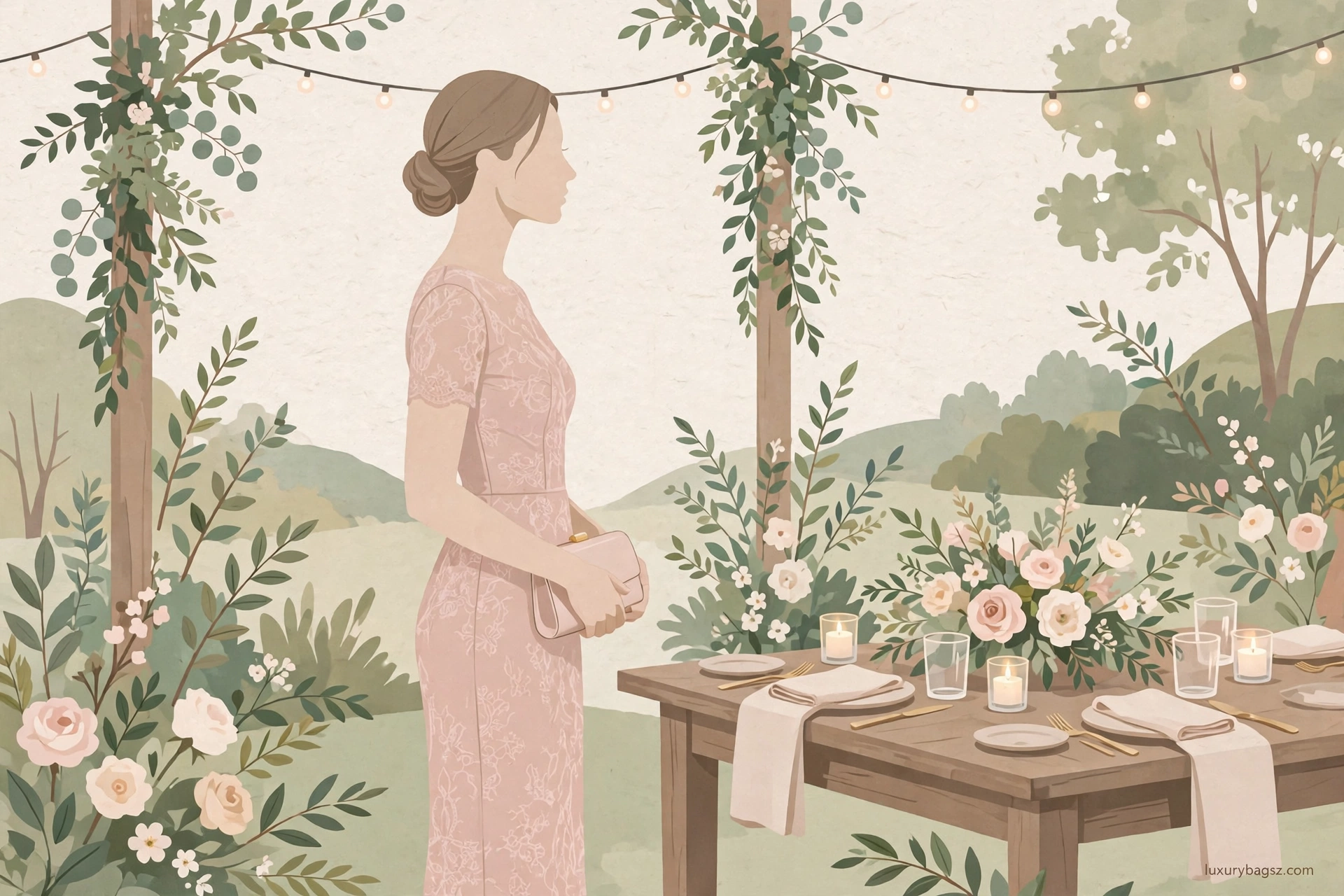
For weddings, the white, ivory and pastel lace midis are the classic guest choice, with one caution: very pale dresses can read bridal in photos, so check with the couple's dress code if in doubt. For races and garden parties, fit-and-flare shapes in stronger colours behave best in wind and on grass. Our summer dresses guide covers the wider warm-weather rotation these dresses join. For evening, look to sequinned mesh, black lace and satin styles with the same fitted bodice. They carry their own decoration, so jewellery can stay simple. For work-adjacent events, the newer knit and crepe dresses are the safer buy. They keep the label's neat waist but swap lace for cloth that reads professional rather than festive.
Fit and Sizing, Honestly
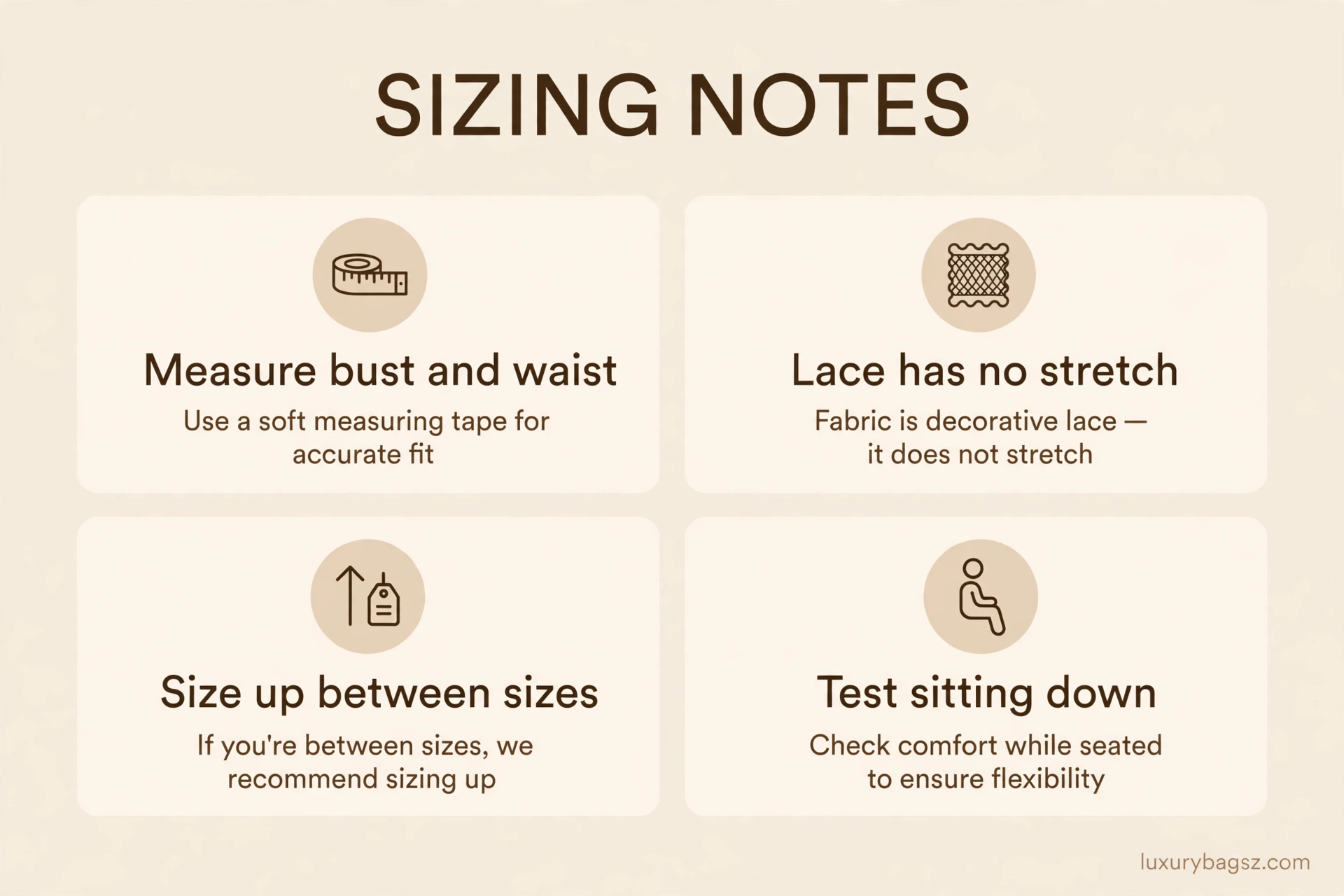
This is where buyers get caught. Lace has almost no give, bodices are structured, and many styles are cut neat at the bust and waist while skimming the hip. If you sit between sizes, the larger one is usually right, especially in strapless and off-shoulder styles where the bodice must grip without digging. Alterations on lace are possible but costly. Use the size chart's actual bust and waist measurements against your own, taken over the underwear you plan to wear. Vanity sizing this is not; treat the numbers as tailoring, not high street. Our edit of black dresses for every occasion includes the black lace versions, which are the most forgiving colour for repeat wear across seasons.

Fit Checks in the Changing Room
Zip it fully and sit down. A lace bodice that feels merely firm standing can feel strict seated, and you will spend half of any wedding sitting. Raise your arms and take a few steps. Strapless styles should not need hauling up; if they slip in the shop, they will slip on the dance floor. Check the lace at stress points: under the arms, at the waist seam and around the zip. Motifs should lie flat with no pulled bars of thread. Look at the hem in daylight. Lace hems are often scalloped and should hang level; a twisted scallop usually means the dress has been stored badly or altered poorly.
What the Detail Buys You
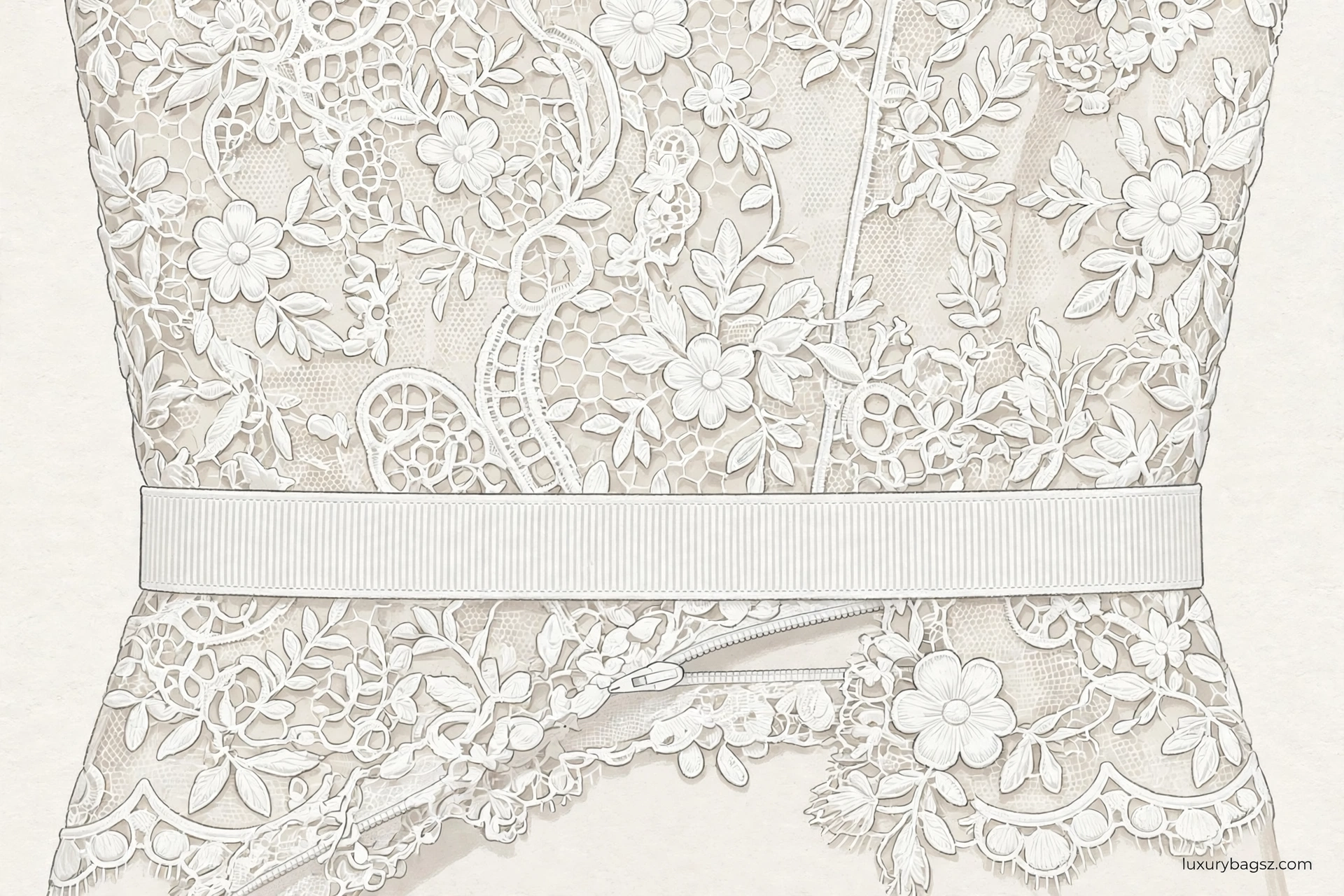
Pick up a dress and feel the weight. Real guipure has substance; the motifs are dense, the joining bars even, and the lining is usually a smooth, opaque cloth rather than thin mesh. Waistbands are often grosgrain ribbon, which stops the waist stretching out of shape during a long day. Zips are typically concealed and should run without catching the lace. None of this makes the dress couture, and it should not be priced as if it were. It does explain the gap between Self-Portrait and a high-street lace copy, which usually feels flimsy by the second wear. Photograph your dress in daylight before an event if you bought it pre-owned. Small lace snags show clearly in photos and can often be secured with two stitches in advance.
Prices, Sales and Pre-Owned Value
Most current dresses sit roughly between £250 and £500, with elaborate sequinned or bridal-leaning styles above that. The label's own seasonal sales discount hard, often by a third or more. Pre-owned prices are softer still, because occasion dresses are worn rarely and supply is plentiful. A past-season lace midi in fine condition commonly appears at a fraction of its retail price. Judge pre-owned pieces by lace condition and bodice shape, not by the seller's worn-once claim alone. Ask for close photos of the zip, waist and underarms. Because styles repeat across seasons with small changes, buying last year's version rarely dates the dress. The silhouette is the signature, not a seasonal print.
Care That Keeps Lace Crisp
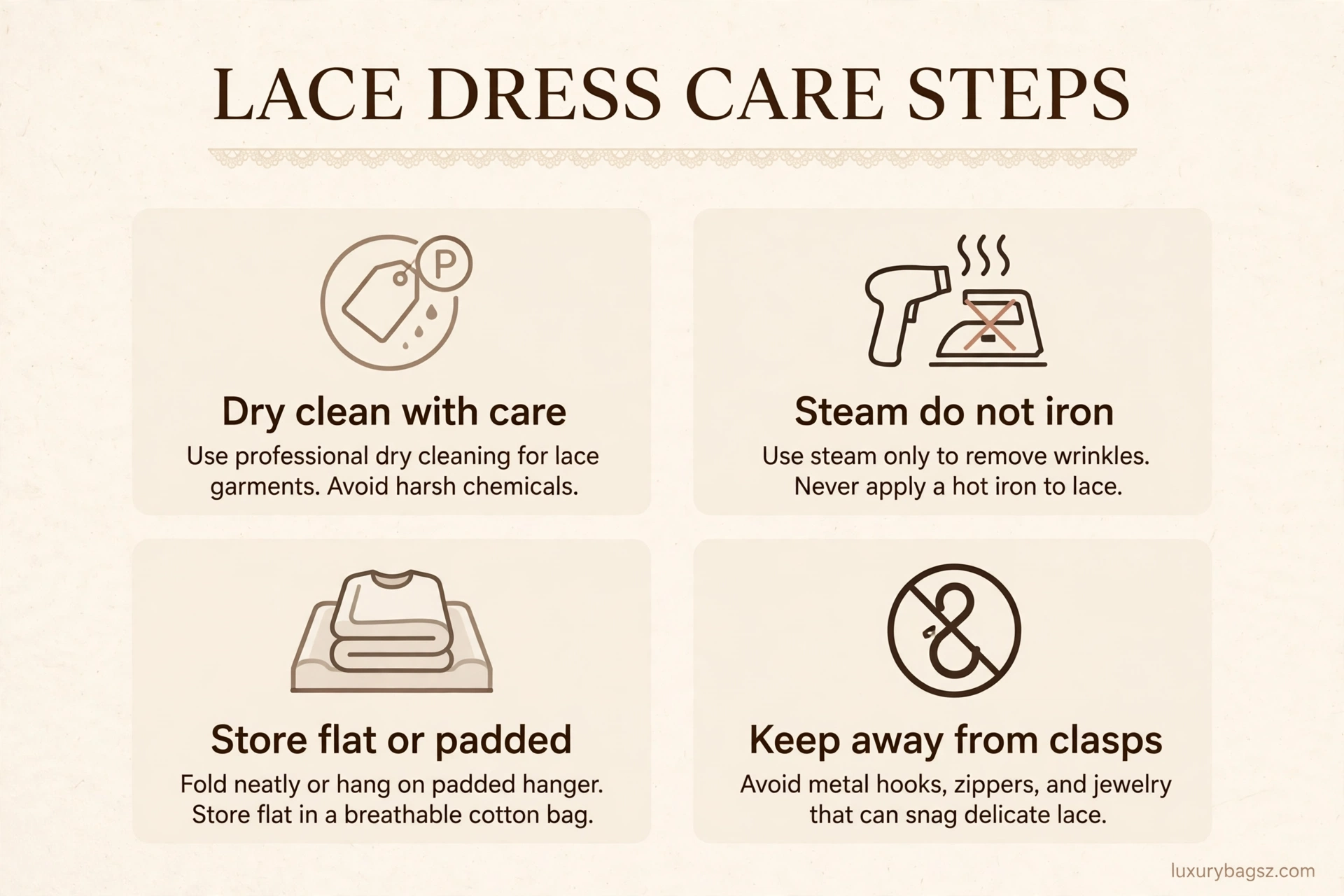
Follow the label: most lace dresses are dry-clean only, and even then, tell the cleaner the fabric is guipure so motifs are supported in a net bag during the process. At home, steam rather than iron. A hand steamer held a few centimetres away relaxes creases without crushing the raised motifs that a flat iron would flatten. Store dresses flat in a drawer or box if you can, or on a padded hanger for a short time only. Heavy lace stretches under its own weight on a thin hanger. Keep lace away from jewellery clasps and rough bag hardware in the wardrobe. Most lace damage is a snag, not wear, and snags begin with storage, not parties.
Frequently Asked Questions
Do Self-Portrait dresses run small?
Many styles do, particularly lace bodices with little stretch. Compare your bust and waist measurements with the size chart, and size up if you fall between sizes.
What is guipure lace?
A heavy lace with raised motifs joined by bars of thread and no net ground. It holds its shape well, which gives these dresses their sculpted look and firm fit.
How much does a Self-Portrait dress cost?
Most styles sit around £250 to £500 at full price, with sequinned and bridal-leaning pieces above that. Seasonal sales and pre-owned listings reduce that considerably.
Can I wear a white Self-Portrait dress to a wedding?
Pale lace reads bridal in photographs, so be careful. Ivory and white styles are safest for other events unless the couple's dress code clearly welcomes them.
Are Self-Portrait dresses suitable for a wedding guest?
Yes; the lace midis are a guest staple. Choose colour over near-white, check the length suits the venue, and test sitting and dancing in the bodice before the day.
How should I wash a Self-Portrait dress?
Most are dry-clean only. Use a cleaner familiar with lace, ask for the dress to be supported in a net, and steam at home rather than ironing the motifs flat.
Is Self-Portrait a luxury brand?
It is a contemporary designer label: priced and finished above the high street, below heritage luxury houses. The value sits in cutting, lace quality and detail.
Do the dresses hold their value?
Resale prices are modest compared with retail, which is good news for buyers. Buy pre-owned for value; buy new when fit and timing matter for a set event.
Which style should I buy first?
A lace fit-and-flare midi in black or a strong colour. It covers weddings, races and evening events, and black lace is the easiest version to wear repeatedly.
Can lace dresses be altered?
Yes, by a tailor used to lace, but it costs more than plain cloth work. Buying the right size first is cheaper; bodice alterations on boned styles are the priciest.
Summary: Buy the Fit, Then the Lace
Self-Portrait earns its place with sculpted lace dresses at contemporary prices. Measure honestly, size up when between sizes, test the bodice seated, and choose black or a strong colour for the hardest-working first buy.