Black Dresses for Every Occasion: Work, Weddings, Evenings and Weekends
One Colour, Every Invitation: The Black Dress in Brief
A black dress can cover work, weddings, dinners, funerals and weekends, but not the same black dress. The trick is matching shape and fabric to the occasion: tailored for the office, soft for daytime, lustrous for evening. Own two well-chosen black dresses — one structured midi and one evening shape — plus a casual knit, and almost every invitation in a normal year is answered from your own wardrobe.
Key Takeaways
- Shape signals formality: shift and midi for work, fluid or fitted for evening.
- Black at weddings is widely accepted now, styled festively, not sombrely.
- Fabric sets the level: matte crepe by day, satin, lace or velvet by night.
- One dress moves day to evening with shoes, bag and jewellery changes.
- Fit matters more in black than any colour; tailoring shows and so do flaws.
- Keep black black: wash cool, inside out, and store away from sunlight.
Why Black Works Where Colour Fails
Black flatters most skin tones, hides a long day's creasing better than pale colours, and never argues with the shoes and bags you already own. It is the wardrobe's safest strong choice. It also repeats invisibly. The same black dress worn three ways in one month reads as a uniform of good taste, where a printed dress would read as the same outfit three times. That repeatability is why stylists build around it. One excellent black dress, well fitted, will out-serve three mediocre colourful ones across a year of real invitations.
The Shapes, Matched to the Occasion
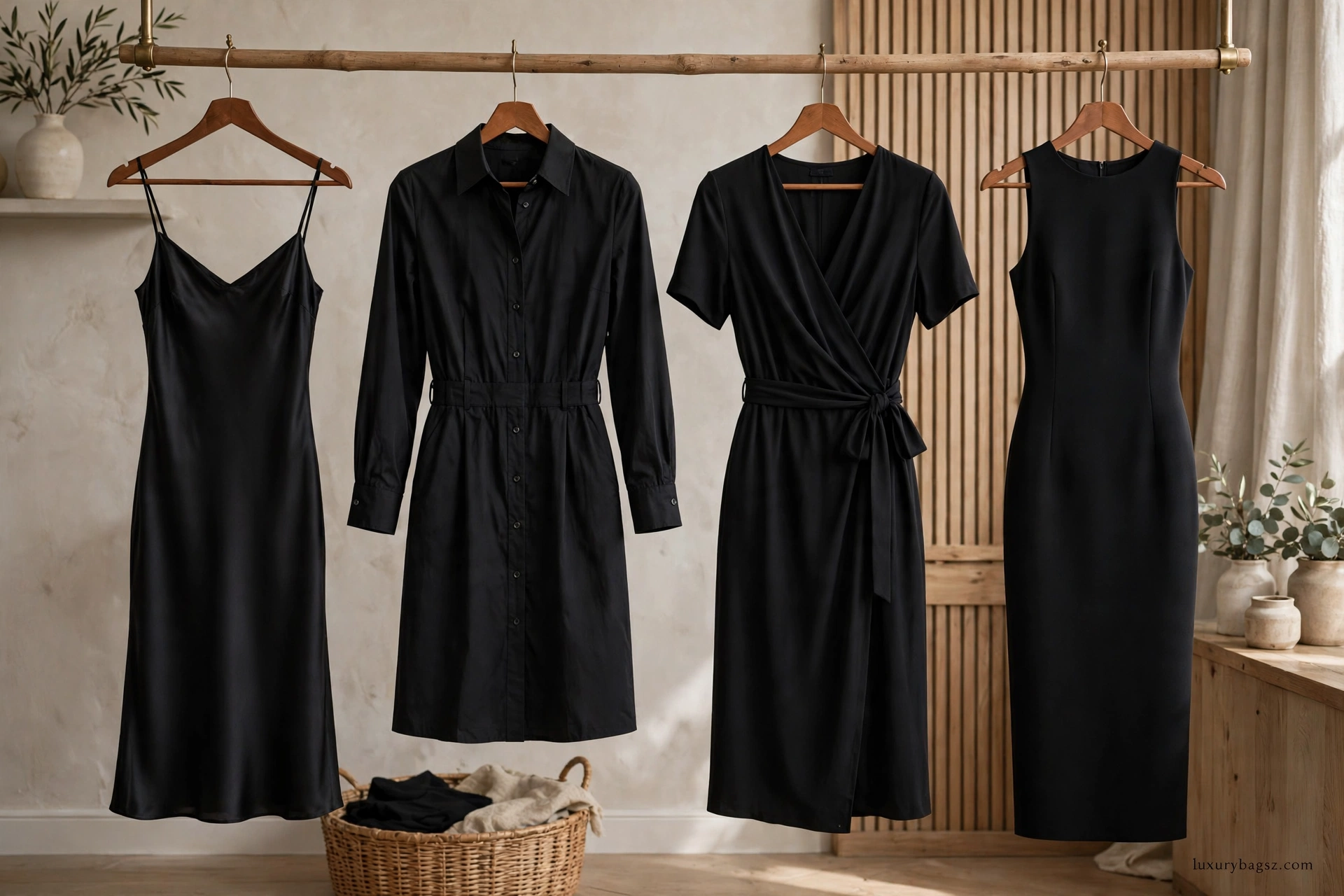
The shift and the tailored midi are the workhorses: clean lines, sleeves or a jacket-friendly neckline, hems at or below the knee. They take meetings, presentations and smart lunches. The wrap dress covers the middle ground — dinners, dates, gallery evenings — because it adjusts to the body and reads feminine without fuss. The slip dress is evening-first but layers well. Column and A-line shapes carry formal events. A long black column needs almost no jewellery; an A-line midi can be dressed up or down purely through shoes.
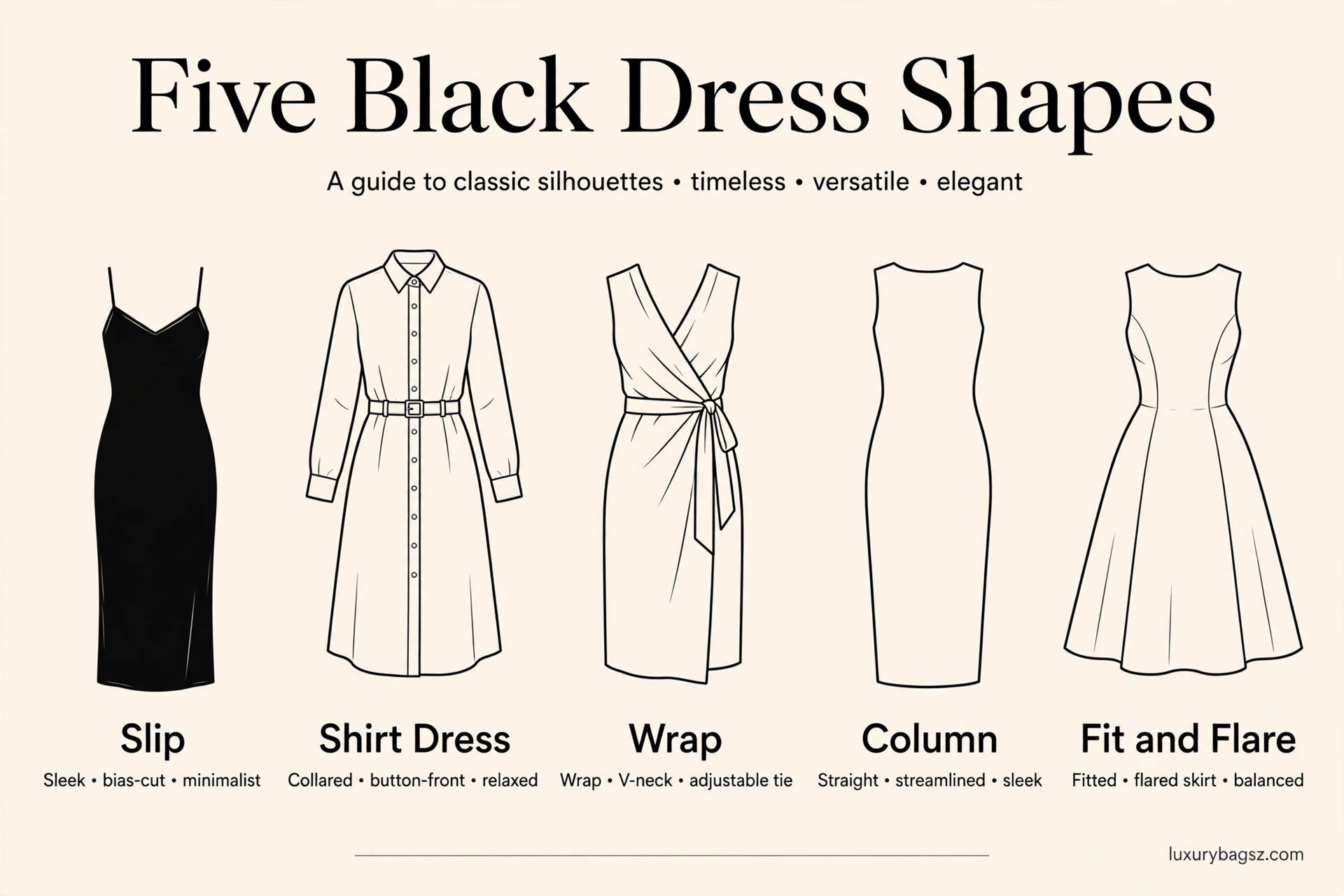
Sleeves settle many office questions at once. A sleeved black dress needs no jacket to look complete, travels better and moves between seasons with only a shoe change.
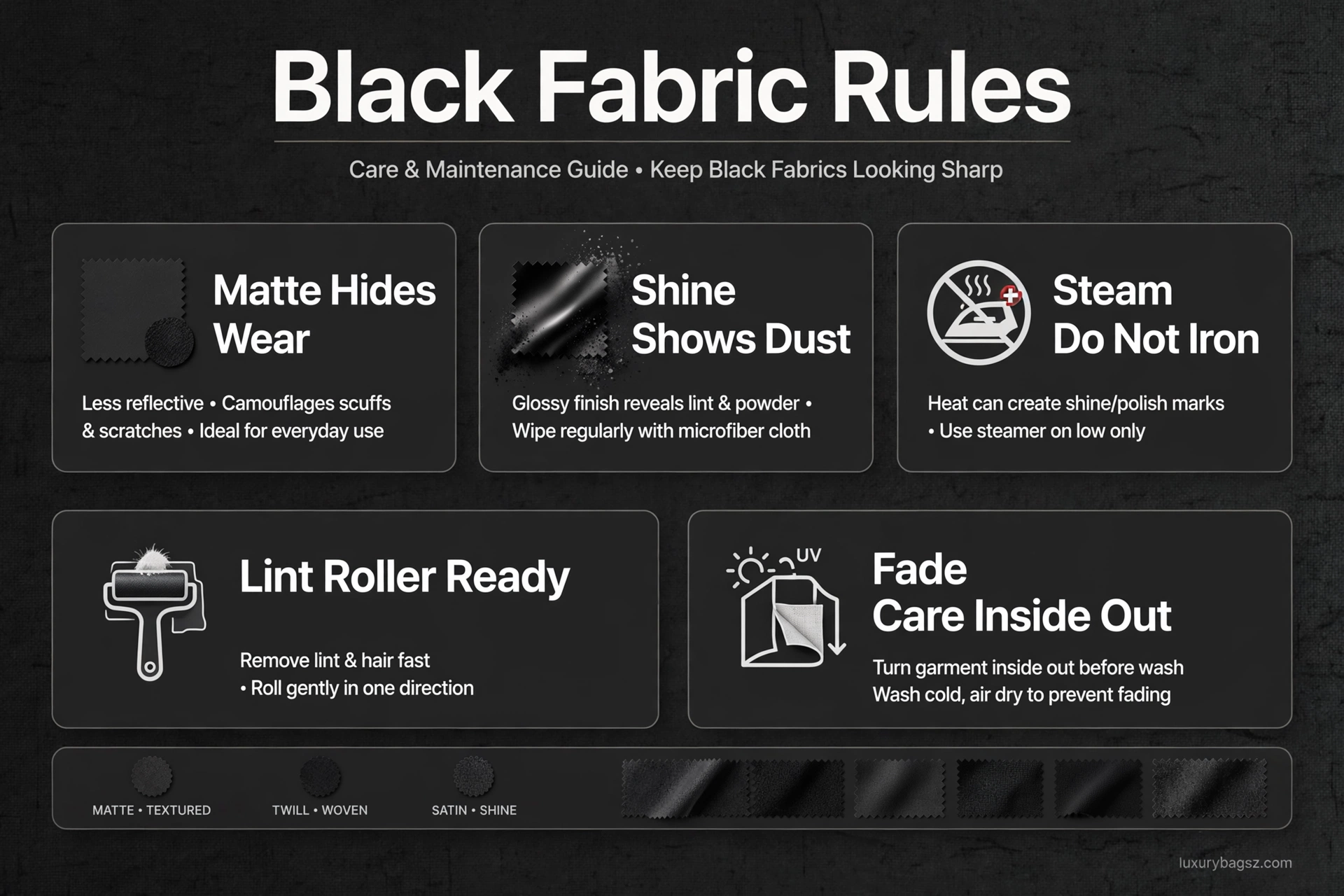
Keep a lint roller wherever the dress lives. Black's one daily weakness is that it advertises dust, pet hair and powder; thirty seconds of rolling protects the whole effect.
Black Dresses for Work, Done Properly
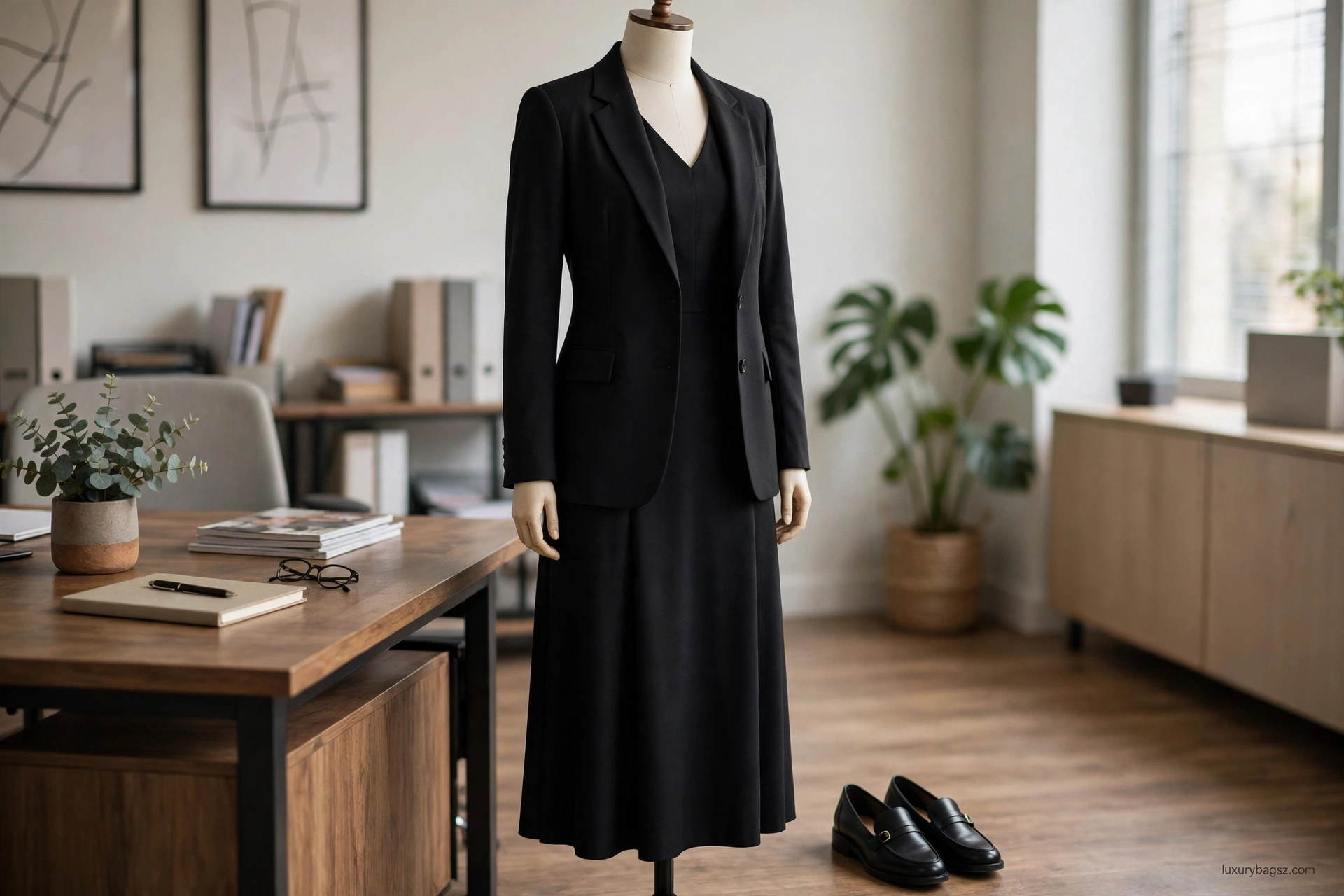
Office black should be matte, structured and unadorned: crepe, ponte or fine wool, with a neckline that needs no adjusting and a hem that behaves when you sit. Add a blazer for senior rooms and remove it for everything else. Shoes decide the temperature: loafers say modern, courts say classic, ankle boots say winter. Keep one test in mind. If the dress would also work at a cocktail party unchanged, it is probably an evening dress visiting the office, not a work dress at all.
The Wedding-Guest Question, Answered
Black at weddings was once read as disapproval; today it is widely accepted in most circles, especially for evening and city weddings, provided the styling is celebratory. The etiquette lives in the details: choose a festive fabric, add colour or metallic in shoes, bag or jewellery, and avoid anything that reads as mourning or bridal-party plainness. Lace is the classic solution, and our history of the black lace dress history and styling shows how it became the joyful way to wear black to happy events.
Fragrance and hair are part of the formula too. Day styling whispers; evening styling can afford a stronger scent and a sleeker finish, and the black dress carries both without change.
If the evening is formal, add the one thing day black avoids: shine at the throat or ear. The dress stays matte and lets the jewellery take the light.
Day to Evening: The Changeover Formula
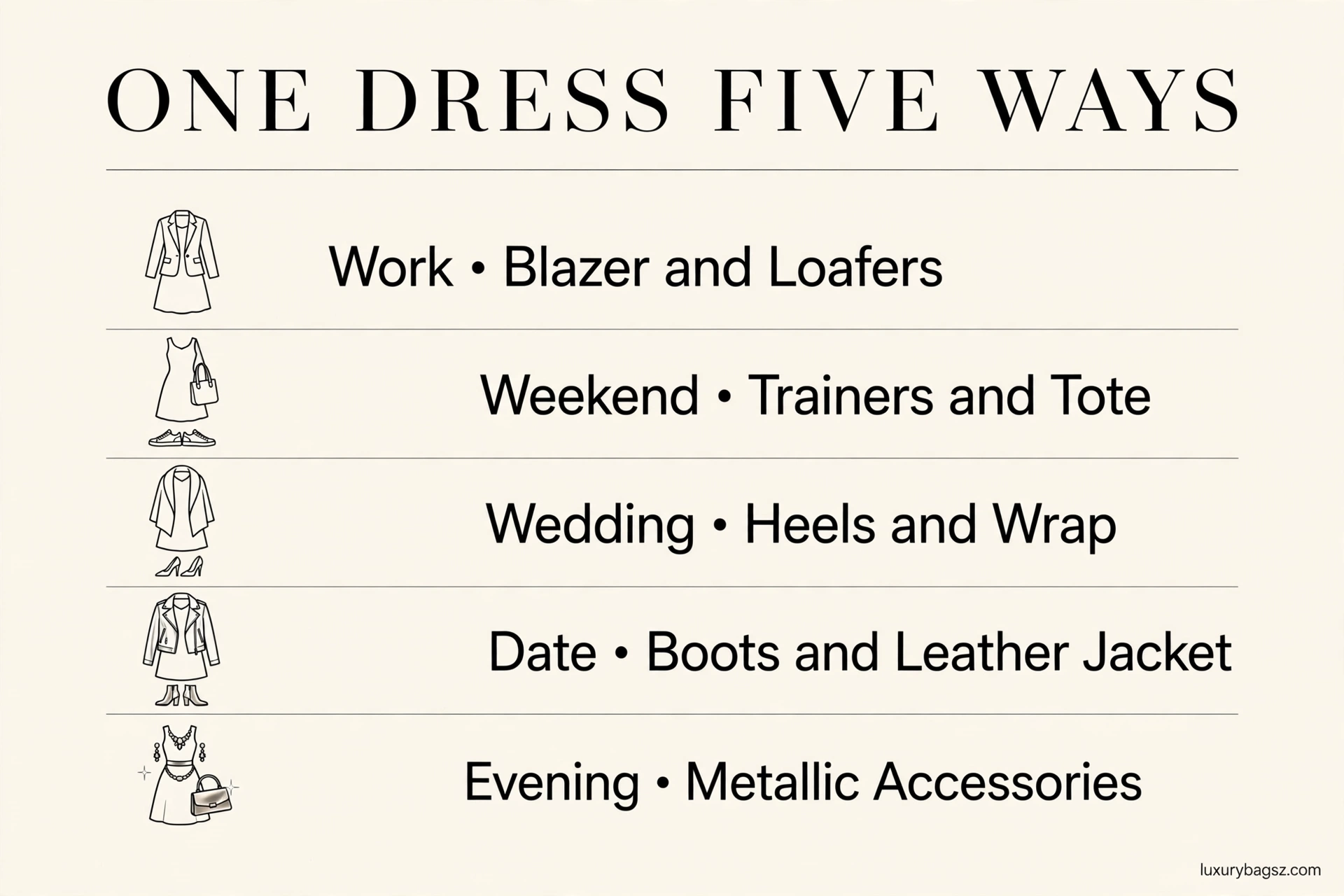
Start with the work midi. Remove the blazer, swap loafers for heeled sandals, trade the tote for a clutch, and add one piece of real jewellery. The dress has not changed; the occasion has. Hair and lip colour finish the move. What read as polish at noon reads as intent at night once the accessories sharpen, which is why a black base is so economical. Keep a small evening kit at work — heels, clutch, earrings — and the 6 p.m. invitation stops being a logistics problem entirely.

Evening Black: Satin, Velvet and the Clutch
Evening is where black earns its glamour. Satin catches light along the body's lines, velvet deepens the colour to its richest, and both photograph beautifully after dark. Our case for the satin dress as a wardrobe staple explains why one satin slip or column outperforms a rail of party dresses bought in panic. Finish with a small structured bag from our edit of designer party bags, and let the dress, not the accessories, hold the room.

Casual Black and Summer Black
The knitted or jersey black dress is the weekend answer: worn with trainers or flat sandals, a denim or leather jacket over it, and no jewellery beyond a watch. Summer black needs breathable cloth and looser cuts, or the colour's heat logic turns against you. Our summer dresses guide covers the shapes that keep black viable in hot weather. A black sundress with tan sandals and a woven bag reads as holiday dressing, not severity. Context, cloth and accessories decide the mood every time.
Fit, Fabric and Keeping Black Black
Black shows fit ruthlessly: pulling seams, a wandering waistline and shiny worn patches all announce themselves. Buy the size that skims, and tailor the rest. Choose fabric by season and formality together — crepe and ponte for day structure, satin and velvet for evening, linen blends and jersey for casual summer wear. Wash black dresses cool and inside out, with similar colours, and dry them out of direct sun. Faded black is the one version of this dress that suits no occasion at all.
One buying rule protects every occasion at once: try the dress seated, walking and reaching. Black shows strain before colour does, and a dress that only poses is a dress half bought.
Choose the dress that moves with your real life, and the colour will do the rest, invitation after invitation.
Frequently Asked Questions
Can I wear a black dress to a wedding?
In most modern circles, yes, especially for evening or city weddings. Style it festively with colour or metallic accessories and a joyful fabric such as lace, and it reads as celebration.
How many black dresses do I actually need?
Three cover nearly everything: a tailored work midi, an evening shape in satin or lace, and a casual knit or jersey dress for weekends. Two will do if one spans day to evening well.
Which black dress is best for work?
A matte, structured midi in crepe, ponte or fine wool, with a settled neckline and a hem at or below the knee. It should pass the sit-down and blazer tests without adjustment.
What shoes go with a black dress?
Almost everything, which is the point: courts or loafers for work, heeled sandals for evening, trainers or flat sandals for casual days. Metallics are the fastest evening upgrade.
Is a black dress appropriate for a funeral?
Yes, it remains the traditional and safest choice. Keep it plain, matte and modest, with quiet accessories, and it will be correct in any setting.
How do I stop black dresses looking dull?
Texture and contrast: mix matte cloth with one lustrous note — satin shoes, a patent bag, gold jewellery or a red lip. Dullness comes from everything matching in finish, not from black itself.
Can I wear black in summer?
Yes, in breathable fabrics and looser shapes: linen blends, cotton and jersey, worn with tan or woven accessories. Avoid heavy synthetic black on the hottest days.
What jewellery suits a black dress?
Gold warms it, silver cools it, pearls classicise it. Choose one metal family per outfit and let a single strong piece — earrings or a cuff — lead.
How do I keep black dresses from fading?
Wash cool, inside out, with dark colours only, use detergent made for dark fabrics, and dry away from sunlight. Store hanging in a dark wardrobe, not on a bright rail.
Are black dresses a good investment buy?
Among the best in a wardrobe. A well-cut black dress in good fabric repeats across years and occasions without dating, giving it an unusually low cost per wear.
Final Verdict: Two Great Ones Beat Five Ordinary Ones
Match the shape to the occasion — tailored midi for work, satin or lace for evening, knit for weekends — fit it properly, and keep the black deep with careful washing. Do that, and the black dress stops being a fallback and becomes the most reliable invitation answer you own.