Seasonal Shopping Edits: What to Buy for Spring, Summer, Autumn and Winter
One Edit per Season, Bought on Time: The Seasonal Edit in Brief
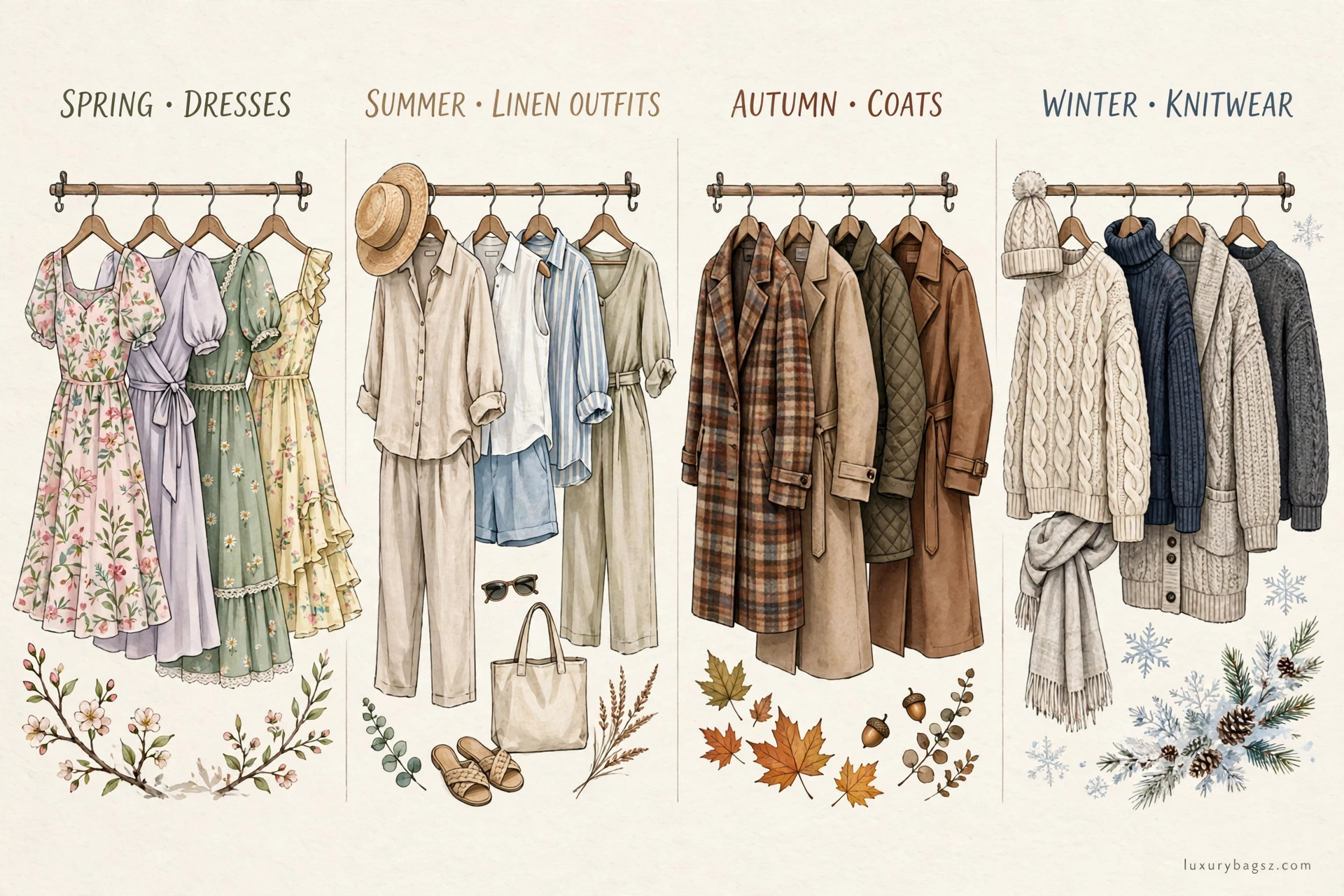
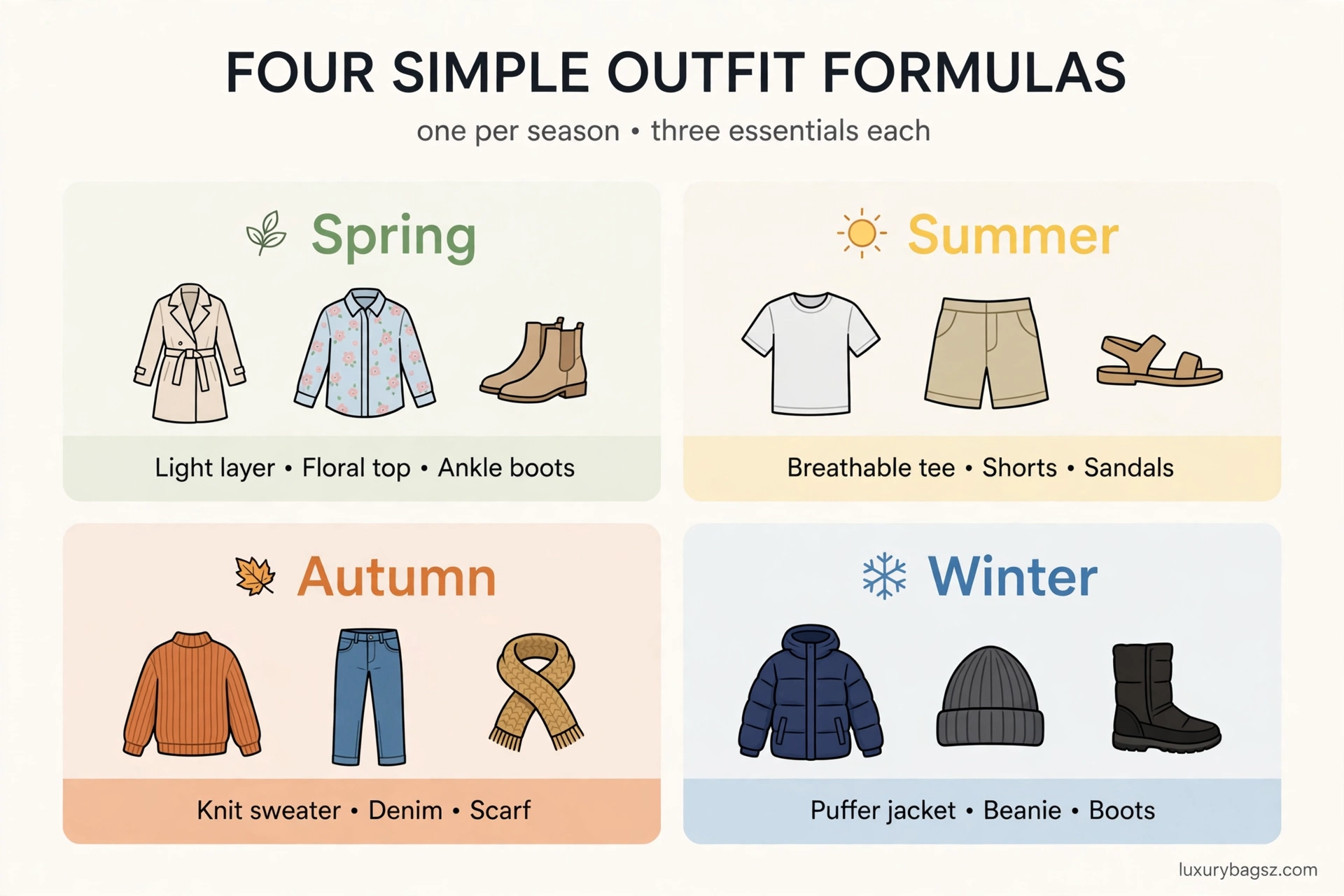
A good seasonal edit is short and early: spring needs a trench and light layers, summer needs linen and cotton, autumn needs a coat and boots, winter needs knitwear. Buy each edit as it lands, wear it for the full season, and skip the mid-season extras. Four small, timely edits beat one giant haul that half-misses the weather. This guide walks through what belongs in each season's edit, the occasions each one must cover, and the timing that gets you the best choice without paying panic prices.
Key Takeaways
- Plan four small edits a year, one per season, each with a clear job list.
- Spring: trench, light knit, loafers. Summer: linen, cotton dresses, sandals, straw bag.
- Autumn carries the biggest spend: coat, boots and a leather bag that works daily.
- Winter is mostly knitwear, layers and one strong festive piece for events.
- Buy at the start of the season for choice; buy again only in the end-of-season sale.
- Every edit should plug gaps in what you own, not restart the wardrobe.
How a Seasonal Edit Should Work
An edit is a filtered shortlist, not a catalogue. Start from your calendar: work, weekends, travel and any events in the next three months set the real brief. Then audit what you already own against that brief. The edit is only the gap: the coat that died last winter, the sandals that will not survive another holiday. Cap the list before you shop, ideally at five to eight pieces. A capped edit forces ranking, and ranking is where the money gets saved. Keep last season's list. Comparing lists year to year shows your repeats, and repeats are exactly where quality upgrades earn their keep.
When Each Edit Lands, and Why Timing Matters
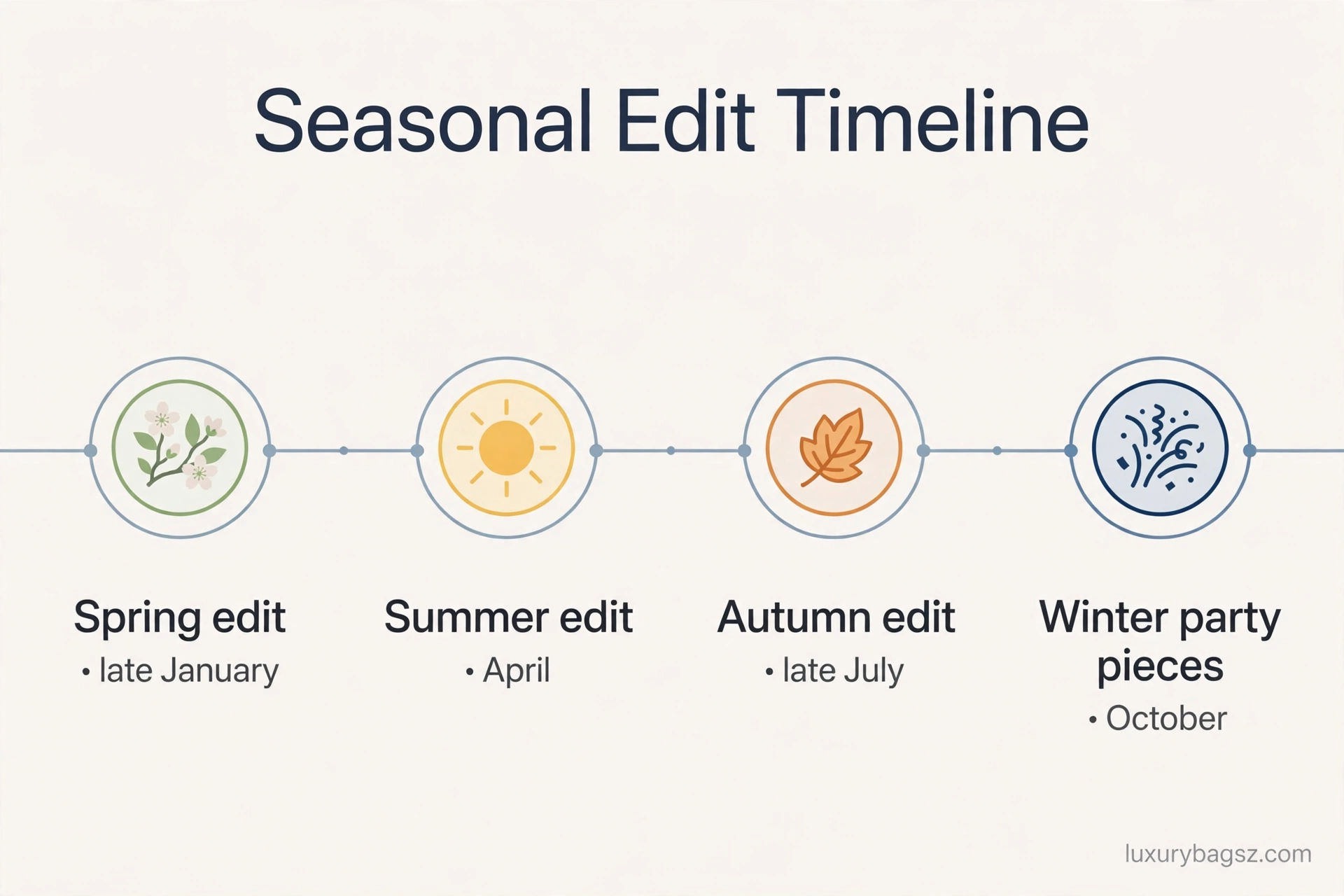
Spring edits land from late January, summer from April, autumn from late July and winter party pieces from October. Fashion's calendar runs ahead of the weather. Buying in the first weeks gives full size runs and honest choice. Waiting for discounts on seasonal pieces often means the common sizes are already gone. Our guide to luxury clothing brands helps here, because each season has its specialist houses worth checking first. End-of-season sales still matter, but use them for next year's classics: the coat, the boots, the plain knit that will be identical in twelve months.
Write the gap list before the edit opens, not while browsing it. Three columns work well: what wore out, what was missing at real events last year, and what would make existing pieces work harder. An edit that answers those columns stays small and useful. An edit written inside a retailer's app becomes a haul, and hauls are how wardrobes fill with near-duplicates.
The Spring Edit: Layers and Light Tailoring
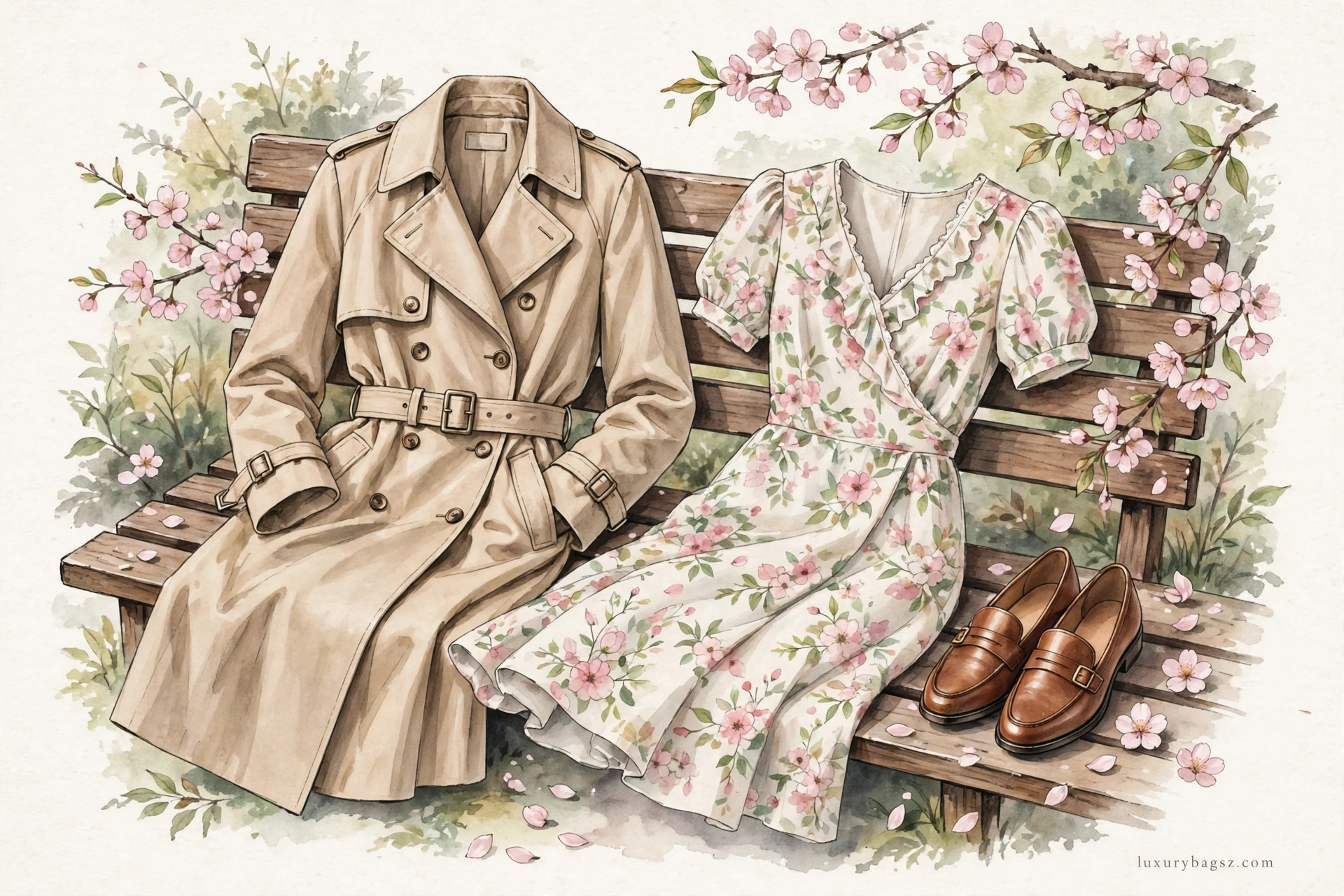
Spring is a layering problem: cold mornings, warm afternoons. The edit answers with a trench or light coat, a fine knit, a shirt layer and loafers or flats. Add one dress that works with a jacket over it, in a print or colour that lifts winter's leftovers. That single dress carries most spring occasions. Trousers in a lighter wool or cotton twill bridge the gap until summer cloth feels right. Avoid buying summer dresses in the spring edit; they land cheaper later. Shoes matter more than tops this season. A good loafer or ballet flat makes last year's clothes read as this spring's outfit with no other change. Fabrics should bridge, not leap. Mid-weight wool, cotton twill and fine knits handle a season that can deliver frost and 18 degrees in the same week. Keep one smarter layer in reserve: a tailored blazer or a neat cardigan turns spring basics into occasion dressing when invitations land at short notice.
Occasions First: Weddings, Holidays and Work Peaks
Each season has one occasion that drives the hardest buys. Spring and summer bring weddings, autumn brings the work reset, winter brings parties. List the occasion outfits before the everyday ones. An event look bought calmly in the edit costs half of the same look bought the week of the event. Reuse across occasions where you can: the spring wedding dress with a different jacket covers a christening, a race day and a smart lunch. Holiday dressing sits inside the summer edit, not apart from it. Pieces that only work on a beach for seven days are the worst value in any season.
Occasions deserve their own mini-edits inside the seasonal ones. A wedding in June, a work trip in September and a December party each need one considered piece, bought when the relevant edit opens rather than the week before. Panic purchases at full price, in the wrong size, are the single biggest leak in most clothing budgets — and the easiest one to close.

The Summer Edit: Cloth That Breathes
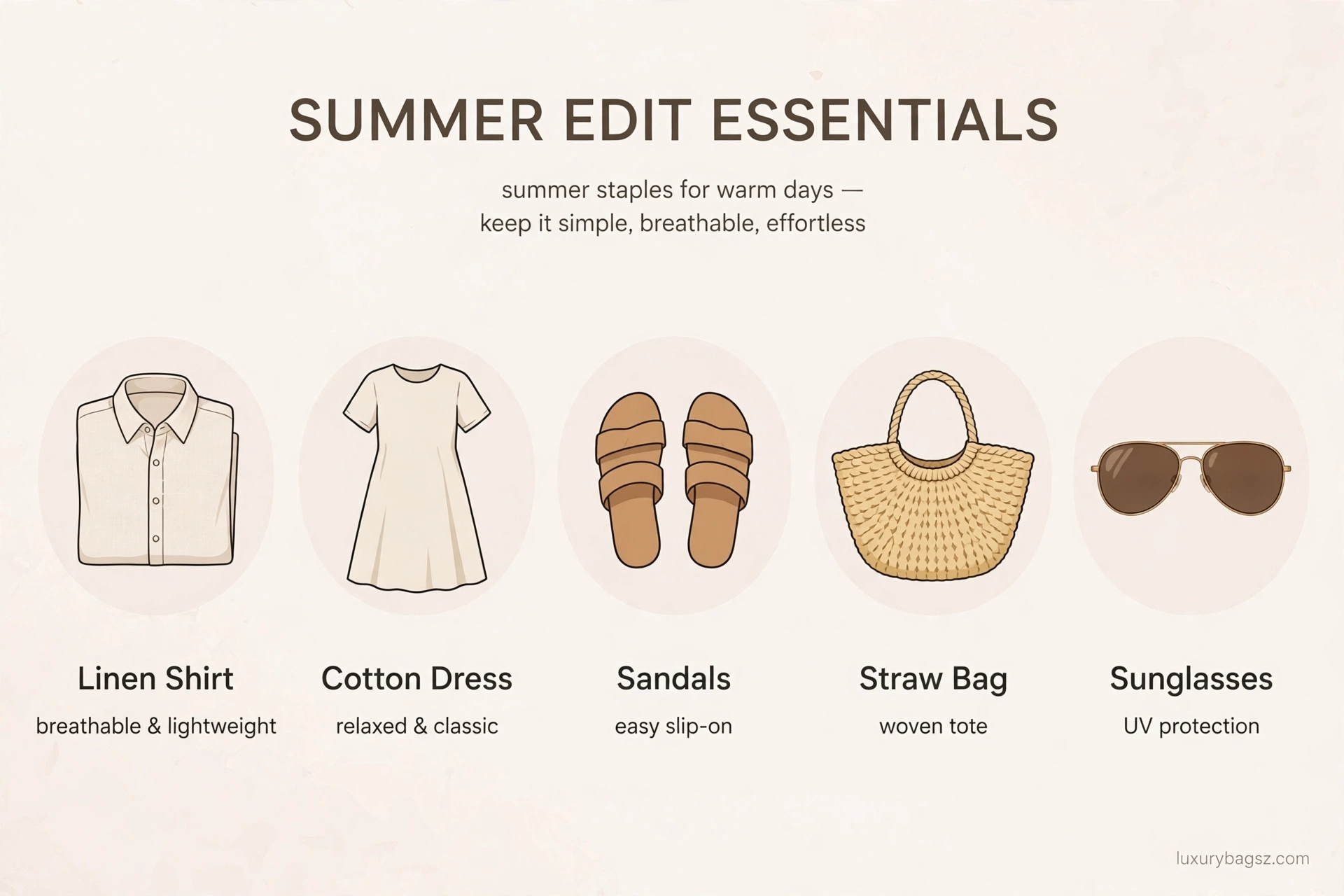
Summer edits live or die on fabric. Linen, cotton lawn, voile and seersucker carry the season; synthetics in heat are the edit's classic false economy. Core buys: a linen shirt or dress, cotton trousers or a skirt, flat sandals that walk, and one smart sandal for evenings. Our edit of designer straw bags covers the bag side, and summer sandals day to night plans the footwear in the same spirit. Finish with sunglasses and a light scarf for travel days. Small pieces, but they are the ones reached for daily in a heatwave.
Read cloth weights, not just cloth names, in the summer edit. Pure linen creases beautifully and honestly, but a linen-cotton or linen-viscose blend keeps a cleaner line for work. Tropical-weight wool sounds like a contradiction and is not: a high-twist, open-weave wool breathes better than most cotton and travels without creasing. The label's weave matters more than the fibre headline.
The Autumn Edit: The Year's Biggest Decisions
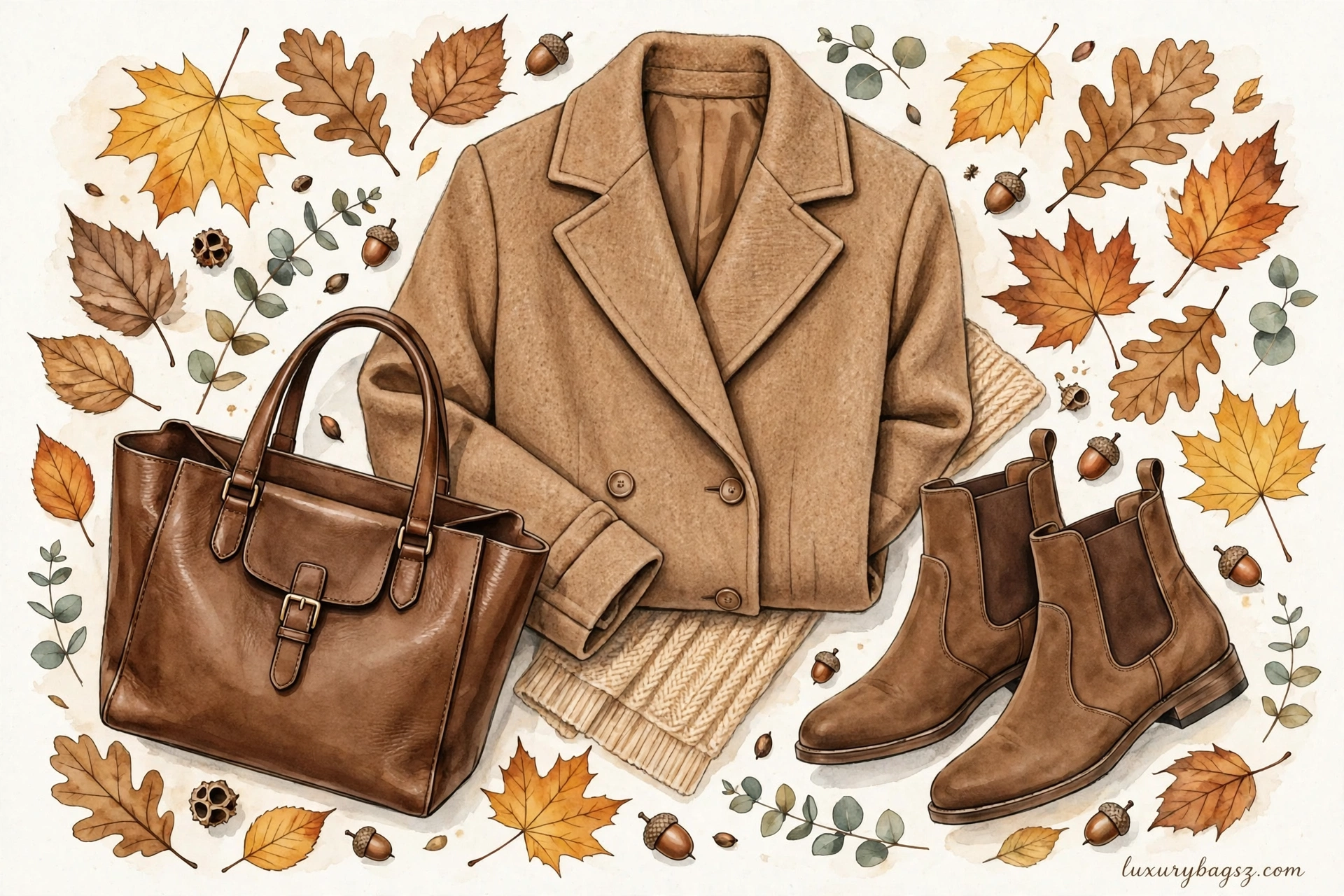
Autumn is where the money goes: a coat, ankle or knee boots, a daily leather bag and the knitwear refresh all land within weeks of each other. Sequence the spending. Coat first, because it frames everything; boots second, fitted to your real trousers and skirts; bag last, once the palette is set. This is also the season to repair last year's pieces before replacing them. A resole and a re-heel often return boots to the edit for a tenth of replacement cost. Colours anchor in autumn: camel, chocolate, burgundy and charcoal bought now will steer your winter edit without any extra planning. Accessories finish the reset cheaply and well: a leather belt, a wool scarf in the season's anchor colour and refreshed tights and socks make old outfits read as new. Do not neglect fit work in this edit. Autumn is when summer's relaxed shapes meet tailoring again, and one alteration visit aligns the whole wardrobe.
Footwear belongs in the edits too, bought with the same timing logic. Summer sandals bought in the spring edit exist in your size; boots bought in the autumn edit get a full season of wear before the sales make you wish you had waited. Shoes bought mid-season in a panic are rarely the pair you keep — the edits exist precisely to prevent that purchase.
The Winter Edit: Knitwear, Warmth and One Festive Piece
Winter edits should be the smallest of the year. The heavy coat exists; the job now is knitwear depth, warm layers and weatherproof footwear care. Buy knitwear in pairs of weights: one fine layer for under tailoring, one chunky knit for weekends. Add tights, gloves and a serious scarf before any new dress. One festive piece covers the party run: a velvet or silk dress, or a tailored jumpsuit, chosen to work with shoes and bags already owned. Our guide to winter white bags shows how one bright accessory lifts the dark winter palette without a new outfit.
Decide the winter coat question in the autumn edit, even if the coat itself is bought later. Trying coats in October, while every size and colour exists, costs nothing and teaches you your size in the two or three houses you like. When the January sales open, you are no longer guessing — you are checking a list, which is the state every good purchase starts from.
Keeping Edits Honest Year After Year
Photograph each edit as it arrives. A simple phone album per season becomes your record of what you actually bought and, later, what you actually wore. At the season's end, note the pieces worn most and least. Next year's edit should buy more like the first group and none like the second. Store off-season pieces clean and repaired. An edit that starts from a cared-for base needs fewer replacements and can spend on upgrades instead. Over three or four years this rhythm builds a wardrobe that feels current every season while quietly replacing very little. That is the whole point.
Frequently Asked Questions
How many pieces should a seasonal edit have?
Five to eight for most people. Fewer if the wardrobe base is strong, more only in a genuine rebuild year such as a new job or a size change.
When do seasonal edits appear in stores?
Spring from late January, summer from April, autumn from late July and winter party lines from October. Online edits usually land a week or two earlier.
Should I buy seasonal pieces in the sale instead?
For next season's classics, yes. For this season's needs, sale stock is often the sizes and colours nobody wanted, so buy key pieces early at full choice.
What belongs in every summer edit?
Breathable cloth first: a linen piece, a cotton dress, walkable sandals, an evening sandal, sunglasses and a straw or canvas bag for daily carry.
Why is the autumn edit the most expensive?
Coats, boots and bags all renew at once, and each is a high-ticket category. Sequencing the buys and repairing last year's pieces keeps the total sane.
How do I plan an edit around a wedding season?
List event outfits first, then everyday gaps. Choose one dress and bag pairing that can be restyled across events with different jackets and jewellery.
Can one edit cover work and weekends?
Yes, if you buy crossover pieces: tailored trousers, a blazer, knitwear and loafers serve both. Keep purely weekend pieces to one or two per edit.
What should I never buy in a seasonal edit?
Pieces for a life you do not have: beach-only sets without a trip booked, or party dresses in a season with no events. They crowd out the real gaps.
How do I stop edits repeating last year's mistakes?
Keep the photo record and the end-of-season notes. Buying patterns are easy to see in pictures, and the fix is usually one category you keep overbuying.
Do edits work on a small budget?
They work better on a small budget. A capped, timed list stops impulse buys, and repair-first habits stretch the base wardrobe for years.
Summary: Four Small Edits, Bought Early and Capped
Seasonal shopping works when each edit is short, early and built from your actual calendar: layers for spring, breathable cloth for summer, the big coat-and-boots decisions in autumn, knitwear depth in winter. Cap the list, repair before replacing, and let the record of past edits steer the next one.