Most Expensive Handbags: Record Prices and the Pieces Behind Them
Record Prices, Reported Honestly: The Top End in Brief
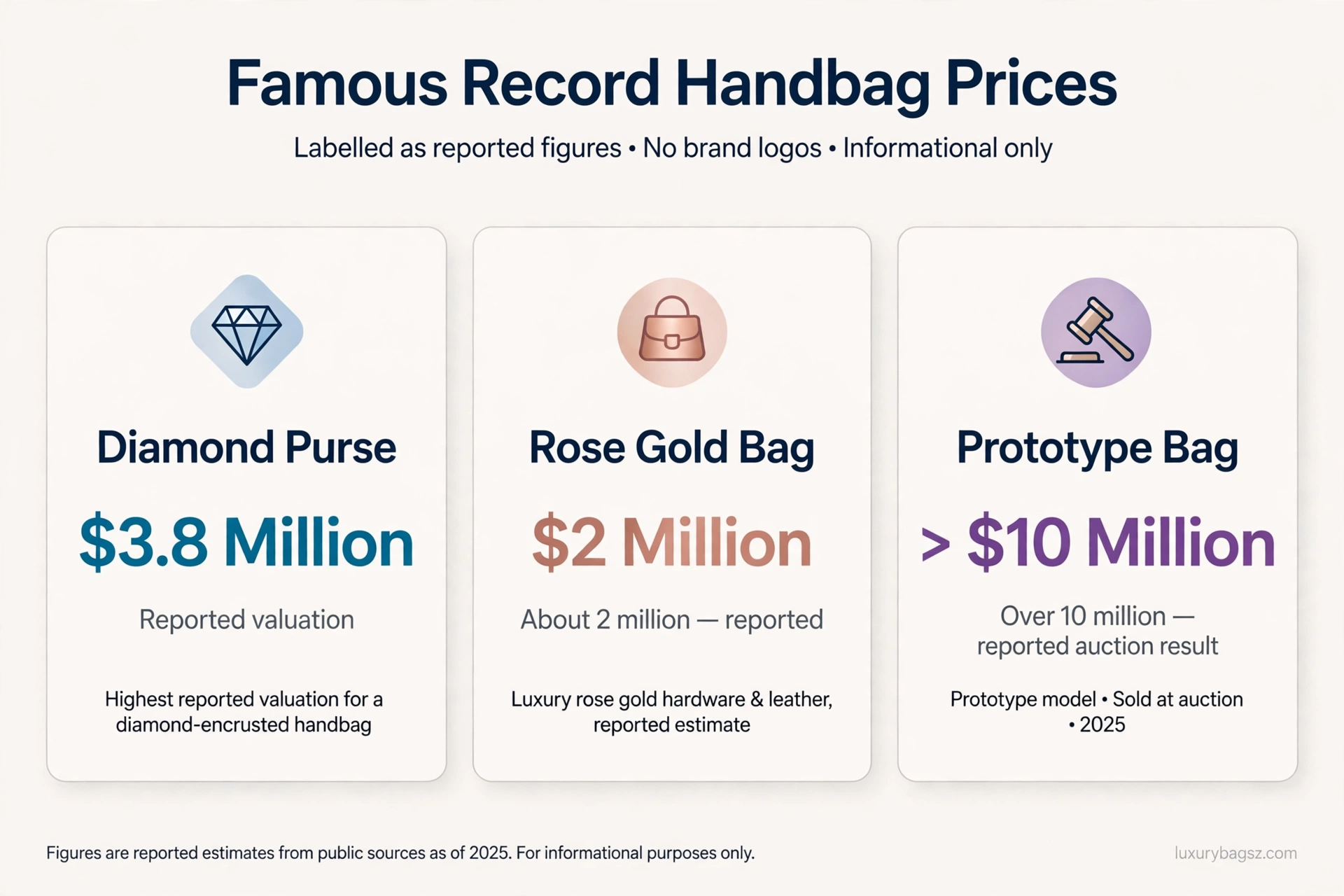
The most expensive handbag ever made is widely reported as the Mouawad 1001 Nights Diamond Purse, valued at a reported $3.8 million and covered in thousands of diamonds. Below it sit one-off jewelled pieces and, more importantly for collectors, auction records: diamond Himalaya Birkins reported around and above $500,000 at their peak sales. Every figure here is a reported or record price, not a shopping price. These bags were made as records, gifts or auction events, and this guide explains what each number really means.
Key Takeaways
- The reported top figure is $3.8 million for the Mouawad 1001 Nights Diamond Purse.
- Jewelled one-offs dominate the top; exotic Birkins dominate the auction records.
- Himalaya Birkins with diamond hardware hold the strongest reported auction results.
- Record prices include publicity value; they are not resale guarantees for normal bags.
- Rarity, exotic skins, precious hardware and provenance drive every top result.
- Ordinary luxury bags live in a different market; do not price them off these headlines.
How to Read These Prices Without Being Misled
Three kinds of figure appear in expensive-bag lists: maker valuations for one-off pieces, auction hammer results, and retail prices for exotic standard models. A maker valuation, like the reported $3.8 million on the Mouawad purse, is an asking figure set by its creator for a record attempt, not a tested market price. An auction result is real money paid on a day, but it includes two determined bidders, sale theatre and a buyer's premium on top of the hammer price. Keeping the three apart is the whole skill. Lists that mix them freely make entertaining reading and very poor buying advice.
Hold one distinction firmly before the numbers blur together: a valuation is an opinion, a retail price is an offer, and an auction result is a fact. Only the third proves that money changed hands. Most lists in this genre shuffle all three into one ranking, which is how a purse nobody bought can sit above a bag two collectors fought over. This list keeps them labelled.
The Jewelled One-Offs at the Very Top
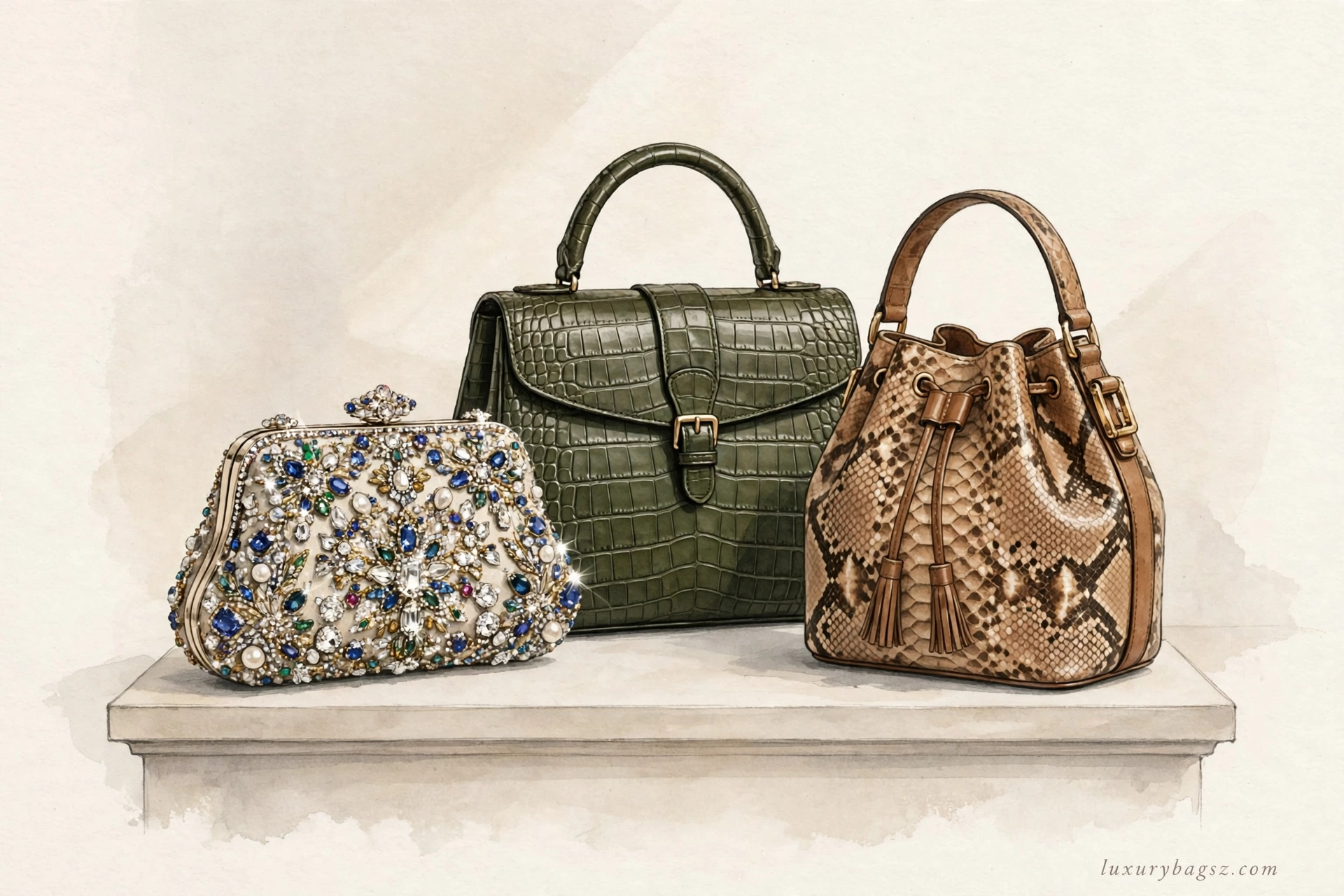
The Mouawad 1001 Nights purse is reported to carry 4,517 diamonds set in 18-carat gold, with a reported making time of around 8,800 hours by ten artisans. Hermes jewelled pieces follow in reported lists: a platinum Birkin by Ginza Tanaka, reported around $1.9 million, and a solid rose gold Kelly reported around $2 million. A diamond Chaine d'Ancre style Hermes piece is also reported near $1.4 million. These are jewellery objects shaped like bags, priced as jewellery first. None trades like a normal handbag. Their values rest on stones, gold weight and fame, and each would need its own specialist sale to test the figure.
Many jewelled one-offs were built as publicity pieces — a jeweller's advertisement in bag form, made to be photographed, exhibited and talked about rather than carried. That does not make them fraudulent; the stones and workmanship are real. It does mean their "price" functions like the price on a concept car: a statement of value by the maker, untested by any buyer.
Auction Records: Where Real Money Has Moved
Auction houses give the firmer ground. Diamond Himalaya Birkins have produced the headline results, with reported sales around $380,000 to over $500,000. In 2025, the original Birkin prototype made for Jane Birkin was reported to sell in Paris for a figure above $10 million, a record driven by provenance, not materials. Our dedicated guide to the most expensive Hermes Birkin bag tracks how those Birkin records built up over the years. Standard exotic Birkins and Kellys in rare colours also set records well above retail, though far below the diamond and prototype results. Auction houses now run dedicated handbag sales in Paris, Hong Kong, New York and London, which has deepened the bidder pool and steadied the calendar of record attempts each year. Results are published with the premiums included, so when you compare a headline with a retail price, remember that part of the gap is fees, taxes and the theatre of a live contest.
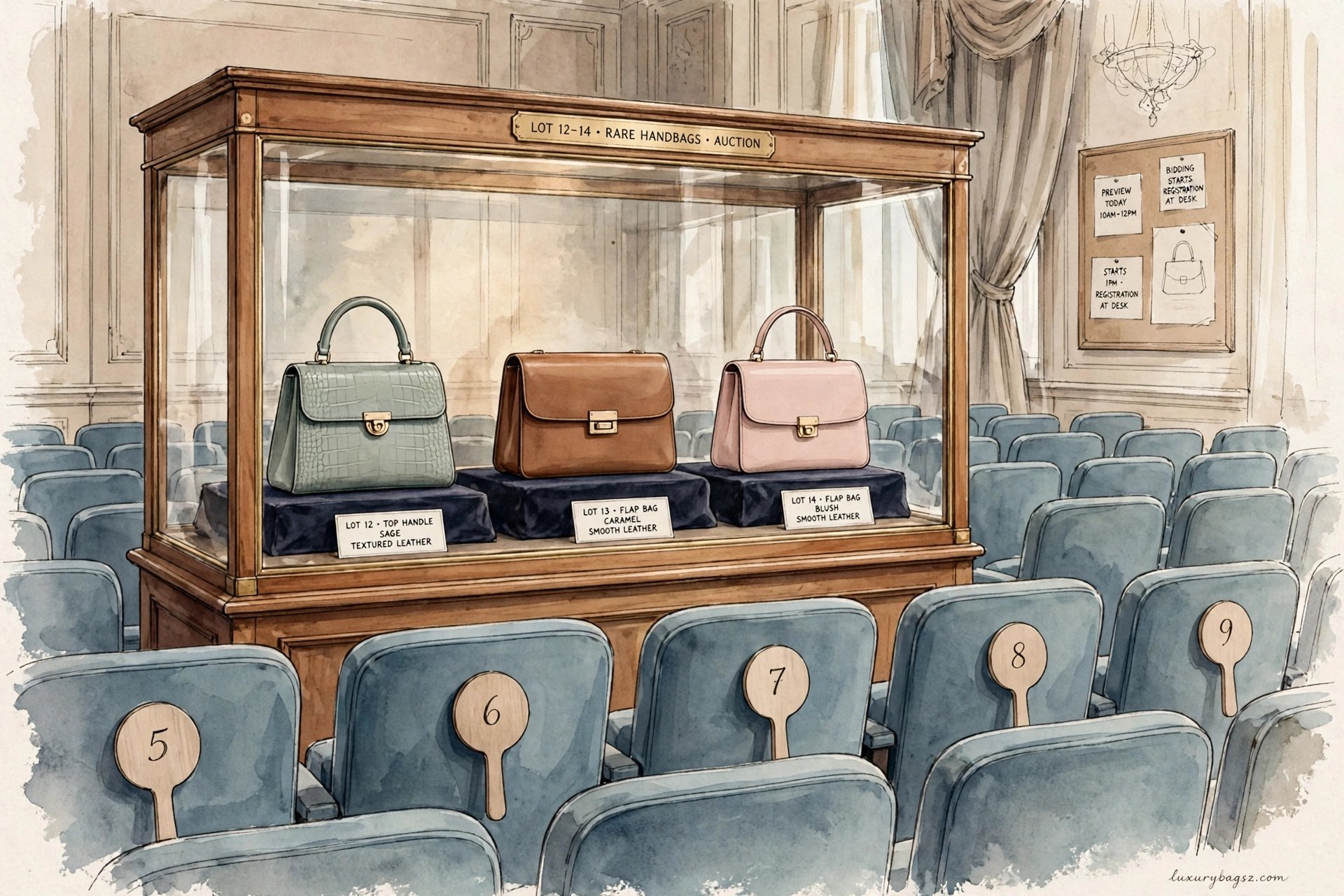
The auction houses have professionalised handbags over the last decade, with dedicated departments, specialist sales and condition reports written like jewellery catalogues. That machinery matters to the records: when a bag is researched, guaranteed and marketed globally by a major house, more bidders trust it, and trusted lots make the prices that make the headlines.
Condition grading quietly moves these numbers too. Auction results are quoted for the bag as sold, and a pristine example with its full set — box, dust bag, receipt, clochette — will be reported beside a worn one as though they were the same object. When a record is cited, the condition is part of the record. Strip that context away and the ranking flatters the worn bags.

Retail's Top Shelf: Expensive, but a Different World
At retail, the ceiling is set by exotic skins. Crocodile and alligator Birkins, Kellys and Constance bags sit at the top of normal price lists. Our breakdown of Hermes handbag prices shows how far even exotic retail prices sit below the auction headlines. Chanel, Dior and Louis Vuitton exotic pieces also reach high five figures at retail, yet they rarely approach Birkin auction territory on resale. The lesson for buyers: retail expensive means scarce and costly to make; record expensive means scarce, famous and contested. Only the second makes headlines.
Retail's top shelf runs on different logic: scarcity by invitation rather than by auction. The most expensive bags a house will sell you — exotic skins, special orders, diamond hardware — are offered to established clients, in limited numbers, at prices that are high but published to those clients. They are genuinely costly, and still usually an order of magnitude below the record headlines.
What Actually Drives a Record Price
Rarity leads: a one-of-one or tiny-run piece removes the ceiling that identical stock puts on any price. Provenance follows, as the prototype Birkin proved. Materials matter in a strict order: precious stones and solid gold first, exotic skins second, fine regular leathers a distant third. Condition and completeness lift results further at auction, where full sets with receipts and original boxes attract the strongest underbidding. Finally, timing: a record needs the right room on the right day. The same bag can miss its estimate a season later, which is why records cluster in hot markets.
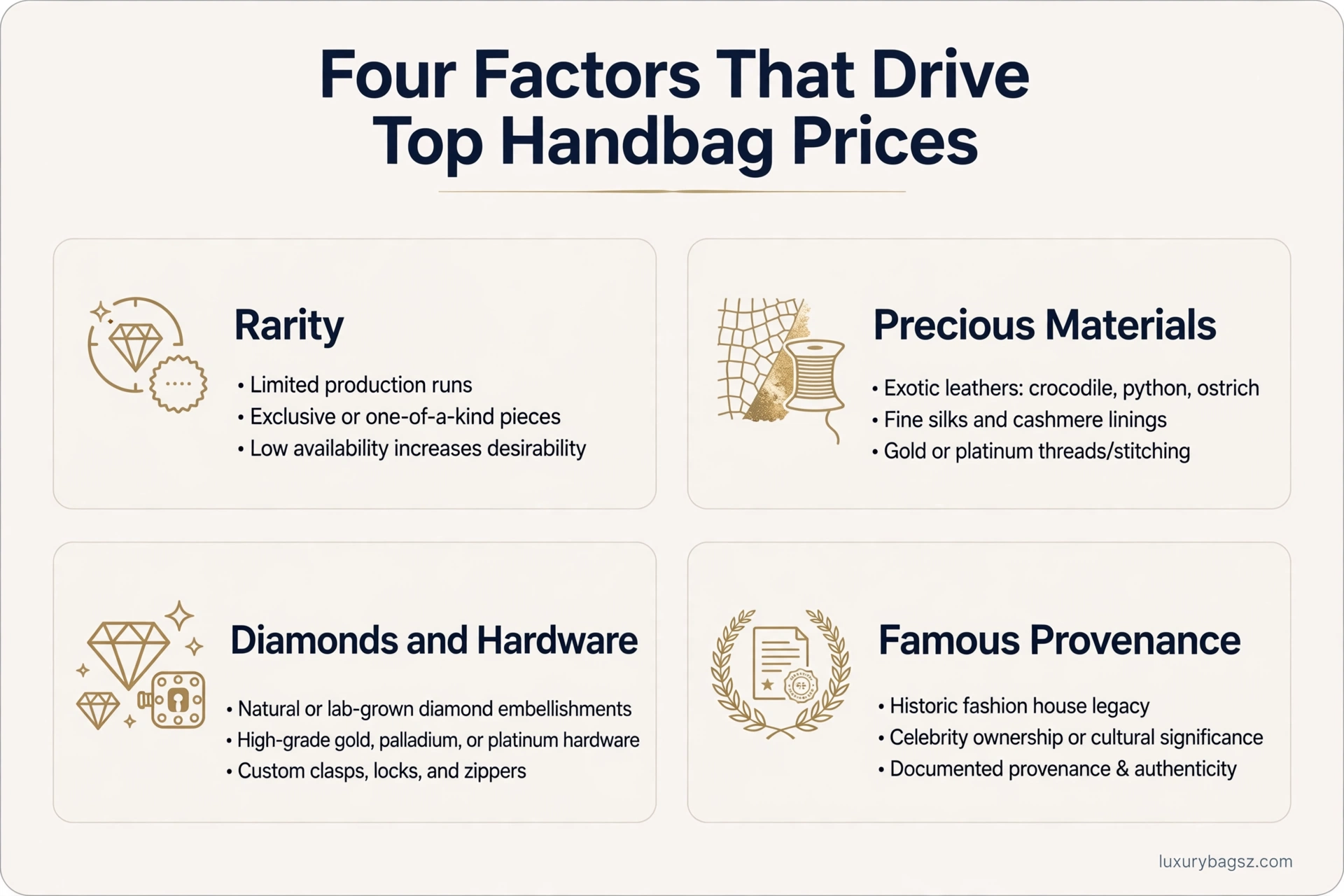
Provenance is the quiet multiplier. A bag documented from the boutique — receipt, care booklet, correspondence, a famous previous owner with photographs — removes the buyer's fear, and fear is what keeps bids low. Two otherwise identical rare bags can finish far apart at auction purely because one arrives with a paper trail and the other asks the room to trust it.
Timing is the final driver, and the least visible. A rare bag sold when two determined collectors are in the room makes a record; the same bag a season later, with one of them satisfied, can make half as much. Headlines report the number, not the room. Read every record as the product of the bag, the paperwork and the particular afternoon it sold on.
The Himalaya Story: Why One Finish Rules the Records
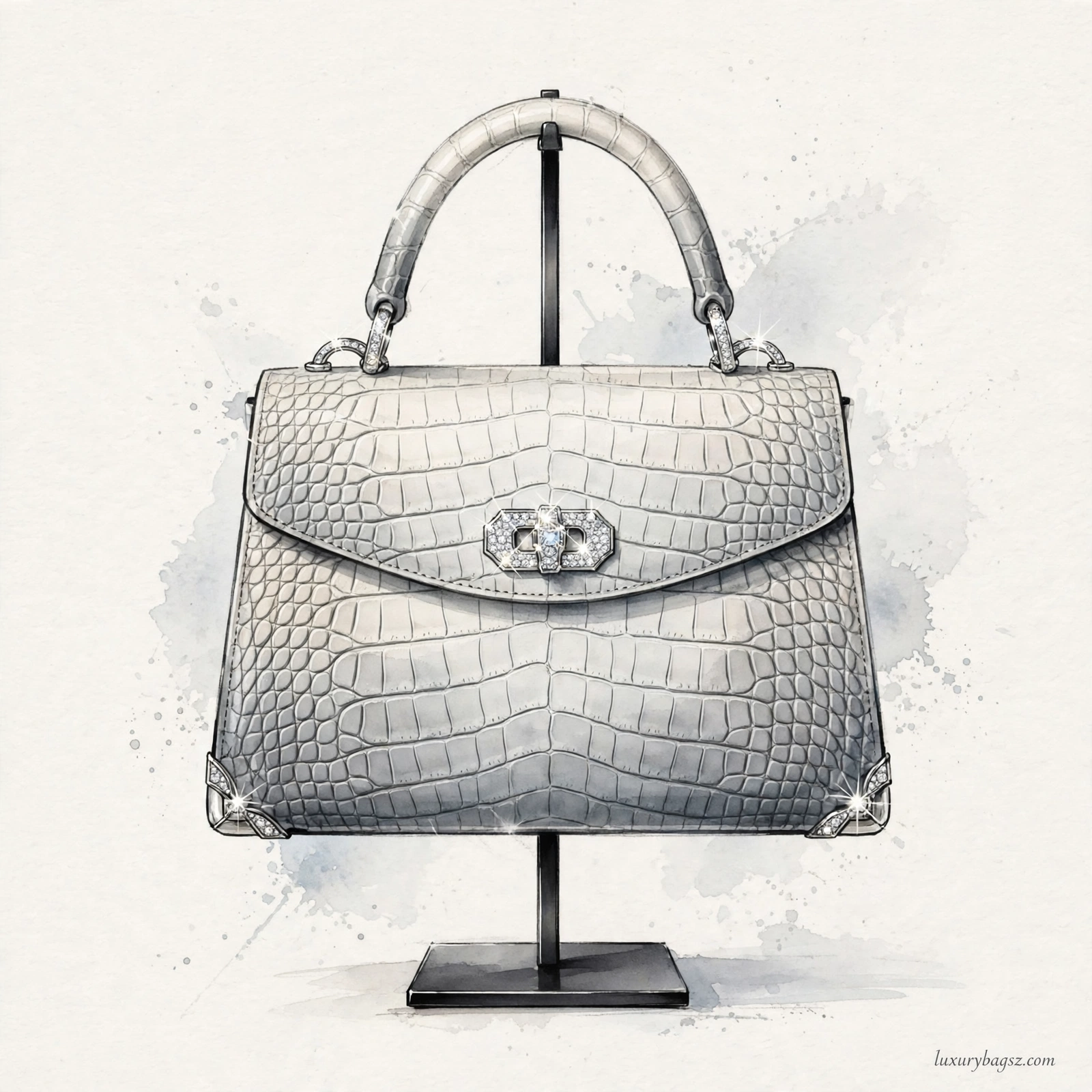
The Himalaya finish grades exotic crocodile from white at the centre to smoky grey at the edges, echoing snow-capped peaks, and it is exceptionally hard to produce. Read our explainer on what is a Hermes Himalaya Birkin for how the finish is made and why supply stays tiny. Add white gold and diamond hardware and the bag becomes both the rarest regular model and a jewellery piece, which is why it holds the model records. Reported Himalaya results vary by size, hardware and year, so any single figure should be read as that sale, on that day, not a standing price. Smaller sizes have led many recent results, because collectors prize the jewel-like scale, while larger examples appeal to a narrower group of buyers. The finish also explains the care premium: pale exotic skins mark easily, so the cleanest examples command the strongest underbidding whenever they appear.
Ownership at this level carries costs the headlines skip. Diamond hardware needs specialist insurance, exotic skins need controlled storage, and some pieces cannot cross certain borders without paperwork because of wildlife-trade rules on exotic leathers. Collectors budget for all of it. Anyone tempted purely by the glamour should hear the unglamorous part first: the record price is the entry fee, not the whole cost.
Buying Near the Top Without Chasing Records
Collectors shopping high exotics should buy through houses or dealers who guarantee authenticity in writing and disclose restoration plainly. Auction buying adds premiums, taxes and no returns, so set a ceiling before the sale and include every fee in it. Our infographic below maps the flow. Never stretch for a bag because a headline says its cousin set a record. Record heat raises asking prices on ordinary examples for months afterwards. The sound top-end buy is a rare but usable bag, in full set, bought below the froth. Patience, at this level, is worth more than speed.
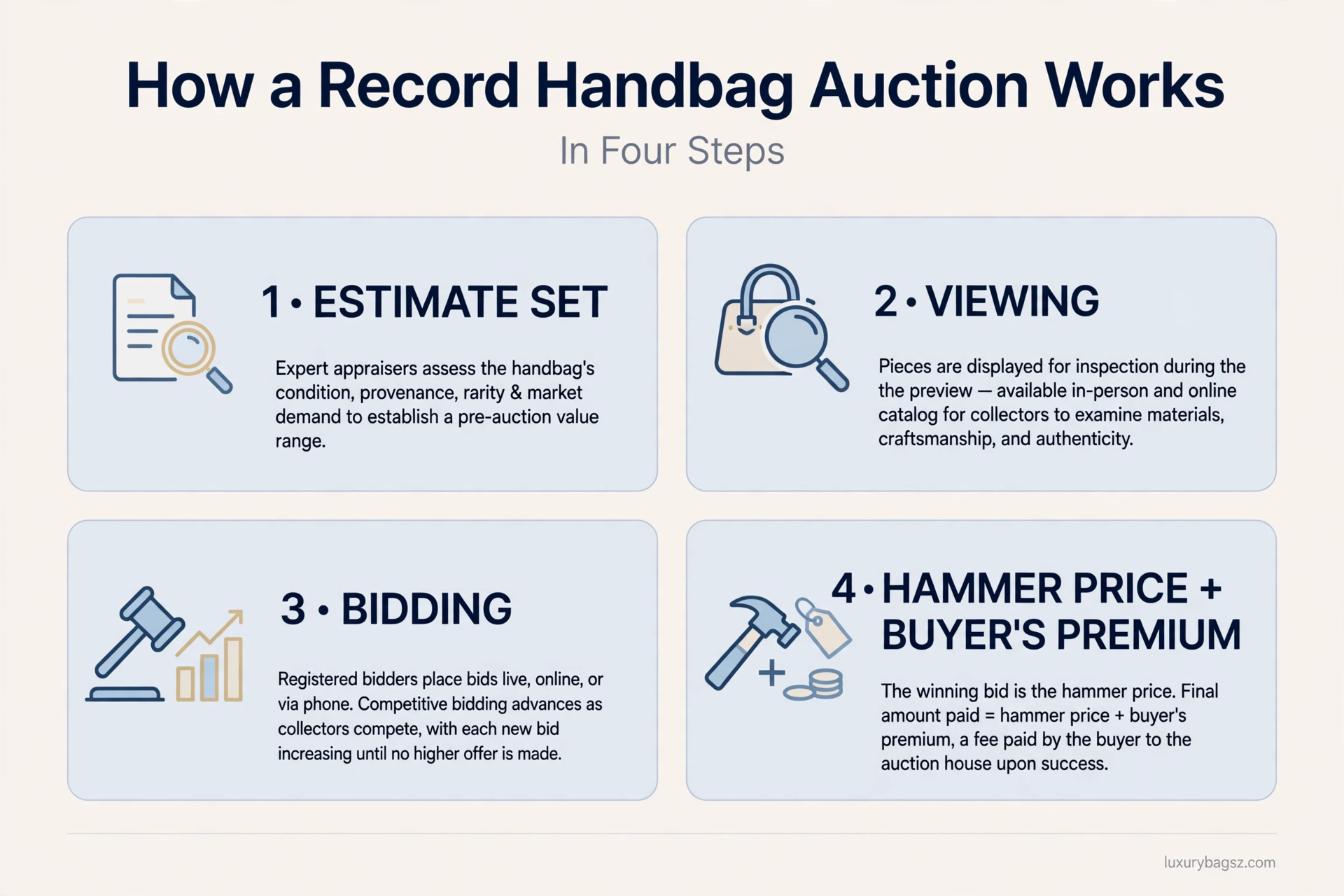
Buying near the top, sensibly, starts with relationships rather than records. Houses allocate their rarest bags to clients they know; resellers price the same bags with a premium for instant access. Neither route rewards impatience. Decide the exact bag, finish and condition you want, learn its last few real selling prices, and let two or three opportunities pass before bidding on the fourth.
What These Records Mean for Normal Buyers
Record prices pull the whole market's imagination upward, but they do not reprice a standard leather bag in a normal boutique. They do explain why houses guard exotic supply so tightly, and why waiting lists and purchase histories shape who is offered what. For most readers, the useful takeaway is perspective: our tour of iconic designer handbags covers the classics that deliver daily luxury at human prices. Enjoy the records as spectacle and craft. Buy, if you buy, for use, fit and quality, and let the million-dollar headlines stay entertainment.
One last effect worth naming: records drift with currencies and fashion cycles. A price set in a strong year can stand untouched for a decade, then fall twice in eighteen months when tastes rotate. Treat every figure in this article as a snapshot of reporting at a moment in time — which is exactly why they are framed as reported and record prices throughout, never as promises. That honesty is the whole point of the list.
Frequently Asked Questions
What is the most expensive handbag in the world?
The Mouawad 1001 Nights Diamond Purse, valued at a reported $3.8 million. It is a jewelled one-off in 18-carat gold with a reported 4,517 diamonds.
What is the highest auction price for a handbag?
The original Jane Birkin prototype was reported in 2025 to sell above $10 million in Paris, driven by its unique history rather than its materials.
Why are Himalaya Birkins so expensive?
The graded exotic finish is very hard to make, supply is tiny, and diamond-hardware versions add jewellery value. Auction competition then does the rest.
Are these reported prices reliable?
Auction results are firm records of a sale. Maker valuations on one-offs are asking figures and should always be read as reported, not proven by a sale.
What makes a handbag reach record prices?
One-off rarity, precious materials, famous ownership and complete original sets, meeting strong bidding on the day. Missing any two, prices fall sharply.
Which brand dominates the most expensive lists?
Hermes, by a wide margin. Birkins and Kellys in exotic skins, jewelled editions and the prototype account for most record and reported top figures.
Can a normal exotic Birkin reach these prices?
Standard exotic retail prices are far lower. Only rare finishes, diamond hardware or famous provenance have produced the very top auction results.
Do expensive bags keep their value?
The rarest Hermes exotics have the strongest record, but results vary by sale and market mood. No handbag should be bought as a guaranteed investment.
What is a buyer's premium at auction?
An extra percentage charged by the auction house on top of the hammer price. With taxes it can add a large sum, so record headlines often quote the total.
Where can I see such bags in person?
Major auction houses display record lots before sales in cities such as Paris, Hong Kong, New York and London. Viewing is usually free and open to the public.
Final Verdict: Records Are Spectacle, Not a Price List
The top of the handbag world is jewellery, theatre and history: a reported $3.8 million diamond purse, jewelled Hermes one-offs, and auction Birkins whose prices turn on rarity and provenance. Read every figure as reported, enjoy the craft, and never let a record headline price an ordinary bag.