

Jewellery Under $500: The Best Pieces Your Budget Can Buy, From Silver to Solid Gold
What $500 Really Buys: More Than You Think, If You Choose by Material
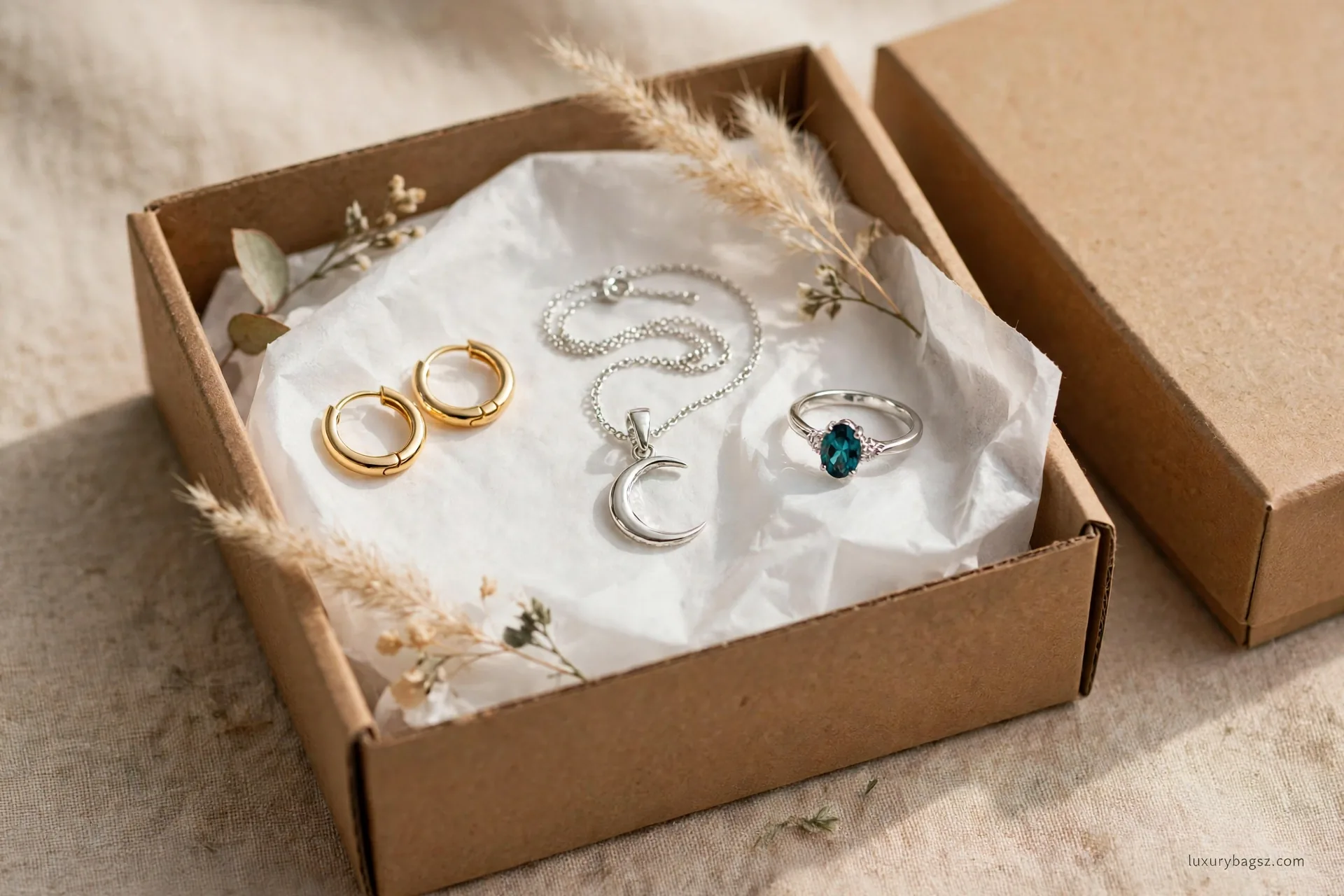
Under $500 buys real fine jewellery: solid gold studs and chains in modest weights, sterling silver with genuine stones, and small natural or lab-grown diamond accents. What it does not buy is heavy gold or large certified stones, so the winning strategy is to spend on material and make, not on size or a famous name. Decide your tier first, then the piece. That order keeps $500 feeling like a jewellery budget instead of a compromise.
Key Takeaways

- Under $100: silver studs, chains and simple pendants carry the value.
- $100–$250: vermeil, pearls and small gemstone pieces come into range.
- $250–$500: solid 14k gold staples and small diamond accents appear.
- Material beats branding at this budget every single time.
- Silver stretches a budget furthest because more money reaches the stone.
- Returns policy and a stated metal spec matter as much as the design.
Start With the Piece You Will Wear Most
A budget goes furthest on a daily piece. Hoops, studs or a chain worn two hundred times a year beat a dramatic piece worn twice. Our everyday fine jewellery guide shows which pieces earn daily status and in what materials. Gift buying follows the same logic. Choose the recipient's most-worn category, not the most impressive object in the shop window. Sizing argues for earrings and pendants over rings when taste or size is uncertain. They fit everyone and exchange easily.
The Three Budget Tiers
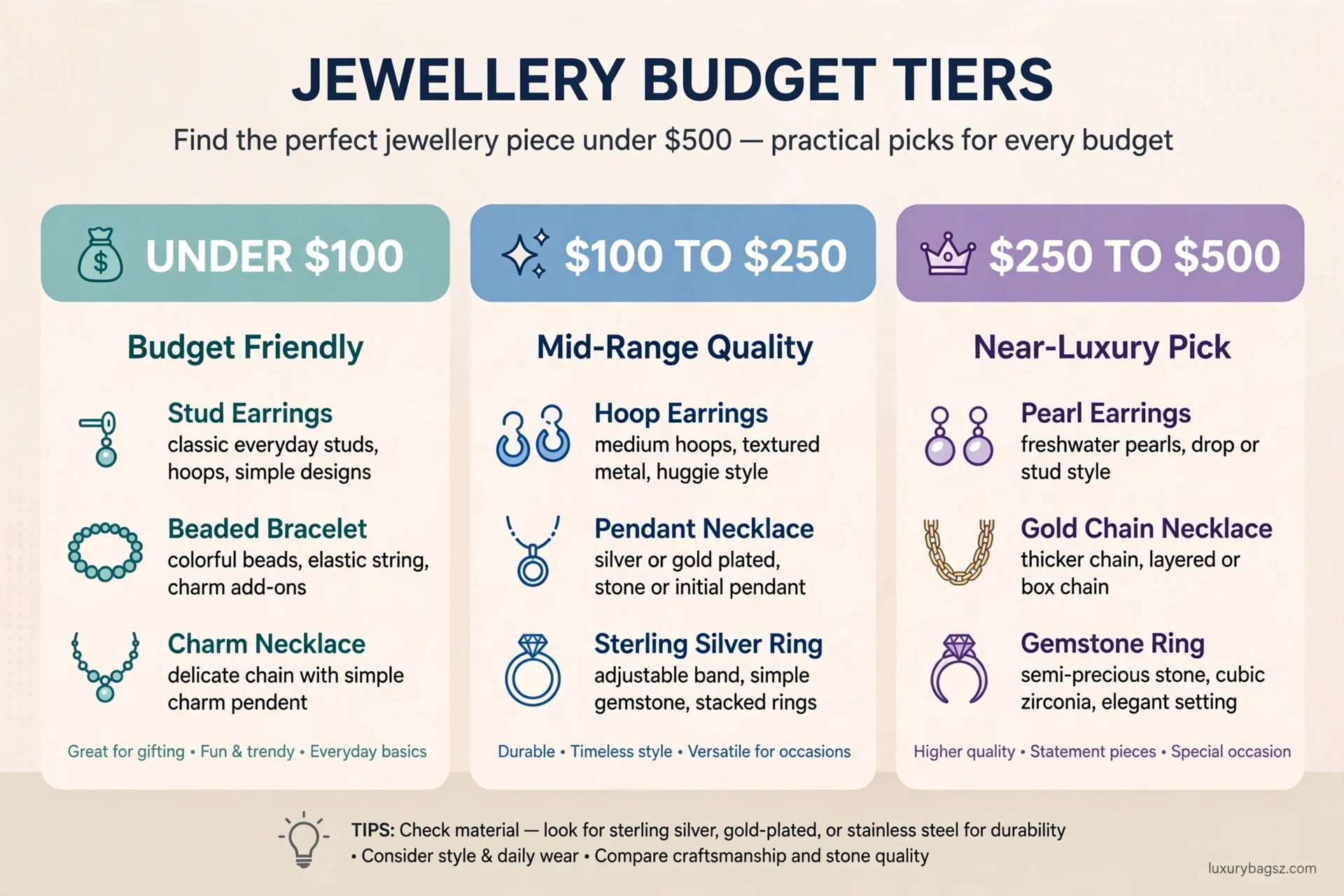
Under $100 belongs to sterling silver and honest simplicity: studs, fine chains, small pendants and beaded bracelets from makers who state their metal. Between $100 and $250, vermeil and gold filled open up, pearls arrive, and gemstone pendants and rings become genuinely pretty. Between $250 and $500, solid 14k gold staples appear — slim chains, small hoops, stacking rings — along with small diamond-accent pieces. Spend at the top of a tier rather than the bottom of the next. The best $240 piece beats the cheapest $260 one almost every time.
The Safest Picks at This Budget
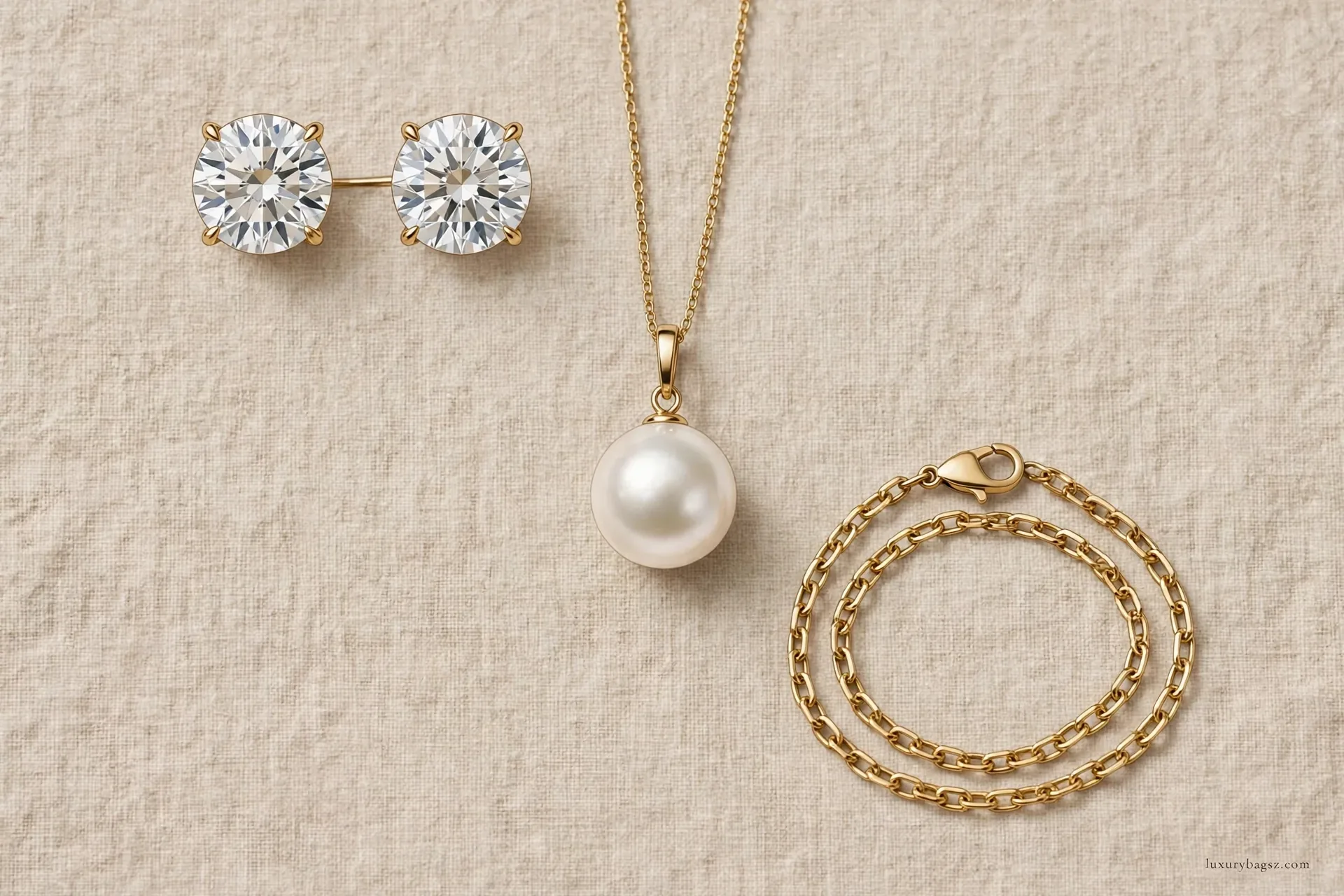
Diamond studs in small total weights are the classic safe buy: universally worn, easy to gift and available in lab-grown versions that stretch sparkle. Pearl pendants and studs give formal polish for the least money in the whole jewellery box, as our must-have jewellery pieces for women list confirms. A gold chain bracelet or a slim bangle in vermeil or gold filled covers the wrist elegantly without ring-sizing risks. Coloured gemstone pendants — garnet, amethyst, topaz, peridot — deliver visible size and personality that a tiny diamond cannot at this price.
Designer Names Under $500
Entry designer jewellery under $500 is mostly sterling silver: pendants, bead bracelets and small earrings carrying a famous signature. Our guide to what to know about Tiffany and Co explains where that house's value sits at entry level. The signature is what you are buying, and for gifts that can be exactly right. For your own daily wear, unnamed solid metal usually gives more jewellery. Pre-owned designer silver closes the gap: the signature and the substance, often at half of the boutique price.
Materials: Where Budgets Are Won and Lost
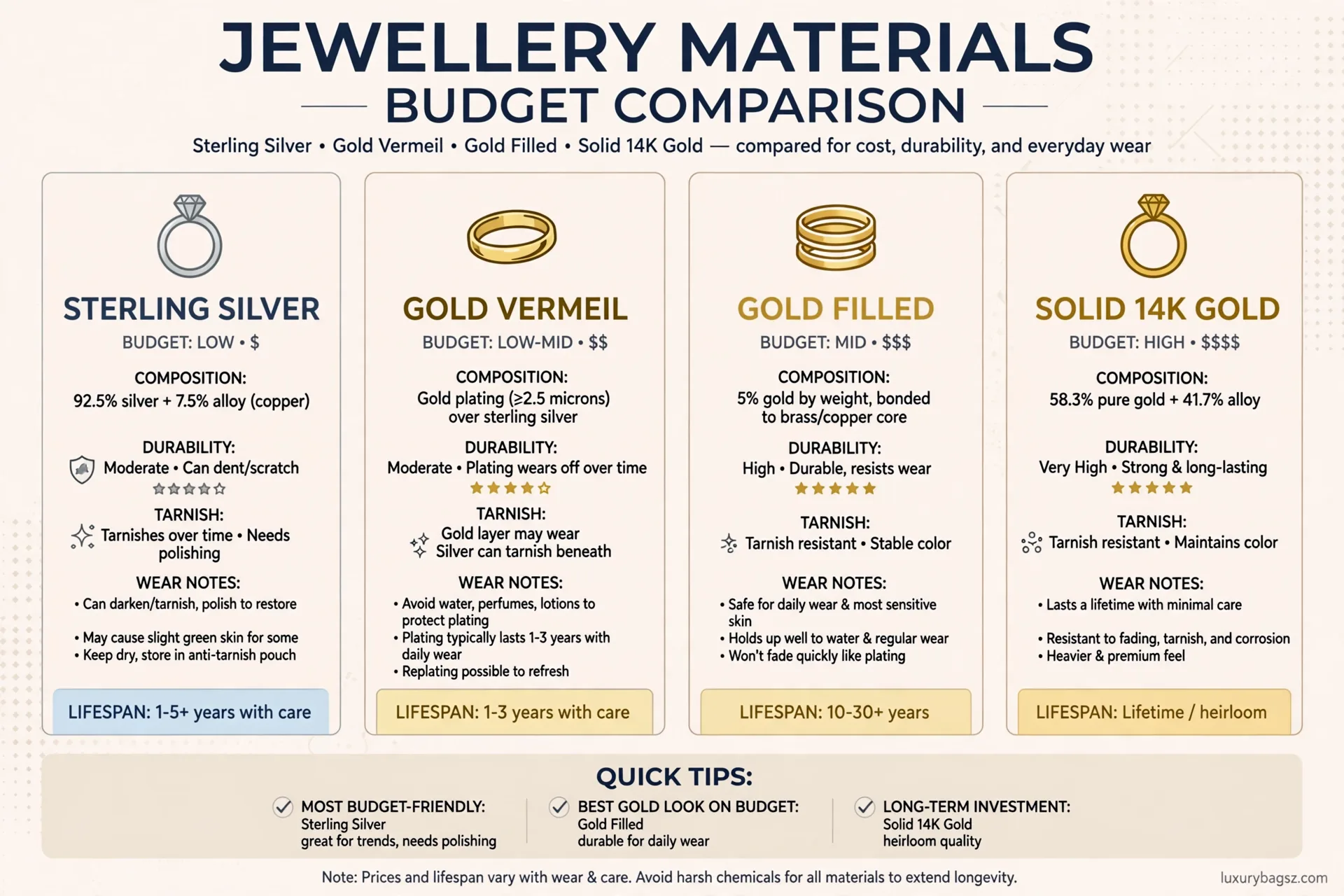
Sterling silver is the budget's champion: precious, durable and cheap enough that design and stones get a fair share of the money. Gold vermeil offers a real gold surface at silver prices, and lasts well with dry, gentle wear. Gold filled goes further for chains. Solid 14k gold under $500 means light pieces: fine chains, small studs, slim rings. Judge them by weight and clasp quality, not photographs. Avoid unnamed plated alloys entirely. Their price looks low until the finish fails within the year and the piece is worth nothing.
Gifts Under $500 That Land Well
Earrings and pendants are the safe categories: no sizes, obvious thought, and packaging that makes even a small piece feel ceremonial. Birthstone pendants add personal meaning at no extra cost, and a January garnet or September sapphire reads as deeply considered. Our designer watches under $500 picks cover the recipient who would rather wear time than sparkle. Include the receipt and choose a seller with free returns. A gift that can be exchanged gracefully is worth more than a risky surprise.
The Value Checks Before You Pay
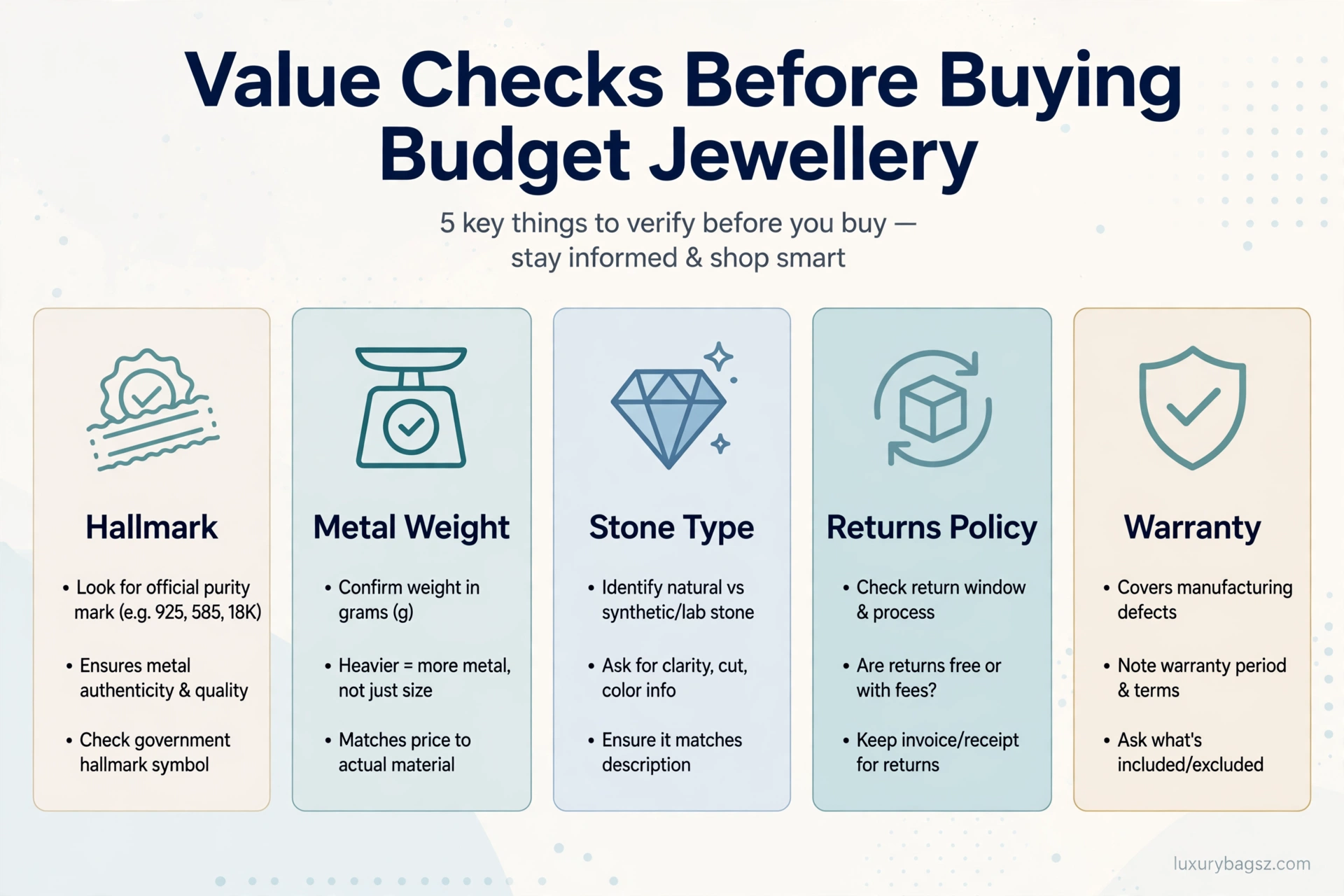
Read the metal line first: solid, vermeil, filled or plated, and the exact karat or silver standard. Vague wording is itself an answer. Check weight where it is given, clasp type, and whether stones are natural, lab-grown or imitation — all three are fine if honestly sold. Confirm returns, warranty and repair terms. Reputable budget jewellers state them plainly because their pieces survive scrutiny. Compare two or three sellers for the same spec. At this level, prices for identical materials vary more than quality does.
Keeping Budget Pieces Beautiful
Silver wants a polishing cloth and an airtight pouch; vermeil wants dry storage and a wipe after wear, never a soak in chemicals. Stone care by type sits in our how to care for gemstone jewellery guide, including pearls and opals. Wear is the other half of value. A $300 piece worn weekly for five years costs pennies a day and looks better than it did in the box. Buy the best material your tier allows, wear it constantly, and under $500 stops feeling like a limit at all.
The Triangle: Stone, Metal, Name — Pick Two
Every piece under $500 is a compromise between three things, and seeing the triangle ends most buying confusion. The three corners are a genuine stone of visible size, solid precious metal, and a famous name on the box. At this budget, a piece can honestly deliver two of the three.
Solid gold from a recognised brand means a stone so small it disappears, or no stone at all. A large genuine gemstone from a recognised brand arrives set in plating or silver. A large genuine stone in solid gold exists at this price only from makers nobody has heard of, which is sometimes exactly the right trade.
Decide which corner to surrender before shopping, based on who the piece is for. For your own daily wear, surrender the name: material and make outlast logos. For a gift that must land socially, the name may be worth its corner. For a birthstone or anniversary piece, the stone is the meaning, so let the metal be honest silver.
Sellers hope you will not notice which corner their piece surrendered. Product descriptions that shout about one corner and whisper about another are telling you the triangle’s shape; read for the whisper.
Construction Details That Decide Lifespan
Two pieces with identical material descriptions can live very different lives, because construction is where budget jewellery is truly made or lost. Settings first: stones should be held by metal, prongs or bezels soldered into the piece, not glued into a cup. A glued stone at this budget is a countdown, and a gentle fingernail test around a display stone tells you more than a sales pitch.
Chains reward a close look. Solid links outlast hollow ones that dent and kink; the clasp should be a lobster or box clasp with a firm action rather than a thin spring ring on anything worn daily; and the jump rings joining clasp to chain should be soldered closed, not merely pinched.
Coating numbers matter where they are stated. Vermeil, by standard, means a gold layer of at least 2.5 microns over sterling silver, many times thicker than ordinary plating, which can be a fraction of a micron over brass. Gold filled is a different construction again, a gold layer bonded to a core and making up a stated share of the piece’s weight, and it wears for years where plating wears for months.
None of these checks needs equipment. They need a minute, a fingernail and the willingness to ask the seller direct questions, which reputable budget jewellers, per this guide’s value checks, answer plainly.
Sets and Stacks: Spending the Budget as a Collection
Five hundred dollars buys one piece or the start of a wardrobe, and the second option often wears better. A matched set, studs with a pendant in the same metal and stone family, reads as considered dressing at any single-piece price and multiplies outfit combinations immediately.
Stacking works the same way on hands and wrists: two slim solid-gold stacking rings outwear and out-style one chunky plated statement, and a chain bought at one length this year gains a partner at another length next year. Collections built across birthdays and sales end up looking designed rather than accumulated.
The discipline is consistency: one metal colour family, one stone family, similar weights and finishes, so each new piece joins the existing ones instead of starting a rival set. Photograph what you own before shopping; the camera is brutally honest about what a collection needs.
This approach also solves the gift problem across years: the giver who starts a set has every future occasion answered, and the wearer ends up with the coordinated fine jewellery that single splurges rarely achieve.
Lab-Grown Stones: Where This Budget Changed Most
No development has moved the under-$500 shelf like laboratory stones. Lab-grown diamonds, chemically identical to mined ones as our lab-grown diamonds guide explains, put visible diamond studs, pendants and even small solitaires inside a budget that used to buy diamond dust in gold or honest cubic zirconia.
Moissanite stretches the same money further still: a harder-than-most, fiercely sparkling stone that reads as celebration rather than compromise in studs and pendants. The choice between them is taste and honesty of labelling, not quality shame, and both should be sold named for what they are.
The resale honesty from this guide’s wider advice applies double here: lab stones are bought to be worn, and their second-hand prices are soft. Buy the size that delights you on the ear, at the best construction quality the budget allows, and let cost per wear make the case.
For the buyer who once faced a triangle with no good corner, lab stones quietly redrew it: a real diamond of visible size, in solid gold, under $500, from reputable sellers, is now an ordinary listing rather than a suspicious one.
Frequently Asked Questions
Can I buy real gold jewellery under $500?
Yes. Solid 14k gold appears in slim chains, small studs, hoops and stacking rings at this budget. Pieces are light, so judge clasp quality and weight carefully.
Are real diamonds available under $500?
Yes, as small accents and studs, especially lab-grown, where a half-carat total weight pair can sit within budget. Expect sparkle, not a large centre stone.
Is vermeil a good buy?
Genuine vermeil — thick gold over sterling silver — is a sound budget material for moderate wear. It outlasts ordinary plating by a wide margin.
What is the best jewellery gift under $500?
Studs or a pendant in the recipient's usual metal. They need no sizing, suit every wardrobe, and in solid material become daily pieces rather than drawer pieces.
Should I buy designer or unbranded under $500?
For a gift, the signature may be the point. For your own wear, unbranded solid metal usually gives more weight, better stones and longer life per dollar.
How can I spot poor quality at this price?
Vague metal descriptions, no weight, glued stones, flimsy clasps and no returns policy. Any two of those together should end the purchase.
Is sterling silver fine jewellery?
Yes. Silver is a precious metal with centuries of fine jewellery behind it, and at this budget it often carries the best stones and making.
Do lab-grown diamonds count as real diamonds?
Chemically and physically, yes; they are diamonds with a different origin and a much lower price. Resale value is low, so buy them for wearing.
What about buying pre-owned under $500?
It is often the best value in this whole guide: signed silver, solid gold and stone pieces at half of retail, from resellers who test and guarantee metal.
How do I make a small budget look luxurious?
One well-made piece, worn clean and polished, in a metal that suits the wearer. Presentation and care do more for luxury than size at this level.
Summary: Material First, Then Design
Under $500 rewards the buyer who reads specifications before admiring photographs: silver with substance, honest vermeil, or light but solid gold. Choose a daily piece, check the metal, the clasp and the returns, and your budget buys jewellery that will still be worn, and still be jewellery, in ten years.






