

Must-Have Bag Styles for Men: Briefcase to Crossbody, Sizes and Picks
The Men's Line-Up in Brief: Five Styles Cover Almost Everything
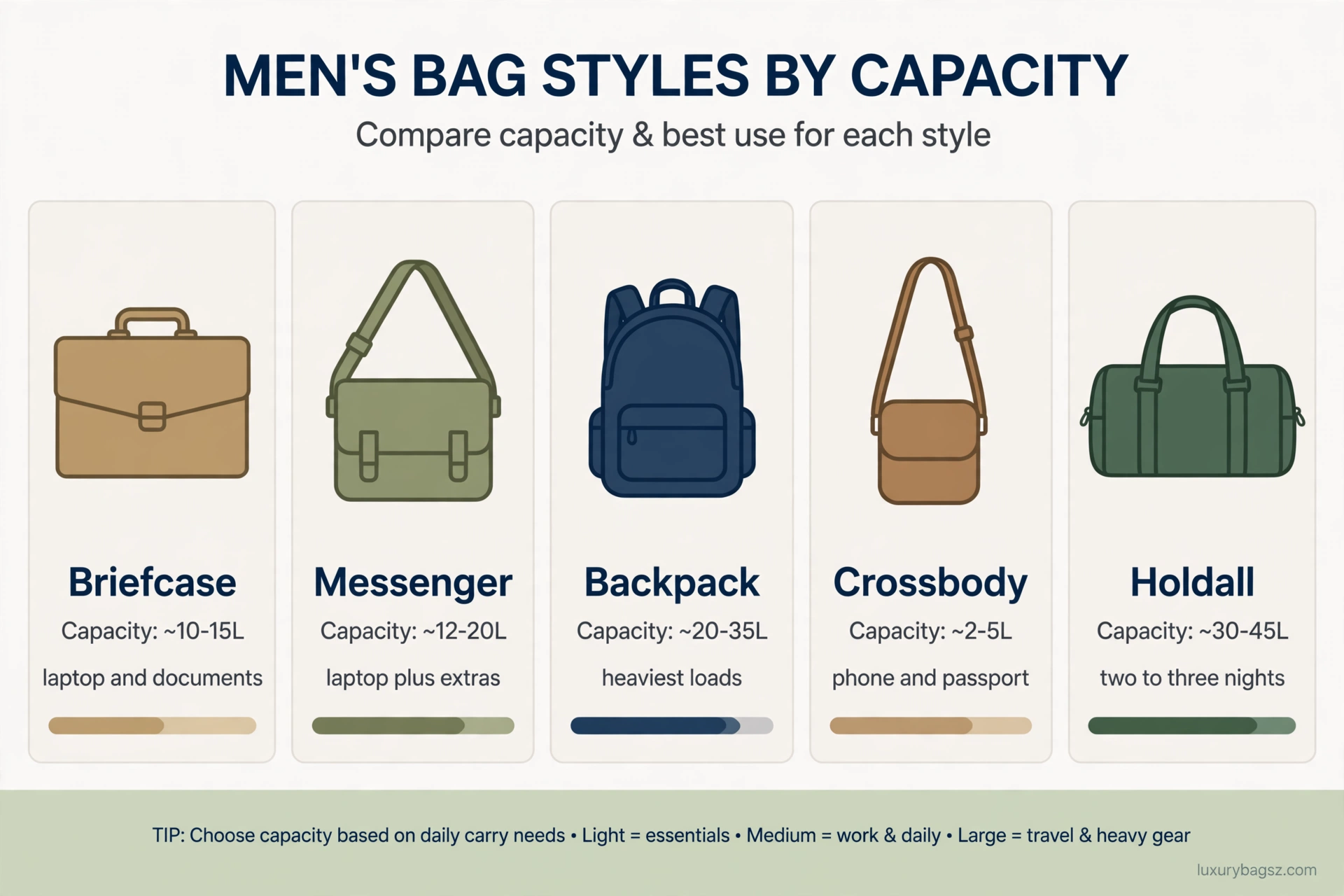
Most men need five bag styles at most: a briefcase or structured messenger for work, a backpack for commuting loads, a tote for flexible days, a compact crossbody for travel and weekends, and a holdall for short trips.
Buy in that order, in black or dark brown leather or hard-wearing canvas, sized honestly to your laptop. Good men's bags typically run from around £150 for strong contemporary makes to over £1,000 for heritage leather.
The must-have test is weekly use. A style you carry three days a week deserves real money; a style you use twice a year does not, however handsome it looks in the shop.
Key Takeaways
- Briefcase or messenger, backpack, tote, crossbody and holdall cover nearly every need.
- Size every work bag to your actual laptop, with the charger and notebook included.
- Leather suits work and longevity; canvas and nylon suit weight and weather.
- Typical prices run from around £150 to over £1,000 for heritage leather pieces.
- Dark, plain finishes integrate with every wardrobe and age best.
- One excellent bag per job beats a shelf of mediocre compromises.
The Briefcase: Still the Work Benchmark
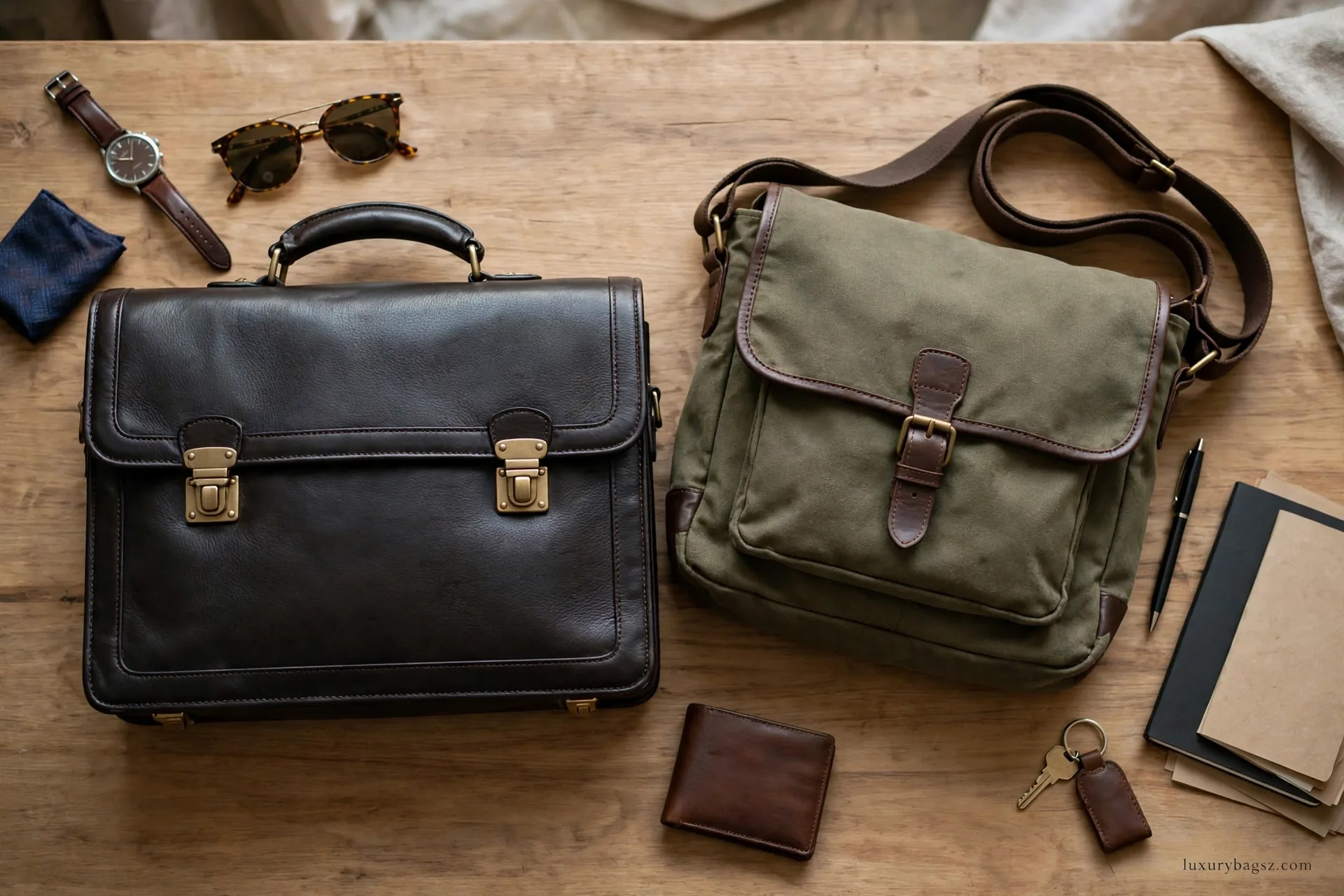
The briefcase remains the sharpest work bag: structured, hand or shoulder carried, and sized precisely for documents and a laptop. Our guide on how to buy a leather briefcase covers frames, locks and leathers in depth.
Modern briefcases have softened: slimmer profiles, padded laptop sleeves and detachable straps acknowledge trains and walking meetings without surrendering the silhouette.
Choose a 15-inch-capable interior only if your laptop demands it. Oversized briefcases look and carry worse, and most men overestimate the paper they actually transport.
In black or espresso full-grain leather, a briefcase is a decade-long buy. It is the one men's style where heritage money is most visibly repaid in daily polish.
A note on proportions: a briefcase should sit within the width of your torso and below the hip when hand-carried. A bag that swings past the knee or juts beyond the shoulder reads as luggage, however fine its leather.
The Messenger: The Flexible Workhorse
The messenger swaps the briefcase's formality for a crossbody strap and a softer body, swallowing laptop, charger, book and gym layer while keeping hands free for bikes and barriers.
Leather messengers suit offices; canvas and nylon versions suit creative work and wet commutes. Either way, insist on a padded laptop sleeve and a strap that does not twist.
A good messenger sits flat against the hip without swinging. Test it loaded in the shop: a bag that migrates around your body will annoy you daily.
For many men the messenger is the single best first quality bag, because it covers work, travel days and weekends without looking wrong in any of them.
Strap quality separates good messengers from frustrating ones: a sliding shoulder pad, hardware that grips its settings and webbing that does not twist will be appreciated thousands of times over the bag's life.

The Backpack: Commuting Without the School Echo
Adult backpacks earn their place with structure: a defined shape, minimal external clutter, a separate laptop compartment and materials that read as leather or technical fabric, not sports kit.
They are the healthiest carry for heavy loads, spreading weight across both shoulders on long walks and standing commutes. No other style competes for genuine daily weight.
Keep the profile slim for trains and offices. Bulky expedition silhouettes fight turnstiles and boardroom chairs alike, however excellent their zips.
A black leather or coated-canvas backpack in a clean design pairs with tailoring surprisingly well, and has become the default executive commute bag in many cities.
For cyclists and walkers, a stabilising chest strap and reflective or wipe-clean surfaces move a backpack from adequate to ideal. Commuting reality, not the showroom, is where these details earn their price.
Organisation is the backpack's quiet battleground: separate laptop access, a small-things pocket that does not empty into the main space, and a bottle holder decide whether a commute feels calm or chaotic.
The Tote and the Crossbody: The Flexible Pair
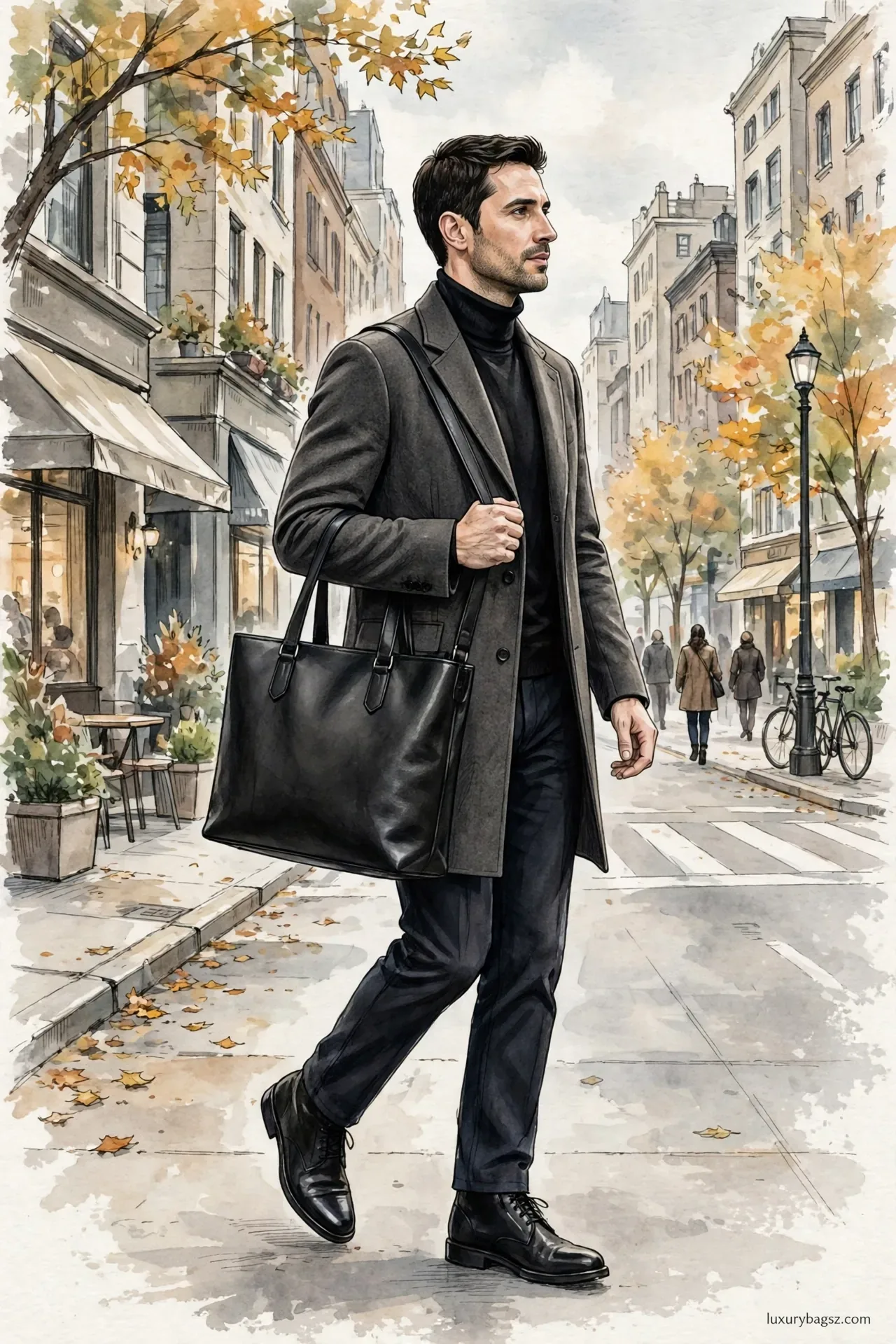
A plain leather or heavy canvas tote handles the irregular days: shopping, laptops plus layers, market runs and flights where a second bag earns its keep as a personal item.
The compact crossbody, worn close on the chest or hip, is the travel and weekend essential: phone, passport, keys and the men's card holder wallet our guide helps you choose, all secure and hands-free.
Together they replace a dozen occasion bags. The tote scales up, the crossbody scales down, and neither asks your outfit to change around it.
Choose the tote with a zip or closed top for cities, and the crossbody with an interior zip pocket. Open, pocketless versions of both shed belongings with enthusiasm.
The small crossbody has quietly become the men's holiday essential, replacing the money belt and the bulging pocket alike. Sized for passport and phone, it is the one style many men resist, then refuse to travel without.
The Holdall: Short Trips Done Properly
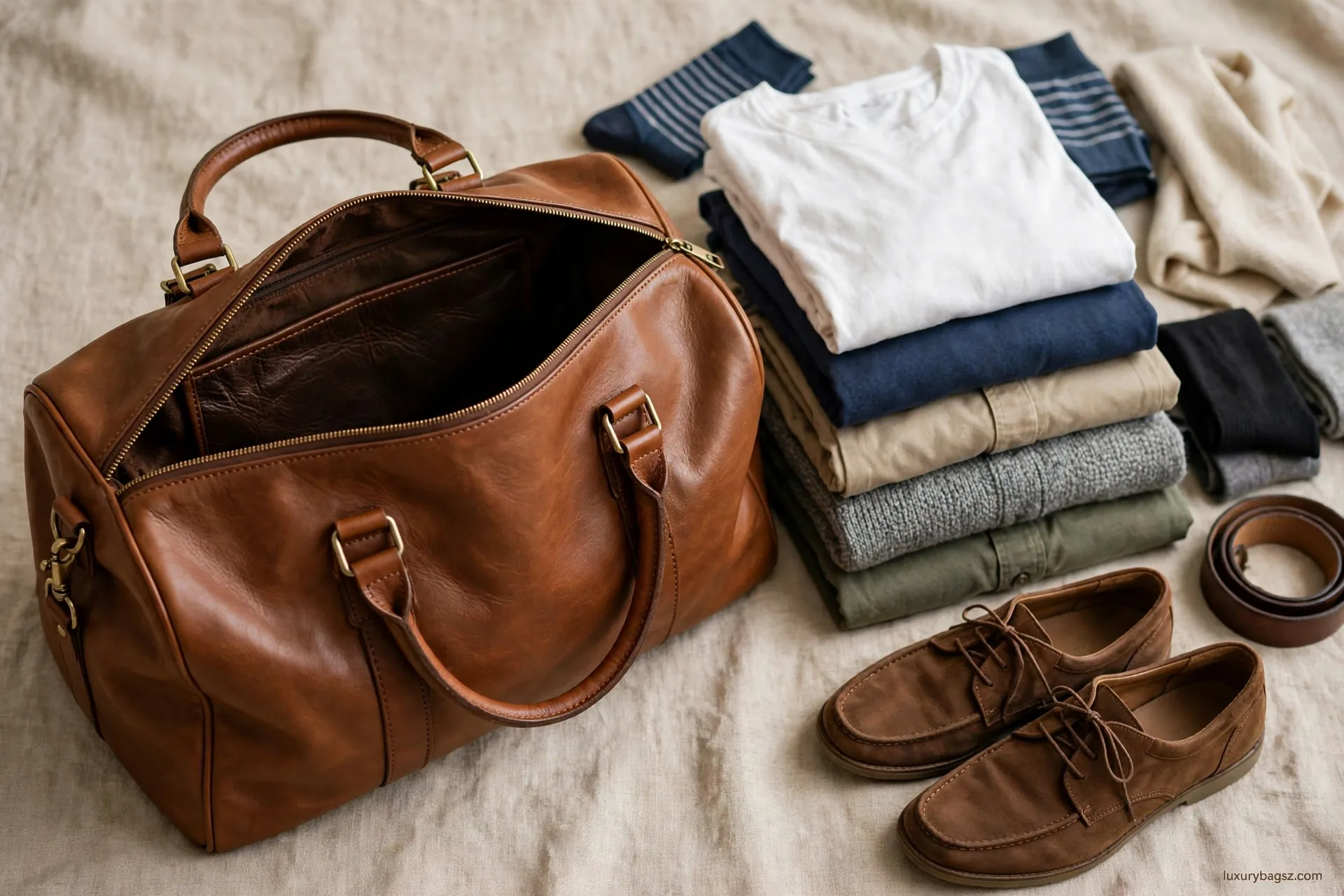
A cabin-sized holdall in leather or waxed canvas turns a two-night trip into one elegant bag. The Louis Vuitton Keepall guide covers the style's most famous example and its sizes.
Look for a wide opening, a shoulder strap you will actually use, and a base that survives airport floors. Shoes in a separate compartment or bag keep clothes clean.
Leather holdalls age beautifully and weigh more; canvas travels lighter and cares less about rain. Choose by your typical journey, car boot or overhead locker.
The folio or document case completes the line-up for laptop-free days: slim, hand-carried, and ideal when the meeting needs only a notebook, tablet and presence.
Airline personal-item rules reward holdalls and totes sized just under seat dimensions, so measure before buying if you fly often. An inch too deep turns an elegant bag into a gate-check argument.
A note on leather holdalls and rain: a good waxed-canvas holdall shrugs off a wet platform, while leather needs a cover or a dry dash. Frequent rail travellers in wet climates often choose canvas for exactly this reason.
Materials and Quality Checks
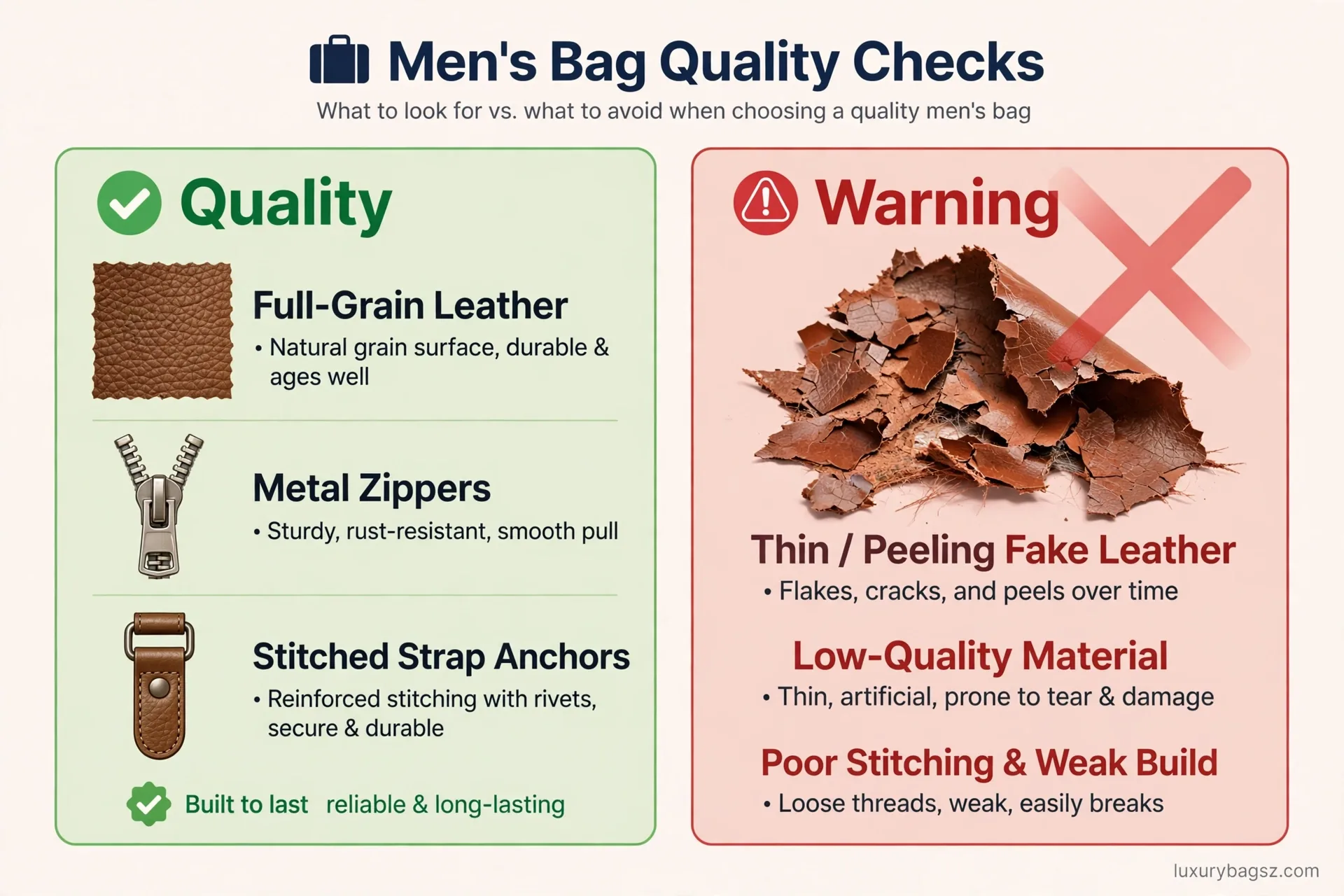
Full-grain leather is the longevity benchmark for briefcases, messengers and holdalls: it scuffs honestly, conditions back and outlasts coated alternatives by years.
Canvas earns its place on totes, backpacks and weekend bags, ideally waxed or backed, with leather trims at stress points. Technical nylon is the wet-weather specialist.
Quality checks are quick: zips should run smoothly under load, straps anchor through the body not just the surface, linings are stitched not glued, and edges are finished, not raw.
Weight is a hidden specification. An empty leather bag over two kilograms taxes every journey, so lift before you love, and favour strong but lighter builds for daily styles.
Hardware tells the truth about price: metal zips with branded pulls, feet that are screwed rather than glued and buckles with real weight signal a bag built to be repaired, not replaced.
Stitching density is an easy tell on inspection: tight, even stitches in a contrasting or matching thread signal care, while long, wandering stitches predict where a strap or handle will eventually part company.
Prices and Care That Keeps Them Working
Strong contemporary men's bags typically cost around £150 to £400, quality leather work bags £400 to £900, and heritage pieces over £1,000. The jump buys leather grade, hardware and repair support.
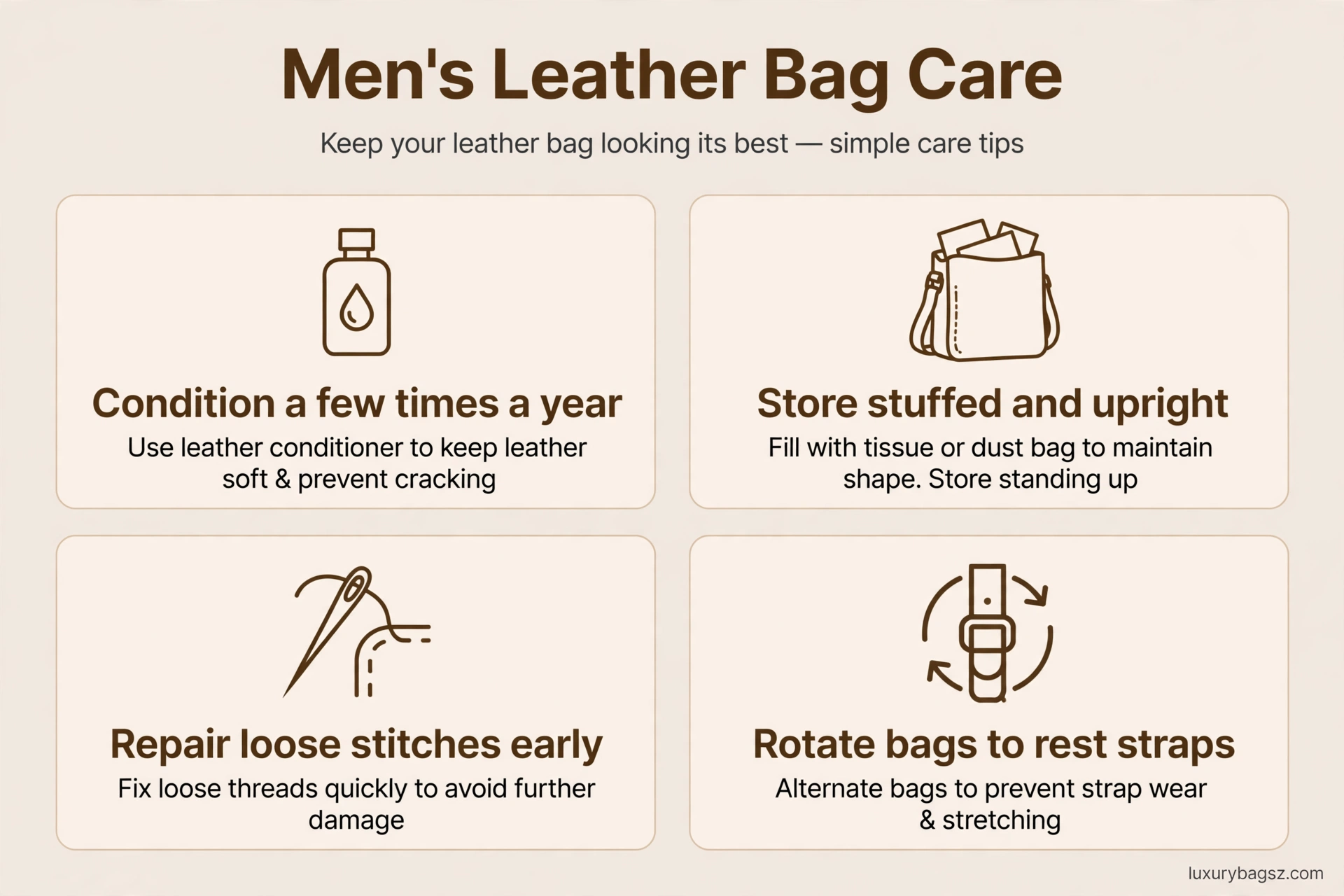
Care is simple and mostly about leather: condition a few times a year following our leather care guide, wipe canvas clean, and store bags stuffed so shoulders and straps keep their set.
Rotate work bags if you can. Even two days a week of rest doubles how long straps, zips and leather stay at their best, and it costs nothing but cupboard space.
Repair early: a loose stitch or tired zip fixed promptly is cheap, while the same fault ignored rewrites the bag's structure. Good makers offer repairs, which is part of the price.
Shoe care habits transfer directly: the same rotation, brushing and storage discipline that keeps good shoes alive keeps good bags alive, and men who already own a shoe routine adapt to bag care in a week.
Building the Capsule: What to Buy, In What Order
Start with the work bag you will carry daily, briefcase, messenger or backpack by commute, then the holdall if you travel monthly, then the crossbody, then the tote.
The order mirrors the logic of a minimalist capsule wardrobe for men: few pieces, each excellent, all combining without thought on a dark morning.
Keep colours to black and one brown family so every bag works with every shoe and coat you own. A single bright or logo piece can join later, as garnish, not foundation.
Review yearly and sell or donate what the year did not use. A tight line-up of carried bags beats a collection of admired ones, in cost per wear and in daily ease.
Resist matching everything: a man's bags do not need to match his shoes exactly, and forced matching looks more anxious than elegant. Family resemblance in colour and finish is quite enough.
Finally, buy for the man you are this year, not the one in the advertisement: your commute, your laptop, your weather and your trips are the specification. The must-have list bends to a life, or it becomes expensive decoration.
Frequently Asked Questions
What bags should every man own?
A work bag suited to your commute, briefcase, messenger or backpack, plus a holdall for short trips and a compact crossbody for travel and weekends. A tote is the useful fifth.
Is a briefcase or messenger better for work?
A briefcase is sharper and suits formal offices and client meetings. A messenger is more flexible and comfortable for commuting, cycling and carrying extras.
What size bag fits a 15-inch laptop?
Choose a bag whose laptop sleeve is rated for 15 or 16 inches and test with your charger included. External dimensions mislead, so check the sleeve measurement itself.
How much should a good men's leather bag cost?
Typically around £400 to £900 for quality leather work bags from strong makers, with heritage pieces over £1,000 and good contemporary options from around £150.
Are backpacks professional enough for work?
Yes, in slim, structured designs in leather or clean technical fabric with a separate laptop compartment. Avoid bulky sports silhouettes with formal clothing.
What is the best bag for men's travel weekends?
A cabin-sized holdall in leather or waxed canvas, with a wide opening and shoulder strap. It covers two to three nights elegantly in one bag.
Leather or canvas: which lasts longer?
Full-grain leather lasts longest with conditioning and repair. Quality canvas is lighter and weather-tough, making it better for weekend and wet-weather styles.
How do you care for a leather briefcase?
Empty it weekly, wipe it down, condition the leather a few times a year, and store it stuffed and upright. Fix loose stitching and zips early.
What colour bag goes with everything for men?
Black suits formal wardrobes, while dark brown pairs warmly with navy, grey and earth tones. Owning one of each covers nearly every outfit.
Can a crossbody bag suit a grown man?
Yes. Compact crossbodies in plain leather or canvas are now standard for travel and weekends, keeping phone, passport and wallet secure and hands free.
Final Verdict: Five Jobs, Five Bags, No Filler
The must-have men's line-up is functional, not fashionable: a work bag matched to your commute, a holdall, a crossbody, a tote and, if the office demands it, a briefcase with real presence.
Buy them dark, plain and well made, size them to your real laptop and life, and each will repay its price in years of unconsidered daily use.






