

How to Buy a Leather Briefcase: A Practical Guide to Getting It Right
Buying a Leather Briefcase, in Brief
A good leather briefcase is bought in four decisions, in order: type, leather, size and weight. Get those right, then check hardware, zippers, lining and strap before you pay.
Buy full-grain leather if you want a case that lasts for decades and improves with age. Expect to pay roughly $250 to $400 for a well-made full-grain briefcase, and be wary of anything far cheaper claiming the same quality.
Measure your laptop's body, not its screen size, and choose a case that fits your daily carry with a little room to spare. A briefcase that is too small frustrates daily, while one that is too large tempts you to overload it.
Key Takeaways
- Decide type first: slim attaché, classic briefcase, pilot case or lightweight bag.
- Full-grain leather lasts longest and develops patina; "genuine leather" is a lower grade.
- Measure your laptop body and your daily carry before choosing a size.
- Check zippers, hardware, stitching and handle reinforcement in person or in photos.
- A lined full-grain case weighs 4 to 7 pounds empty; unlined cases weigh far less.
The Four Briefcase Types
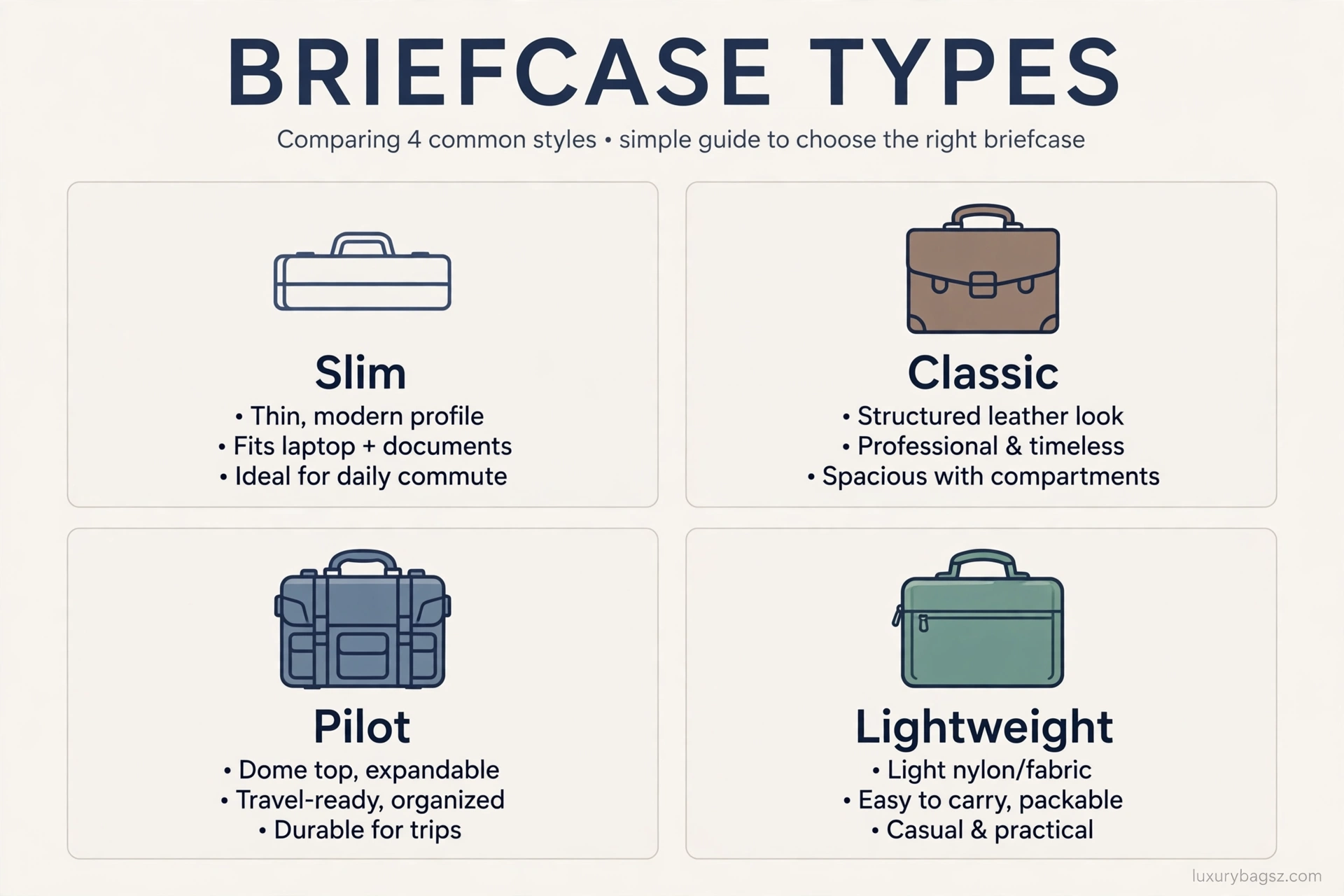
The slim attaché is the most formal type, a thin, structured case for documents and a slim laptop. It suits lawyers, executives and anyone who carries little but wants to look impeccably neat.
The classic belted briefcase bag is the versatile middle ground, with a flap or zip top, a handle and usually a shoulder strap. It carries a laptop, notebook and documents comfortably, and it suits most office workers.
The pilot case is larger and more structured, often with wheels or extra compartments for frequent travellers. It suits consultants and frequent flyers who carry documents, tech and travel essentials together.
The lightweight briefcase or messenger-style bag trades structure for comfort. It suits commuters on foot or by bike, since it weighs less and moves more easily, though it looks less formal than a structured case.
Leather Grades, Honestly Explained
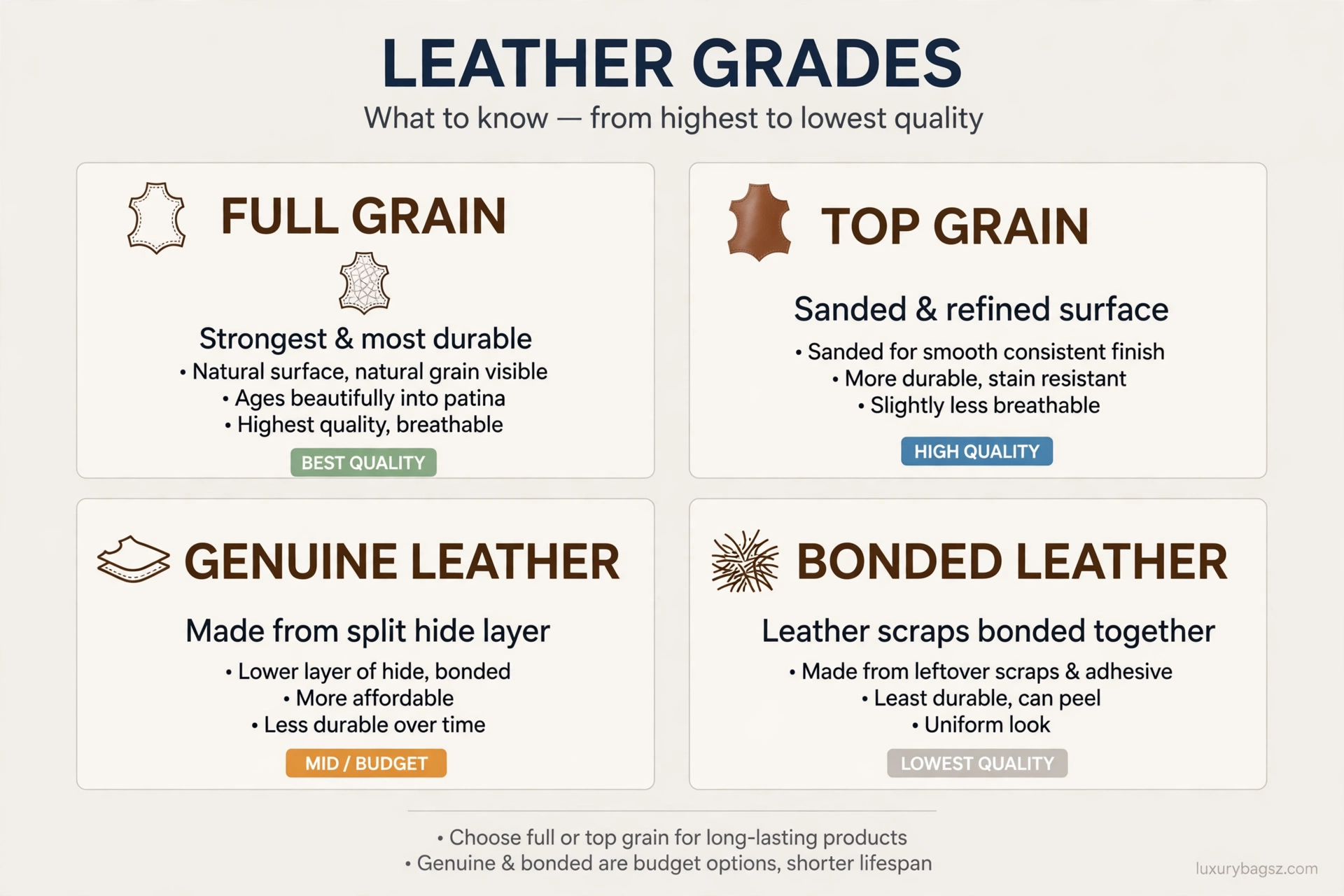
Full-grain leather is the whole top layer of the hide, with the natural grain left intact. It is the strongest option, resists wear best and develops a rich patina over time. For a career investment, this is the standard.
Top-grain leather is sanded and buffed to remove surface marks, giving a smoother, more uniform finish. It is a good, slightly more affordable alternative, but it sacrifices some durability and ageing character.
Genuine leather sounds reassuring, but it is actually a lower grade, made from a split layer of the hide, often painted and embossed. It is weaker, does not patina, and wears out far sooner than full-grain or top-grain.
Bonded leather, made from leather scraps glued together, should be avoided for a briefcase entirely. It peels, cracks and fails within a few years, however good it looks in the shop. Check the label, not just the price.
Tanning, Thickness and Feel
Vegetable-tanned leather ages gracefully and develops deep patina, but it needs a break-in period of weeks or months before it softens fully. It suits buyers who enjoy a bag that improves with use.
Chrome-tanned leather is supple immediately and more water-resistant, but it rarely achieves the same deep patina and can degrade faster under strong sun. Hybrid tanning aims to balance both qualities.
Thickness matters for structure. A functional briefcase usually uses leather around 1.2 to 1.6 millimetres thick. Thinner leather sags under load, while much thicker leather becomes unwieldy and heavy for daily carry.
Feel the leather before buying if you can. It should feel dense and supple, not plasticky or papery. Press a thumbnail near the handle: a good hide rebounds within a couple of seconds, showing proper temper and density.
Size: Measure What You Actually Carry
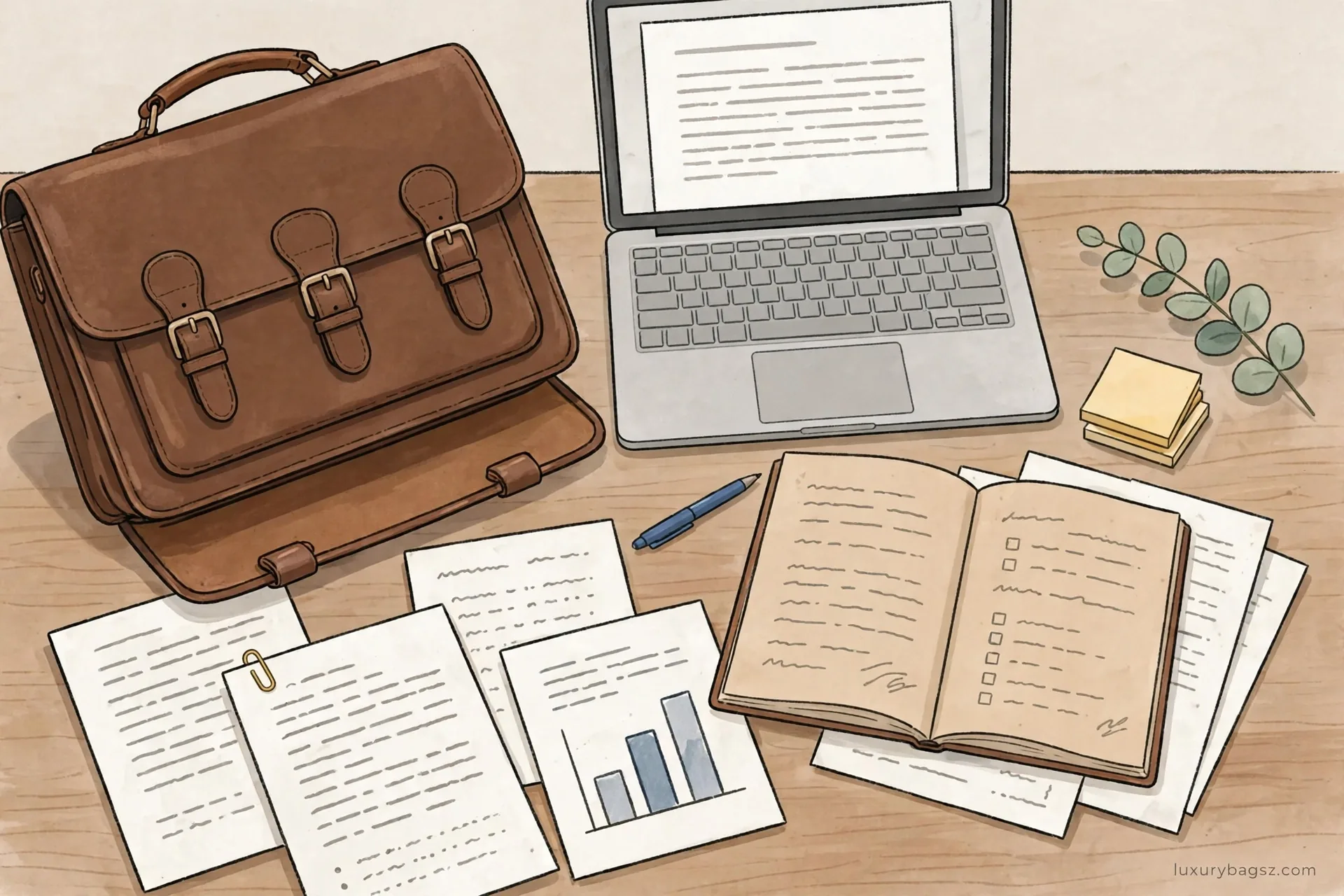
Lay out your daily carry on a table before shopping. Laptop, charger, notebook, documents, wallet, phone and keys are the usual items, and seeing them together prevents both under-buying and over-buying.
Measure your laptop's body dimensions, not just its screen size. A 15-inch laptop varies in actual width and depth by brand, and a sleeve that fits one brand may be tight for another. Check the sleeve measurements in the listing.
Depth is the dimension buyers forget. A slim case that fits a laptop may not fit a thick notebook, a charger and documents together. Choose a depth that holds your daily load without forcing the zip or flap closed.
If you carry documents flat, choose a case at least as wide as your largest folder or tablet. A case that bends documents at the corners will annoy you daily, however handsome it looks empty.
Construction: Stitching, Edges and Hardware
Stitching reveals more about a briefcase than any marketing claim. Look for straight, even, small stitches with no loose threads, inside and out. Reinforced stitching at handles and strap points is essential.
Saddle stitching, where two needles pass through the same hole from opposite sides, is the strongest hand-stitching method. Machine stitching with polyester thread is common and durable, but it lacks the same forgiveness under stress.
Edges are a failure point. Painted or burnished edges should be smooth and even, with no peeling or splitting. Rough, unfinished edges on a new case signal corner-cutting that will worsen with wear.
Hardware should be solid metal, not plated plastic. Zippers should run smoothly, ideally from a reputable maker, and clasps, buckles and D-rings should feel weighty and close firmly. Test every closure several times before committing.
Locks deserve a specific check on attaché and structured cases. A combination lock should turn smoothly and hold its setting, while a key lock should come with a spare key. A lock that sticks on day one will only worsen with daily use.
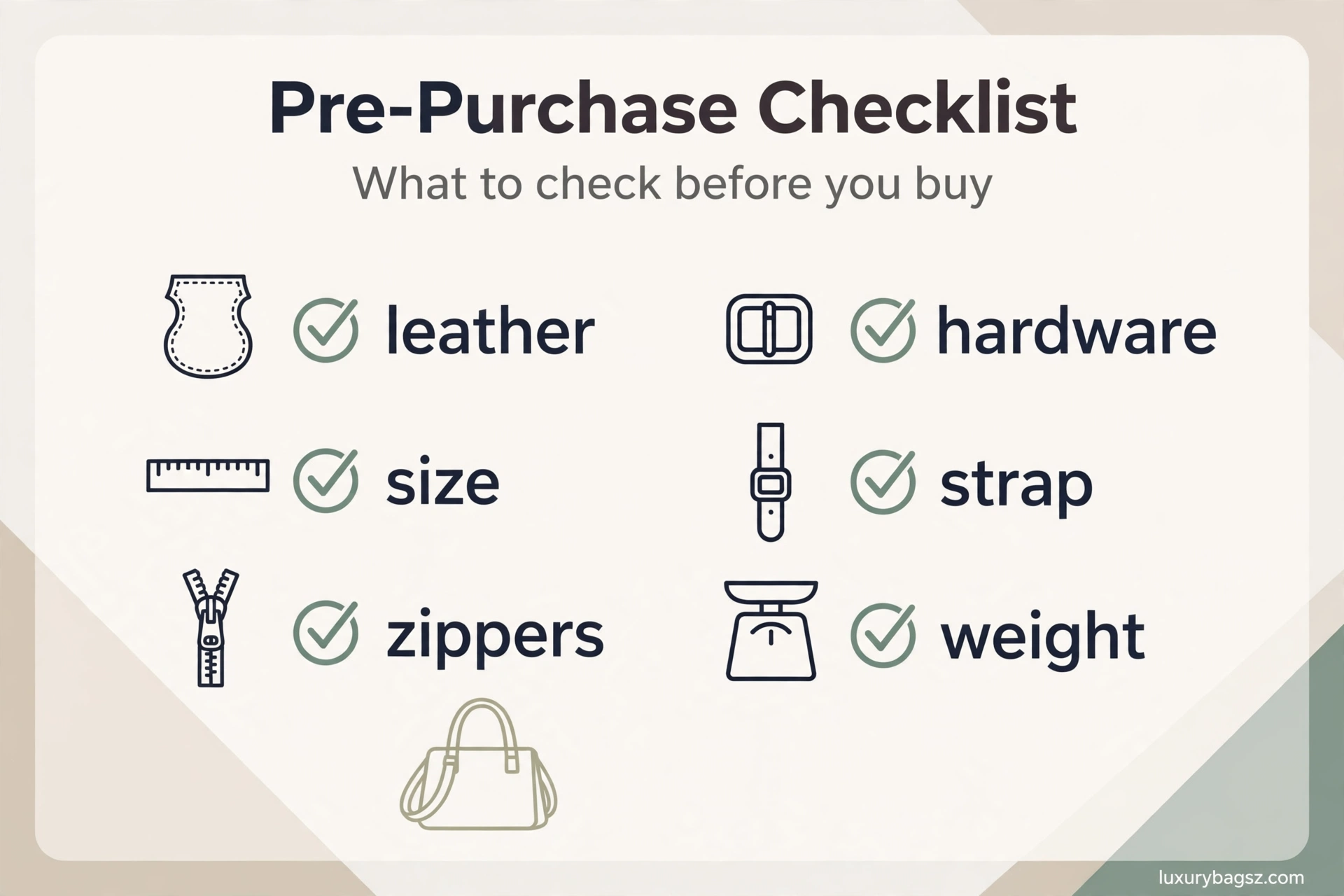
The Pre-Purchase Checklist
Run through this checklist before paying, whether in store or online. First, does the listing state full-grain leather clearly, not just "leather" or "genuine leather"? Vague wording is a warning sign.
Second, are the laptop sleeve measurements larger than your laptop body? Third, does the depth fit your daily carry? Fourth, are zippers metal and smooth, and is hardware solid rather than hollow?
Fifth, are handles reinforced with stitching or metal fixtures, and is the shoulder strap detachable and adjustable? Sixth, is the weight one you will happily carry all day, including your load?
Finally, does the maker offer a warranty and a reasonable return window? A maker confident in full-grain leather and solid construction will stand behind it. A short or absent warranty deserves scepticism.

Carrying It Well, and What to Wear With It
A briefcase looks best carried by its handle for short distances, with the shoulder strap reserved for longer walks and commutes. A detachable strap gives you both options without compromising the formal look.
Weight management matters. A lined full-grain case weighs 4 to 7 pounds empty, and your load adds several more. If you walk or take transit daily, favour an unlined or lighter case, or a convertible style that distributes weight better.
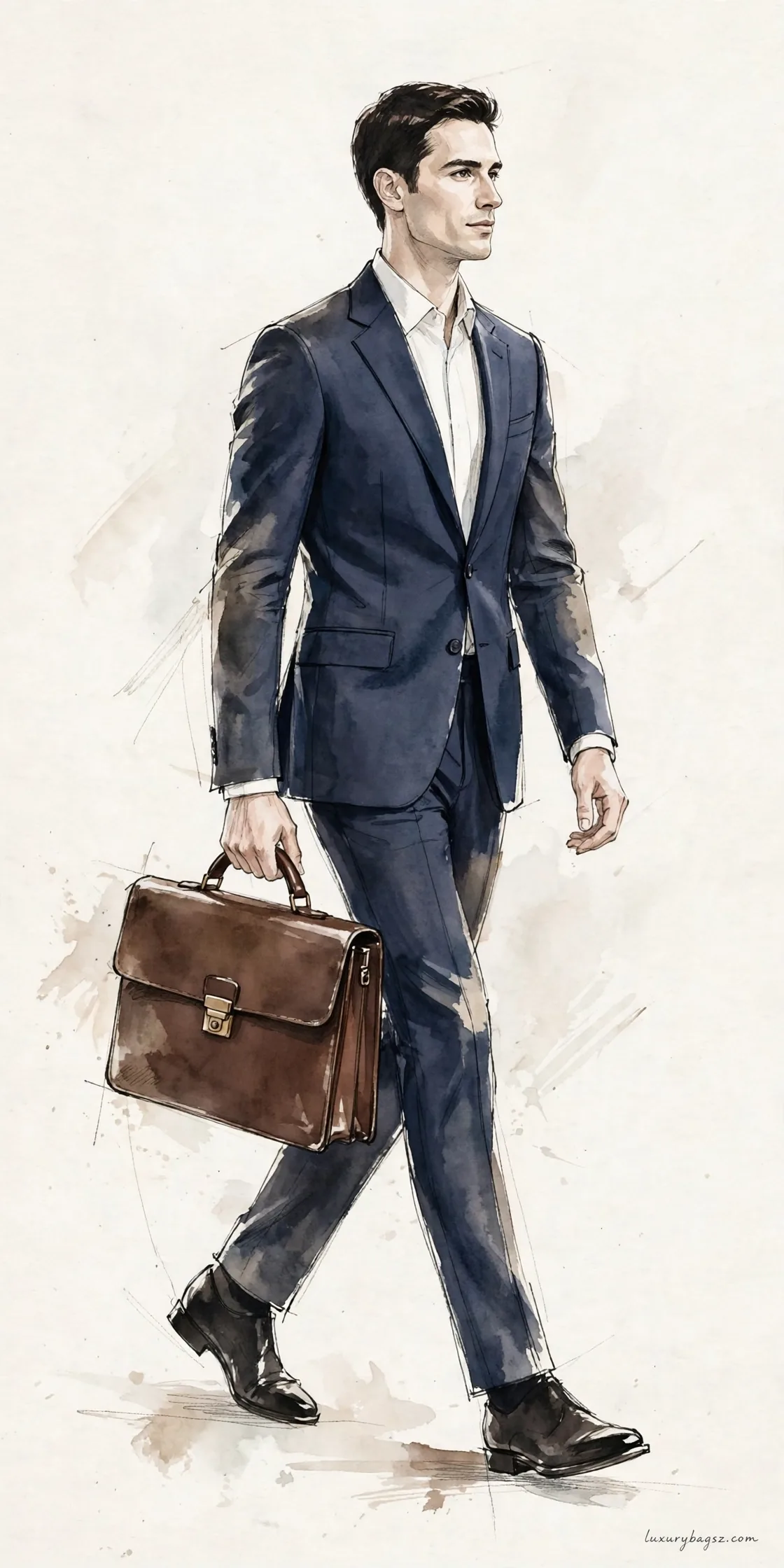
For the office, a briefcase pairs naturally with a suit or smart tailoring and polished dress shoes. Match the briefcase leather tone to your belt and shoes where possible, especially in formal settings.
For creative workplaces, a softer, less structured briefcase with a shoulder strap reads more relaxed. The same leather quality rules apply, but the silhouette can be less rigid without looking careless.
Price, Care and When to Restore
A good full-grain briefcase typically costs $250 to $400, with top-grain versions slightly less. Below about $150, you are usually buying genuine or bonded leather, however premium the listing sounds.
Specialty hides, hand-stitching and heritage makers cost more, sometimes well over $500. That premium buys craftsmanship and longevity, not just a brand name, so judge it by construction, not by logo.
Care is simple but regular. Wipe with a soft cloth monthly, clean deeper marks with a mild leather cleaner, and condition every three to four months to keep the leather supple and prevent cracking.
Restoration is worth considering for a good case that has scuffed or dried out. A cobbler or leather specialist can recondition, restitch and re-edge a full-grain case, often for far less than replacement, extending a good investment further.
Second-hand buying follows the same checks, with extra attention to handle wear, corner scuffs and interior smell. A well-kept used full-grain case can be excellent value, while a neglected one may cost more to restore than it is worth.
Frequently Asked Questions
What is the best leather for a briefcase?
Full-grain leather is best for longevity and patina. Top-grain is a good, slightly cheaper alternative. Avoid genuine leather and bonded leather for a case you expect to last for years.
How much should a leather briefcase cost?
Expect roughly $250 to $400 for a well-made full-grain briefcase with solid hardware. Cheaper cases usually cut corners on leather grade, zippers or stitching, while heritage makers cost more.
What size briefcase do I need?
Measure your laptop body, not its screen size, and lay out your daily carry before shopping. Choose a case with a sleeve larger than your laptop and enough depth for notebook, charger and documents.
Is a leather briefcase better than a backpack?
For formal offices and client meetings, a briefcase reads more professional. For long commutes on foot or by bike, a backpack distributes weight better. Convertible briefcases offer a useful middle ground.
How heavy is a leather briefcase?
A lined full-grain briefcase weighs about 4 to 7 pounds empty, while an unlined case weighs 2 to 3 pounds. Add your load before judging whether the weight suits a full day of carrying.
Should a briefcase have a shoulder strap?
A detachable, adjustable strap is very useful for commuting, even if you usually carry by the handle. It lets you switch to hands-free carrying without compromising the formal look.
How do you care for a leather briefcase?
Wipe monthly with a soft cloth, clean marks with a mild leather cleaner, and condition every three to four months. Keep it away from radiators and prolonged direct sun, which dry the leather.
What is the difference between full-grain and genuine leather?
Full-grain is the top layer of the hide with its natural grain intact, making it strongest and best-ageing. Genuine leather is a lower split layer, often painted, which is weaker and does not develop patina.
Can a leather briefcase fit a 15-inch laptop?
Most standard briefcases fit a 15-inch laptop, but check the sleeve's actual measurements against your laptop body. Brands vary in width and depth, so screen size alone is not a reliable guide.
When is it worth restoring a briefcase?
If the case is full-grain with sound structure, restoration is usually worthwhile. Reconditioning, restitching and re-edging cost far less than a comparable new case and can add years of life.
Summary
Buy a leather briefcase by type, leather, size and weight, in that order, and then verify the details: stitching, hardware, zippers and strap. Spend enough for full-grain leather and solid construction, and the case will not just carry your work, it will improve with every year you use it.






