What Fabrics Are Most Breathable for Summer Menswear? Ranked for Heat and Humidity
The Most Breathable Summer Fabrics in Brief
Linen is the most breathable summer fabric for most men, followed closely by seersucker and lightweight cotton poplin. Linen's hollow flax fibres release heat fast and dry quickly, while seersucker's puckered weave holds fabric off the skin so air can circulate.
The honest ranking depends on the job. For a relaxed shirt, linen wins. For a crisp office shirt, cotton poplin wins. For tailoring that must look sharp all day, tropical wool or a linen blend beats pure linen, which wrinkles freely.
Two things decide breathability together: fibre and weave. A breathable fibre in a tight, heavy weave can still feel hot, and a clever weave like seersucker can make ordinary cotton feel far cooler than its fibre alone suggests.
Key Takeaways
- Linen ranks first for heat release and drying speed, but wrinkles more than any rival.
- Seersucker's puckered weave creates an air gap, making it cool even in cotton.
- Cotton poplin is the best crisp, breathable office shirt fabric; heavy cotton traps heat.
- Chambray offers denim character at shirt weight and breathes well in summer.
- Tropical wool, such as fresco, suits summer tailoring better than most people expect.
- Tencel and modal excel next to the skin for tees and underlayers, absorbing more moisture than cotton.
- Check GSM: shirts around 100 to 150 GSM and trousers around 150 to 190 GSM suit summer best.
What Makes a Fabric Breathable
Breathability is really two things: airflow through the fabric and moisture handling. Airflow depends mostly on weave openness, while moisture handling depends on whether the fibre absorbs sweat and how fast it releases it.
Linen excels at both. Flax fibres are hollow at a microscopic level, so they move hot, moist air out faster than cotton. Textile research often puts linen roughly 20 percent ahead of a comparable cotton plain weave on heat release.
Cotton absorbs well but dries slowly, so a soaked cotton tee can feel heavy and clingy. Synthetics often wick fast but trap odour and feel clammy once saturated. The best summer fabrics balance absorption, drying, and airflow rather than winning one measure alone.
The Ranking, From Coolest to Warmest
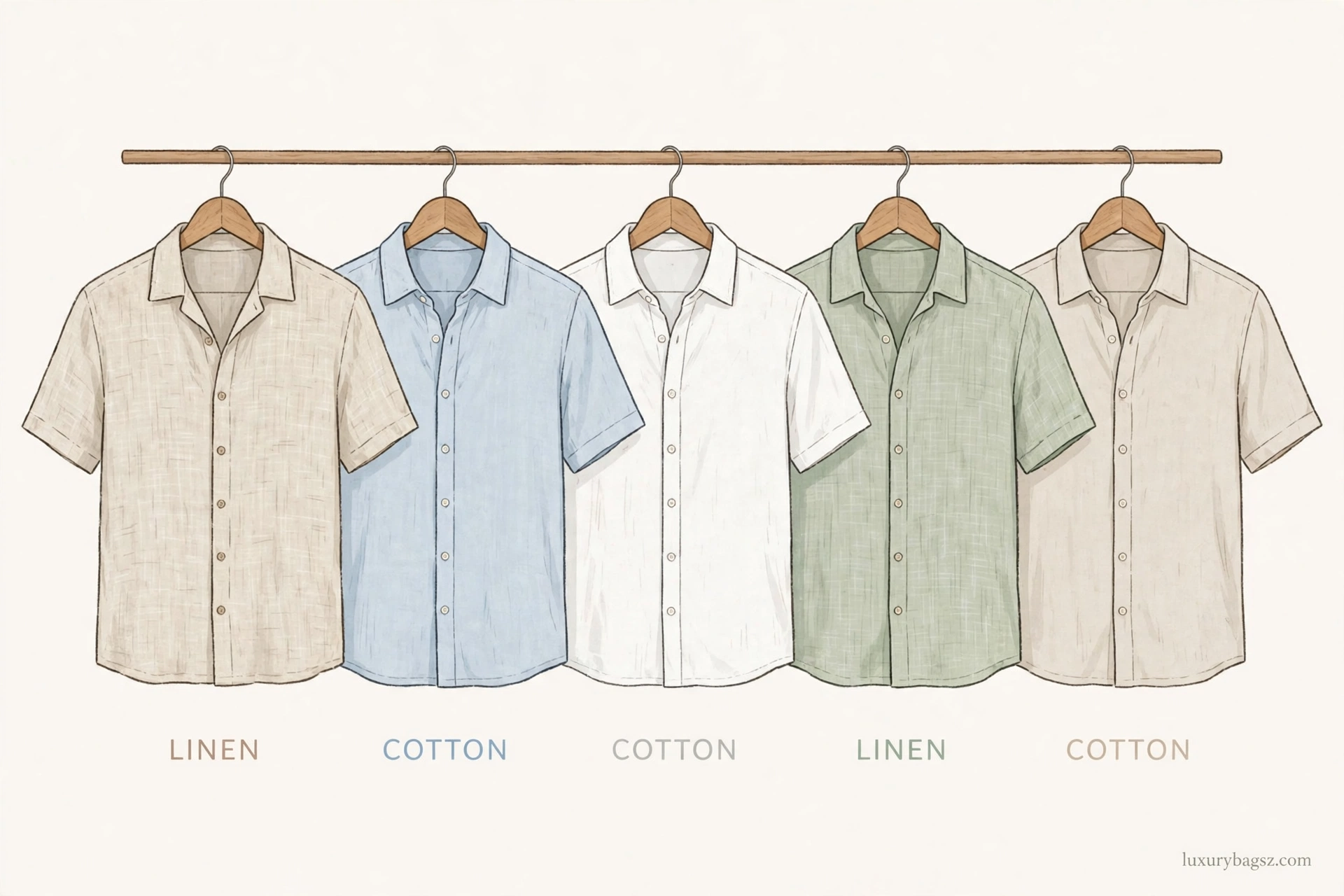
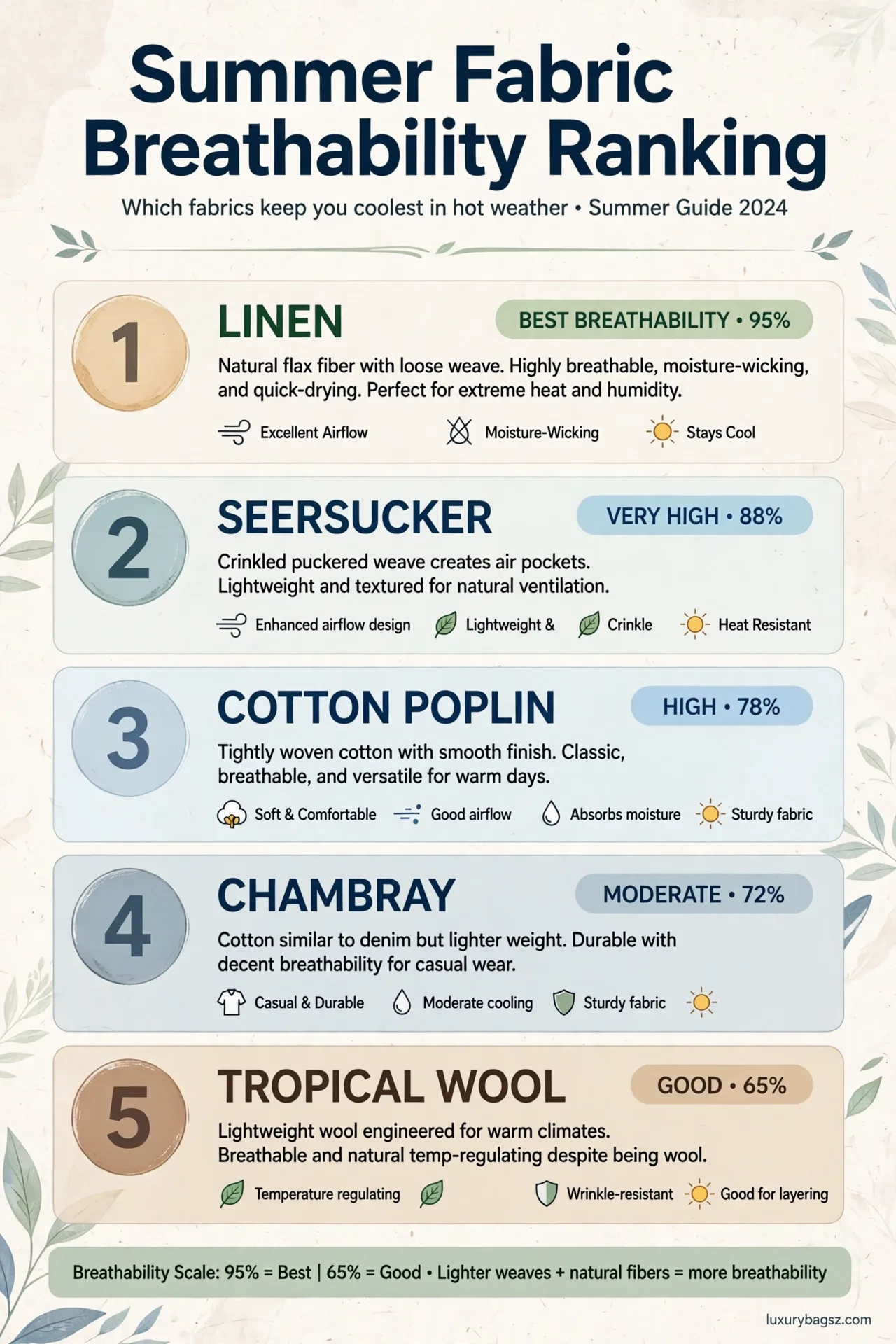
For shirts in hot, humid weather, the practical ranking runs: linen, seersucker, cotton poplin, chambray, linen-cotton blends, Tencel, tropical wool, then ordinary cotton jersey. Light colours and loose fits improve every fabric on the list.
Linen leads because it combines open weave, fast drying, and a textured surface that sits off the skin. Seersucker follows because its puckers do the same job mechanically, even though its fibre is cotton.
Ordinary heavy cotton sits last not because cotton is bad, but because heavy, tight cotton traps heat. A light poplin in the same fibre can feel like a different fabric entirely, which is why weave matters as much as fibre.

Linen: The Summer King, Wrinkles Included
Linen is made from flax, woven in an open structure that promotes airflow. It absorbs moisture well, dries faster than cotton, and feels light even in humidity. Irish linen is often cited as the premium benchmark for shirts and trousers.
The price is wrinkles. Flax fibres are stiff, so they crease where they bend and hold the crease until pressed. In summer, most wearers accept that as part of linen's relaxed character, but it rules pure linen out for very formal all-day meetings.
Blends fix much of the problem. A 70/30 linen-cotton blend still feels like linen but wrinkles roughly 20 to 30 percent less, while a 55/45 blend halves wrinkling at the cost of slightly more warmth. Keep at least 55 percent linen if you want it to still breathe like linen.
Cotton Poplin, Madras, and Chambray
Cotton poplin is a plain-weave cotton with a crisp, smooth surface and excellent airflow at shirt weights. It holds a collar well, irons cleanly, and suits office shirts better than linen, which is why it dominates summer business shirts.
Madras is a lightweight, usually plaid cotton from India, made for hot climates. Its colours are bright and its weave is light, making it a strong casual summer shirt fabric, though its patterns limit formal use.
Chambray, covered in our companion fabric guides, gives denim character at shirt weight. It breathes well, feels soft from the first wear, and layers easily, though it wrinkles and dries more slowly than linen.
Seersucker: The Pucker That Cools
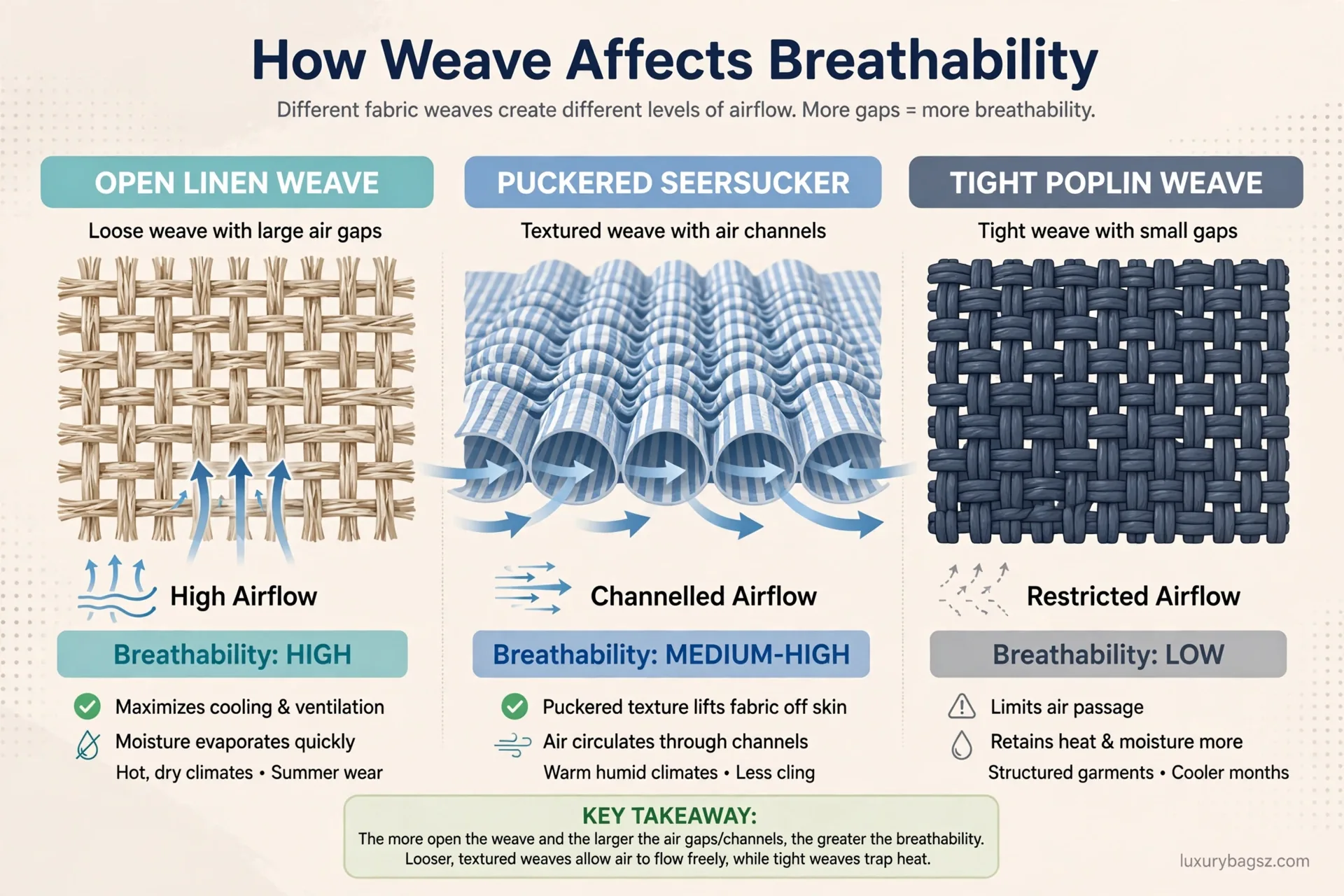
Seersucker is cotton woven so that some stripes pucker permanently. Those puckers hold most of the fabric away from your skin, creating air channels that let sweat evaporate and air circulate freely.
That air gap is why seersucker feels cool regardless of fibre weight. A seersucker shirt or blazer can outperform a flat cotton shirt of the same weight, and it needs no ironing, since the puckers are meant to look textured.
The look is the limit. Seersucker's stripes, often blue and white, read as classic and preppy, which suits summer weddings and resort wear but not every office. In solid or subtle colours it becomes far more versatile.
Tropical Wool, Tencel, and Modal
Tropical wool surprises many buyers. Open weaves like fresco use twisted yarns that hold the fabric off the skin, so a lightweight wool suit can feel cooler than a cotton suit in the same heat. For summer tailoring, it is often the sharpest breathable choice.
Tencel, made from eucalyptus wood, and modal, made from beechwood, absorb more moisture than cotton and feel silky against the skin. They shine in tees, undershirts, and underwear, where direct skin contact matters most.
Performance synthetics have a narrower role. Moisture-wicking polos and shorts pull sweat away and dry fast for sport, but for all-day wear they can feel clammy and hold odour more than natural fibres. Use them for activity, not for the office.
Building Summer Outfits Around Fabric
Start with the shirt, since it sits closest to the skin and decides most of your comfort. Linen or poplin for the office, seersucker or chambray for weekends, and Tencel blends for tees and undershirts cover nearly every summer day.
For trousers, linen or linen-cotton blends suit relaxed days, while lightweight cotton twill chinos suit smarter days. Keep trouser weight around 150 to 190 GSM so they hold shape without trapping heat.
For tailoring, choose linen blends for relaxed suits and tropical wool for business suits. Light colours reflect heat and look cooler, while dark colours absorb heat and show sweat more readily, whatever the fabric.
What to Check Before Buying
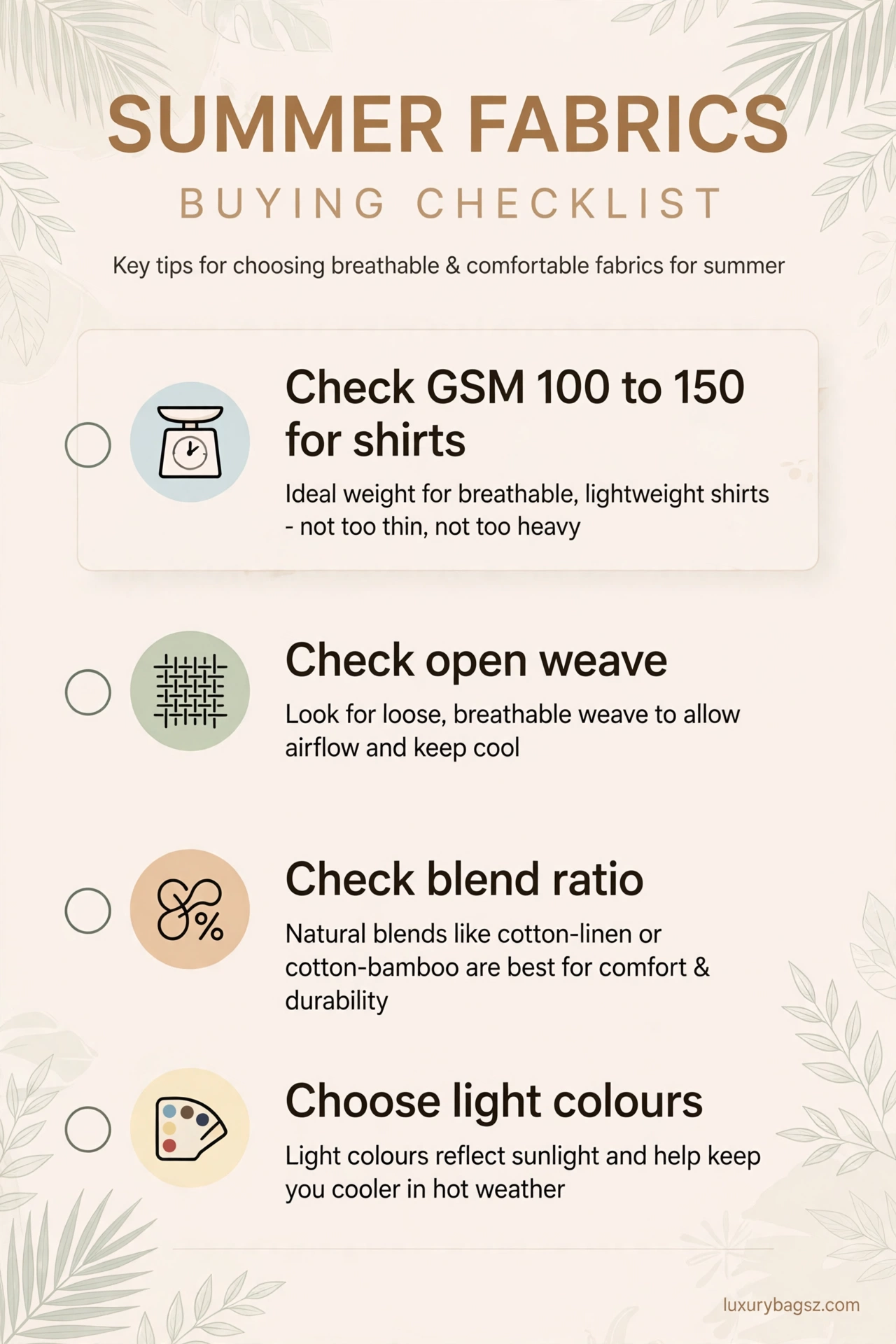
Check the GSM on the label or product page. Shirts around 100 to 150 GSM and trousers around 150 to 190 GSM hit the summer sweet spot; much above that, even linen starts to feel heavy.
Check the weave by holding the fabric to light. An open weave shows light through the gaps and promises airflow, while a dense, shiny weave promises heat retention. Stretch the fabric lightly: a good summer fabric should spring back without feeling stiff.
Check the blend ratio, especially for linen. Below 55 percent linen, the fabric behaves more like its other fibre, so a linen-look cotton blend will not breathe like linen. For wool, look for tropical or fresco weaves, not just a low GSM.
Fabrics to Avoid in Summer Heat
Avoid heavy denim, flannel, corduroy, and thick twill in high heat. They trap air, absorb sweat slowly, and dry slowly, which is the worst combination for humidity.
Avoid polyester-heavy dress shirts unless they are genuinely engineered for wicking. Cheap polyester traps heat and odour, and its smooth surface can feel clammy within an hour outdoors.
Avoid very dark, heavy fabrics for outdoor days, even in breathable fibres. Colour and weight can undo a good fibre choice, so a black heavy linen shirt can feel hotter than a white light cotton one.
Frequently Asked Questions
What is the most breathable fabric for summer?
Linen is generally the most breathable, thanks to hollow flax fibres, an open weave, and fast drying. Seersucker and cotton poplin follow closely for shirts.
Is linen or cotton better for summer?
Linen outperforms standard cotton in heat because it breathes better and dries faster. Lightweight cotton poplin beats heavy cotton, though, and suits crisp office shirts better than linen.
What is the coolest fabric for humid weather?
Linen, especially in an open weave and a light colour, handles humidity best. Seersucker is a strong second, since its puckers keep fabric off damp skin.
Does seersucker really keep you cooler?
Yes. Its puckered weave creates a permanent air gap between fabric and skin, improving airflow and evaporation even though the fibre is cotton.
Is tropical wool good for summer?
Yes, surprisingly so. Open tropical weaves like fresco hold fabric off the skin and breathe well, making them excellent for summer suits that must stay sharp.
What GSM is best for summer shirts?
Around 100 to 150 GSM suits summer shirts. Below that, fabric can go sheer; above it, even breathable fibres start to feel heavy.
Are linen blends as breathable as pure linen?
A 70/30 linen-cotton blend is close, with fewer wrinkles. Below about 55 percent linen, the fabric behaves more like cotton and loses much of linen's advantage.
Is Tencel good for summer menswear?
Yes, especially next to the skin. Tencel absorbs more moisture than cotton, dries well, and feels soft, making it ideal for tees and undershirts.
Should summer clothes be loose or fitted?
Slightly loose fits breathe better, since air can move between fabric and skin. Very tight clothes trap heat whatever the fabric, while overly baggy clothes add weight and bulk.
Do light colours really keep you cooler?
Yes, light colours reflect more heat than dark colours, and they show sweat less. In strong sun, colour choice can matter as much as fibre choice.
Summary
For summer menswear, start with linen for relaxed shirts, cotton poplin for crisp office shirts, seersucker for hot weekends, and tropical wool for tailoring. Check weave and GSM as carefully as fibre, keep blends above 55 percent linen when you want linen's cooling, and let light colours and a slightly loose fit do the rest. Breathability is a system, not a single fabric, and getting the system right is what keeps you cool.