

How the Leather Working Group Works: Audits, Medals, and What LWG Really Certifies
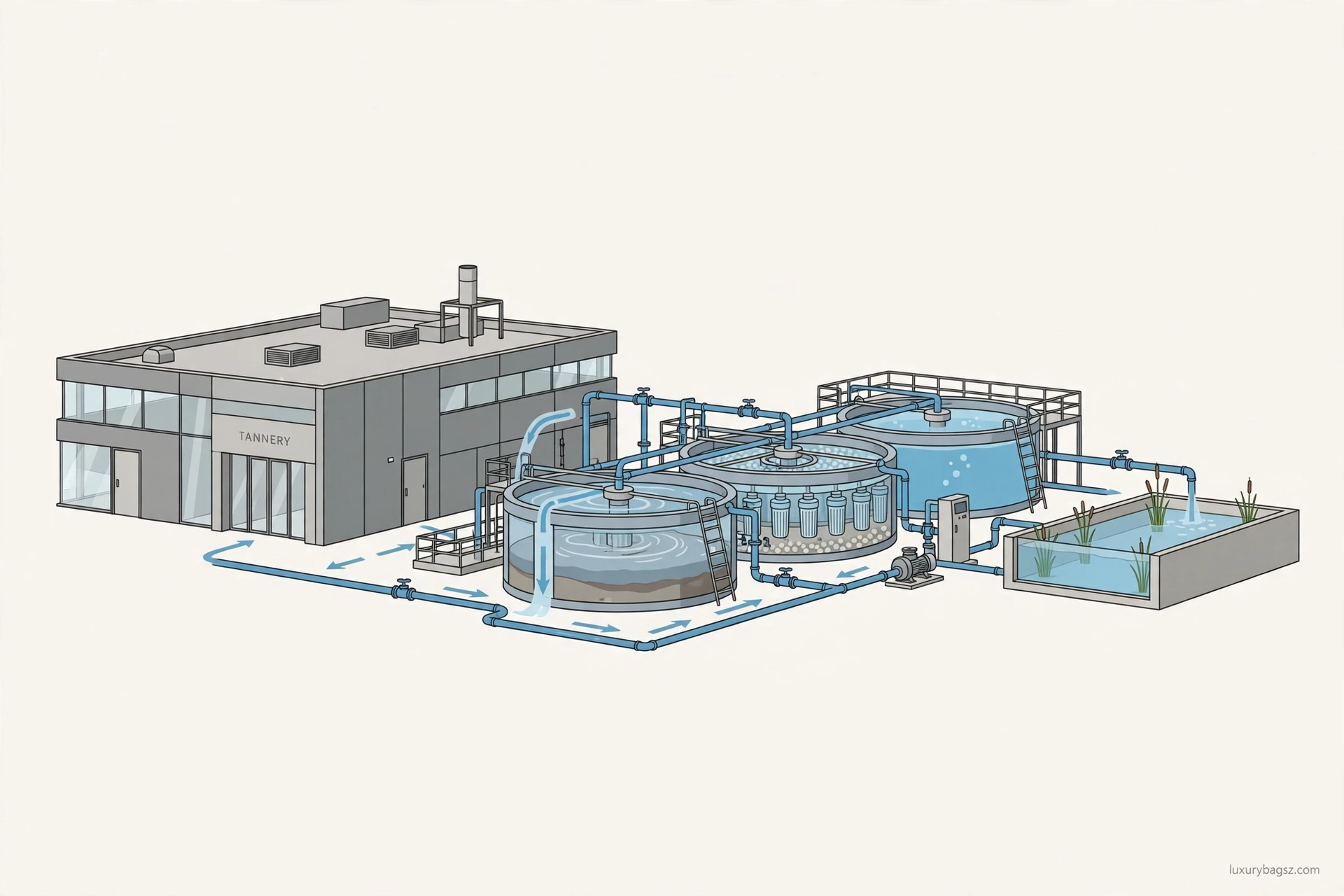
How the Leather Working Group Works in Brief
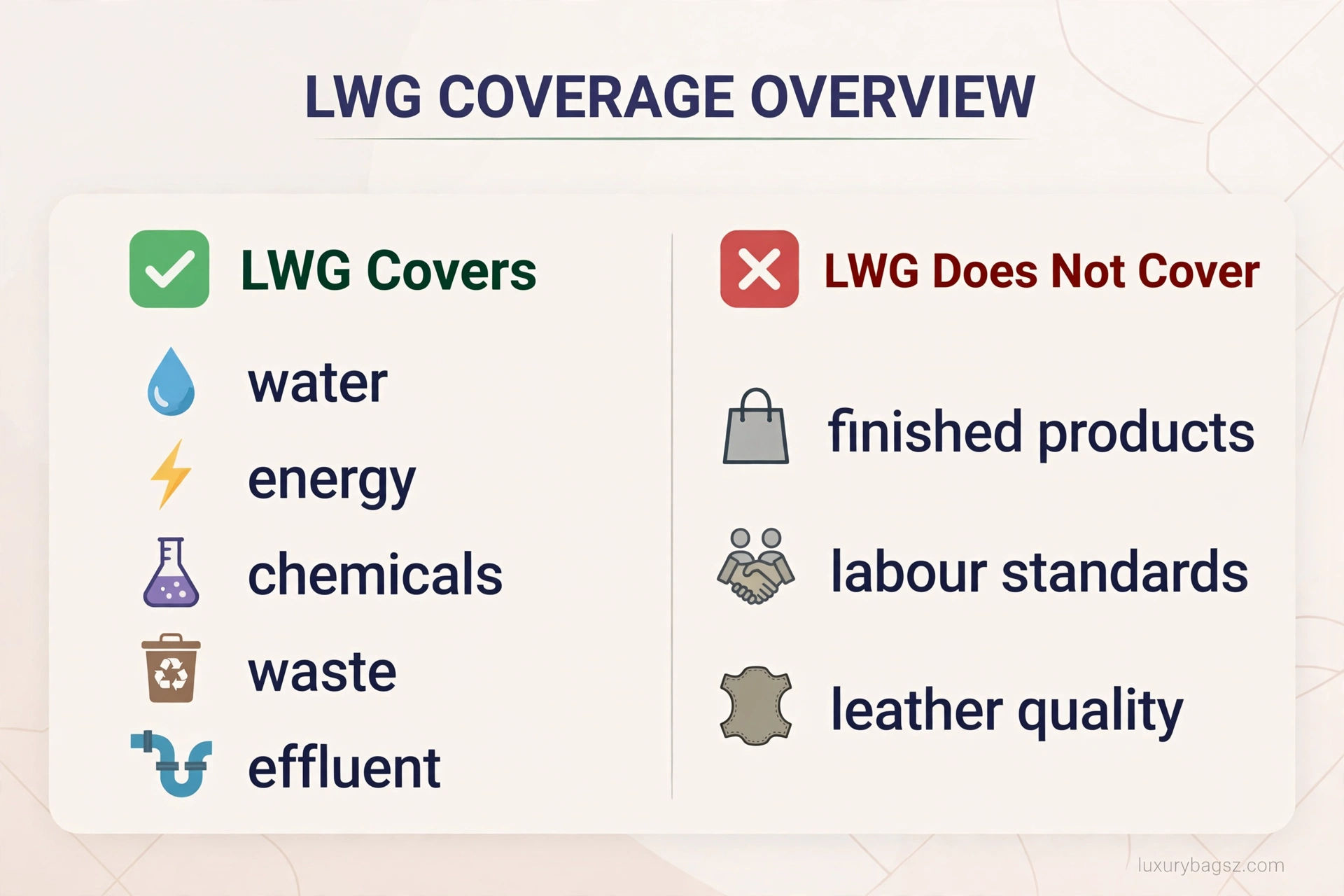
The Leather Working Group, or LWG, is a multi-stakeholder group set up in 2005 by brands, leather manufacturers, suppliers, and technical experts. Its core job is running an audit standard that measures how responsibly a tannery manages water, energy, chemicals, waste, and effluent.
Audits are carried out by independent, approved auditors, now overseen by the not-for-profit LWG Assurance Services, which assigns auditors, runs peer review, and issues certification. LWG itself receives only a small administration fee, currently £300, rather than being paid to audit.
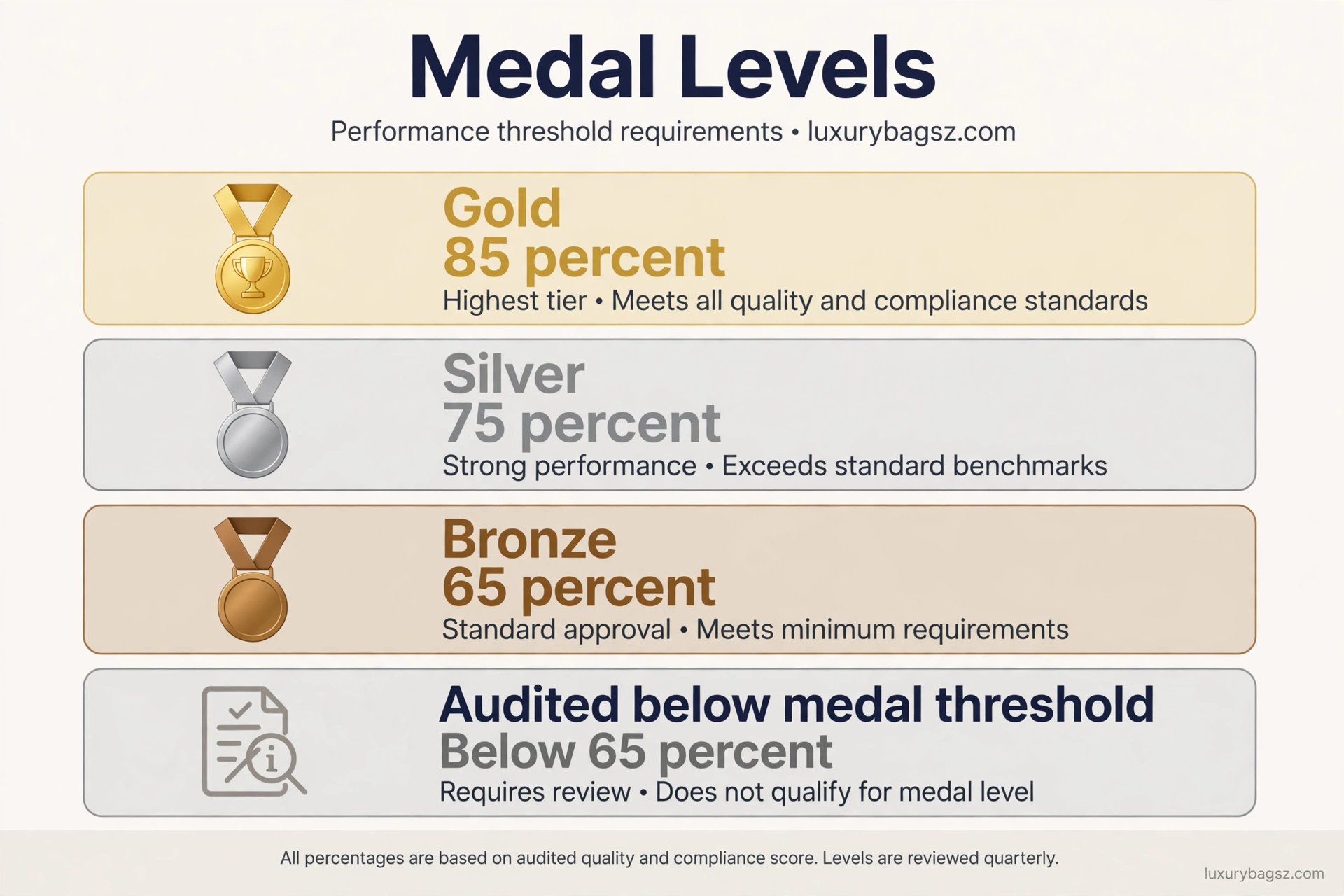
Tanneries earn gold, silver, or bronze medals by scoring at least 85, 75, or 65 percent in the critical scoring areas. A lower audited rating means the site was audited but missed a medal threshold. LWG certifies facilities, not finished products, and that distinction matters for every claim you read.
Key Takeaways
- LWG was formed in 2005 to reduce leather's environmental impact through a common audit standard.
- The audit covers environmental performance: water, energy, chemicals, waste, effluent, and traceability inputs.
- Medals require minimum scores in every critical area: gold 85 percent, silver 75 percent, bronze 65 percent.
- Certification lasts 24 months and covers one site only, not a whole company group.
- LWG does not certify animal welfare, labour conditions, or finished products on its own.
- A brand may use the LWG logo if it sources from audited facilities; the logo is not proof that one item's leather came from a gold tannery.
What LWG Is, and What It Is Not
LWG is a membership organisation, governed by an elected board of stakeholder representatives: four tanneries, four brands, and one supplier, each serving up to two four-year terms. Members fund it, and members help revise the standard.
It is not a regulator and not a consumer label in the usual sense. It does not ban chemicals outright, does not inspect finished shoes or bags, and does not guarantee that a product is sustainable. It measures and scores tannery practice against a shared protocol.
That narrow scope is a strength and a limit. Because it measures the same things everywhere, brands can compare tanneries fairly. Because it measures only those things, an LWG claim must never be read as a whole-product sustainability promise.

The Medal System Explained
The audit protocol contains around 16 areas, of which 11 are critical scoring areas. To earn any medal, a tannery must reach the minimum score in each critical area, not just a high average across the board.
Gold requires at least 85 percent in the critical areas, silver at least 75 percent, and bronze at least 65 percent. A site that is audited but falls below bronze thresholds is rated audited, which is honest but not a medal.
Water use illustrates the scoring. Guidance cited for the standard puts gold at roughly 30 litres or less per square metre of leather, with silver higher and bronze higher again, alongside limits on effluent quality. Exact thresholds move with protocol revisions, so treat figures as indicative, not permanent.
What an Audit Actually Measures
Water stewardship comes first in most summaries: how much process water is used per square metre, how effluent is treated, and whether discharge meets chemical oxygen demand and other limits. Tanneries must measure, not estimate, these figures.
Energy use and emissions follow, including energy per unit of leather and efforts to cut consumption. Chemical management covers inventories, restricted substances, and safe storage, while waste covers solid waste handling, by-products, and disposal routes.
Traceability inputs are also assessed, such as whether hides come from known sources and whether the tannery can show chain-of-custody records. Health and safety is touched on, but the audit is not a full social or safety audit, a point LWG states plainly.
How an Audit Runs, Step by Step
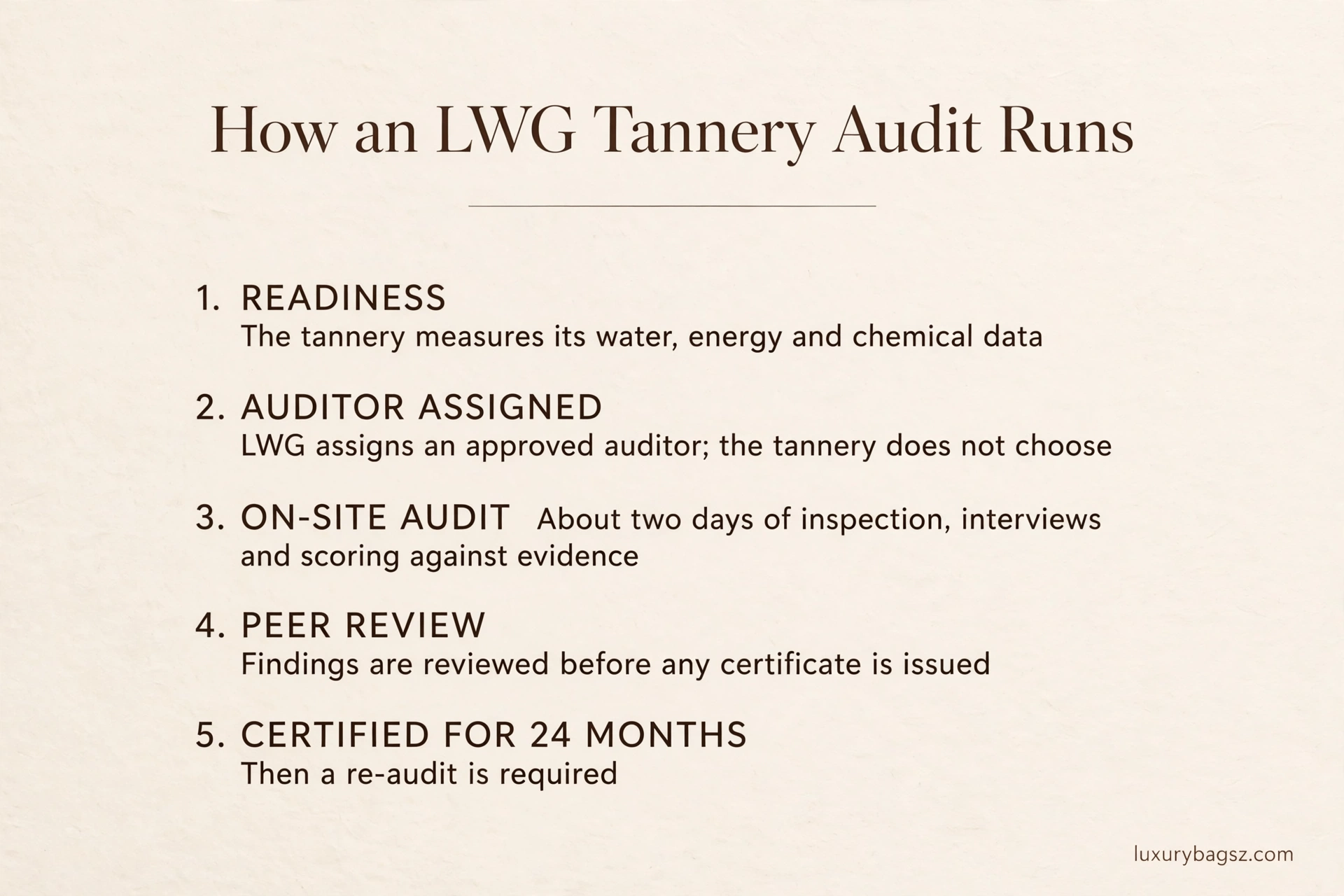
A tannery first checks its readiness, often with internal measurement of water, energy, and chemical data over a full production period. It then contacts LWG Assurance Services, which assigns an approved auditor rather than letting the tannery choose its own.
The on-site audit typically takes two days. The auditor inspects plant and records, interviews staff, samples data, and scores each protocol area against evidence, not claims. Findings go through peer review before any certificate is issued.
After certification, the tannery receives a summary report and detailed notes, becomes an LWG member, and can give input to the group. Certification is valid for 24 months, after which re-audit is required, and the tannery can use its medal rating in business-to-business communication.
What LWG Does Not Cover
LWG audits do not cover social aspects inside a tannery in depth, nor a full health and safety assessment. Brands that care about labour standards need separate audits or certifications for those areas.
The audit covers the site where leather is made, not other sites in the same group, and it does not certify compliance at subcontractors unless they are separately audited. A group with one gold tannery and three unaudited ones cannot claim the whole group is gold.
It also does not cover fur, and it does not judge leather quality, durability, or style. A gold-rated tannery can still make poor leather, and a bronze tannery can make beautiful leather; the medal measures environmental management, not craftsmanship.
From Tannery Medal to Product Claim
Brands that are LWG members may use the LWG logo to signal that they source from facilities audited against the standard. That is a sourcing commitment, not a claim that every hide in a given product came from a medal tannery.
Stronger product claims name the tannery, the medal, and the scope, such as leather from a gold-rated facility for a stated share of the product. Vague claims that just say LWG leather, with no medal, facility, or share, tell you very little.
Our guide to which country makes leather for Hermès bags shows why origin claims need the same care: a country name, like a medal name, is only useful when it is tied to a specific tannery and a specific product.
The New LWG Sustainability System
LWG is moving from Protocol 7 toward a new LWG Sustainability System, developed through a multi-stakeholder process under ISEAL principles. It will include a manufacturing standard, chain-of-custody rules, and deforestation due diligence, plus a carbon footprint tool.
For buyers, the key change is traceability. Chain-of-custody rules should make it harder to claim LWG leather for a product whose hides cannot be traced to audited facilities, and deforestation due diligence addresses one of leather's most criticised impacts.
Until the new system is fully in force, expect a transition period where both old protocol medals and new system claims appear. Ask which standard a claim refers to, and when it was audited, rather than assuming the newest rules already apply.
How to Read an LWG Claim Like a Professional
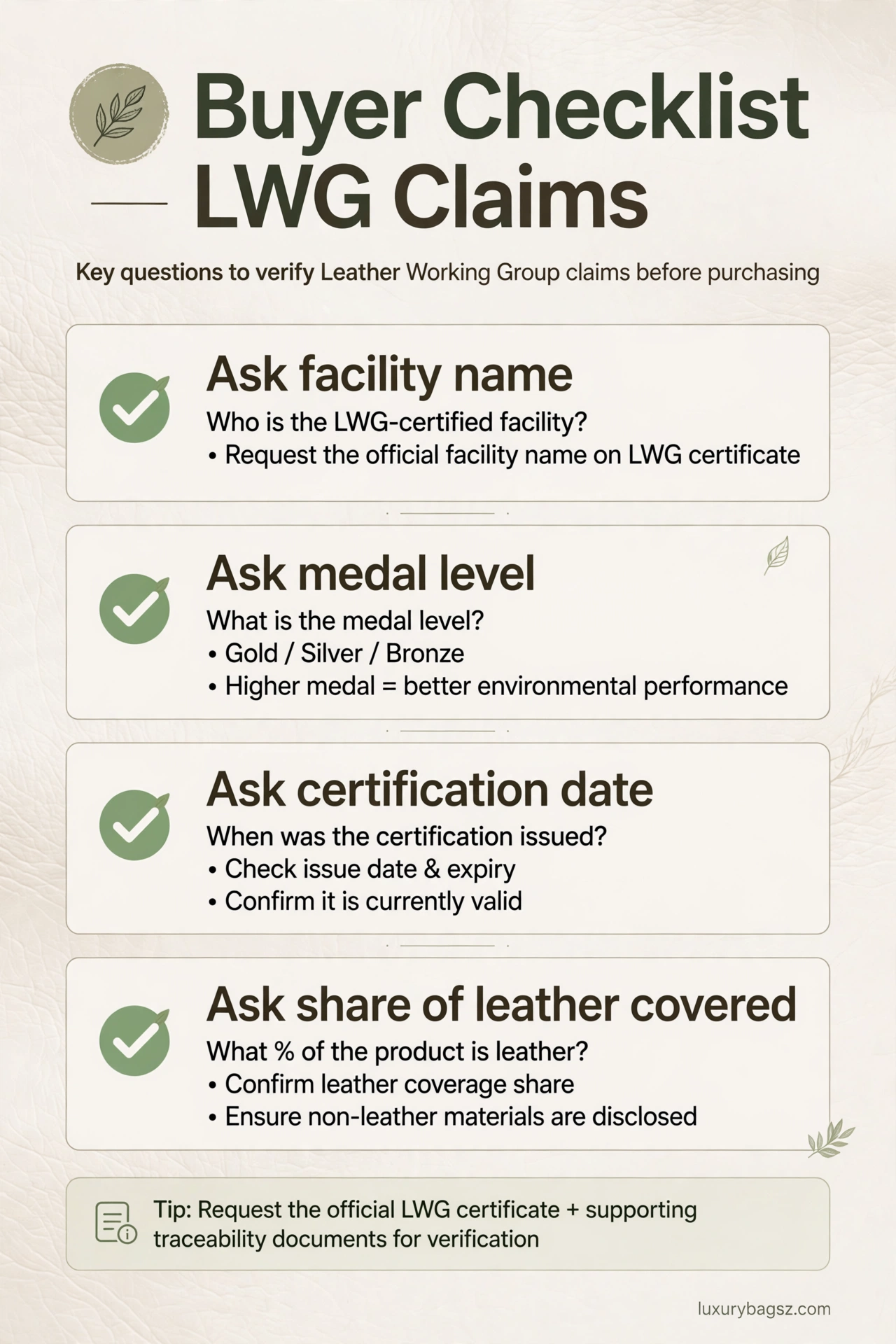
Ask four questions: which facility was audited, what medal did it earn, when does certification expire, and what share of this product's leather came from that facility? A credible seller answers all four.
Be wary of claims that use the LWG name for a finished product with no tannery named, for a company group rather than a site, or for a medal earned years ago with no re-audit date. Those are the most common ways LWG language gets stretched.
Also compare LWG with other labels rather than treating it as a pass or fail. OEKO-TEX covers chemical safety in the finished product, ISO 14001 covers environmental management systems, and LWG covers tannery environmental performance. They complement each other; none replaces the others.
Does LWG Actually Improve Tanneries?
Evidence suggests yes, within its scope. Since 2005, LWG has audited well over a thousand tanneries, and its supplier scorecard lets brands see audit results by area, which pressures laggards to improve water and chemical practice.
Critics fairly note that medals reward relative performance, not absolute sustainability, and that a bronze tannery is still a tannery with real impacts. LWG's answer is continuous improvement: thresholds rise over time, and the new system adds traceability and deforestation checks.
For shoppers, the balanced view is this: LWG gold is a meaningful positive signal about how leather was made, LWG audited is a weak signal, and no LWG claim at all is not proof of bad practice, since small tanneries may lack the resources to audit.
Frequently Asked Questions
What is the Leather Working Group?
LWG is a multi-stakeholder group formed in 2005 by brands, tanneries, suppliers, and experts to audit leather manufacturers on environmental stewardship and drive improvement across the industry.
How does LWG certification work?
An approved auditor, assigned by LWG Assurance Services, audits a tannery site over about two days, scores it against the protocol, and peer review confirms the result before certification is issued.
What do LWG gold, silver, and bronze mean?
Gold means at least 85 percent in critical scoring areas, silver at least 75 percent, and bronze at least 65 percent. A site below bronze that was still audited is rated audited, not medal-rated.
How long does LWG certification last?
Certification is valid for 24 months, after which the tannery must be re-audited to keep its rating. Always check the date, since an old medal may no longer be current.
Does LWG certify finished products?
No. LWG certifies tannery facilities and their environmental management. A product claim should name the facility and the share of leather covered, or it is only a general sourcing claim.
Does LWG cover animal welfare or labour?
Not in depth. The audit focuses on environmental performance, with limited health and safety coverage. Separate standards are needed for labour and animal welfare claims.
Can a brand use the LWG logo?
LWG brand members may use the logo to show they source from facilities audited against the standard. It signals a sourcing commitment, not that one item is fully LWG leather.
What is LWG Assurance Services?
It is the not-for-profit certification body set up in 2025 to oversee LWG audits: assigning auditors, managing contracts and payments, running peer review, issuing certificates, and handling appeals.
What is the new LWG Sustainability System?
It is the successor to Protocol 7, adding a manufacturing standard, chain-of-custody rules, deforestation due diligence, and a carbon footprint tool, developed with stakeholder input.
Is LWG leather always sustainable?
No single audit makes leather sustainable. LWG gold is a strong signal about tannery environmental practice, but the full footprint also depends on farming, chemicals, transport, product life, and disposal.
Conclusion
The Leather Working Group works as a measurement and improvement system, not as a magic label. It scores tanneries on water, energy, chemicals, and waste, awards medals only when every critical area clears a threshold, and certifies one site for two years at a time. Read claims with that scope in mind, ask for facility, medal, date, and share, and LWG becomes a genuinely useful tool for choosing better-made leather.






