Luxury Accessories for Men: Watches, Leather Goods, Cufflinks and Finishing Touches
Start With Three: Watch, Wallet, Belt
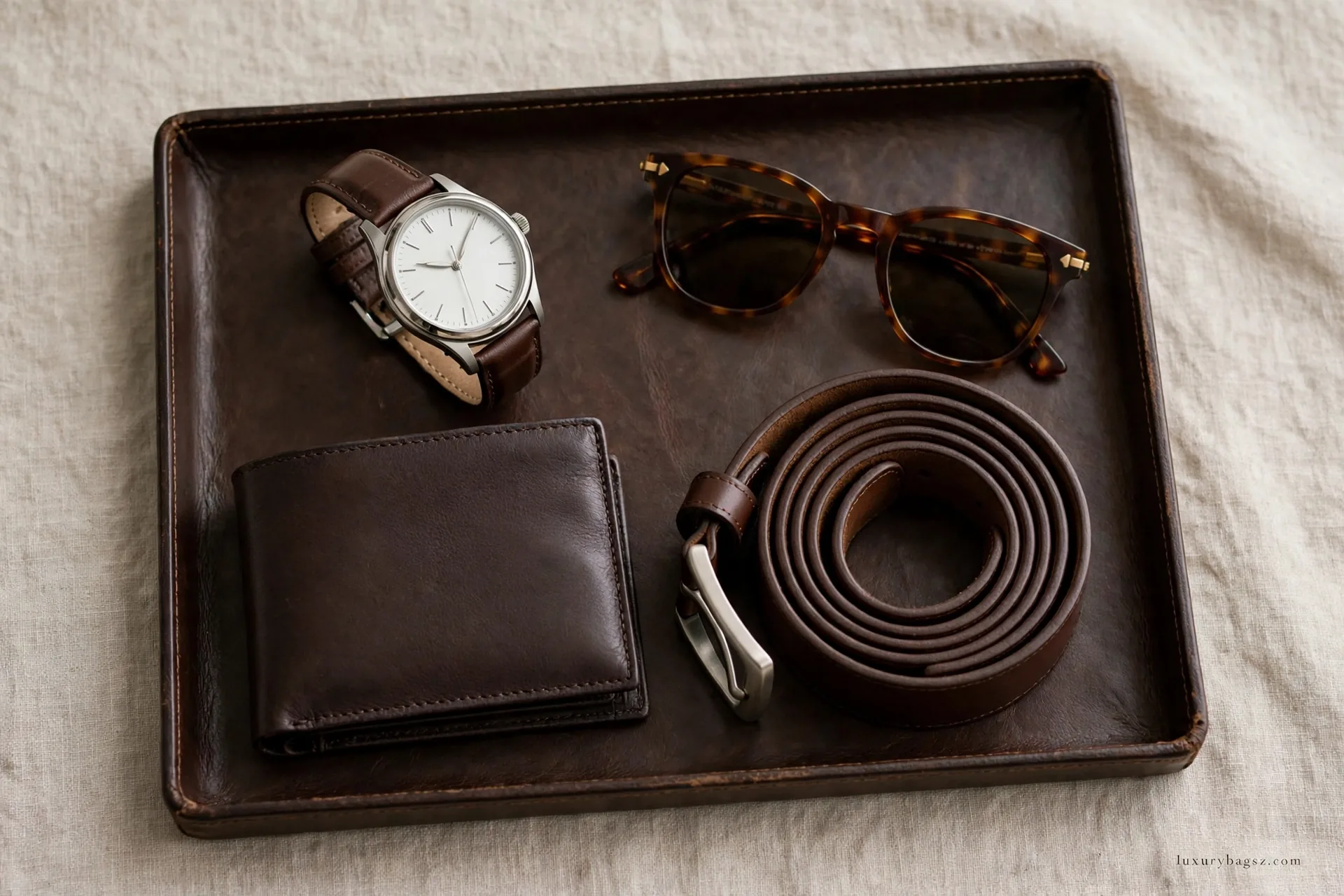
The luxury accessories a man actually needs are few: one classic watch, one wallet in full-grain leather, one belt that matches his best shoes, then cufflinks and sunglasses as the wardrobe allows. Quality here means materials and making, not logos. Sapphire crystal on a watch, full-grain hide in a wallet and solid metal in a buckle outlast any monogram. Buy one piece at a time, in classic shapes and colours. A small set of excellent accessories finishes every outfit in our wider wardrobe guides without ever dating.
Key Takeaways
- A classic watch sized to your wrist is the single most useful luxury accessory.
- Full-grain leather is the grade that ages well in wallets, belts and cases.
- Keep buckles, cufflinks and watch metal in one tone per outfit.
- Slim is luxury now: a card holder or slim bifold beats a bulging wallet.
- Sunglasses should fit your face shape first and carry a label second.
- Buy classic shapes once rather than fashionable shapes repeatedly.
How to Build the Set Without Waste
Start from the outfits you already wear. Accessories must finish those clothes, not demand new ones, so list your suits, shoes and coat colours first. Our gentleman's style guide sets the wardrobe base these pieces are chosen to complete. Order purchases by daily visibility. A watch and wallet are handled and seen every day; cufflinks appear weekly at most for most men. Choose a metal tone and a leather colour family early — silver metal with black and brown leathers, for example — and stay inside it for coherence.
Resist matched gift sets. They look coordinated in a box and odd in life, where one piece is always better made or more useful than the rest. One excellent item also teaches your eye. After a season with a good wallet, judging leather in a belt or a bag becomes far easier. Keep receipts and boxes for watches and fine pieces. Provenance protects resale value and helps with servicing and repairs later.
The Watch: One Classic, Properly Sized
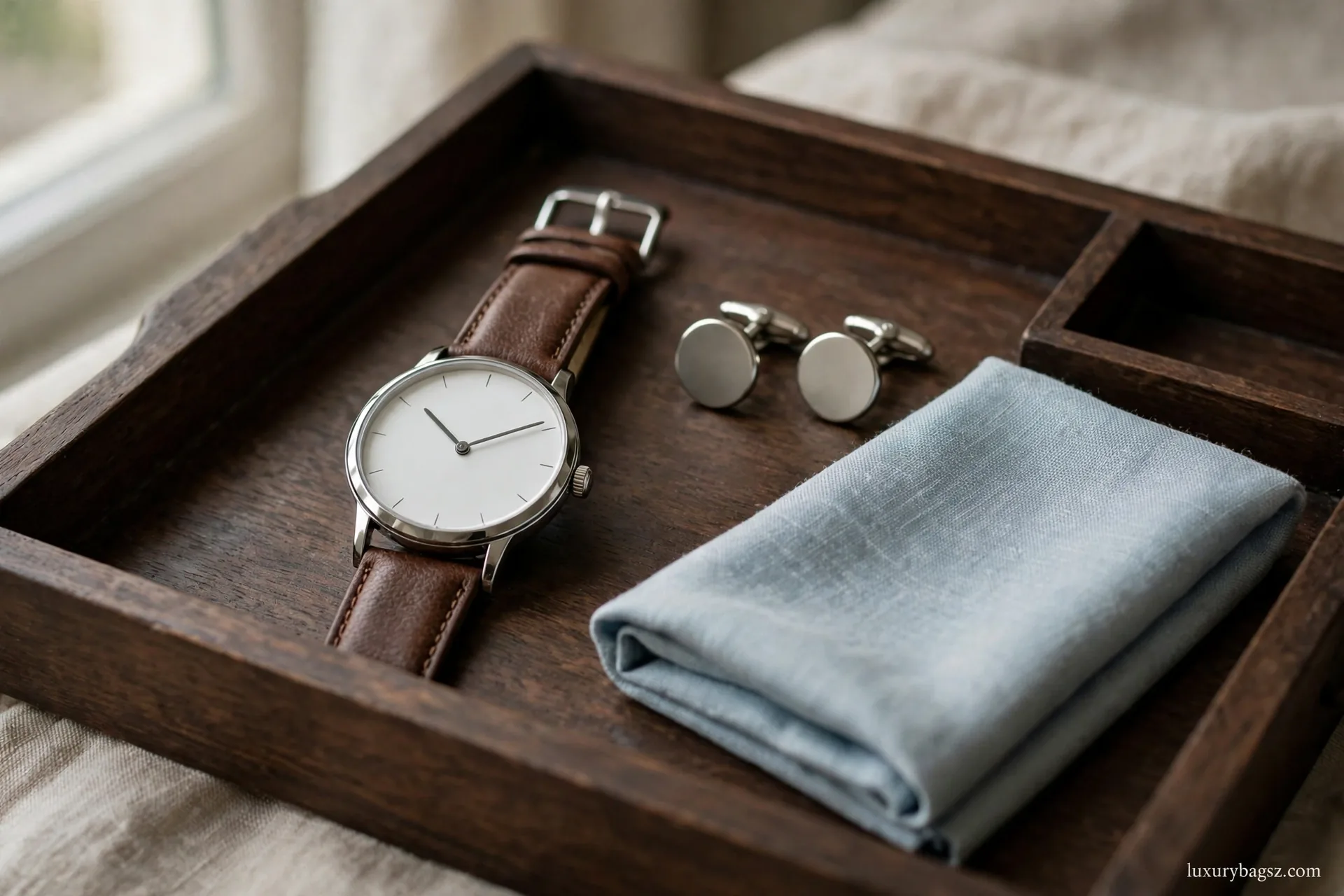
A dress or classic sports watch in the 36–40mm range suits most wrists. The lugs should not overhang your wrist, and the dial should stay legible and plain. Sapphire crystal resists scratches far better than mineral glass. An automatic movement suits enthusiasts; a good quartz suits men who want zero fuss. Our round-up of top luxury men's watches compares the classic houses and the styles that hold their value best. A leather strap dresses a watch up and a steel bracelet dresses it across more settings. Many men keep both and swap with the season.
Buy the watch for your most common week, not your most formal day. A plain watch works at a wedding; a diamond-set one rarely works at a desk. Pre-owned watches from reputable dealers offer strong value. Insist on service history, original papers where possible and a returns window. Servicing is part of the price. Budget for a professional service every few years on a mechanical watch and factor it into the true cost.

Wallets, Card Holders and Small Leather Goods
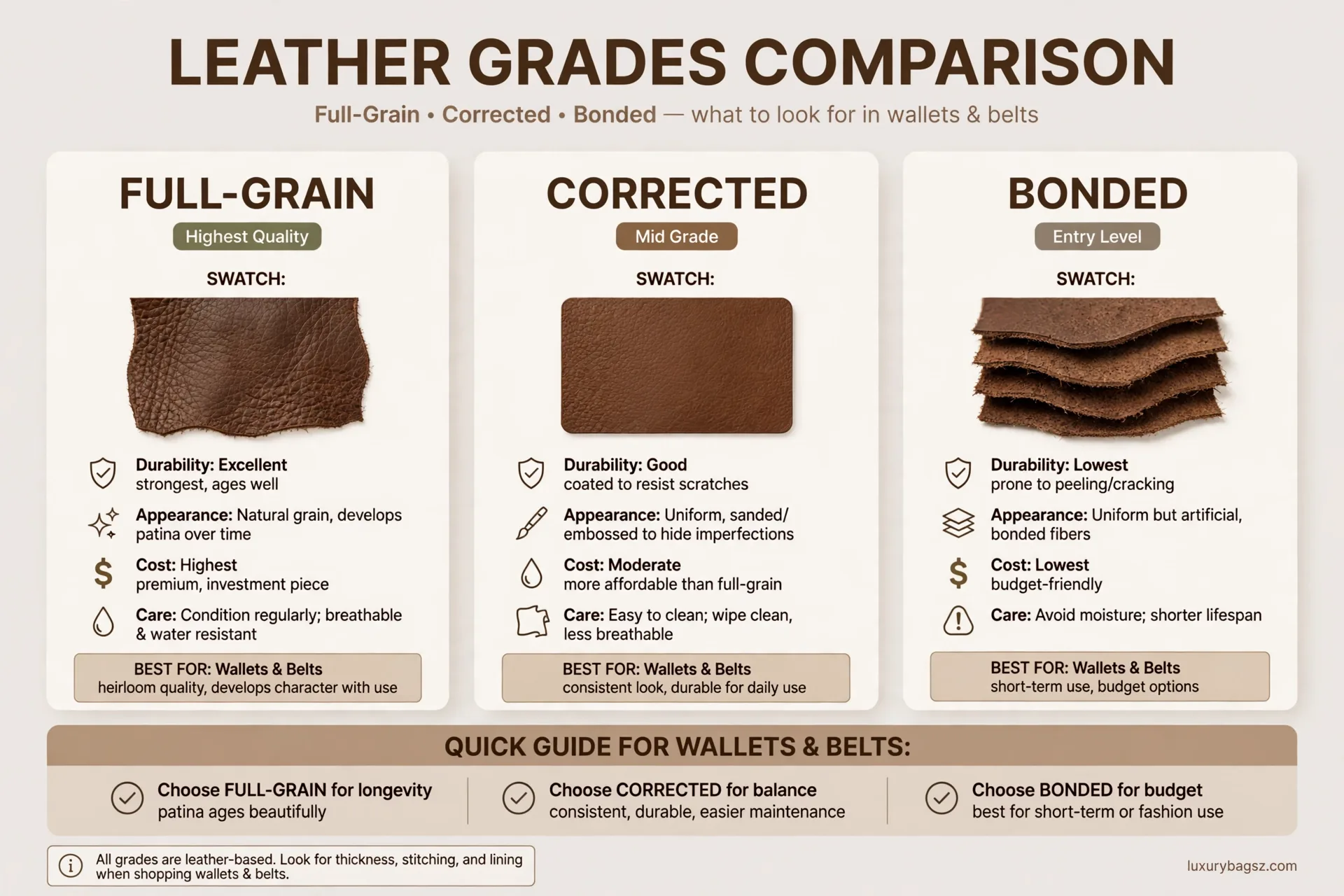
Full-grain leather is the top layer of the hide, with its natural surface intact. It scuffs, heals with handling and develops a rich patina over years. Corrected and split leathers are cheaper and look perfect at first, then crack at folds. Bonded leather, made from fibres, is the grade to avoid in luxury buying. Choose shape by carry. A slim card holder suits front pockets and light days; our guide on how to choose a men's card holder wallet compares capacities and layouts. A slim bifold remains the classic all-rounder. Carry fewer cards rather than a thicker wallet — bulk ruins trouser lines and posture in equal measure.
Stitching should be even, edges painted or burnished smoothly, and corners reinforced. Turn the piece over: the inside finish tells the truth about making. Colour choice is simple. Black for formal lives, dark brown for the most versatile, and tan for men who enjoy visible patina developing. RFID lining is a useful modern extra in a classic shape. It adds nothing to the look and can help in crowded travel settings.
Belts, Bags and Carry Pieces
A dress belt is around 30–35mm wide in smooth leather with a plain frame buckle in solid brass or steel. It should match the shoes in colour family. Avoid oversized logo buckles in formal settings. They date quickly, draw the eye to the waist and fight the clean line of tailoring. For carry, a leather briefcase, a folio or a well-made holdall covers work and weekends. Our overview of classic Louis Vuitton bags for men shows the enduring shapes in that category. Canvas with leather trim is lighter and often tougher for travel. Full leather is heavier, dressier and ages beautifully when the hide is good.
Check handles and stress points before price tags. Stitched and riveted handles, metal feet and a lined interior predict years of use. A wash bag in leather or coated canvas is a quiet luxury that earns its place weekly. Choose one that opens wide and wipes clean. Keep carry pieces empty when stored and stuff soft shapes lightly. Leather that rests in its natural shape keeps that shape for decades.
Cufflinks, Tie Bars and Formal Finishes
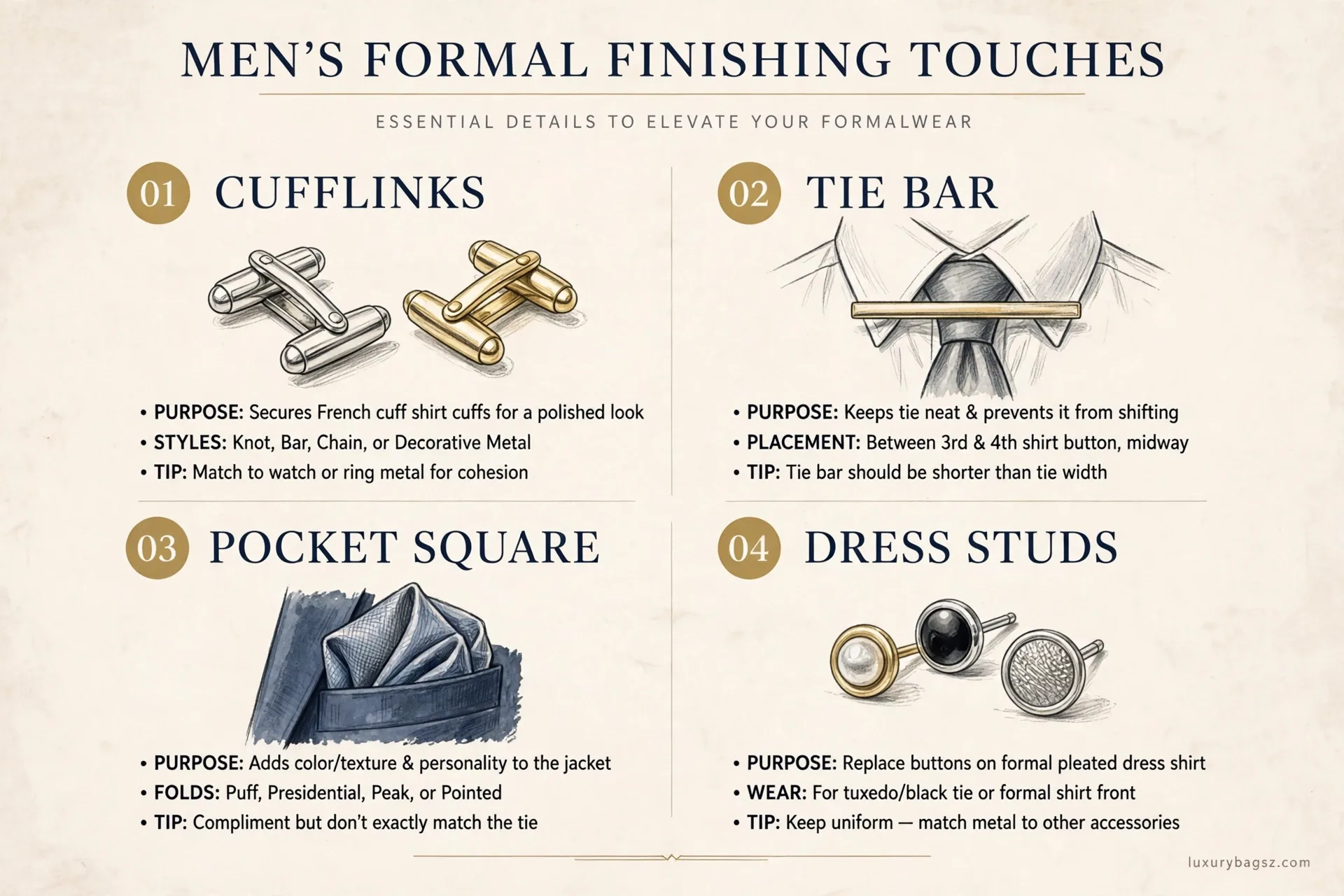
Cufflinks are the one place a man can add wit safely. Plain knots, bars and discs in silver or gold suit every shirt; novelty shapes suit very few. Metal should echo the watch and belt buckle. One metal tone per outfit looks intentional; mixed tones need confidence and a reason. A tie bar should sit between the third and fourth shirt buttons and never be wider than the tie. Its job is order, not display. Dress studs and a proper bow tie complete black tie dress. If you attend formal events yearly, owning beats hiring on cost and fit within a few wears.
Pocket squares belong here too: white linen for formal wear, silk with a quiet pattern for smart occasions, puffed rather than folded to points. Collar stays in metal keep a collar crisp all day for pennies of visible effect. They are the cheapest luxury upgrade on this page. Keep formal pieces together in one tray or roll. Pieces stored together get worn; pieces scattered in drawers get forgotten and replaced.
Sunglasses, Pens and Everyday Upgrades
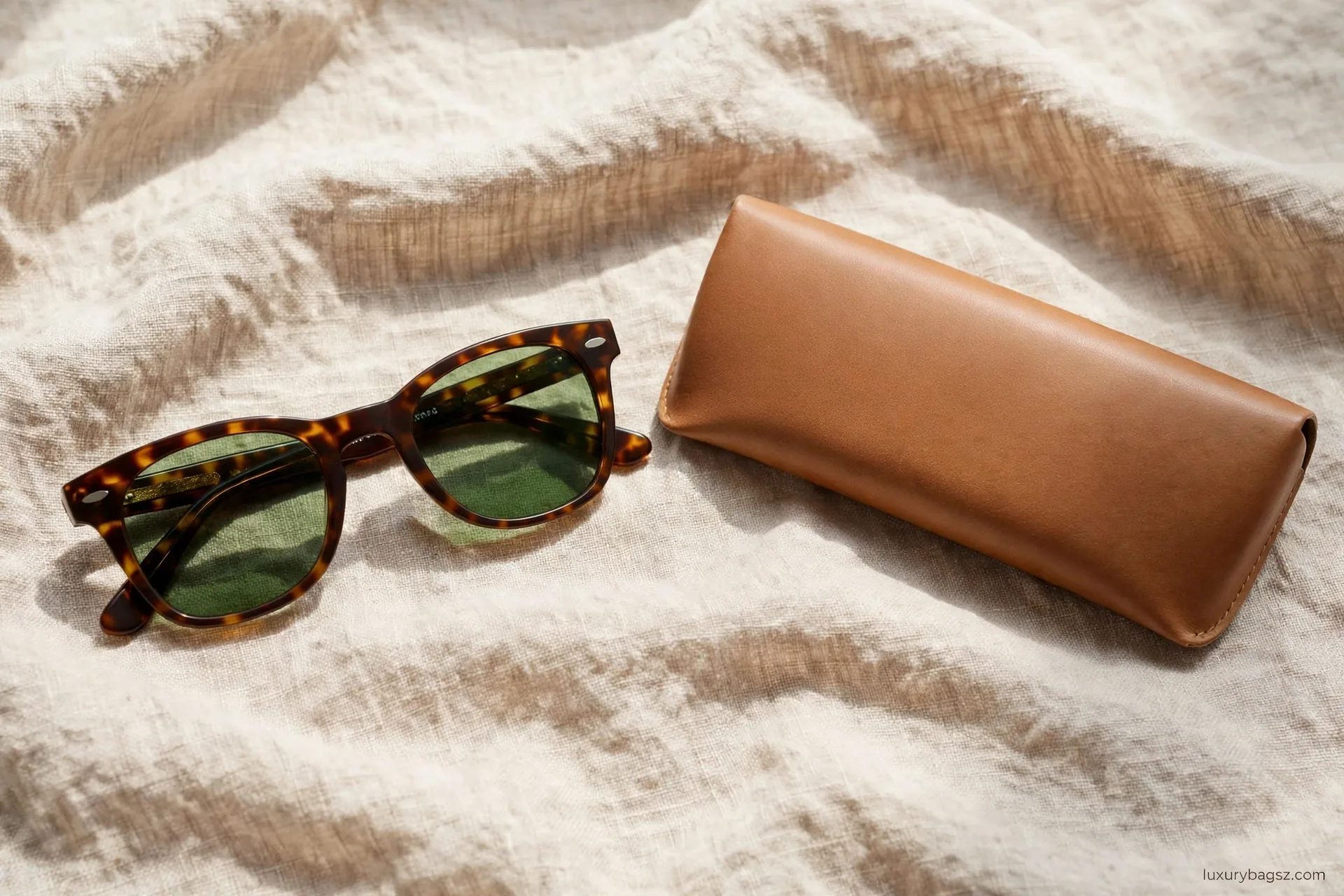
Sunglasses should be chosen by face shape first. Acetate frames in tortoiseshell or black, with glass or quality lenses and full UV cover, suit most men. Oversized fashion frames date; classic aviator, wayfarer-style and round shapes return every decade because they flatter bone structure. A fountain pen or a well-weighted ballpoint in metal turns signing into a small pleasure and makes a proven gift. Refills are cheap; presence is not. Our wider point stands: everyday objects you touch hourly repay quality fastest. A key case, a glove pair in soft leather and a solid umbrella belong in this tier.
Gloves should fit snugly with no spare length in the fingers. Lined leather gloves in brown or black cover formal and casual coats alike. A money clip or a slim front-pocket wallet suits men who never carry cash bulk. Choose sprung metal or leather-covered designs that grip firmly. Phone and laptop sleeves in leather protect daily tech and look better with age. Buy them sized exactly to your current devices, not a hoped-for upgrade.
Prices, Gifts and Pre-Owned Buying
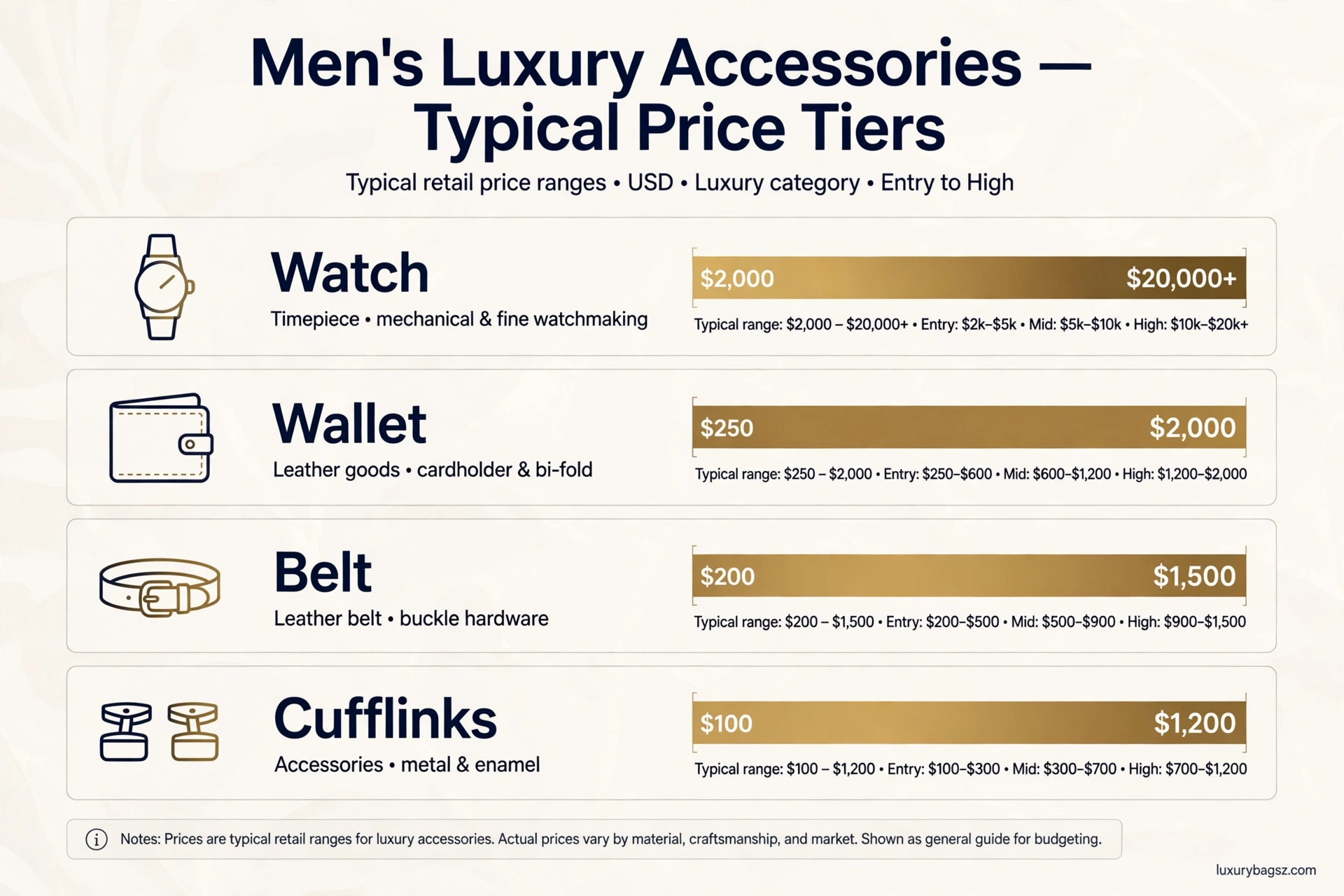
Watches span the widest range, from a few hundred for good quartz to five figures and beyond for fine mechanical pieces from historic houses. Leather goods at true luxury level typically sit in the low to mid hundreds for wallets and belts. Below that, check the leather grade carefully. Cufflinks in solid silver or gold cost more than plated sets and outlast them. For gifts, classic shapes in a man's known metal tone are the safe route. As gifts, accessories beat clothing: no sizing beyond belts and gloves, daily use, and a clear quality story the recipient can feel in hand.
Pre-owned watches and leather goods offer value if you buy the seller first. Look for service records, clear photos of edges and corners and a returns policy. Avoid pre-owned belts unless nearly unworn — holes and shaping are personal. Wallets are safer if the leather is uncracked and the interior is clean. Keep a simple rule for every tier: one excellent piece now beats three adequate pieces this year, in cost per use and in pleasure.
Care That Keeps Leather and Metal Looking New
Condition leather goods a few times a year with a neutral cream, sparingly. Over-conditioning softens structure; neglect cracks the surface. Keep wallets out of back pockets when sitting for long periods. Heat, pressure and bending break cards and stretch leather faster than age does. Store watches wound down or on a winder as the maker advises, away from bathroom humidity. Metal bracelets clean well with a soft brush and mild soap. Polish buckles and cufflinks with a soft cloth, and keep silver pieces in anti-tarnish pouches if you live near the sea.
Sunglasses live in their case, never loose in a bag or on a car dashboard. Heat warps acetate and loose storage scratches lenses in a week. Rest belts flat or hung by the buckle, never tightly rolled for months. Leather remembers the shape you store it in. Rotate small leather goods if you own two wallets. Rest spreads wear and lets each piece dry fully between periods of daily use.
Frequently Asked Questions
What is the best first luxury accessory for a man?
A classic watch sized to your wrist. It is worn daily, finishes every outfit and, bought plainly, never goes out of style.
How can I tell if leather is full-grain?
Full-grain shows a natural, slightly varied surface and feels supple rather than plasticky. Sellers of genuine full-grain state the grade plainly.
Should my belt match my shoes exactly?
Match the colour family and finish — black with black, brown with brown. Exact shade matching is nice but not required for a polished look.
Are logo accessories worth the money?
Sometimes, but materials decide value. A plain full-grain wallet from a quiet maker usually outlasts a logo wallet in corrected leather.
What size watch should I buy?
Most wrists suit 36–40mm cases. The lugs should stay within your wrist width; a watch that overhangs will always look borrowed.
Is a card holder enough for everyday use?
For many men, yes. If you carry six cards or fewer and little cash, a card holder is slimmer, kinder to pockets and easier to keep tidy.
How much should cufflinks cost?
Solid silver or well-made plated cufflinks sit in the tens to low hundreds. Pay for metal and making, not for novelty shapes.
What sunglasses suit most faces?
Classic acetate frames in tortoiseshell or black, in aviator, wayfarer-style or round shapes. Fit and UV cover matter more than branding.
Can I buy luxury accessories pre-owned?
Yes, especially watches and hard-wearing leather goods. Buy from reputable sellers, check service history and edges, and confirm returns.
How do I stop a wallet bulging?
Carry less: review cards monthly, remove receipts weekly and choose a slim bifold or card holder. Bulk is a habit, not a necessity.
Final Verdict: Few Pieces, Best Materials, No Logos Needed
A man's luxury accessories earn their name through materials and making — sapphire, full-grain hide, solid metal — worn daily and cared for lightly. Start with a watch, a wallet and a belt that matches your shoes. Add cufflinks, sunglasses and carry pieces slowly, in one coherent palette.