

Mould on a Leather Bag: How to Remove It and Stop It Coming Back
Treat It Promptly, and Treat It Outdoors
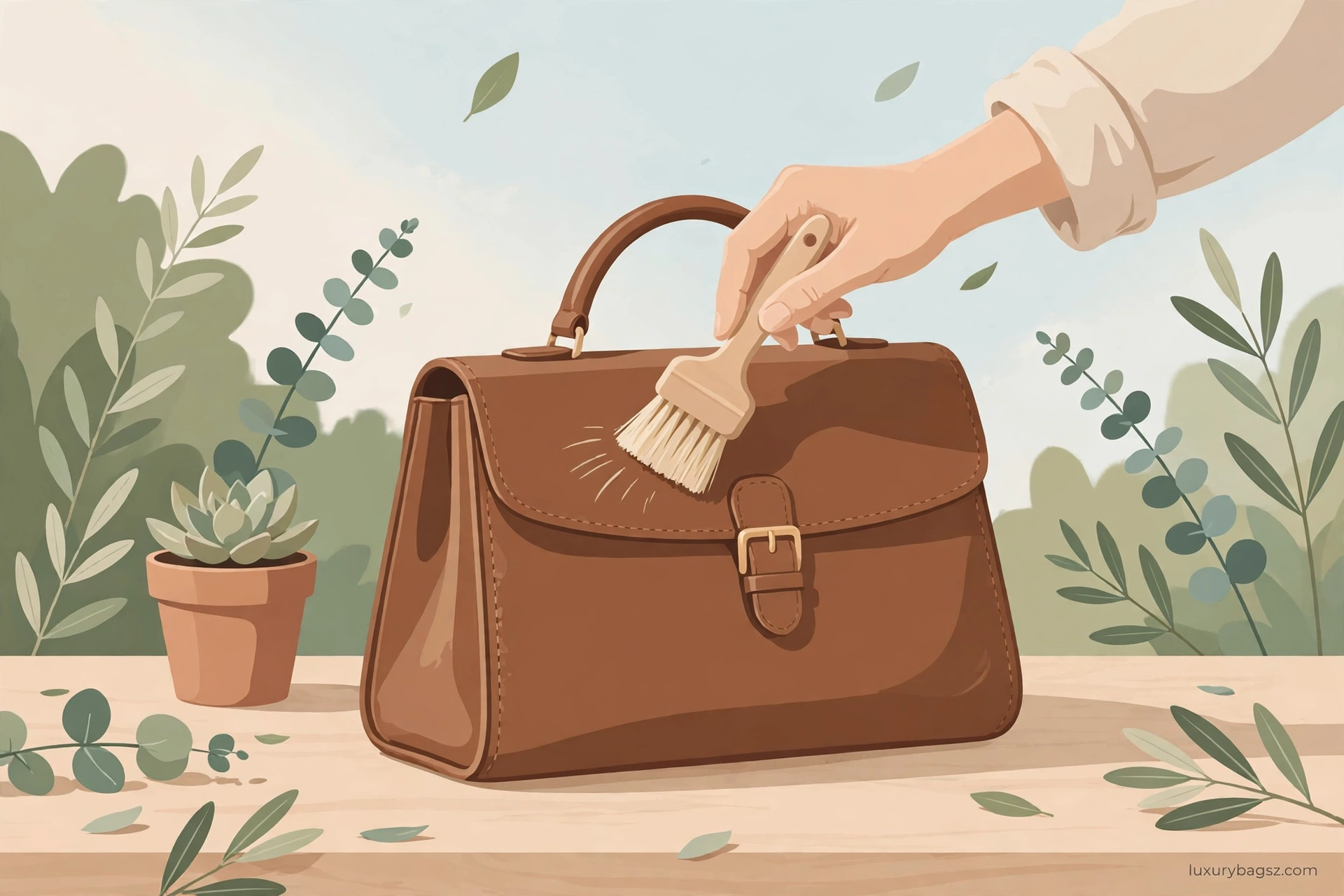
To remove mould from a leather bag, take the bag outside first: brush loose growth off with a soft, dry brush, then clean the surface with a cloth barely dampened with a leather-safe cleaner, working a small area at a time.
Mould on leather looks alarming, and light surface growth on a sound bag usually cleans away well. The real enemies are delay and damp: left in a closed cupboard, growth spreads into seams and lining and starts to etch the surface.
Work outdoors, wear a mask if growth is heavy, and keep the bag away from other leather goods until it is clean and fully dry. This guide covers the full routine and the storage changes that stop it returning.
Key Takeaways
- Always start outdoors: brush loose mould off in open air so spores do not settle indoors or on other bags.
- Clean with a barely damp cloth and a leather-safe cleaner; leather hates soaking, even when it is mouldy.
- A specialist leather mould product, used exactly as directed, is safer than bleach or strong household sprays.
- Dry the bag fully in moving air, in shade, before conditioning or storing it.
- The smell needs its own treatment with airing and absorbents after the growth is gone.
- Mould returns to the storage conditions that grew it; fixing humidity and airflow matters more than the cleaning.
Why Mould Grows on Leather Bags
Leather is an organic material, and its surface and finishes hold the moisture and nutrients mould needs. A bag stored damp, or in a humid room with still air, is an invitation.
Closed cupboards in humid climates, plastic boxes, and bags put away after rain without drying are the usual settings. Growth often starts in seams, under flaps and inside the lining, where air moves least.
Warmth speeds it up, but the core ingredients are simply moisture, food and stillness. Remove any one of the three and mould struggles to establish itself on a clean, dry bag.
Location is a clue as well. Mould favours the hidden places first: under the flap, inside pockets, along the base and inside the lining, where air barely reaches and moisture lingers after use.
Run the check in good light with the bag fully open. A bag can look clean on its front panel while growth is establishing itself in the two places its owner never looks.
Telling Mould from Dust and Bloom
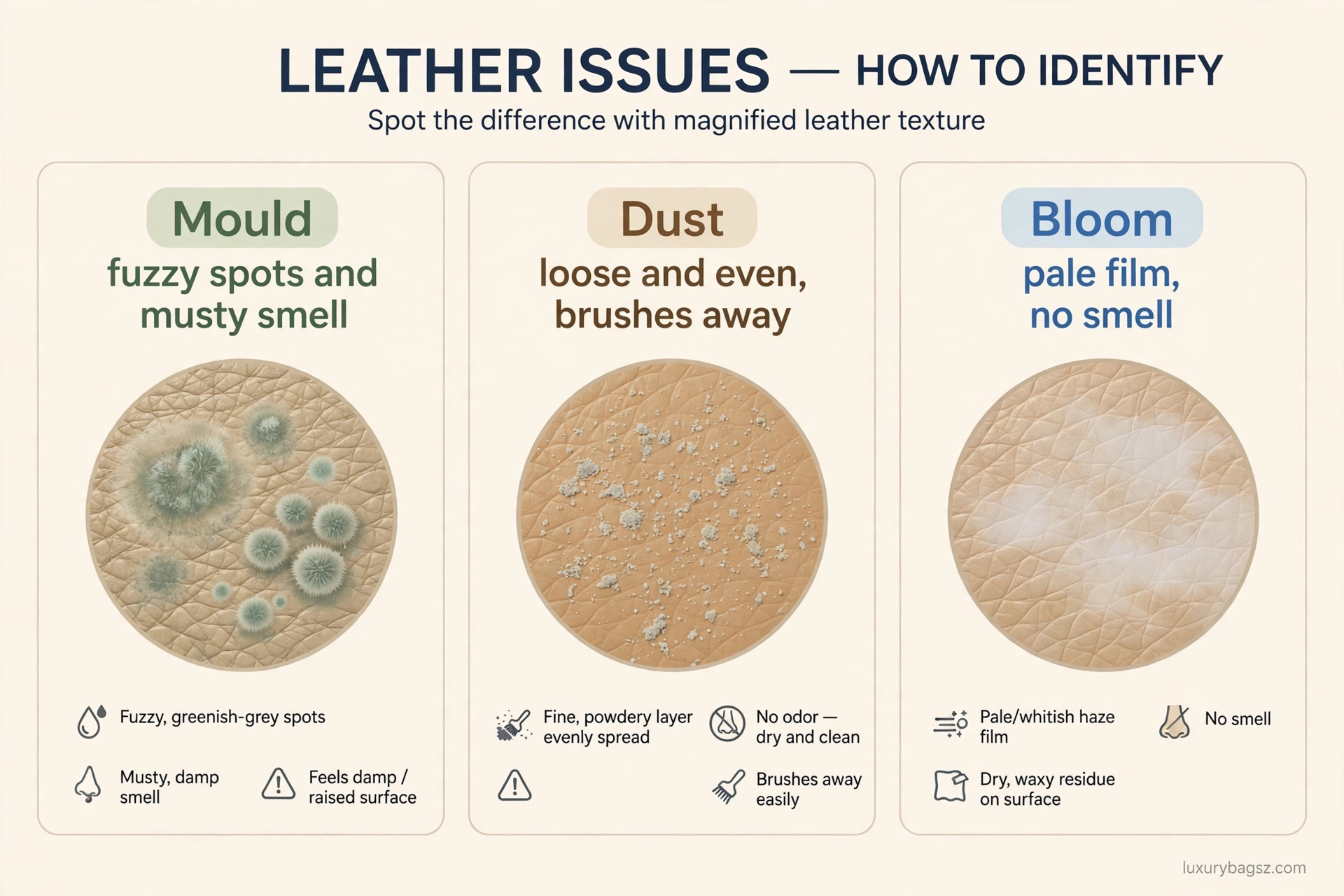
Mould shows as fuzzy or powdery spots, white, green, grey or black, often in clusters and often with a musty smell. It smears when wiped and returns in the same places if the cause remains.
Dust sits loose and even, and blows or brushes away cleanly. Leather bloom, the pale film some finishes push out, wipes away and does not smell musty; it is cosmetic, not growth.
If you are unsure, isolate the bag and watch for a few days in dry air. Growth spreads and smells; dust and bloom do neither. When in doubt on a valuable bag, photograph it and ask a leather specialist.
Before You Start: Safety and Setup
Work outside or in a well-ventilated space away from soft furnishings. Wear a simple mask and washable gloves if growth is heavy, and keep the bag off indoor surfaces until it is cleaned.
Empty the bag completely, pockets included, and check the lining: growth inside needs treating too, and a mouldy item left inside will reseed the whole bag.
Gather a soft brush, white soft cloths, a leather-safe cleaner or a dedicated leather mould product, and a fan for drying. Keep bleach, mould sprays meant for tiles, and strong solvents away from leather entirely.
The Removal Routine, Step by Step
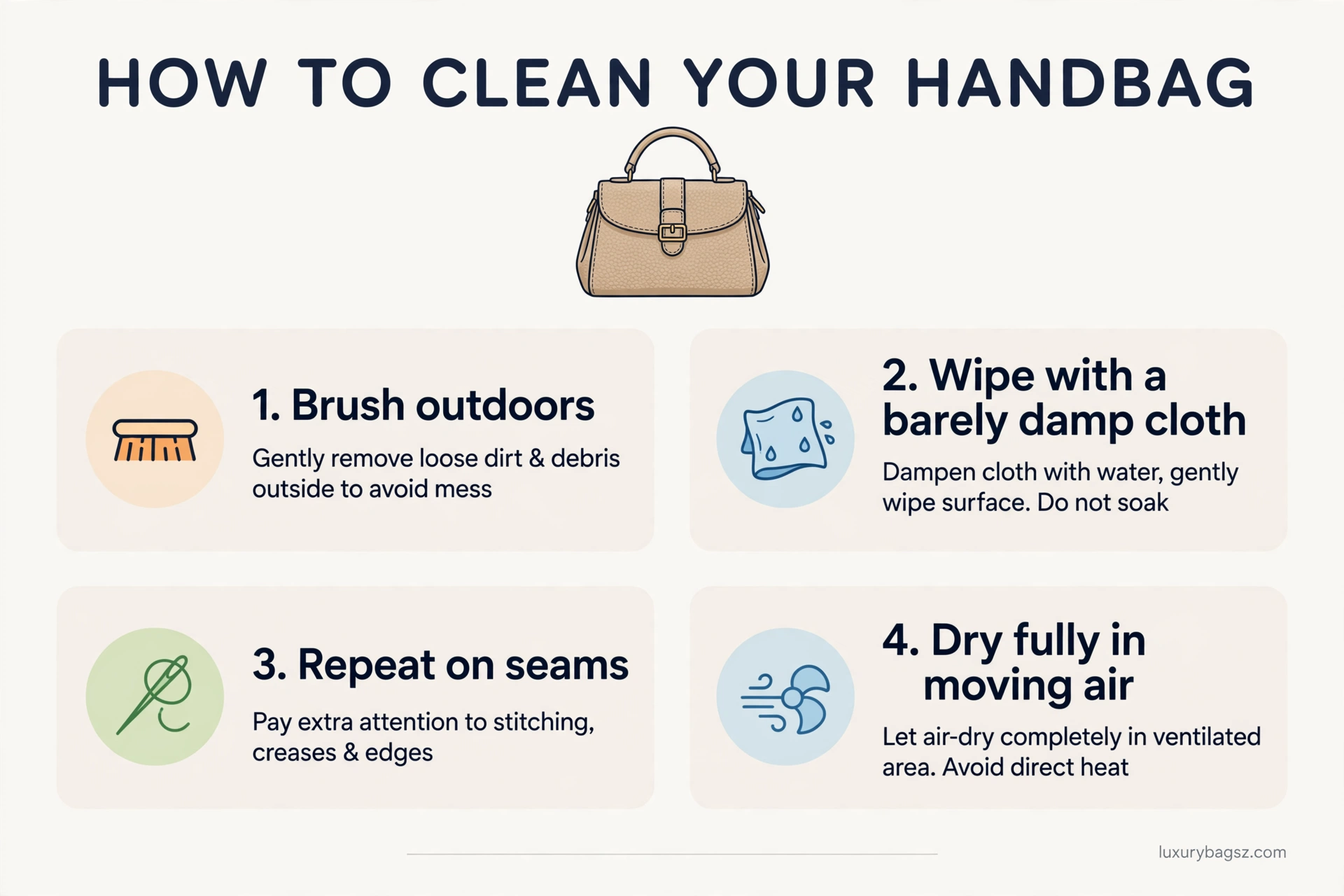
Step 1: Brush. Outdoors, brush the whole surface gently with a dry, soft brush, working away from your face. Growth should lift as powder; wipe the brush clean away from the bag as you go.
Step 2: Clean. Dampen a white cloth with your leather cleaner, wring it nearly dry, and wipe the affected areas with light strokes. Turn the cloth often so you are lifting growth off, not spreading it.
Step 3: Repeat and inspect. Work over seams, strap joins and under the flap twice. If growth sits deep in stitching or the leather feels soft or spongy beneath it, stop and go to the specialist part below.
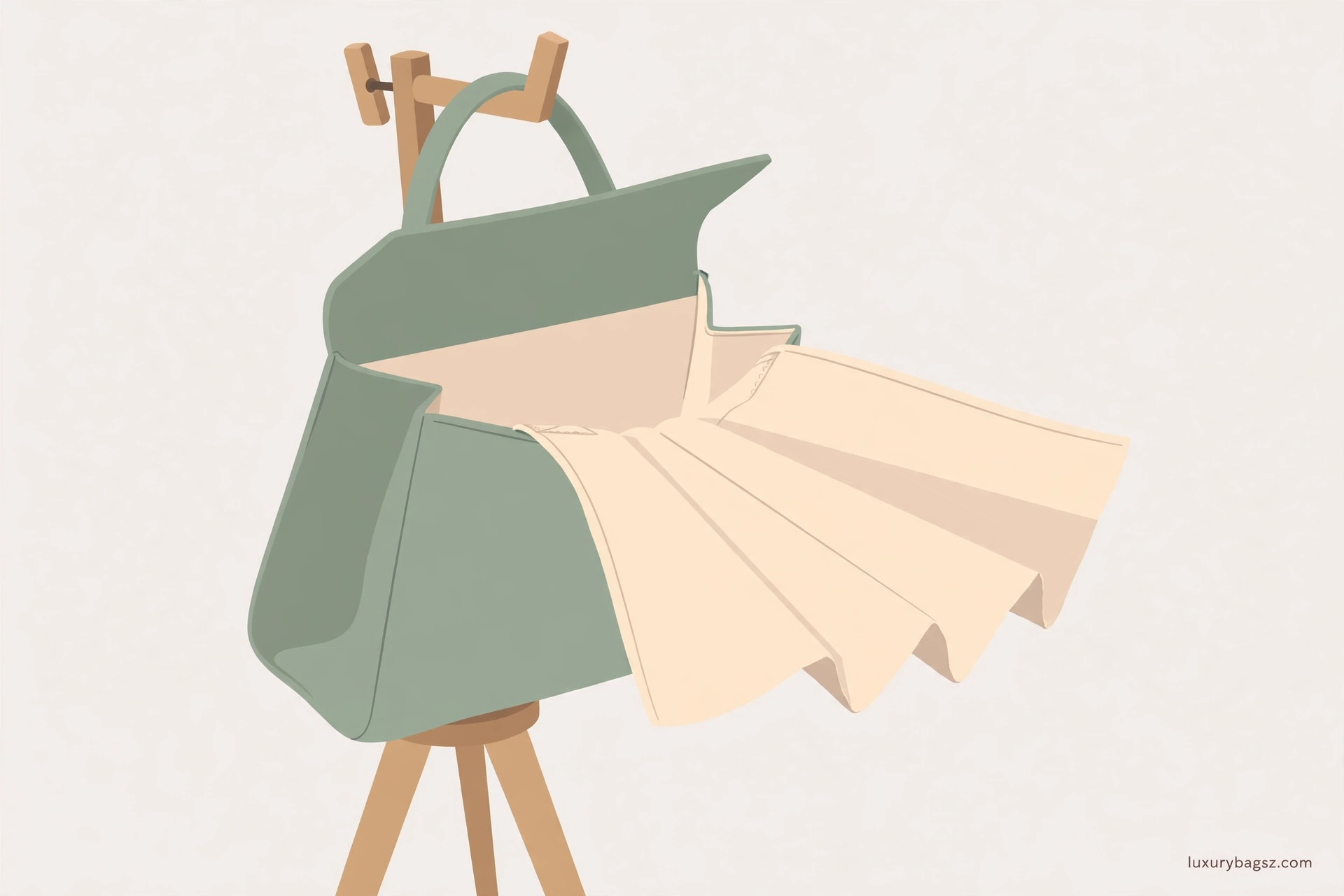
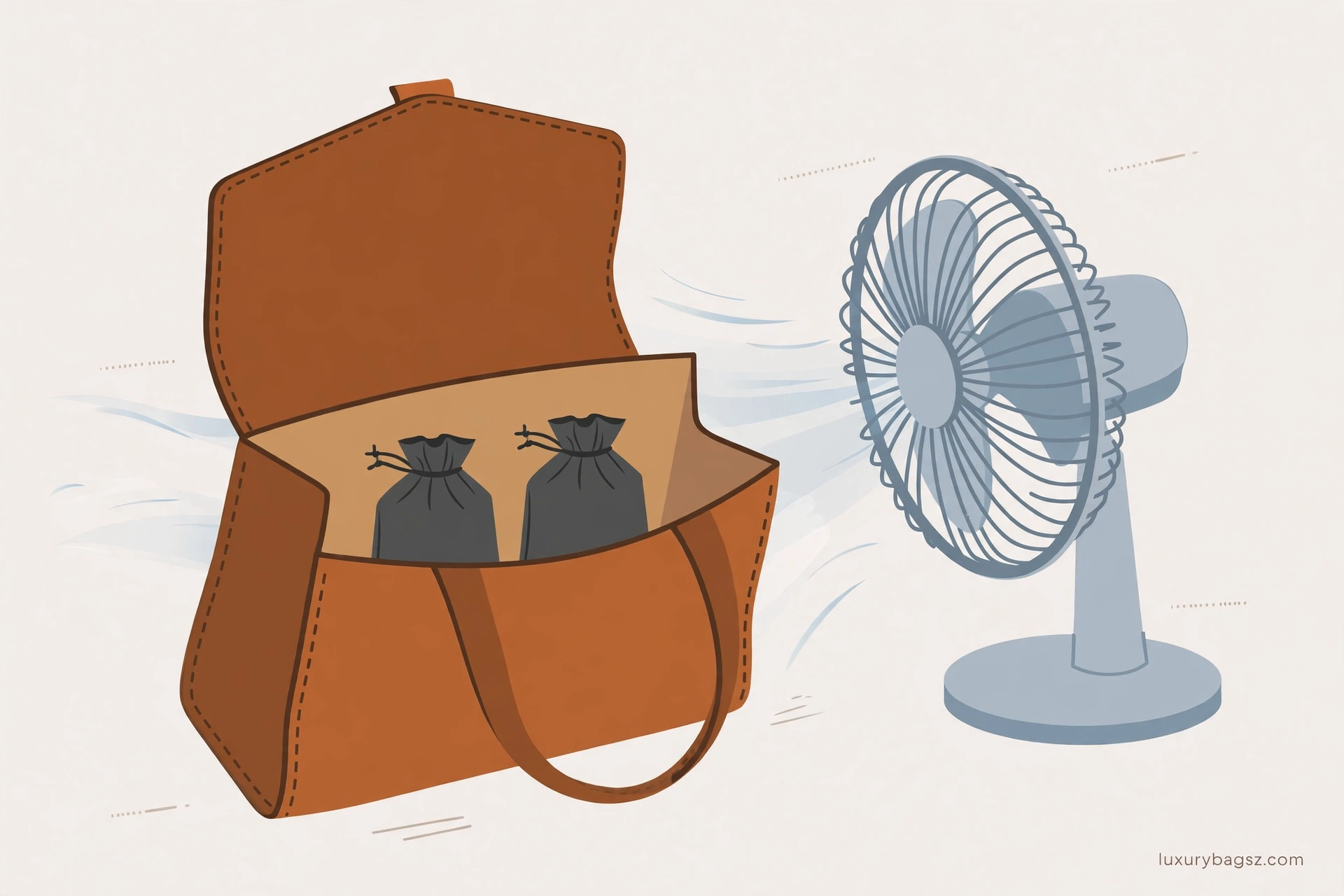
Step 4: Dry fully. Stand the bag open in moving air, in shade, until every part feels dry and the musty note has faded from the surface. Only then consider a light, leather-appropriate conditioner on sound areas.
Hardware and stitching deserve a pass too. Wipe metal fittings with a dry cloth after cleaning, since damp cleaner left in joins invites corrosion, and check stitching lines where growth likes to anchor.
If thread looks darkened, fuzzy or weak in a cleaned area, note it. Mould that has reached stitching is one of the signs that the job has moved from cleaning into repair territory.

Linings, Suede and Delicate Leathers
Fabric linings can usually be pulled gently outward and treated with the same barely damp approach, then dried thoroughly. Check care labels where present, and never soak a lining that is glued at its edges.
Suede and nubuck need a dry hand: brush first, and use only products made for suede, because liquids darken the nap. Lambskin and other delicate leathers should be brushed and aired only at home.
Our guidance on how to restore leather explains where home care ends; mould on a delicate or valuable finish crosses that line sooner than most owners expect.
Getting Rid of the Mouldy Smell
Cleaning removes the growth; the smell often lingers in the lining. Air the open bag for several days, then use bicarbonate of soda or charcoal in a tied pouch inside it, refreshed over a week or two.
Our full routine for how to remove odour from a leather bag covers absorbent cycles in detail and applies exactly here.
Do not seal the bag away while it still smells musty. The smell is your moisture warning; a bag that smells clean and feels dry is a bag that is ready to store.
Storage That Stops It Coming Back
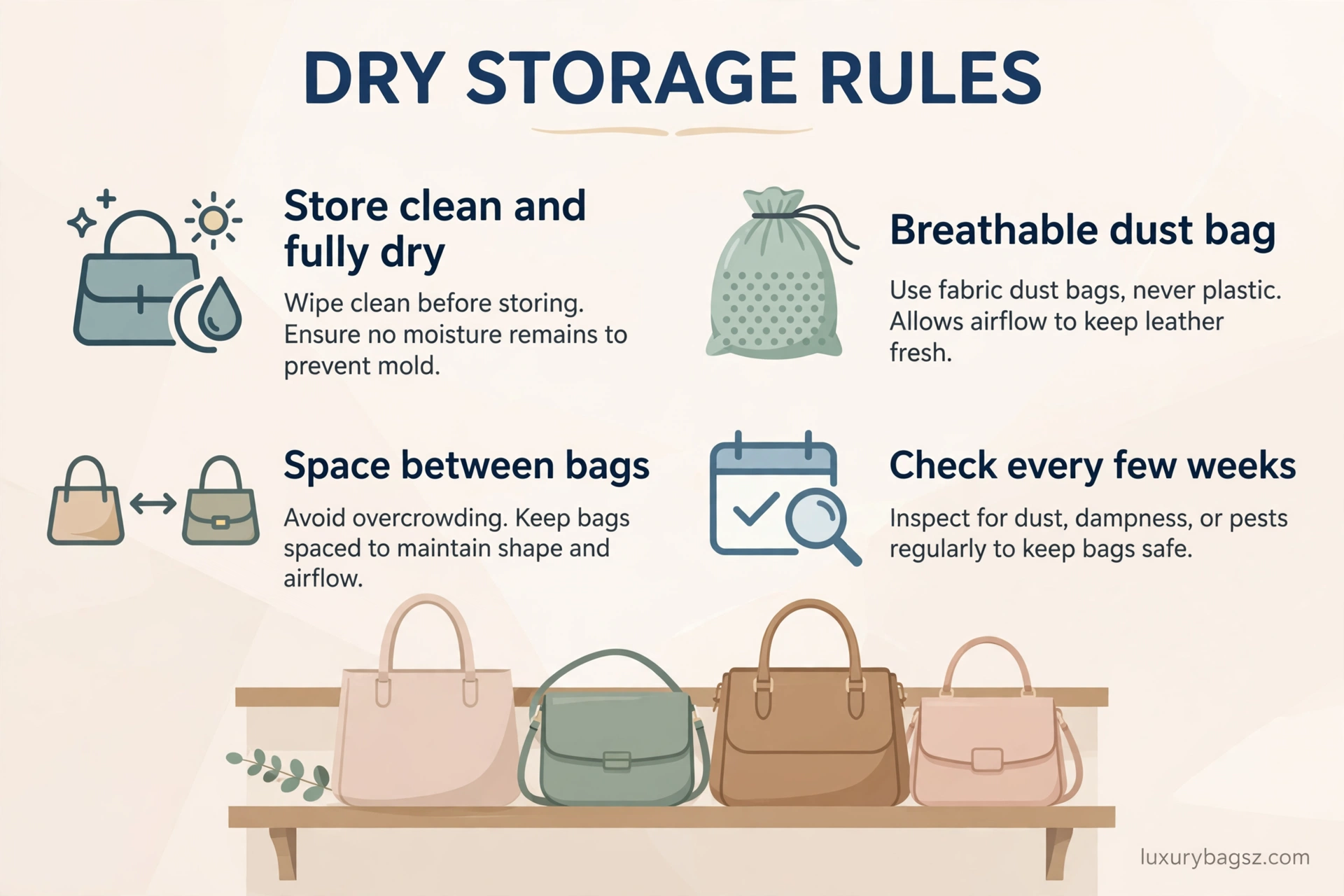
Store the bag clean, fully dry and empty of anything damp, in a breathable dust bag on an open shelf rather than in a sealed box or plastic. Give bags space; leather stored touching in still air shares its problems.
Our guide to how to take care of leather sets out the conditions leather prefers: cool, dry, dark, with air able to move around it.
In humid homes, a dehumidifier or moisture absorbers in the cupboard earn their keep. Most importantly, look at stored bags every few weeks: five minutes of airing beats a full mould rescue every time.
Cost perspective helps the decision. Professional mould treatment on a sound bag is usually far cheaper than replacing the bag, and far cheaper than the damage a spreading bag can do to a wardrobe stored beside it.
Ask the specialist two questions before handing it over: whether the growth has reached the structure, and what result is realistic. Their answers, not the internet's optimism, should decide what you spend.
When the Bag Needs a Professional
Go to a leather specialist if growth covers large areas, sits deep in seams, or has left the leather stained, stiff, soft or smelling after two careful home cycles.
Vintage and high-value bags deserve that call earlier. A specialist can treat growth, address staining and refinish damaged areas in ways home cleaning cannot, and will say plainly if a bag is beyond saving.
Do not store a half-treated bag back with your others while you decide. Keep it isolated, dry and aired, so one bag's problem does not become the whole shelf's problem.
Frequently Asked Questions
Can mould permanently damage a leather bag?
Yes, if left long enough. Growth can stain, etch and weaken leather and rot stitching. Light surface growth caught early usually cleans away without lasting harm.
Is vinegar safe for removing mould from leather?
It is widely suggested, but it is acidic, can affect finishes and dyes, and is risky on delicate leathers. A leather-safe cleaner or dedicated leather mould product is the safer choice.
Can I use bleach or bathroom mould spray on a bag?
No. Bleach and tile sprays strip colour and destroy leather finishes. They solve a bathroom problem, not a handbag one, and the damage is immediate and permanent.
Should I throw away a mouldy bag?
Not before assessing it. Many mouldy bags recover well with cleaning and drying. Bags with deep rot, crumbling leather or growth through the structure may not be worth saving.
How do I clean mould from the lining of a bag?
Pull the lining gently outward where the design allows, wipe with a barely damp cloth and cleaner, then dry it completely in moving air before pushing it back.
Does sunlight kill mould on leather?
Moving dry air does the useful work. Brief indirect light is fine, but direct sun fades and dries leather, so dry the bag in shade rather than baking it.
Why does mould keep coming back on my bag?
Because the storage conditions have not changed. Humidity, still air and a bag stored damp will regrow mould on the cleanest leather, so fix the cupboard, not just the bag.
Can I condition leather after mould removal?
Yes, once the bag is clean and fully dry, and only on sound leather. Conditioning a damp or still-mouldy bag seals the problem in.
Is the mouldy smell harmful or just unpleasant?
The musty smell signals active or recent growth and lingering moisture. Treat the growth, dry the bag fully, then deodorise; masking the smell alone achieves nothing.
How often should I check stored bags for mould?
Every few weeks in humid homes or seasons, and monthly otherwise. A quick look and airing catches growth while it is still a five-minute brush-off.
Conclusion
Brush it off outdoors, clean gently, dry it completely, and change the storage that grew it. Mould on a leather bag is usually a warning about a cupboard, not a death sentence for the bag, provided you act while the growth is still on the surface.






