

Christian Louboutin Brand History: How the Red Sole Rose From a Paris Atelier
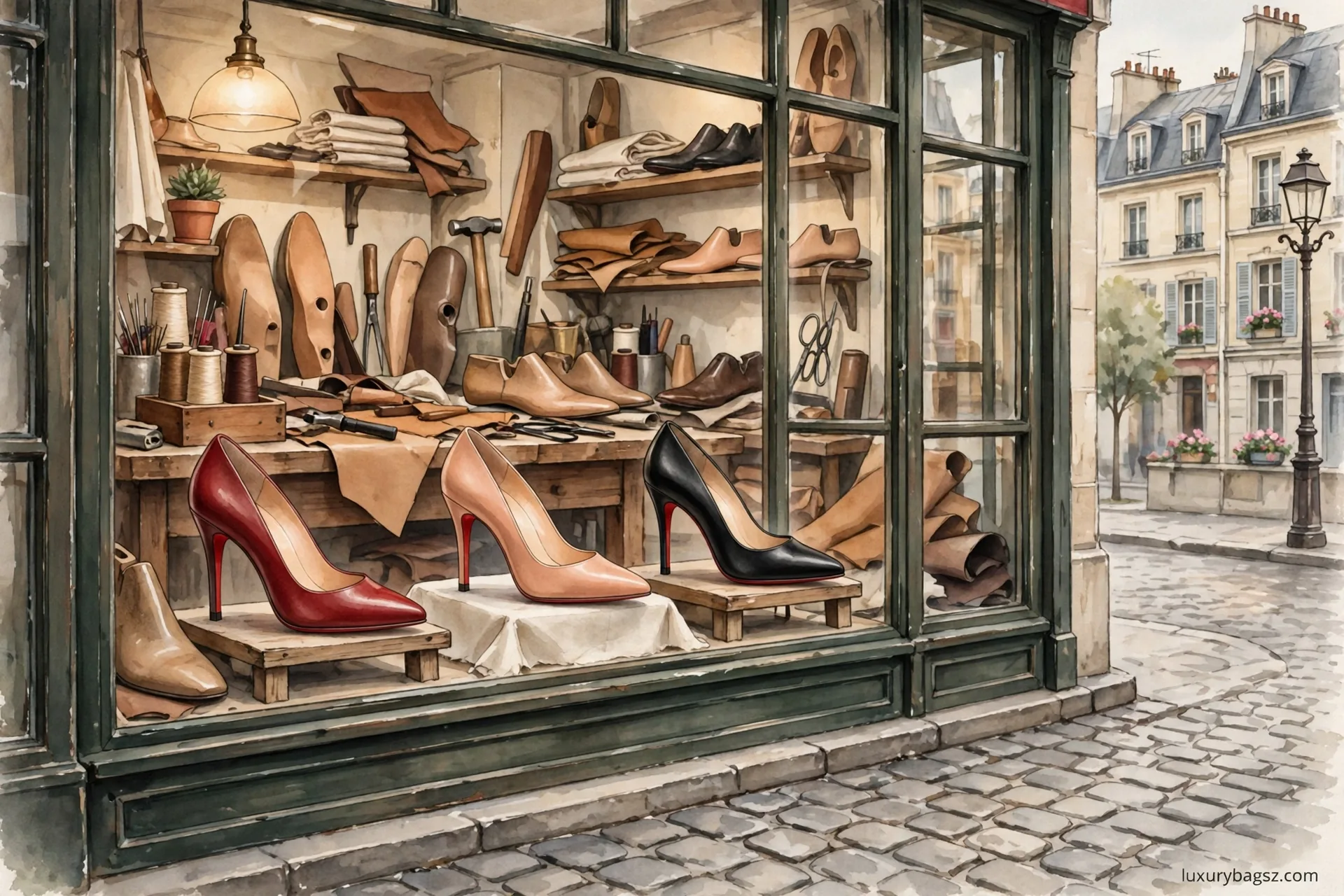
The Red Sole Story in Brief: Nail Polish, Paris, 1992
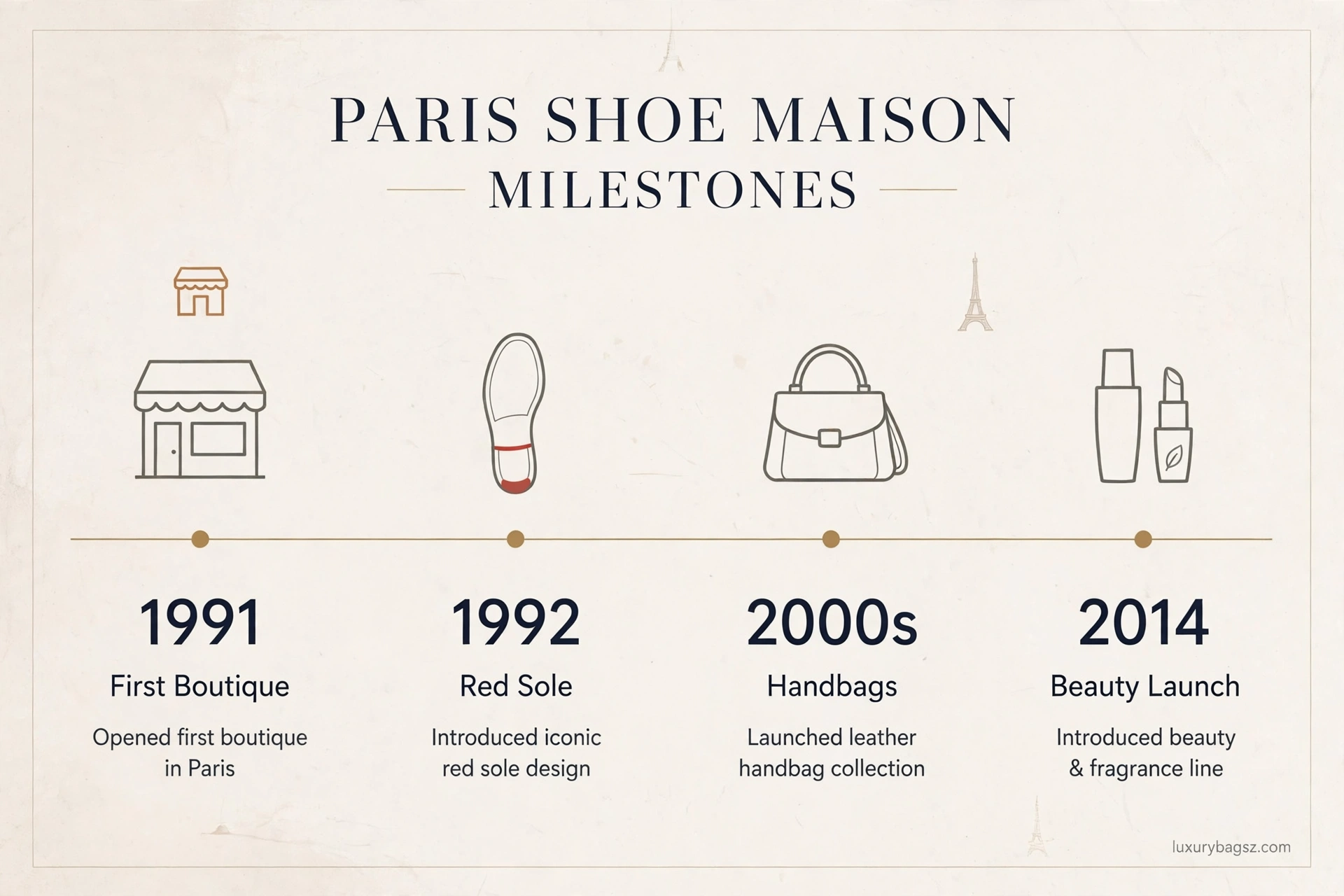
Christian Louboutin opened his first Paris boutique in 1991, and in 1992 he painted a shoe sole with red nail polish borrowed from an assistant. That flash of red became the Maison's signature. The brand's own history tells the tale plainly: the black sole on a prototype felt dull, the red polish was near, and the shoe came alive the moment the colour went on.
Key Takeaways

- The Maison was founded in Paris in 1991, in the Galerie Véro-Dodat.
- The red sole arrived in 1992 as a spontaneous fix using red nail polish.
- Louboutin trained through freelance work and time with Roger Vivier.
- The red sole later gained trademark protection, defended in famous court cases.
- Pigalle, So Kate and Lady Peep turned a signature into a shoe wardrobe.
- Beauty, men's shoes and handbags followed the women's shoe success.
A Paris Childhood and a Forbidden Stiletto
Louboutin grew up in Paris, raised among three sisters. The brand's own account says femininity and its rituals fascinated him from an early age. As a boy of about ten, he saw a sign at a Paris museum asking women not to wear stilettos, to protect the wooden floors. The heel drawn on that sign stayed with him. It is a neat origin story because it explains the work. His shoes treat the stiletto as something powerful and slightly dangerous, never as a plain accessory. He began sketching shoes as a teenager. By sixteen, on the Maison's telling, he was designing for the dancers of the Folies Bergère cabaret.
Apprenticeship, Freelance Years and the First Boutique
Before his own name sat above a door, Louboutin learned the trade the slow way. He worked as a freelance designer for established houses, including Chanel and Yves Saint Laurent. Time spent with Roger Vivier, the great French shoe designer, sharpened his sense of line and ornament. Vivier's influence shows in Louboutin's love of a sculpted heel. In 1991 he opened his first boutique in the Galerie Véro-Dodat, a covered Paris arcade. The shop gave him creative freedom that freelance briefs never could. Princess Caroline of Monaco was an early customer whose praise helped spread word of the new name. Paris fashion circles noticed quickly after that.
The museum sign story has a second half worth knowing. The young Louboutin did not simply admire the drawn heel; he objected to the ban itself, and shoes stayed linked in his mind with freedom.
1992: The Happy Accident of the Red Sole
The founding myth is unusually well documented, because the brand repeats it itself. A prototype of the Pensée shoe looked flat against its black sole. Louboutin's assistant was painting her nails red nearby. He took the polish, painted the sole from toe to heel, and the design suddenly worked. He later called it a happy accident. Crucially, he also reasoned that women who avoided colour in clothes still wore red on nails and lips, so red would be accepted. From then on, every women's shoe carried the lacquered red sole. A finishing detail became the most recognised signature in modern footwear.
Building a Maison Around One Colour
A signature only matters if the product holds up. Through the 1990s the range grew from a Paris secret into an international luxury name. New York followed Paris in the early 1990s, on the brand's timeline. Boutiques in fashion capitals turned a designer's shop into a global Maison. The business later widened carefully. Handbags arrived in the 2000s, a men's line followed, and beauty launched in 2014 with nail polish first, closing the circle neatly. Through every expansion, the shoes stayed central. The red sole did the marketing that other houses bought with advertising, simply by being seen in motion.
Geography helped the young brand too. Paris gave it craft credibility, while early American attention gave it scale, and the two together built the waiting-list atmosphere of the early years.
The Shoes That Carried the Story
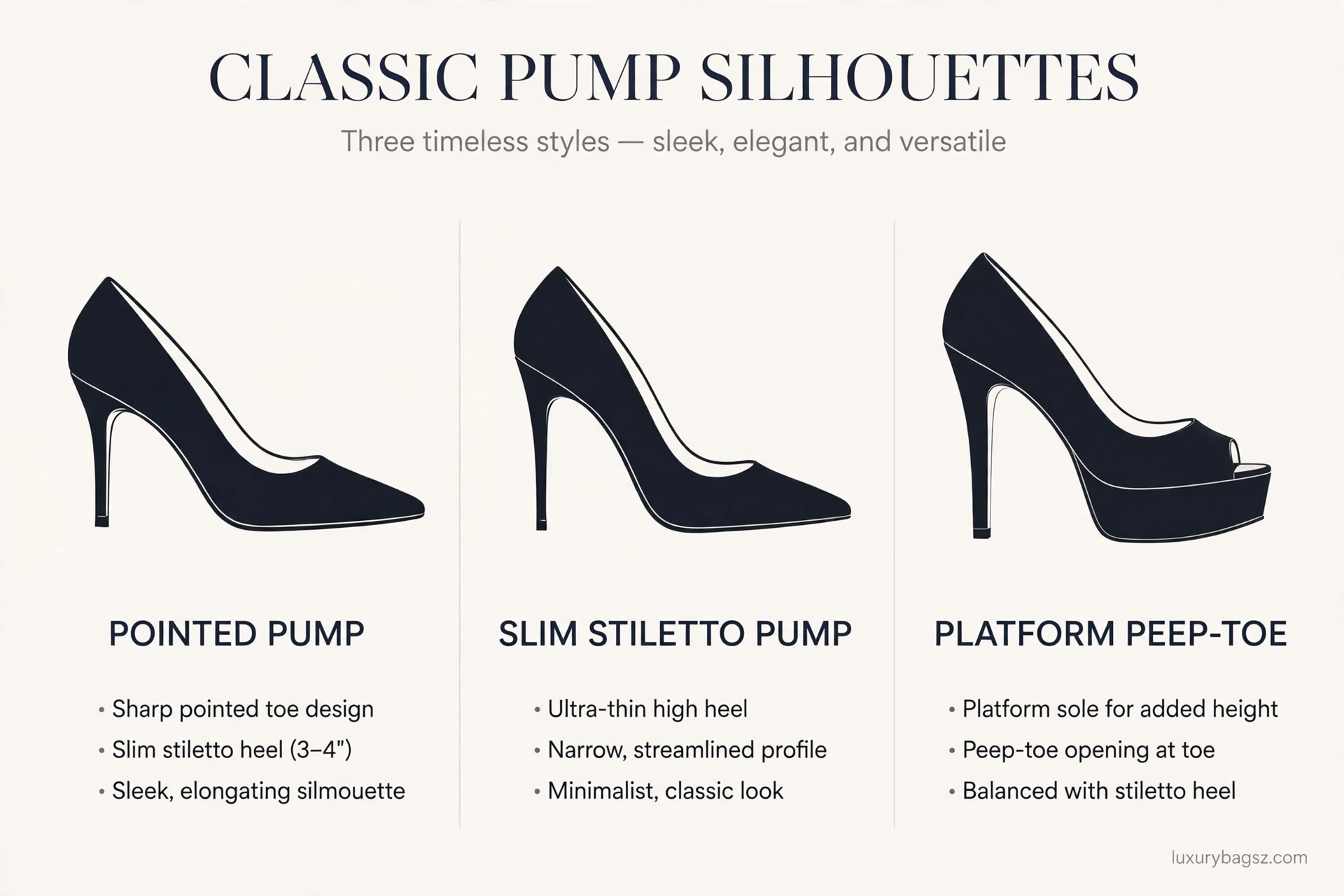
Signatures need heroes, and Louboutin produced several. Our Pigalle pumps guide covers the pointed pump that became a modern classic. Our So Kate guide tells the next chapter: a slimmer, higher evolution that celebrities adopted almost as a uniform. The Lady Peep brought the platform era into the range, while spiked, glittered and sculptural styles kept the runways and red carpets supplied. Each hero shoe repeats the same formula. A clean, leg-lengthening line on top, and that unmistakable flash of red underneath with every step.
Fame, Film and the Red Carpet
Pop culture did heavy lifting for the Maison. Red soles appeared in films, music videos and lyrics, until the shoes became shorthand for glamour itself. Our survey of iconic designer women's shoes shows how rare that level of recognition is. Few products are identified from underneath. Celebrity wearers kept the cycle turning. A sole glimpsed on a red carpet sold the next pair more surely than any campaign photograph could. The 2020 Paris exhibition devoted to Louboutin's creative world confirmed the shift. The shoe designer had become a cultural subject in his own right.
The red also proved remarkably adaptable. It survived minimal eras and maximal eras alike, because it sits underneath the shoe, flashing in motion rather than shouting from the upper.
The Trademark Fights That Protected the Red
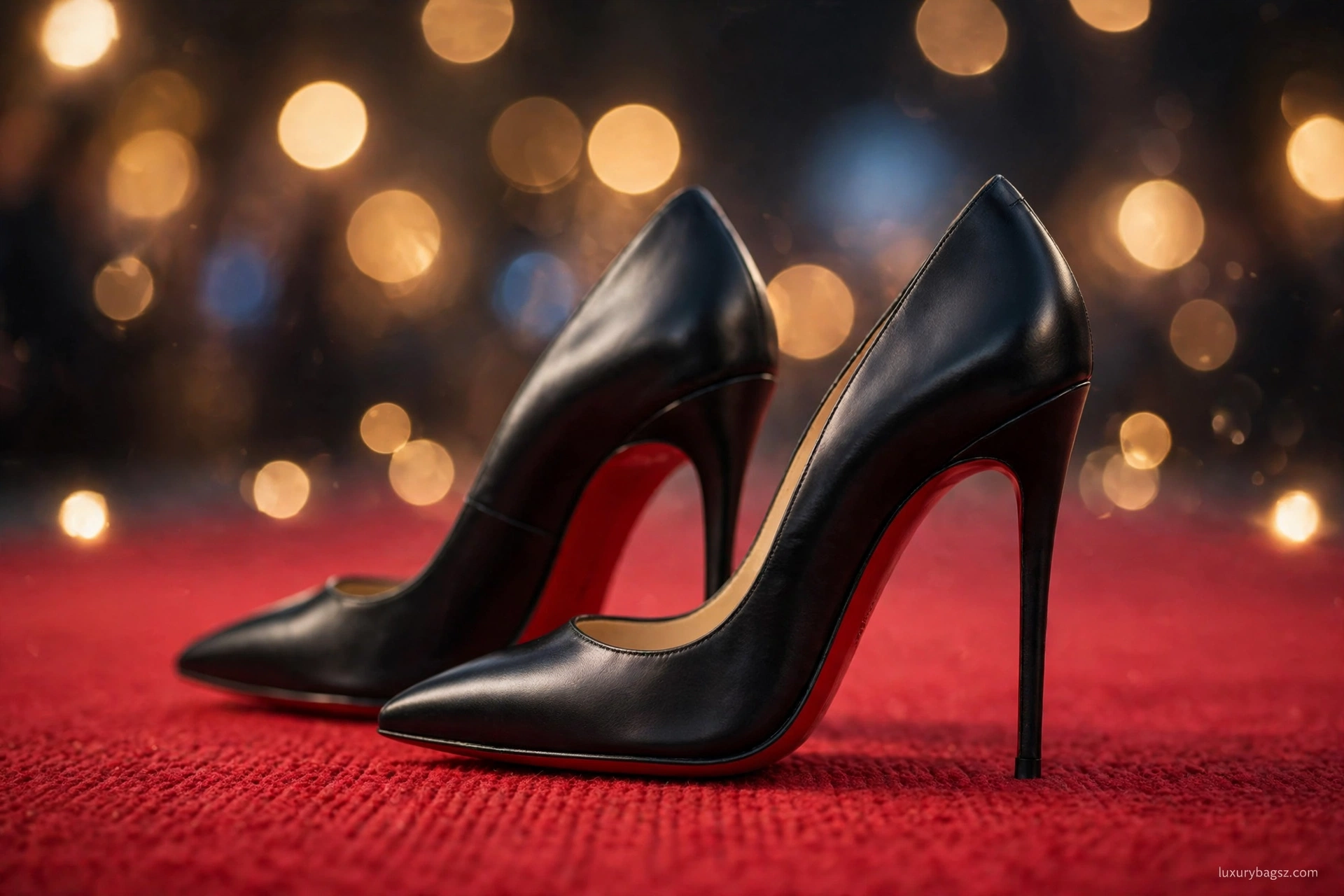
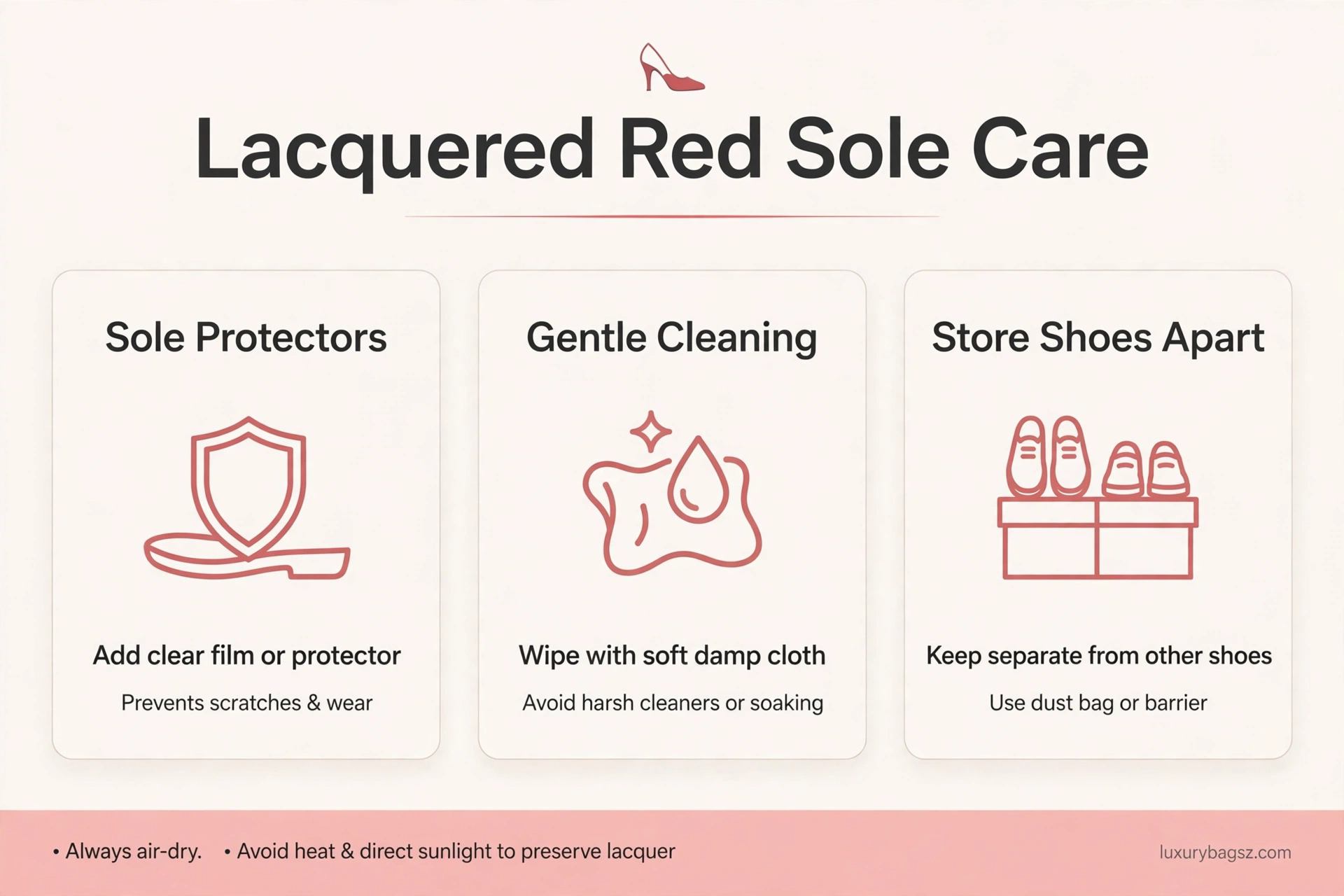
Success invited imitation, so the Maison defended its colour. The red sole gained trademark registration in the United States in the 2000s. A famous case against Yves Saint Laurent tested the limits. Courts broadly protected the red sole on contrasting uppers, while allowing red shoes that are red all over. Rulings in Europe also shaped where the protection applies. The detail matters to buyers because it explains why the sole stays so fiercely guarded. For owners, the lesson is practical. The lacquer is the brand, so protecting it with sole guards and gentle wear keeps both the look and the value.
What the History Means for Buyers Today
Buy the shoe, not just the story, but let the story guide the choice. Core shapes with long production runs are the safest first purchase. Our look at luxury heritage shoe brands puts Louboutin in context: a young house that built heritage at unusual speed. That youth cuts both ways. Vintage depth is thinner than at older houses, yet classic colours and shapes already behave like heritage pieces on resale. Start with the guidance in our designer heels guide, then pick the Louboutin shape that fits your life, not just the legend.
The Lost Years: Gardening, Vogue and the Return
The strangest part of the history is the gap in it. In the late 1980s, after years of freelance shoe design, Louboutin walked away from fashion almost entirely and worked as a landscape gardener, while contributing to Vogue.
The break matters because it reset his eye. Gardens taught the colour confidence that the red sole later expressed, and designing planting schemes is composition work much like designing a shoe line: structure first, then the flash of colour that makes people look.
He has said he missed shoes, and the return in 1991 was on his own terms: a salon of his own rather than another freelance desk inside someone else’s house. The Maison that followed carries that independence in its bones; it has never designed by committee.
Many designer biographies hide their false starts. This one kept its gardener years in the official story, and the brand is more interesting for it.
The Business Grows Up: Backers, Boutiques and New Investors
The 1991 salon was funded with two backers, a reminder that even the most romantic fashion story starts with rent. Princess Caroline of Monaco’s early custom, covered earlier in this history, did the work advertising could not yet afford.
From Paris the store map spread through the fashion capitals over the following two decades, reaching a network commonly reported at around 150 boutiques worldwide, alongside department-store counters. Each opening repeated the same theatre: red in the decor, shoes displayed like sculpture.
Ownership stayed unusually concentrated for a house of its size, which kept the design singular. In 2021 the investment company Exor took a minority stake, reported at the time as 24 per cent, a move read in the industry as the Maison preparing for its next scale of growth while keeping its founder in creative control.
For buyers the business story is not trivia: continuity of ownership is why a Pigalle bought today resembles the Pigalle of a decade ago closely enough to share a wardrobe with it.
The Exact Red: Colour Code, Lacquer and Wear
The red is not approximate. The house’s red is identified with the Pantone shade 18-1663 TPX, a specific, reproducible colour that every genuine sole is lacquered to match, and one of the details our fake-spotting checks rely on when a sole’s red looks wrong.
The finish is a lacquer over the leather sole, applied as the final stage of making. That is why it gleams like nail polish, and also why it wears: lacquer on a walking surface is a display finish, not a protective coating, and the house itself acknowledges that the red will mark and wear with use.
Owners therefore choose between the schools covered in our Louboutin care guide: protect the forefoot with a colour-matched sole guard, refresh the lacquer through specialist repainting services, or wear the shoes as designed and accept the worn red as the mark of a shoe that lived.
Counterfeiters copy the colour cheaply and badly, which is why the exact shade, the gloss level and the clean edge where lacquer meets leather remain working authentication details rather than design trivia.
The Making: Sketches, Travel and Italian Production
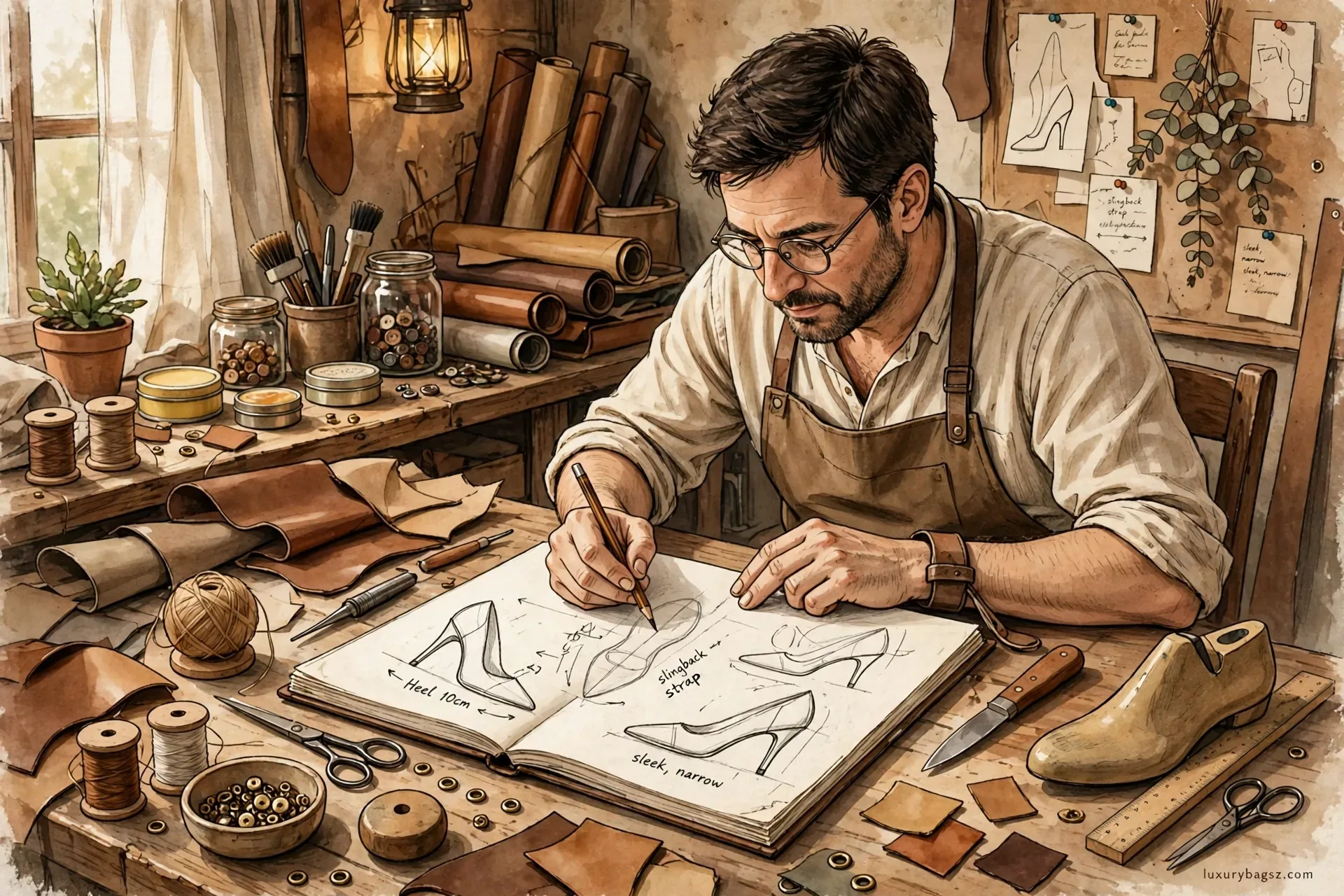
Louboutin’s design process begins with drawing, hundreds of sketches per collection by the house’s account, refined with his studio in Paris before patterns and prototypes are made. He has often cited travel as his research method, collecting shapes, colours and ornament from the places he visits.
Production is Italian: the shoes are made in Italy by specialist factories, combining machine precision on structure with hand finishing on the details that show, the stitching, the lacquer, the final polish.
That division explains the product’s character. The silhouette is Parisian and drawn; the construction is Italian and industrial in the best sense, which is why the shoes hold their shape and take repair well for a fashion product.
It also explains the price position. The buyer is paying for a drawn design, a signature finish and European making, in that order, and the resale market prices the same three things in the same order.
Recent Chapters: Exhibition, Beauty and a New Generation
The 2020 Paris exhibition devoted to Louboutin’s work, mentioned earlier in this history, marked the brand’s passage into cultural institution: sketches, collaborations and inspirations displayed as a life’s work while the designer was still in mid-career.
Beauty has kept expanding from the 2014 nail polish launch into lipstick, fragrance and eye products, all packaged with the same sculptural confidence as the shoes. The polish bottle, with its tall spiked cap, remains the neatest piece of brand design in the range: the stiletto, bottled.
The men’s line has been the recent growth story, moving from sneakers and studded loafers into a fuller wardrobe, and the house announced new creative leadership for the men’s side in 2025, a signal that the next chapter of the history will be written on both sides of the store.
Through all of it, the women’s shoe and its red sole remain the centre of gravity. Houses survive their founders’ fame by knowing exactly which product is the sun.
Collecting the History: Vintage and Resale
Because the house is young by heritage standards, its vintage market has a clear shape: the collectible pieces are the early icons and the limited runway designs, while the long-running classics trade as wearable shoes rather than artefacts.
Early Pigalle and So Kate pairs in classic colours hold their value through simple demand arithmetic: the styles never left the range, so a sound used pair is a discount on a current purchase, and buyers price it that way.
Limited editions, collaborations and exotic materials form the collector tier, where condition of the lacquer becomes the deciding detail. A pristine red sole on a twenty-year-old pair signals a shoe that was worn carefully or barely at all, and collectors pay for exactly that signal.
The practical consequence for new buyers is reassuring: buy the classics, wear them properly, keep the box and receipts, and the history in this article works for you at resale time. The Maison’s story is now long enough to hold value, and still young enough that its best chapters may be ahead of it.
Frequently Asked Questions
When was Christian Louboutin founded?
The first boutique opened in Paris in 1991, in the Galerie Véro-Dodat. The red sole followed a year later and became the Maison's signature.
Why are Louboutin soles red?
Louboutin painted a prototype sole with red nail polish in 1992 because the black sole looked dull. The colour transformed the shoe, so he kept it on every pair.
Who trained Christian Louboutin?
He learned through freelance design work for houses including Chanel and Yves Saint Laurent, and spent formative time with the shoe designer Roger Vivier.
Is the red sole trademarked?
Yes, in many markets, with limits shaped by court cases. Protection generally covers a red sole that contrasts with the upper, not an entirely red shoe.
What was the Louboutin and Yves Saint Laurent case about?
Louboutin sued over red-soled shoes sold by Yves Saint Laurent. The outcome largely protected the contrasting red sole while allowing all-red shoes.
What are the most famous Louboutin shoes?
The Pigalle, So Kate and Lady Peep are among the best known. Each pairs a leg-lengthening shape with the lacquered red sole underneath.
When did Louboutin launch beauty products?
Beauty arrived in 2014, starting with nail polish. The choice was a nod to the polish bottle that inspired the red sole back in 1992.
Does Christian Louboutin make men's shoes?
Yes. A men's line followed the women's success, sparked in part by the singer Mika, and it carries red soles on many styles too.
Where are Louboutin shoes made?
Production is centred in Italy, and the soles carry a Made in Italy stamp. Shoes are finished to luxury standards with lacquered red soles.
Are older Louboutin styles worth buying pre-owned?
Core shapes in classic colours can be excellent value pre-owned. Check sole wear, heel tips and authenticity carefully before you buy.
Summary: One Colour, Carefully Kept
A boutique opened in 1991, a bottle of nail polish in 1992, and three decades of disciplined design turned a finishing touch into a fashion landmark. The history rewards buyers who choose the lasting shapes. Pigalle, So Kate and Lady Peep carry the story best, one red flash at a time.






