

David Yurman Brand Guide: History, Cable Jewellery, and Smart Buying
David Yurman in Brief: Sculpture You Can Wear Every Day
David Yurman is an American jewellery house best known for one idea: the twisted Cable motif. If you buy one piece first, make it a Cable bracelet in a metal you already wear, in a size that slips on without pinching. That single choice gives you the brand at its most recognisable, and it pairs with almost everything else you own.
The house was founded in 1980 by sculptor David Yurman and painter Sybil Yurman. Their jewellery grew out of wearable art rather than a traditional fine-jewellery workshop, and that sculptural feeling still defines the work. Cable is not a logo or a pattern stamped on a surface. It is the structure itself, a helix of metal that catches light as you move.
Key Takeaways

- David Yurman was founded in 1980 by David and Sybil Yurman, a sculptor and a painter.
- The Cable bracelet, created in 1982, is the house signature and appears across bracelets, rings, necklaces and earrings.
- Sterling silver mixed with 18-karat gold is a classic Yurman combination, so check the metal mix before you pay.
- Buy your usual bracelet size first, then add bolder pieces once you know how the cuff sits on your wrist.
- Pre-owned Cable holds up well when the twist is crisp, the finish is even, and the hallmarks are clear.
The Story Behind the Brand
David Yurman began as a sculptor and Sybil Yurman as a painter, and their first jewellery pieces were made to be worn as art. The story most often told is a simple one: David made a bronze necklace of intertwined figures for Sybil to wear to a gallery opening, and a gallery owner asked whether it was for sale. That moment turned a personal gesture into a business, and the couple spent years travelling, exhibiting and building a following piece by piece.
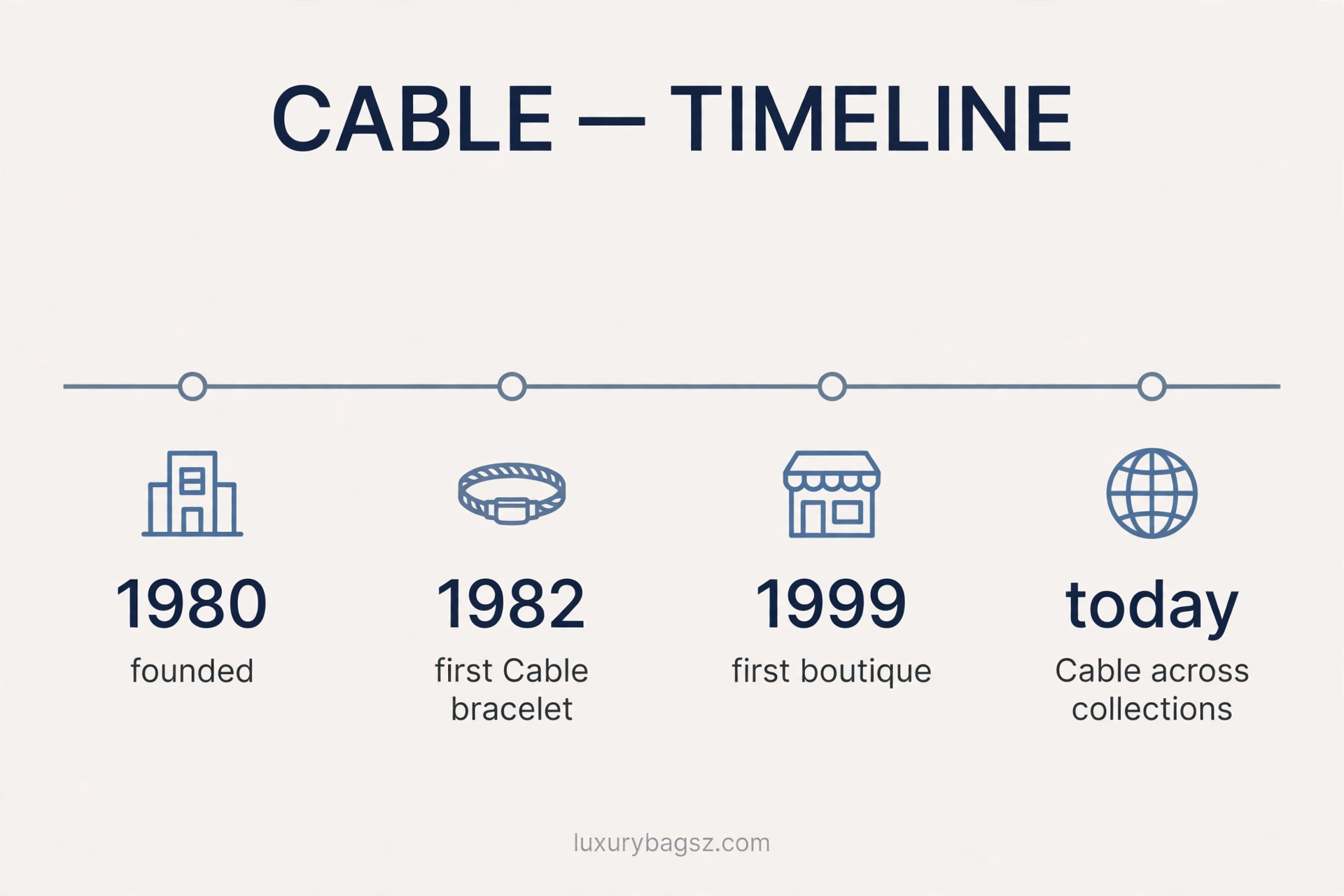
The company was formally founded in 1980, and its first Madison Avenue boutique followed in 1999. Those two dates matter because they explain the brand's character. It is old enough to have a genuine archive, yet young enough to feel modern beside centuries-old European houses. Its American identity is also part of the appeal: relaxed, wearable luxury rather than formal, occasion-only jewellery.
Sources disagree on whether the first Cable bracelet dates to 1982 or 1983, so treat the year with care. The house's current history points to 1982, when David shaped gold wire by hand and finished the first piece with pink tourmaline and emerald end caps. Older articles often say 1983, which may reflect a later collection launch rather than the first creation. Either way, the design itself is not in doubt.
What Cable Really Is
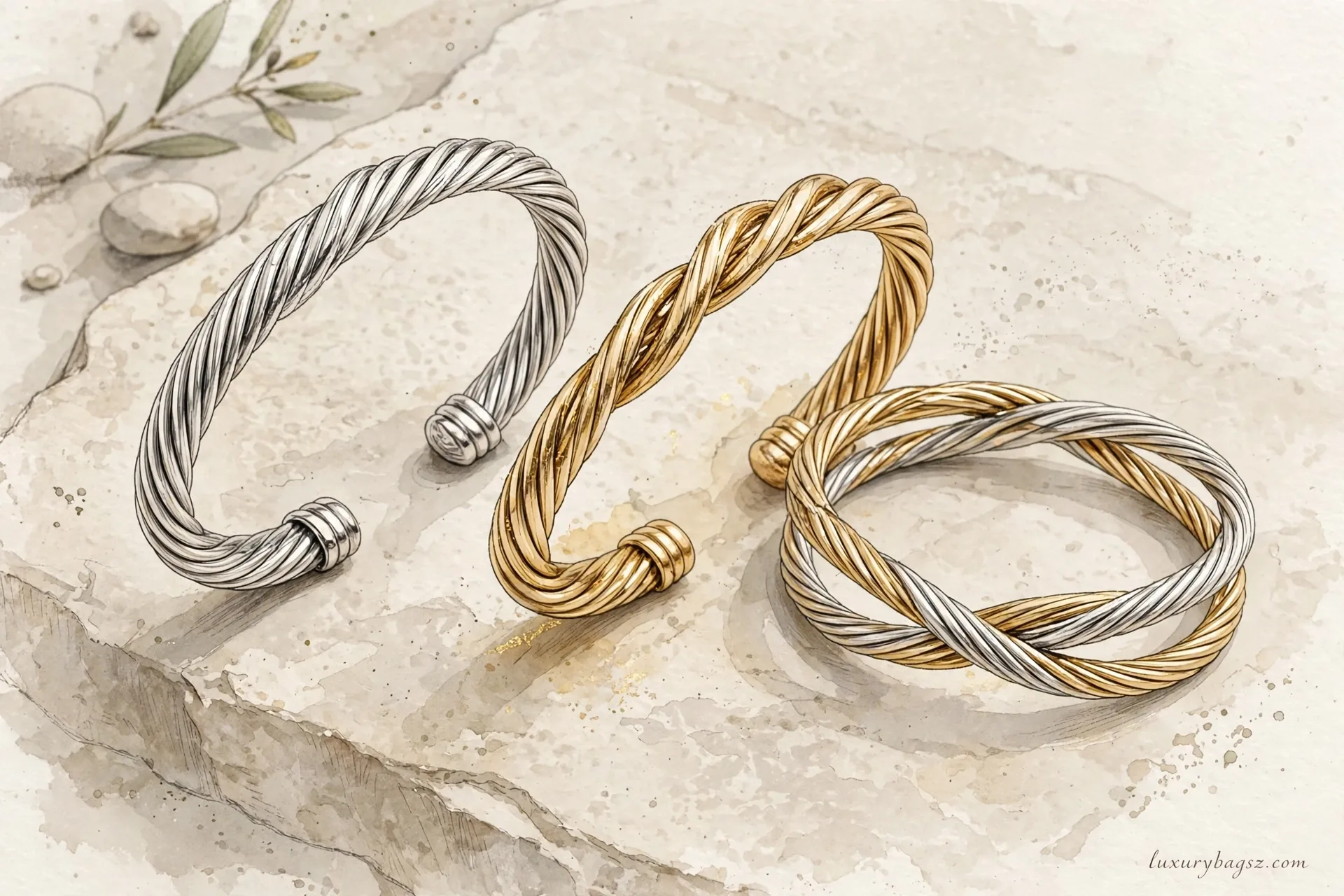
Cable is a twisted helix, a spiral form that David Yurman linked to ancient torques, bridge cables and forms found in nature. In practice, it looks like fine metal rope wound into a cuff, a ring band or a chain. The twist gives the piece movement and depth, even when the metal is plain sterling silver with no stones at all.
That simplicity is the point, and it is also why Cable is so widely copied. A genuine piece should show a clean, regular twist with no flat spots, rough edges or uneven gaps. The ends, known as end caps or finials, should sit symmetrically and feel secure. If the twist looks mushy or the caps wobble, walk away, however tempting the price.
Cable comes in many widths, from slim cuffs that stack neatly to bold cuffs that anchor an outfit on their own. Slim widths suit smaller wrists and layered looks, while wider widths suit a single statement piece. Try both if you can, because the same width can look very different on a 14 cm wrist and a 17 cm wrist.
The Collections Worth Knowing First
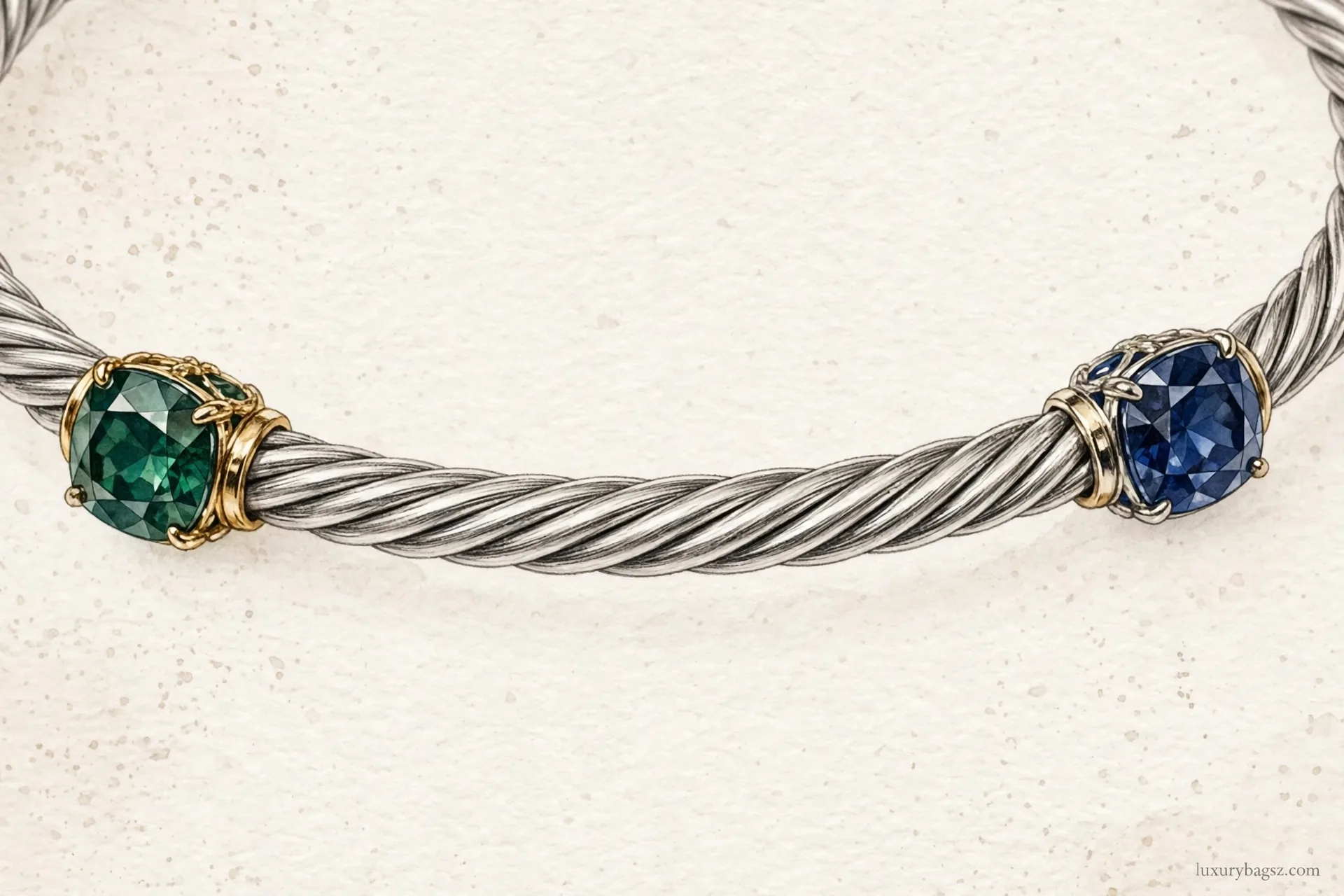
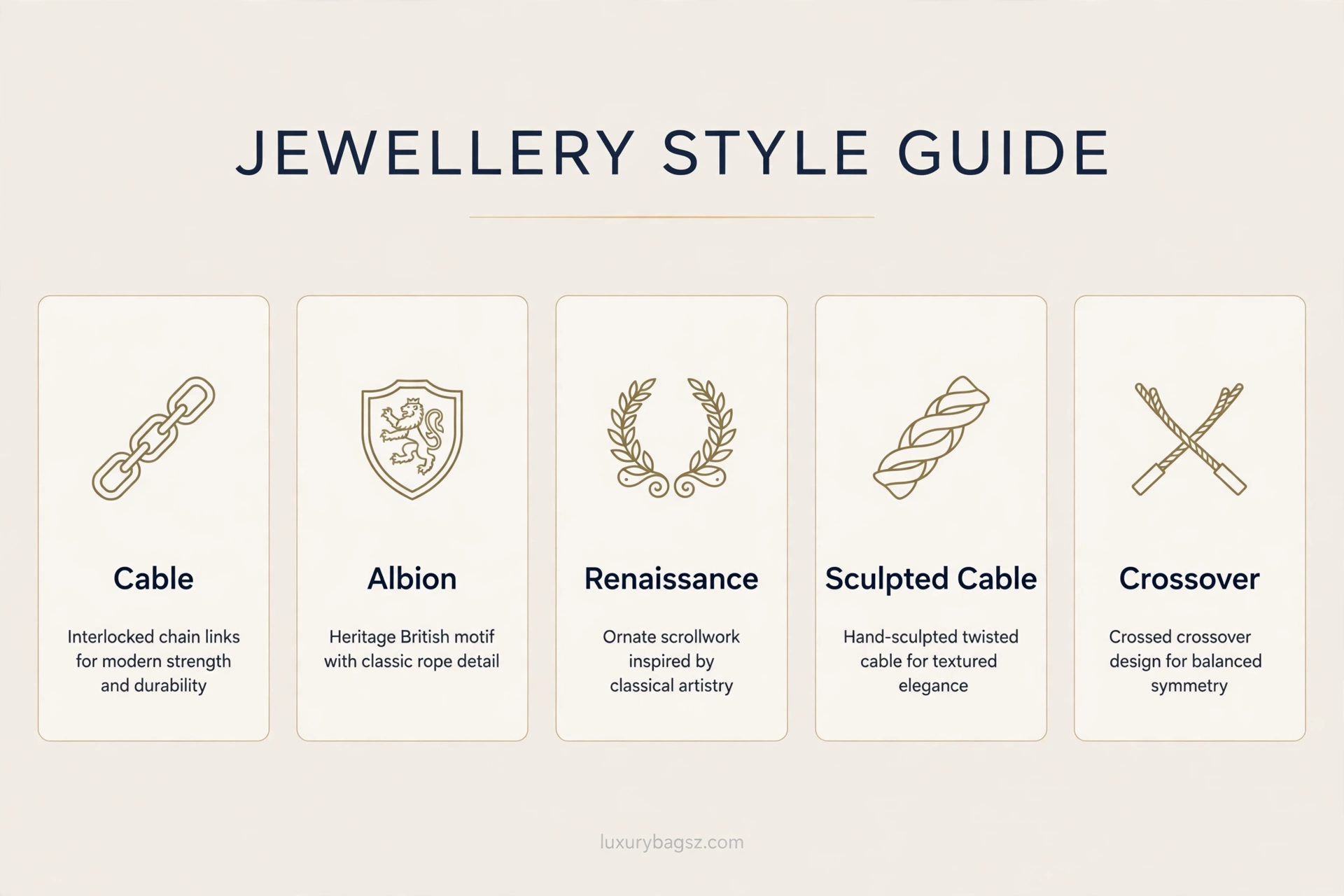
Cable is the foundation, but several collections build on it in useful ways. Classic Cable is the cleanest starting point, usually in sterling silver, sometimes with gold accents or gemstone ends. Albion adds a large cushion-cut gemstone, often citrine, amethyst or blue topaz, set into a Cable frame. It is bolder and more colourful, and it suits buyers who want one jewel that does visible work.
Sculpted Cable refines the twist into a smoother, more architectural line, while Crossover twists two strands over each other for a softer, woven effect. Renaissance pieces lean into colour and classical references, with rich stones and detailed metalwork. Men's Cable uses thicker proportions and darker stones, and it is worth browsing even if you usually shop the women's range, because the scale can suit larger wrists better.
Do not try to learn every collection before buying. Pick the feeling you want first: quiet and daily, colourful and bold, or sculptural and architectural. Then narrow to one collection and compare widths, metals and stones within it. That approach prevents the common mistake of buying a beautiful piece that never matches anything else you own.
Sizing, Fit and Comfort
David Yurman bracelets are usually sold in sizes such as small, medium and large, and the right size depends on your wrist measurement plus how much movement you like. Measure your wrist snugly with a tape, then add a little room for comfort. A cuff that barely closes will pinch when your wrist warms up, while a cuff that slides to your hand will bang against desks and door frames.
Open cuffs need extra care, because they flex every time you put them on. Open the cuff only as far as needed, slide it over the narrowest part of your wrist, and let it settle. Never pull the two ends wide apart, and never bend a cuff back and forth to adjust it, because repeated flexing weakens the metal over time.
Rings follow a similar rule: buy your true size rather than guessing up or down for a wide band. Wide Cable bands feel tighter than slim bands in the same size, so try the exact width you plan to buy. If you are between sizes, the wider the band, the more likely you are to need the larger size.
How to Buy New and Pre-Owned
Buy new from a boutique, an authorised department store or the brand's own channels when you want a full warranty, a fresh finish and an easy return. Buy pre-owned when you want a discontinued colour, a gentler price or a piece that is no longer in production. Both routes are sensible, but pre-owned buying needs sharper checks.
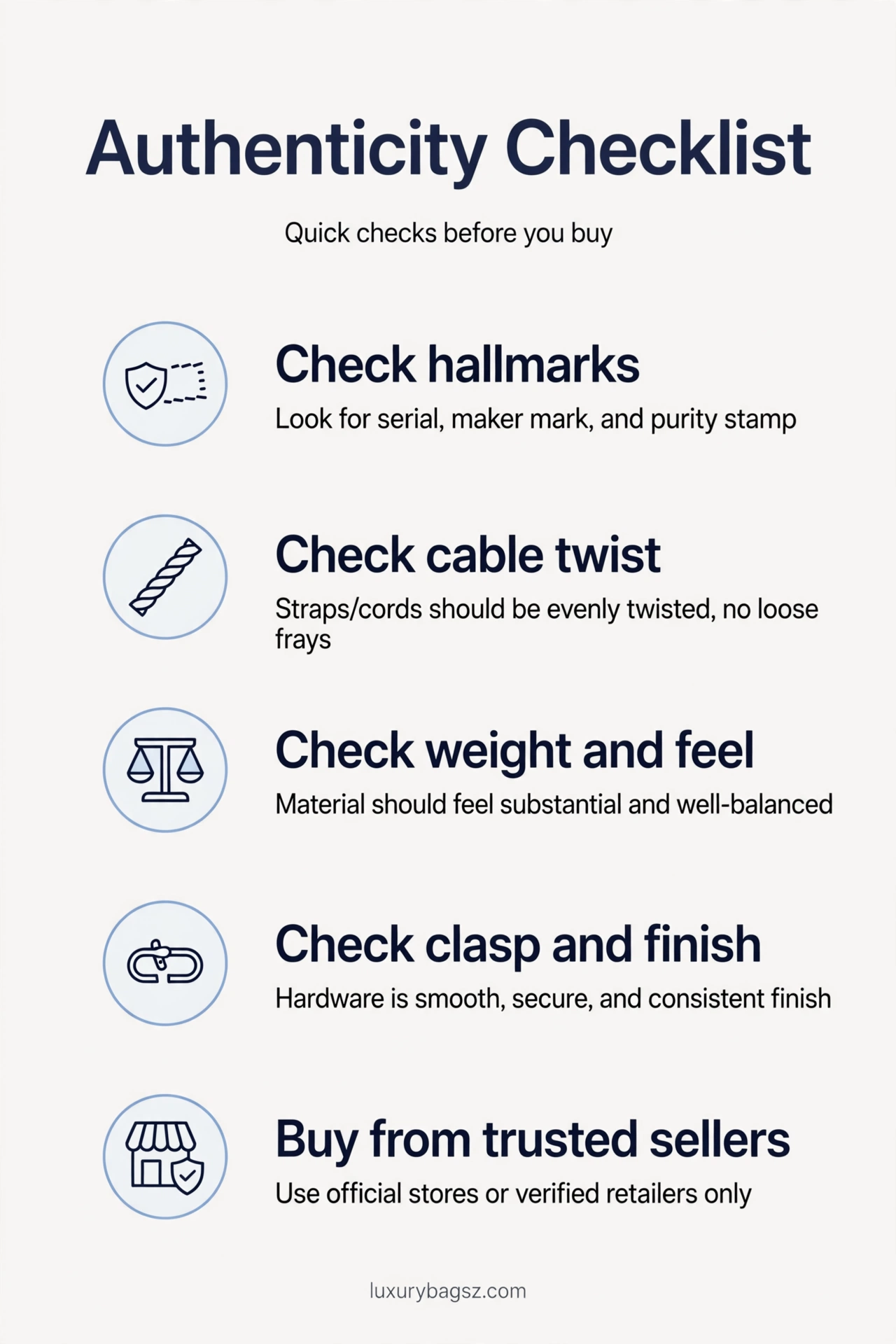
Start with hallmarks, which should be crisp and correctly spelled, and compare them with clear photos of known genuine pieces. Check the Cable twist, the symmetry of the end caps, the weight in your hand and the quality of the clasp or hinge. Ask for close photos of every mark, every stone setting and any wear on the inner band, where cuffs rub against skin and desks.
Our guide to fake bracelet checks walks through the warning signs in detail, and it is worth reading before any pre-owned purchase. Insist on a return window, keep all packaging and paperwork, and be wary of any seller who refuses clear photos or rushes you. A genuine seller welcomes scrutiny, because scrutiny protects them too.
Styling, Care and Everyday Wear
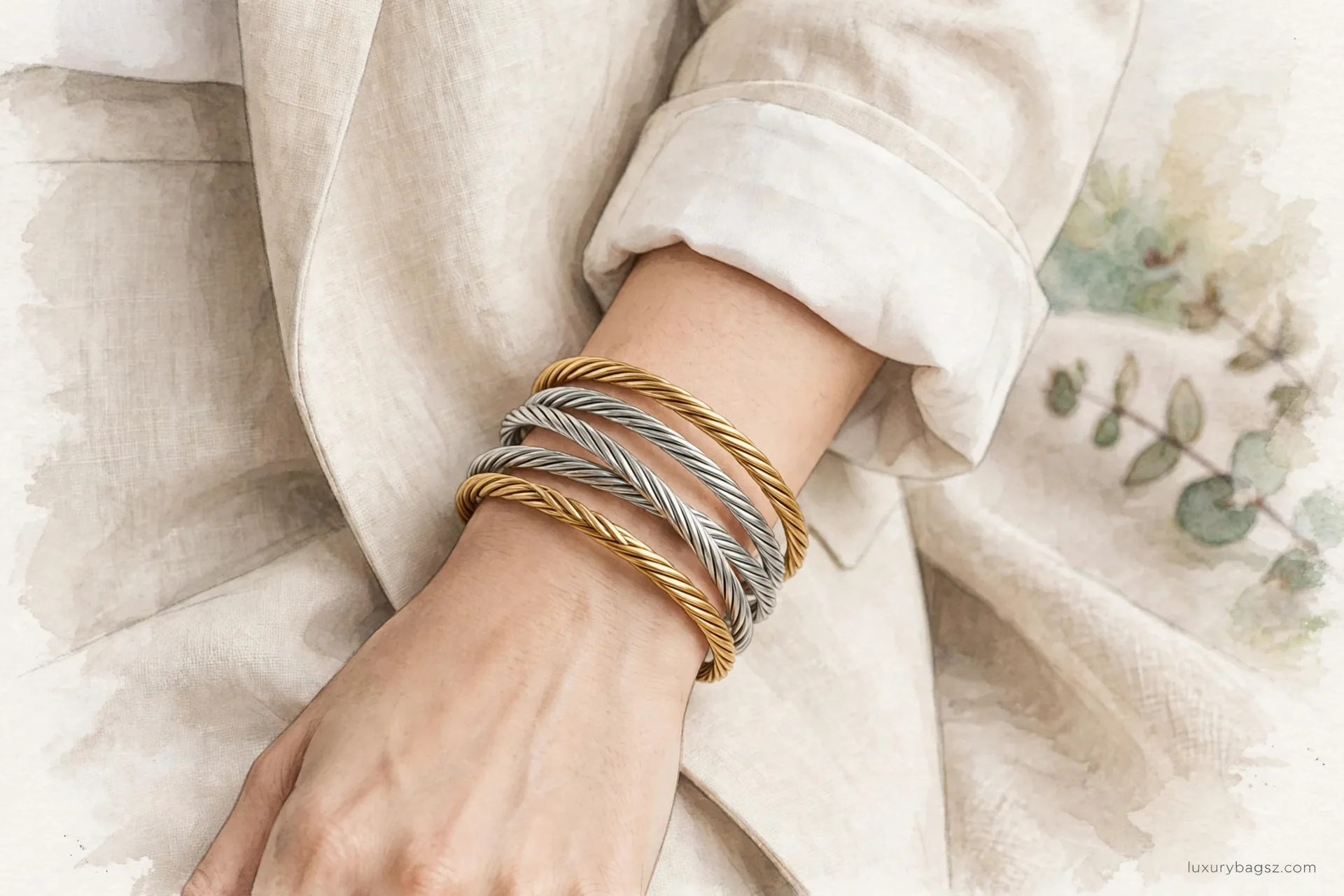
Cable jewellery earns its price by being worn often, not stored for special occasions. A silver Cable cuff works with a white shirt, denim and trainers, while a gold-accented cuff lifts a plain black dress without looking overdressed. Stacking works best when you vary width rather than colour: one bold cuff, one slim cuff and a simple watch is usually enough.
Avoid stacking Cable against hard, sharp jewellery that can scratch the twist, and take cuffs off before heavy work, gardening or gym sessions. Perfume, hairspray and sunscreen should go on before jewellery, not after, because residue dulls the finish and settles into the grooves of the twist. Store each piece separately in a soft pouch so cuffs do not rub against each other.
Cleaning is gentle work. Warm water, mild soap and a soft cloth handle most daily grime, and a soft brush reaches the grooves if needed. Dry the piece fully before storing it, and keep silver away from humidity where possible. Our notes on gold and diamond ring care cover the same gentle-first approach, which also suits gemstone-set Yurman pieces.
Value, Resale and What to Avoid
David Yurman is best bought as jewellery you love, not as an investment product. Classic Cable in sterling silver and gold holds its appeal well, and popular Albion stones in good condition resell more easily than unusual colours in poor condition. Completeness helps: box, pouch, paperwork and a clean, unworn-looking finish all support a stronger resale price.
Avoid three traps. First, do not pay a premium for a "rare" colour or size without checking recent sold listings, because sellers often inflate rarity. Second, do not buy a damaged cuff hoping a jeweller can restore it cheaply, because re-twisting Cable is skilled work and may cost more than the saving. Third, do not assume every Yurman piece appreciates, because fashion jewellery cycles and only the most recognisable designs hold steady demand.
If resale matters to you, read about what gives signed jewellery value and how to approach designer jewellery resale pricing before you list anything. Price honestly, photograph honestly, and describe wear exactly. Buyers pay more for trustworthy listings than for flattering ones.
Frequently Asked Questions
1. When was David Yurman founded? David Yurman was founded in 1980 by David and Sybil Yurman in New York, growing out of their work as a sculptor and a painter.
2. What is the David Yurman Cable bracelet? It is an open cuff built from a twisted helix of metal, finished with decorative end caps, and it remains the brand's signature design.
3. Was the first Cable bracelet made in 1982 or 1983? Sources disagree. The brand's current history gives 1982, while many older articles say 1983, so treat 1982 as the house position rather than a settled fact.
4. Is David Yurman real gold or silver? Most pieces use sterling silver, 18-karat gold, or a mix of both, often with gemstones. Always check the individual piece's hallmarks and product description.
5. Does David Yurman jewellery suit everyday wear? Yes, that is its strength. Cable pieces are designed to be comfortable daily jewellery, though you should still remove them for heavy manual work.
6. How do I choose a Cable bracelet size? Measure your wrist snugly, add a little comfort room, and try the exact width you plan to buy, because wider cuffs feel tighter than slim ones.
7. What is Albion? Albion is a David Yurman collection centred on a large cushion-cut gemstone set into a Cable frame, often in citrine, amethyst or blue topaz.
8. How do I clean a Cable bracelet? Use warm water, mild soap and a soft cloth, brush gently into the grooves if needed, and dry fully before storing the piece separately.
9. Is pre-owned David Yurman worth buying? Yes, when the twist is crisp, the hallmarks are clear and the seller offers clear photos plus a return window. Avoid pieces with bent cuffs or mushy twists.
10. Does David Yurman hold its value? Recognisable Cable and Albion pieces in good, complete condition resell best, but buy for wear first and treat any resale return as a bonus.
Final Verdict: Start With Cable, Then Build Slowly
David Yurman rewards a slow, confident approach. Start with one Cable piece in a metal you wear daily, learn your size and your preferred width, and only then add colour, stones or bolder cuffs. Check hallmarks, protect the twist, and buy from sellers who welcome questions. Done that way, a Yurman piece becomes the quiet workhorse of your jewellery box rather than a beautiful object you are afraid to wear.






