

How to Remove Odours from a Leather Handbag (and from Wool and Tweed Bags)
Air First, Products Last
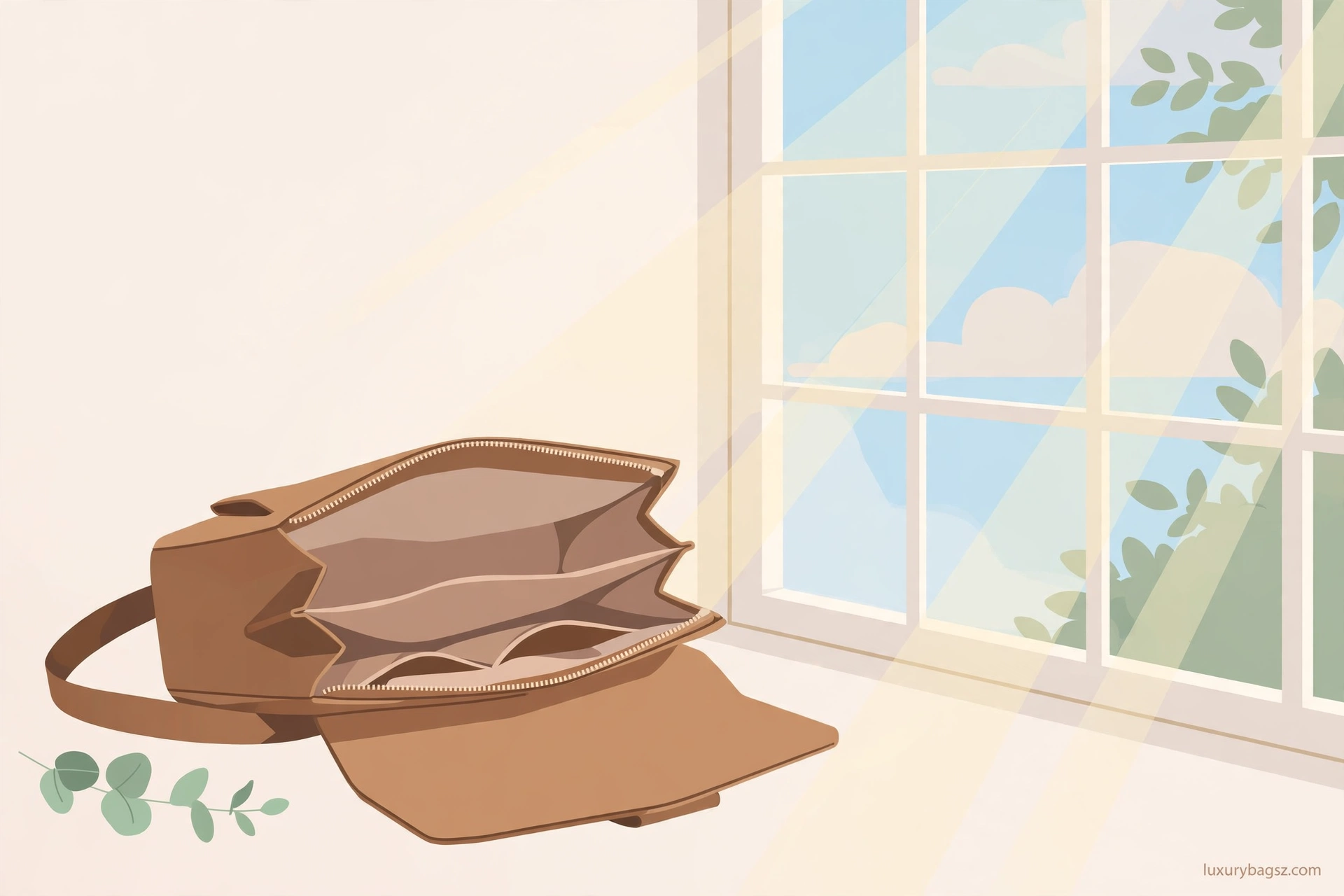
To remove odour from a leather bag, start with the slowest and safest tool you own: air. Empty the bag fully, open every pocket, and let it stand open in a dry, shaded, ventilated place for several days. Many storage and musty smells fade by half with airing alone.
If the smell survives airing, move to absorbents kept off the leather itself: bicarbonate of soda or activated charcoal in a tied cloth pouch inside the bag, refreshed over one to two weeks. That patient method shifts most everyday odours.
Perfume cover-ups, sprays inside the bag, and soaking cleaners make things worse. This guide works through each odour type, the safe steps, and the smells that mean the bag needs a specialist instead.
Key Takeaways
- Air the emptied, fully opened bag in shade for several days before trying anything else.
- Use bicarbonate of soda or activated charcoal inside a cloth pouch, never sprinkled loose on leather or lining.
- Work in weekly cycles: absorb, air, sniff, repeat. Deep odours rarely leave in a day.
- Never spray perfume, air freshener or disinfectant inside a bag; they mix with the odour and can stain linings.
- Delicate leathers such as lambskin get airing and absorbents only, with no wiping or liquids.
- Smoke, mould and chemical smells that survive two cycles belong with a professional cleaner.
Find the Source Before You Treat It
Sniff with intent: is the smell musty storage, smoke, perfume, food, mildew, or the sharp chemical note some new and faux leathers carry? Each one answers to a different treatment, and the wrong one wastes weeks.
Check the lining, pockets and base corners for the source itself: a forgotten sweet, a leaking pen, a damp umbrella once stored inside. No absorbent fixes a source that is still sitting in the bag.
Empty everything, shake the bag out over a bin, and wipe loose debris from the lining with a dry cloth. Then air it before judging how bad the problem really is.
Where the smell lives matters as much as what it is. An odour strong in the lining but faint outside is a lining problem, usually quickest to fix. One that greets you from the closed bag has soaked further in.
Sniff after airing, not before, for your true baseline. The first day's impression exaggerates everything, and several owners have given up on bags that a week of air would have saved entirely.
Match the Odour to Its Cause
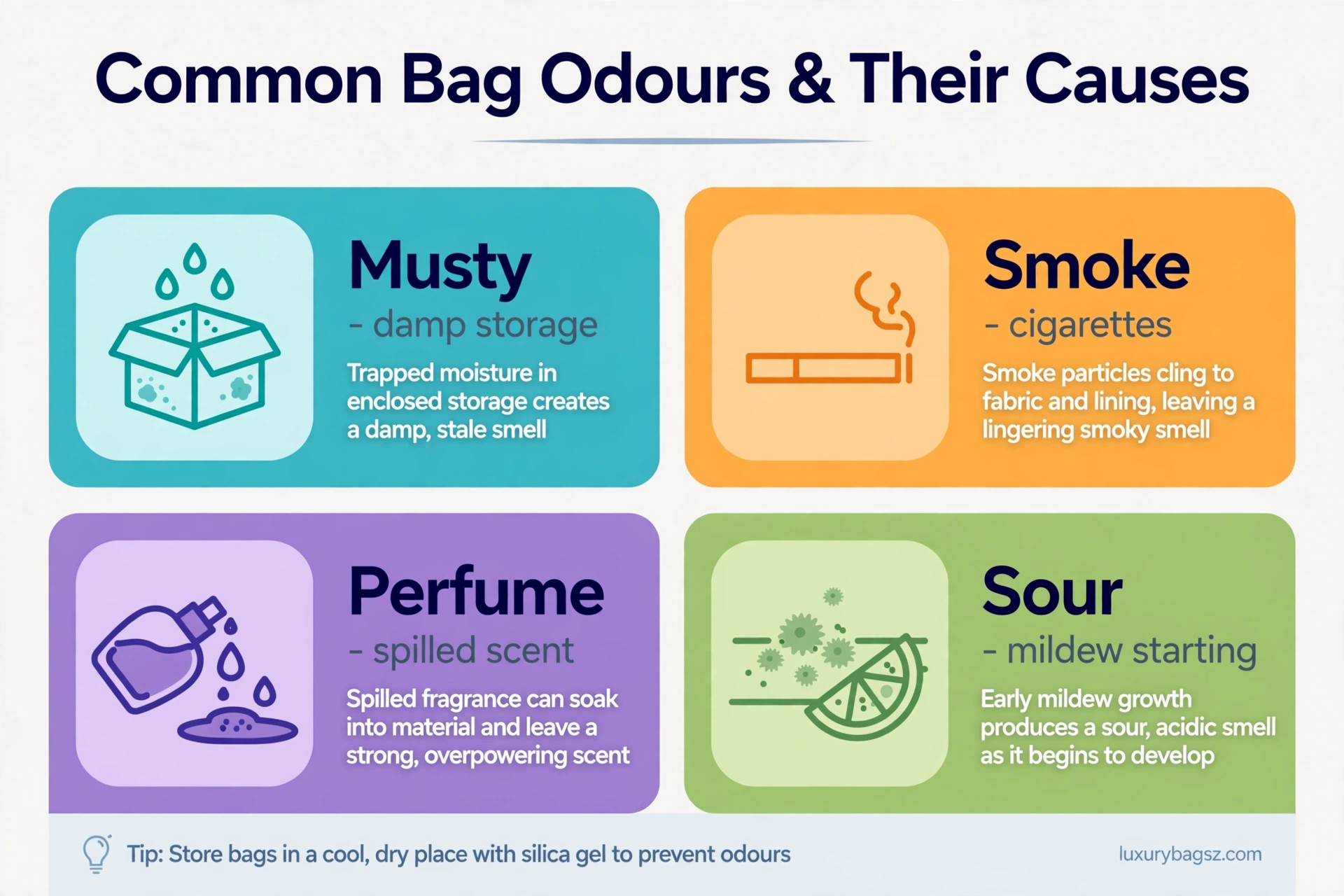
Musty smells come from closed, damp storage and usually respond well to airing and absorbents. Smoke clings to linings and leather pores alike and is the slowest everyday odour to clear.
Perfume and food smells sit nearer the surface and often fade within one absorbent cycle. A sour, earthy note with any visible spotting suggests mildew, which needs the mould treated, not just the smell masked.
A chemical smell on a new bag usually fades with airing alone. A chemical smell on an older bag can mean a deteriorating synthetic lining, which no home method will reverse.
Step One: The Airing Routine
Stand the bag upright with the top open and the lining pulled gently outward where the design allows. Place it in moving air, out of direct sun and away from radiators or other heat.
Leave it for at least three days, turning it once a day so every side airs. In humid weather, air indoors near a dehumidifier or fan instead; outdoor damp will feed the problem.
Delicate bags get only this step plus absorbents. Our routine for how to clean Chanel lambskin bag surfaces shows how little liquid lambskin tolerates, and odour work follows the same rule.
Work the inside pockets as their own small rooms. A tiny pouch in a forgotten pocket is a common reason a bag improves everywhere except one corner, where the smell stubbornly stays exactly as strong.
Step Two: The Bicarbonate Method
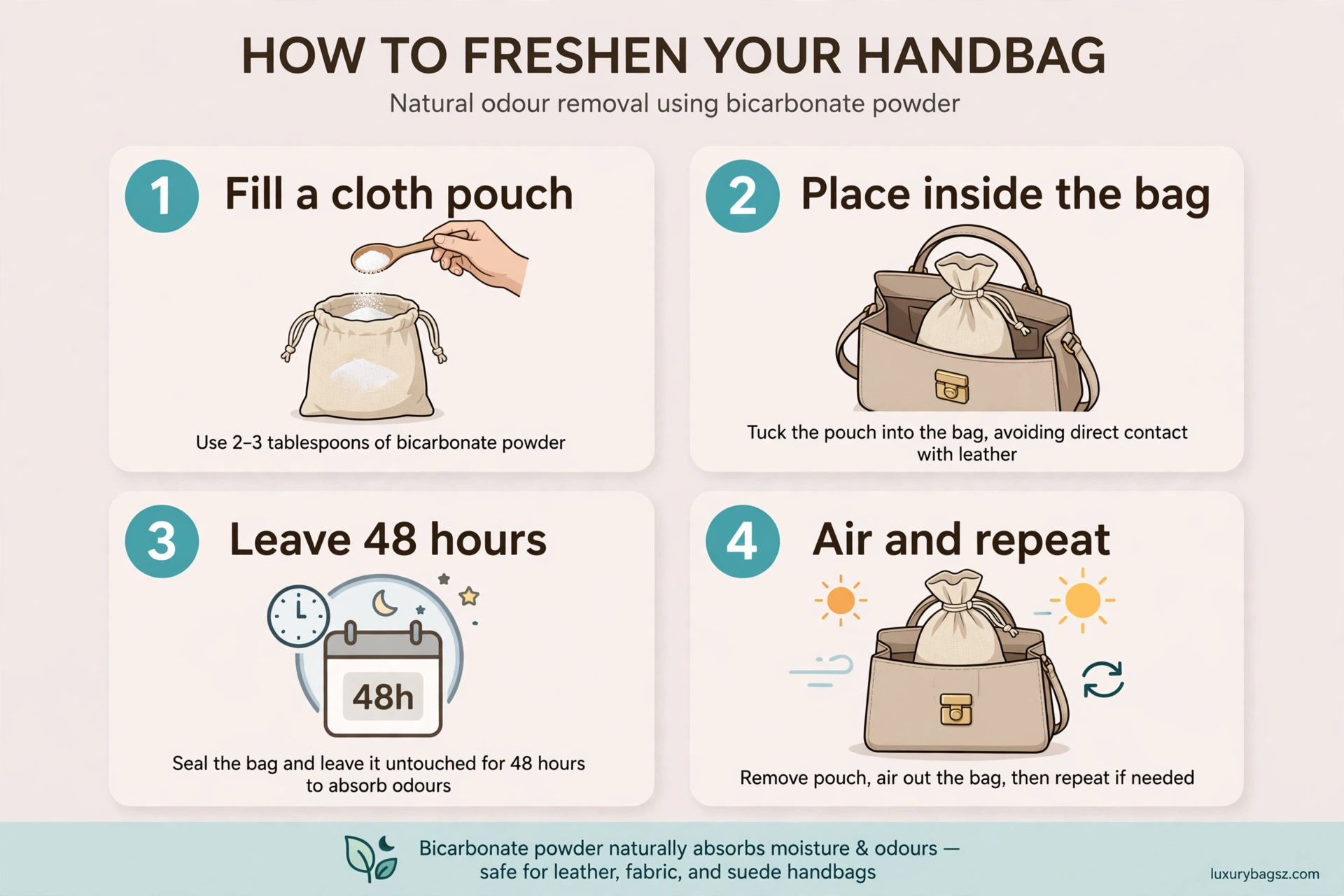
Fill a clean cotton sock or muslin pouch with bicarbonate of soda and tie it closed. Place the pouch inside the emptied bag, close the bag loosely, and leave it somewhere dry for 48 hours.
Remove the pouch, air the bag for a few hours, and sniff. Repeat with fresh bicarbonate for up to two weeks for stubborn smells, changing the pouch every two to three days as it saturates.
Never sprinkle the powder loose into the bag. It works its way into stitching and lining seams, is hard to remove fully, and the gritty residue can abrade delicate linings.
Time is the active ingredient in every one of these methods. Absorbents pull odour slowly from leather's pores, and there is no safe way to hurry the exchange with heat, sprays or stronger chemicals.
Keep a simple rhythm: pouch in for two to three days, bag aired open for a day, then judge. Most owners see the biggest improvement between the second and fourth cycle, not the first.

Step Three: Activated Charcoal and Paper
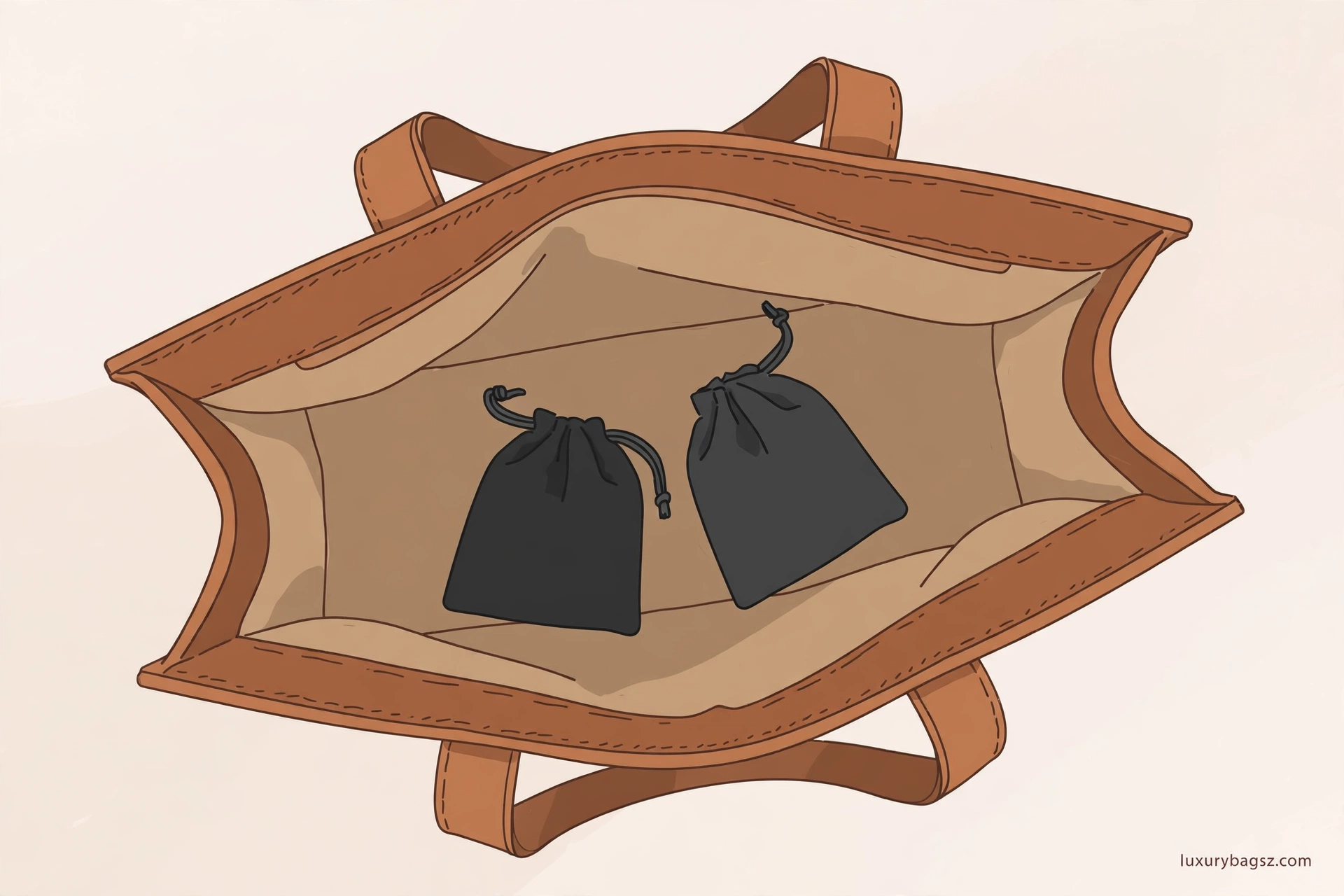
Activated charcoal pouches work the same way as bicarbonate but absorb more per gram and suit smoke smells better. Use one or two pouches inside the bag and refresh or replace them weekly.
Plain packing paper loosely stuffed into the bag also absorbs odour slowly and holds the bag's shape while it airs. Avoid printed newspaper against pale linings, because the ink can transfer.
Whichever absorbent you choose, keep it in a pouch or as formed paper. Loose granules in seams and pockets create the next problem while solving this one.
Wool and Tweed Bags
Fabric bags hold odour in their fibres, and they reward the same patience. Air the bag open and shaded, then use a bicarbonate pouch inside it, exactly as for leather.
For the outer wool or tweed, a gentle surface sprinkle of bicarbonate, left for a few hours and shaken and soft-brushed off outdoors, can help. Test a hidden patch first, and never soak the fabric.
Our guide to how to clean Chanel tweed fabric bags covers washing limits for these weaves; odour work should stay dry unless that guidance says otherwise.

Stopping the Smell Coming Back
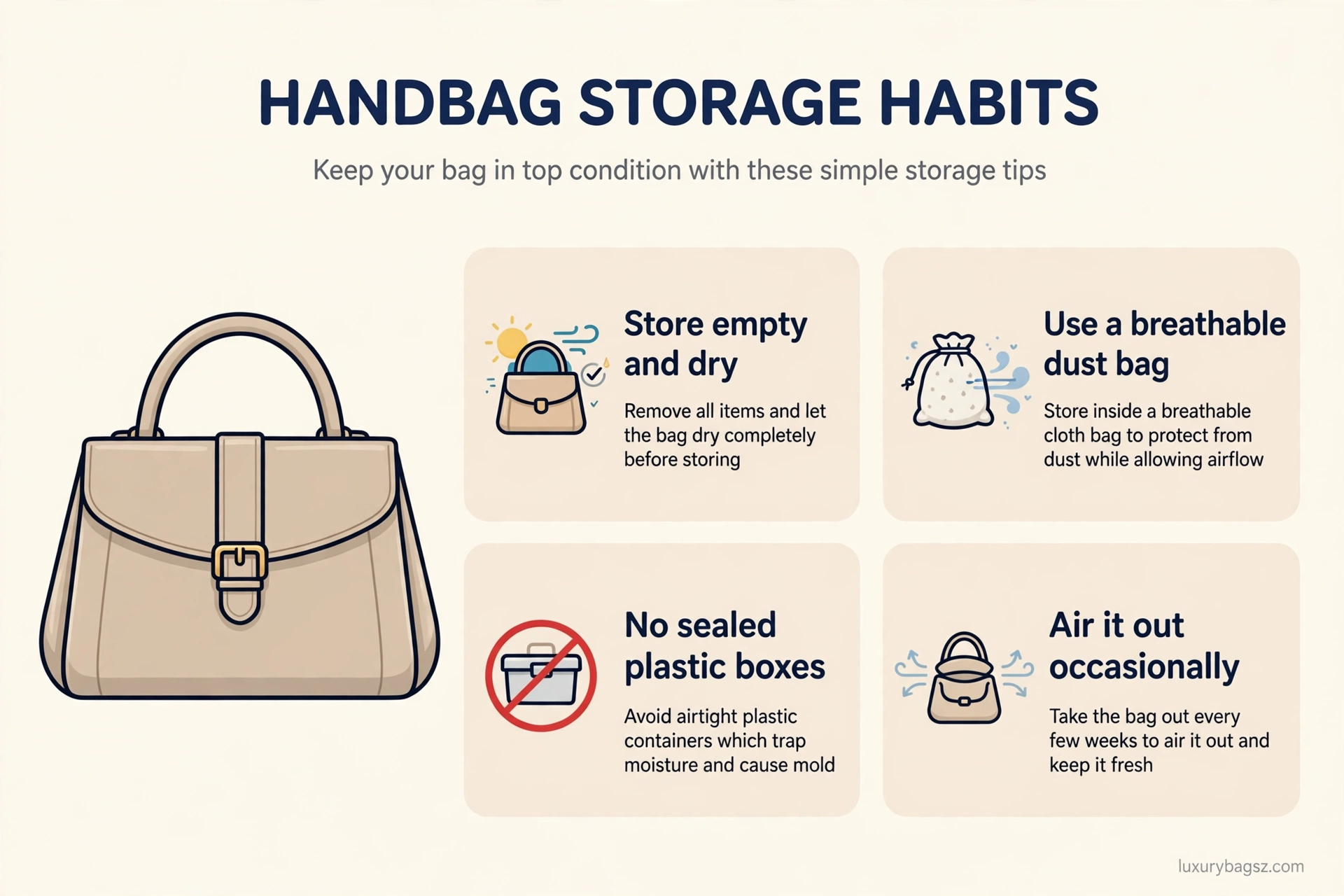
Store bags empty, clean and fully dry, in breathable dust bags rather than plastic boxes or sealed bags, which trap the moisture that starts musty smells.
Our wider guide to how to take care of leather covers the storage conditions leather likes: cool, dry, dark and aired from time to time.
Never store a bag straight after a rainy day or a spill. Air it open overnight first, and keep scented products, gym kit and food out of bags you care about keeping fresh.
One more honest case: a bag that smells strongly of a previous owner's perfume may simply need longer than two weeks. Scent molecules are persistent, and faint traces can linger for months of normal use.
If the bag is otherwise sound, using it is often the final stage of treatment. Daily airing between wears finishes what pouches started, provided the smell is fading rather than fixed.
Smells That Need a Specialist
Send the bag to a professional if the smell is smoke set deep into leather, if mildew spotting is present, or if two full absorbent cycles have changed nothing.
Be honest with yourself about deteriorating linings: a sticky or crumbling synthetic lining that smells chemical is failing materially, and the fix is relining or replacement, not deodorising.
A good bag spa will say plainly if an odour cannot be fully removed. For a valuable bag, that honest verdict is worth paying for before you sell, gift or store the piece long term.
Frequently Asked Questions
How long does it take to remove odour from a leather bag?
Light mustiness can fade in a few days of airing. Deep smoke or storage smells usually need one to two weeks of absorbent cycles, and some never fully leave.
Can I sprinkle bicarbonate of soda directly into my bag?
No. Keep it inside a tied cloth pouch or sock. Loose powder lodges in seams and stitching, is hard to remove, and can abrade delicate linings.
Will air freshener or perfume fix a smelly bag?
No. Sprays mix with the existing odour rather than removing it, and the liquids can stain linings and mark leather. Absorb the smell; do not cover it.
Does activated charcoal work better than bicarbonate?
For smoke and strong smells, usually yes, gram for gram. For ordinary mustiness, bicarbonate in a pouch works well and costs almost nothing.
Can I wash the lining of a leather bag to remove smell?
Pulling a lining out and sponging it is risky: water spreads to the leather, glue lines soften, and dyes can move. Dry methods first; a specialist for anything wetter.
How do I remove odour from a tweed or wool bag?
Air it open in shade, use a bicarbonate pouch inside, and brush a light surface sprinkle off the fabric after a few hours. Keep the weave dry throughout.
Why does my stored bag smell musty again?
It was stored damp, sealed, or both. Store bags clean, fully dry and in breathable dust bags, and air them occasionally so moisture never builds up.
Can odour be removed from lambskin bags?
Gently, yes, using airing and pouch absorbents only. No liquids, wipes or sprays should touch lambskin, so stubborn smells on lambskin go to a specialist.
Does sunlight help deodorise a bag?
Fresh shaded air helps; direct sun does not belong in the method. Sunlight fades and dries leather, so air in shade or indoors near a fan instead.
When is a smelly bag not worth saving?
When the smell comes from a deteriorating lining or deep smoke saturation in a low-value bag, professional costs can exceed the bag's worth. Get a quote before deciding.
Conclusion
Air it, absorb it, repeat patiently, and keep every product in a pouch and off the leather. Most bag odours give up within two weeks of that routine, and the ones that do not have told you, honestly, that they need a specialist.






