

When Is the Best Time to Sell a Designer Bag? Timing and Seasonality
The Honest Answer First
The best time to sell a designer bag is when buyers are actively looking for it: the pre-holiday months, the start of a new fashion season, and the weeks just after a boutique price rise on your model.
Timing will not rescue a bag nobody wants, and a true classic in black sells in any month. But for colours, seasonal styles and trend-led pieces, the calendar can swing both the price you achieve and how long you wait for it.
This guide maps the year, the market triggers that matter more than the month, and the preparation timeline that lets you hit a peak window instead of chasing it.
Key Takeaways
- November to mid-December is the strongest general window, driven by gift buying and party-season outfits.
- Seasonal colours sell best just before their season peaks: pastels in late winter, raffia in spring, rich tones in early autumn.
- A boutique price increase on your model lifts resale asking prices; listing just after one is a proven move.
- Discontinuation news and sudden celebrity or screen moments create short, valuable spikes in demand.
- January and the height of summer are usually the quietest times for mid-range pieces.
- Preparation takes weeks, not days: authentication, cleaning and photography should be done before the window opens.
Timing advice works only for a bag that is ready, and readiness is my department. Before any selling window opens — the pre-holiday rush, a price rise on your model — I would want the bag examined, honestly graded and photographed the way this guide’s countdown sets out, with its full set gathered: box, dust bag, receipt, lock and keys. A classic in black sells in any month because buyers can verify it quickly. Seasonal colours cannot wait for that slow work. Ten years around pre-owned bags has taught me that preparation is the part of timing sellers actually control, so control it early.
What Timing Can and Cannot Do
Timing changes the size of your audience, not the quality of your bag. Condition, completeness and brand heat set the ceiling; the calendar decides how many buyers compete beneath it.
Our breakdown of what affects a designer bag's resale value covers those fundamentals in full. Timing is the multiplier you apply on top of them.
As a rough guide, sellers and resellers consistently report faster sales and firmer prices in peak windows, and slower, more negotiated sales in quiet ones. The classic black flap barely notices; the mint crossbody notices a lot.
None of this is a law. A rare model in a rare colour obeys scarcity, not seasons, and a seller watching sold prices weekly will always time better than a seller following any calendar, including this one.
The Year at a Glance
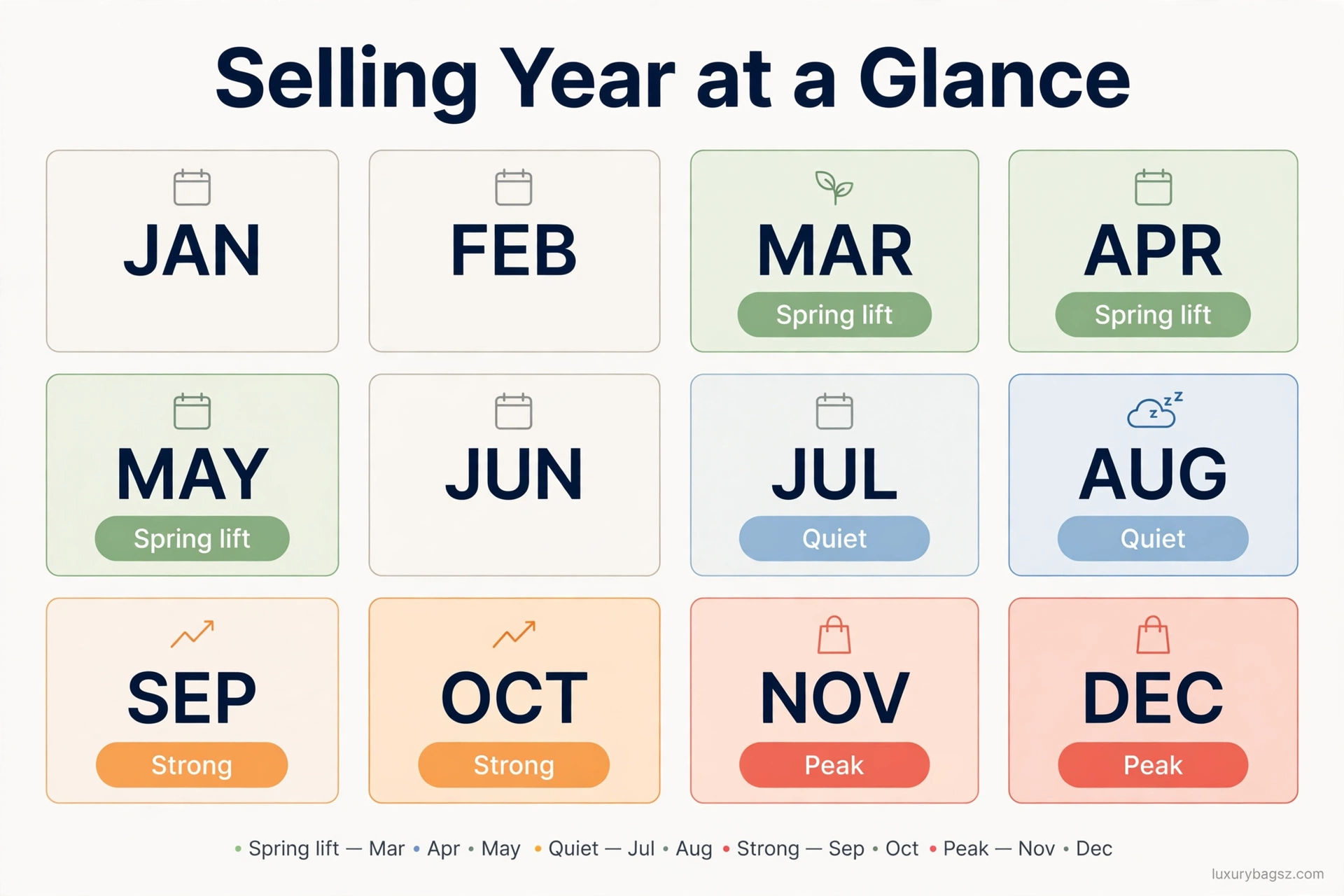
January is typically quiet for mid-range bags as holiday spending fades, though the very top brands stay busy and new-year price rises can stir their market. February picks up around gifting occasions.
March to May is strong: spring wardrobes, wedding season and bonus or tax refund money in some markets bring buyers back. June stays fair for summer styles, then July and August soften as buyers travel.
September revives sharply with the new fashion season, October builds, and November to mid-December is peak. Late December dies away as delivery deadlines pass, whatever the demand.
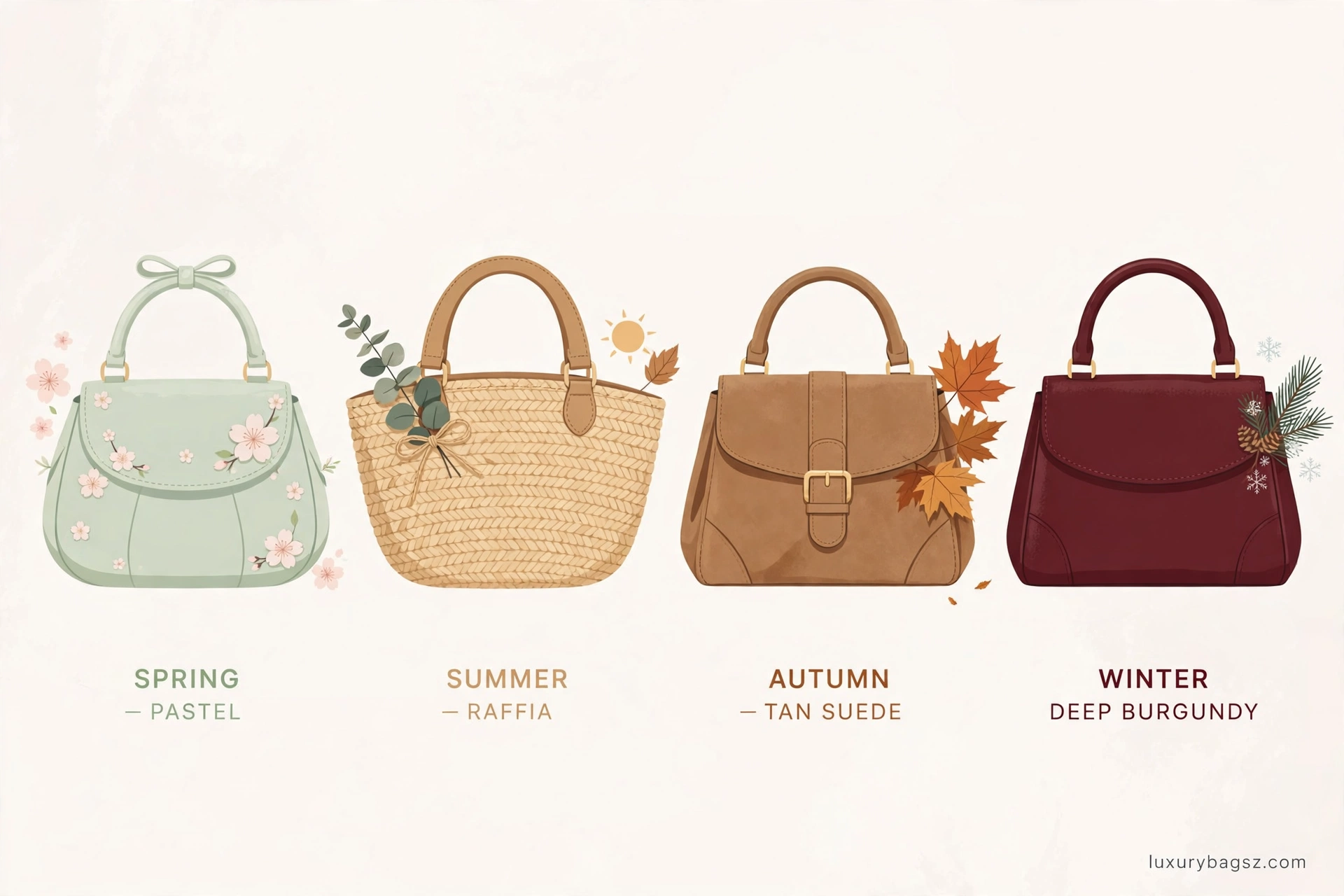
Colour deserves its own word inside seasonality. Brights and pastels are spring purchases, white is a summer one, and black, tan and oxblood deepen in demand as the light fades in autumn.
Hardware and size follow softer patterns: large totes stir with the back-to-work weeks, small evening bags with the party calendar, and travel bags in the run-up to holiday periods. Match all three, colour, size and purpose, to the same window.
Match the Bag to Its Season
Seasonal bags have a home season, and they sell best in the run-up to it, when buyers are planning outfits rather than already wearing them.
List raffia, straw and canvas in late winter to spring. List pastels and white bags in late winter too, so they are live when spring searches start. List suede, shearling and deep colours in late summer to early autumn.
Selling a summer bag in November means competing with every gift-focused listing while your natural buyer is thinking about coats. If the season is wrong, holding a clean, stored bag for a few months usually beats a discounted sale now.
Price firmly for this window. Gift buyers shop against deadlines and value certainty, so a fairly priced, complete, well-photographed bag often sells faster at full asking price in November than a cheaper, scruffier listing does in January.
Offer the details gift buyers ask for: exact measurements, clear corner photographs, and honest delivery timing. Every answered question before it is asked removes one reason for a deadline-driven buyer to choose another bag.
The Holiday Window, Used Properly
The pre-holiday peak rewards complete sets. A bag with box, dust bag and receipt reads as a gift, and gift buyers pay for presentation and certainty more than bargain hunters do.
List by early November so your bag is live, photographed and priced before the rush. Platforms and consignors get crowded later, and intake delays can push you past the window entirely.
Evening bags, clutches and anything sparkly belong to this window too. Once the party season passes, that demand does not return in force until the following autumn.
Fashion week coverage is a slower trigger worth watching. When a house's show puts a silhouette or colour everywhere, its back-catalogue equivalents start moving within weeks, and prepared sellers catch that wave.
None of these triggers can be scheduled like the seasons, which is exactly why the preparation part below matters. A seller who is ready can list within days of news; a seller who is not watches the spike pass.
Market Triggers That Beat the Calendar
A boutique price increase on your model raises the reference price for every pre-owned example. Listing in the weeks just after a rise, at a sensible gap below the new boutique price, is one of the most reliable timing plays.
Discontinuation is another: when a model is retired, supply freezes while interest spikes. Celebrity sightings, screen appearances and viral moments create shorter spikes; they reward sellers who are already prepared.
Brand heat cycles matter as well. A creative-director change or a hit new collection pulls the whole brand's back catalogue up with it, including pieces that sat unsold the year before.

Prepare Before the Window Opens
Peak windows punish the unprepared, because the work takes longer than sellers expect. Photograph in daylight, gather paperwork, and decide your channel while the market is still quiet.
Our step-by-step guide to how to sell a designer bag for the best price covers channels, pricing and negotiation in depth.
Clean the bag gently, air it, and store it properly while you wait. A bag that arrives at its peak window smelling of storage or carrying fresh marks loses the very premium the timing was meant to capture.
A Four-Week Countdown to Listing
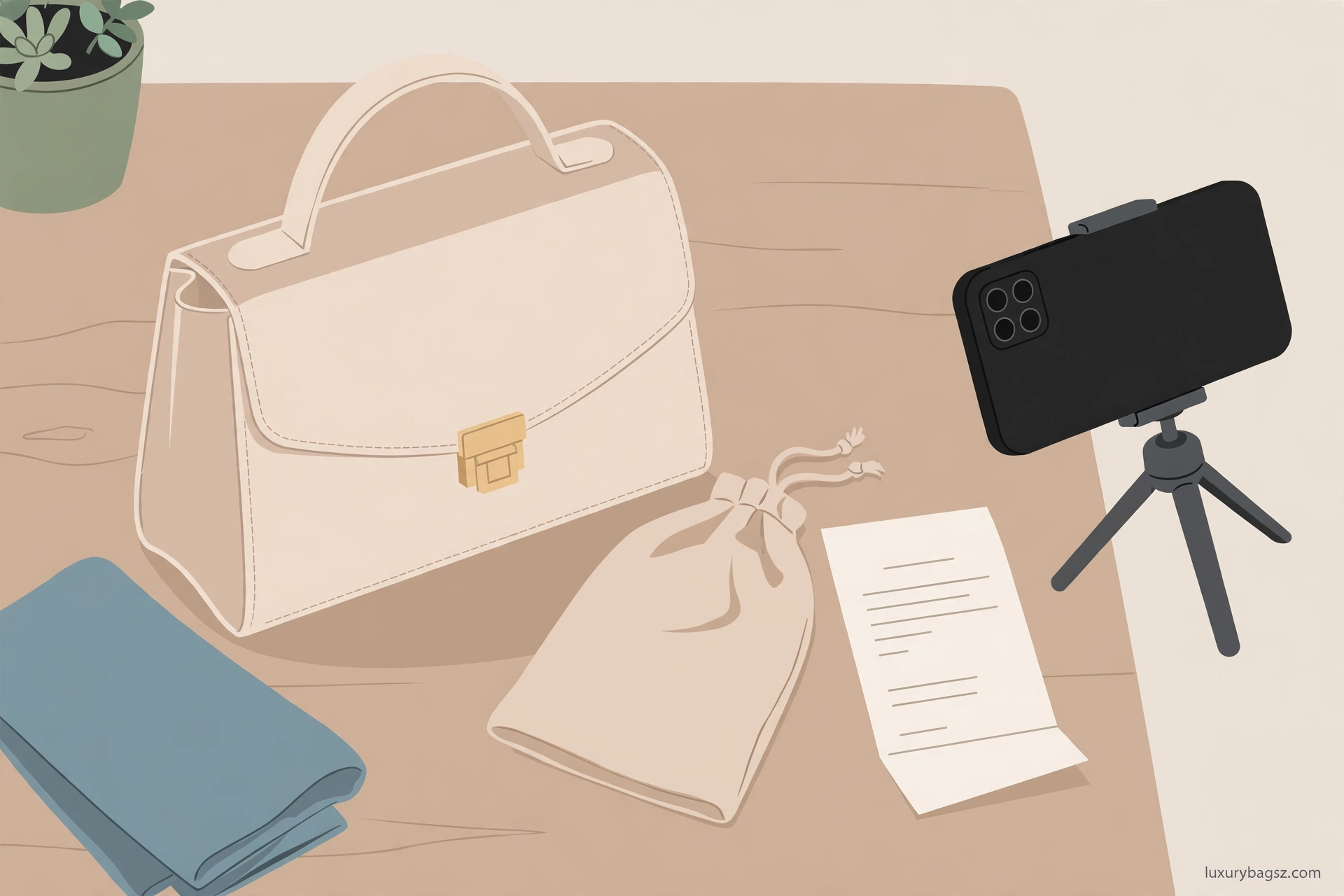
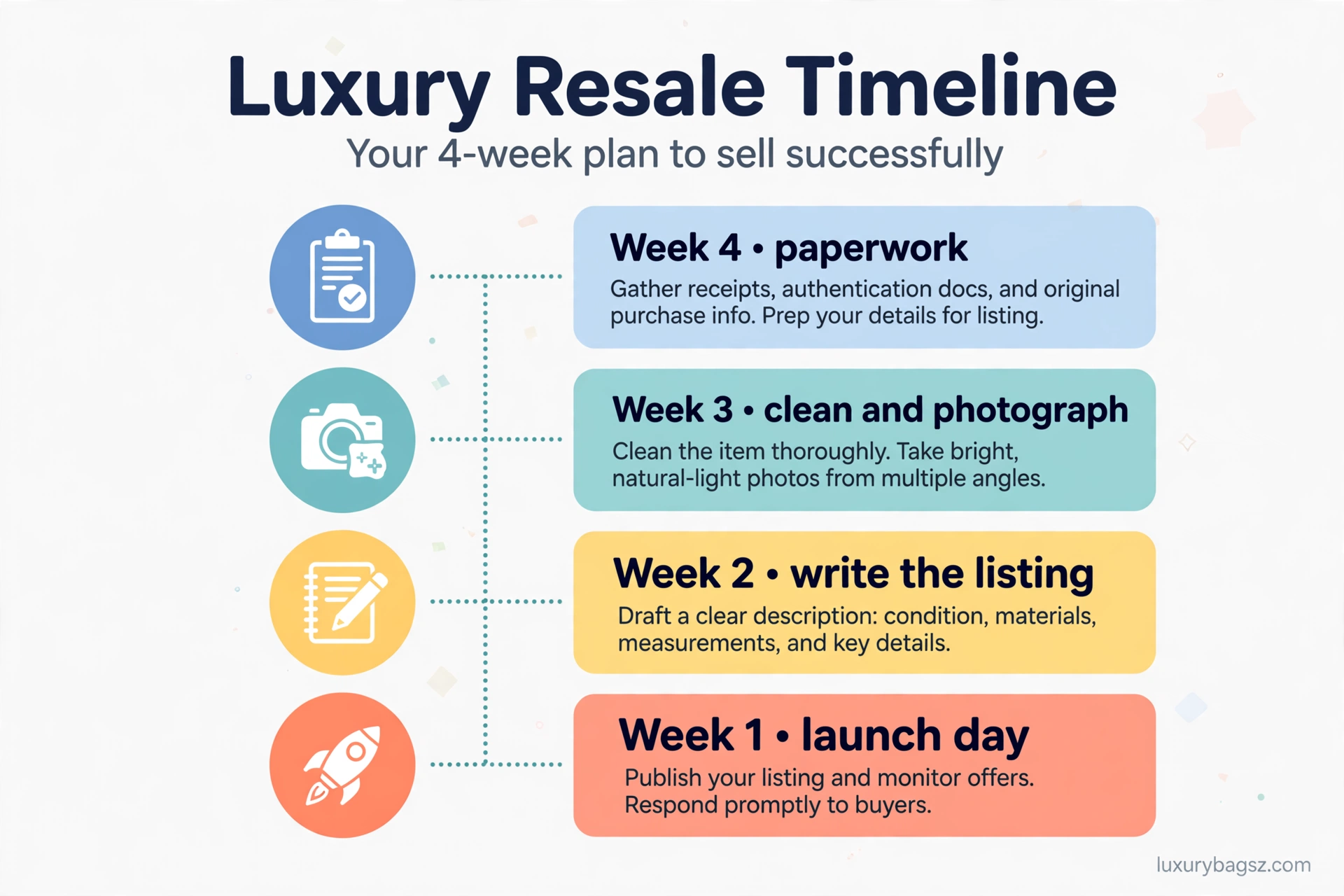
Four weeks out: confirm authenticity documents, order any missing paperwork copies, and check recent sold prices for your exact model, size and colour.
Three weeks out: gentle clean, condition check, and photography, inside and out, including corners, hardware and date codes or stamps. Two weeks out: draft the listing honestly, naming flaws plainly.
One week out: choose the launch day inside the peak window, set your floor price, and list. Respond fast in the first days; early enquiries are usually the most serious buyers a listing gets.
There is also a personal calendar to respect. Selling takes photographs, messages, postage and patience, and launching that workload into your own busiest month is how good bags end up sold cheaply just to end the process.
If life is full, consign. The fee is real, but a well-timed consignment sale, handled by people whose only job is the window you chose, usually beats a rushed private sale in a quiet month.
When Waiting Is the Wrong Move
Do not hold a bag for a peak window if its trend is fading; a falling style loses more in three months than the season adds. Sell into whatever demand remains.
Do not hold a bag that is deteriorating. Sticky linings, peeling edges and storage smells get worse in a cupboard, and the repair or discount will outgrow any seasonal gain.
And do not hold for a rumoured price rise that may never come. A good price in hand, from a verified buyer, beats a hypothetical better one in almost every real seller's story.
Frequently Asked Questions
What is the single best month to sell a designer bag?
For most bags, November offers the strongest mix of gift buying, party demand and active browsers. Early December still works, until delivery deadlines begin to bite.
Is January a bad time to sell?
Usually quieter for mid-range pieces, yes. Top-brand classics still move, and new-year boutique price rises can lift the very brands a January seller is most likely to hold.
When should I sell a pastel or white bag?
List in late winter, so the bag is live when spring searches begin. Selling pale bags in autumn means waiting through their weakest demand of the year.
Does a boutique price increase really lift resale prices?
Yes, because buyers compare against the new boutique price. Listing just after a rise, priced sensibly below it, is one of the most reliable timing strategies.
Should I wait for my bag to come back into fashion?
Only if the bag is a quality classic in good condition. Trend cycles do return, but storage takes a toll, and a fading trend piece usually loses more than it regains.
How far ahead should I prepare a sale?
About four weeks is comfortable: paperwork and authentication first, then cleaning, photography and listing drafts, so you can launch inside the window you chose.
Do complete sets sell better at holiday time?
Especially then. Box, dust bag and receipt make a pre-owned bag giftable, and gift buyers pay for that certainty and presentation.
Is it better to consign or sell directly at peak time?
Direct selling keeps more of the price but takes more of your time during the busiest weeks. Consignment suits sellers who want the peak handled for them.
What if my bag's model is being discontinued?
List while the news is fresh. Supply has stopped, interest is high, and that combination is usually the best price moment a discontinued model ever gets.
Can timing fix a low-value bag?
No. Timing multiplies existing demand; it cannot create it. Condition, brand heat and completeness set the value, and the calendar only helps you collect it.
Timing a Sale: Windows, Not Tricks
Pick the window your bag naturally belongs to, prepare four weeks ahead, and list just as its buyers arrive. That simple discipline, plus honesty about condition, beats every clever trick the resale calendar offers.
I watch these windows from the buying side. The bags I am asked to check surge in the same weeks this guide names — before the holidays, at discontinuation news — and a seller who prepares four weeks ahead meets buyers at their most motivated.






