

How to Protect Leather Soles: Sole Guards, Taps and Care That Work
Leather Soles, Protected
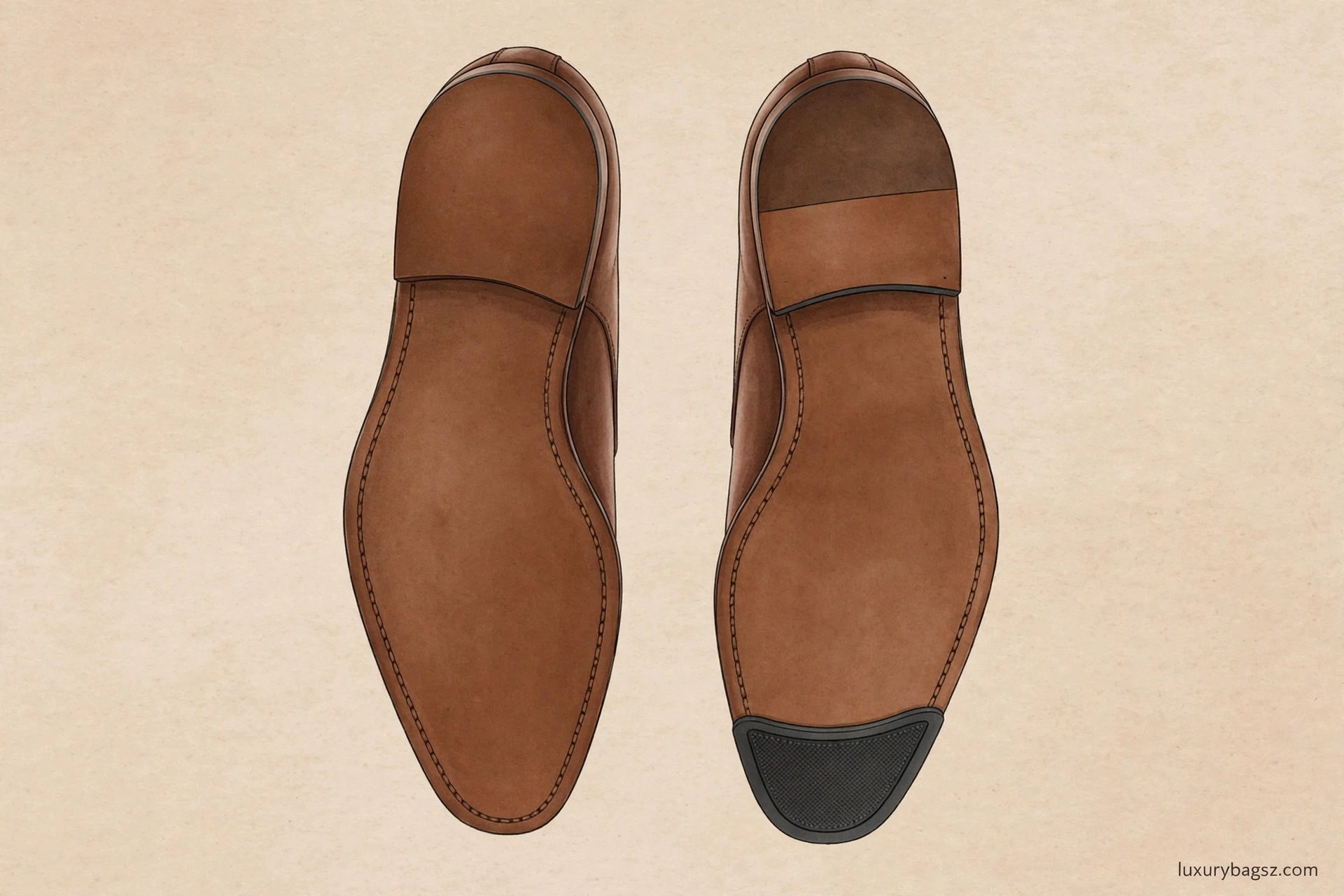
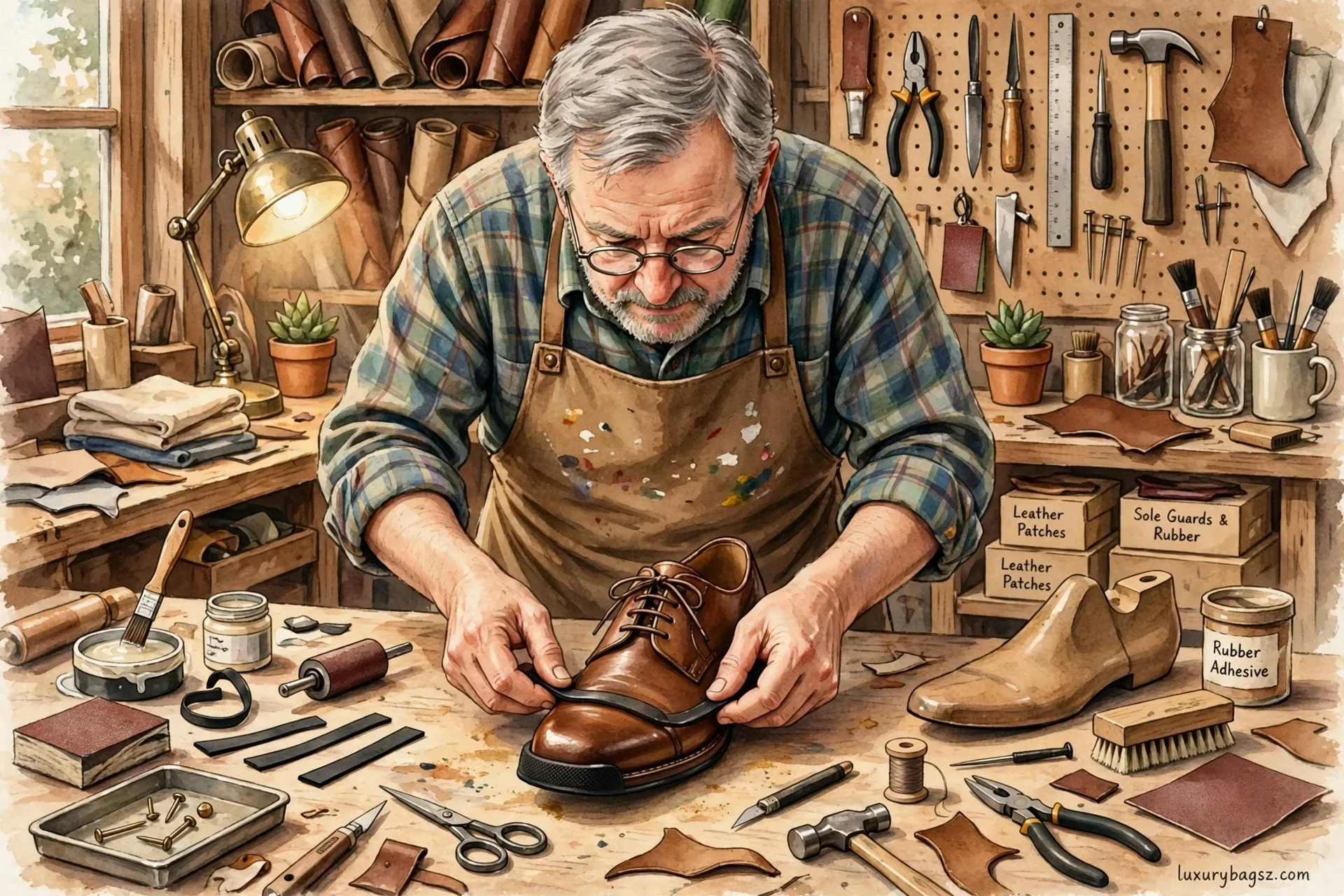
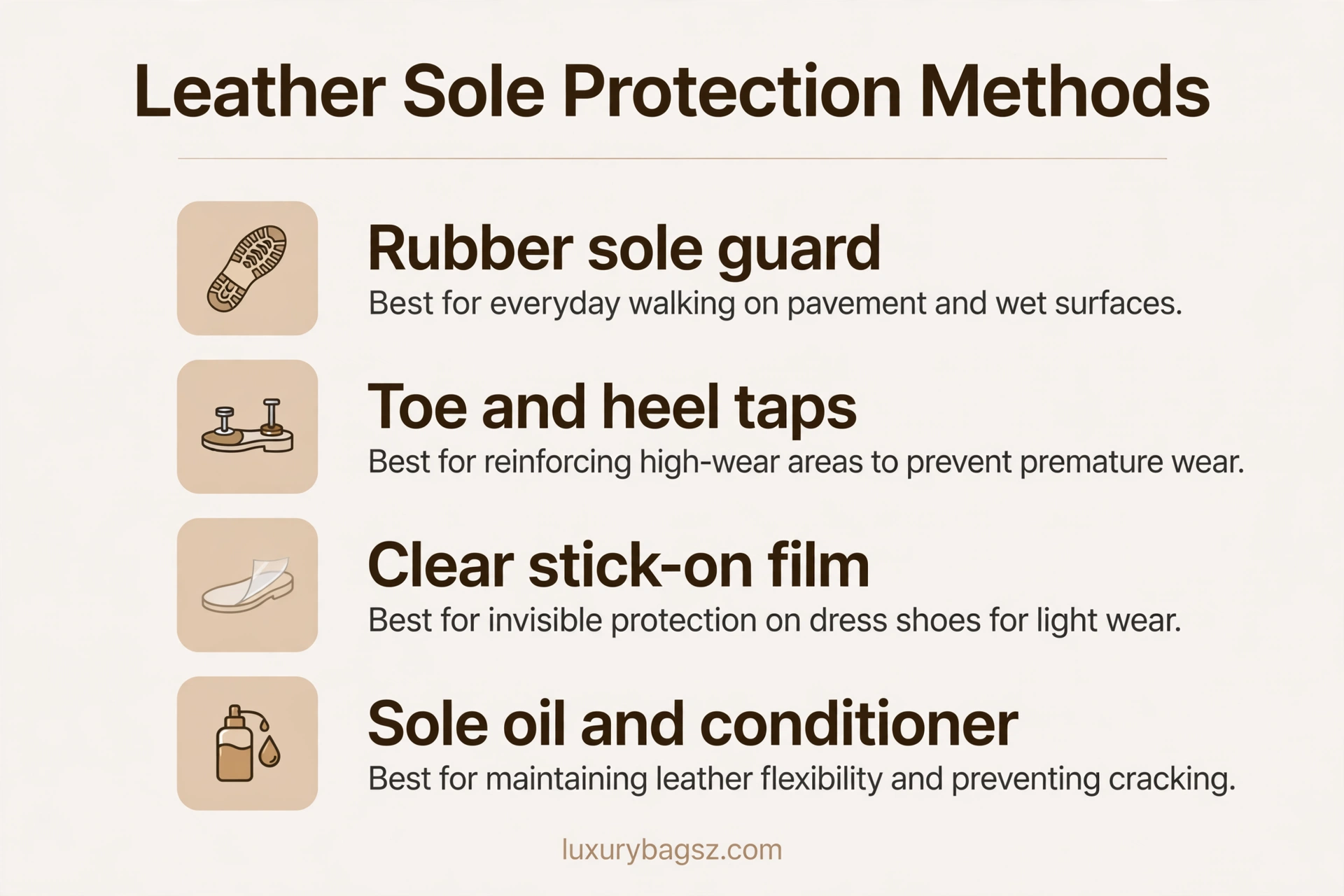
The best way to protect leather soles is to add a thin rubber sole guard before the leather wears down. A cobbler sands the forefoot lightly, glues on the rubber layer, and trims it flush with the sole edge. From then on, you wear through cheap, replaceable rubber instead of the leather itself.
That one job covers most of the risk, but it is not the only option. Toe and heel taps reinforce the highest-wear spots, clear films preserve a showroom look for light wear, and sole oil keeps leather supple. Timing matters most: guards work on sound soles, not on leather already worn through.
Key Takeaways
- A rubber sole guard is the most effective leather sole protection for everyday wear.
- Fit guards while the sole is still sound; they cannot rescue leather worn through.
- Toe and heel taps reinforce the spots that wear fastest, and pair well with a guard.
- Clear films suit light wear but peel and need frequent replacement.
- Sole oil keeps leather supple and slows cracking, but does not stop abrasion.
- Sources disagree on timing: some say guard before first wear, others after a few wears.
Why Leather Soles Wear Out Fast
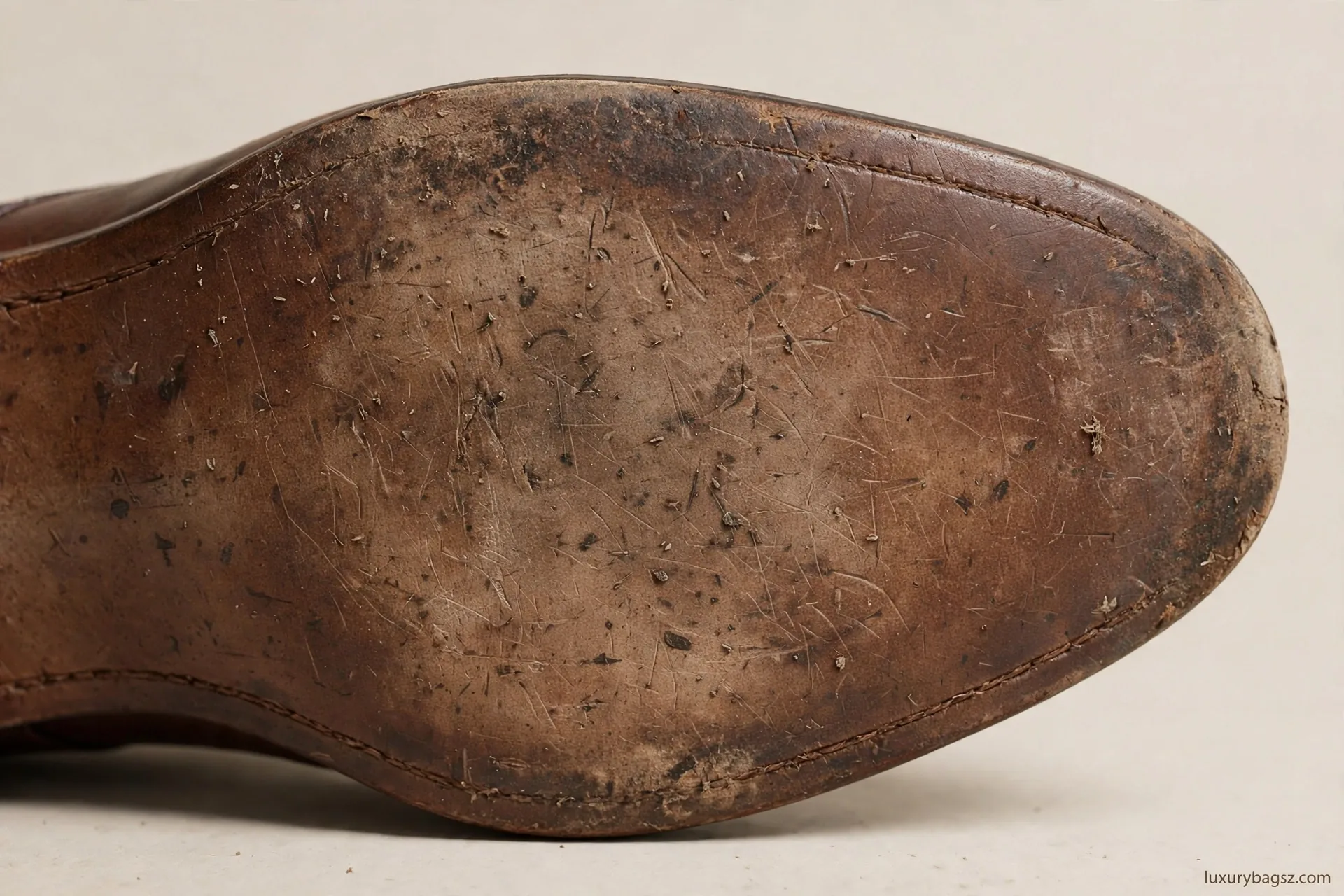
Leather soles look elegant, but soft leather meets hard ground at every step. The forefoot and heel grind against pavement, concrete, and stone, and an unprotected sole can wear noticeably within months of regular wear.
Water makes it worse, since wet leather softens and wears faster. Wear is uneven: most people push off through the ball of the foot, so the forefoot thins first. Once leather thins past the stitching, a guard job turns into a bigger repair.
Sole Guards: The Main Protection
A sole guard is a thin rubber layer, usually 1 to 2 millimetres thick, glued over the forefoot. It runs from the toe to about the arch, where most wear happens, while the heel is left alone since heel pieces are easy to replace.
Fitting is straightforward for a skilled cobbler: the leather is sanded lightly so the glue bonds, the rubber is cemented on, and the edges are trimmed flush.
For everyday dress shoes, fit matters more than brand: flush edges and no lifting corners. Guards also add grip on marble, polished wood, and wet pavement.
Other Ways to Protect Leather Soles
Toe and heel taps are small metal, plastic, or hard-rubber plates fixed where wear hits hardest. Metal lasts longest but can click on hard floors, so plastic suits indoor wear better.
Clear stick-on films are thin transparent sheets pressed onto the sole. They keep the original look untouched and go on at home, but they peel and wear through quickly, and can lift a lacquered finish if left on too long.
Sole oil, such as mink or neatsfoot oil, keeps leather supple and slows cracking, but does not stop abrasion, so it partners guards rather than replacing them.

When to Add Sole Guards
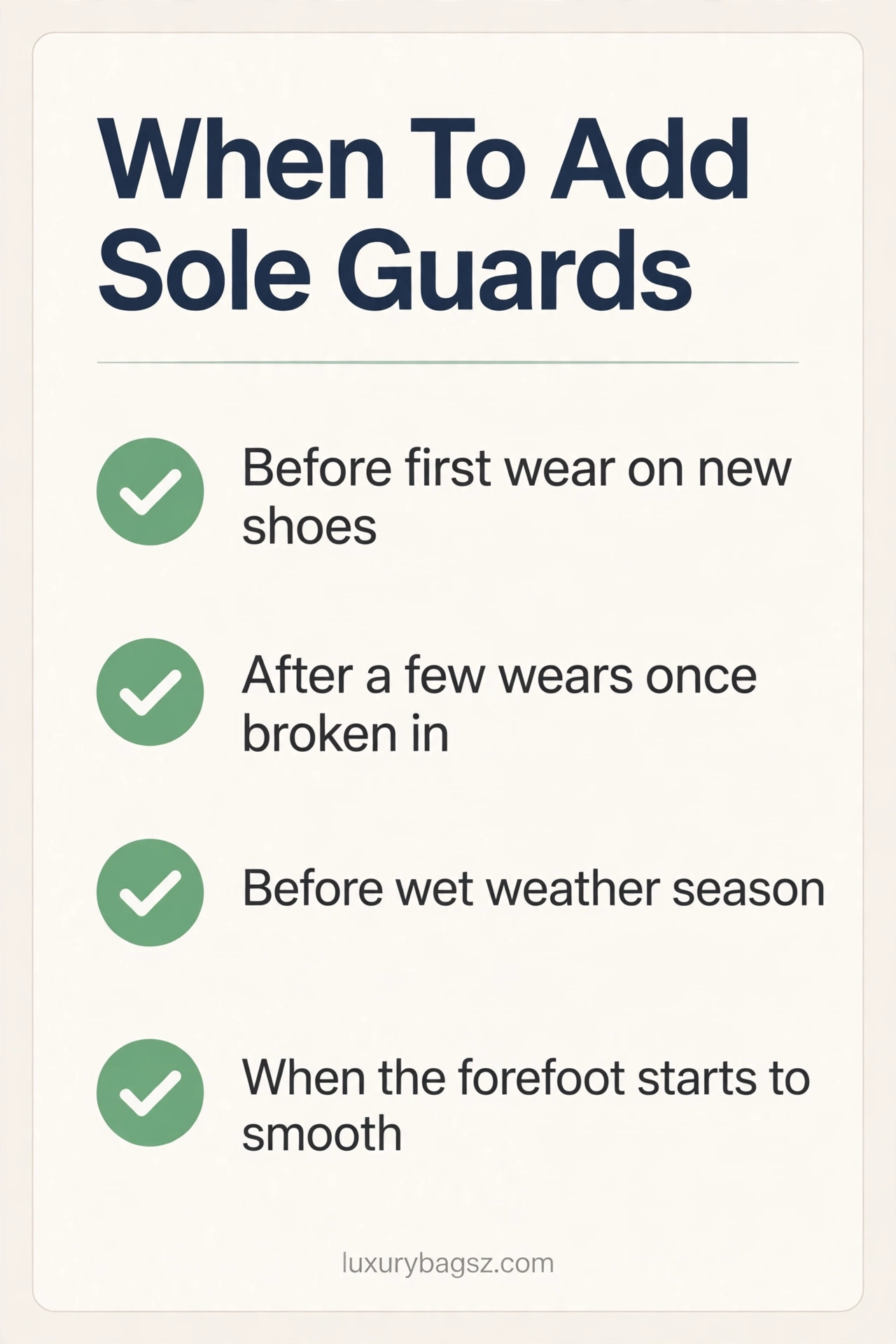
Sources disagree on the perfect moment, and both sides have a point. Some makers say guard before first wear, so no leather is ever lost. Others recommend waiting four or five wears, so the shoe breaks in first.
For most wearers, either window works; the real mistake is waiting too long. Once the forefoot is smooth, a guard still bonds fine, but thin or holed leather means a resole instead.
What to Ask Your Cobbler
Start by asking whether the sole is still sound enough for a guard. A good cobbler will check thickness, stitching, and waist, and will tell you honestly if a resole is the better spend. If the sole is too thin, a guard glued over it will not hold.
Next, ask about fitting details: will the guard sit flush with the sole edge, and will the cobbler match the rubber colour to the sole? For boots, our resole guide for boots explains when a rebuild beats guarding.
Which Shoes Suit Sole Guards
Leather-soled dress shoes are the classic candidates: oxfords, derbies, brogues, and monk straps. Guards keep their sleek profile while removing the slipperiness of new leather soles indoors. Loafers benefit too.
Check how loafers should fit first, since a guard will not fix a poor fit. Welted dress boots worn in town are strong candidates as well. Exceptions are dancing shoes, which need leather's glide, and shoes that already have rubber soles. On bespoke shoes, a guard protects an irreplaceable sole and delays a rebuild.
Pros, Cons and Replacement Costs
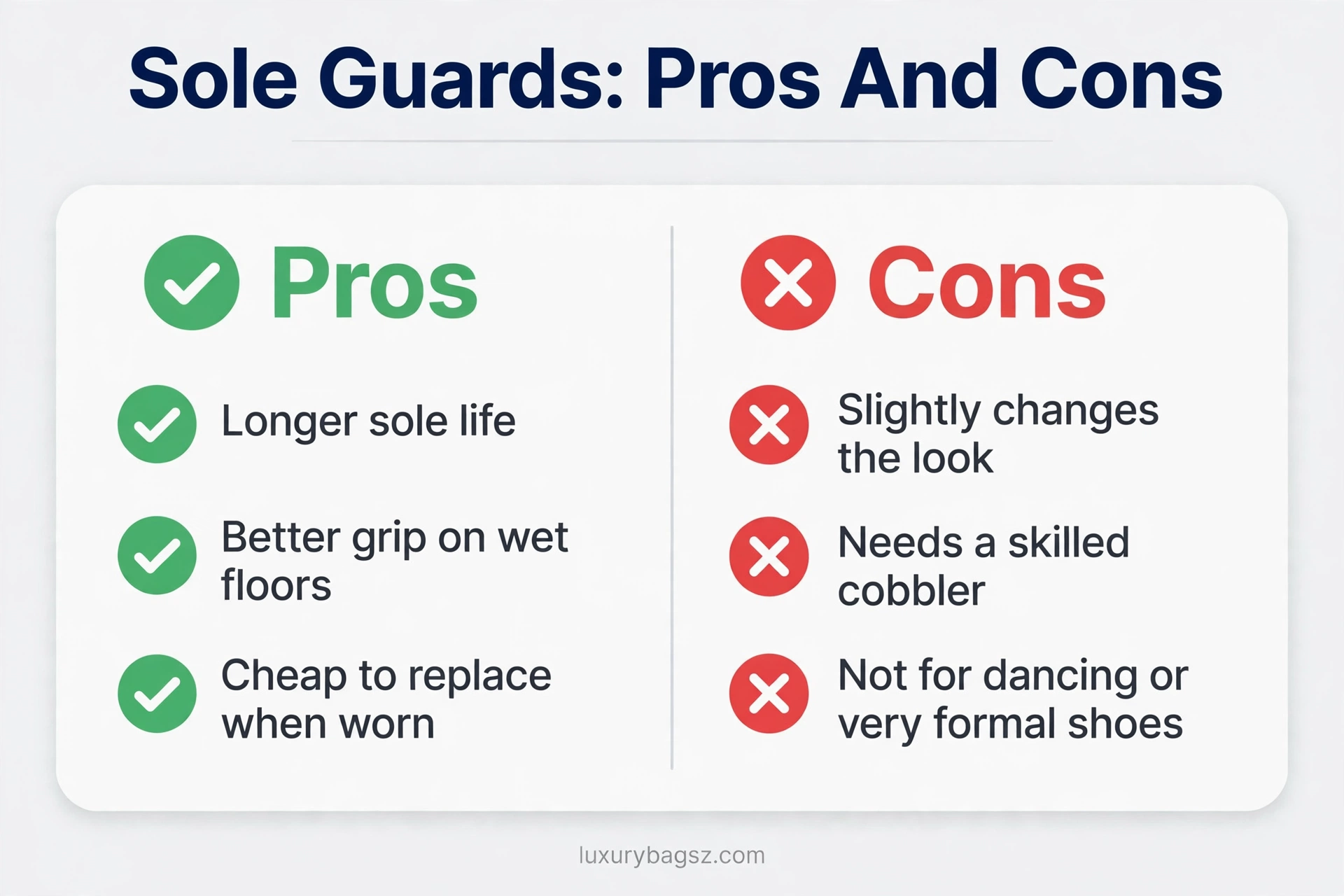
The pros are clear: longer sole life, better grip, and a far cheaper replacement cycle. When a guard wears thin, the cobbler peels it off and glues on a new one, leaving the original leather untouched, at far less than a full resole.
The cons are real but modest: a guard slightly changes the look from below, the shoe can feel a fraction stiffer at first, and a poor fitting leaves a ridge or lifting edge. As a guide, a cobbler-fitted half sole runs around £20 to £35, while a full re-stitch can start around €120.
Fitting Guards Yourself vs Paying the Cobbler
Self-adhesive and glue-on sole protectors are sold for home fitting, and on an everyday pair the job is genuinely manageable: clean the sole, position the protector, trim the excess after the cement cures, and leave the shoes overnight before wearing them.
The savings are real but so are the failure modes. A guard fitted over a dirty or glossy sole peels at the edges within weeks, trapped grit works under the rubber, and a misjudged trim can cut into the sole edge itself. The shoes you practise on should not be the shoes you care most about.
Send the good pairs to the cobbler. The sanding, cementing and flush trimming described earlier in this guide is quick for a professional and hard to imitate with kitchen scissors, and the fitting cost is small next to a resole.
A reasonable household rule: DIY on mid-range shoes you wear hard, cobbler on anything bespoke, lacquered, stitched with a closed channel, or simply expensive to replace.
Wet Weather: The Leather Sole Protocol
Leather soles absorb water, and wet leather wears several times faster than dry leather because the fibres soften. The single most protective habit costs nothing: do not wear leather soles in heavy rain if another pair can take the day.
When they do get soaked, dry them slowly and completely. Stuff the shoes with newspaper or insert trees, lay them on their sides so the soles get air, and keep them away from radiators and direct heat, which crack wet leather as it dries.
Rest wet soles at least a full day, and ideally two, before wearing them again. Leather that goes back into service still damp in the middle wears in a weekend what dry leather wears in a season.
Salt is the winter addition: wipe slush and salt residue off soles the same evening, because salt draws moisture in and dries leather out at the same time. A sole guard earns double value in winter, since the rubber takes the salt instead of the leather.
Reading Your Soles: The Monthly Inspection
Turn the shoes over once a month and read the wear like a gauge. A guard worn thin at the ball of the foot is doing its job and announcing its replacement; a guard lifting at an edge needs re-gluing before grit gets underneath.
Wear concentrated on one side of the forefoot or heel tells you about your gait, and severe one-sided wear is worth showing the cobbler, because taps and guards can be placed to correct the pattern rather than just cover it.
Press the leather at the waist and ball with a thumb. Sound sole leather feels firm; a spongy or papery feel means the leather itself is exhausted or moisture-damaged, and that is resole territory, not another guard.
Check the stitching while you are there. Guard rubber protects the stitches on the forefoot, which is part of their value; exposed, fraying stitches at the waist mean the shoe needs professional eyes soon.
Painted and Lacquered Soles: The Special Case
Signature painted soles, the famous red among them, change the calculation. The colour is a surface lacquer over leather, and it will wear from the contact areas with use no matter what you do; brands state this plainly and treat it as normal.
A colour-matched rubber guard preserves the look from a normal viewing distance while stopping the wear at the forefoot, and many owners of red-soled heels take exactly this route. Our Christian Louboutin shoe care guide covers the house-specific advice in full.
The purist alternative is clear film for occasional wear, accepting its short life, or simply wearing the shoes as designed and letting the contact patches fade as honest use. All three positions are defensible; the decision is about whether the sole is, to you, a finish to protect or a signature to display.
What is not defensible is a cheap sanding job by an inexperienced repairer on a lacquered sole. If you guard a painted pair, choose the cobbler by their experience with exactly that work.
Rotation: The Protection Nobody Sells
Alternating pairs is the oldest sole protection of all. Leather that rests a day between wears dries fully, holds its shape around trees, and commonly lasts far longer than the same shoe worn daily.
Two pairs worn in rotation typically outlast two pairs worn one after the other to destruction, because moisture and compression, not just abrasion, are what exhaust sole leather.
This is also the honest context for every product in this guide: guards, taps and oils extend the life of soles that are rested and inspected. No treatment rescues a single pair worn wet, daily and unchecked.
Frequently Asked Questions
What is the best way to protect leather soles?
A thin rubber sole guard fitted by a cobbler. It takes the abrasion instead of the leather, adds grip, and is cheap to replace when worn thin.
Should I add sole guards before wearing new shoes?
Yes, or after just a few wears — either way, while the sole is still sound.
Can sole guards be added to worn shoes?
Yes, as long as the leather is still thick enough and the stitching is intact. If worn through, expect a resole instead.
Do sole guards change how shoes feel?
Slightly, at first — thicker rubber feels a little stiffer, but 1-millimetre guards are least noticeable.
Are sole guards the same as Topy soles?
Essentially yes — Topy is a French brand whose name is now used generically for any rubber half sole.
Do I need toe taps as well as a sole guard?
Not always, but they help if you drag your toes or wear the tip fastest. A toe tap protects the tip a half guard sometimes leaves exposed.
Can I fit sole guards myself at home?
Films fit at home, but a glued guard needs sanding, cementing, and trimming, so use a cobbler for shoes you care about.
How long does a sole guard last?
It depends on your mileage and surfaces. Check the ball of the foot regularly, and replace the guard once the rubber wears smooth or thin.
Do sole guards work on boots and loafers?
Yes, they work the same way on leather-soled boots and loafers as on dress shoes. For heavy work boots, a thicker rubber sole is usually better.
Will a sole guard stop my leather soles getting wet?
It helps, since rubber shields the forefoot from wet ground, but it does not waterproof the whole shoe — combine guards with sole oil.
Final Verdict
Protecting leather soles is a small job with an outsized payoff. A guard fitted early takes the wear, adds grip, and turns an expensive resole into a cheap swap.
Do it early, use a cobbler who fits guards flush, and replace the rubber when it wears thin. Your leather soles will last years longer.






