

How to Polish Cordovan Shoes: Brushing, Cream, and a Lasting Shine
The Cordovan Shine, Without the Guesswork
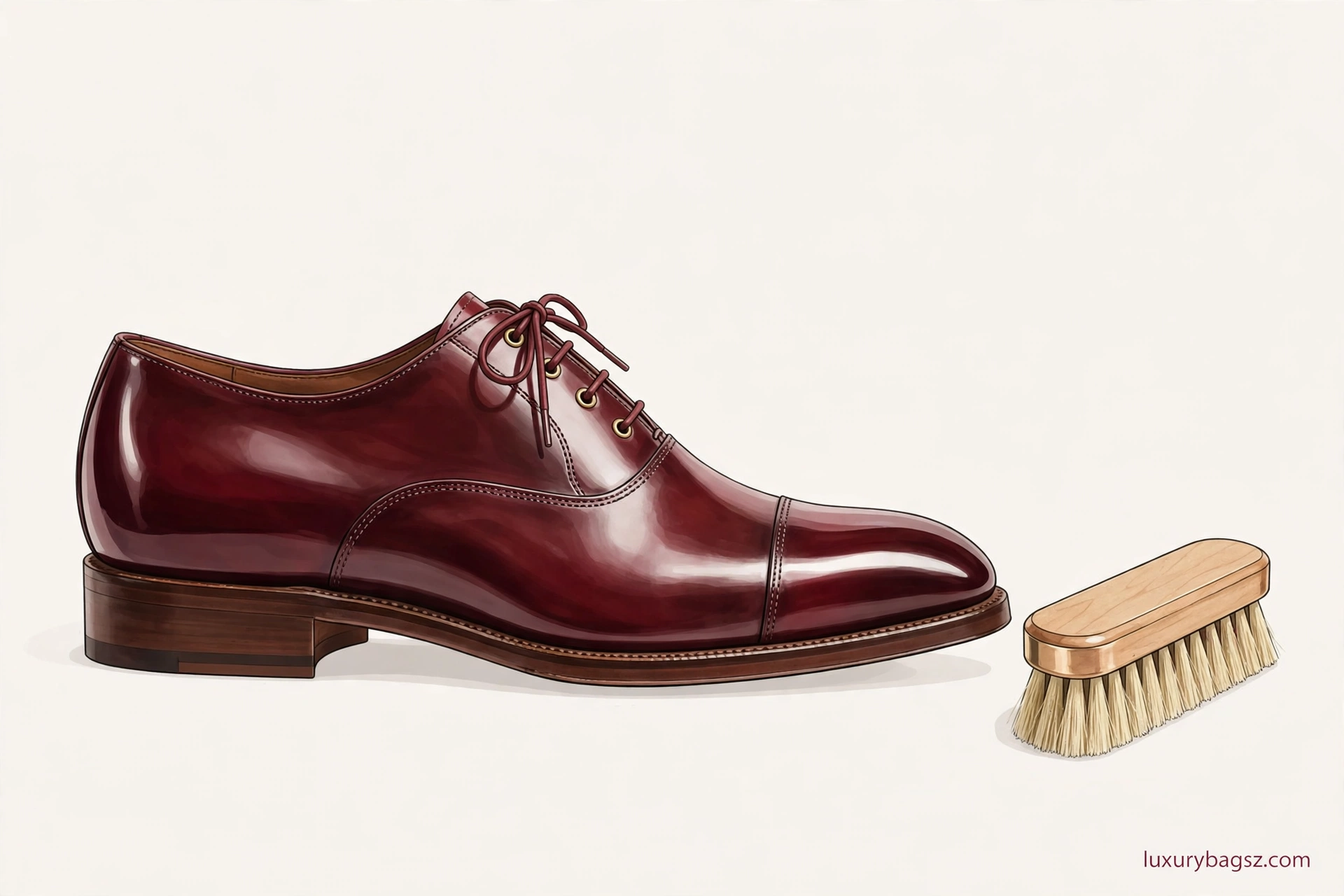
Polish cordovan shoes by brushing first, then using a little cordovan cream, and saving wax for the toe and heel only. Most of the shine comes from brushing, not from piling on polish. Cordovan is already rich in oils, so less product gives a deeper, clearer glow.
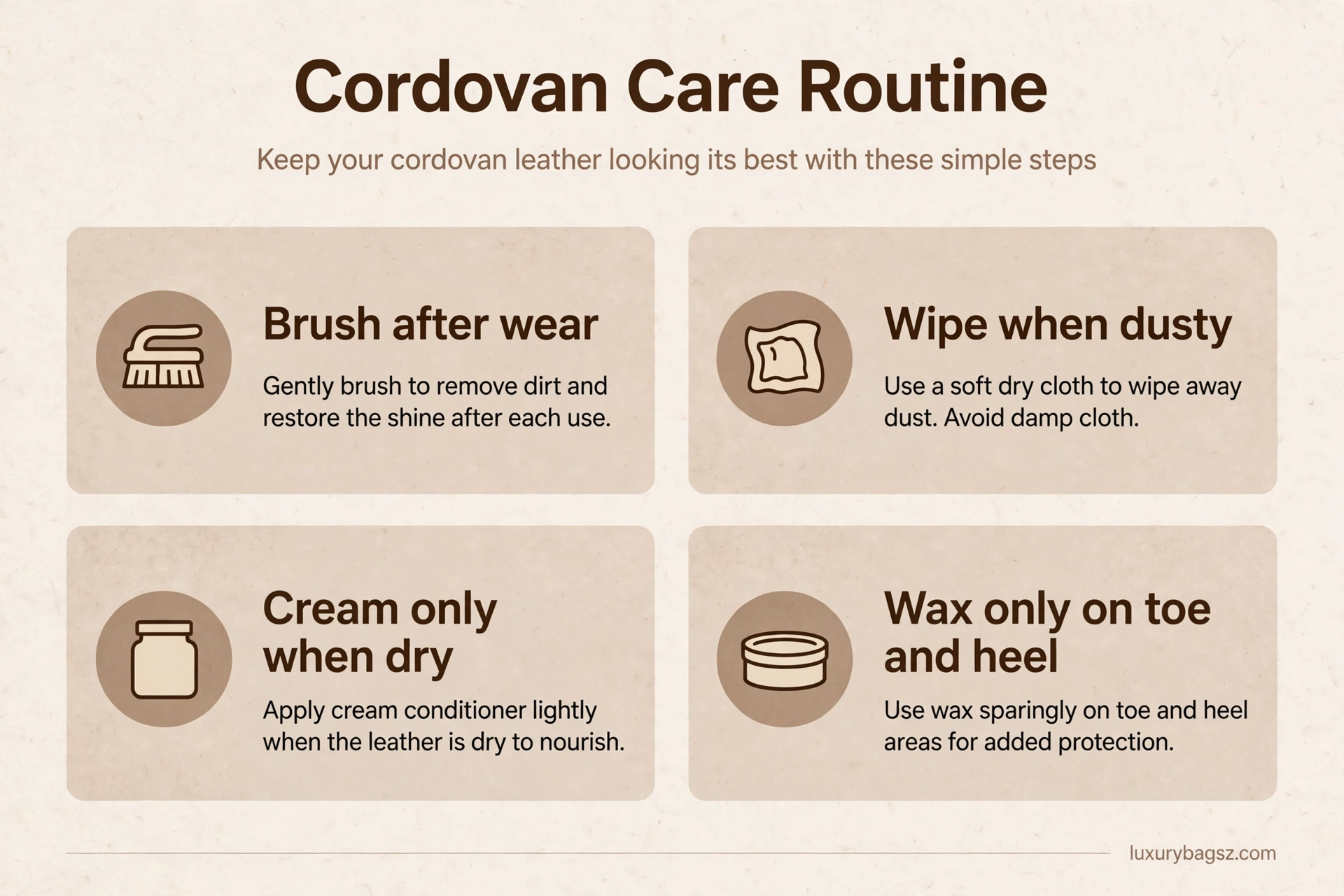
That is the whole method in one line. Brush after wear, wipe off dust, and let cream soak in before you buff. Use wax only where the leather does not bend, so it cannot crack when you walk. Done this way, a pair keeps its depth for years.
Sources disagree on one point, and you should know it. Some guides use paste wax regularly, while others say to use it seldom and sparingly. This guide sides with sparingly, because heavy wax hides the depth that makes cordovan special.
Key Takeaways
- Brushing is the main polishing step for cordovan, not heavy wax.
- Use cordovan cream thinly, and only when the leather feels dry.
- Keep hard wax on the toe cap and heel counter, never on the flexing vamp.
- Let cream soak in well before brushing it off.
- Never dry cordovan fast with heat, and never use saddle soap on it.
- A deer bone or spoon back can smooth rolls, pressed gently along the roll.
Why Cordovan Polishes Differently
Cordovan is dense and packed with oils from tanning, so it behaves unlike calfskin. Calf dries out and needs regular feeding, while cordovan mostly needs its own oils brought back to the surface. Brushing warms those oils and spreads them, which is why a dull pair can glow with no polish at all.
It also rolls instead of creasing sharply, so the vamp flexes in soft waves. Thick wax on those waves cracks and flakes as you walk, leaving white lines. That is why the rules for calf, where wax goes all over, do not transfer to cordovan.
If you want the background on rolls, creases, and cost, our shell cordovan myths guide covers it. This guide sticks to polishing.
The Kit You Actually Need
You need a soft horsehair brush, a clean cotton cloth, cordovan cream in a matching colour, and a hard wax for the toe and heel. A deer bone, or the back of a spoon, is useful for smoothing rolls. Shoe trees help the shoes hold shape while you work.
Keep one brush for cordovan only, so stray polish colours never transfer. A softer brush for final buffing is a nice extra, but not essential.
Our Saphir Renovateur guide explains that cleaner-conditioner in detail. It suits cordovan as a light first step, but it is not a substitute for cordovan cream.
Brush First, Then Smooth the Rolls
Start every polish by brushing the whole shoe with the horsehair brush. Brush back and forth, firmly enough to lift dust, and spend extra time on the welt and edges where dust collects. Never rub polish into a dusty shoe, or you will grind grit into the surface.
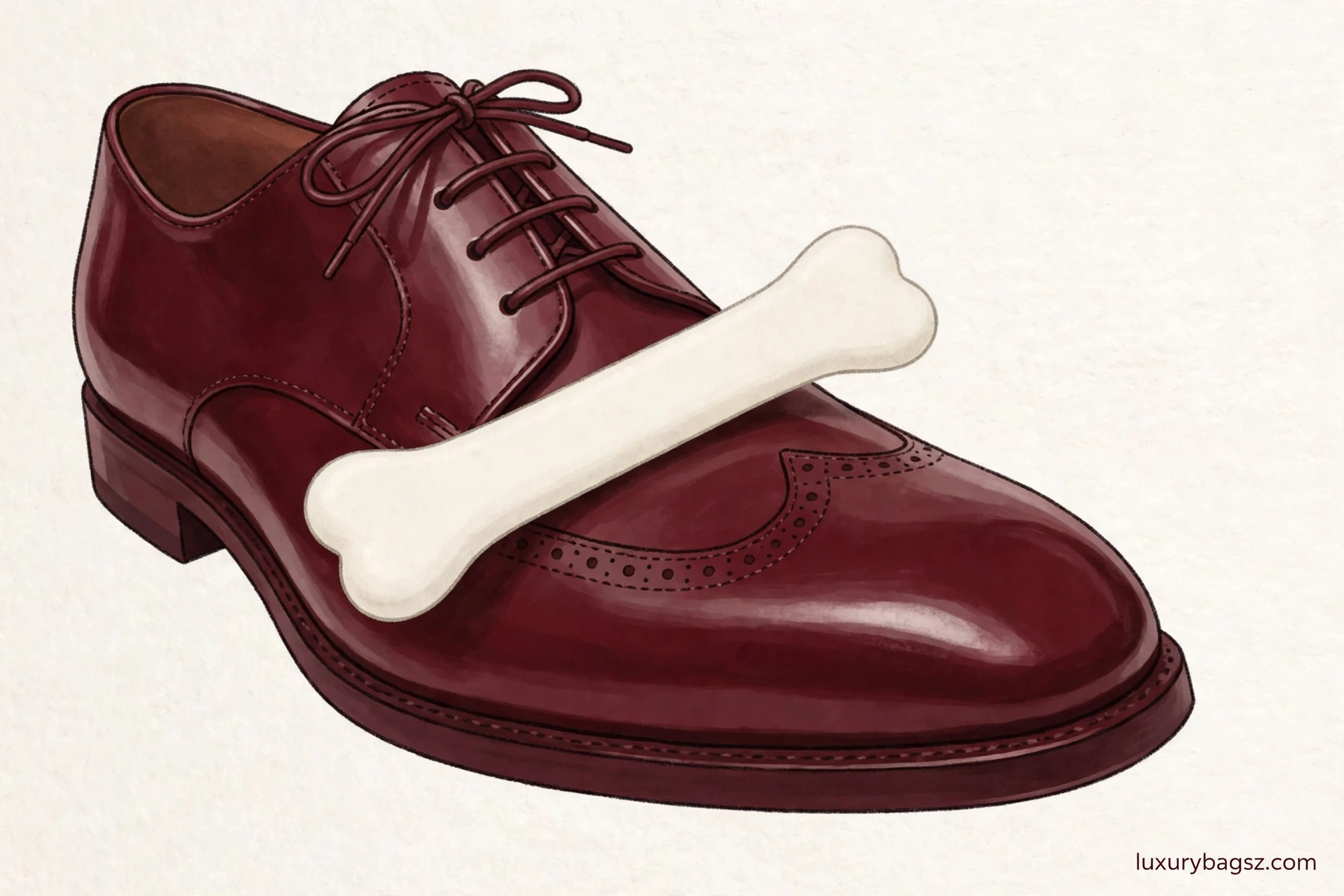
Next, smooth any rolls on the vamp with the deer bone. Roll it gently along each roll, with moderate pressure, and never press hard across the leather. A spoon back works the same way, and both tools simply press the fibres flat again.
Wipe dust with a dry cloth, using a barely damp cloth only for stuck marks. Let the shoes dry fully at room temperature before any cream goes on.
Cream: Thin, Patient, and Only When Needed
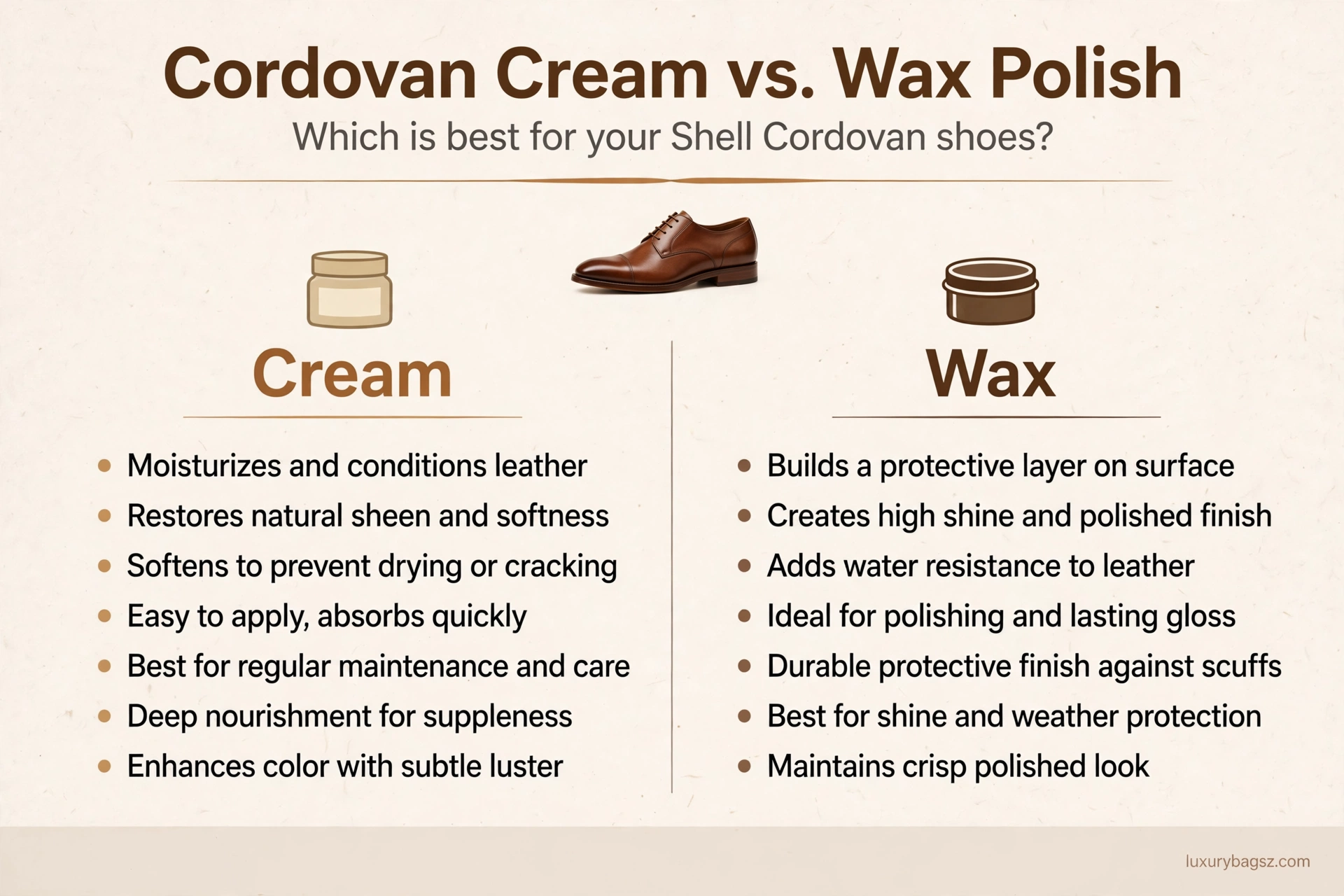
Apply cordovan cream with a cloth wrapped round two fingers, in small circles. Use a tiny amount, and add more only when the cloth stops spreading. Cover the whole shoe thinly, and give the vamp a little extra attention where rolls sit.
Then wait. Some makers say to leave cream at least ten minutes, while one detailed guide allows at least thirty minutes for dense cordovan to absorb. Longer is safer here, so give it time.
Brush the cream off with the horsehair brush once it has dried. The colour should look even, and the surface should feel smooth, not tacky. If it still feels sticky, you used too much, so brush longer and use less next time.
Wax: Toe and Heel Only, in Thin Layers
Wax is for shine, not for feeding the leather, so keep it where the shoe does not bend. Work a tiny amount of hard wax onto the toe cap and heel counter in small circles. Let each thin layer dry, then buff lightly before adding the next.
For a higher gloss, dampen the cloth very slightly and repeat with even thinner layers. A mirror gloss product, which holds more hard wax, builds faster than a standard wax. Finish with a soft cloth, buffing gently, and stop while the shine looks deep rather than cloudy.
Never take wax up onto the vamp. The first steps you take will crack it, and the white residue is hard to remove without stripping back. If wax does stray onto the vamp, brush it out promptly and leave that area to cream alone.

Restoring a Dull or Scuffed Pair
Most scuffs on cordovan vanish with brushing alone, because the oils move and the surface re-forms. Brush vigorously for several minutes before reaching for any product, and check the scuff in good light. You will often find there is nothing left to fix.
For a deeper mark, apply a thin layer of matching cordovan cream, let it soak in, and brush again. Repeat once if needed, but resist the urge to layer on wax to hide the mark. Wax over a scuff just seals a dull patch under a shiny skin.
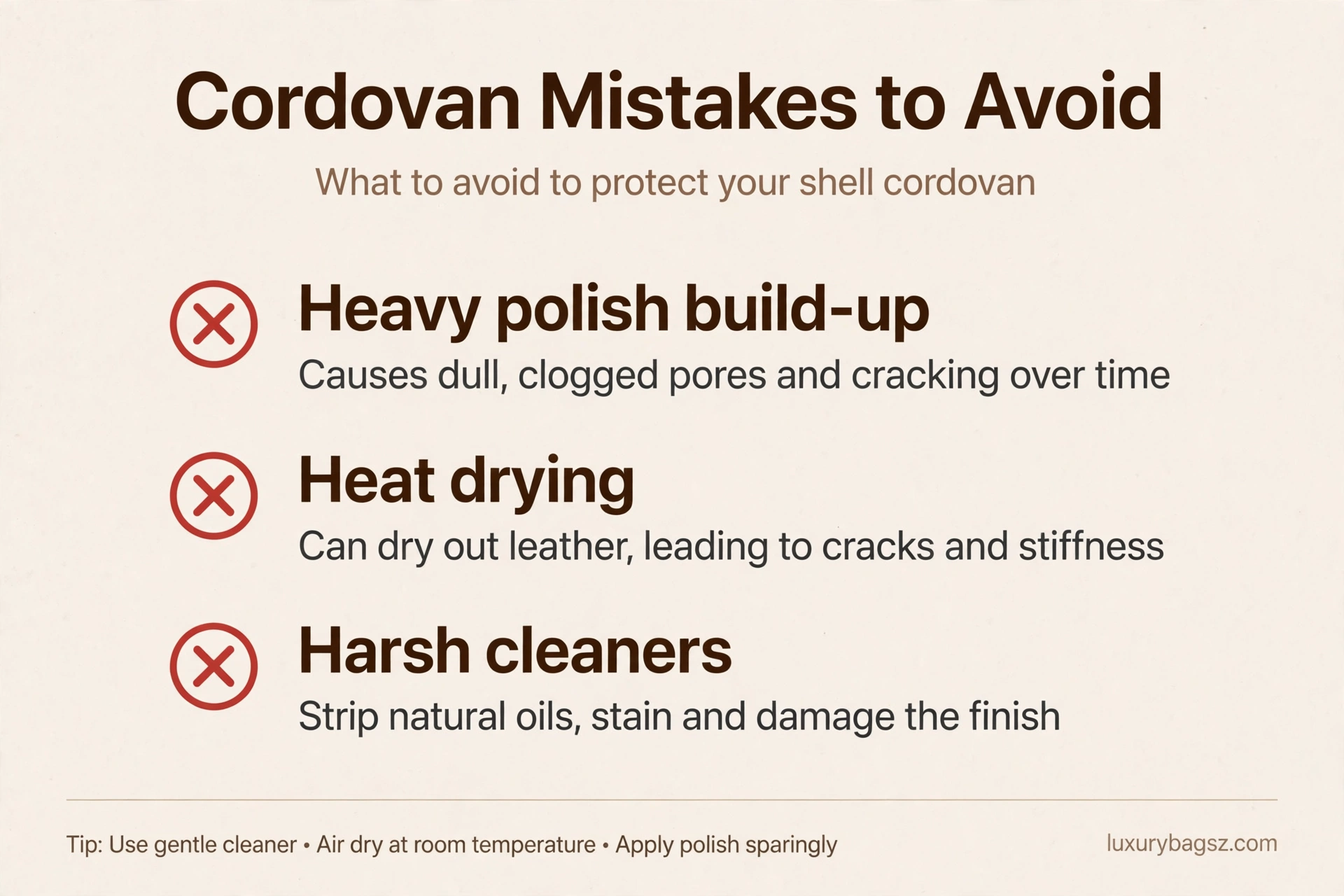
Dry wet shoes slowly, stuffed with paper, away from radiators. Our guide to caring for leather boots stresses the same slow-drying rule. Fast heat stiffens cordovan and can leave marks brushing cannot lift.
What to Avoid
Never use saddle soap, spray shines, or cleaners with petroleum solvents on cordovan. Saddle soap strips the oils that give cordovan its glow, and sprays can leave a film that dulls the surface. One classic maker warning also rules out liquid polishes, which are too harsh for this leather.
Avoid neutral wax polish on coloured cordovan, since it can leave a whitish film where the leather bends. Use a matching colour instead, or a cordovan cream with no added tint if you only want nourishment. Test any new product on the inside heel first.
Do not buff so hard that friction heats the leather strongly. Cordovan is vegetable-tanned, and strong heat from hard buffing can damage the surface. Steady, moderate brushing beats frantic rubbing every time.
How Often, and How to Store
Brush after every few wears, and cream only when the leather feels dry. One tannery guide puts cream at roughly every ten to fifteen wears, which is a sound rhythm for most owners. If you wear the pair daily, you may need cream sooner; if rarely, far less often.
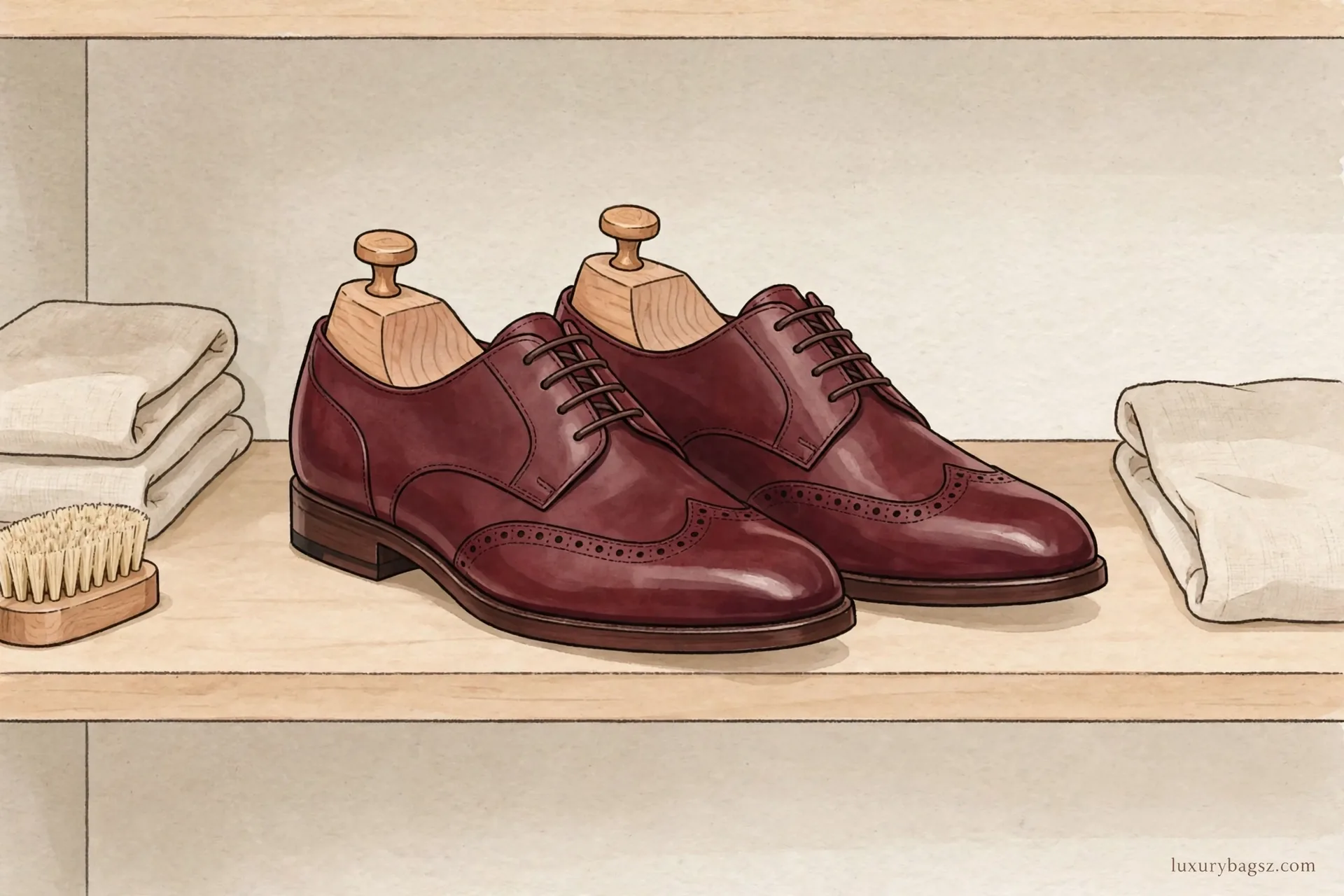
Store shoes on trees, in a cool, dry place, away from direct sun. Trees hold the shape and help rolls settle flatter between wears. Let them air for a day after wear before boxing them.
For the wider routine that covers bags and shoes together, see our guide to caring for leather bags and shoes. The same little-and-often habit sits at the heart of both.
Frequently Asked Questions
How often should I polish cordovan shoes?
Brush after every few wears, and cream roughly every ten to fifteen wears, or whenever the leather feels dry. Most pairs need brushing far more often than they need cream or wax.
Can I use normal calf shoe cream on cordovan?
It is best not to. Calf creams often carry solvents that cordovan does not need, and they can dull its depth. Use a cream made for cordovan, in a matching colour.
Why does my cordovan look dull after polishing?
The usual cause is too much product. Heavy cream or wax sits on the surface and hides the glow. Brush longer, use less next time, and let cream soak in fully before buffing.
Should I wax the whole cordovan shoe?
No. Keep hard wax on the toe cap and heel counter only. Wax on the flexing vamp cracks when you walk and leaves white residue in the rolls.
How do I remove scuffs from cordovan?
Brush vigorously first, since most scuffs disappear that way. For a stubborn mark, add a thin layer of matching cordovan cream, let it soak in, then brush again.
Can I use a deer bone on cordovan?
Yes, gently. Roll it along each roll on the vamp with moderate pressure to press the fibres flat. Never press hard across the leather, and a spoon back works as a substitute.
What should I never use on shell cordovan?
Avoid saddle soap, spray shines, liquid polishes, and cleaners with petroleum solvents. They strip oils or leave films that dull the surface and are hard to remove.
How long should cordovan cream dry before brushing?
Allow at least ten minutes, and longer for a very dry pair. One detailed guide allows at least thirty minutes, and leaving cream overnight is safe if the leather is thirsty.
Can cordovan get a mirror shine?
Yes, on the toe and heel, using thin layers of hard wax or mirror gloss with a slightly damp cloth. Expect a high shine rather than the glass finish calf can reach, and keep it off the vamp.
How do I dry wet cordovan shoes?
Stuff them with paper and let them dry slowly at room temperature. Never use a radiator or a hair dryer, since fast heat stiffens the leather and can set water marks.
Final Verdict
Cordovan rewards restraint. Brush well, cream thinly and rarely, wax only the toe and heel, and leave harsh products in the cupboard. Follow that order and the shine builds slowly, stays clear, and deepens with wear instead of flaking away.






