

Diane von Furstenberg at 40 Years: The Wrap Dress That Changed How Women Dress
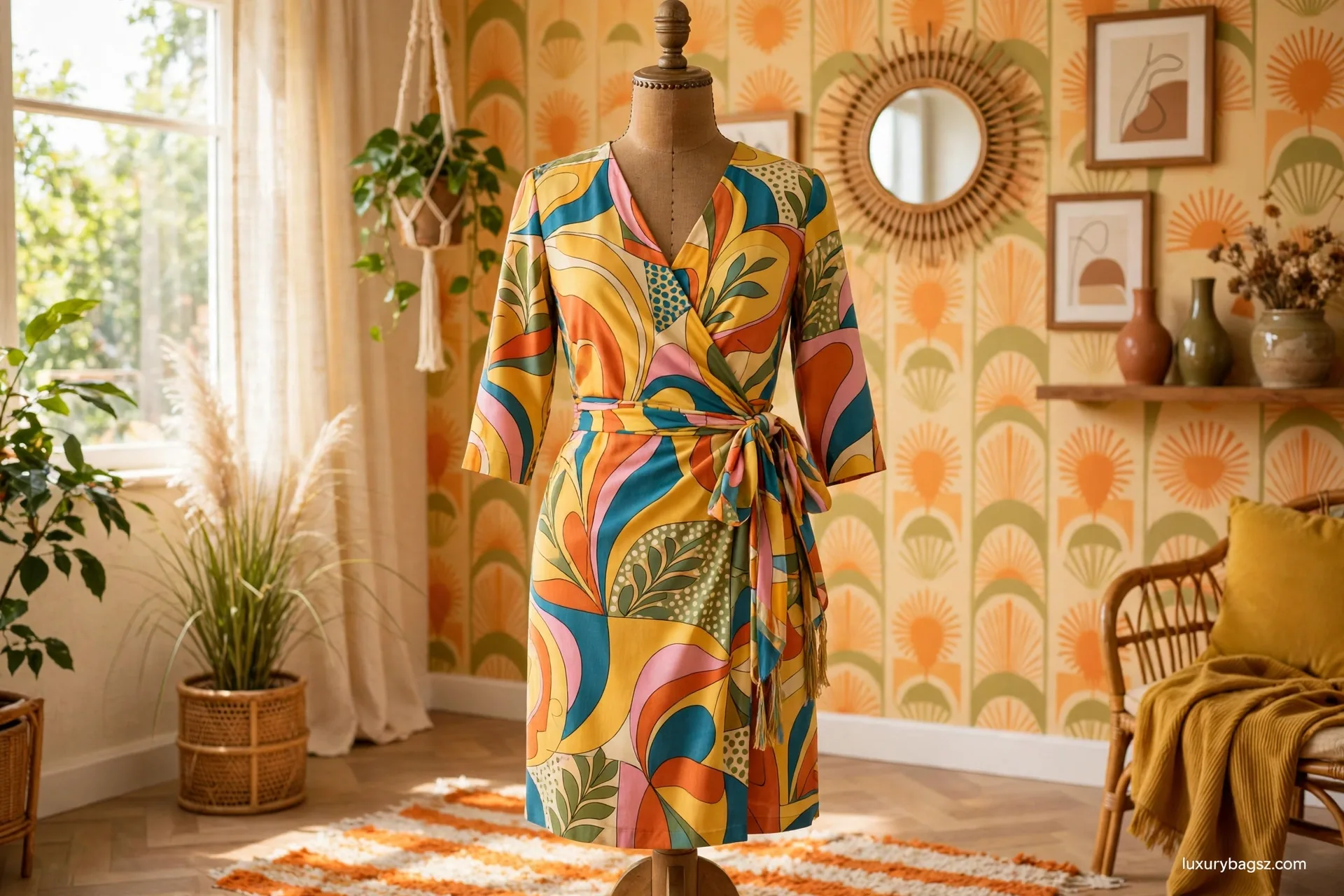
The Dress That Turned 40 and Never Left
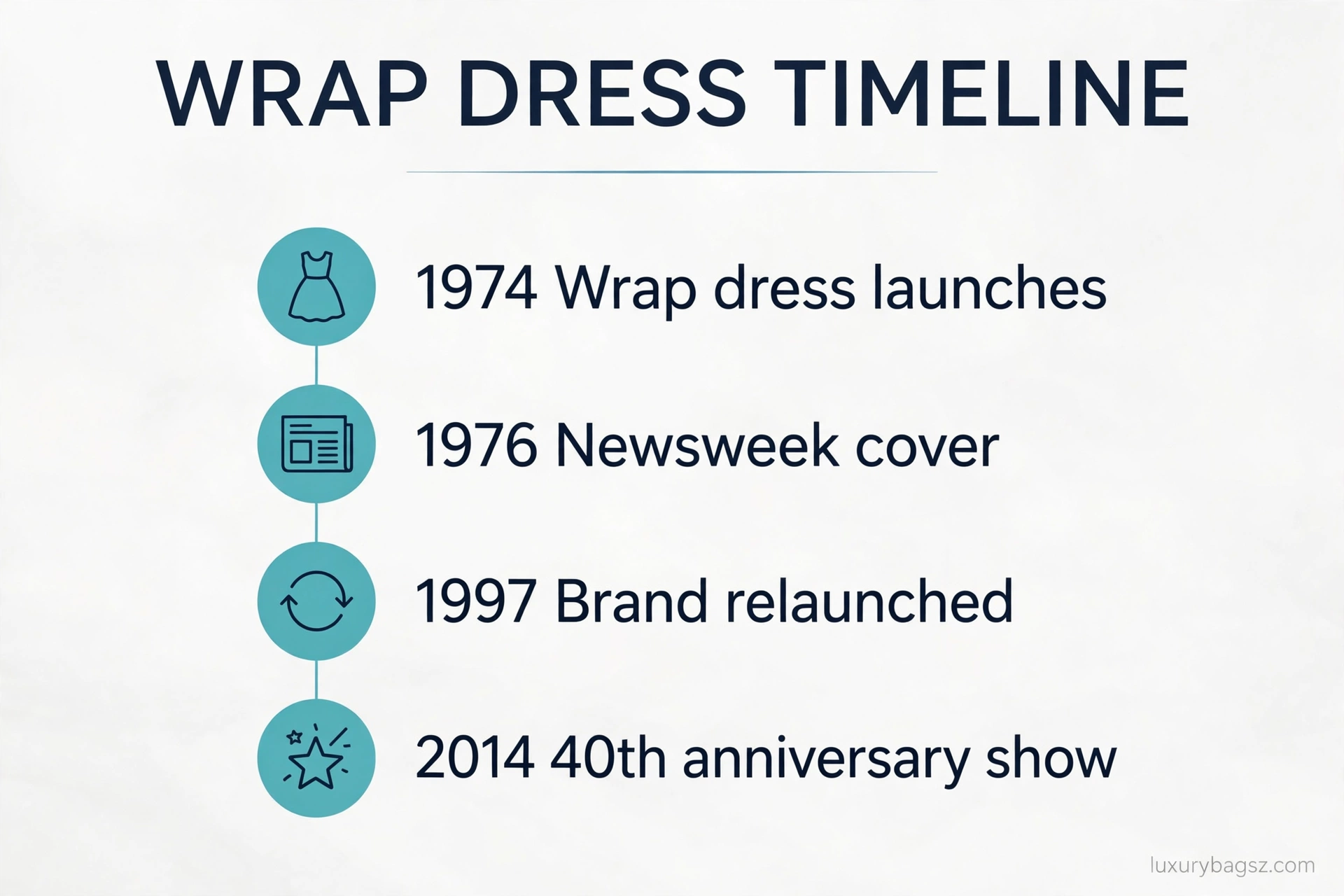
The direct answer is simple: Diane von Furstenberg's wrap dress reached its 40th anniversary in 2014, forty years after its 1974 launch, and it earned that celebration because it solved a real problem.
Working women in the 1970s needed something smart enough for the office, comfortable enough for a long day, and easy enough to wear without a wardrobe team. The jersey wrap dress did all three, and it did so at a price many women could actually reach.
This guide covers how the dress began, what the 40th anniversary exhibition showed, how to judge fit, and how to buy one now, whether new or vintage. It also flags where sources disagree, so you can shop with clear eyes rather than nostalgia alone.
Key Takeaways
- The wrap dress launched in 1974, growing out of a wrap top and matching skirt.
- By 1976, millions had sold, and Diane von Furstenberg appeared on the cover of Newsweek.
- The 40th anniversary was marked in early 2014 by the "Journey of a Dress" exhibition in Los Angeles.
- Fit lives or dies on the tie position, the neckline depth, and the weight of the jersey.
- Vintage wraps reward careful checks of elastic, seams, and print fading before you pay.
How a Wrap Top Became a Dress
Diane von Furstenberg was working and learning in Italy in her early twenties, including time at a printing and knitting mill in Como. There she learned how printed jersey behaved: how it stretched, how it draped, and how colour sat on the cloth.
Back in New York, she made simple printed jersey pieces with a pattern-maker, starting with T-shirts and shirt dresses. Then came a little wrap top in the style of the sweaters dancers wore over leotards, plus a skirt to match.
The turning point, by her own account, came when she saw Julie Nixon Eisenhower on television wearing that wrap top and skirt together. Seen as one outfit, the pairing looked like a single dress. Diane joined the two ideas, and the wrap dress was born.
That origin matters for buyers today. The dress was never meant to be stiff or formal. It was designed to move, to tie at the waist, and to flatter without tailoring. Any version that fights your body has drifted from that idea.
Why 1974 Was the Right Moment
The early 1970s were a hinge moment for women's wardrobes. More women were entering offices and public life, yet much of what was sold to them was either a rigid suit or something too fragile for daily wear.
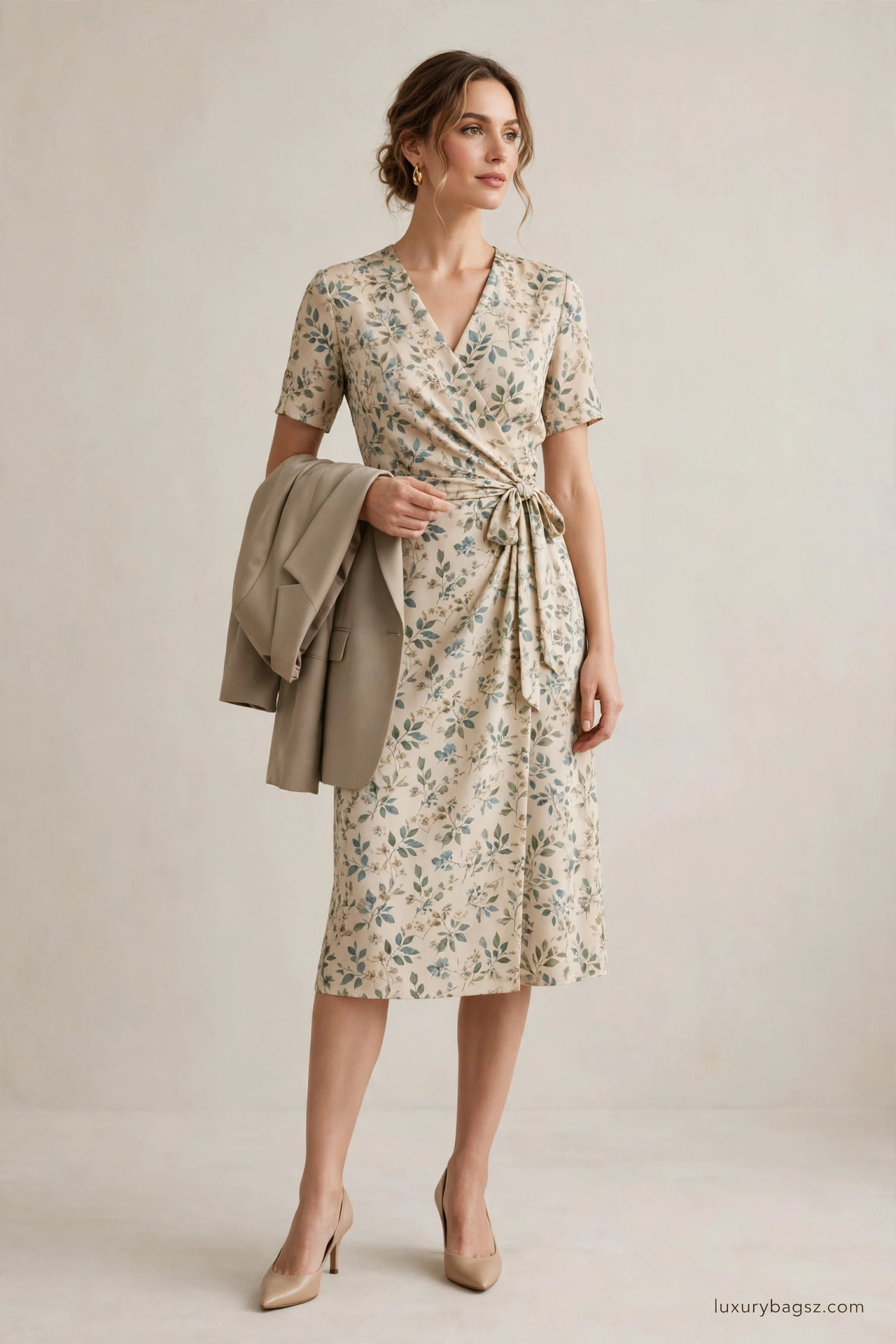
The wrap dress offered a third way. Its V neckline, defined waist, and knee-length skirt read as polished, while jersey kept it comfortable. It could be dressed up with heels or down with flats, and it packed without the fuss of a tailored suit.
Sales figures vary by source, which is worth noting plainly. Some accounts report over a million dresses sold by 1976, while others cite five million across 1974 to 1976. The gap probably reflects different counting windows and wholesale versus retail figures, but every account agrees on the scale: this was a mass success, not a niche hit.
If you love the era's silhouettes more broadly, our guide to 1970s dresses explains how to judge shape, length, and fabric before buying.
The 40th Anniversary and "Journey of a Dress"
In early 2014, the Los Angeles County Museum of Art hosted "Journey of a Dress", an exhibition marking the wrap dress's 40th birthday. More than 150 silhouettes from the archives were shown, tracing how one shape carried four decades of prints, lengths, and moods.
The show was not just a nostalgia exercise. It made a design argument: a good silhouette survives because it adapts. The wrap appeared in bold geometrics, animal prints, florals, and quiet solids, and each version still read instantly as a wrap dress.
Diane herself has said she once took the dress for granted, and that the exhibition was the first time she truly honoured it. That honesty is part of the story. The dress made her famous, then she spent years proving she was more than one design, only to return to it with fresh respect.

Anatomy of a Good Wrap Dress
A wrap dress has four working parts: the bodice that crosses over, the tie that anchors it, the skirt that falls from the waist, and the jersey that holds it all together. When one part is wrong, the whole dress feels wrong.
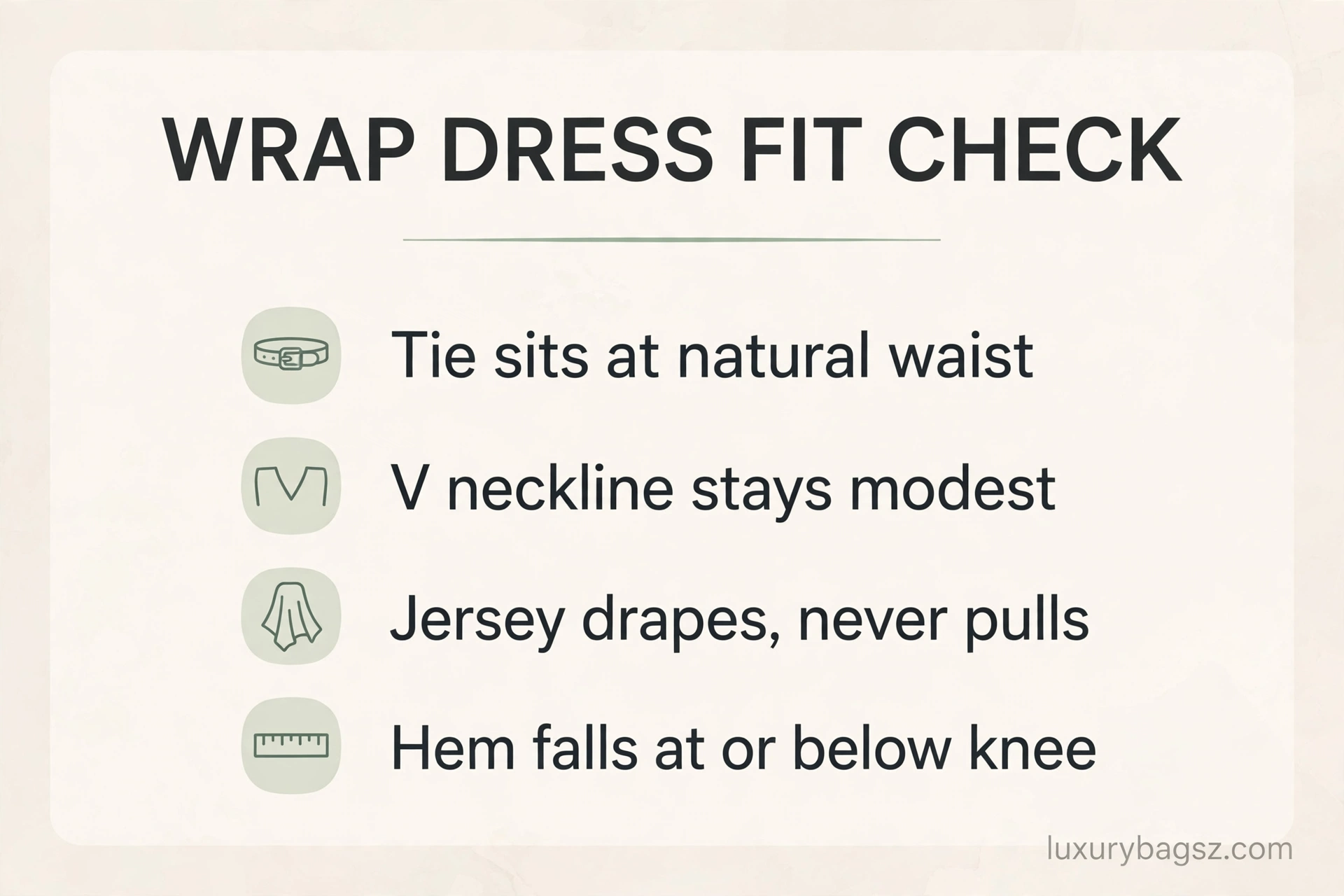
Start with the tie. It should sit at your natural waist, not ride up to the ribs or slip to the hips. A tie that creeps during the day usually means the bodice is cut too long or the jersey is too light.
Next, check the neckline. A wrap V should stay modest when you move, bend, and sit. If you need a safety pin to feel safe, the wrap is cut too deep for you, and no amount of styling will fix it.
Finally, feel the jersey. Good wrap jersey has weight and recovery: it drapes smoothly and springs back when stretched. Thin, shiny jersey tends to cling, show every line, and lose shape after washing.
Prints Through the Decades
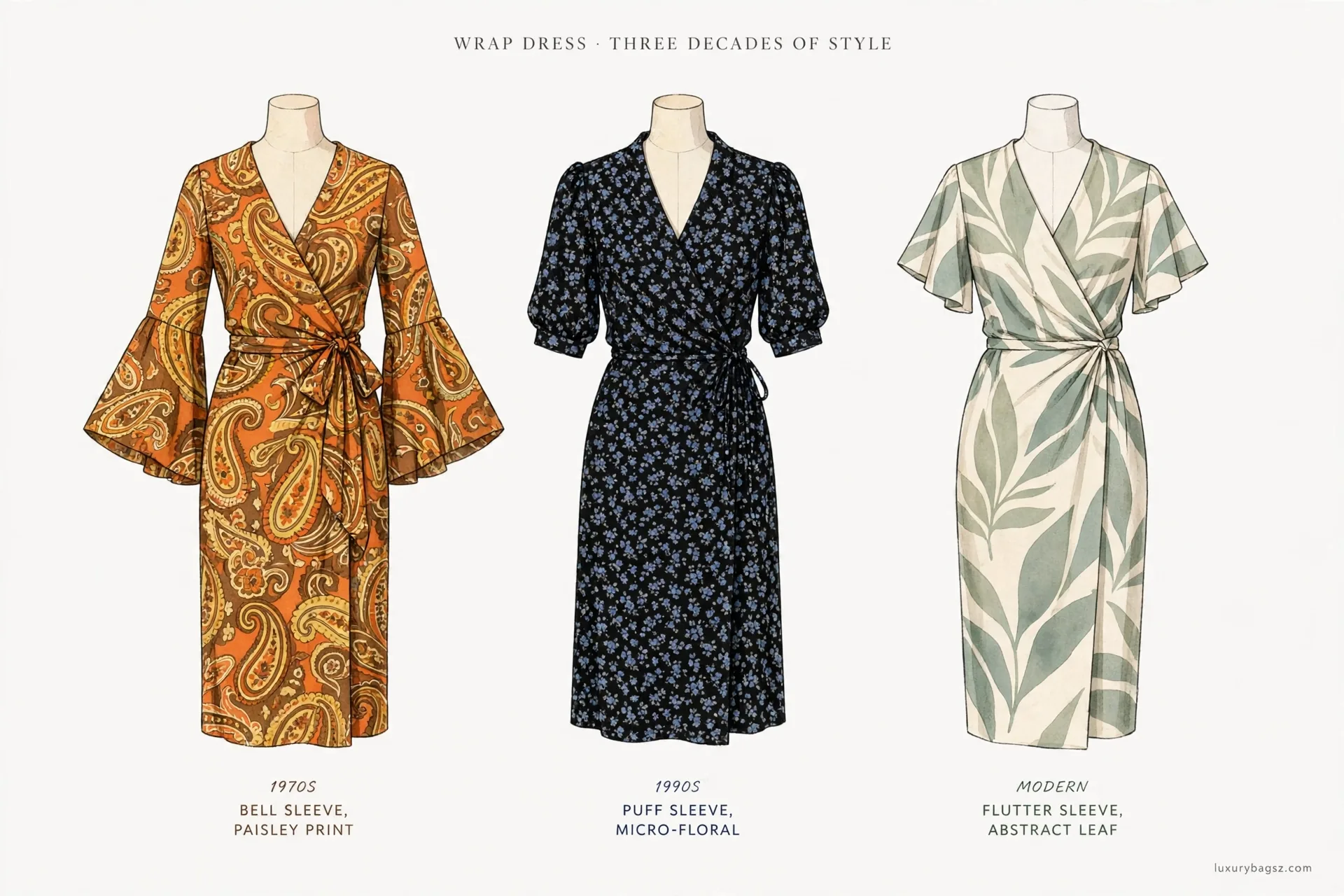
Prints are the wrap dress's memory. The chain-link print, bold geometrics, and animal patterns from the 1970s still read as classic DVF, while later decades added softer florals, abstract painterly prints, and minimal solids.
When choosing a print, think about scale before colour. Large, bold prints suit taller frames and statement occasions, while smaller prints are easier to wear daily and pair with other pieces. A print that fights your skin tone will sit unworn, however famous the pattern.
Also consider placement. Because the wrap crosses at the waist, a strong motif can land awkwardly at the crossover point. Hold the dress up, cross it as you would wear it, and check where the eye lands.
For a quieter wardrobe, a solid wrap in black, navy, or deep red is often the hardest-working choice. It carries the same flattering shape without asking the print to do all the talking.
Buying New or Vintage: What to Check
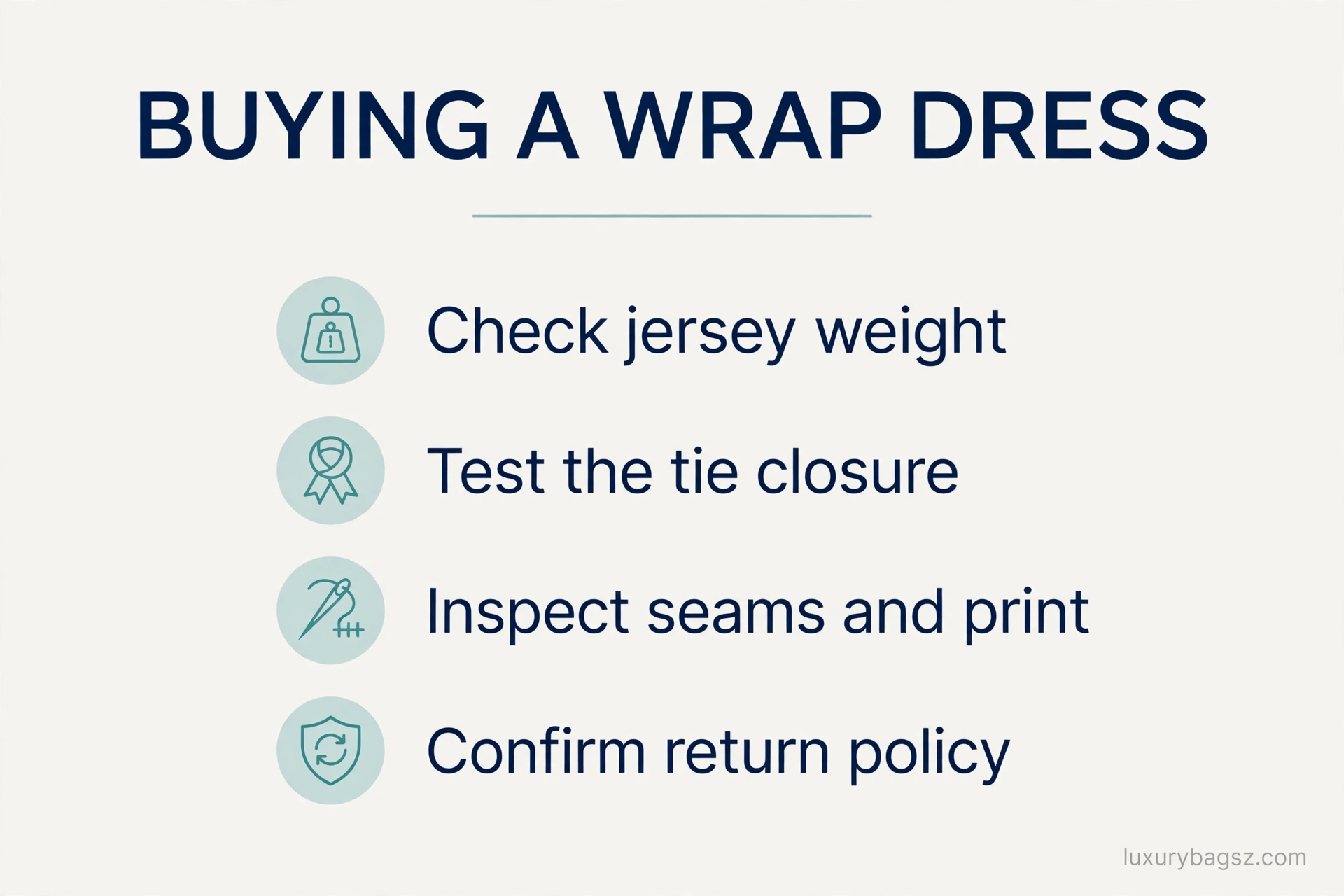
New wrap dresses are the safer bet if you want a reliable fit and a returns policy. Check the fabric mix on the label, try the tie closure twice, and sit down in the dress before deciding. A dress that only works standing up will disappoint you.
Vintage wraps can be wonderful, especially 1970s and 1990s pieces with strong prints, but they need sharper checks. Inspect the seams at the waist and underarm, look for thinning at the tie ends, and check whether any elastic has perished. Faded prints and stretched necklines are the most common faults.
Always ask a seller for flat measurements rather than trusting a size label, since sizing has shifted over fifty years. Compare the waist, bust, and length with a dress you already own and love.
Our broader advice on buying vintage clothing online covers seller checks, photos to request, and returns questions that apply just as well here.
Styling and Caring for a Wrap Dress
For work, pair a printed wrap with a simple blazer and closed-toe shoes, keeping jewellery quiet so the print leads. For evening, drop the blazer, add a heel, and let the neckline carry a pendant or earrings, not both.
A wrap dress also pairs naturally with a structured everyday bag, since the soft jersey benefits from something with shape. If you are building a longer-lasting wardrobe, our guide to vintage designer bags explains which classics hold value and which are best bought for love alone.
Care is simple but matters. Wash jersey on a cool, gentle cycle, or hand wash vintage pieces, and dry flat rather than tumble drying. Never iron directly over a printed area at high heat, and store the dress on a hanger with the tie loosely fastened so it keeps its shape.
One last styling note: a wrap dress is not a one-occasion piece. If yours only leaves the wardrobe for parties, try it with trainers and a denim jacket at the weekend. You may find, as generations of wearers have, that it earns its keep far more often than expected. A simple satin dress can fill the dressier gap instead, leaving the wrap for everyday wear.
Frequently Asked Questions
1. When did the wrap dress turn 40? In 2014, forty years after its 1974 launch, marked by the "Journey of a Dress" exhibition in Los Angeles.
2. Who designed the wrap dress? Diane von Furstenberg, who developed it from a wrap top and matching skirt in the early 1970s.
3. What made the wrap dress so popular? It was comfortable, affordable, easy to wear, and flattering, arriving just as more women needed practical workwear.
4. How many wrap dresses sold in the 1970s? Sources disagree: some say over a million by 1976, others five million across 1974 to 1976. Both point to huge sales.
5. What is the best length for a wrap dress? Knee length or just below suits most wearers, since it balances the V neckline and keeps the shape office-appropriate.
6. Does a wrap dress suit every body shape? It suits many shapes because the tie defines the waist, but neckline depth and jersey weight still need checking on your own frame.
7. How do I stop a wrap dress gaping? Choose a shallower V, check the tie sits at your natural waist, and consider a camisole or a small stitch at the crossover.
8. Are vintage wrap dresses worth buying? Yes, if seams, ties, elastic, and print condition check out, and flat measurements match a dress you already wear well.
9. How should I wash a jersey wrap dress? Cool gentle wash or hand wash, dry flat, and avoid high heat on printed areas to protect colour and shape.
10. What should I wear with a wrap dress to work? A simple blazer, closed-toe shoes, and quiet jewellery keep the print as the focus without looking overdressed.
Final Verdict: A 40-Year-Old Idea That Still Works
The wrap dress lasted forty years and beyond because it respected the woman wearing it. It asked for no special underwear, no tailoring appointment, and no occasion to justify it.
Buy for fit first, print second, and condition third, and you will own the same idea that filled the Los Angeles exhibition in 2014: a simple dress, well cut, that lets its wearer get on with her day.






