How to Choose the Perfect Wedding Dress: A Step-by-Step Guide
Choosing Your Dress, Answered Up Front
Choose the perfect wedding dress by working in this order: set a total budget that includes alterations and accessories, fix the venue and date, learn which silhouettes suit your body and the setting, then try dresses in a small number of planned appointments. Most brides should start nine to twelve months before the wedding, order six to nine months out, and expect two to three fittings. The right dress is the one that fits the budget, the venue and your body — in that order of honesty. Everything below unpacks each step, with the mistakes that cost brides money and calm when the order is reversed.
A calm bride is a prepared one: nearly every dress panic story — the wrong size ordered, the budget blown on the gown alone, the fitting a week before the day — is a sequencing failure, not bad luck.
Key Takeaways
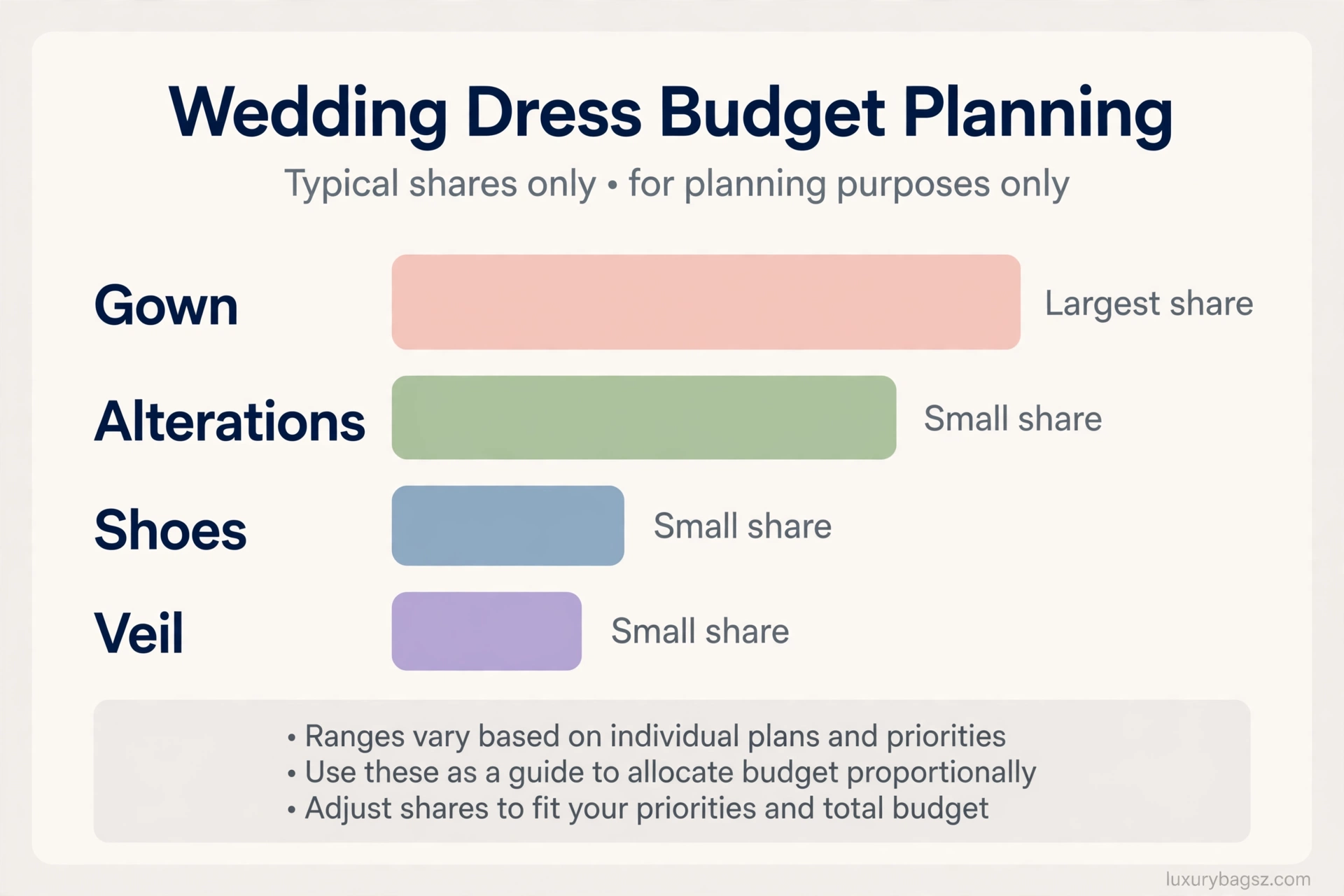
- Budget means the whole outfit: gown, alterations, veil, shoes, underwear and cleaning.
- Venue and season rule out more dresses than taste does — start there.
- Learn the five silhouettes before appointments so trying on has a purpose.
- Order nine to twelve months out if you can; rush options exist but cost more.
- Take a maximum of two honest companions to appointments, not an audience.
- The dress must let you sit, eat, hug and dance. Test all four at the final fitting.
Start With the Whole Budget, Not the Dress Price
Decide the total outfit figure first and write it down. Alterations alone commonly add hundreds, and veils, shoes, undergarments and post-wedding cleaning add hundreds more. A dress bought at the very top of the budget leaves nothing for fitting it properly. A slightly cheaper dress, perfectly altered, looks more expensive on the day. Share the real number with the boutique. Good consultants work to it and hide nothing relevant above it; vague budgets waste everyone's appointments. If the total is tight, decide now what gives: simpler fabric, a shorter veil, or the pre-owned route covered in the timelines section. Every famous dress problem starts as a budget surprise.
Body shape advice helps most when held lightly. Pear, apple and hourglass guides predict what usually works, but posture, confidence and how you like to move outrank every chart ever printed.
Try the extremes on purpose at the first boutique: one huge ball gown, one stark sheath. Your reaction to the two poles teaches more in ten minutes than an hour of similar A-lines in the middle.
Learn the Silhouettes Before You Try Anything
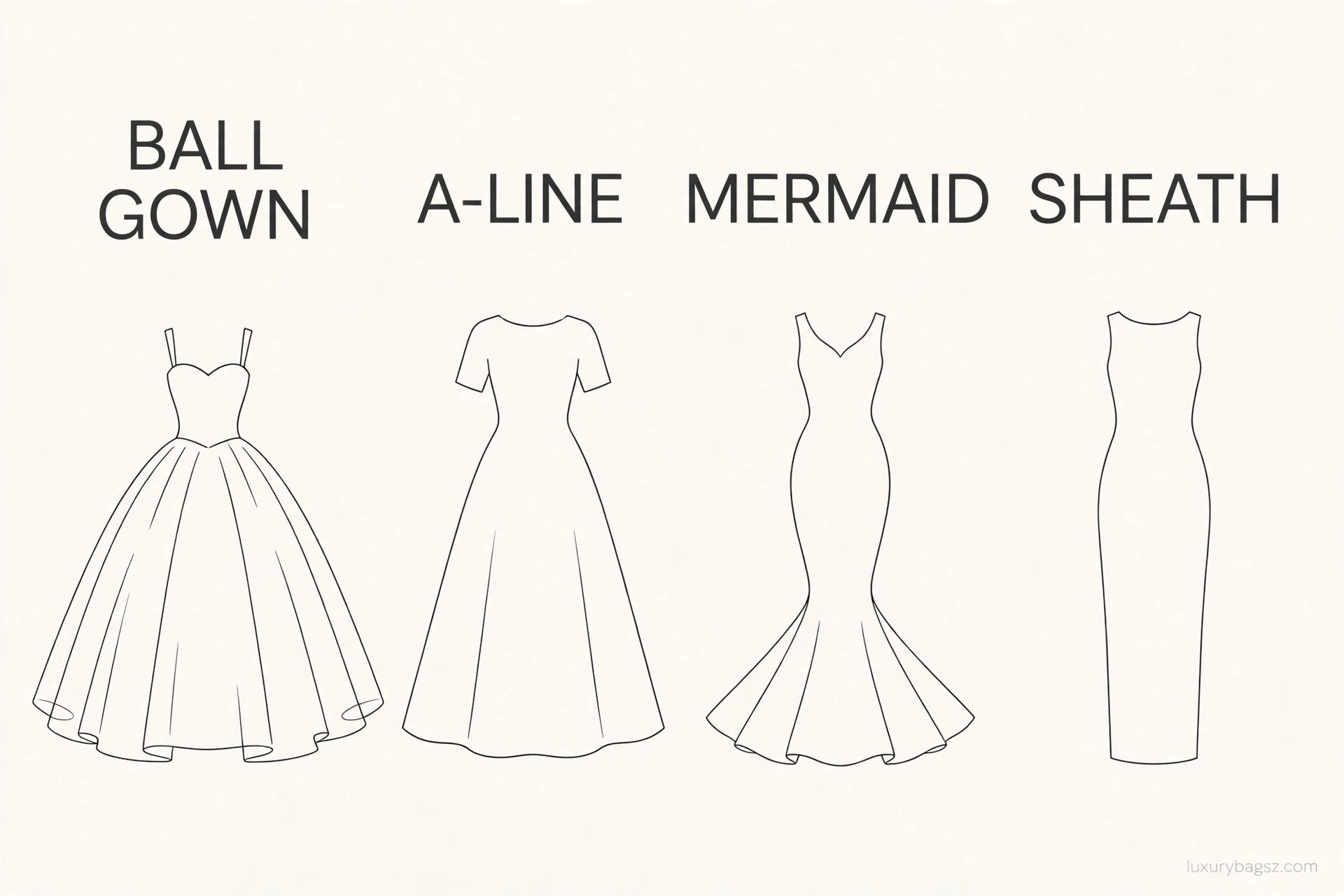
Five shapes cover nearly every dress: ball gown, A-line, sheath, mermaid and empire. Knowing their names turns a vague appointment into a comparison you can steer. Ball gowns and A-lines forgive hips and waists and suit formal venues. Sheaths follow the body and suit slim frames and simple settings. Mermaids dramatise curves and restrict stride; empires float from under the bust and suit smaller busts and beach or garden weddings. You will not know your shape until dresses are on your body — most brides buy a different silhouette than they imagined — but knowing the map speeds the discovery.
Weather deserves a vote of its own: an outdoor August wedding in a beaded satin ball gown is a endurance event, while a January register office forgives almost any fabric. Dress for the day you will actually have.
Guest comfort belongs in the venue maths too: a dress with a long train in a crowded barn reception spends the evening being stepped on. Match drama to floorspace and the dress survives its own party.
Match the Dress to the Venue and Season
A cathedral train in a register office, or a silk sheath at a windswept cliff ceremony, fails practically before it fails visually. Let the setting eliminate whole families of dresses. Beach and garden weddings ask for light fabrics, shorter trains and hems that tolerate grass. Winter weddings reward sleeves, heavier satin and wraps. Consider the photographs your venue gives: vast staircases carry ball gowns; intimate restaurants suit sheaths and midis that let you move between tables. Designer lines work to these settings too — the beaded ball gowns in our Elie Saab wedding outfits guide are built for grand rooms and evening light.
Understructure is fabric's silent partner: built-in corsetry, boning and cups decide whether a strapless dress stays serene for twelve hours. Ask what is inside the bodice, not just what covers it.
Lace has weights and tempers: fine Chantilly drapes and suits sheaths; heavier corded lace holds structure for ball gowns. Asking which lace a dress uses tells you how it will move and photograph.
Fabrics and Colour: What Each Choice Does
Satin gives structure and shine; crepe gives a smooth, modern line; lace gives texture and softens strong shapes; tulle gives volume without weight. Fabric decides comfort across a long day. Heavy beaded satin is glorious for three hours and work for twelve; chiffon and crepe forgive heat and dancing. Colour needs the same realism. If you are unsure why white rules the rails at all, our history of why wedding dresses are white explains the tradition and its modern shades. Judge every shade in daylight against your skin. Ivory flatters most people; stark white suits cooler tones; champagne warms pale skin beautifully.
Set a code word with your most trusted companion: one phrase that means stop, I need air and water and a minute alone with the mirror. Appointments are emotional marathons disguised as shopping.
Appointments: How to Run Them Well
Book two or three boutiques, not eight. Try six to eight dresses at each, photograph nothing where it is forbidden, and note how each dress feels after ten minutes, not ten seconds. Bring the shoes or a similar heel height, and the underwear you plan to wear. Our designer wedding shoes guide explains how heel height changes posture and hem in the mirror. Take one or two people whose honesty you trust. Big groups vote for the dress they would wear, and the loudest voice rarely belongs to the bride. The tips film in this part covers appointment craft well. Sleep on any dress you love: the right one survives the night without discounting itself in your head.
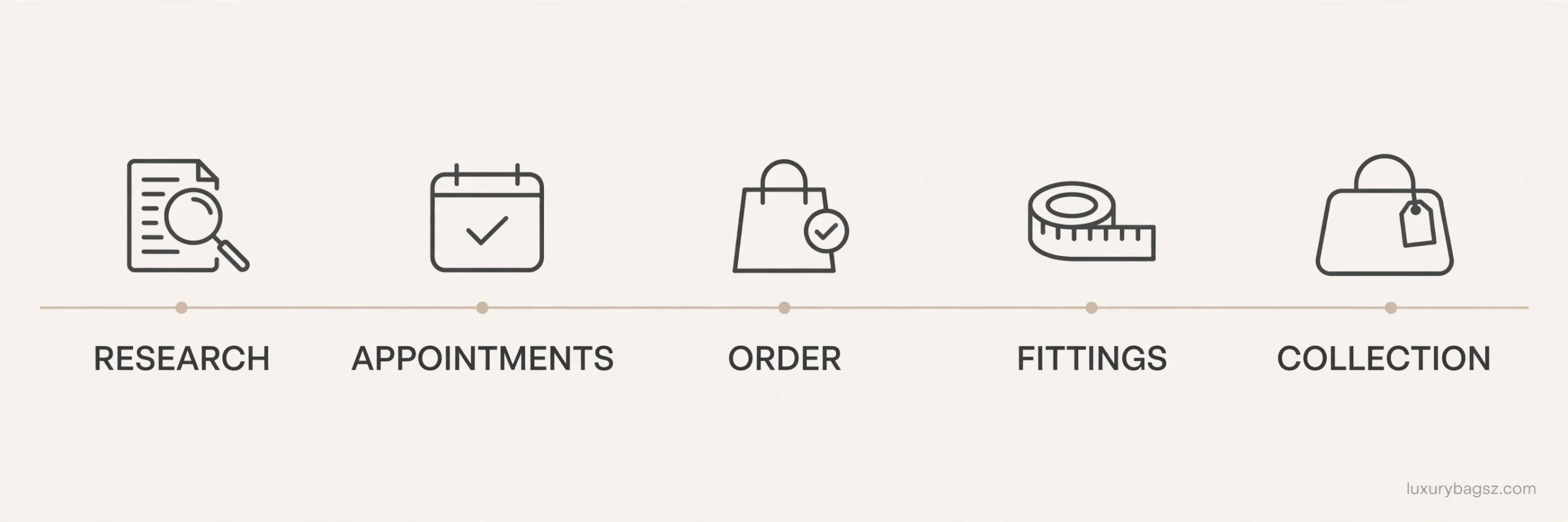
Order in writing: style name, size, colour shade name, delivery window and alteration terms on the receipt. Verbal promises in a happy showroom have a way of evaporating by delivery day.
Deposit terms deserve the same attention as the dress: what is refundable, what happens if delivery slips, and who pays for the first alterations round. Read them in the shop, not at the kitchen table afterwards.

Timelines, Ordering and the Secondhand Shortcut
Made-to-order dresses take months to sew and ship, then weeks to fit. Start a year out for the calm version; nine months is still comfortable for most labels. Sample dresses and ready-to-wear lines shorten everything, at the cost of choice. Rush fees buy speed at most houses, and they buy less than brides hope. Pre-owned designer gowns skip the queue entirely and halve or better the price. Our guide to buying a secondhand designer wedding dress covers sizing risks and condition checks in detail. Whatever the route, fix the final fitting two weeks before the wedding, with a buffer week behind it. Dresses, like weddings, reward slack in the schedule.
Ask the fitter to show your helper the bustle and any tricky fastenings, and film it on a phone. Thirty seconds of video at the fitting saves twenty minutes of fumbling at the reception.
Comfort-test the neckline and straps under movement: lean, hug an imaginary aunt, lift both arms. Bodices that behave standing still can wander in celebration, and tape is a poor substitute for fit.
Fittings: Where Good Dresses Become Yours
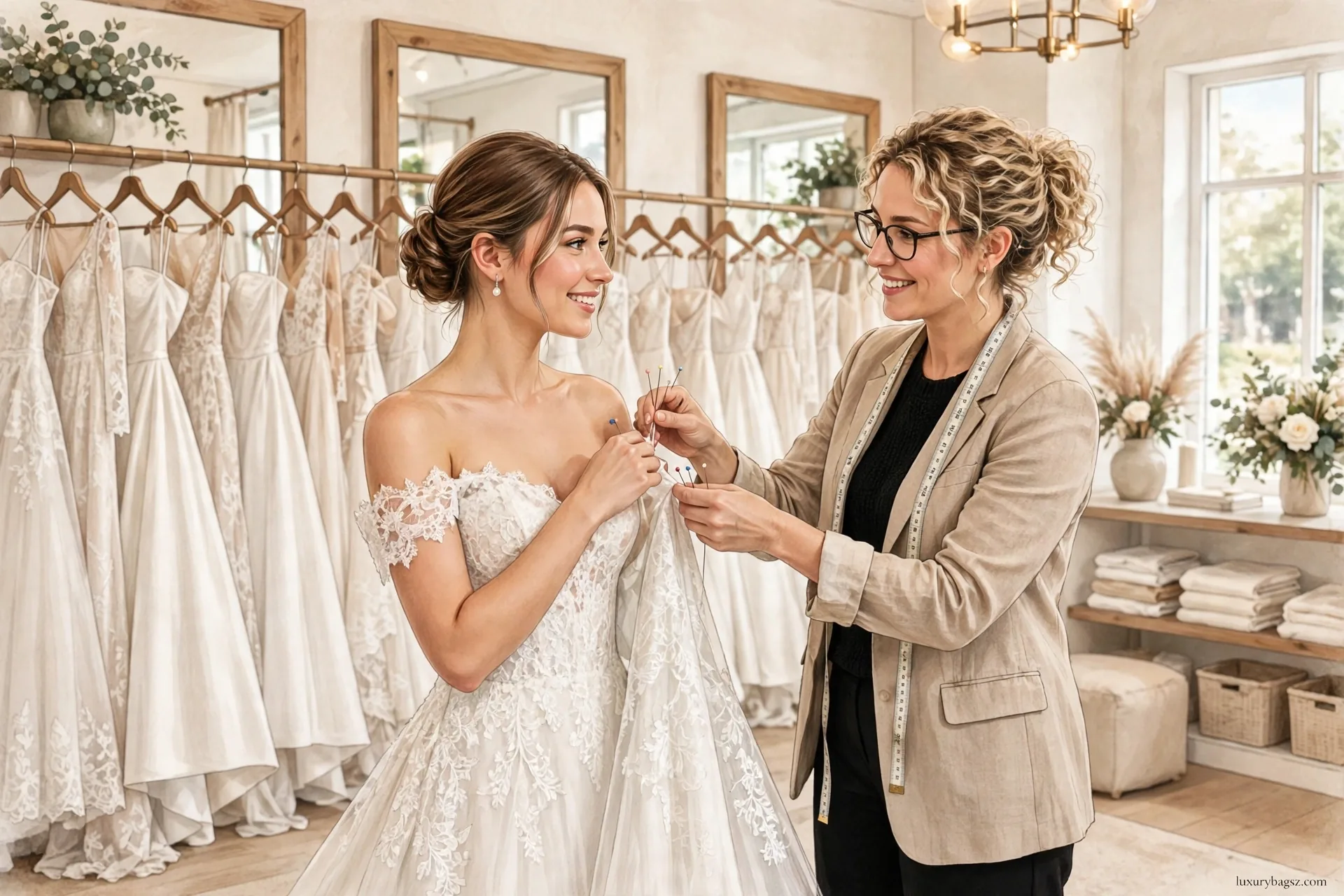
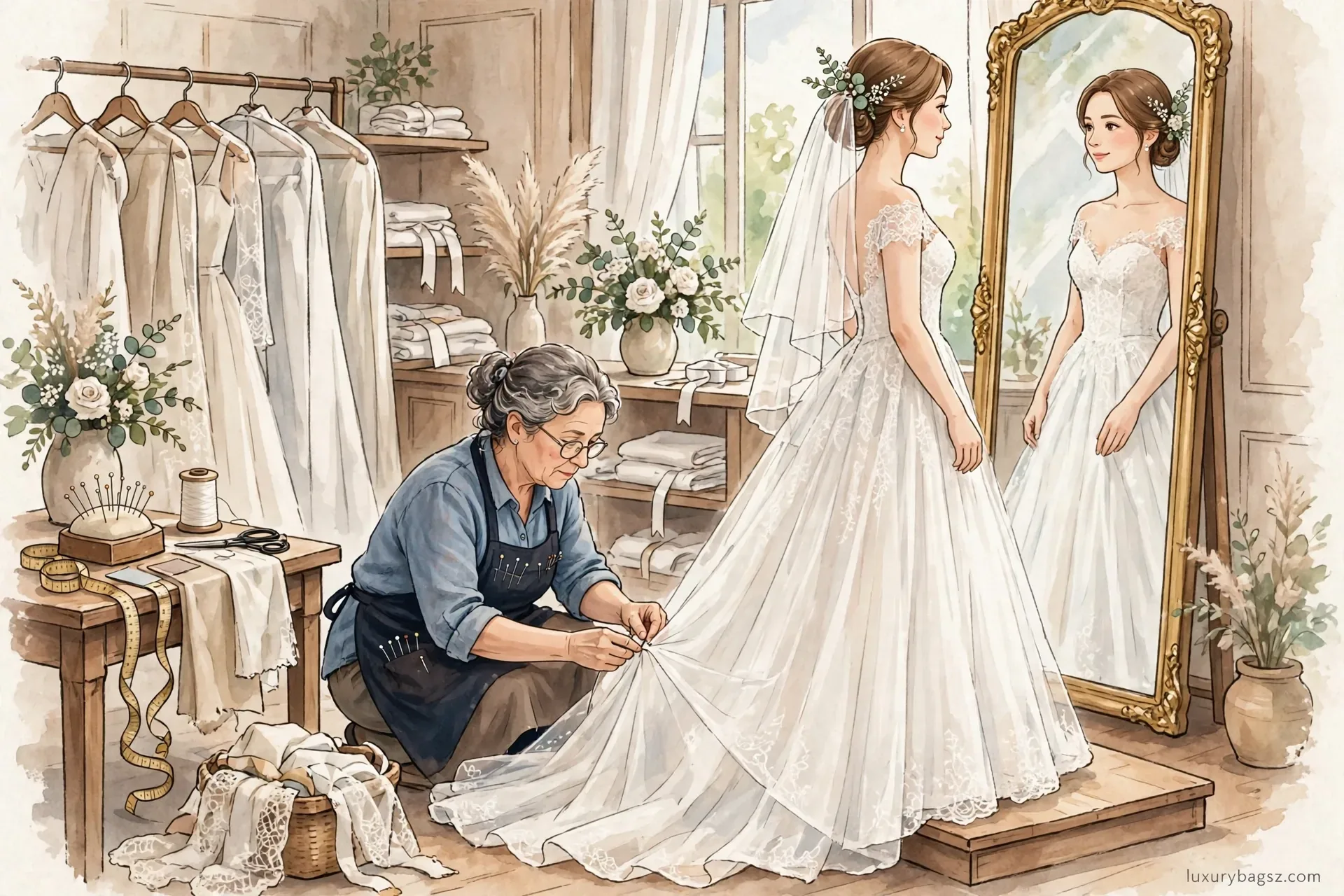
The first fitting pins the big things: bodice fit, strap or sleeve placement, and hem against your actual wedding shoes. Bring those shoes to every fitting. The second fitting refines: bustle points for the train, waist ease for eating, and movement tests — sit, climb a step, raise your arms for the first dance and the bouquet. Speak up about small discomforts. A strap that digs at minute ten will wound by hour six, and fitters cannot fix what they are not told. Weight changes between fittings are normal life, but tell the boutique early. Last-week surprises are the expensive kind, and seam allowances are finite.
Plan the dress's journey home and its hanging place before collection day. A gown needs a tall, quiet spot away from pets, radiators and curious small hands — arrange it like the guest of honour it is.
Final Checks in the Last Fortnight
Collect the dress in daylight and inspect it fully: seams, beadwork, hem and colour, against the swatch or photographs from your order. Practise the bustle with the person who will fasten it on the day, and photograph the result. Bustles are simple at the fitting and baffling at midnight without rehearsal. Assemble the emergency kit: needle and thread in the dress colour, safety pins, fashion tape, a stain wipe and spare stockings. Appoint one person to own it. Then stop looking at other dresses. The choosing is done; the remaining job is to enjoy being the person the dress was fitted for.
Frequently Asked Questions
When should I start dress shopping?
Nine to twelve months before the wedding is the calm timeline: it allows made-to-order sewing, shipping and two to three fittings without rush fees. Sample and pre-owned routes can work in weeks.
How many dresses should I try on?
Around fifteen to twenty across two or three boutiques is plenty for most brides. Beyond that, dresses blur together and decision fatigue sets in. Quality of comparison beats quantity.
What is a realistic alterations budget?
Commonly several hundred pounds for hemming, bodice work and a bustle, and more for lace or beaded gowns. Ask the boutique for its typical range before you fall for a dress.
Should I buy a dress to slim into?
No. Buy for the body you have; dresses can be taken in far more easily than let out. Pressure to change shape by a fixed date adds stress no wedding needs.
What underwear do I need for fittings?
Bring the style you plan to wear on the day — strapless, low-back or shaping — and shoes of the right heel height. Both change how a bodice sits and where the hem falls.
Is a pre-owned designer dress a good idea?
Often the best value in bridal: couture construction at a fraction of new prices, with no waiting. The trade-off is one size and one condition, so check measurements and fabric carefully.
How do I choose between two dresses I love?
Wear each for ten minutes, sit and move in both, and picture your venue around you. Then sleep on it. The dress you keep describing to others is usually the answer.
What if my mother or friends dislike my favourite?
Listen once, in case they see a fit problem you missed. Then remember who wears it for twelve hours and appears in the photographs for fifty years. Choose yours.
Do I need a veil?
No. Veils, capes, sleeves and hairpieces are all options, and modern brides mix them freely. Try a veil once, because it changes the whole silhouette more than any other accessory.
What should I check at the final fitting?
Fit while sitting and dancing, strap comfort, bustle fastening practised with your helper, hem against the real shoes, and every seam and bead in daylight. Sign off only when all pass.
Conclusion: Order, Budget, Venue, Body — In That Sequence
The perfect dress is a process, not a lightning strike: money first, setting second, silhouettes third, and fittings to make the chosen dress truly yours. Start early, take few voices with you, test comfort like you mean it, and leave a buffer week at the end. Do that, and the mirror moment takes care of itself.