Why Are Wedding Dresses White? The History Behind the Tradition
The Short Answer First: White Is Younger Than You Think
Wedding dresses are white mainly because Queen Victoria wore a white lace gown when she married Prince Albert in 1840, and her widely reported wedding turned white into the fashionable, romantic choice across Britain, Europe and America. Before that, most brides simply wore their best dress in any colour — red, blue, gold, even black in some regions. White also carried a practical message: an impractical, hard-to-clean gown showed a family could afford a dress worn once. The purity meaning came later, layered onto the fashion by Victorian moral writing. White won through royalty, industry and Hollywood together — here is how.
There is a pleasing irony at the heart of the story: the whitest part of the tradition is its marketing. White won because it was copied, sold and photographed better than any rival, not because it was oldest.
Key Takeaways
- Brides wore colour for most of history; white was one option among many before 1840.
- Queen Victoria's 1840 wedding made white fashionable across the Western world.
- White signalled wealth first: a once-worn, easily marked dress was a luxury.
- Mass production, two world wars and Hollywood fixed white as the default.
- The purity symbolism is a later Victorian idea, not the original reason.
- Today ivory outsells stark white, and colour is returning in many cultures and styles.
Before White: Brides Wore Their Best Dress
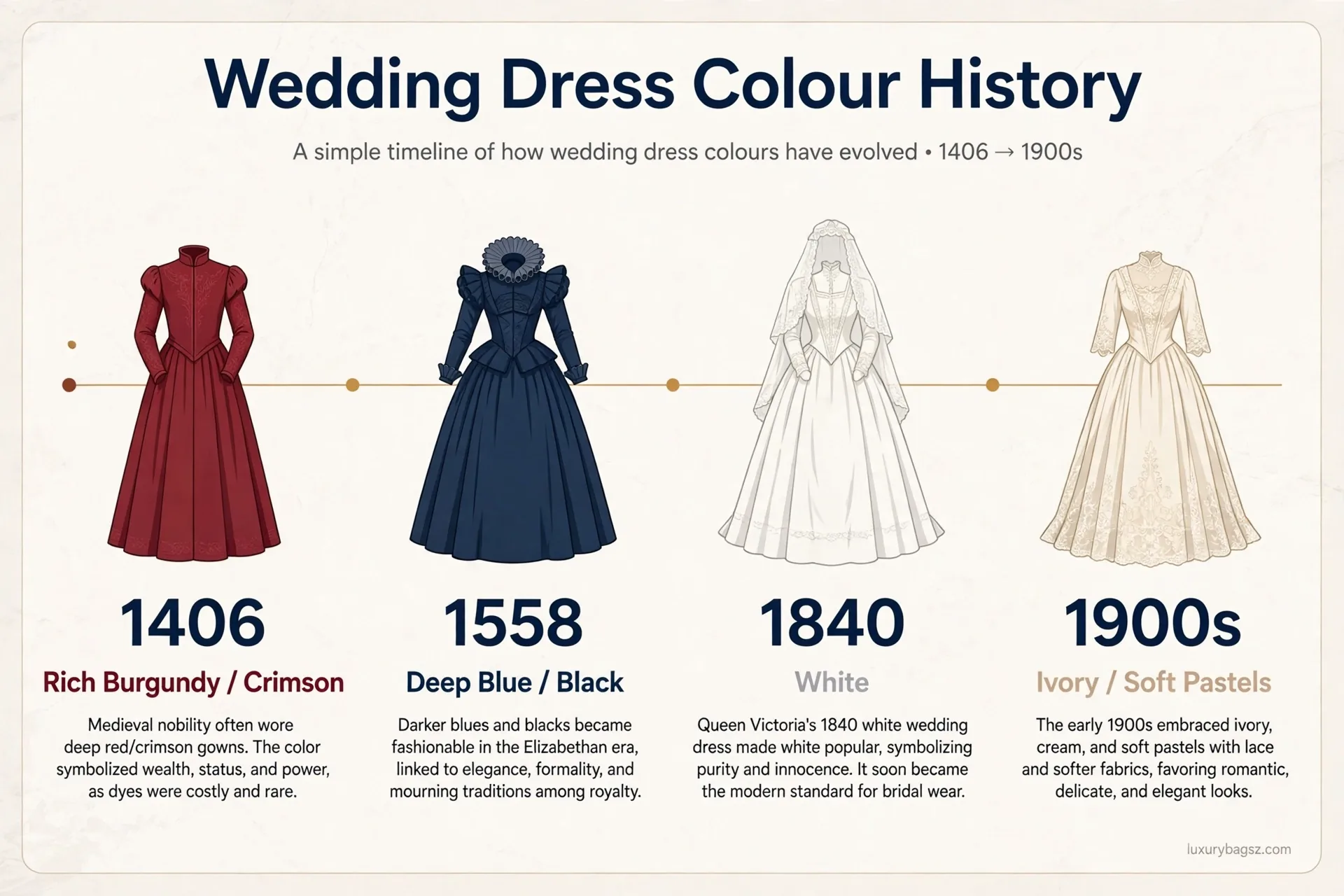
For most of history, a wedding dress was not a special purchase. A bride wore the best dress she owned, in whatever colour her wardrobe and purse allowed. Wealthy brides chose rich fabrics — silk, velvet, brocade — often in deep colours trimmed with gold or silver thread, because the cloth itself announced the family's standing. Working brides wore a good Sunday dress that returned to normal service afterwards. A dress worn once would have seemed wasteful, not romantic. White did appear occasionally, worn by some wealthy brides and in some religious orders, but it held no special wedding meaning. It was a colour, not a custom.
In parts of northern Europe, brides wore black or their darkest best dress well into the 1800s — practical for funerals and Sundays afterwards — and thought nothing of it. Colour at weddings simply meant your finest cloth.
Earlier White Moments That Did Not Catch On
History offers white brides before Victoria. Mary, Queen of Scots wore white in 1558 — then considered a mourning colour at the French court, which caused comment. A few aristocratic brides in the 1700s and early 1800s chose white or silver gowns, and fashion plates of the Regency era showed pale dresses, since pale muslin was fashionable day wear. None of it became a rule. Each white gown was a personal or fashionable choice in a sea of colour, and wedding portraits of the era show reds, blues and golds. The tradition needed more than an example. It needed publicity, industry and a story — all of which arrived in 1840.
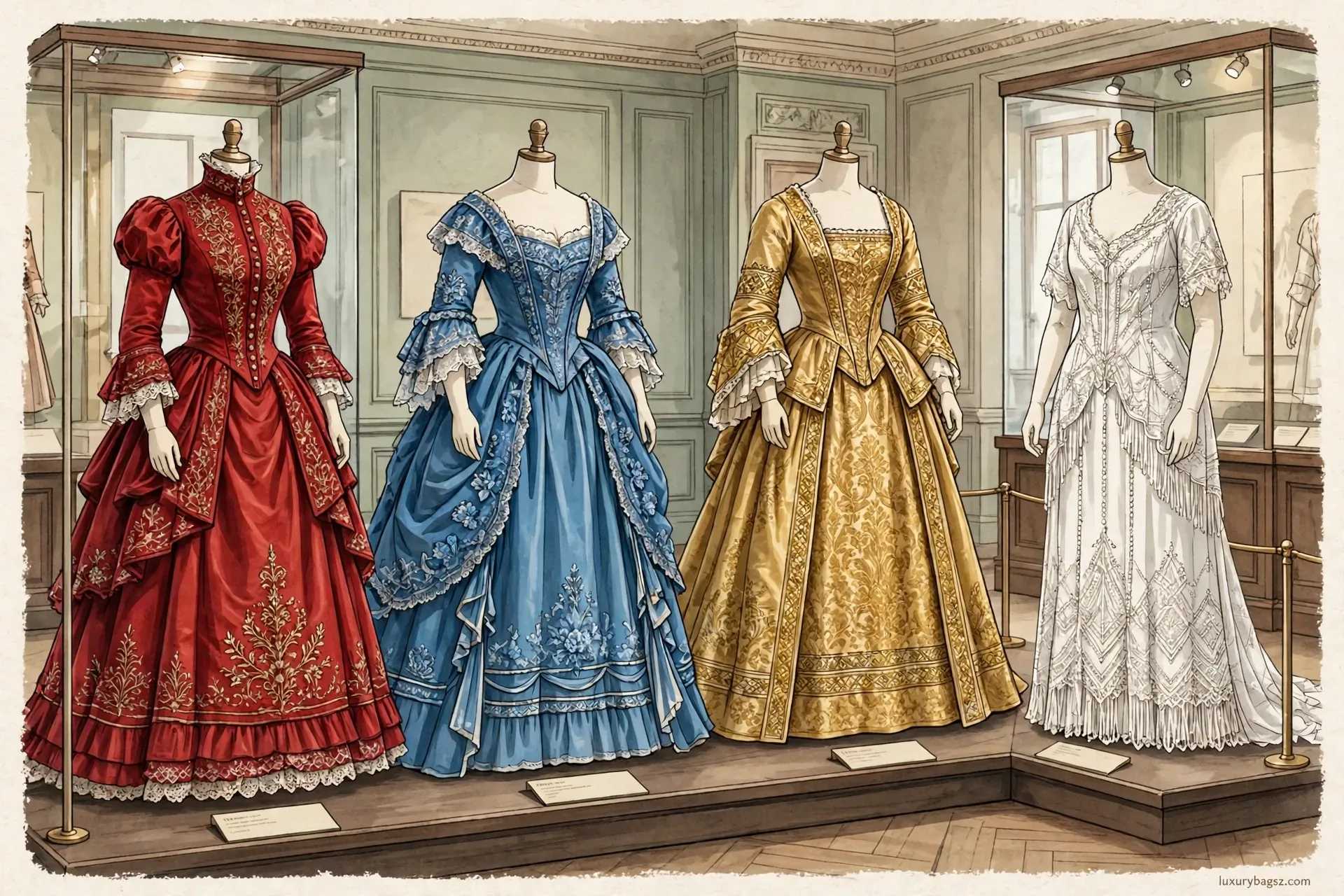
The lace Victoria chose mattered as much as the colour: Honiton lace from Devon, handmade and expensive. Imitations flooded in within years, and machine lace soon put a version of her look within middle-class reach.
1840: Queen Victoria Changes the Picture
Victoria chose a white satin gown trimmed with Honiton lace for her wedding to Prince Albert, partly to support the English lace trade. The choice was economic as much as romantic. Her wedding was reported in newspapers and illustrated journals around the world, with detailed descriptions of the dress. Brides who could afford it copied her within seasons. American magazines soon declared white the proper colour for a bride, and etiquette writers built rules around the fashion the young queen had set. By the end of the century, a wealthy Western wedding without a white gown had become the exception. The colour had a queen, a story and an industry behind it.
Religion played a smaller part than people assume: churches did not prescribe white. The colour spread through shops, magazines and imitation of the famous — a fashion story wearing ceremonial clothes.
Wealth, Purity and the Meanings Added Later
White's first message was money. A white dress soils at a touch, can rarely be worn again, and demands costly lace and cleaning — a public proof of means. Victorian writers then attached symbolism: innocence and purity. That reading fitted the era's view of brides and was repeated until it felt ancient, though it was newer than the fashion itself. The association stuck so firmly that by the 1900s many people assumed white had always meant purity, and coloured gowns could draw disapproval they had never drawn before. The short film in this part tells the same story simply, and it is a good one to share with anyone who insists the tradition is medieval. It is not.
Department stores deserve their share of credit: by the early 1900s, bridal departments staged whole weddings in white — dress, veil, shoes, gloves — and sold the complete picture as the correct one.

Industry, War and Hollywood Lock It In
Once demand existed, the bridal industry industrialised it: department stores, pattern makers and later specialist salons built their ranges around white and ivory gowns. The world wars interrupted the pattern — wartime brides married in suits or borrowed dresses — but the post-war boom restored the big white wedding as a symbol of normal life returning. Hollywood finished the job. Screen weddings in white gowns, from 1950s musicals onward, exported the look worldwide as the picture of a wedding itself. By the late twentieth century, white was so standard that choosing colour had become the statement, rather than the other way round.
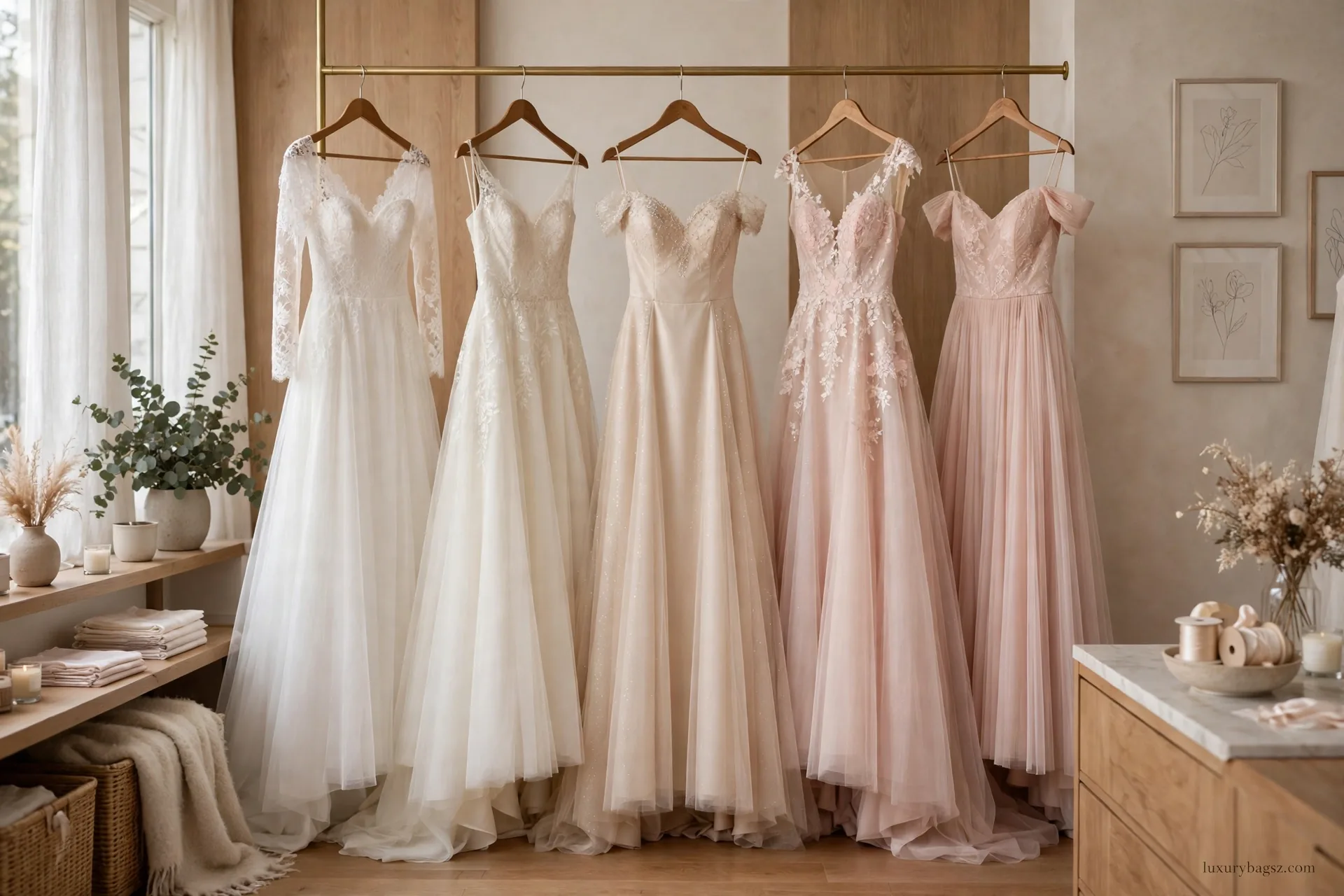
Photography quietly policed the shades: early film rendered stark white as a blown-out glare, pushing brides toward ivory long before modern stylists made the same point. The camera has always been a bridesmaid.
The Shades of White: Stark, Ivory and Champagne
Modern brides rarely wear optical white. Stark white is blue-toned and harsh on many skin tones and in photographs, so salons sell mostly ivory and cream. Ivory warms the gown and flatters most complexions; champagne and blush add depth under beading and lace, which is why designers build whole lines in them. The shade rules matter secondhand too: our guide to buying a secondhand designer wedding dress explains checking colour under daylight, because old ivory yellows at the folds. Matching veil, shoes and gown shades matters more than matching names. Take swatches together into daylight before committing to any of them.
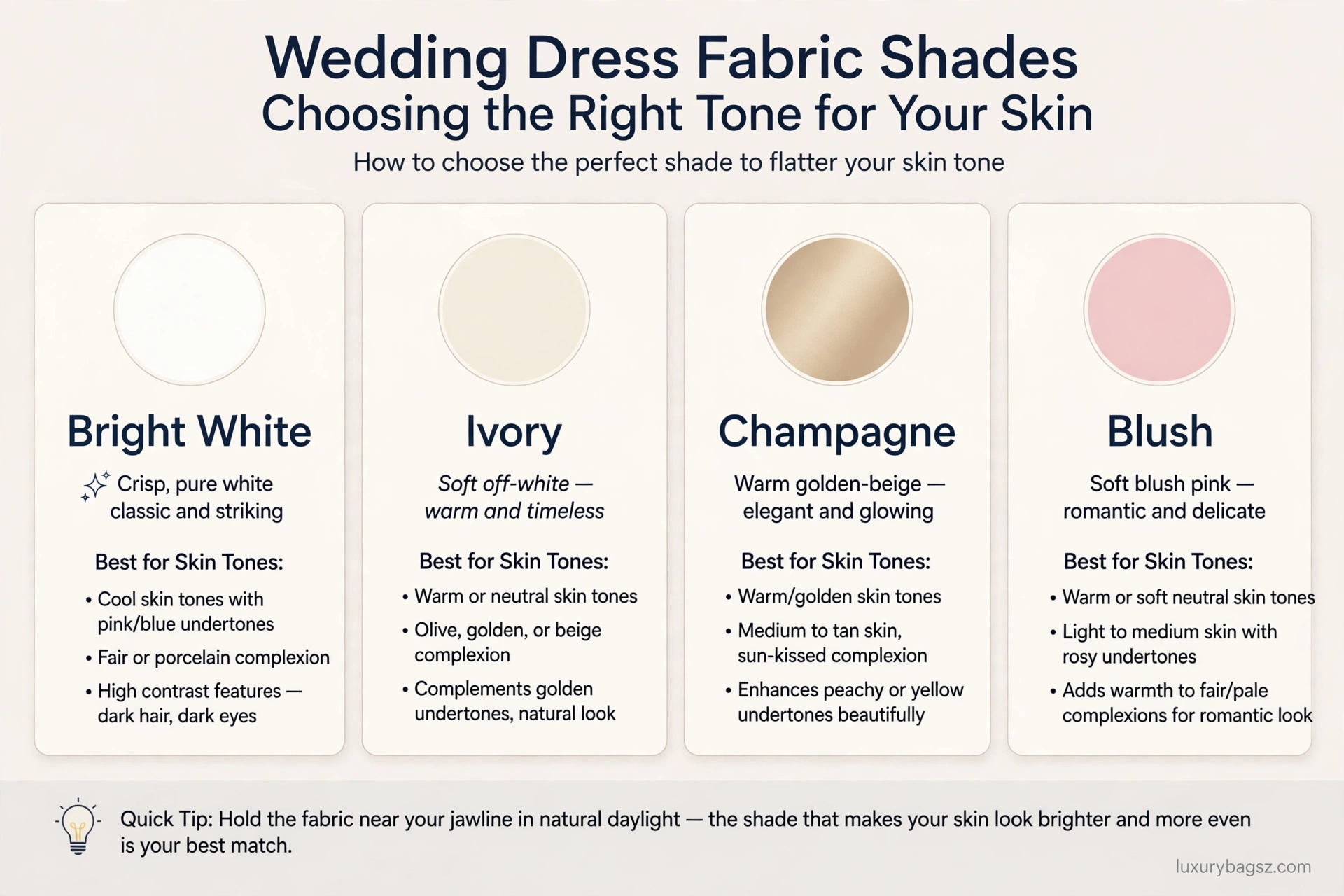
Second weddings and older brides were once steered away from white by etiquette writers — a rule now almost entirely abandoned. Modern guidance is simpler: wear the shade and shape that feel like you.
Colour Never Left: Cultures and Modern Brides
White is a Western tradition, not a world rule. Chinese brides wear red for luck, Indian brides wear rich reds and golds, and many cultures never adopted white at all. Even in the West, colour is returning: blush, champagne and pale blue gowns fill modern lines, and the Elie Saab wedding outfits in our companion guide show how far sparkle can take a non-white gown. Black wedding dresses, once coded as mourning, now appear as deliberate fashion. The meaning of a colour is whatever the couple and their culture agree it is. Whichever colour you choose, finish the outfit in daylight: our designer wedding shoes guide covers shade-matching ivory gowns to shoes without a visible clash.
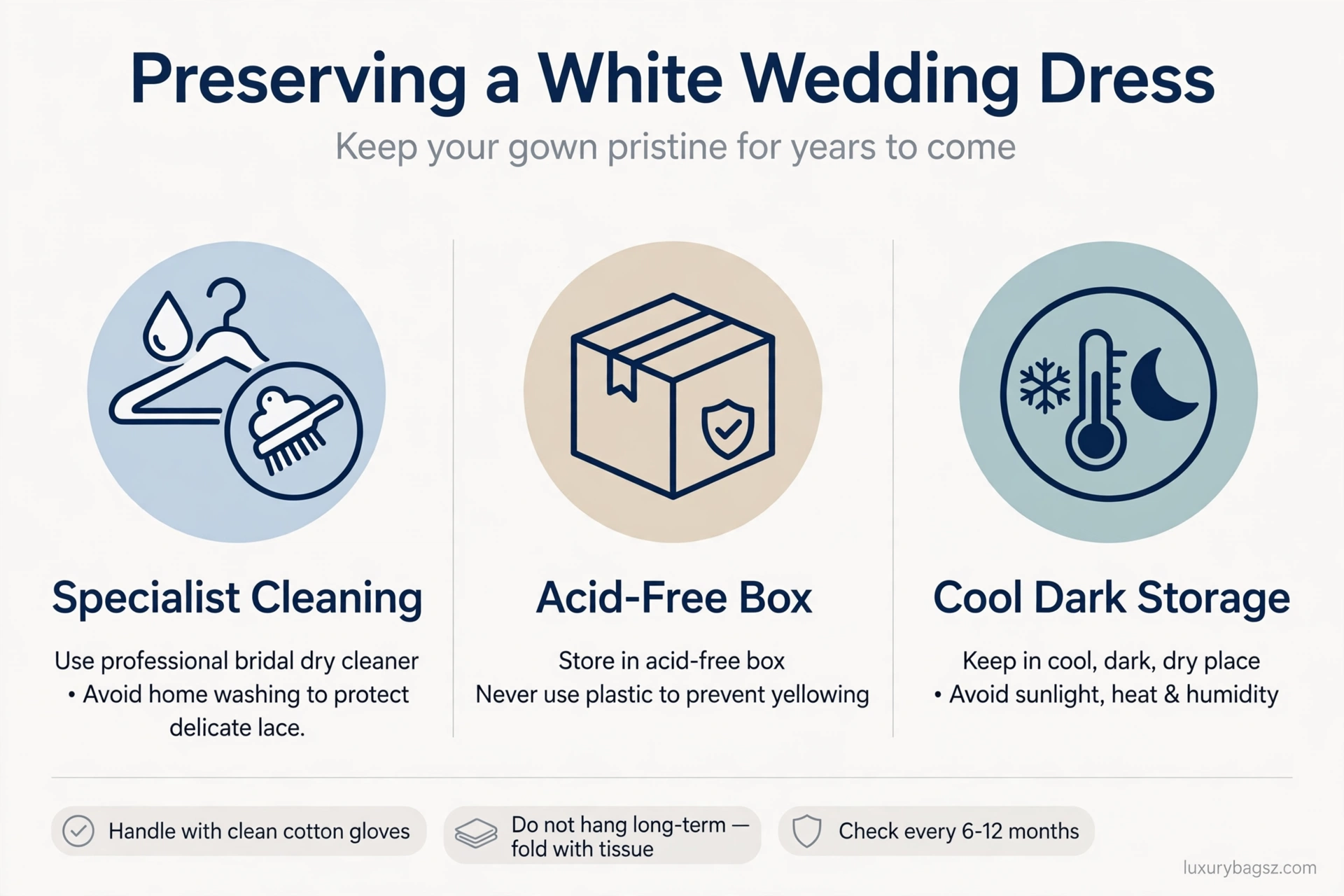
If you inherit a white gown, have it assessed before storing it again: old stains oxidise darker with every year, and a specialist can often lift what a decade of attic heat has not yet fixed permanently.
Keeping a White Gown White
White's original problem remains: it marks. Store a white gown away from light, which yellows pale silk and lace unevenly, starting at exposed folds. Handle it with clean hands at fittings — skin oils are the invisible stain that appears months later as a yellow patch on the bodice. Dry any part of the gown in shade after cleaning, and use a bridal specialist: home washing of lace and beadwork risks both colour and shape. Boxed storage with acid-free tissue keeps whites truest. Hanging in a bright room is how a white gown becomes an ivory one without anyone deciding it should.
Frequently Asked Questions
Who started the white wedding dress tradition?
Queen Victoria, in 1840. Her white lace gown was reported worldwide, and brides copied it. White dresses existed before her, but her wedding turned a fashion choice into a tradition.
What colour did brides wear before white?
Any colour — usually their best dress. Reds, blues, greens and gold were common for wealthy brides, and many brides wore a good dark dress that could serve afterwards for church and occasions.
Does white really symbolise purity?
That meaning was attached by Victorian writers after white became fashionable. The original signals were wealth and fashion: a once-worn, easily marked dress showed the family could afford it.
Why do most brides wear ivory instead of pure white?
Stark white is blue-toned and unflattering on many skin tones and in photos. Ivory and cream are warmer, kinder to complexions, and kinder to lace and beading, so salons stock them most.
Do all cultures wear white for weddings?
No. White is a Western custom. Chinese weddings favour red for luck, Indian weddings wear rich colours and gold, and many cultures keep their own colours with their own meanings.
When did white become the standard?
Through the later 1800s for wealthy Western brides, then for almost everyone after the Second World War, when the bridal industry and Hollywood made the white gown the default picture of a wedding.
Can I wear a coloured wedding dress?
Of course. Blush, champagne, blue and even black are all current options, and designers build full lines in them. The tradition is less than two centuries old; it does not bind anyone.
Why were white dresses seen as wealthy?
Because they were impractical: they soiled easily, needed expensive lace and cleaning, and could rarely be worn again. Wearing one announced that the family could afford a single-use luxury.
Did wartime brides wear white?
Often not. During both world wars many brides married in suits, uniforms or borrowed dresses, then the post-war years revived the full white wedding as a symbol of celebration and plenty.
How do I stop a white gown yellowing?
Store it clean, boxed with acid-free tissue, cool and dark, and handle it with clean hands. Light and skin oils are the main yellowing causes, and a bridal specialist cleaner is worth the cost.
Conclusion: A Young Tradition with a Great Story
The white wedding dress is not ancient custom but a brilliant piece of nineteenth-century fashion, launched by a queen supporting her country's lace makers. Its meanings — wealth first, purity later, romance always — were built by magazines, industry and film. Wear it with pleasure, or wear red like most of history did. Both are traditions now.