

Vera Wang Wedding Dresses: Lines, Styles, Prices and Pre-Owned Checks
Vera Wang Wedding Dresses in Brief: The Modern Bride's Default
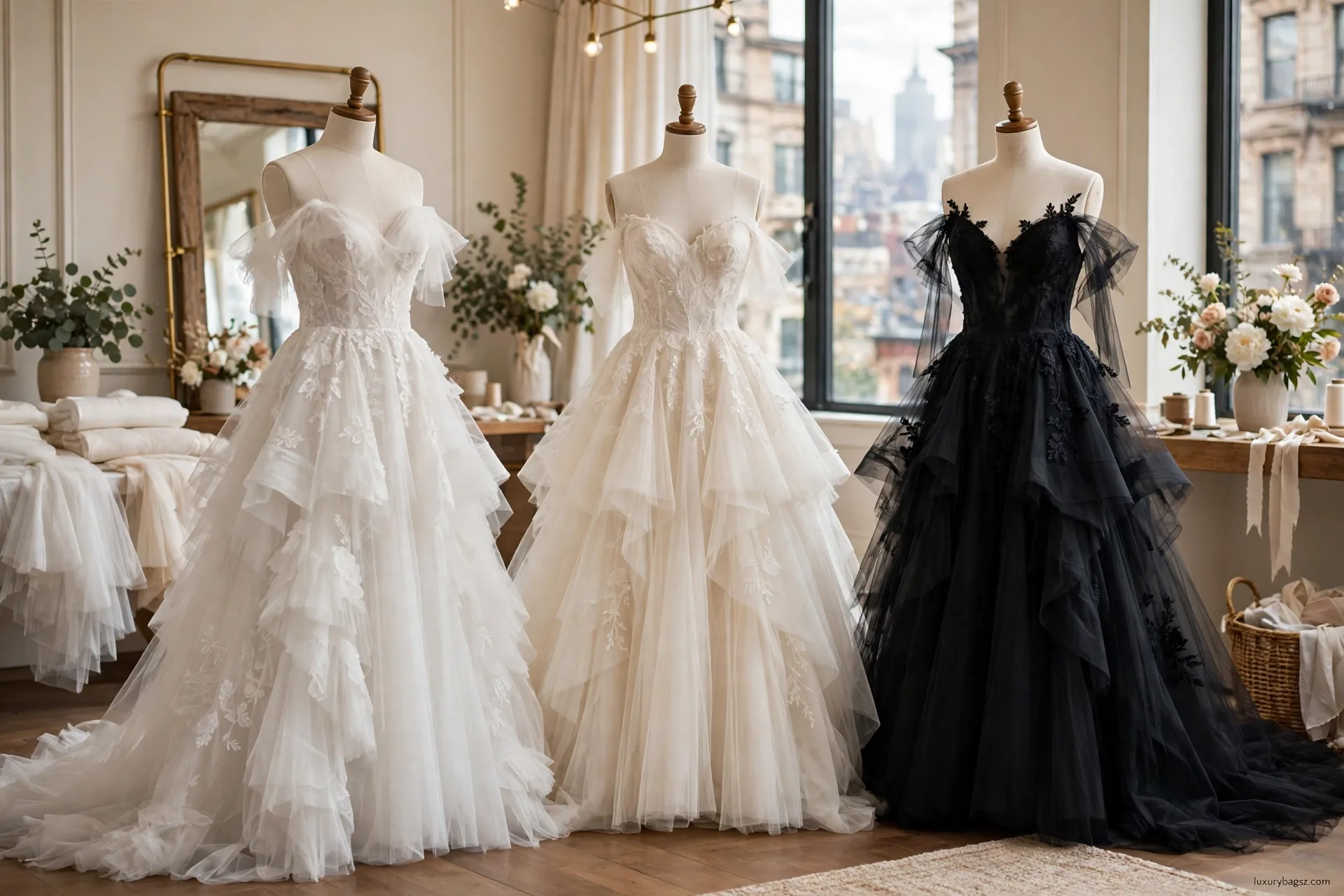
Vera Wang wedding dresses reshaped bridal from 1990 onward: where gowns were once stiff and sweet, Wang brought fashion — deconstructed tulle, exposed structure, draped bodices and, famously, colour including black. Her lines run in tiers, from couture gowns in the five figures down through the main bridal line to licensed diffusion ranges costing a few hundred pounds. The name on all of them is the same; the construction is not. Buy knowing which tier you are in, fit carefully because the draping is precise, and check diffusion pieces hardest of all before paying couture-level resale prices for them.
Context helps sense-making here: bridal was a conservative trade before 1990, and this house is the main reason a bride today can choose between a cathedral of tulle and a black sheath and call both wedding dresses.
Key Takeaways
- Wang modernised bridal: layered tulle, raw edges, draping and fashion-first design.
- Three tiers exist — couture, the main bridal line and licensed diffusion ranges.
- Prices range from a few hundred pounds (diffusion) to five figures (couture).
- Signature looks include huge tulle ball gowns, slim draped sheaths and black dresses.
- Sizing follows bridal convention — usually one to two sizes above high-street size.
- Pre-owned checks must confirm the tier: labels, construction and fabric quality tell all.
How Vera Wang Changed Bridal
Wang came to bridal from fashion — Vogue editor, then design director — and opened her first bridal salon in New York in 1990 after struggling to find a dress for her own wedding. She treated the wedding dress as a fashion garment: designed each year like a collection, photographed like editorials, and built with techniques from eveningwear. Celebrity weddings multiplied the effect. A generation of brides grew up expecting choice — drama, minimalism, colour — rather than a single sweet template. The house's importance is why its tiers confuse buyers: the influence is couture-level, while some of the dresses sold under the name are made far from the atelier.
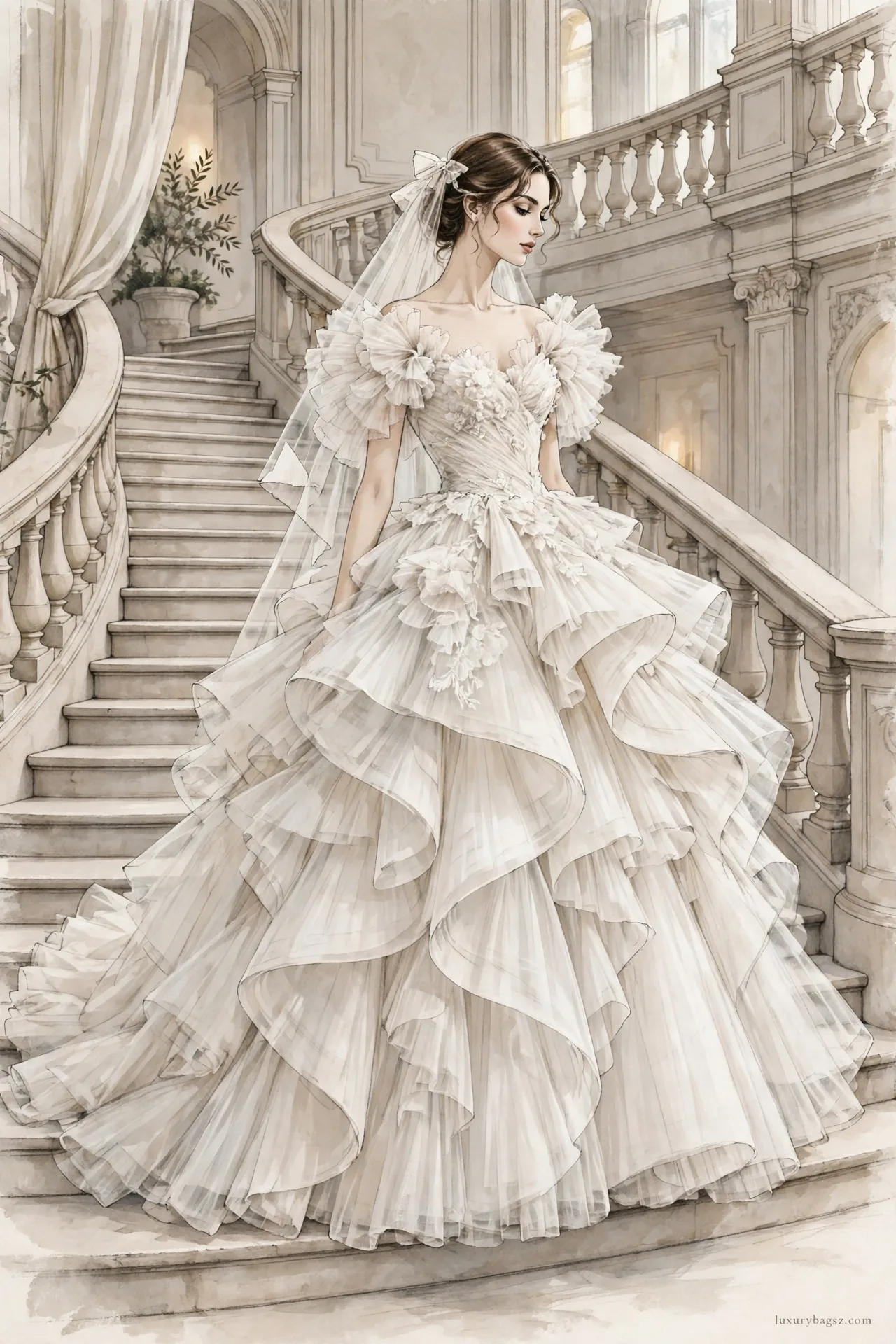
The house also normalised the two-dress wedding: a grand gown for the ceremony, then a short or slim dress for the party — a habit its own lines serve at every tier from couture to diffusion.
The Signature Looks
The tulle ball gown is the icon: acres of layered, sometimes raw-edged tulle under a fitted bodice, romantic and architectural at once. The draped sheath is the counterweight — bias draping, soft structure and an undone elegance that suits modern, minimal venues. Colour is the third signature. Blush, champagne, nude layering and full black gowns all came from this house; our history of why wedding dresses are white shows how recent the rule she broke really is. The short film in this part traces what made the name iconic. Watch the construction as much as the silhouettes: that is where the tiers separate.
Salon shopping itself differs: appointments are private, gowns are made to your measurements in stages, and the price quoted includes a level of fitting service that chain stores charge for separately, if they offer it at all.
Price tags inside the salon include theatre: private appointments, champagne, a stylist who has dressed a hundred brides in the same gown. Enjoy it, but remember the dress must still win without the lighting.

The Lines: Couture, Collection and Diffusion
The couture and main bridal lines are sold through the house's salons and top bridal boutiques, made to order with fittings, in silk, fine tulle and hand-finished lace. Diffusion lines, produced under licence and sold through bridal chains and department stores, carry the design language at a fraction of the price, in simpler fabrics and construction. Both are legitimate products — but they are different products. A diffusion dress is a good dress, not a cheap couture one, and should be priced as itself. If you are weighing lines against each other, the process in our guide on how to choose the perfect wedding dress applies unchanged: budget, venue, silhouette, fittings.
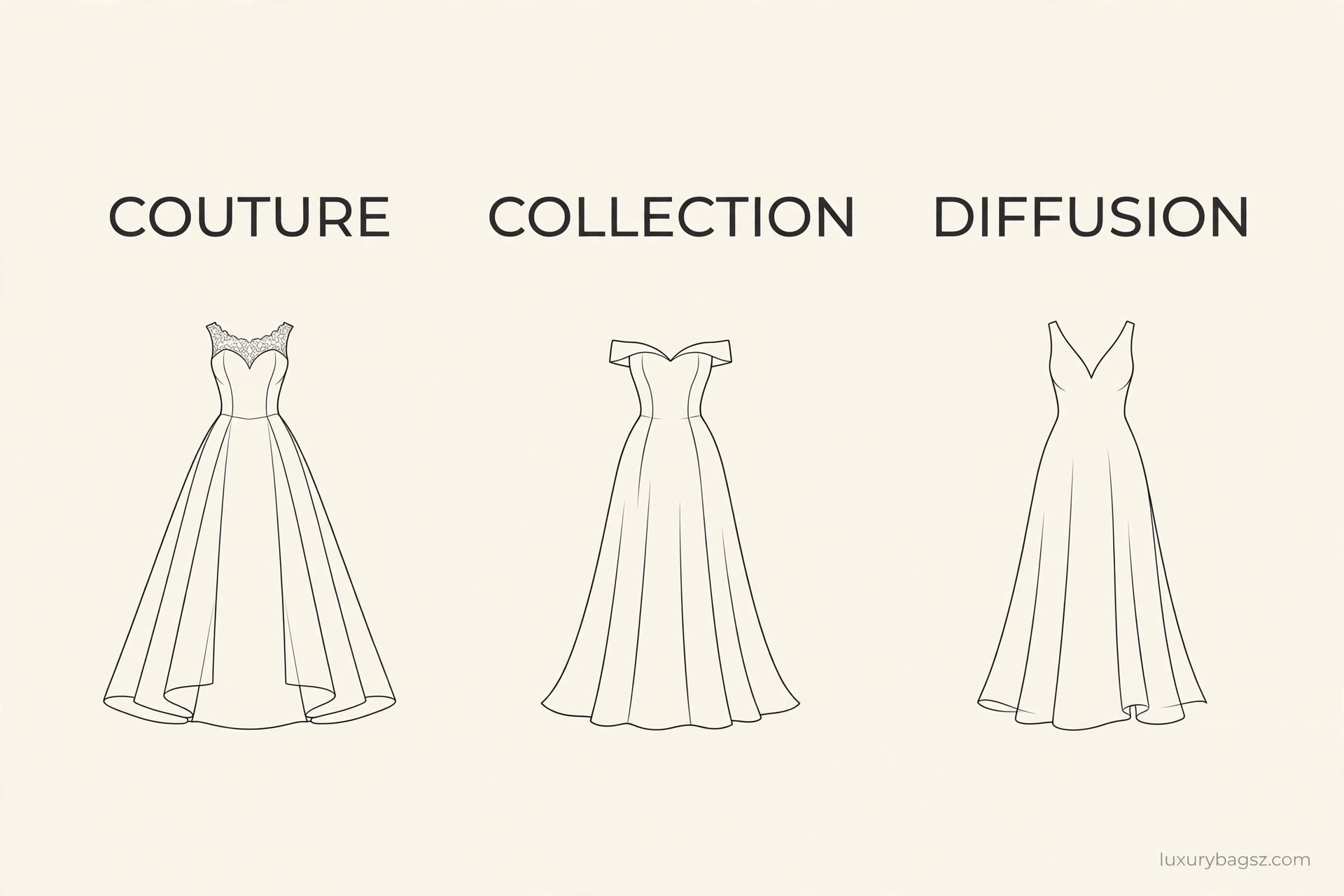
Layer count is the fastest physical test: cup a handful of skirt. Salon tulle feels like gathered mist across many layers; diffusion skirts feel thinner and crisper, with fewer, stiffer layers doing the work.
Fabrics and Construction Clues
Top-tier gowns use silk organza, fine tulle in many layers, hand-rolled edges and internal structure that holds the bodice without visible strain. Raw edges are deliberate, not unfinished: layered tulle is cut and left to feather, which takes quality tulle to look soft rather than frayed. Diffusion dresses simplify honestly: fewer layers, machine-finished hems, synthetic tulle with a crisper hand, and lace appliqué rather than full lace cloth. None of this makes a diffusion dress a bad buy. It makes the label and the receipt the two most important documents in any resale listing.
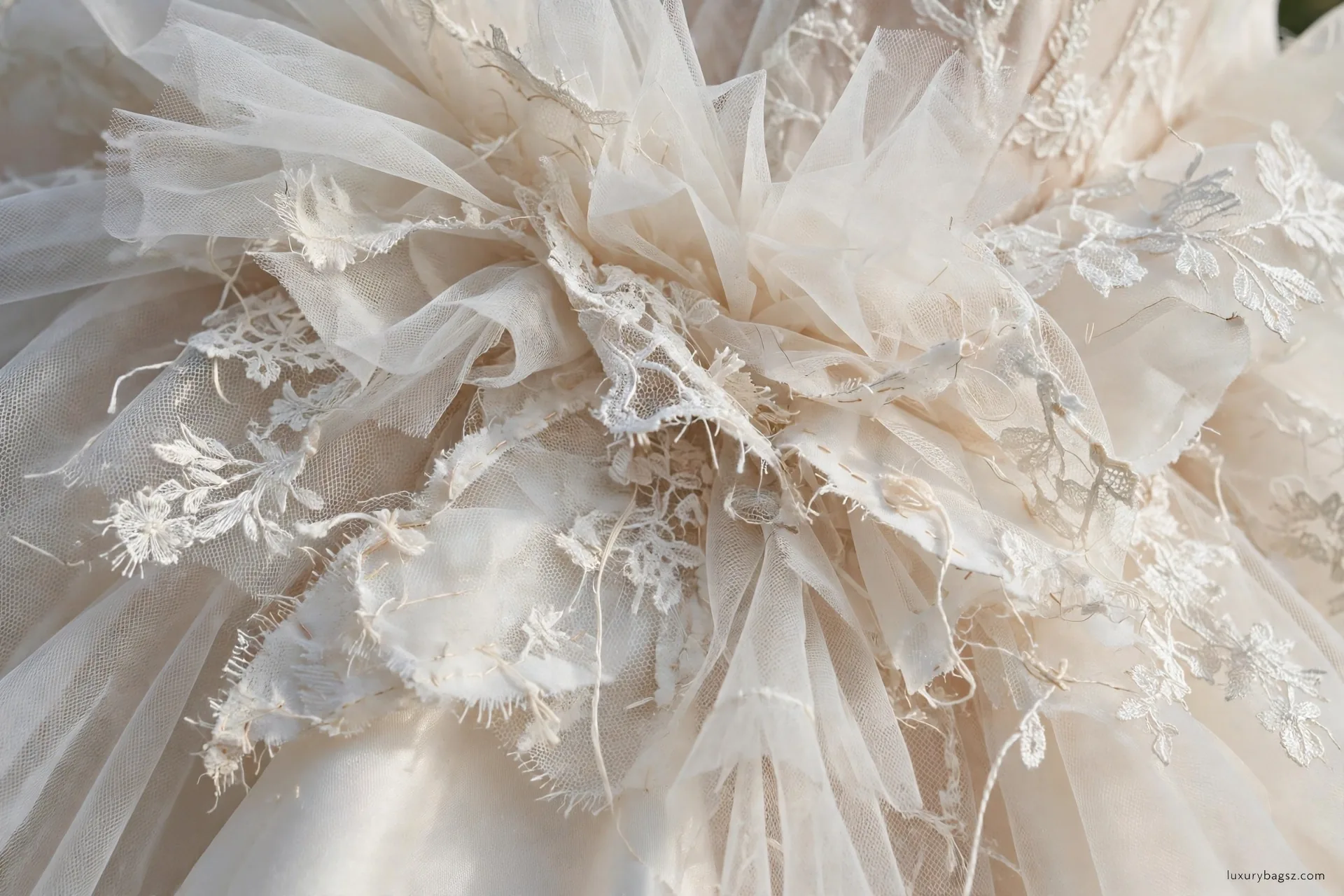
Veils from the salon lines are part of the design language — raw-edged, layered, sometimes blush or black. A diffusion dress under a salon veil is a legitimate way to lift the whole look for less money.
Lengths deserve a tape measure, not a guess: salon gowns are cut for height plus heels. If you are petite and buying pre-owned, ask for the original wearer's height and heel height in the listing conversation.
Sizing and Fit Notes
Bridal sizing runs small across the industry, and this house is no exception: expect to order one to two sizes above your high-street size, then alter down. Draped bodices are fitted precisely at the salon stage. Pre-owned buyers should match measurements, not label sizes, especially bust and waist on sheaths. Tall brides do well here — lengths run generous. Petite brides should budget for skilled hemming, since layered tulle skirts need their proportions rebalanced, not just shortened. Bring the actual shoes to fittings. Heel height shifts the drape's fall, and our designer wedding shoes guide covers pairing drama gowns with shoes that survive the day.
Sample sales at the flagship salons are the sharpest legitimate discount on true salon gowns. Sizes are limited and dresses are tried-on stock, so the pre-owned checks apply in full.
Condition discounts everything: a salon gown needing cleaning and bodice work can land dearer worn than a diffusion gown bought new and altered once. Price the finished dress, never the headline dress.
Prices Across the Tiers
Diffusion gowns sit in the hundreds of pounds new. The main bridal line occupies the several-thousands, and couture pieces rise into five figures with fabric and handwork. Resale scrambles these tiers, which is the buyer's opportunity and risk: genuine salon gowns sell at diffusion-new prices, while diffusion dresses are sometimes listed with couture language. Compare like with like. Search completed listings for the exact line and style name, not just the designer name, before judging any price. Alterations and cleaning narrow the gap further. A cheap gown needing heavy work can cost more worn than a sound gown bought dearer.
Ask for the original boutique paperwork by name. Genuine sellers of salon gowns usually kept receipts, order forms or alteration records; their absence does not prove a fake, but their presence ends arguments.
Pre-Owned and Authenticity Checks
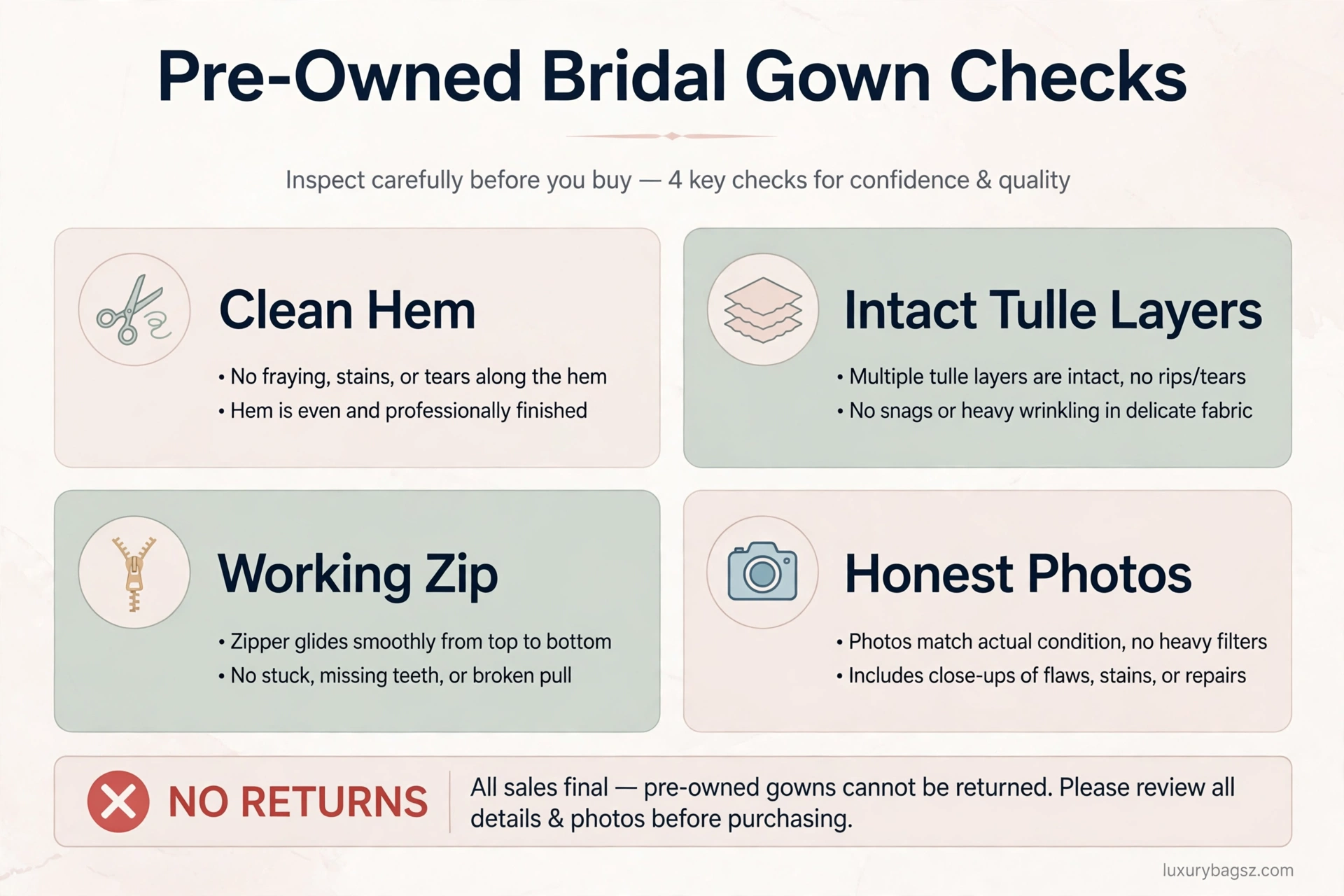
Start with the label: line names, care labels and country of manufacture differ between salon and diffusion production, and genuine dresses state them plainly. Handle the tulle. Fine, soft, many-layered tulle with finished inner seams points to the salon lines; stiff, sparse layers point the other way. Check draped bodices for stretched or repaired darts, and black or blush gowns for fading at folds — coloured tulle fades unevenly in light. Walk away from no-returns listings at salon prices without paperwork. The warning on the checks visual exists because tier confusion is the commonest costly mistake with this name.
Store coloured gowns — blush, champagne, black — with extra light discipline. Dyes in tulle fade faster than ivory shows age, and one bright stripe from a wardrobe door gap can mark a skirt permanently.
Care for Tulle and Draped Gowns
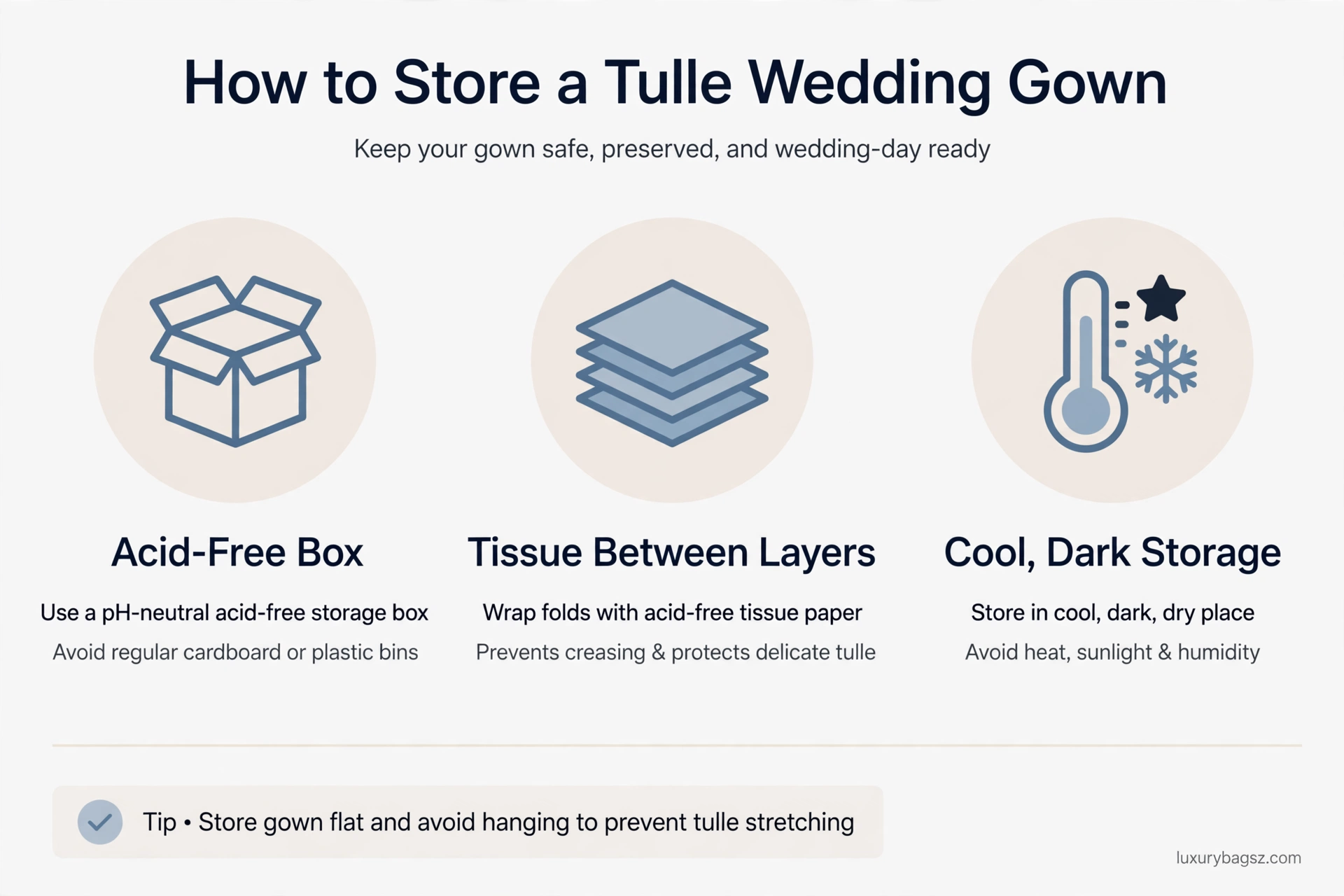
Clean through a bridal specialist, and warn them about raw-edged tulle layers, which should be preserved, not trimmed into neatness by an over-helpful cleaner. Hang by inner loops only, in a breathable bag, away from light. Layered skirts are heavy in aggregate, and straps will stretch under them. Keep the gown away from radiators and sun while it airs after the wedding; tulle dries fast but marks with heat and perfume if rushed. Boxed storage with acid-free tissue suits long keeping. Refold along different lines yearly so the same creases do not set into the layers.
Frequently Asked Questions
How much does a Vera Wang wedding dress cost?
By tier: diffusion ranges cost a few hundred pounds new, the main bridal line several thousand, and couture gowns five figures. Resale prices overlap the tiers, so identify the line before judging value.
Are diffusion-line dresses genuine Vera Wang, and are black wedding dresses really a Vera Wang thing?
Yes, they are licensed products designed under the name, made more simply for chain and department-store sale. They are genuine, but they are not salon construction and should not be priced as if they were.
The house is closely associated with bringing black and deep-colour gowns into mainstream bridal lines. They remain a statement choice and photograph strikingly.
What is Vera Wang famous for in bridal, and do the dresses run small?
Like most bridal lines, yes: expect one to two sizes above your high-street size, then alterations. Pre-owned, trust the seller's flat measurements over the label size.
Modernising it: fashion-led collections, huge layered-tulle ball gowns, draped sheaths, raw edges and colour — including blush, nude and black gowns — from her first salon in 1990 onward.
Can a tulle ball gown be altered?
Hems and bodices can, with a skilled bridal seamstress. Layered skirts need proportion-aware hemming — simply cutting length ruins the balance of the layers.
Why do some Vera Wang dresses look unfinished?
The raw, feathered tulle edges are a deliberate signature, cut to soften the silhouette. On genuine pieces the effect is even and soft; frayed, uneven damage is a different thing.
How can I verify a pre-owned dress's line?
Check the label wording and care label, fabric quality, layer count, seam finishing, and any salon paperwork. Price far below salon level with no documents is itself an answer.
Do these dresses hold resale value, and what should I budget beyond the dress?
Salon-line classics in popular sizes resell respectably; diffusion pieces resell at diffusion prices. Condition of tulle and bodice decides more than the name embroidered on the label.
Alterations, veil or headpiece, shoes, undergarments, and specialist cleaning after the day. On tulle-heavy gowns, cleaning and storage are part of the real cost from the start.
Summary: Know the Tier, Then Love the Dress
Vera Wang gives brides fashion, drama and choice across three honest tiers. The only expensive mistake is confusing them. Identify the line, measure rather than trust labels, check tulle like a tailor, and the dress that changed bridal can change your day too — at the price its construction deserves.






