

How to Clean Cowboy Boots the Right Way: Leather, Suede and Everyday Care
Cowboy Boots, Cleaned Right, in Brief
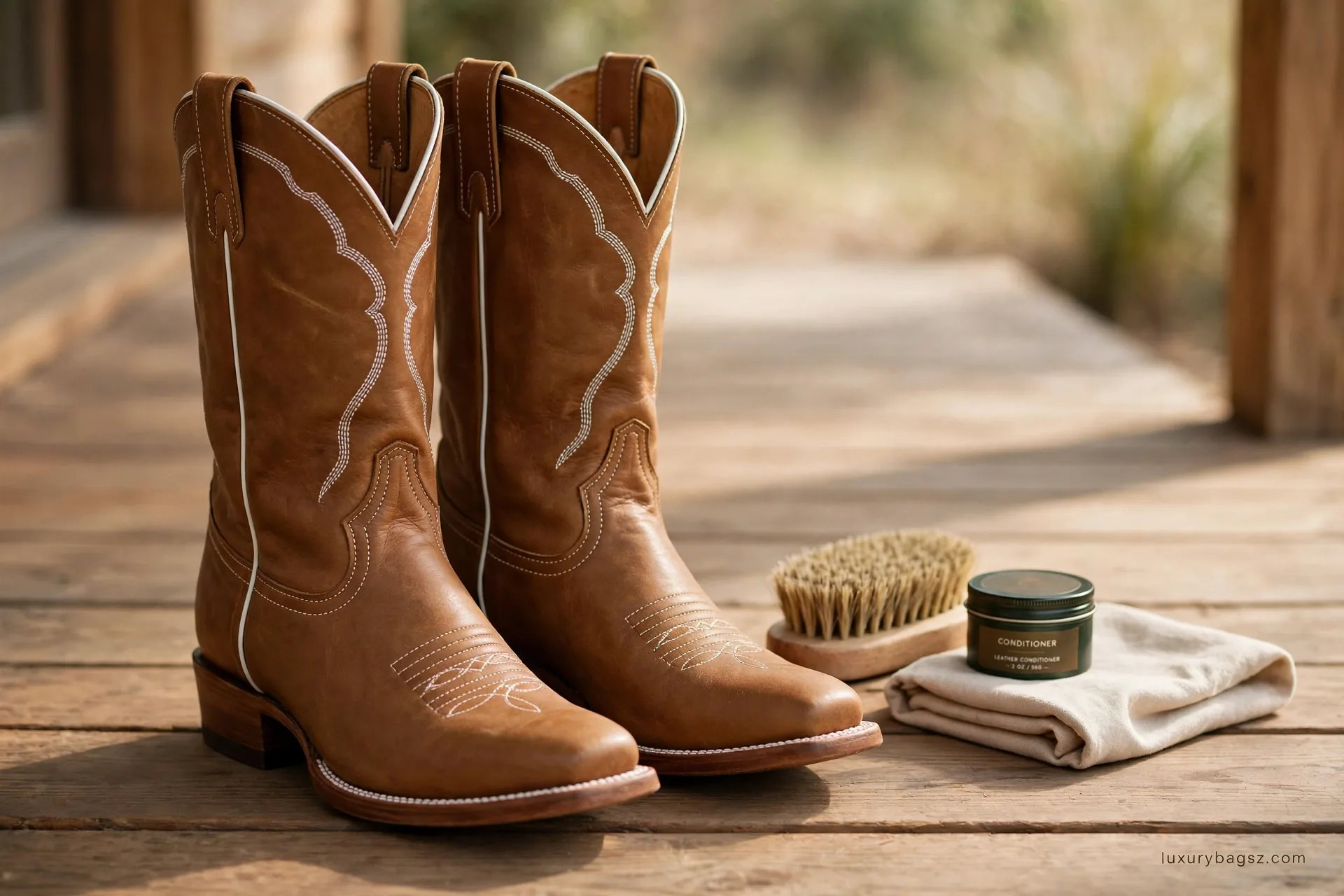
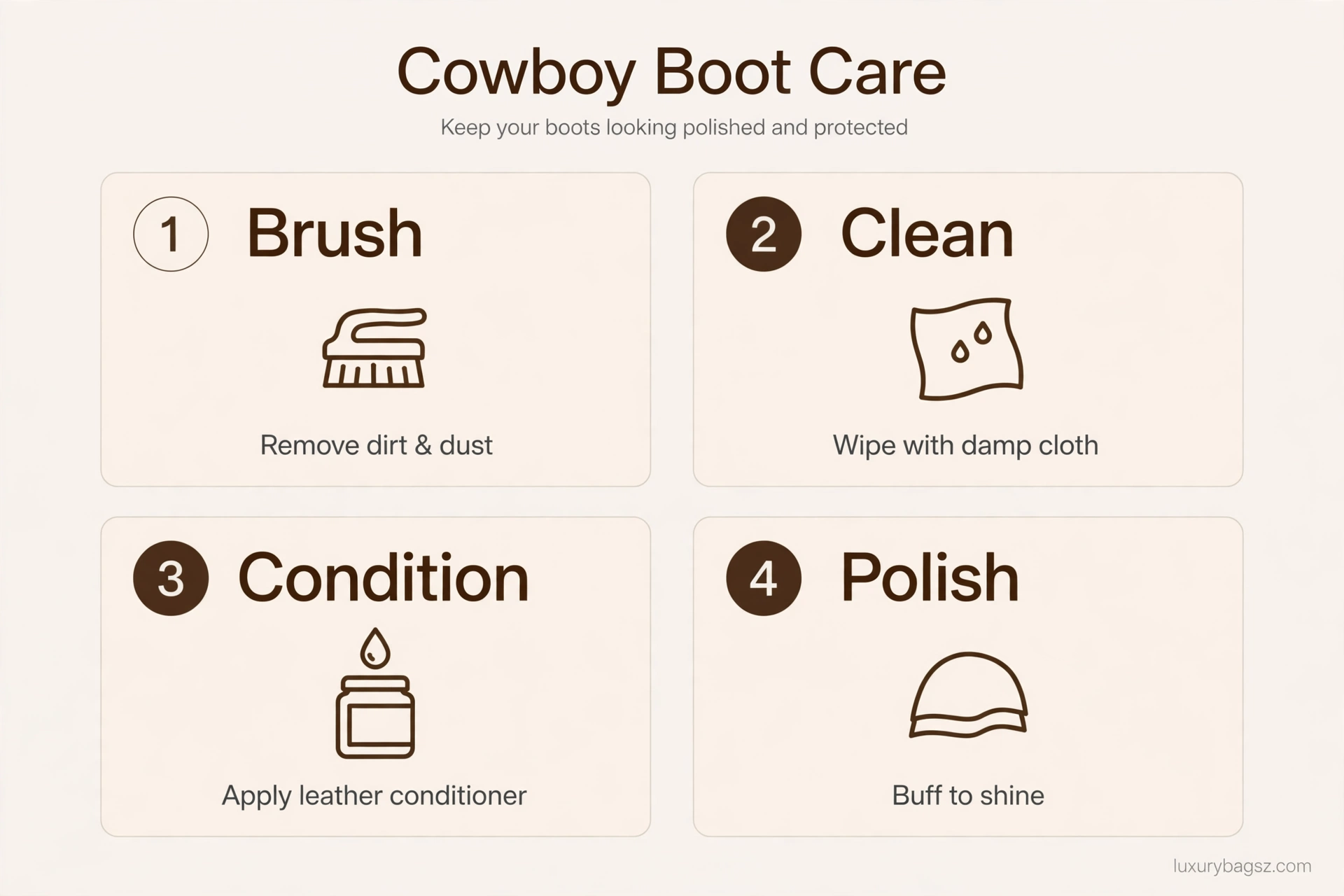
Cowboy boots last for decades when they are cleaned the right way, and they fail early when they are not. The whole routine comes down to four moves in order: brush off grit, clean only as deeply as the dirt demands, condition smooth leather when it feels dry, and polish or protect last.
Most damage does not come from wear. It comes from grit ground into leather, from boots dried too fast beside heat, and from the wrong product on the wrong leather. Cream and oil belong on smooth leather only, never on suede.
If your boots are muddy, let the mud dry first, then brush it off. If they are only dusty, a quick brush after wear is often all they need. Deep cleaning is a rescue job, not a weekly habit.
Key Takeaways
- Identify the leather before you use any product: smooth, suede, rough-out, nubuck and exotic skins all need different care.
- Brush boots after every wear. Grit left on leather acts like sandpaper the next time you walk.
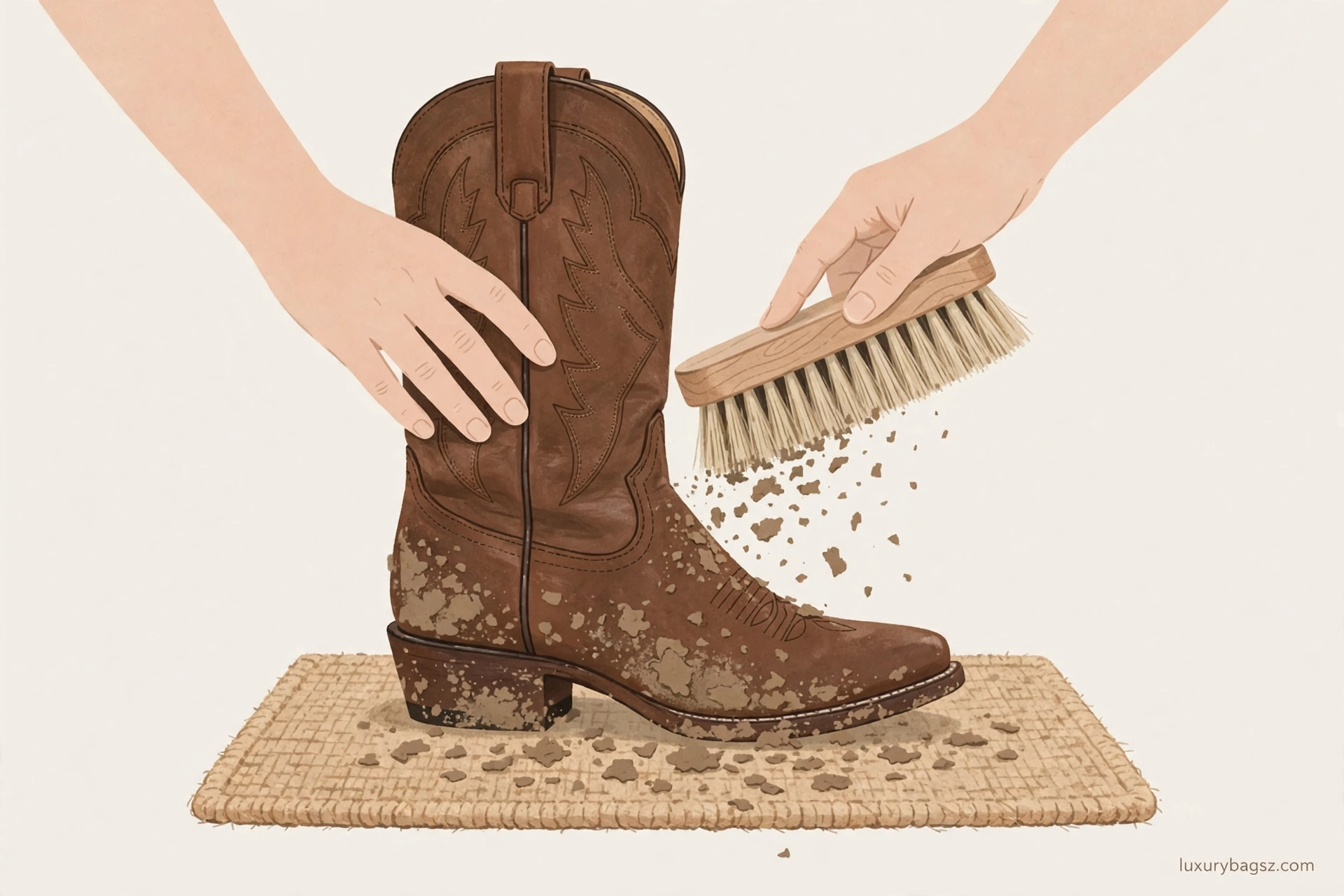
- Let mud dry, then brush it off. Never smear wet mud across the leather.
- Clean smooth leather with a barely damp cloth or a little saddle soap, then wipe all soap away.
- Never put cream, oil, wax or polish on suede or rough-out. Brush dry, use a suede eraser, and protect with a suede-only spray.
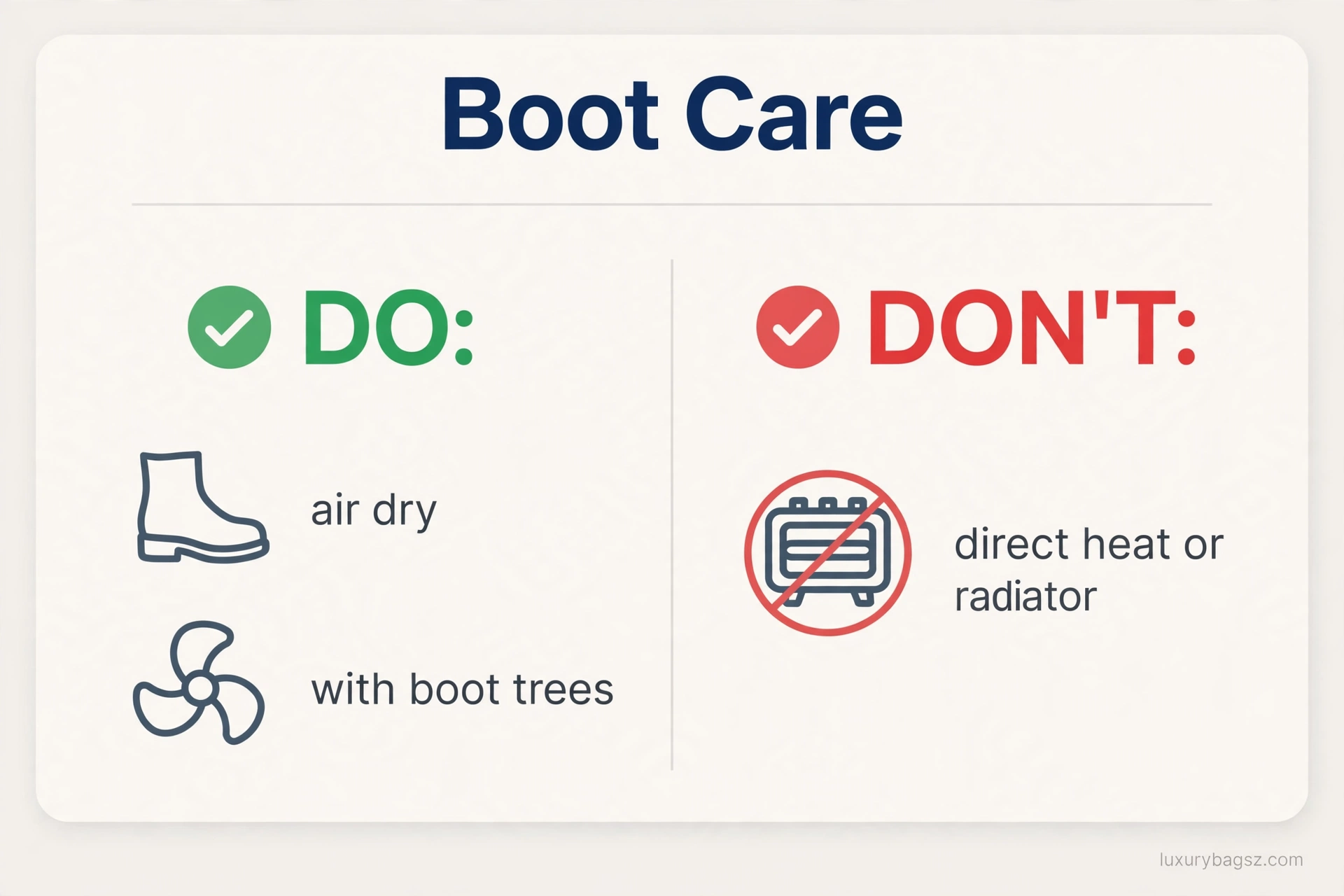
- Dry wet boots slowly at room temperature, stuffed with paper or on boot trees. Never use a radiator, a hair dryer or direct sun.
- Condition smooth leather when it looks dull or feels dry, not on a fixed calendar. Over-conditioning makes leather soft and floppy.
- Remove road salt the same day. Salt draws moisture out of leather and stiffens stitching if it sits.
Identify Your Leather First
Start by finding out what your boots are made of, because every later step depends on it. The product page, the box label or the maker will usually name the leather. When in doubt, look and touch: smooth leather has a finished, wipeable surface, while suede feels soft and fuzzy.
Smooth cowhide is the most common cowboy boot leather. It is forgiving, it takes conditioner and polish well, and it shows scuffs clearly but buffs well too. Grained cowhide has a pebbled surface that hides small marks better and is a little more forgiving of daily wear.
Suede and rough-out are the underside of the hide, with a napped surface that soaks up water, salt and oil fast. Nubuck is similar, with a finer, velvety nap. All three need a dry-first approach and no creamy products at all, ever.
Exotic skins such as caiman, ostrich and snakeskin are the exception to almost every rule here. Do not condition, waterproof or deep-clean an exotic pair with standard boot products. Take exotic boots to a specialist cobbler, because a wrong product can change the colour or lift the scales for good.
Check the sole and the welt too. A leather sole wears faster on wet pavements than a rubber sole, and a stitched welt collects grit that can rot stitching over time. A quick look at the sole edge tells you whether the boots need a cobbler soon or just a clean.
The After-Wear Routine
The most valuable habit in cowboy boot care is also the shortest. Do it after every wear, before the boots go back on the shelf, and most later problems never get started.
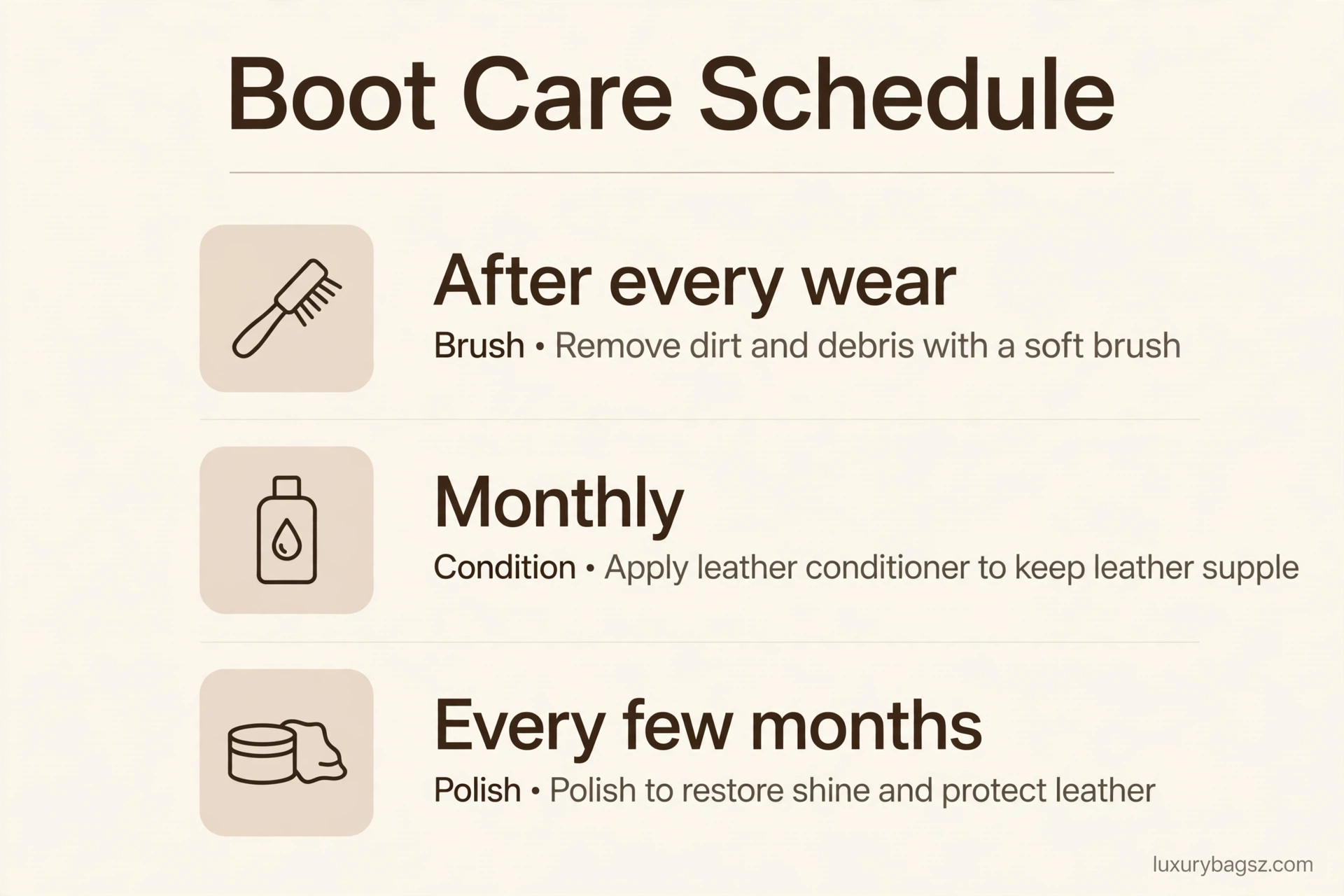
First, knock the boots gently together outside, or brush them, to remove loose dust, grit and mud. Grit is abrasive, and grit pressed into leather by the next wear wears the finish away. A soft horsehair brush is enough for smooth leather, used with light, quick strokes.
Next, wipe smooth leather with a soft, dry cloth. This removes surface dust and light moisture without adding any product. If the boots are muddy, let the mud dry first, then brush it off, rather than smearing wet mud across the leather.
For suede, skip the cloth and brush only when the boots are dry. Brushing wet suede flattens the nap and can push dirt deeper into the fibres. If the nap looks flat in one spot, a light brush after drying usually lifts it again.
Pull boots off by hand or with a boot jack, not by stepping on the heel of one boot with the other. Forcing a boot off strains the heel counter and the back seam, and tall shafts are especially easy to damage this way. A boot jack costs little and protects both boots.
Air the boots at room temperature for several hours before storing them. Feet produce moisture, and leather needs time to release it. Putting damp boots straight into a box traps that moisture against the leather and the lining, which invites odour and mildew.
Clean Smooth Leather, Step by Step
For a regular clean, you need only a soft brush, a soft cloth, lukewarm water and, for stubborn dirt, a little saddle soap or leather cleaner. Work in a ventilated spot, and test any new product on a hidden area first, such as the inside of the shaft.
Brush the whole boot first, including the welt, the welt stitching and the folds around the ankle. Dirt collects in these grooves, and a toothbrush is handy for the welt and the sole edge. This dry pass removes most of what a wash would otherwise smear around.
Dampen a cloth, wring it until it is barely damp, and wipe the leather in small circles. For light dirt, this is enough. For stubborn marks, work a small amount of saddle soap into a lather on a damp cloth or dauber brush, then rub it over the leather in circles.
Wipe all soap away with a clean, damp cloth, rinsing the cloth often. Do not let soap dry on the leather, because dried soap leaves a dull film and can pull out oils. Repeat the wipe until no suds remain, then wipe once more with a barely damp cloth.
Let the boots dry fully at room temperature before you condition or polish. This takes several hours, and a full day is better after a deep clean. Stuffing the shafts with clean paper helps them hold their shape while they dry.
Clean Suede and Rough-Out Differently
Suede cowboy boots look superb, but they punish the wrong cleaning method. Water, cream, oil and polish all darken suede, flatten the nap or leave stains that are hard to reverse. The rule is simple: start dry, stay dry, and add liquid only as a last resort.
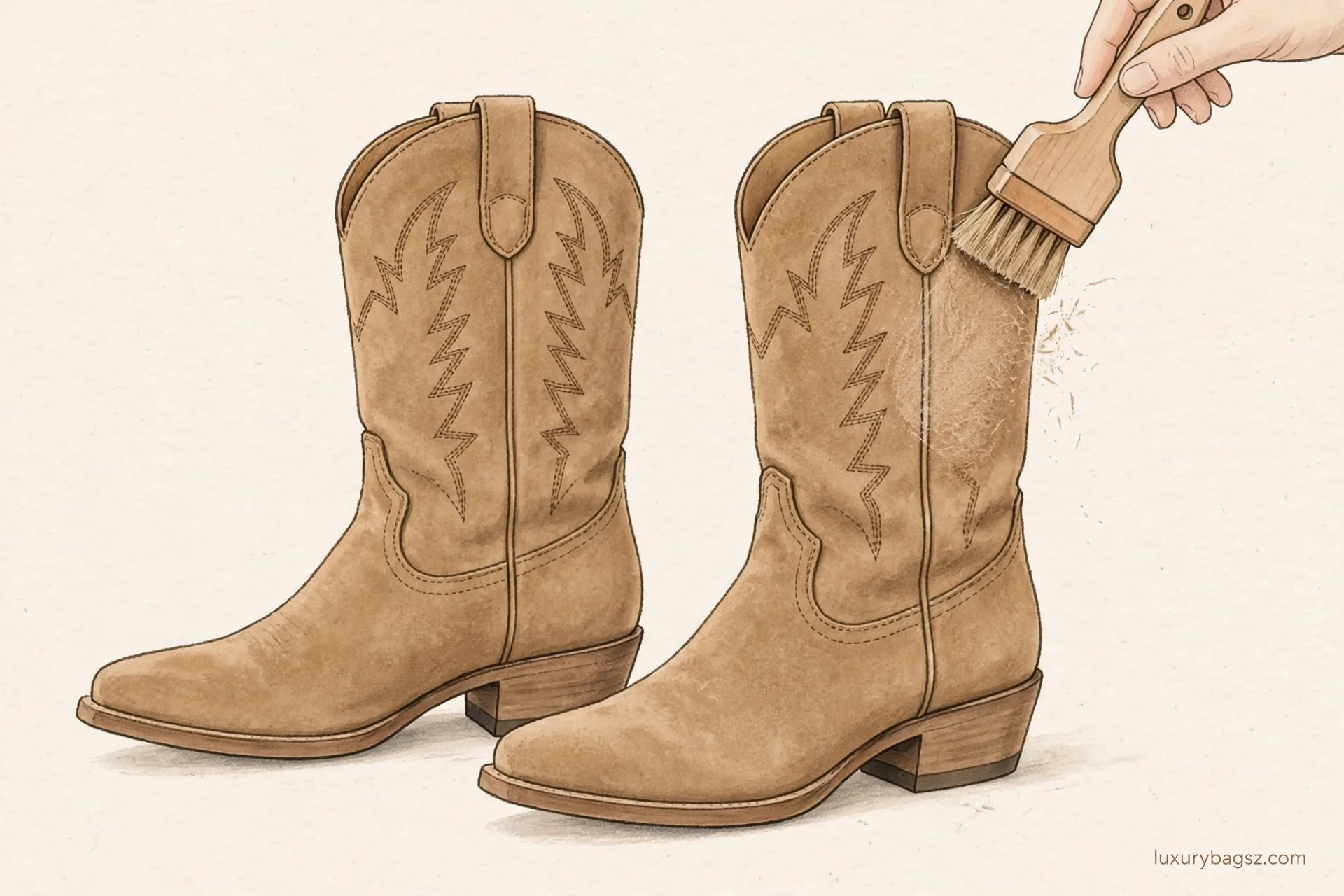
Brush dry suede with a suede brush or a soft crepe brush, lightly, in one direction, following the nap. This lifts dust and raises flattened fibres. For scuffs, rub a suede eraser gently over the mark, then brush again to clear the crumbs and lift the nap.
For a dried mud spot, wait until the mud is fully dry, then brush it away. If a stain remains, a suede-specific cleaner, used exactly as its label directs, is safer than household soap. Test it on a hidden spot first, and never soak the boot.
Grease and oil marks on suede are the hardest stains to fix at home. Blotting at once helps, and cornflour left on the mark overnight can draw out some oil. If the mark stays dark after two tries, stop and ask a cobbler, because harder scrubbing usually spreads the stain.
Once suede is clean and fully dry, spray it with a suede-only protector, holding the can at the distance the label states. Let it dry, then brush lightly to restore the nap. Reapply protector every few months of regular wear, or after any deep clean.

Condition Without Overdoing It
Conditioner replaces oils that cleaning and wear remove, keeping smooth leather supple and crack-free. It is the most important step for long boot life, and also the easiest to overdo. A little, done right, beats a lot, done often.
Condition only when smooth leather needs it: when it looks dull, feels dry or papery, or shows fine creases that stay pale. For daily-worn boots, that often means once a month, and for occasional boots, every two to three months. A fixed weekly schedule is too much for most boots.
Use a dime- to quarter-sized amount per boot to start, rubbed into a cloth, not poured onto the leather. Work it in with small circles, covering the shaft, the vamp and the heel. If the leather drinks it up at once and still looks dry, add a second thin coat.
Let the conditioner absorb for at least 20 minutes, or overnight for very dry leather. Then buff with a clean, dry cloth to remove excess and restore an even look. Skipping the buff leaves a sticky surface that attracts dust and darkens unevenly.
Choose the right conditioner for the job. A neutral, non-oil-based cream keeps colour truer, while an oil-based conditioner darkens leather and adds water resistance. If you love the current colour, test any oil product on a hidden spot first, because darkening is hard to undo.
Never condition suede, rough-out, nubuck or exotic skins with a smooth-leather conditioner. These leathers need their own products, or none at all. One creamy coat can flatten a nap or stain an exotic skin for good, and no wash fully reverses it.
Polish, Waterproof and Protect
Polish is optional, but it revives colour, covers light scuffs and gives smooth leather a finished look. It only works on leather with a finish, so skip it on unfinished, waxy or distressed leathers unless the maker says otherwise.
Apply polish in thin layers with a cloth or applicator, buffing between coats until you reach the finish you want. A matching colour revives faded leather, while a neutral polish adds shine without changing colour. Keep polish off stitching, buckles and sole edges.
For white or contrast stitching, polish is the enemy: it tints the thread the colour of the polish. Tape over stitching with painter's tape before polishing, or clean the stitching afterwards with a soft brush and a little soap. This small step keeps the contrast look crisp.
Waterproofing is a separate choice from conditioning. A spray protector suits smooth and exotic-look leathers, while beeswax-based products suit heavy work boots. Spray in a ventilated spot, let the boots dry fully, and reapply after deep cleans or a season of hard wear.
Do not expect any protector to make boots fully waterproof. It slows water uptake and buys you time in rain, but standing water still soaks through seams and welts. In heavy rain, the honest answer is a different pair of boots, not a thicker coat of spray.
Salt, Mud and Stain Rescue
Winter salt is the fastest way to ruin a good pair of cowboy boots. Salt draws moisture out of leather, leaves white rings, and stiffens stitching and suede if it sits. The rescue is simple, but it works best the same day the salt appears.
Start by brushing off loose, dry salt. Then wipe smooth leather with a barely damp cloth, rinsing often, until the white lines fade. For stubborn rings, a weak mix of equal parts water and white vinegar on a cloth, tested on a hidden spot first, often lifts what water alone leaves behind.
Dry the boots slowly at room temperature, stuffed with paper, and condition smooth leather only once fully dry. Salt-damaged leather is thirsty, so one thin conditioner coat after rescue helps, but do not flood it. Two thin coats, buffed between, beat one heavy coat.
Mud rescue follows the same patience rule. Let mud dry completely, brush it off, then wipe with a barely damp cloth. If mud has dried into the welt stitching, a soft toothbrush and a little soap, rinsed well, clears the grooves without soaking the boot.
For oil, food or drink stains on smooth leather, blot at once, never rub, then clean with a little saddle soap and condition after drying. Dark spots that stay after two careful tries are usually dye-deep, and a cobbler or a colour-matched cream is a better next step than stronger chemicals.
Soles, Stitching, Storage and When to See a Cobbler
Soles and heels wear out before uppers do, and that is normal. Check the sole edge and heel caps every few months. When the heel cap wears to a slant, or the sole feels thin at the ball of the foot, a cobbler can replace them far more cheaply than a new pair costs.
Keep welt stitching clean, because dirt in the welt groove rots thread over time. A soft brush after wear, plus a toothbrush pass during deeper cleans, is enough. If stitching frays, loosens or breaks, stop wearing the boots for long walks and book a cobbler before the sole starts to separate.
Store boots upright, on boot trees or stuffed with paper, in a cool, dry, dark place. Cedar trees absorb moisture and odour, and they hold the shaft shape. Never store boots in sealed plastic, which traps moisture, and never stack heavy items on shafts, which creases them.
Rotate your boots when you can. Wearing the same pair every day never gives leather a full drying and resting cycle, and rest is part of care, not a luxury. Two pairs in rotation last far longer than one pair worn daily, even with identical cleaning.
The same brush, clean, condition and polish order also suits dress leather boots, and our Hermes leather boots care guide shows how that routine adapts to fine calfskin and suede ankle boots. The products change with the leather, but the order and the patience do not.
See a cobbler promptly for a cracked sole, a detached heel, deep cuts, colour loss across a large area, a broken zip or a shaft seam coming apart. Home products cannot fix structural damage, and trying can make the repair harder and dearer. A good cobbler will also tell you honestly when a pair is past saving.
Frequently Asked Questions
How often should I clean my cowboy boots?
Brush them after every wear, wipe smooth leather when dirty, and deep-clean only when mud, salt or stains demand it. For most wearers, a full clean and condition every one to three months is plenty.
Can I wash cowboy boots with water?
Light damp wiping is fine for smooth leather, but never soak boots, hose them down or machine-wash them. Soaking swells leather, loosens adhesives and can warp shafts as they dry.
What is the best cleaner for cowboy boots?
For routine dirt, a barely damp cloth is enough. For stubborn dirt, saddle soap or a leather-specific cleaner works well, followed by a full rinse-wipe and a conditioner coat once dry.
Can I use saddle soap on suede cowboy boots?
No. Saddle soap, cream, oil and polish all damage suede and rough-out. Brush suede dry, use a suede eraser for scuffs, and protect it with a suede-only spray.
How do I get mud off cowboy boots?
Let the mud dry completely, then brush it off outdoors. Wipe any residue with a barely damp cloth, clean the welt with a toothbrush, and let the boots dry at room temperature.
How do I remove salt stains from cowboy boots?
Brush off dry salt, wipe with a barely damp cloth, and try a weak water-and-vinegar mix on a hidden spot for stubborn rings. Dry slowly, then condition smooth leather once fully dry.
Should I condition cowboy boots after every clean?
Condition smooth leather after a deep clean, because cleaning strips oils. After a light wipe, conditioning is only needed if the leather looks dull or feels dry.
Can I polish cowboy boots with white stitching?
Yes, but tape over the stitching first with painter's tape, or clean the stitching afterwards with a soft brush and soap. Polish tints thread quickly, and white thread shows every trace.
How should I store cowboy boots?
Upright, on boot trees or stuffed with paper, in a cool, dry, dark place. Avoid sealed plastic, direct sun, radiators and damp basements, all of which age leather faster.
When should I take cowboy boots to a cobbler?
For worn heel caps, thin soles, loose or broken stitching, detached heels, deep cuts or shaft damage. Early repairs are cheap, while a separated sole or torn seam costs far more to fix.
Final Verdict
Clean cowboy boots are not hard to keep, they just need the right order and a little patience. Brush after wear, clean only as deeply as the dirt demands, condition smooth leather when it is dry, and dry everything slowly away from heat.
Match the product to the leather, keep creamy products off suede, and deal with salt the same day it appears. Do those few things well, and a good pair of cowboy boots will outlast trends, seasons and many cheaper pairs bought in the meantime.






