

How to Spot a Fake Hermès Collier de Chien Bracelet: 12 Checks
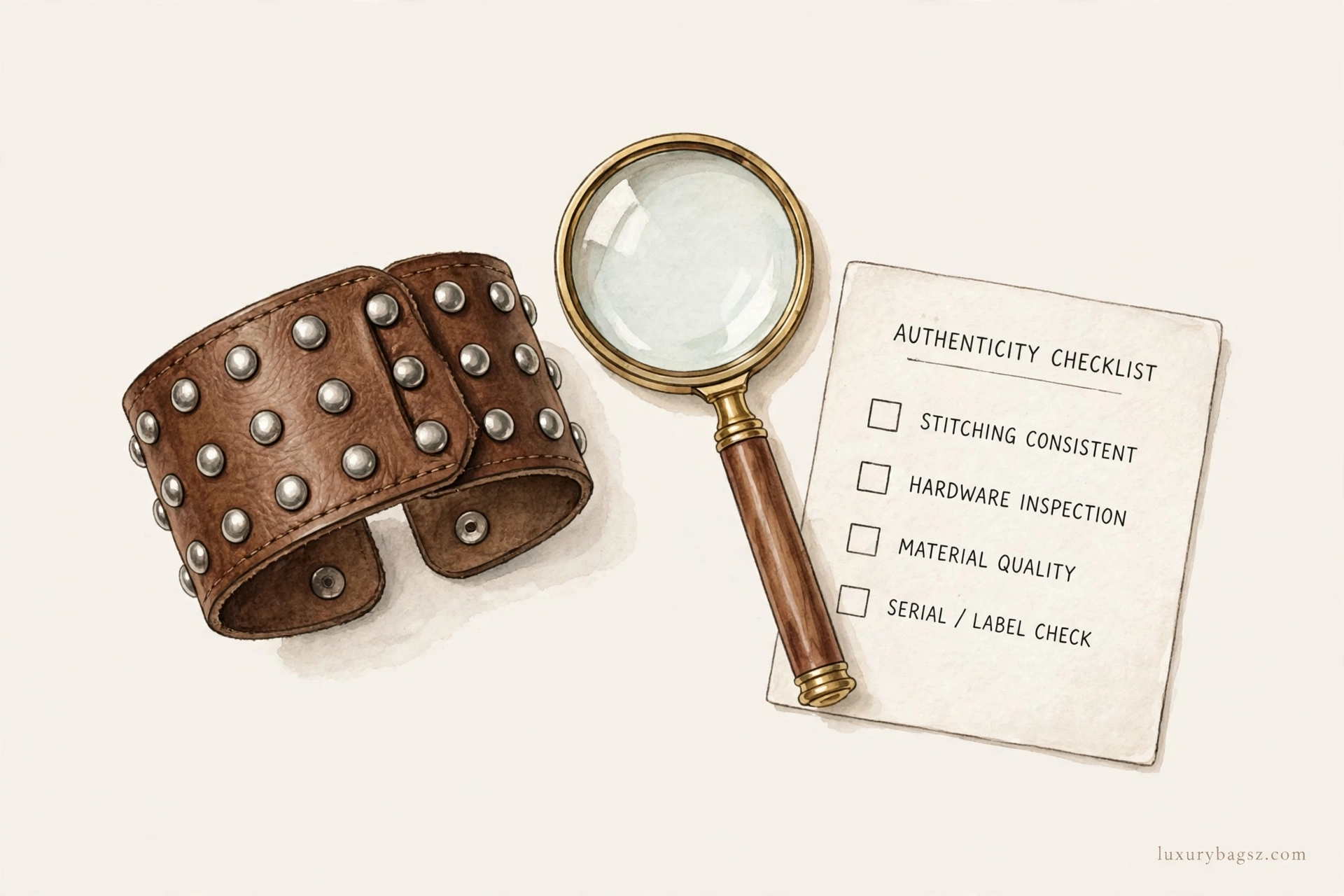
Why the CDC Rewards a Slow Look
The Collier de Chien is one of the most faked bracelets in the world, because its shape is simple to copy and hard to copy well. The studs, the ring and the stitching are where the money runs out on a fake.
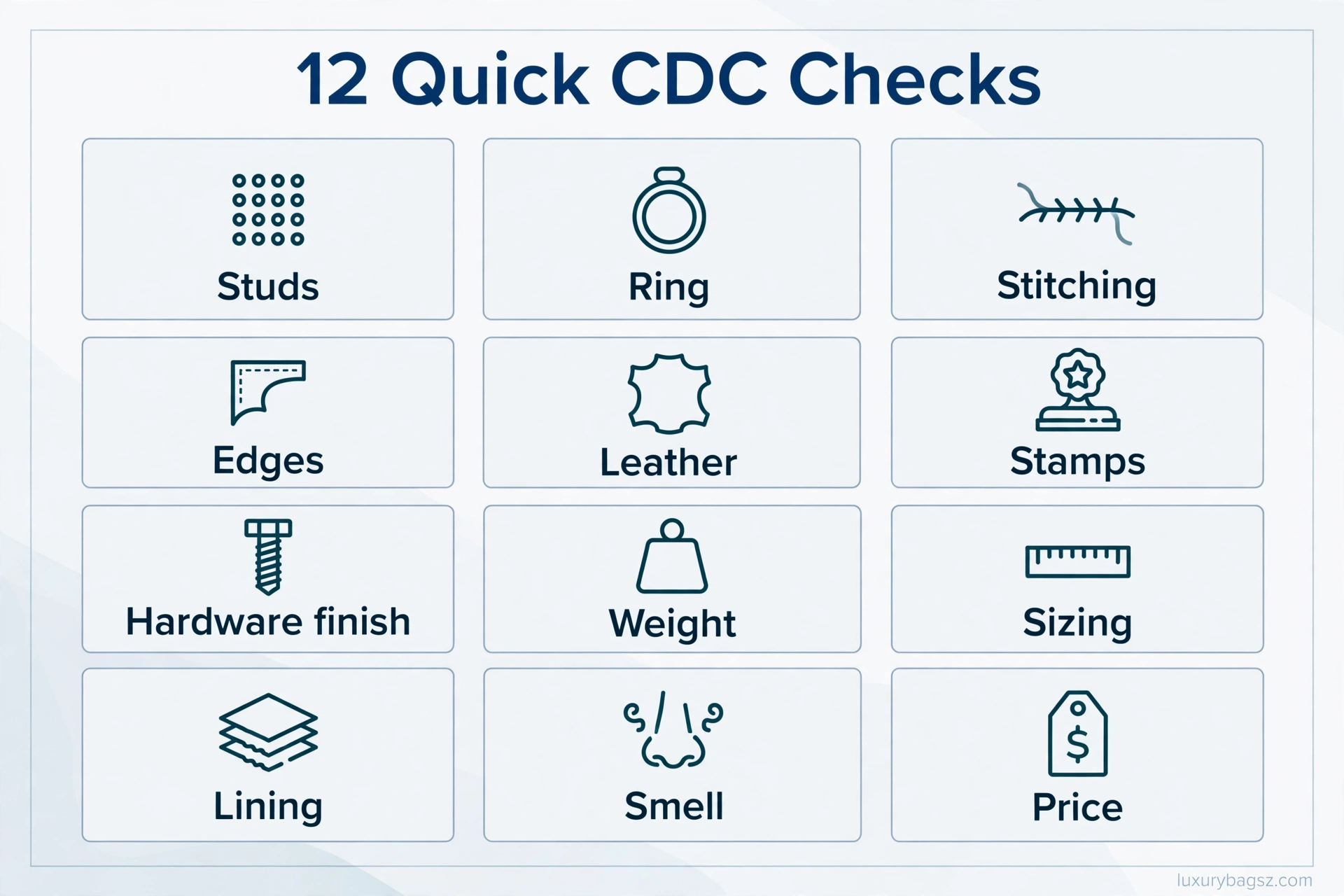
These 12 checks move from the outside in: hardware first, then leather and stitching, then stamps, sizing and the paper trail. A genuine CDC passes all twelve without drama; most fakes fail three or more.
Use them before you pay, with the bracelet in hand or in clear, seller-supplied photos of the exact points named. Any seller who refuses those photos is telling you the result in advance.
Key Takeaways
- Studs must match in height, angle and finish; the ring must feel seamless.
- Stitching on a genuine cuff is even saddle stitching with no glue or loose ends.
- Stamps sit inside the strap or on the metal: crisp, correctly spelt and placed.
- Weight tells the truth on metal versions: real silver and gold feel dense.
- Sizing bands and measurements on fakes often disagree with the actual cuff.
- A leather CDC far below the typical $1,300 to $1,600 band is a check that fails.
Checks 1 and 2: The Pyramid Studs
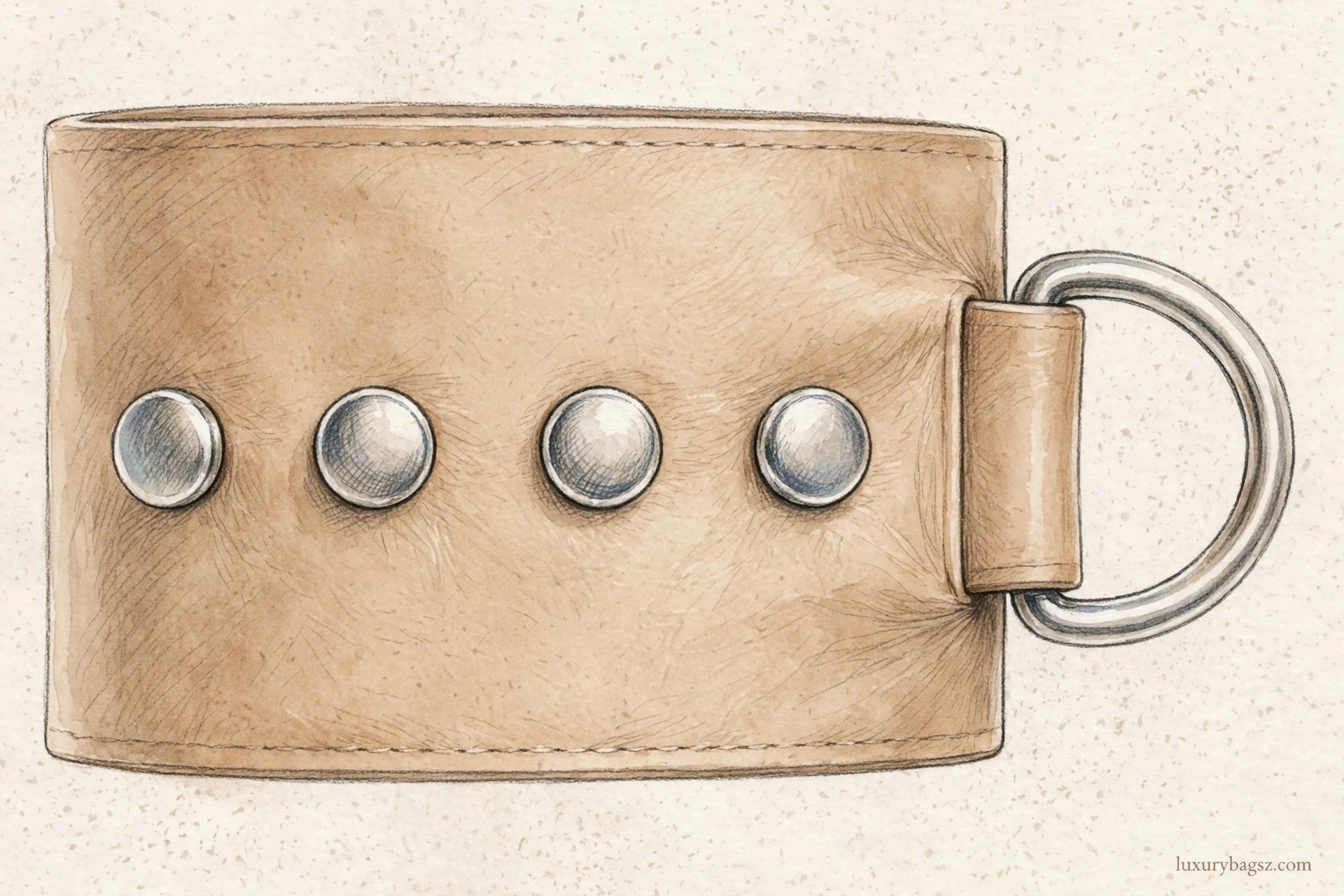
Check 1, stud alignment. The four Médor pyramid studs on a genuine cuff stand at identical height and angle, in a clean line. Leaning, uneven or mismatched studs are the commonest fake tell.
Check 2, stud finish. Real studs are smoothly cast and evenly plated, with crisp pyramid edges. Bubbling plating, rough casting lines or edges that feel sharp fail this check.
Press each stud gently: all four should feel firmly fixed with no wobble or rotation. Loose hardware is a manufacturing shortcut genuine quality control does not pass.
Our buying guide to the Hermès Collier de Chien bracelet shows the genuine proportions to compare against, across leather, silver and gold versions.
Photograph the studs straight on, not at an angle. Perspective hides a leaning stud in listing photos, and a straight-on shot is the one honest sellers provide without being asked twice.
Checks 3 and 4: The Ring and Closure
Check 3, the ring. On a genuine CDC the central ring is a smooth, seamless-feeling piece that moves freely. A visible join, grinding movement or thin, light feel points to a copy.
Check 4, the closure. The stud fastening should engage positively at each hole, with holes cleanly punched and evenly spaced. Torn, oval or wandering holes suggest cheap work.
Open and close the cuff several times. Genuine hardware repeats the same clean action; fakes often need force, misalign, or show the strap twisting as it fastens.
Photograph the closure open and closed when buying remotely. Moving hardware is where fakes save money, and honest sellers will always show it working.
Checks 5 and 6: Leather and Stitching
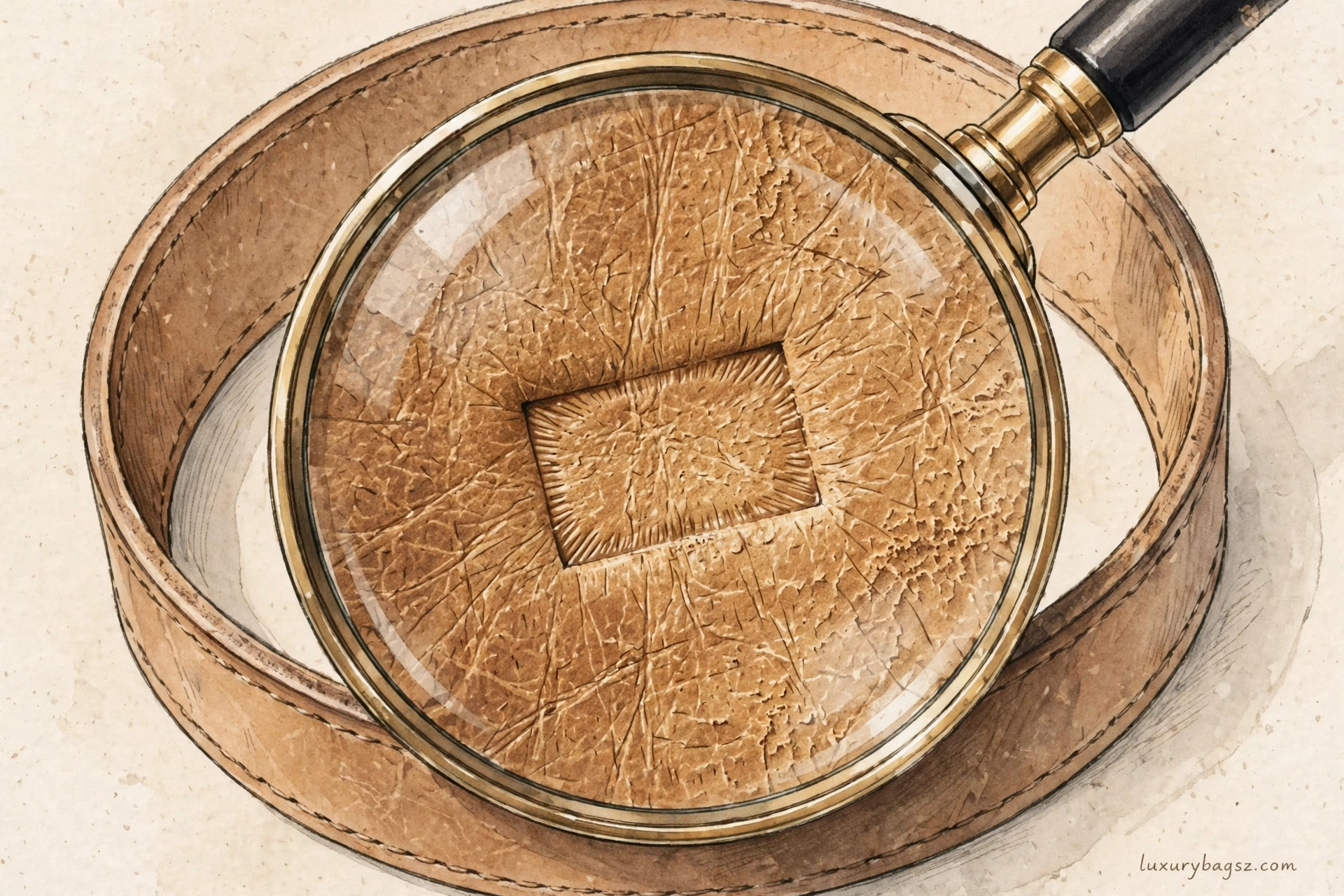
Check 5, the leather. Genuine cuffs use dense, fine-grained calfskin or clearly genuine exotic skin, smelling of leather. Plastic shine, coarse grain or a chemical smell fails here.
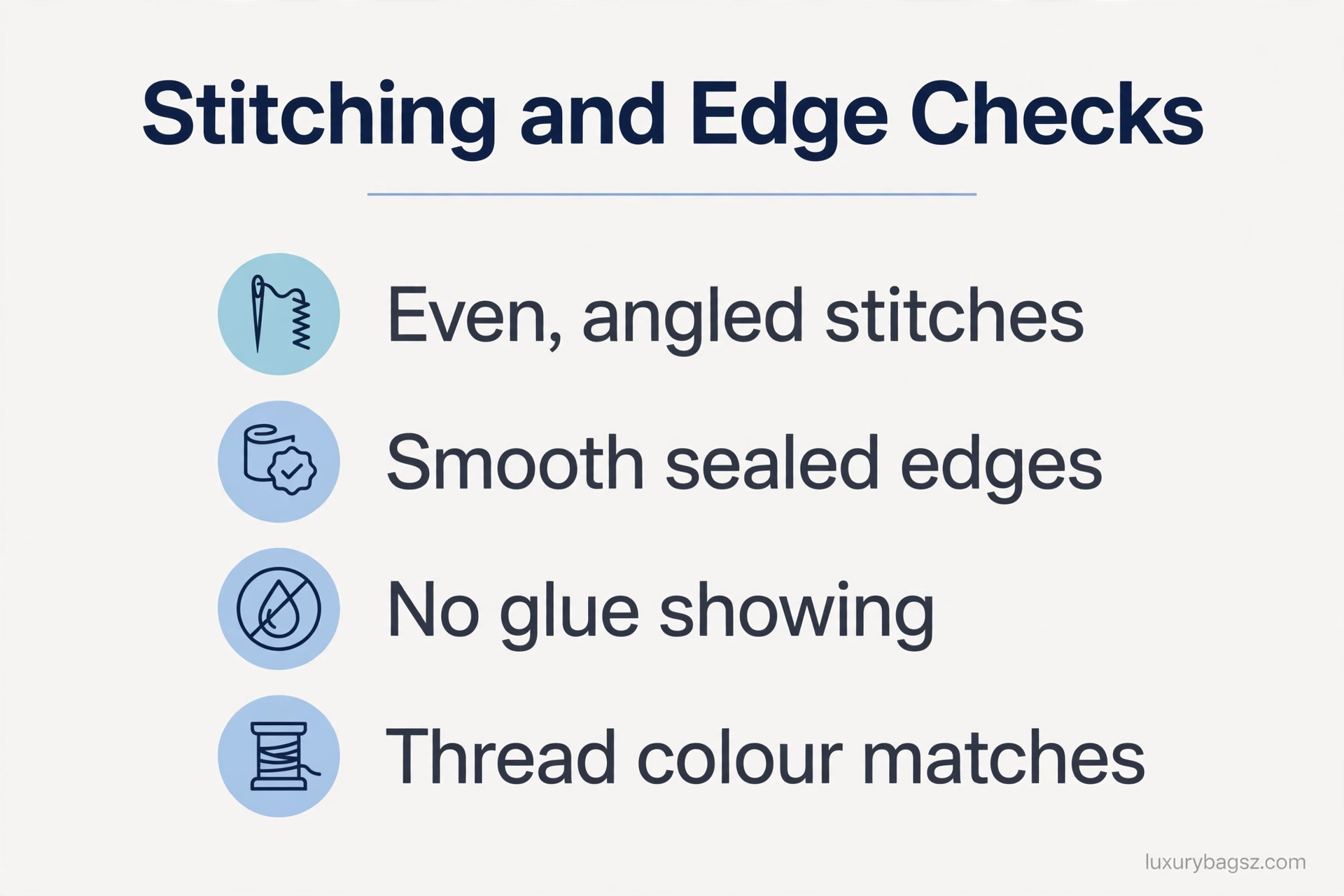
Check 6, the stitching. Look for even, tight saddle stitching at a consistent angle, with no loose ends, doubled threads or glue along the seam. This is the check fakes fail most reliably.
Run a fingertip along the strap edges: they should feel smooth and evenly finished, not raw, peeling or sticky. Edge paint that chips in flakes is a warning sign.
On exotic versions, scale pattern should be natural and centred as Hermès cuts it. Printed or embossed imitation skin, with repeating identical scales, is not genuine.
The strap holes deserve the same straight-on treatment: count them, space them, and check the leather around each for tearing. Hard use and bad making both confess at the holes first.
Checks 7 and 8: Stamps and Markings
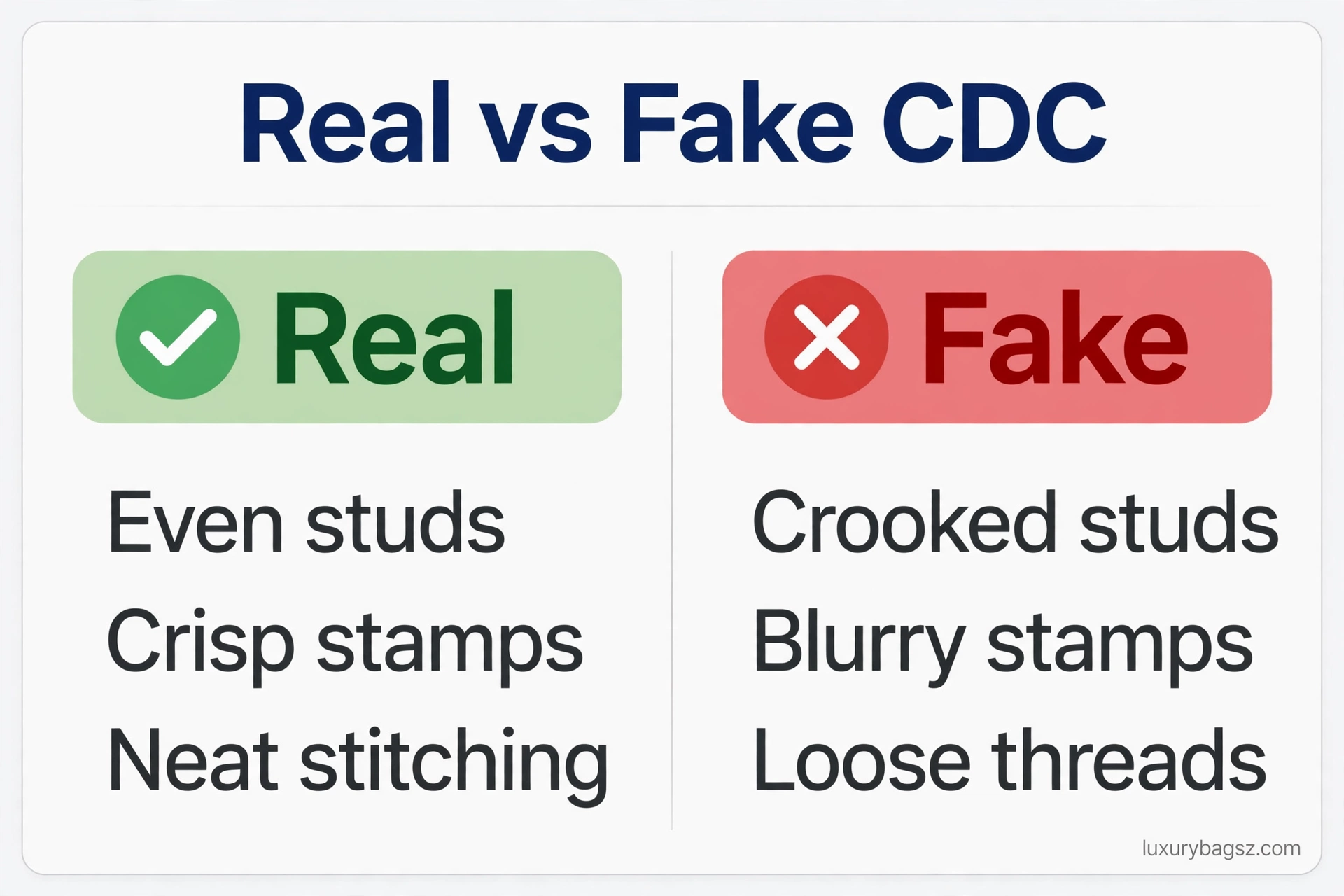
Check 7, the stamps. Leather cuffs carry maker and size markings inside the strap; metal versions carry hallmarks and maker marks. All should be crisp, correctly spelt and neatly placed.
Check 8, consistency. The size marking should match the cuff's actual size band, and markings should agree with each other. A stamp that contradicts the measured size is a serious warning.
Blurred, shallow or crooked stamps are common on fakes, because stamping well needs the right dies and pressure. Compare letterforms against authenticated examples, not listing photos.
The general method behind these checks is set out in our guide to how to authenticate luxury jewellery, which pairs well with this model-specific list.
Checks 9 and 10: Metal Versions, Weight and Shape
Check 9, weight and density. A sterling silver CDC has real heft, and gold versions feel denser still. A metal CDC that feels light or hollow in the hand is almost certainly plated base metal.
Check 10, shape. Rigid Hermès bracelets are oval, following the wrist, not round. A perfectly round metal CDC, or one that flexes easily, fails a check authenticators rely on.
Inspect hallmarks with a loupe if you can: genuine marks are sharp and complete. Soft, partial or invented-looking marks on the inner surface are a classic fake shortcut.
Diamond-set versions add a stone check: settings should be even, stones matched and secure. Wobbly stones or glue traces around settings end the conversation immediately.
Check 11: Fit, Sizing and Proportions
Check 11, live proportions. Measure the cuff's width and wrist size and compare them with the genuine model's known bands. Fakes often drift wider, narrower or longer than the real design.
Try it on if you can: a genuine CDC sits close, lies flat and fastens at a sensible hole for its size band. A cuff that only fits at its last hole, despite its label, is mis-sized or fake.
Compare both ends of the strap and the stud spacing with authenticated photos at the same angle. Proportion drift is hard to see alone and obvious side by side.
Keep a tape measure in your authentication kit. Numbers do not care about boutique lighting, and fakes are built for photographs, not for measurements.
A loupe costs very little and pays for itself on the first hallmark it clarifies. Authenticators use one for a reason: the eye forgives what magnification does not.
Check 12: Packaging, Receipts and Price
Check 12, the supporting cast. A genuine set usually includes the orange box, a pouch and care material, all cleanly printed. Misspellings, thin board or sloppy ribbons are bad signs.
Receipts support; they never decide. Genuine receipts are paired with fake bracelets every week, so the cuff must pass on its own first, with the paper as a bonus.
Price closes the case: with leather cuffs typically around $1,300 to $1,600 and metal versions above that, a new CDC at a fraction of the band is the product confessing.
If two or more checks fail, walk away, and if the sums are large, pay an authentication service before the return window closes. Their fee is small beside a fake's cost.
Ask for a photo of the cuff fastened on a wrist at its stated size. Proportion lies are hard to maintain in a worn shot, and genuine sellers know exactly why you are asking.
Buying the CDC Safely
Buy from boutiques first and authenticated resale second. The CDC's fame means the second-hand market is deep, but so is the fake supply feeding it.
Cross-check with the enamel line's tells in our guide to how to spot a fake Hermès Clic H bracelet: stamp discipline and hardware finish carry across the range.
Demand photos of studs, ring, stitching, stamps and closure, in daylight, from the actual piece. Stock photos and refusal are both answers, and neither is the one you want.
Trust the pattern, not the story. A genuine CDC needs no story: it passes twelve quiet checks in a row, and that calm is exactly what you are paying for.
If a seller offers a story instead of photographs, price the bracelet as unauthenticated, which is to say, do not buy it at authenticated money. Stories are free; genuine bracelets are not.
Frequently Asked Questions
What is the fastest way to spot a fake CDC?
Study the studs and stitching together. Uneven stud height or finish plus wavy, glued stitching is the combination that exposes most fakes within a minute.
Should the CDC ring have a visible seam?
No. The genuine ring feels smooth and seamless and moves freely. A visible join, roughness or grinding movement is a strong warning sign.
Where are the stamps on a real CDC?
Leather cuffs carry markings inside the strap; metal versions carry hallmarks and maker marks on the metal. They should be crisp, correctly spelt and consistent with the size.
How can I check a silver CDC?
By weight, shape and marks: real silver feels dense, the bracelet is oval rather than round, and hallmarks are sharp and complete. A light, round, softly marked piece fails.
Do fakes use real leather?
Some do, which is why leather alone proves nothing. The stitching quality, edge finish, stud work and stamps are where a leather fake still gives itself away.
Can packaging prove a CDC is real?
No. Boxes, pouches and receipts are copied and mixed with fakes. Let packaging support a bracelet that already passes the physical checks, never replace them.
Is a cheap CDC ever genuine?
A used leather cuff can fairly sell below retail, but a new one at a small fraction of the typical $1,300 to $1,600 band is not credible. Price plus failed checks settles it.
What size checks should I run?
Measure the cuff and compare width and wrist size with the genuine size band it claims. Fakes often drift in proportion, and a label that disagrees with the tape is a tell.
Are diamond CDC versions faked too?
Yes, and the stone work exposes them: uneven settings, mismatched stones or glue traces fail checks that even good metal copies cannot pass.
Where is the safest place to buy a CDC?
Hermès boutiques first, then established resale platforms that physically authenticate. For private sales, run all 12 checks and consider a paid authentication before paying.
Final Verdict: Twelve Quiet Checks Beat One Loud Logo
A fake CDC is built to survive a glance and a photograph. It is not built to survive stud measurements, a loupe on the stamps and a fingertip along the stitching.
Run the twelve checks in order, insist on the photos that prove them, and let the price band guard the door. The genuine bracelet passes calmly; anything else is a story you should not buy.






