Hermès Change Trays and Vide Poches: Sellier, Pégase and Leather Trays Explained
The Smallest Way Into Hermès Home
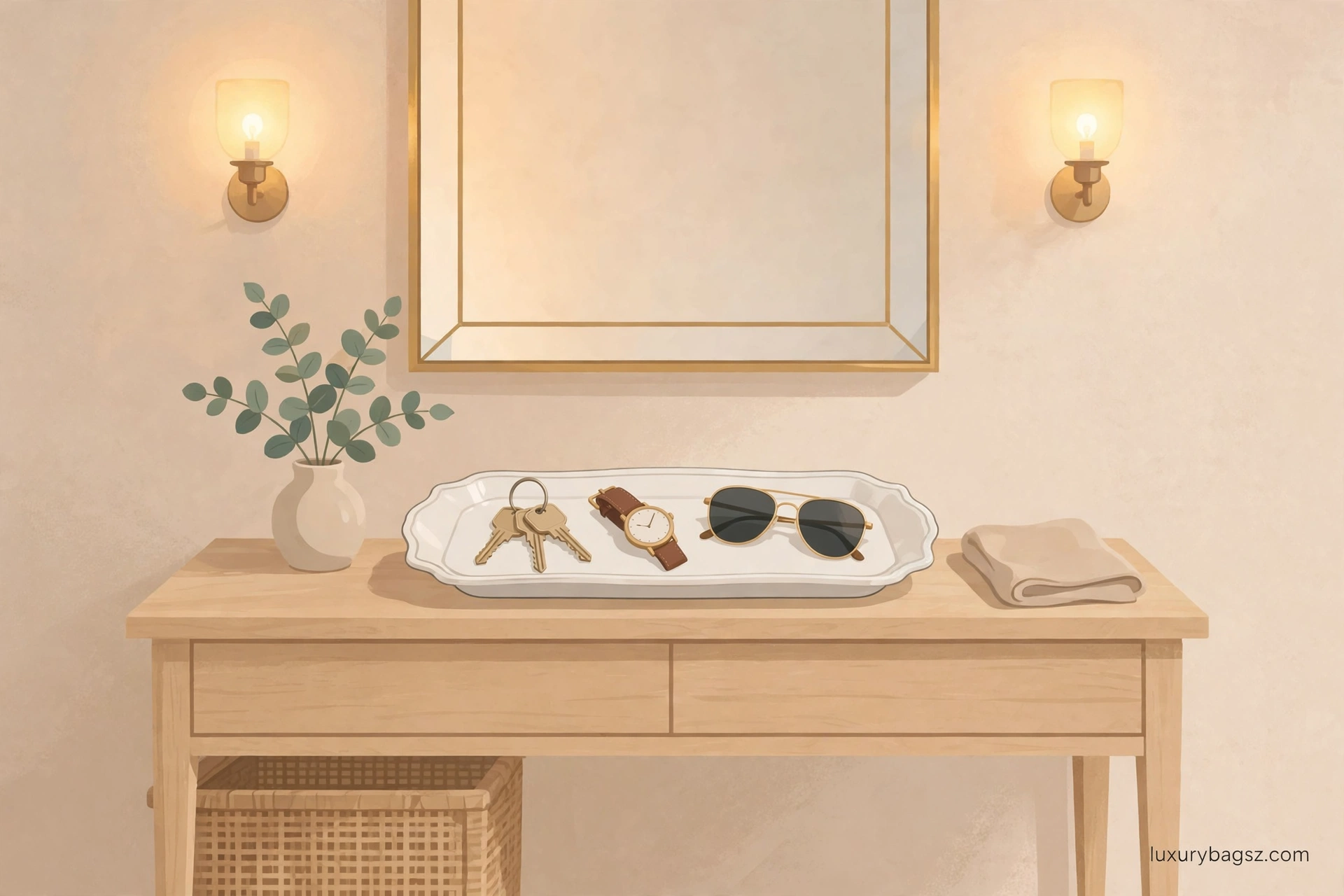
A hermes change tray — the vide poche, or pocket emptier — is the hardest-working small object in the house's home range: a porcelain or leather tray, usually around 21 by 17 cm, that catches keys, coins, watches and jewellery at the door or the bedside.
It is also the most attainable entry into Hermès home, with porcelain designs such as Sellier and a wide family of printed patterns, plus soft leather trays that fold flat for travel.
This guide explains the types, sizes, prices and which tray suits which spot in your home.
Key Takeaways
- The standard porcelain change tray measures around 21 by 17 cm; smaller formats around 16 by 12 cm also appear.
- Porcelain trays sit on a velvet goatskin base and carry prints from the tableware and scarf worlds.
- Sellier is the equestrian classic; Pégase designs bring the winged-horse motif to porcelain trays and ashtray formats.
- Leather vide poches use snap corners, land softly and travel flat; resale prices vary enormously.
- Typical resale for change trays runs from a few hundred dollars to over $1,000 for sought-after designs.
- Buy the tray for the spot it will live in: porcelain for halls and desks, leather for travel and bedside.
What a Vide Poche Actually Does
Vide poche is French for empty pocket, and that is the whole design brief: one beautiful place where the contents of your pockets land, every day, in the same spot.
Hermès has made them for decades in porcelain printed with house motifs, set on a soft goatskin base that protects furniture and stops the tray sliding or ringing.
It is a tiny object with an outsized effect. A good tray ends the daily hunt for keys and makes an entryway feel considered rather than cluttered.

The Porcelain Families
Most porcelain trays borrow their art from the tableware and silk worlds. Mosaïque au 24 trays carry the flagship's mosaic; others wear scarf designs, equestrian scenes or the red scrolls of our Balcon du Guadalquivir guide.
The Hermès Mosaïque au 24 tray is the formal choice in platinum or gold mosaic; printed picture trays are the playful ones, often bought as pure decoration.
All share the same formula: Limoges-style porcelain, a printed design, a velvet goatskin underside and French manufacture, as auction and retailer listings consistently describe.
Sellier and Pégase: The Named Classics
The Sellier tray is the equestrian heart of the range: its name means saddler, and documented examples show green and gold decoration with a suede-lined underside, at around 21.4 by 17.2 cm.
Pégase, the winged horse, appears across Hermès small porcelain, including ashtray and tray formats in small and large models sold through vintage specialists.
Named designs matter at resale. A tray with a recognised motif, its box and a clean base will always outrun an anonymous pattern, however pretty.
Sizes: Standard, Mini and Ashtray Formats
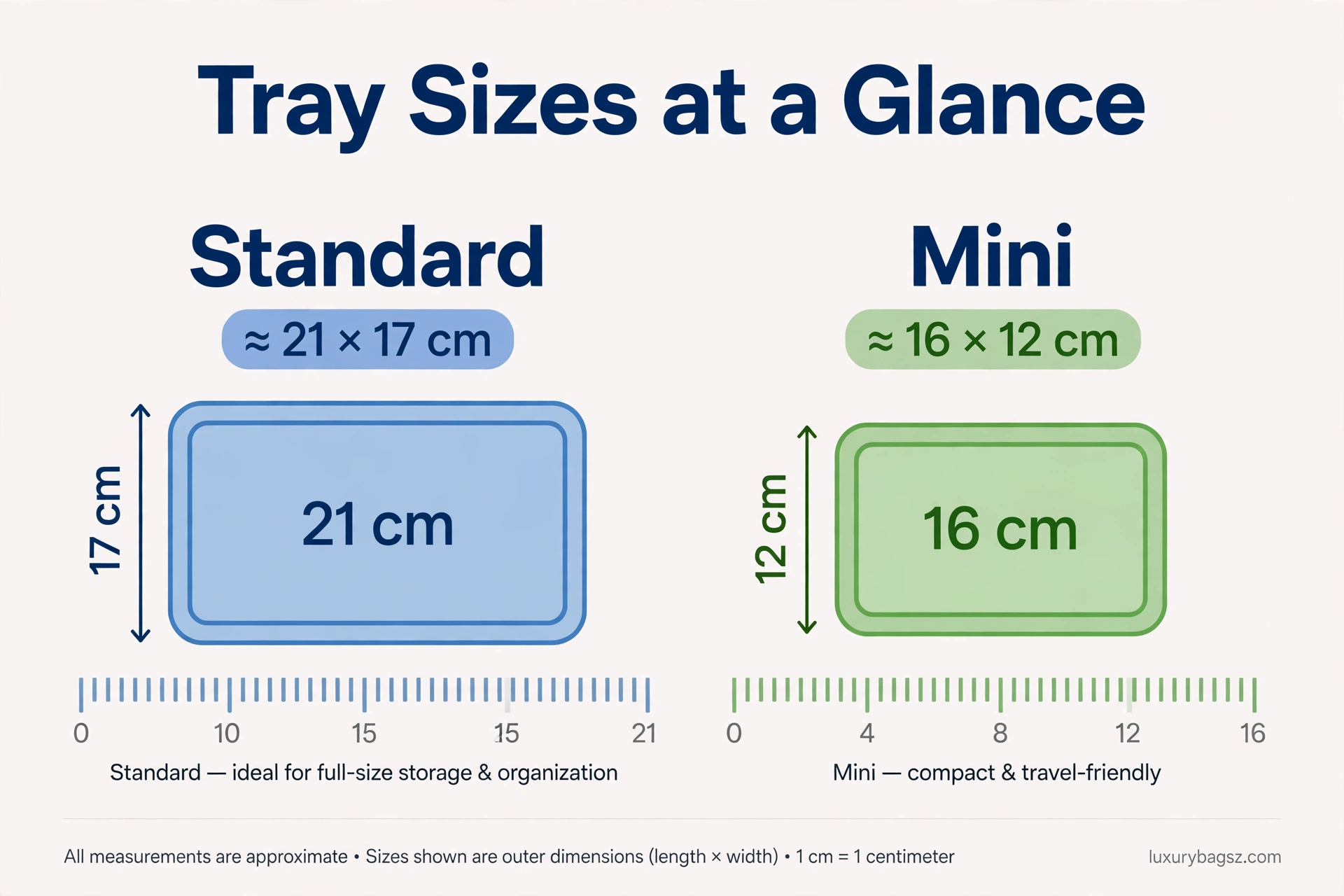
The standard change tray is around 21 by 17 cm, confirmed across auction and retailer listings: big enough for keys, a wallet and a watch, small enough for any console.
Smaller porcelain trays around 16 by 12 cm appear in patterns such as Chaîne d'Ancre, suiting rings, earrings and a single key set rather than a full pocket emptying.
Larger trays and ashtray-derived formats exist too, but measure before buying vintage: listings mix models, and centimetres decide whether your tray fits its intended spot.
There is a third way to use the mini size: as the base of a gift. A small tray holding a silk twilly, a lipstick or a keyring turns three modest Hermès pieces into one composed present.
The Leather Vide Poche
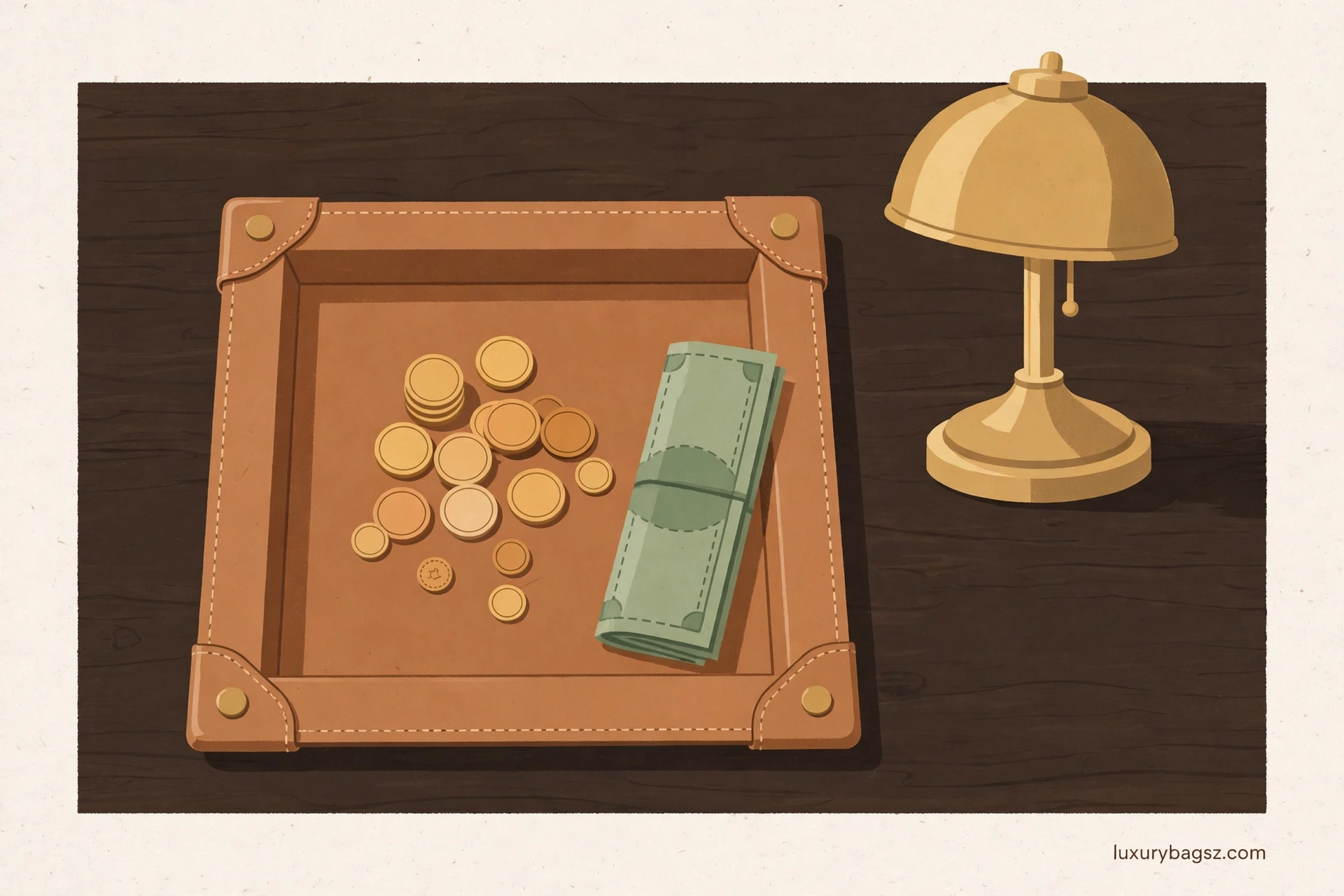
The leather version works differently: a flat piece of leather whose corners snap up to form a soft tray. Unsnap it and it travels flat in a suitcase, which porcelain never can.
Leather trays land silently, forgive dropped watches and suit bedside tables. Their look is saddlery rather than tableware, often in the house's classic tans and browns.
On resale platforms, leather trays average higher than porcelain ones, with listings spanning from the mid hundreds into several thousand for rare leathers and designs.
Porcelain or Leather: Choosing Well
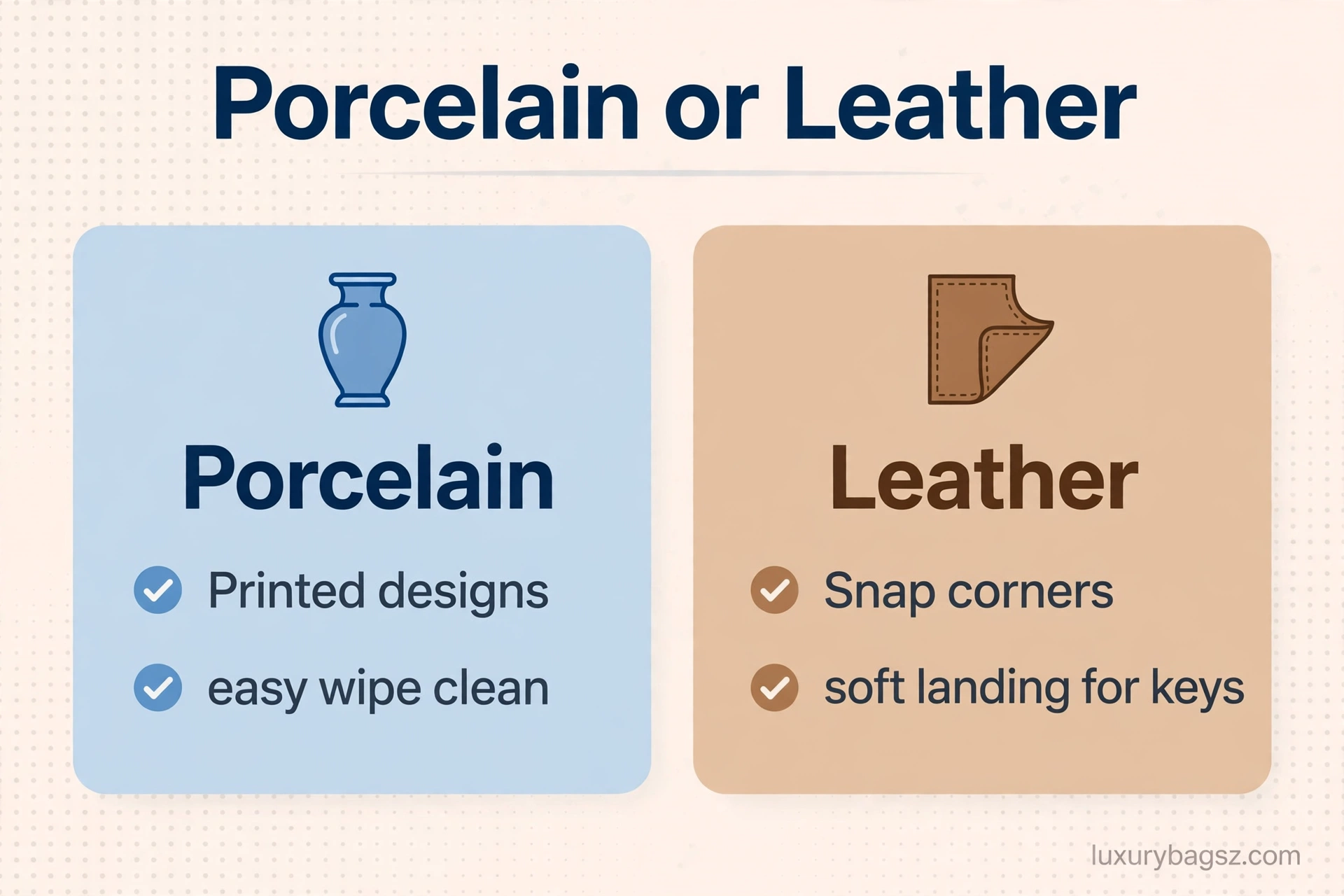
Choose porcelain for a fixed, decorative spot: hall console, desk, dressing table. The prints are the pleasure, the goatskin base protects wood, and the tray stays put.
Choose leather for travel, bedside and anywhere a tray gets knocked. It is quieter, softer on jewellery and watches, and packs flat when you move or travel.
Collectors often end with both: porcelain where guests see it, leather where life happens. Neither is the wrong answer; they are different tools.
A hybrid habit is common among collectors: porcelain in the hall where keys land hard, leather at the bedside where silence matters, mini porcelain on the dressing table.
If you entertain, a second standard tray near the drinks area quietly collects bottle openers, coasters and corks through an evening and restores order in one carry.
Prices: Boutique and Resale Reality
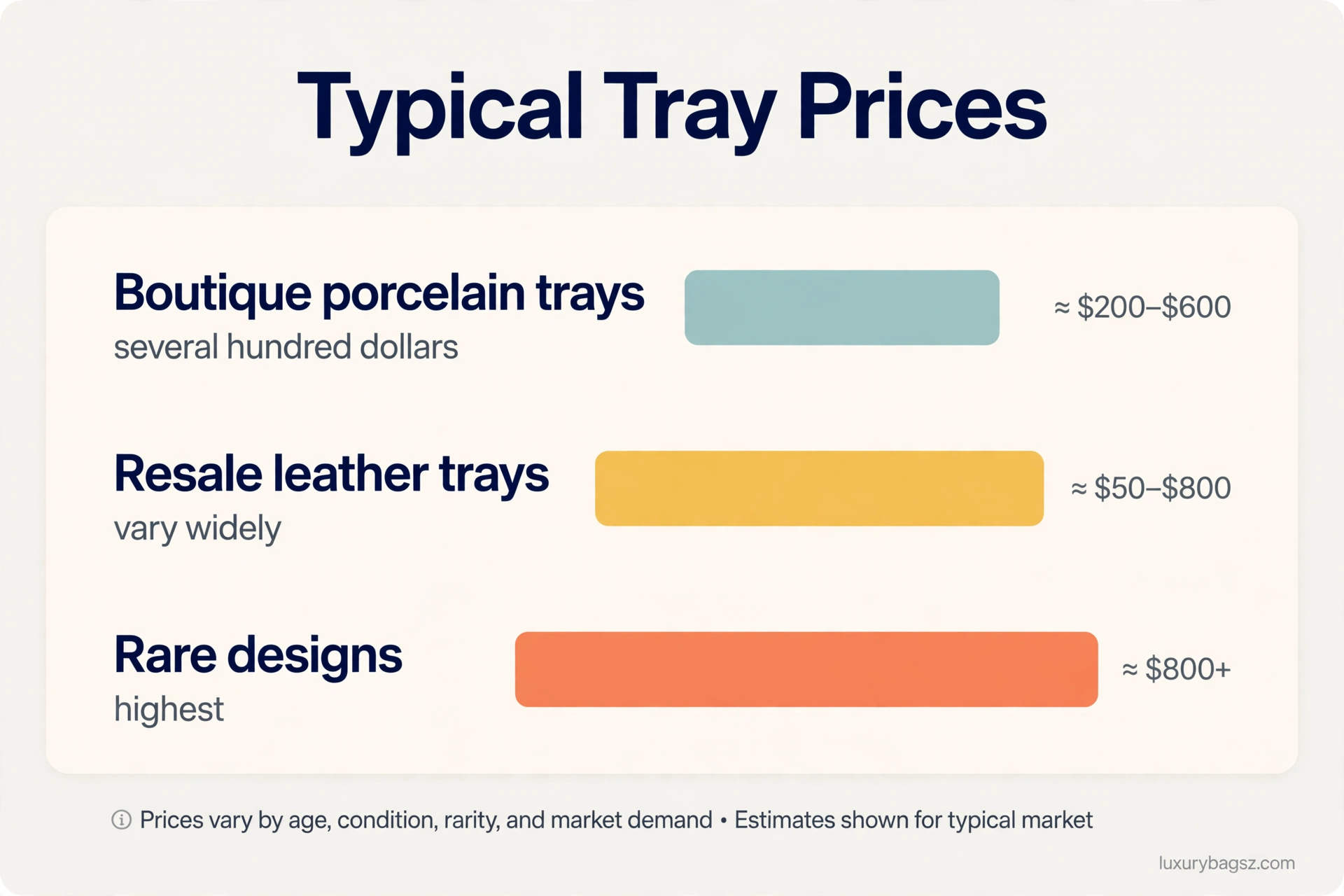
New porcelain change trays at Hermès sit in the several-hundred-dollar range depending on pattern, with special designs higher; a Mosaïque au 24 tray has been listed in Australia at a level above most.
Resale spreads widely. Change trays on major platforms have ranged from around $340 to over $4,000, averaging near $1,149, with common porcelain models in clean condition often changing hands for a few hundred pounds or dollars.
As always with small Hermès objects, box, base condition and a named design move the price more than age does.
Styling-wise, one tray per surface is the rule that keeps the look calm. A tray is a frame; two frames on one console compete, and the objects inside both lose.
Rotate prints seasonally if you collect. A stored tray in its box keeps its base perfect, and rotation makes a small collection feel larger.
Care and Buying Checks
Wipe porcelain with a soft damp cloth and keep the goatskin base dry; water staining on the base is the most common condition fault and it lowers resale value.
For leather trays, condition the leather lightly and store them snapped, away from direct sun, so the corners keep their shape and colour.
Before buying, check for chips at the corners, cracks in the glaze, a clean legible backstamp and an unstained base; our what is Hermès tableware overview covers the porcelain marks to expect.
Start with one tray, live with it for a month, and let the household vote with its keys.
Frequently Asked Questions
What size is a Hermès change tray?
The standard porcelain tray is around 21 by 17 cm. Smaller models around 16 by 12 cm also exist, so always check the measurements in a listing.
What does vide poche mean?
French for empty pocket. It is the tray by the door or bedside where keys, coins and jewellery land at the end of the day.
What is the Sellier tray?
The equestrian-themed porcelain change tray named for the saddler. Documented examples show green and gold decoration, a suede or goatskin base and the standard 21 by 17 cm format.
Are Hermès change trays porcelain or leather?
Both. Porcelain trays carry printed designs on a goatskin base; leather vide poches are snap-corner trays that fold flat for travel.
How much does a Hermès change tray cost?
New porcelain models sit in the several-hundred-dollar range. Resale runs from a few hundred dollars to several thousand for rare designs and leathers.
What is Pégase in the tray range?
Pégase is the winged-horse motif used across Hermès small porcelain, including trays and ashtray formats in small and large models found through vintage specialists.
Can I use a change tray as an ashtray?
Some Hermès small porcelain pieces were designed as ashtrays and double as trays. A change tray works for keys and jewellery; use proper ashtrays for ash.
How do I clean a porcelain change tray?
Wipe with a soft damp cloth and dry it fully. Keep the goatskin underside dry, as water marks on the base are common and reduce value.
Do change trays hold their value?
Named designs in clean condition with box and base intact resell well for small objects. Common patterns in worn condition sell for a few hundred rather than four figures.
Which tray should I buy first?
Porcelain in a design you love, in the standard size, for the hall. It is the classic entry point; add a leather travel tray later if the habit sticks.
Summary
The Hermès change tray turns a daily habit into a small ceremony: porcelain Sellier elegance by the door, soft leather order by the bed.
Measure your spot, choose the material that fits your life, and buy the cleanest example you can find.