

Designer Sneakers for Men: The Styles Worth Buying and How to Wear Them
The Pairs That Earn Their Price
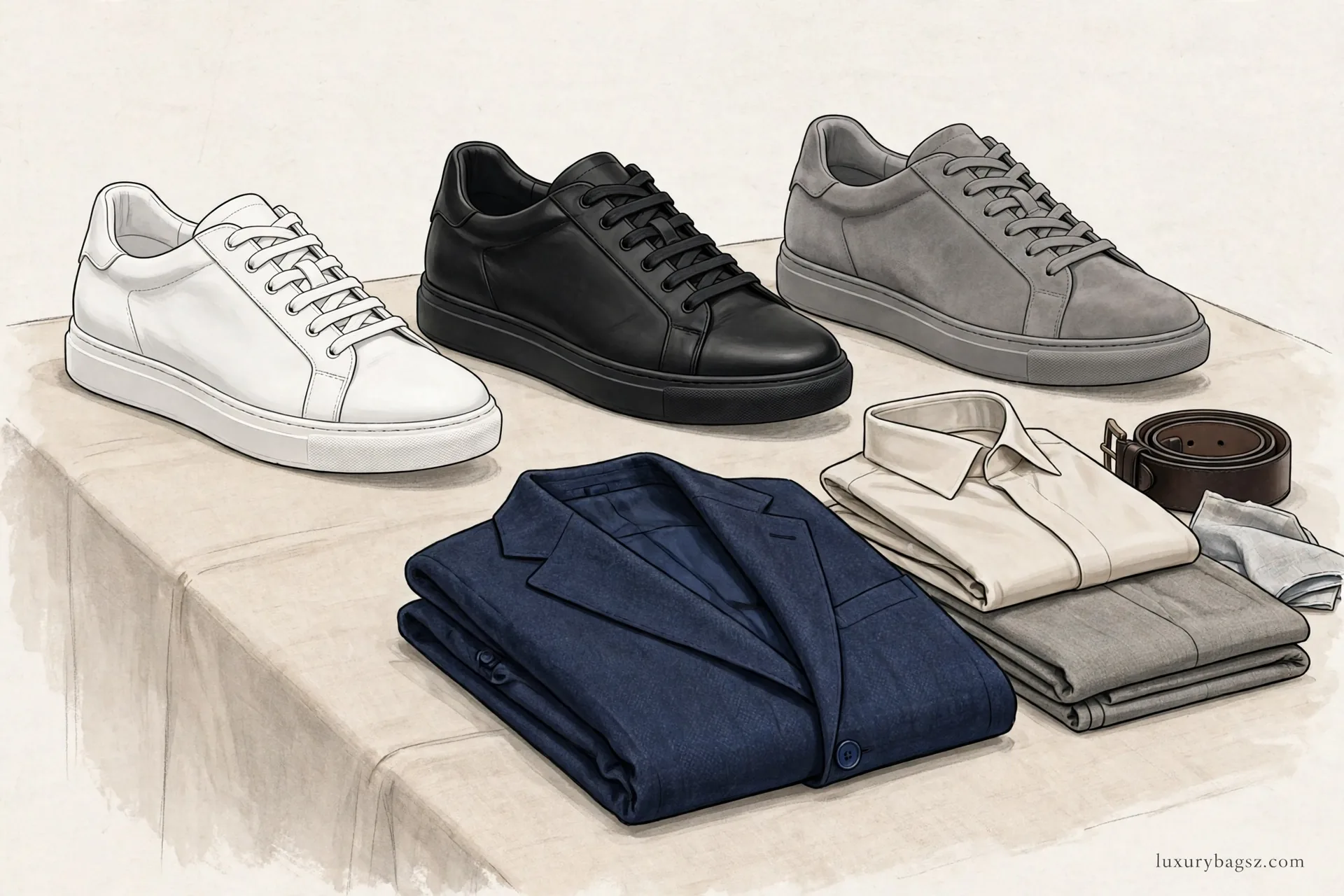
The designer sneakers worth a man's money are rarely the loudest ones. A minimal leather low-top in white or black, a suede pair in grey or brown, and one retro runner cover smart, casual and weekend dressing without shouting about their labels.
Expect to pay roughly £350–£700 for the well-made end of the market. What that buys is better leather, cleaner finishing and shapes that stay in the range for years. Buy the quiet pair first; statement pairs make sense only once the basics are covered.
Key Takeaways
- Start with a minimal leather low-top; it pairs with the most outfits.
- Suede adds texture for autumn; retro runners add comfort and colour.
- Designer prices typically run £350–£700 for leather low-tops.
- Italian labels often size long and narrow; check centimetre charts.
- Judge quality by stitching, lining and sole build, not the logo.
- Pre-owned pairs in near-new condition offer the best value route in.
Why Men Buy Designer Sneakers at All
Most men buy them for range. One clean pair replaces three ordinary ones: it works with chinos on Friday, denim on Saturday and a soft suit at a wedding. Our best sneakers buying guide shows how a small rotation covers nearly every occasion.
Materials are the second reason. Designer pairs usually use full-grain leather, leather linings and stitched or well-bonded cupsoles. They crease more gracefully, smell better after long days and can often be resoled or refurbished rather than binned.
The third reason is restraint. The best men's designer sneakers carry small, quiet branding. If the logo is doing all the work, the shoe rarely survives a change in fashion. Choose shapes you would still wear if the name were hidden.
The Four Styles That Matter
The minimal leather low-top is the foundation: plain toe, slim cupsole, no visible branding. The suede low-top is its softer brother, best in grey, sand or chocolate, and made for knitwear, cords and autumn light.
Retro runners bring colour and cushioning, and high-tops bring height and attitude with denim and outerwear. House overviews like our guides to Gucci shoes for men and Balenciaga shoes show how differently brands treat the same four shapes.
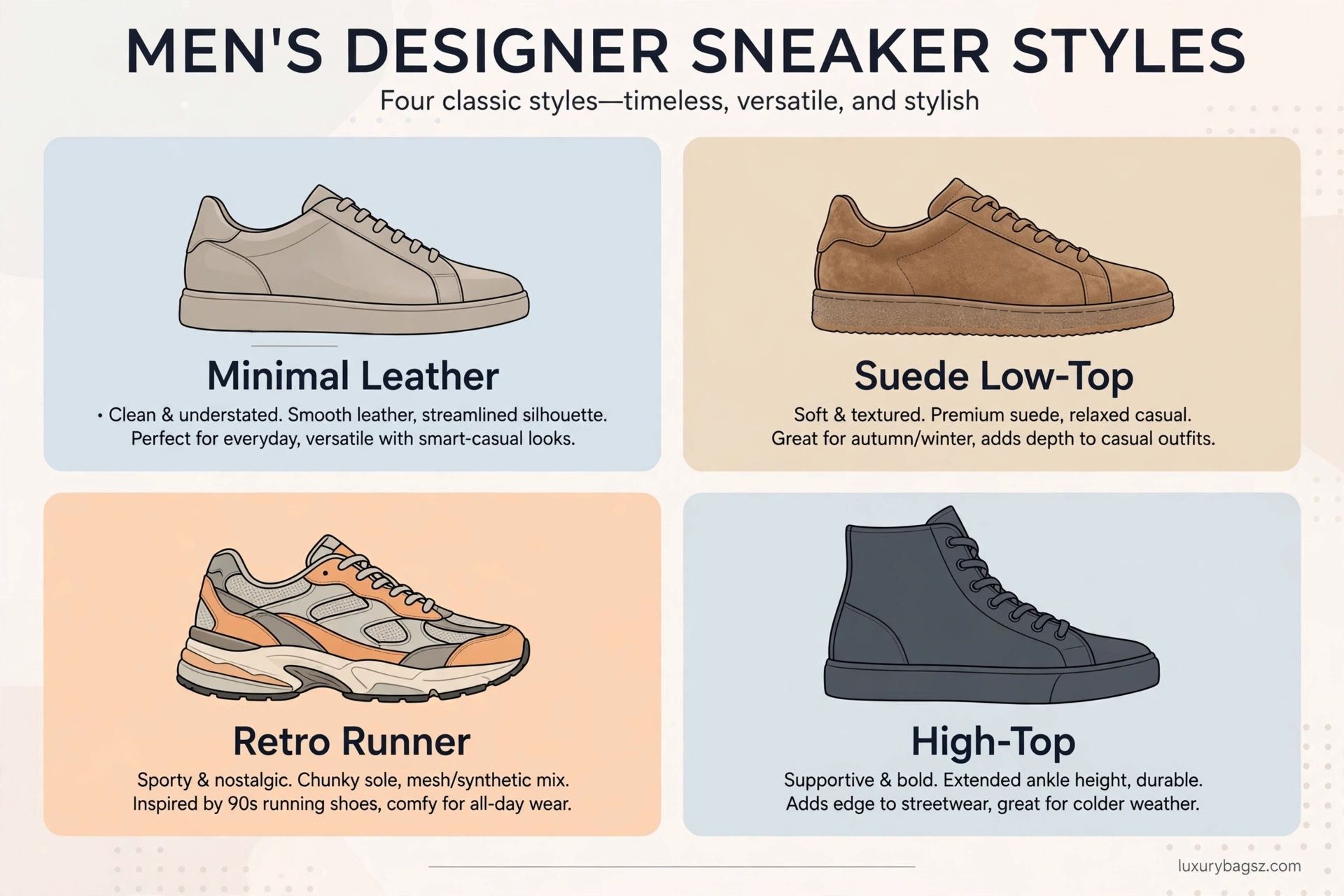
Own the first style before collecting the rest. Two pairs — one minimal, one suede — will cover most wardrobes. Runners and high-tops are personality buys; they should follow your habits, not lead them.
Leather, Suede and What Quality Looks Like
Run a thumb over the leather: it should feel dense and smooth, not papery or plasticky. Stitching should be even, with no loose ends at the toe or heel. The lining should be leather or a quality textile, fully attached, with no bubbles or lifts.
Suede quality shows in the nap. Short, even nap that changes shade when brushed is a good sign. Long, shaggy or patchy nap usually means a cheaper split leather that will bald at the toe and heel within a season.
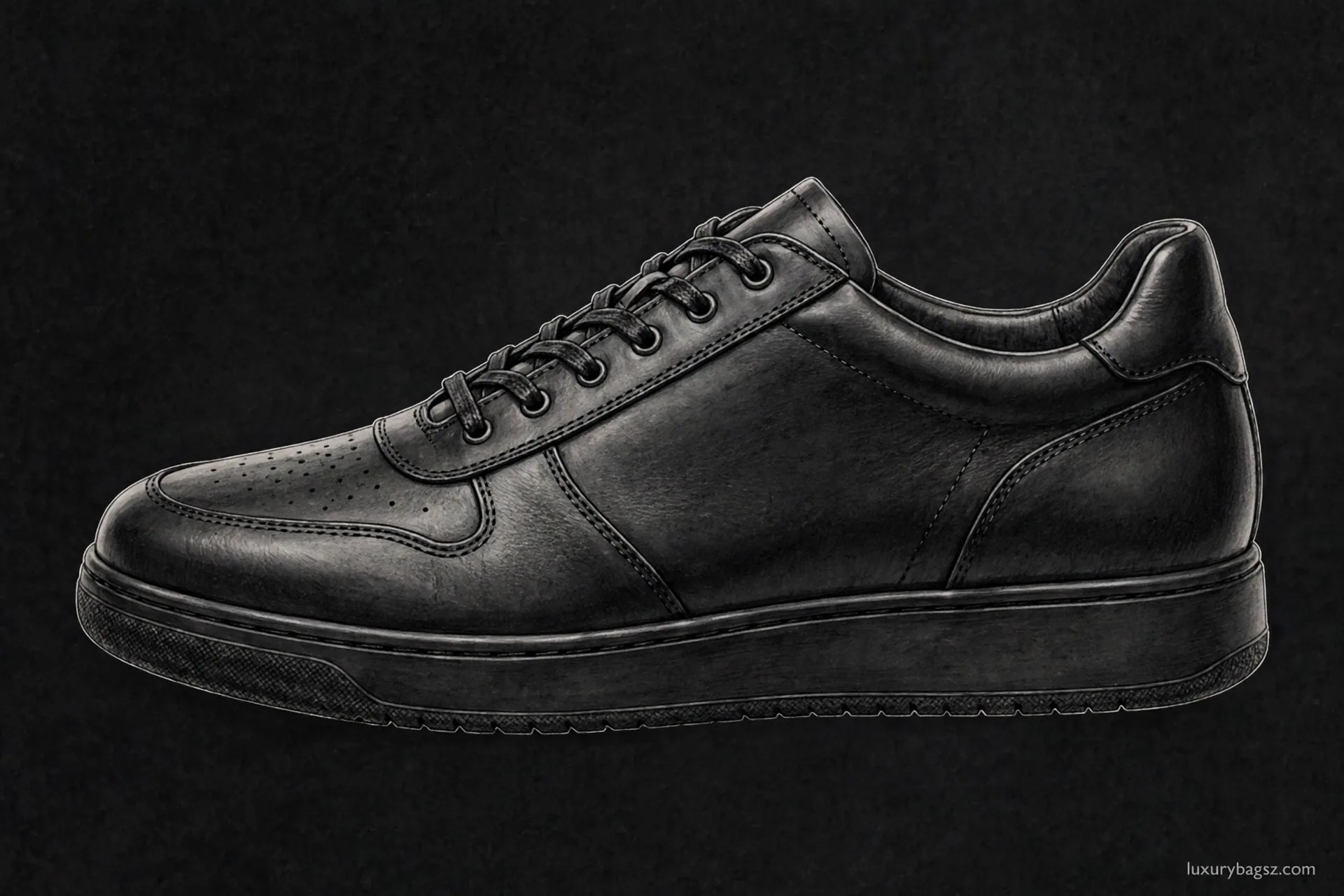
Check the sole join all the way round. A clean, even glue line or neat stitching suggests care; overflow and gaps suggest the opposite. Press the insole too — better pairs use cushioned, shaped insoles rather than flat foam boards.

Prices and Where the Money Goes
Core leather low-tops from fashion houses typically sit between £350 and £700. Suede versions often cost a little less. Runners with mixed materials and big soles can pass £800, and limited collaborations go higher still, driven by scarcity rather than build.
If this is a first premium pair, our walkthrough on how to buy your first designer shoes sets out the order to spend in. As a rule, buy the plain colourway at full price and let printed, seasonal versions find you in the sales.
Sales are genuinely useful here. End-of-season discounts of 30–40% are common on colourways, while white and black staples rarely drop. If your size sells out early in staples, that is the market telling you they are the right buy.
How to Wear Them Without Looking Dressed Down
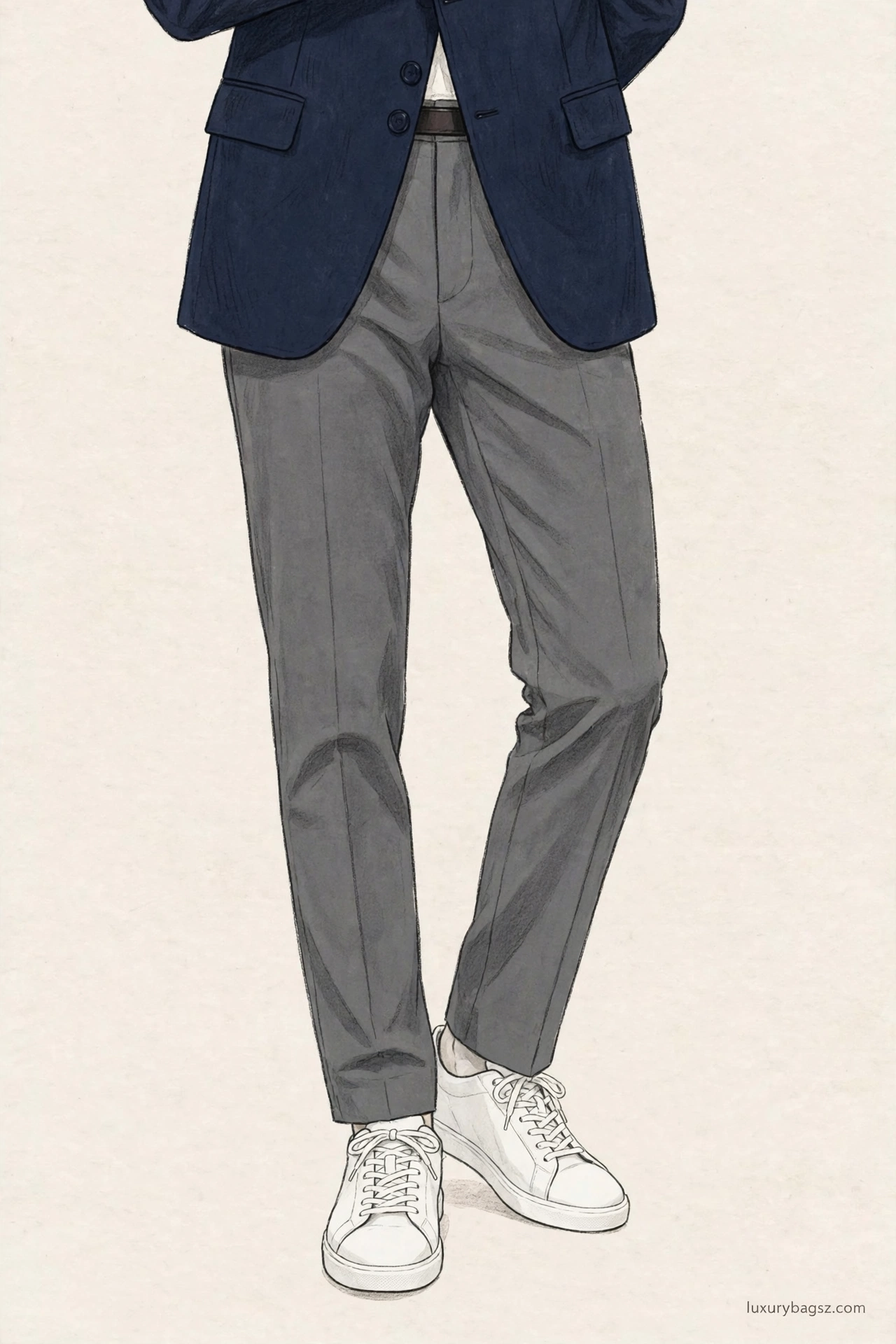
With tailoring, keep the shoe slim and the trousers cropped or cleanly hemmed so the line stays sharp. White low-tops with a navy or grey suit is now standard smart-casual. Black on black works after dark and in winter.
With denim, everything works, but proportions matter. Chunky soles need straighter legs; slim soles suit tapered jeans. Avoid puddling hems over any sneaker — it makes even expensive pairs look borrowed.
Shorts are the hardest test. Choose low-tops, keep socks invisible or deliberately sporty, and skip high-tops unless the whole outfit is streetwear. If in doubt, the minimal pair you bought first is the answer again.
Checking Authenticity and Condition
Fakes target the best-selling shapes, so buy the checks, not the story. Compare stitching density, logo placement and the size label against the brand's own product photos. Genuine pairs feel balanced in the hand; many fakes feel light and hollow.
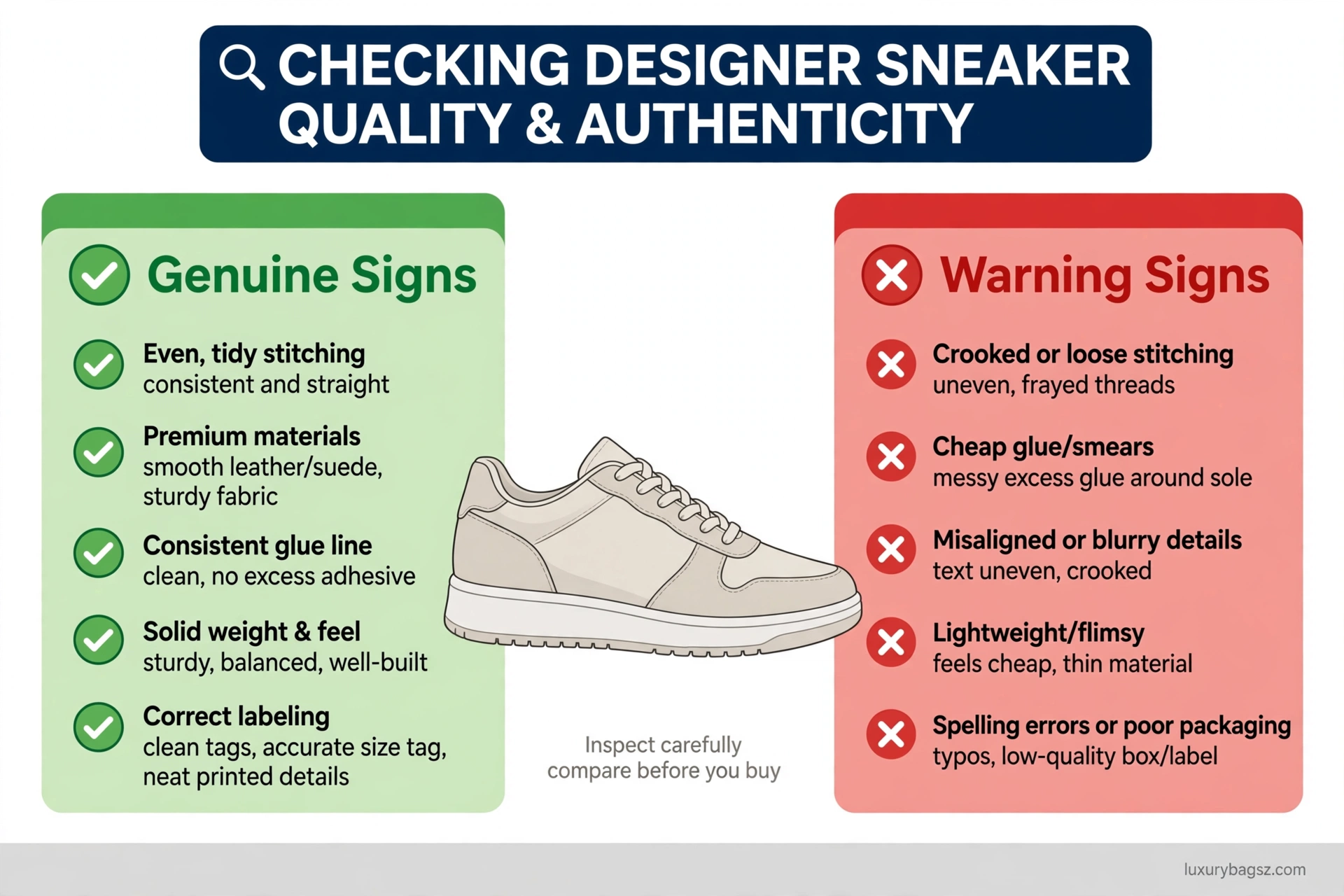
For used pairs, our guide to how to grade designer shoe condition gives the grades sellers use. Photograph requests should cover both soles, both heels, the insoles and the labels. A seller who refuses sole photos is telling you something.
Box, dust bags and receipts help, but none of them prove anything alone. They support a shoe that already passes the physical checks. Judge the pair in front of you first, and treat paperwork as a bonus rather than proof.
Care for Leather and Suede Pairs
Wipe leather after wear with a dry or barely damp cloth, and condition it every few months so it does not crack at the flex points. Keep white soles clean with a dedicated sole cleaner; yellowed soles make the whole shoe look tired.
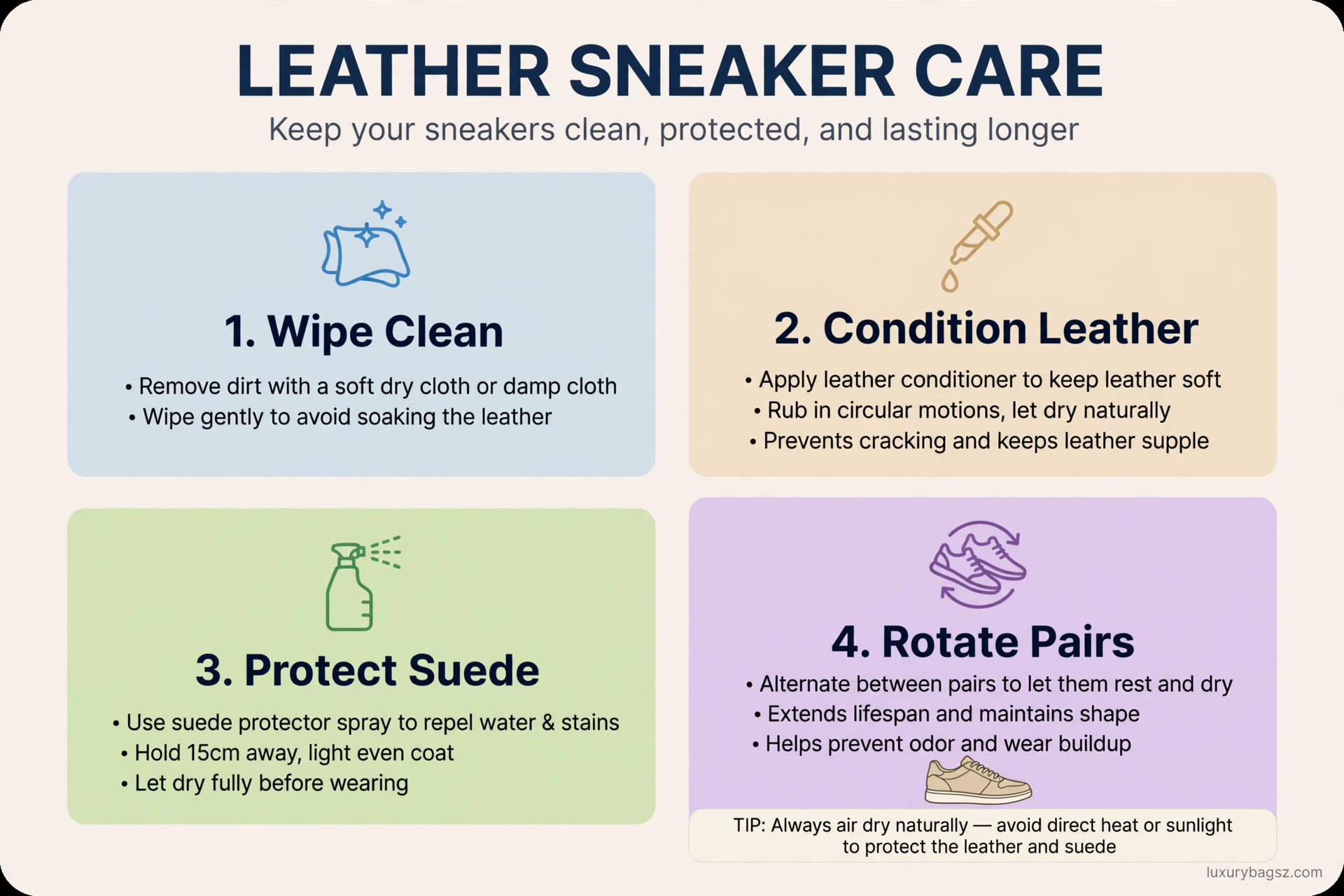
Suede needs a protector spray before the first outing and a brush after wet days, once fully dry. Never chase a fresh water mark with heat. Let it dry slowly, brush the nap back, and most marks fade into the texture.
Rotate pairs, store them with trees or stuffed with paper, and keep them out of direct sun. Designer leather fades like any other leather. A dark cupboard shelf will keep colours true far longer than a bright hallway rack.
Sizing Notes by Label Type
Italian houses often cut long and narrow. Many men drop half a size in Italian leather low-tops, especially with thin socks. French labels are similar; British and German labels tend to be closer to standard trainer sizing.
Sports-luxury hybrids follow trainer rules: true to size, sometimes half a size small in knit uppers. If you are between sizes and mostly wear the pair with thicker socks, take the larger one and add a thin insole.
When ordering two sizes to test, walk on carpet, check heel slip, and return promptly. Wearing a test pair outdoors usually voids the return. Most returns grief comes from fit, so the ten-minute home test is worth doing properly.
Frequently Asked Questions
Which designer sneakers should a man buy first?
A minimal leather low-top in white or black. It pairs with tailoring, denim and shorts, and stays in fashion for years. Every other style is easier to choose once this foundation pair is in the rotation.
How much should I expect to pay?
Most well-made designer low-tops sit around £350–£700. Runners and limited editions cost more. Below that range, premium high-street and specialist labels often give similar build without the fashion-house markup.
Do designer sneakers last longer than normal ones?
Usually, yes, if they use full-grain leather and solid soles. They crease better and can often be resoled or repaired. Knit and heavily glued fashion pairs may not outlast good sports trainers, so check the build.
Can I wear designer sneakers to the office?
In most smart-casual offices, yes — clean, minimal leather pairs pass easily. Keep them wiped and the soles white. Save runners, high-tops and bright colours for dress-down days unless your office is fully casual.
How can I tell if a pair is fake?
Check stitching, weight, lining quality, logo placement and the size label against official photos. Glue overflow, blurry printing and a hollow feel are classic warnings. Buy from reputable sellers and ask for sole photos.
Are white or black sneakers more versatile?
White pairs with more outfits across the year, especially in spring and summer. Black is easier to keep looking smart and better after dark. If you can only own one, choose based on your wardrobe's dominant colours.
Do designer sneakers run true to size?
Italian and French labels often run long, so half a size down is common. Sports-luxury pairs are usually true to size. Always compare your foot length in centimetres with the brand's own chart before ordering.
Is suede a good choice for a first pair?
Suede looks excellent but needs more care and hates rain. As a first pair, smooth leather is easier. Add suede second, spray it before wearing, and it will reward you with the most compliments per pound spent.
Where is the best place to buy them?
Brand boutiques and established department stores for full price certainty; official outlets and end-of-season sales for discounts; reputable resale platforms for discontinued colourways. Avoid social-media sellers offering prices far below retail.
How do I keep white leather sneakers white?
Wipe them after wear, clean soles weekly in heavy use, and store them away from sunlight. A leather cleaner every few weeks stops grime building into the grain, where it becomes much harder to lift.
Men’s Sneakers: Leather, Stitching, Sole
Buy the quiet leather low-top first, add suede for texture, and let runners and high-tops follow your real habits. Judge every pair by leather, stitching and sole build, size carefully by centimetres, and the designer premium becomes money spent on shoes you will actually wear for years.
I judge sneakers the way I judge bags: leather first, stitching second, build third, logo last. More than ten years of checking bags has taught me that construction never lies, even when branding does. A quiet leather low-top with honest stitching will still look right when the loud pair is a quiz question.






