

Designer Formal Dresses: The 9 to 5 Shapes That Go to Dinner Too
Formal Dresses That Work the Whole Day
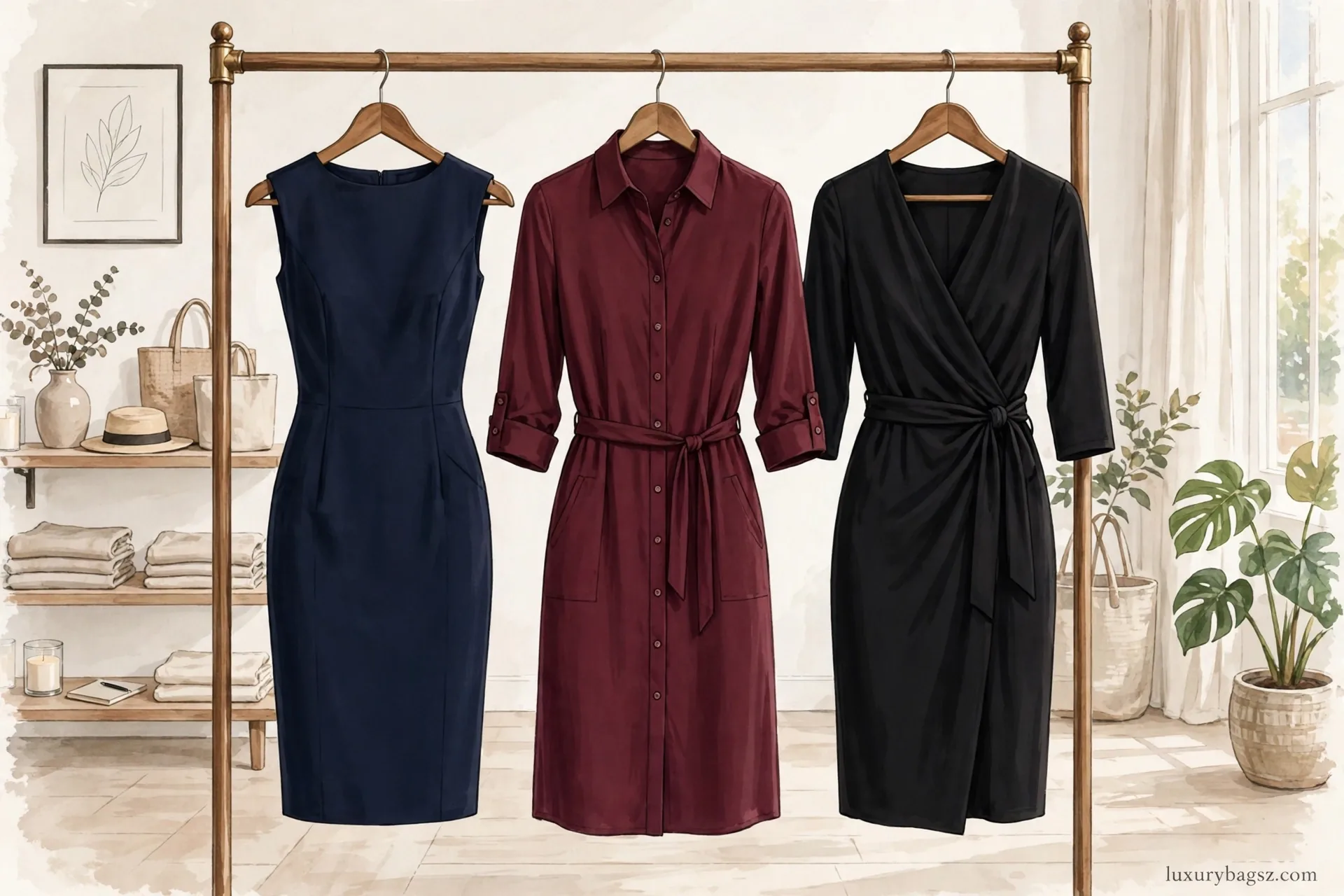
A designer formal dress should pass two tests: it looks right in a 9 a.m. meeting, and it still looks right at a 7 p.m. dinner without a full change. The shapes that pass are the sheath, the wrap and the shirt dress, in crepe, ponte or fine wool. Buy the fit before the colour. A formal dress lives or dies on how the waist sits, how the skirt behaves when you sit, and whether the fabric recovers by morning for the next wearing.
Key Takeaways
- Sheath, wrap and shirt shapes cover almost every formal dress code in working life.
- Crepe, ponte and fine wool crease least and travel best between day and evening.
- The sit test is decisive: a formal dress must survive a desk chair and a dinner chair.
- Navy and charcoal are softer than black by day and just as formal after dark.
- A blazer, a belt swap and better shoes carry the same dress from desk to dinner.
- Designer prices buy cut, lining and fabric that keeps its shape across a long day.
What Counts as Formal, Honestly
Formal for daytime work means covered shoulders or sleeves, a hem at or below the knee, a neckline that stays put when you lean, and fabric with enough body to look composed at 5 p.m. It does not mean dull. A jewel-toned sheath or a well-cut wrap dress is formal and alive at once; only shine, slits and evening fabrics push a dress out of the office category. Formal also means finished: no visible underwear lines, no straps slipping, hems level and shoes clean. Those small things are read as competence long before anyone registers the label inside the dress. The same logic shapes separates, which is why our guide to designer skirts pairs so naturally with this one for readers building a work wardrobe piece by piece.
The Four Shapes That Earn Their Keep
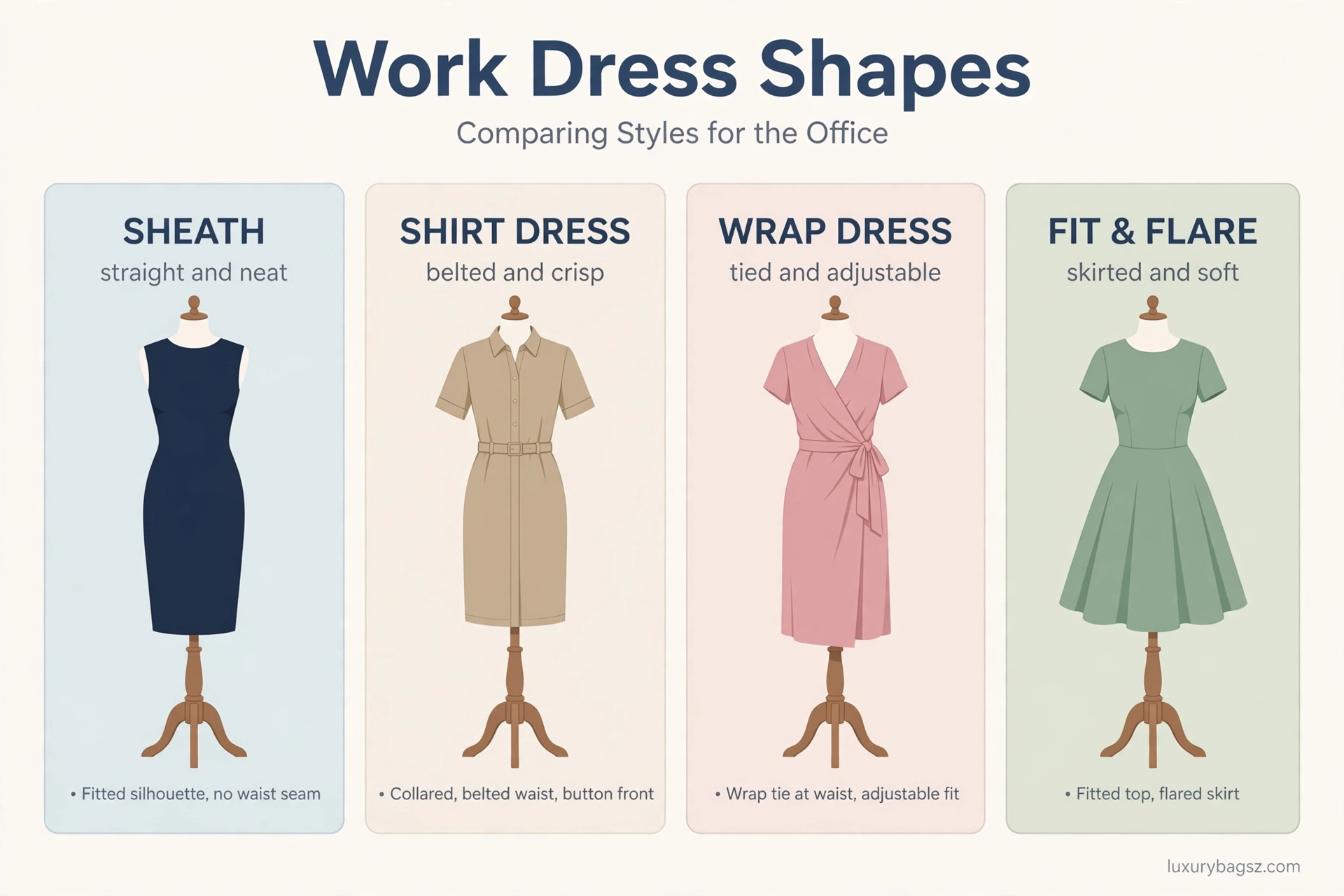
The sheath is the benchmark: close, clean and knee-length. It needs excellent cut because there is nowhere for a bad fit to hide, and it rewards a body it was patterned for. The wrap dress is the diplomat — adjustable at the waist, kind after lunch, and formal enough in a matte fabric with a longer hem. The shirt dress brings a collar and buttons, which reads as instant authority. Fit-and-flare is the softest option: a fitted bodice and a skirt with room to sit, move and eat in. It suits events that are formal but long, from conferences to family occasions.
Fabrics That Survive a Working Day
Crepe is the first choice: it drapes, resists creasing and photographs calmly. Wool crepe adds warmth for winter; lighter crepe blends carry spring and autumn without a coat indoors. Ponte — a firm double-knit — is the traveller's friend. It barely creases, needs no ironing after a suitcase, and holds a sheath shape from morning train to evening event. Avoid satin and high-shine fabrics for daytime formal wear; they belong to evening. Linen is lovely but creases into a record of your day by lunch, which undoes the formal effect. Silk blends sit at the luxury end and behave beautifully, but they ask for dry cleaning and gentle storage. For a first formal dress, crepe or ponte gives ninety per cent of the look with half the upkeep.
Colour and Pattern Rules
Navy is the hardest-working formal colour: softer than black in daylight, equally serious in a boardroom, and kind to almost every skin tone. Charcoal runs it close. Burgundy, forest green and deep teal are the jewel tones that read as formal without shouting. They also hide a long day's creases better than pale colours do. Keep patterns small and quiet: a faint pinstripe, a tiny check, a micro dot. One loud print on a formal dress limits it to rare outings, however much it cost. Black deserves a fair word. It is formal anywhere, but it shows dust, fades unevenly in cheap dye, and can look harsh in morning light. Good black crepe is excellent; tired black jersey is not.
Desk to Dinner: The Five-Minute Change
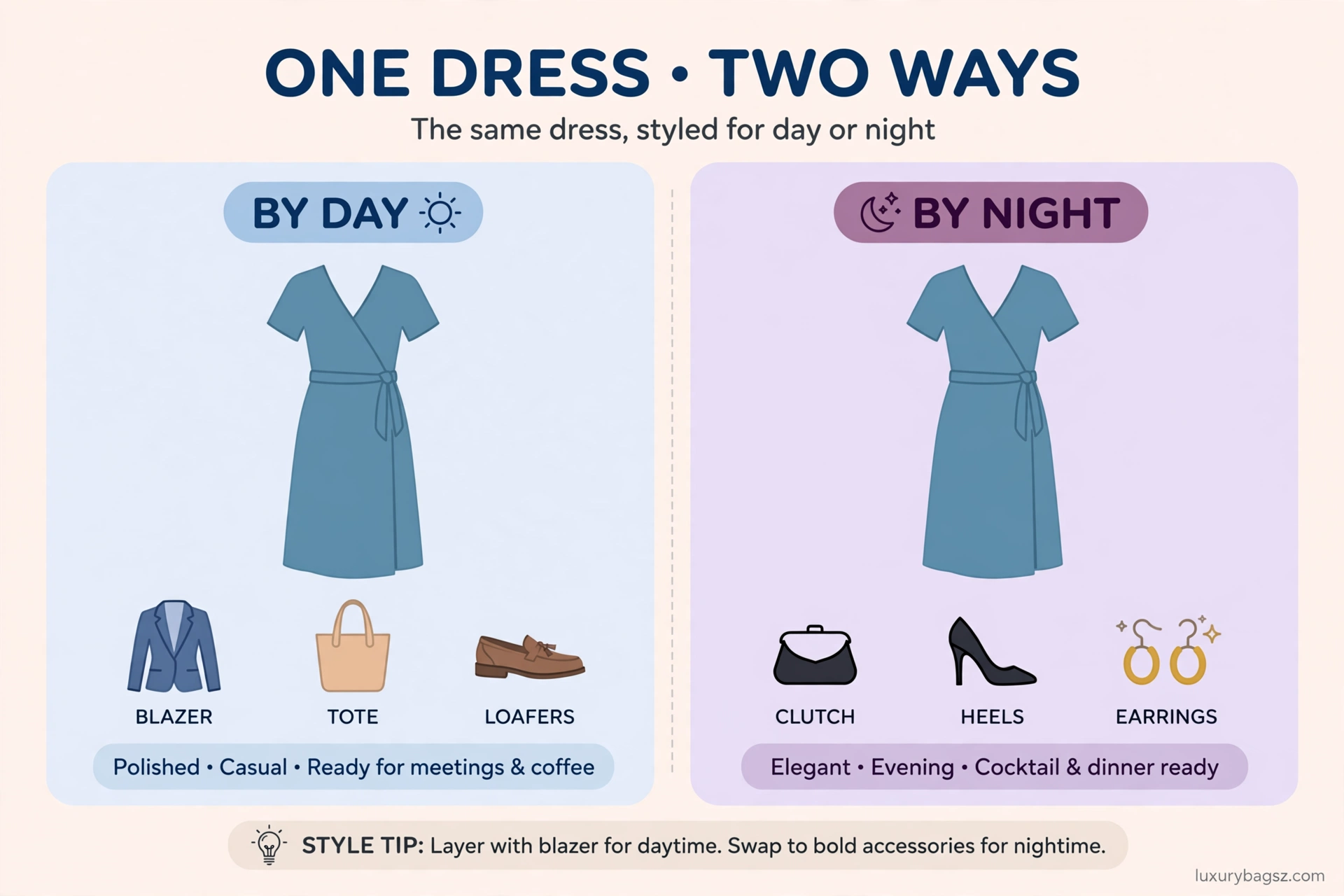
The dress stays; the frame changes. Swap the day bag for a clutch, the loafers for heeled shoes, and add one piece of jewellery with presence — earrings usually beat a necklace over a work neckline. A belt change is the quiet power move: the plain day belt goes, a slimmer metallic or patent one arrives, and the waist becomes an evening detail instead of an office one. Refresh the face, not the outfit. Blotting paper, lipstick and a hair smooth-over do more for the evening reading of a formal dress than any emergency shopping trip. Warmth is the last piece. An evening layer that works over a dress — a fine shawl, a cropped jacket — should live in your office drawer from October onwards, ready for the dinners you say yes to at 4 p.m.

Shoes, Bags and the Finishing Frame
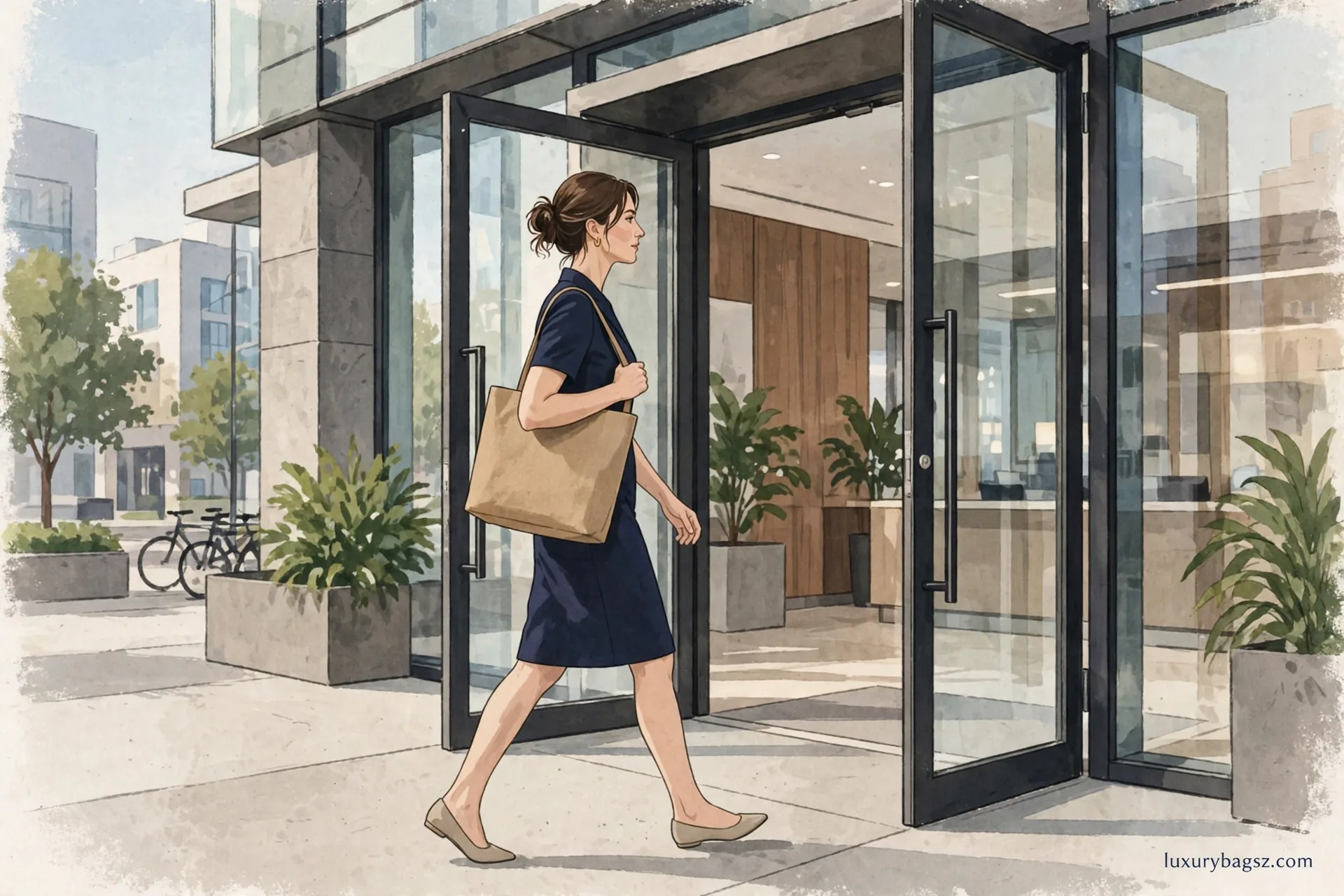
By day: loafers, low block heels or clean court shoes, and a structured tote that holds a laptop. The tote matters — a formal dress with a slouchy bag reads as an accident. By night, the finishing piece is the bag. A small clutch or minaudière from the world of designer party bags instantly moves a work dress into evening territory. Tights deserve honesty: sheer black or nude, without ladders, or none. Nothing ends a formal look faster than a snagged stocking at ankle height. Keep a desk kit: spare tights, a lint roller, fashion tape and a travel steamer if your office allows it. Five quiet items in a drawer will rescue more formal days than any second dress.

Prices, Fit Checks and Care
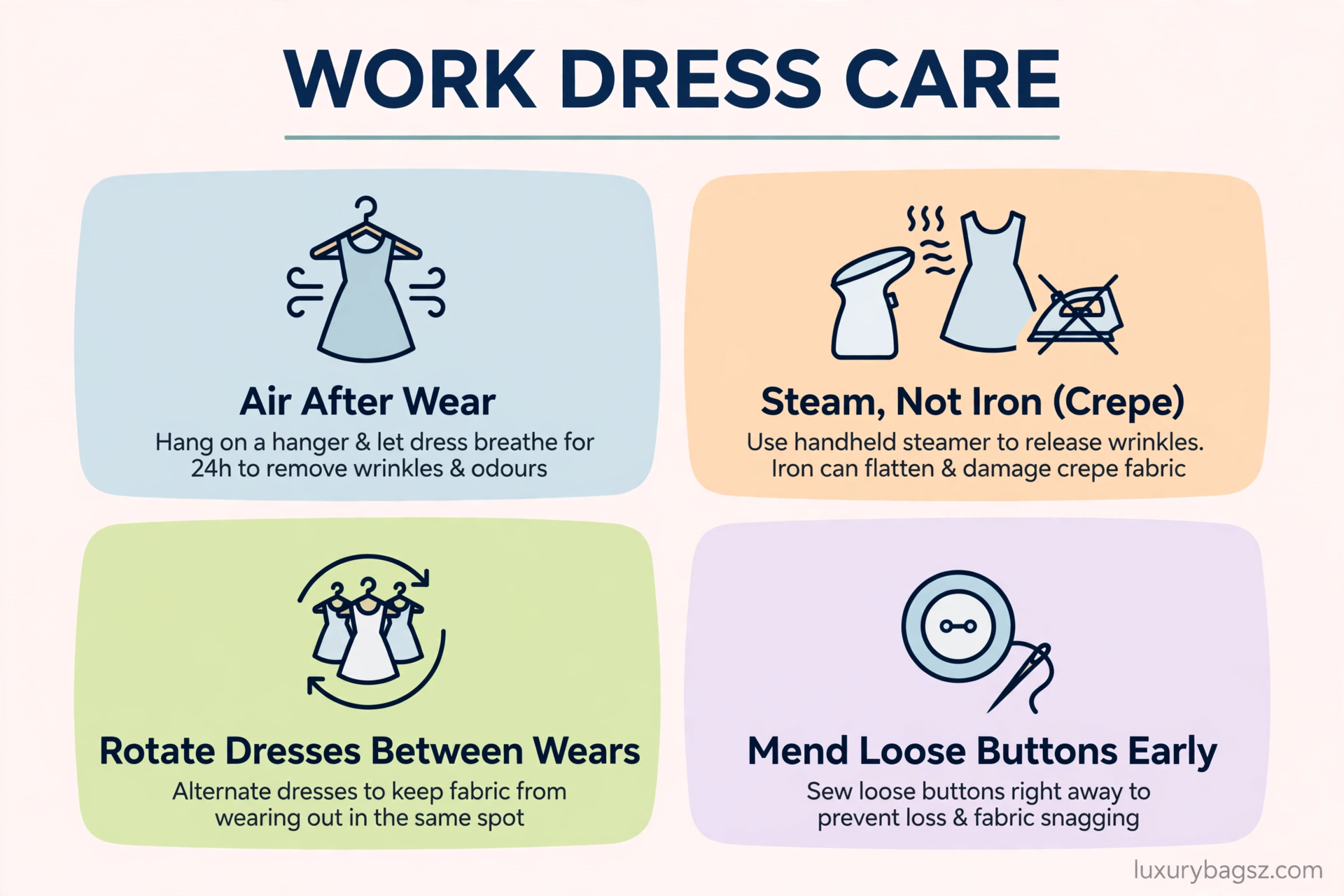
Expect typical designer formal dresses from around £180 to £600, with wool and silk-lined styles at the top. The money should show in the lining, the zip and the way the skirt is weighted to hang. Fit checks: sit and cross your legs, raise your arms as if hailing a taxi, and bend to a low drawer. A formal dress that survives those three in the shop will survive the job. Care follows the guidance in how to care for designer clothing: press rather than iron hard, air between wears, and store on shaped hangers so shoulders keep their line.
Building a Two-Dress Formal Rotation
Two dresses cover a formal working life: one navy or charcoal sheath, one wrap or shirt dress in a jewel tone. Alternate them, rest each between wears, and nobody tracks the repetition. Buy the dark one first and spend properly on it, because it will carry interviews, presentations and difficult meetings where you cannot afford to think about your clothes. Add separates around the pair — a blazer, two shoe options, one evening bag — and the rotation quietly becomes a wardrobe. That is the whole secret of people who always look formally dressed. Size the rotation to your real calendar, not your imagined one. If formal events happen twice a month, two dresses are plenty; if they happen twice a week, a third dress in ponte will pay for itself in one winter.
Frequently Asked Questions
What dress length is formal enough for an office?
At the knee or just below it is the safe standard. Mid-calf also works and reads more fashion-aware; above the knee moves a dress out of most formal dress codes.
Can a wrap dress really be formal?
Yes, in a matte fabric with a hem at the knee, a modest neckline and clean shoes. Shine, short hems or jersey that clings too closely are what make a wrap read casual.
Which colour should my first formal dress be?
Navy. It is formal in every daylight setting, softer than black, pairs with black, brown and nude shoes, and photographs well at events.
How do I stop a sheath dress riding up when I sit?
Check the fit at the hip and the lining. A sheath cut too tight across the hip will climb; the right size sits still. A smooth lining also helps the skirt settle back down.
Are sleeveless formal dresses acceptable at work?
In many offices, yes with a blazer or cardigan for meetings; in conservative workplaces, keep a sleeve. Broad straps are the safer sleeveless choice if you go that way.
What fabric travels best for work trips?
Ponte. It folds without creasing, needs no iron, and a ponte sheath or wrap will come out of a case ready to wear after a hanging in a steamy bathroom.
How many formal dresses do I actually need?
Two good ones, alternated and rested, cover most working lives. A third in an evening-leaning fabric extends the rotation for event-heavy jobs.
Can the same dress work for a wedding and the office?
Often yes: a jewel-tone fit-and-flare or wrap with different shoes and bag passes both. Avoid white, ivory and anything bridal-adjacent for the wedding, obviously.
What shoes are safest with formal dresses?
A low-to-mid heel court shoe or a polished loafer in black, navy or nude. Keep one pair at the office for the days a formal meeting appears unannounced.
How do I keep a formal dress fresh between wears?
Air it on a hanger overnight away from the wardrobe, spot-clean marks at once, and steam rather than wash after every wear. Rest is what keeps crepe looking new.
Final Verdict: Two Shapes, Zero Panic
Choose a sheath and a wrap or shirt dress in crepe or ponte, navy first, and fit them sitting down before you pay. Frame the same dress with a tote by day and a clutch by night, rest it between wears, and the 9-to-5 formal problem is solved for years, not seasons.






