

Designer Kaftans: Styles, Fabrics, Prices and How to Wear One
The Kaftan in Brief: One Flowing Dress, Three Jobs
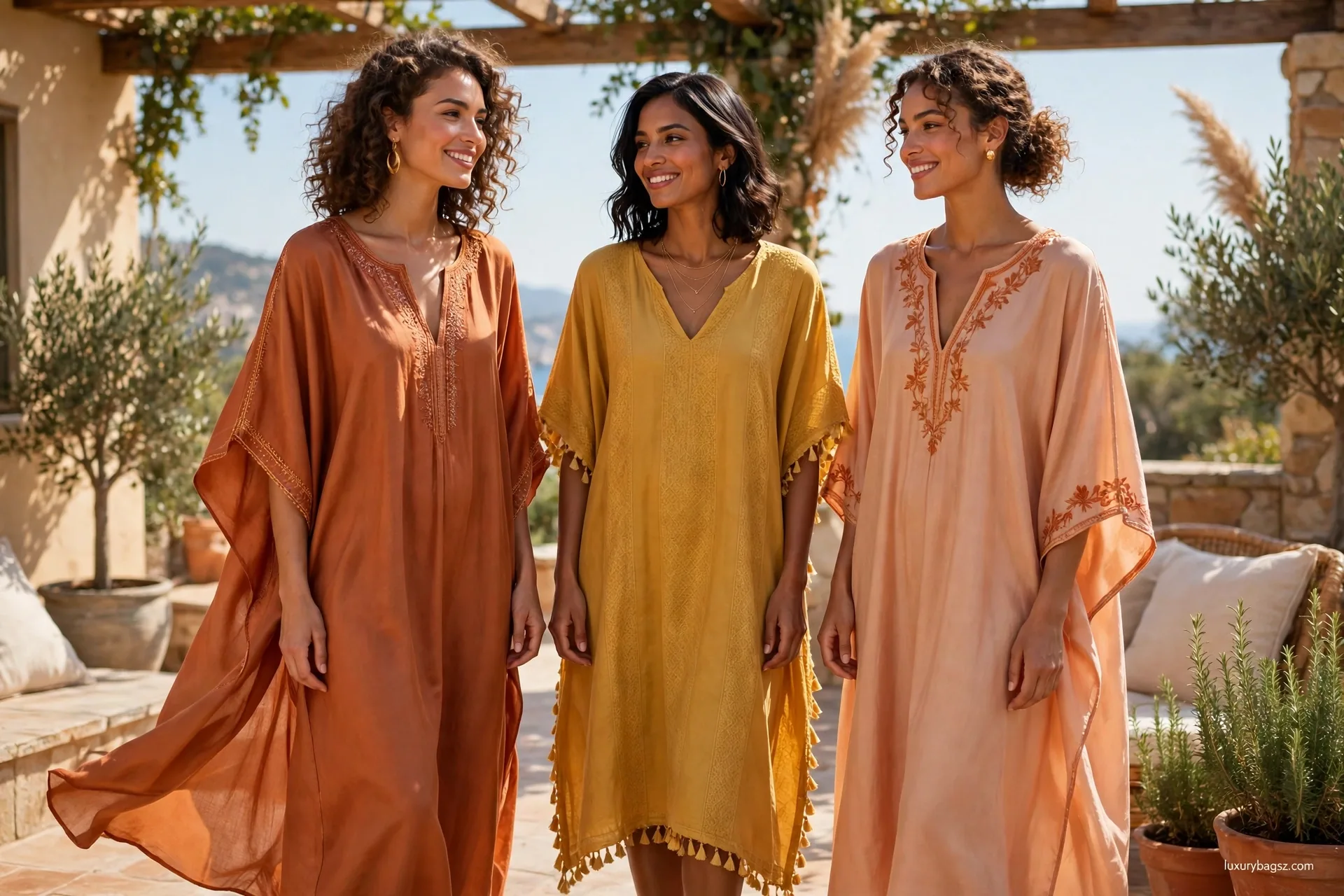
A designer kaftan is a loose, flowing dress with wide sleeves and an ankle or knee length hem. The best one to buy depends on the job: cotton or linen for the beach, silk or chiffon for evenings, and a belted cut if you want shape.
Prices typically range from around £80 for a simple cotton style to four figures for embroidered silk. Fit is forgiving by design, so fabric and length matter far more than size.
This guide covers the main styles, what each fabric does, how to add shape, and the checks that keep a flowing dress from looking like nightwear.
Key Takeaways
- Match the fabric to the job: cotton and linen for heat, silk and chiffon for evenings.
- Length does the styling work — midi for day, full length for formal settings.
- A slim belt or tie waist adds shape without fighting the drape.
- One-size labels are common; check the actual chest and length measurements.
- Embroidery and beading push the price up and the care level with it.
- Store embellished kaftans flat or on padded hangers to protect the detail.
What a Kaftan Is, and Where It Works
The kaftan began as a long robe across the Middle East and North Africa, then entered Western resort dressing in the 1960s and 1970s. Designers kept the easy shape and changed the fabrics and prints.
That history explains its range. The same basic cut appears as a beach cover, a resort dress and a formal evening piece, with only cloth and detail separating them.
For hot-weather dressing generally, our designer cotton clothing for summer edit shows the same breathable logic in shirts and dresses.
Buy a kaftan for ease, not structure. If you want tailoring, this is the wrong dress; if you want to look dressed with almost no effort, it is ideal.
Sizes in kaftans often run as small-medium and medium-large rather than numbered sizes. Between the two, choose by length first: a too-long hem is harder to fix than a roomy body.
The kaftan also travels between cultures and dress codes gracefully. In many settings it counts as modest dressing while still feeling festive, which is part of its lasting appeal.
The Three Main Styles: Beach, Resort and Evening
Beach kaftans are short or midi, usually cotton, linen or light viscose, and made to slip over swimwear. They should dry fast and shrug off creases in a tote.
Resort kaftans run longer, with bolder prints and a tie or drawstring waist. They carry you from lunch to sunset drinks without a change of outfit.
Evening kaftans use silk, satin or chiffon, often with embroidery or beading at the neck. Worn with heels, they read as proper occasion dressing.
Our designer beachwear guide covers the cover-up end of this range in more depth if holidays are your main use.
Fabrics within one style vary widely, so read the composition label, not the product name. A beach kaftan in silk exists, but it will not thank you for salt water and sunscreen.
Prints also shift a style between jobs. The same midi cut in a plain colour works for town, while a tropical print keeps it firmly in holiday territory.
Fabrics: Cotton, Linen, Silk and Chiffon
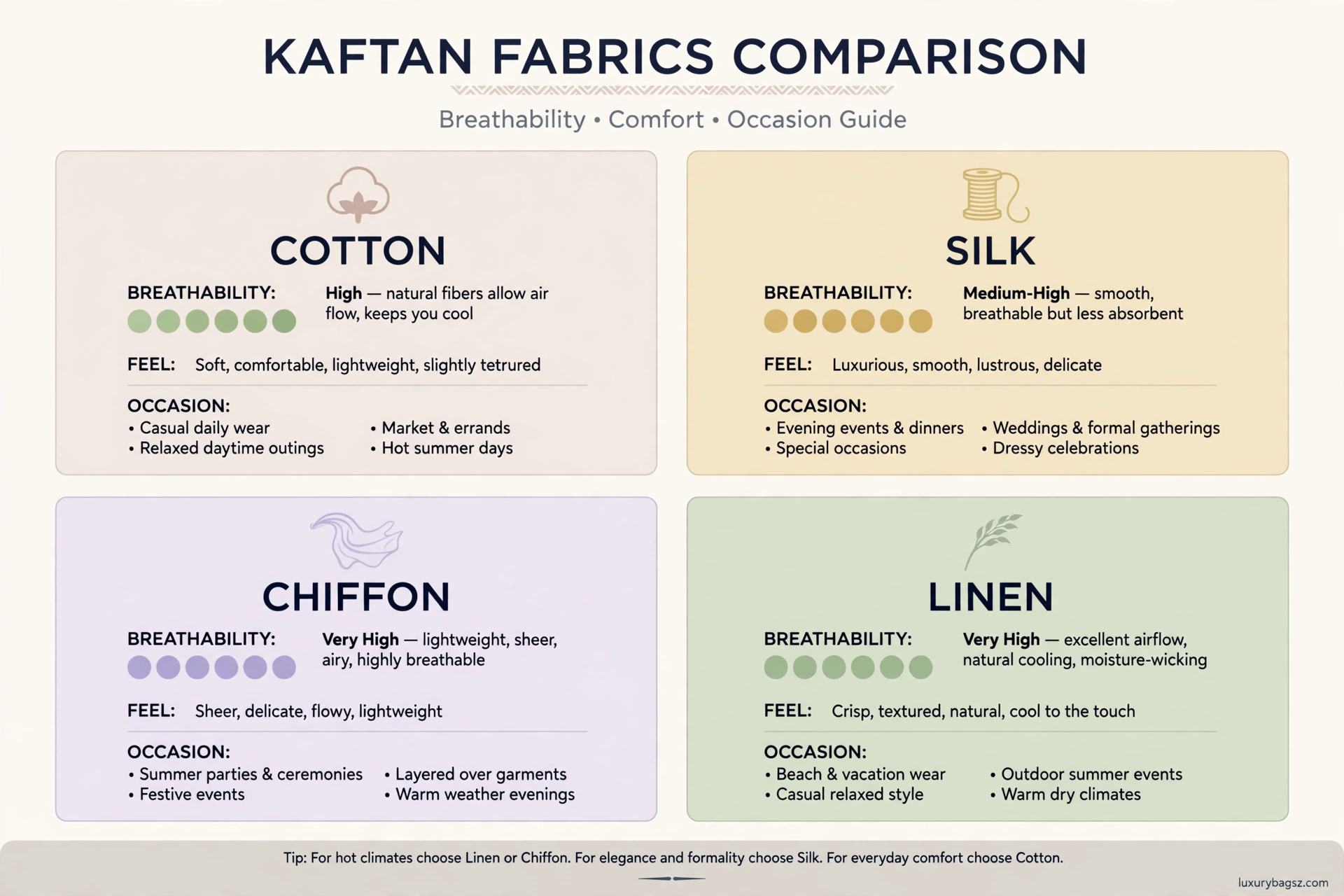
Cotton is the workhorse: breathable, washable and kind in heat. A cotton voile kaftan is the one most owners wear weekly in summer.
Linen breathes even better but creases freely. Choose it if you like a relaxed look, and avoid it for photographs if creases bother you.
Silk drapes beautifully and holds rich colour, but needs gentle care and costs more. Chiffon floats and layers well, yet snags easily on jewellery.
Blends sit in the middle. A cotton and silk mix gives some sheen with easier care, and is often the smartest buy for travel.
Care labels split along the same lines as price. Cotton and linen usually machine wash gently; silk, chiffon and anything beaded will ask for hand washing or a cleaner.
Weight is a useful clue in hand. A kaftan that feels substantial in cotton will drape closer and last longer than a feather-light one at the same price.
Length and Fit: Getting the Proportions Right
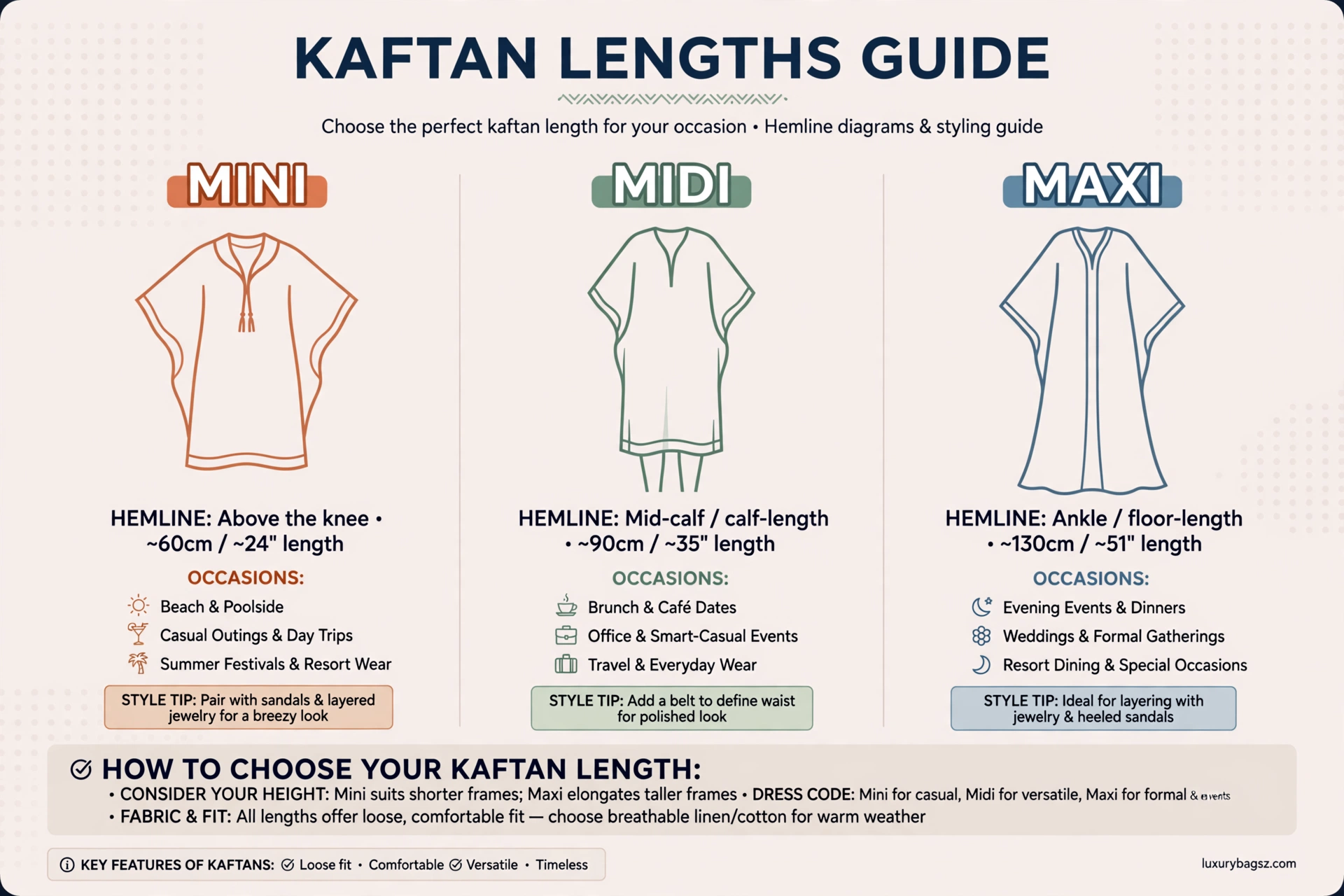
Mini and knee lengths suit the beach and petite frames. Midi, ending mid calf, is the most versatile length for lunches and sightseeing.
Full length styles elongate the body and suit evenings. Make sure the hem clears the ground in the shoes you will actually wear.
Most kaftans are cut generously, and many are sold as one size. Check the flat chest measurement and total length rather than trusting the label.
If the shoulders swim on you, the dress will look borrowed. The shoulder line is the one place a kaftan should sit near the body.
Sleeve width changes the silhouette as much as length does. Wide kimono sleeves add drama and breeze; narrower sleeves look neater under a jacket or cardigan.
If you are between lengths, remember shoes decide the final read. A midi worn with heels sits higher on the calf than the same dress with flat sandals.
Adding Shape: Belts, Ties and Necklines
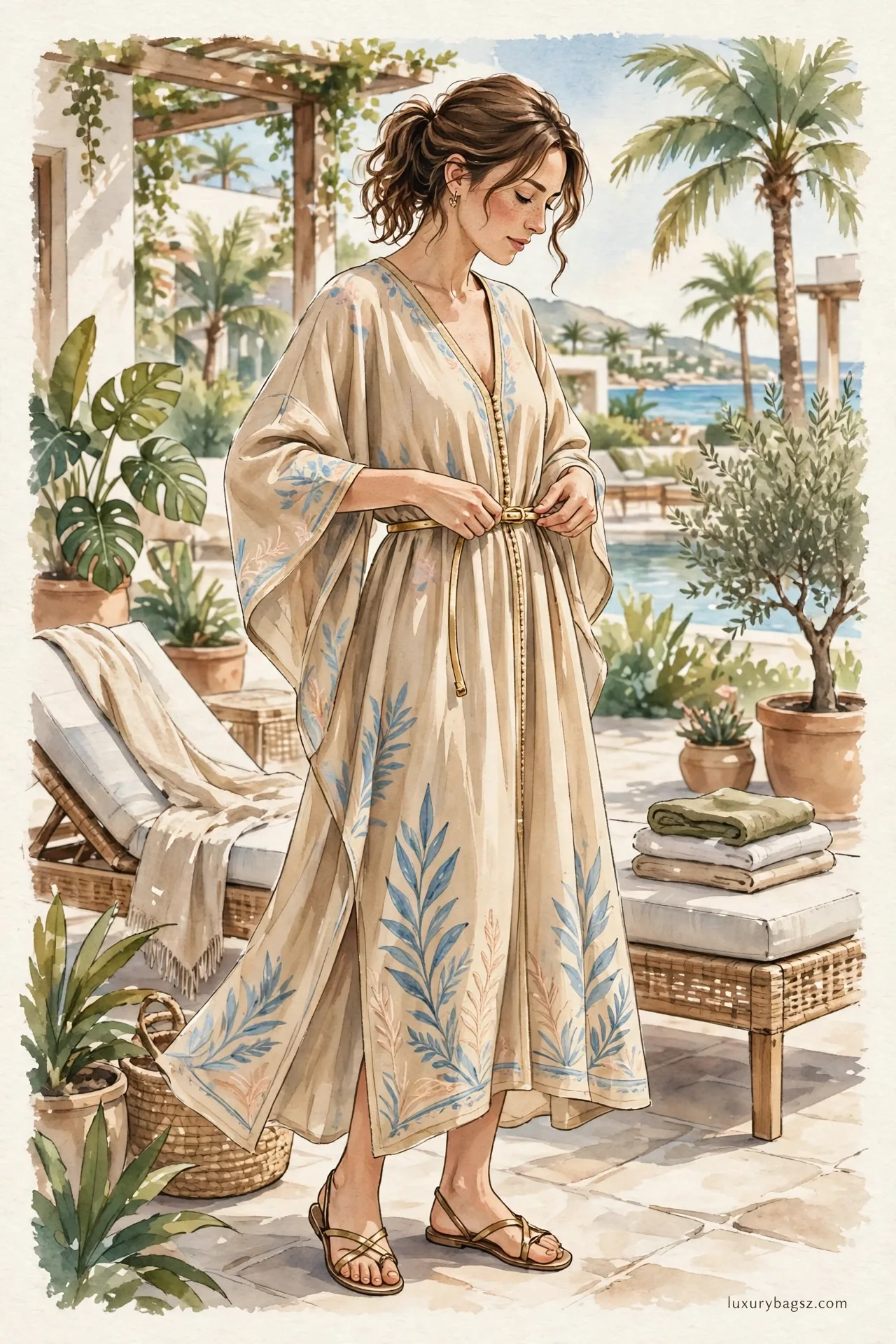
A loose kaftan plus a slim belt at the natural waist is the simplest styling formula. It keeps the drape and gives the outfit a centre.
Many designs include a self tie or inner drawstring. Use it loosely; a kaftan cinched too tightly loses the ease that makes it work.
Necklines change the mood. A deep V lengthens the torso, a round neck feels modest and neat, and off-shoulder cuts suit evenings.
Keep other elements plain when the print is bold. Our designer straw bags round-up shows the simple bag shapes that sit well with printed resort dresses.
Jewellery should follow the neckline. A deep V takes a pendant; a high, embellished neck takes earrings only, so the detail does not fight itself.
For photographs, belted styles in block colours read sharpest. Loose printed kaftans look wonderful in person but can blur into the background of a picture.

Prints, Colour and Embellishment
Large prints suit the scale of a kaftan; tiny prints can look lost in all that cloth. Place busy prints away from the face if they fight your colouring.
Block colour in a jewel tone is the most evening-friendly choice. It also shows the quality of the fabric more honestly than a print does.
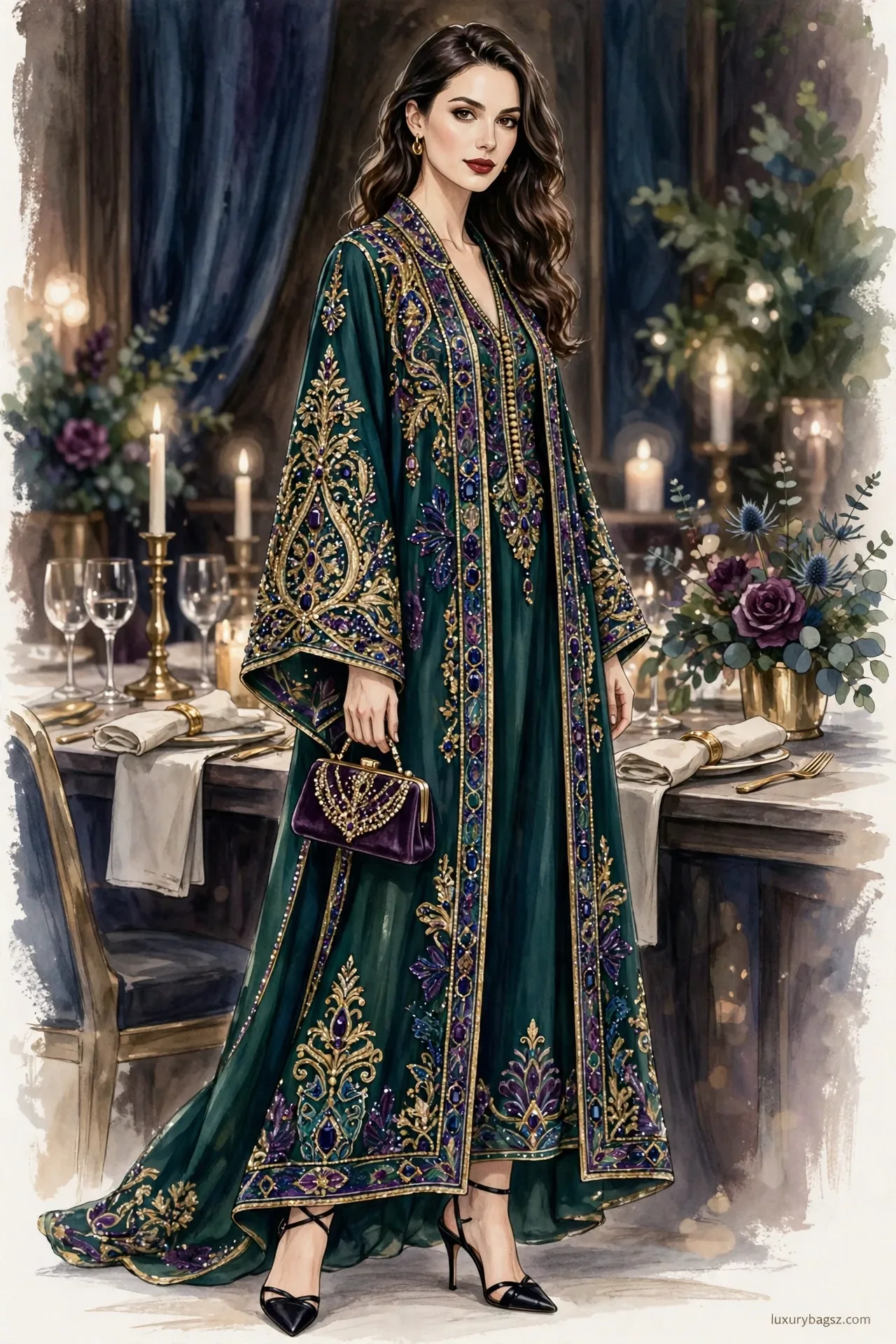
Embroidery at the neckline draws the eye up and removes the need for a necklace. Beading adds weight, so check that seams are reinforced.
Metallic thread looks rich after dark but can feel scratchy. Run a hand inside the neckline before you commit to an embellished piece.
Care for prints as you would the base cloth, with one extra rule: wash inside out. Turning the garment slows fading on the side that faces the world.
Embellished pieces deserve a mesh bag even for hand washing. It stops beads catching on each other and on the basin.
Prices and What Pushes Them Up
Simple cotton and viscose kaftans from designer resort lines typically start around £80 to £180. Silk lifts the range to roughly £300 to £800.
Hand embroidery, beading and limited prints push prices into four figures. At that level you are paying for handwork hours, not cloth.
Pre-owned kaftans offer strong value because the loose fit suits many buyers. Check embellishment and underarm seams carefully in listings.
Cost per wear favours the plain resort style. The heavily beaded evening piece is glorious, but most wardrobes use it twice a year.
Second-hand silk kaftans deserve a smell and seam check before anything else. Silk holds odours, and underarm seams carry the strain of the loose cut.
Vintage 1970s kaftans are plentiful and often superbly made. Check zips and hook fastenings, which age faster than the cloth around them.
Care: Washing, Storing and Travelling
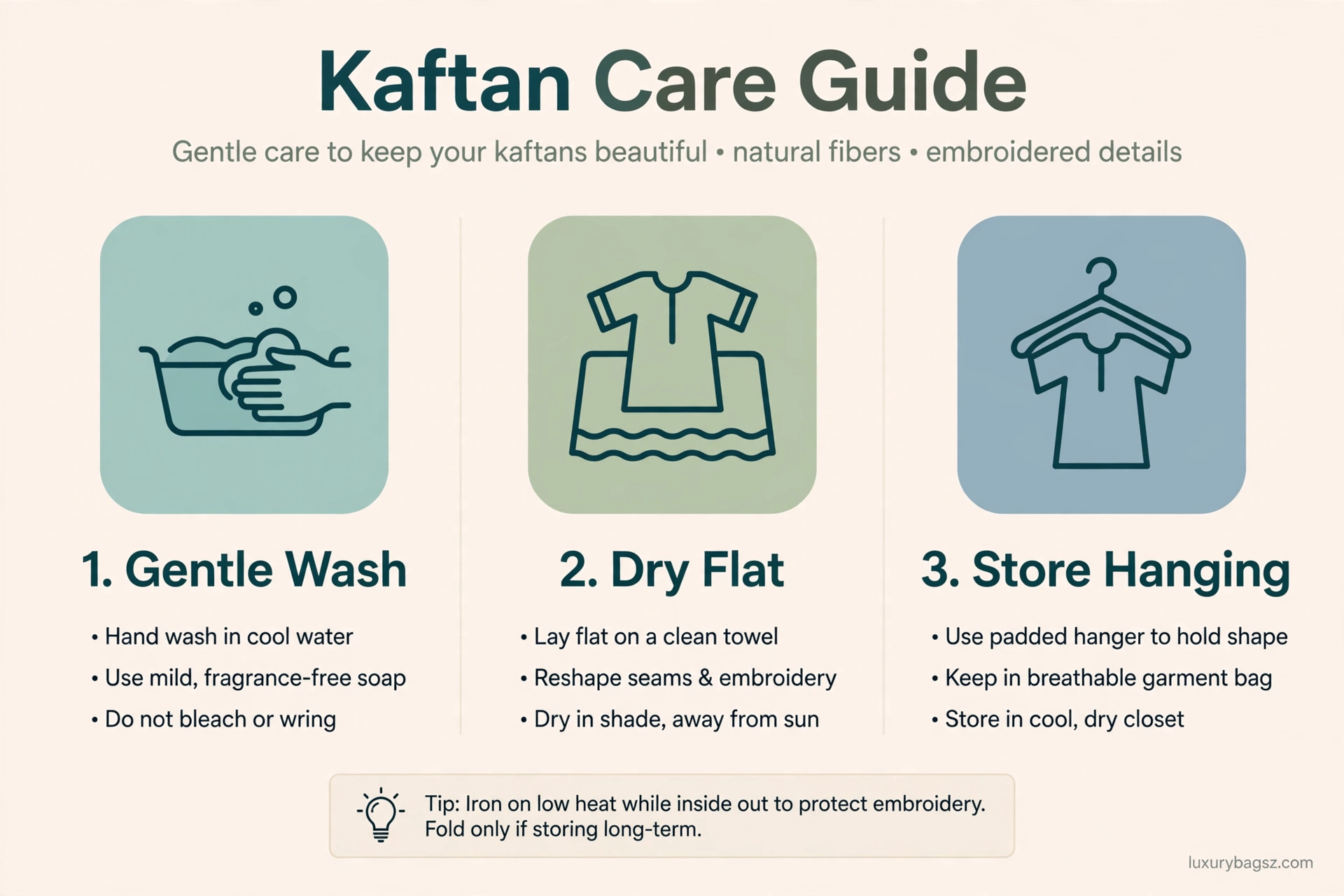
Wash cotton and linen kaftans cool and gently, then dry flat or on a line in shade. Strong sun fades prints faster than washing does.
Silk and chiffon pieces are safer hand washed or dry cleaned, per the label. Never wring an embellished neckline; roll it in a towel instead.
Store kaftans on padded hangers or folded with tissue at the folds. Heavy beading should rest flat so the cloth does not stretch.
For travel, roll rather than fold, and hang the dress in a steamy bathroom on arrival. Most creases fall out of natural fibres overnight.
One kaftan can serve a whole holiday if you style it three ways: loose for the beach, belted for town, and with heels and earrings for dinner.
That versatility is the real value case. Few single garments cover pool, market and restaurant without looking like a compromise anywhere.
Frequently Asked Questions
Are kaftans flattering on all body shapes?
Yes, largely because the shape skims rather than clings. Adding a belt or tie at your natural waist gives definition if you want it, and length choice does the rest.
What fabric is best for a beach kaftan, and how do you wash an embellished kaftan?
Cotton or linen. Both breathe in heat, dry quickly over swimwear and tolerate sand and sunscreen far better than silk or chiffon.
Follow the label first. Many need dry cleaning; if hand washing is allowed, use cool water, never wring the neckline, and dry the piece flat.
Can you wear a kaftan to a wedding, and is it a good travel dress?
Yes, in silk or embellished chiffon with heeled sandals and a small clutch. Avoid cotton beach styles, which read as holiday wear however you accessorise them.
One of the best. It packs flat, needs no precise fit after a long flight, and works from beach to dinner with a change of shoes and belt.
How should a kaftan fit at the shoulders, and are one-size kaftans really one size?
They suit a wide range, but not everyone. Check the flat chest width and the total length against your own measurements before ordering.
Near the body. The body of the dress should flow freely, but a dropped, oversized shoulder makes the whole piece look borrowed rather than relaxed.
How much should a designer kaftan cost?
Typically around £80 to £180 for cotton resort styles, £300 to £800 for silk, and four figures for hand-embroidered evening pieces.
Can petite women wear long kaftans?
Yes. Choose a midi or a maxi with a defined waist, and keep prints on a smaller scale so the cloth does not overwhelm your frame.
How do you stop a kaftan looking like nightwear?
Add structure around it: a belt, real shoes rather than slides, and one piece of jewellery. Fabric matters too — day dresses in matte cotton read far sharper than shiny satin.
Final Verdict: Buy the Fabric for the Job
Choose a kaftan by fabric and length first, print second. Cotton for the beach, a belted midi for resort days, and silk or embellished chiffon for evenings will cover almost every invitation.
Check the shoulder line and the real measurements, care for embellishment gently, and the dress will earn its place for years.






