

Designer Homeware: What to Buy, What It Costs and How to Start
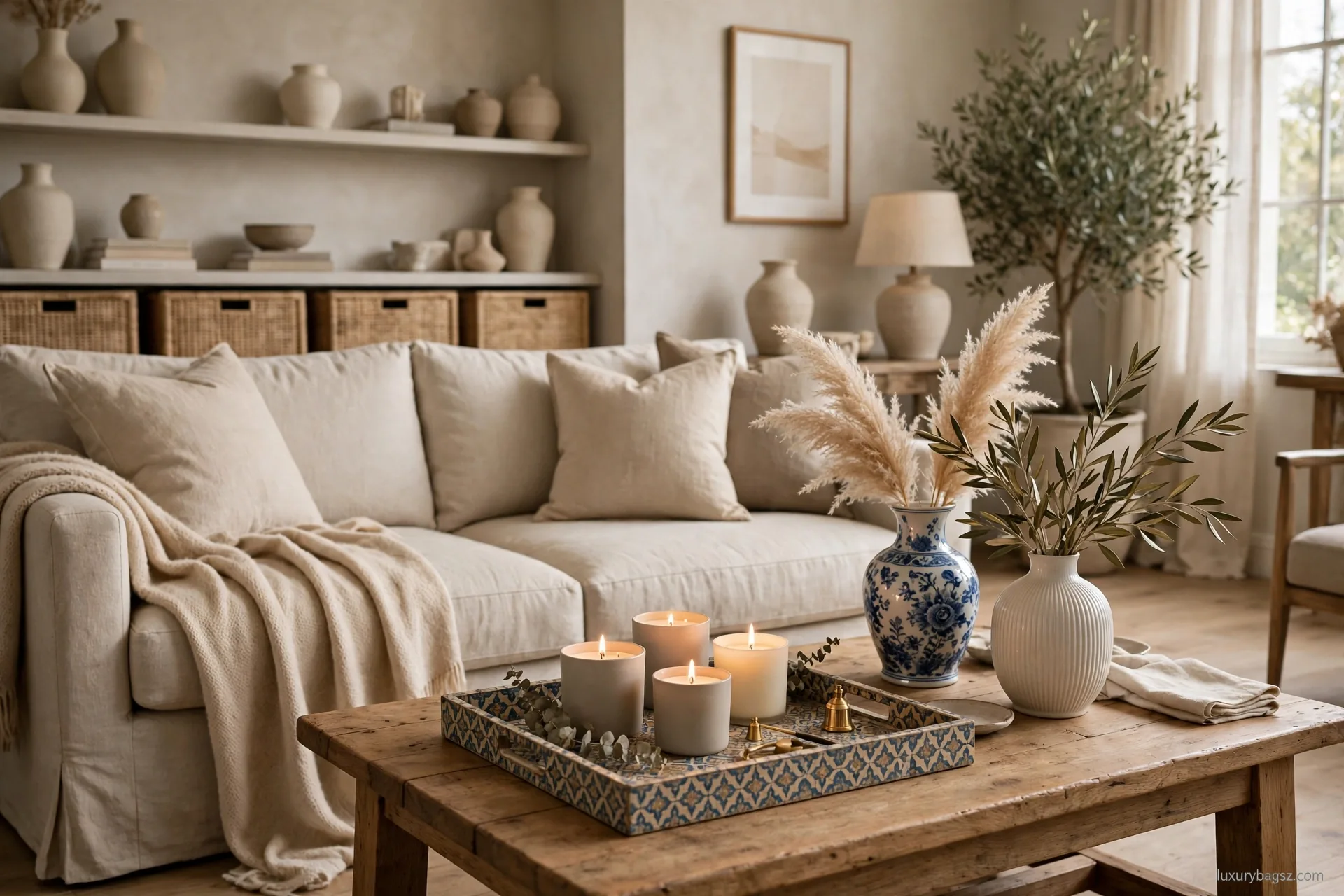
Designer Homeware in Brief: Start With What You Touch Daily
Designer homeware is the fashion houses' world translated to the home — porcelain tableware, crystal, textiles, candles and objects — and the sensible way in is small: buy the pieces you handle every day at the quality you can afford. A single porcelain set, two crystal glasses or one wool throw typically costs from tens of pounds for candles and small objects to hundreds for tableware, with full dining sets and furniture far beyond. Start with tableware or scent, buy open-stock where replacements exist, and treat everything else as decoration after the daily pieces are right.
One discipline governs the whole category: complete sets slowly rather than rooms instantly. A pattern collected over years, each piece chosen, beats a showroom copied in a weekend, in both cost and pleasure.
Key Takeaways
- Tableware, textiles, glassware and scent are the four useful categories.
- Small objects — candles, trays, throws — are the affordable entry point.
- Buy open-stock patterns so a broken plate can be replaced, not mourned.
- Fashion-house homeware holds value best in classic patterns and full sets.
- Everyday luxury beats cupboard luxury: choose what you will touch daily.
- Hand-wash crystal and decorated porcelain; store textiles clean and dark.
What Counts as Designer Homeware
The category spans porcelain and bone china, crystal glassware, silver and brass table objects, wool and cashmere throws, bed and table linen, candles and home fragrance. Fashion houses license or make these lines as an extension of their world: the same patterns, colours and motifs that appear on scarves and bags appear on plates and cushions. Dedicated porcelain and crystal makers sit alongside them, often older than the fashion labels, with craft depth the fashion lines frankly borrow. Judge every piece as an object first and a logo second. A plate is used three times a day; its maker's name is read far less often than its rim is chipped.
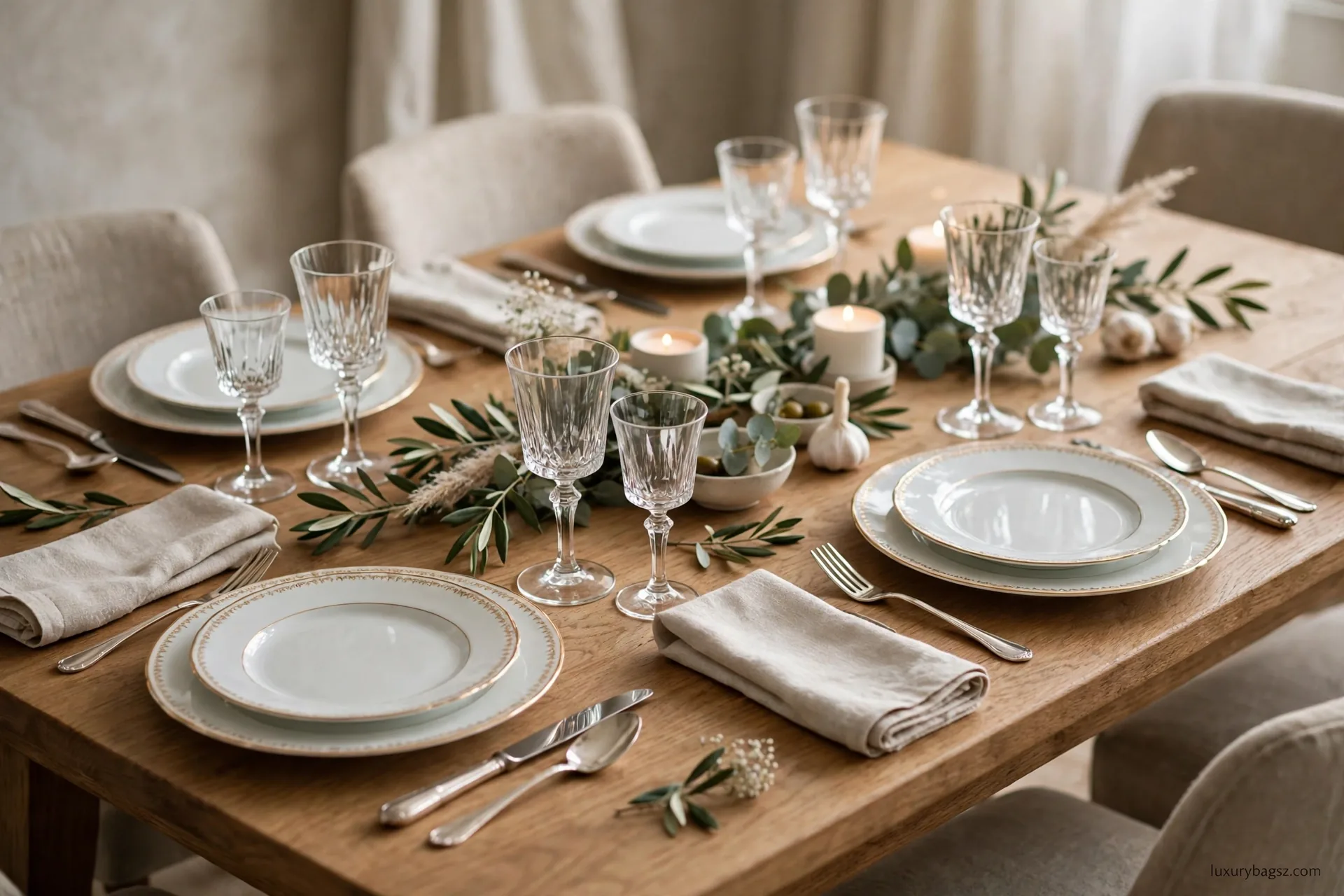
Cushions follow throws in impact per pound: two in a house fabric can carry a plain sofa into designer territory, and covers zip off for cleaning, which matters more than most buyers expect.
Textiles: The Fastest Room Change
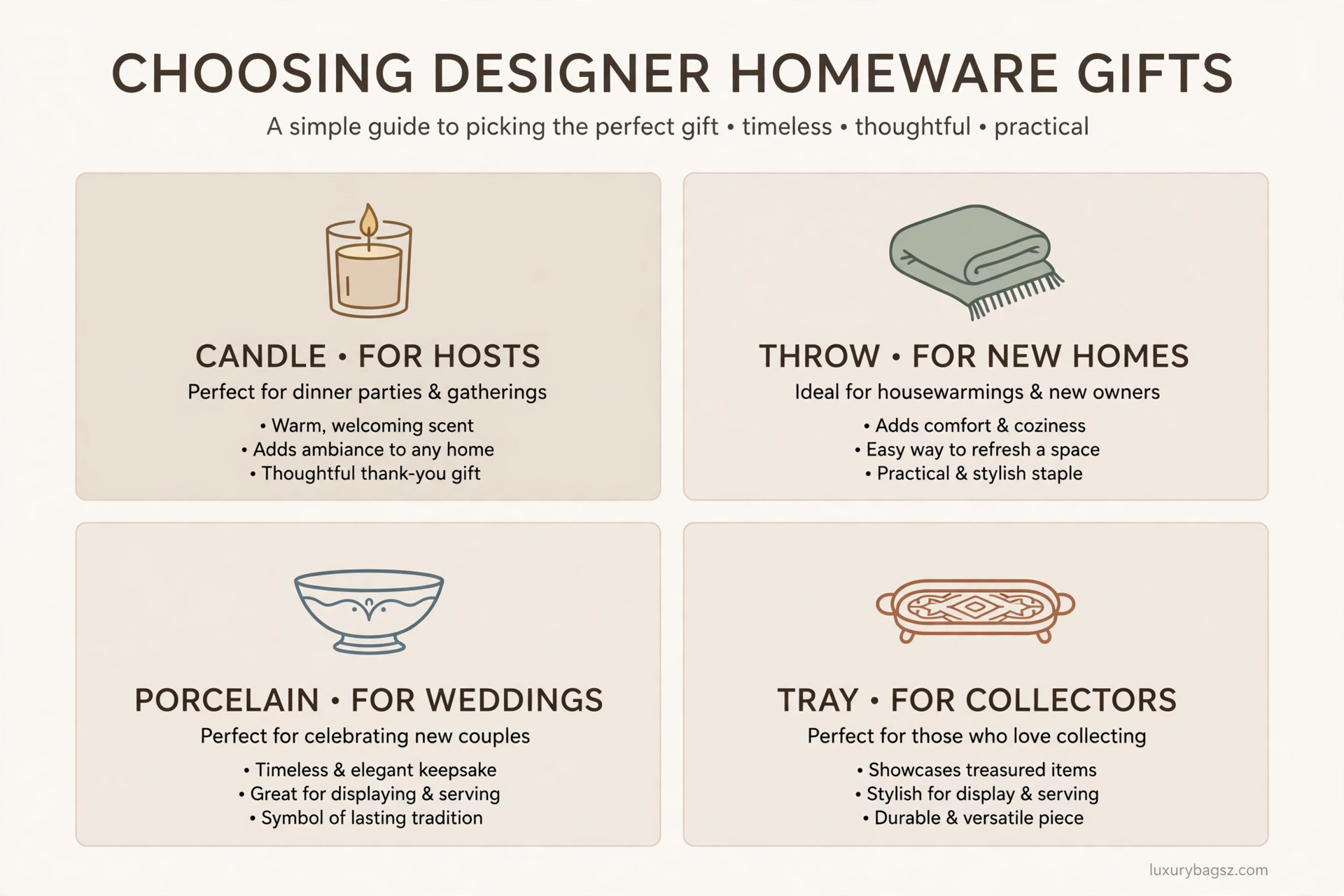
Throws and cushions change a room in an afternoon, carry the houses' most recognisable patterns, and ask for no plumbing, drilling or commitment. Wool throws are the workhorse: warm, hard-wearing and forgiving of daily life. Our guide to what a Hermès Avalon blanket is covers the most famous example, its jacquard weave and its care. Bed linen is the quiet luxury: high-thread-count cotton feels different every single night, which is more than can be said for most decorative objects. Table linen in linen or cotton damask elevates ordinary crockery. Buy napkins generously — they are the most-used, most-stained textile in the house.
Dinner services reward secondhand hunting more than any other category: discontinued patterns flood resale when households downsize, and patient buyers assemble twelve settings for the price of four new.
Tableware: Porcelain, Patterns and Open Stock
Porcelain and bone china are the core purchase. Bone china is finer and more translucent; porcelain is harder and more forgiving of daily knocks. Classic patterns from long-running houses are the safe money: they stay in production for decades, so replacements and additions remain possible. Our explainer on what Hermès tableware is shows how one house runs patterns from mosaic to equestrian across whole services. Build a service for your real table — six or eight settings, serving pieces later — rather than a twelve-place monument to guests who never come.
Candles and diffusers hide in this category as the gateway for many homes: a hall that smells considered makes every later purchase look more deliberate. Begin there if the tableware decision feels large.
Glassware, Metal and the Kitchen Crossovers
Crystal earns its place at the table by light: it rings, it sparkles, and it makes ordinary wine feel like an occasion. It also chips, so buy shapes you can replace. Brass, silver plate and stainless objects — candle holders, trays, cutlery — bring weight and shine without fragility, and age gracefully with simple polishing. Kitchen appliances wear designer dress too: the Smeg and Dolce & Gabbana collaboration turned fridges and toasters into Sicilian art objects, at art-object prices. Treat such pieces as furniture decisions, not gadgets: you will look at them daily for a decade, and the pattern should survive your taste changing.
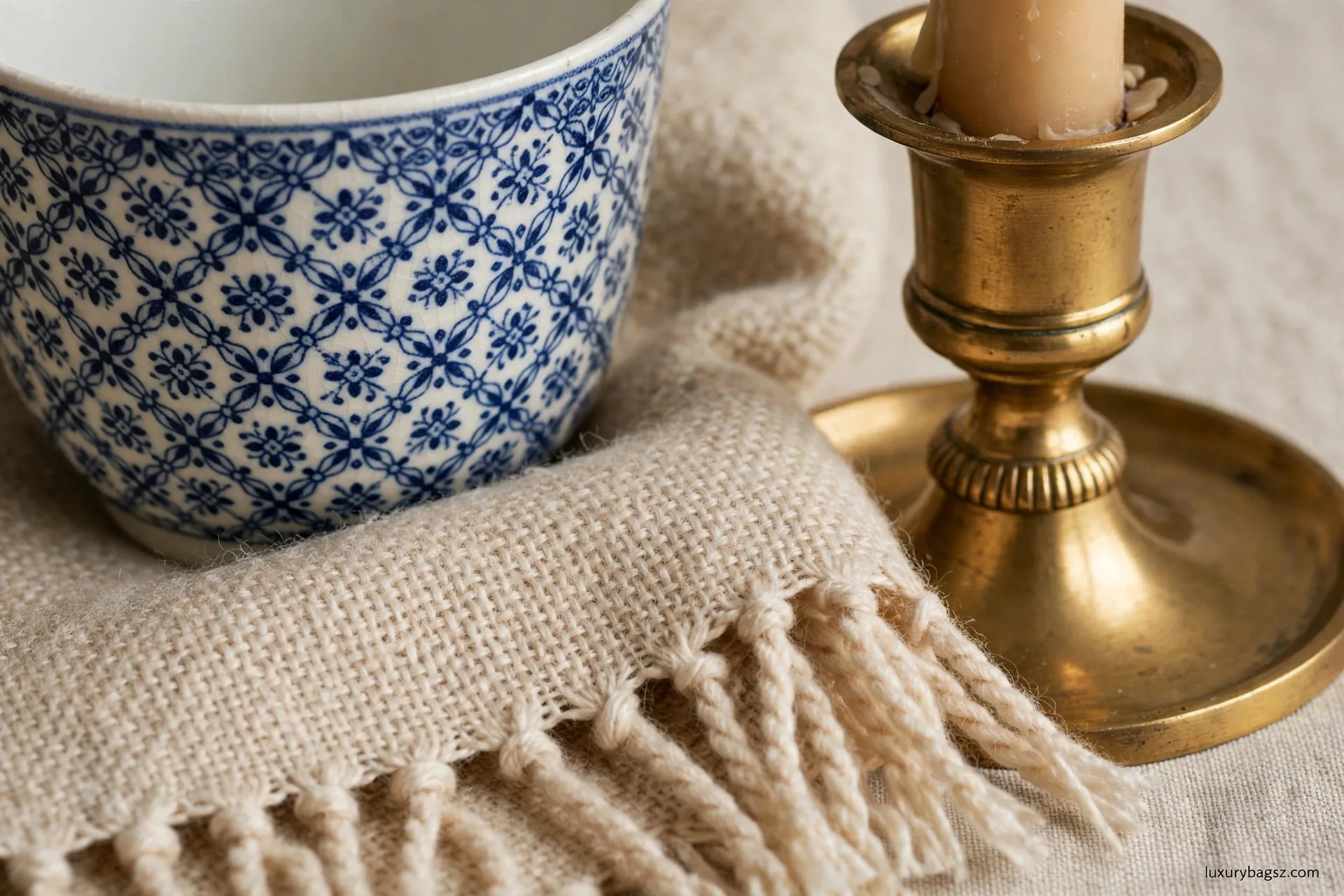
Wedding lists are the strategic moment for tableware: guests fund the collectable tier gladly, piece by piece, and open-stock patterns let a couple build a service across anniversaries afterwards.
Scent: Candles, Diffusers and the Small-Object Entry
Home fragrance is where most people start, because the ticket is small and the effect is immediate: a good candle changes a room's mood within minutes. Designer candles cost more than supermarket ones for better wax, slower burn and scents developed with real perfumers. Burn them properly — first burn to the edge — and they repay it. Diffusers suit hallways and bathrooms where flames cannot live. Incense and room sprays serve quick changes rather than lasting atmosphere. As gifts, scent and small objects are the low-risk tier: they need no size, no pattern commitment, and they are finished with pleasure rather than stored with guilt.
Weight is the in-hand quality test for metal and glass: balanced cutlery, candle holders with real heft and crystal that feels substantial all signal the material honesty that the tiers above the cheapest share.
Prices: The Honest Tiers
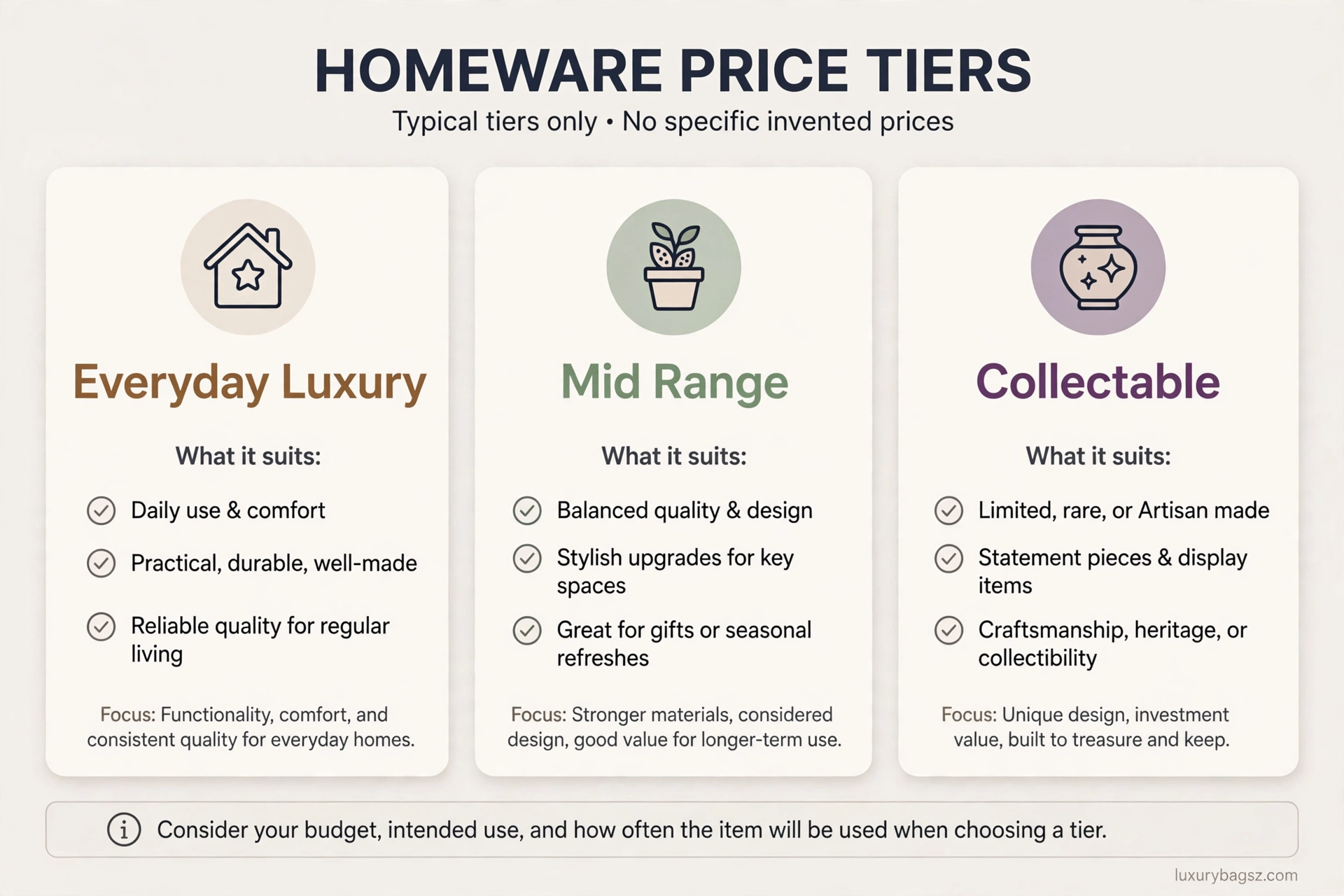
Everyday luxury — candles, napkins, small trays, single glasses — lives in the tens of pounds. This tier carries the designer pleasure at household prices. Mid range — throws, cushion covers, part services of tableware, quality bed linen — runs into the low hundreds, where craft starts to be visible and felt. Collectable pieces — full porcelain services, crystal sets, cashmere, furniture and art objects — run from high hundreds into thousands, and should be bought slowly. The unboxing film in this part shows one house's homeware at the top end. Enjoy it as a window display: the tiers below it are where most homes happily live.
Ask sellers of sets to count aloud in the listing — settings, serving pieces, and any seconds. Honest counts are the norm in this market and a listing that will not count is telling you something.

Buying Pre-Owned and Checking Condition
Porcelain checks are simple and strict: no chips on rims, no cracks, no crazing in the glaze, and gilding unworn at the edges where thumbs and stacking rub. Crystal should ring when flicked and show no cloudiness — dishwasher haze is permanent and quietly ruins the sparkle that justified the price. Textiles need a smell and stretch test: smoke and moth are the enemies, and both hide in folded storage. Check corners and fringes where moths start. Full or near-full sets beat single orphans for value, except in famous patterns where singles sell to people completing their own sets.
Rotate tableware in daily use rather than saving it for guests: porcelain kept for best often outlives its owners unused, while pieces used weekly justify every penny and improve ordinary Tuesdays.
Care: Porcelain, Crystal, Textiles
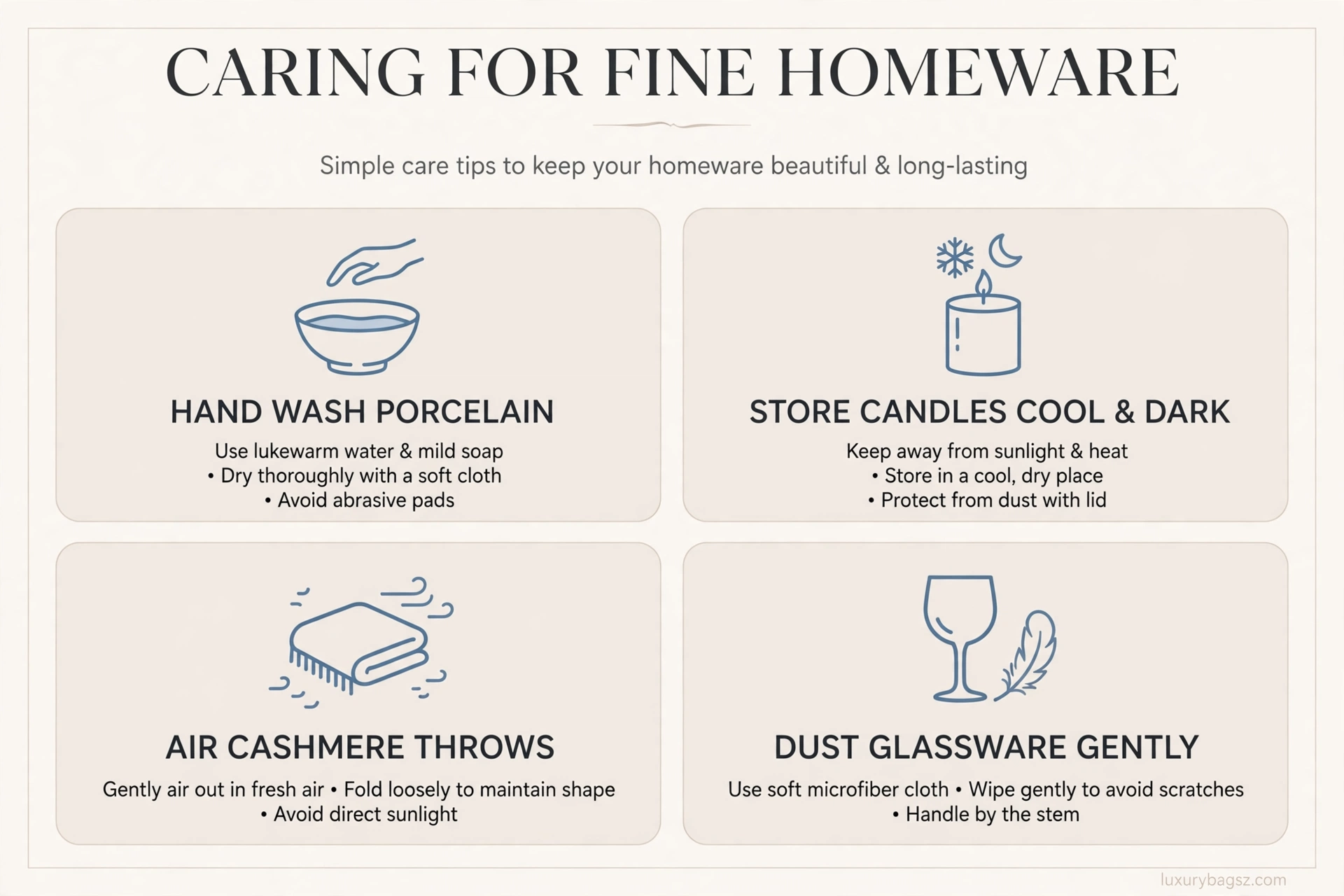
Hand-wash decorated and gilded porcelain, and all crystal, in warm water with a soft cloth. Dishwashers dull gilding and cloud crystal slowly but permanently. Store plates with felt or cloth separators, and glasses upright, never stacked inside each other. Most chips happen in cupboards, not at tables. Wash wool throws rarely, with wool detergent, and store them clean in the dark with cedar or lavender against moths — never dirty, which is what moths actually eat. Candles last longest burned in long sessions: let the wax melt to the edge each time, trim the wick, and keep them from draughts that bend the flame.
Frequently Asked Questions
What is the best designer homeware to start with?
A piece you touch daily: tableware if you cook and host, a wool throw if your evenings are on the sofa, bed linen if you want luxury you feel nightly. Candles are the cheapest honest start.
Is designer homeware worth the money?
In classic patterns and daily-use pieces, yes: the craft lasts decades and replacement stock exists. In novelty and trend pieces, you are buying fashion, and it should be priced in your head as fashion.
What is open stock and why does it matter?
Open stock means a pattern stays in production, sold piece by piece, so a broken plate can be replaced years later. It is the single most practical feature to check before starting a service.
How many place settings should I buy?
For your real life: six or eight covers most households, with serving pieces added later. Twelve-piece monuments gather dust and tie up money that better textiles would enjoy more.
Can I put designer porcelain in the dishwasher?
Plain porcelain usually can; gilded and hand-decorated pieces should be hand-washed. Dishwasher detergent and heat dull gold edges and cloud crystal over time, and the damage does not reverse.
Do fashion houses actually make their homeware?
Some make it in their own workshops; many license it to specialist porcelain, crystal or textile makers. Either way, judge the object's craft — the specialist makers are often superb.
What homeware makes the safest gift?
Candles, diffusers, napkins, small trays and throws: no sizes, no pattern commitment for a whole room, and quality that is felt immediately. Avoid single glasses and orphan plates as gifts.
How do I check secondhand porcelain?
Rims for chips, glaze for crazing and cracks, gilding for wear at the edges, and a light tap — sound porcelain rings clearly, cracked pieces thud. Buy sets over singles where you can.
Why is bone china more expensive?
It contains bone ash, giving finer translucency and strength in thin walls, and it is costlier to fire successfully. Many makers regard it as the finest tableware material available.
How do I stop moths eating wool throws?
Store throws washed clean — moths eat the food and sweat residues, not clean wool — in the dark with cedar or lavender, and air them a few times a year.
Daily Luxury, Chosen Slowly
Designer homeware rewards the unglamorous order: tableware, textiles and scent that you touch every day, in classic patterns with replacements available. Add the collectable pieces slowly, check secondhand porcelain like a jeweller, and wash the good crystal by hand. A home built that way feels luxurious at breakfast, not just at dinner parties.
Luxury you touch daily is the only kind that compounds. I check small, handled objects closely — a clasp worn smooth, an edge rubbed bright — because use writes on everything. Choose homeware the same way: pieces your hands will grade every morning, in patterns you can still replace in ten years.






