Colour Transfer on Leather Bags: How to Prevent It and What Actually Lifts It
Fresh Transfer Lifts, Old Transfer Mostly Fades
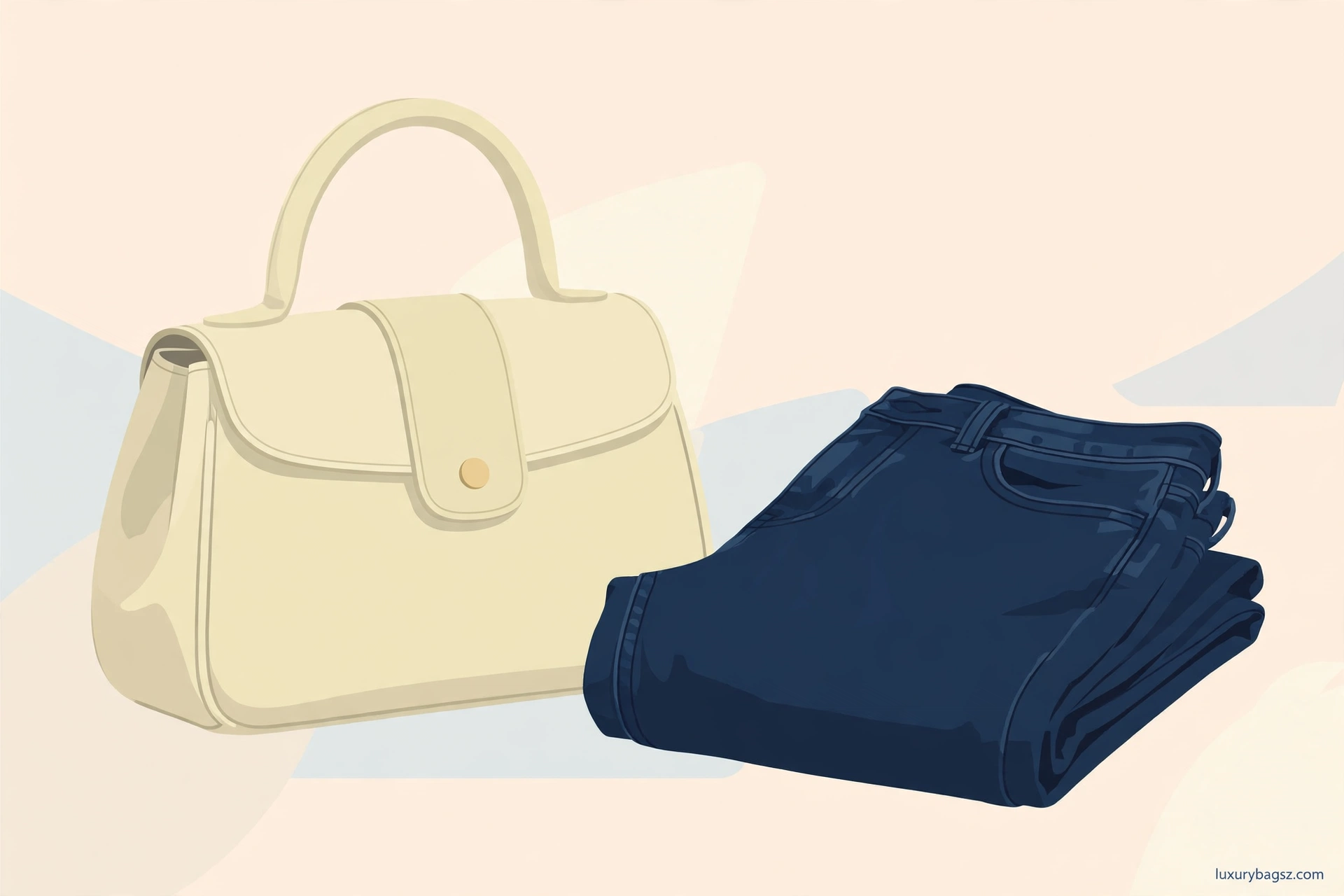
Colour transfer happens when loose dye from dark fabric, usually new denim, rubs onto a paler bag. Caught the same day, a gentle clean with a white cloth and a leather-safe cleaner lifts much of it. Caught after weeks of wear, the honest answer is that set-in dye often only fades.
That gap between fresh and set-in is the whole subject. Scrubbing, alcohol and household cleaners do not close it; they strip the bag's own finish and turn a dye mark into a colour-loss patch, which is harder to fix than the transfer was.
This guide covers what causes transfer, which bags are at risk, the safe method for fresh marks, what to avoid, and the prevention habits that keep pale bags pale.
Key Takeaways
- New, dark denim is the main culprit: its loose indigo dye moves with friction, heat and moisture.
- Pale, smooth and soft leathers are most at risk; dark and pebbled finishes hide or resist transfer better.
- Act the same day: blot and gently clean with a white cloth and leather-safe cleaner, and check as you go.
- Never use alcohol, wipes with solvents, erasers or household sprays on a dye mark; they lift the bag's finish too.
- Set-in transfer usually needs professional colour work, and even then it may only improve, not vanish.
- Prevention works: the white-cloth test on new garments, and keeping pale bags off dark denim, stop most cases.
What Colour Transfer Actually Is
Transfer is loose surface dye on the move. Dark fabrics, especially indigo denim, carry dye that has not fully bonded, and rubbing presses it onto anything paler in contact.
Leather receives it readily because its finish is slightly porous, and soft, unfinished or lightly finished leathers receive it fastest. The mark is the fabric's dye sitting in and on your bag's surface.
Heat and moisture speed the process up, which is why transfer appears after long wears, warm days and rainy ones. A crossbody worn against jeans for hours is the classic scenario.
Which Bags Are Most at Risk
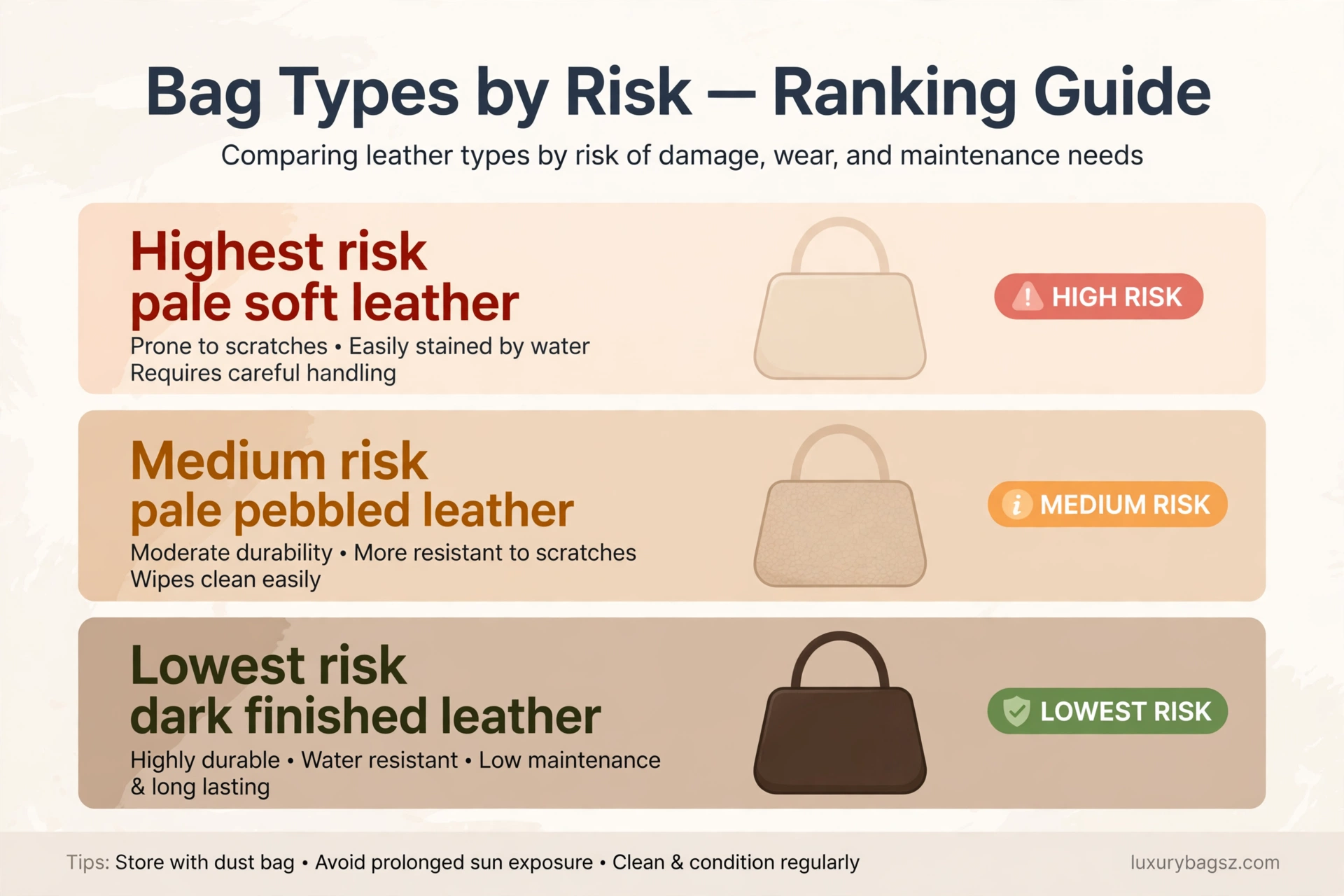
White, cream, blush and pastel bags show transfer first and suffer most, because any dye contrasts with the pale ground. Lambskin and other soft, lightly finished leathers absorb dye deepest.
Pebbled, heavily finished leathers resist better and clean more easily, one reason our chanel caviar vs lambskin comparison scores caviar ahead for daily wear.
Dark bags collect transfer too, but it rarely shows. The risk list is really about pale bags, new dark clothing, and long friction contact between the two.
Your own bag can be the culprit in reverse, too. A new, deeply dyed bag can crock its own colour onto pale clothing, which is the same loose-dye physics working in the opposite direction.
The white-cloth test works both ways: rub a damp white cloth on a new bag before its first wear against light clothes. Colour on the cloth means clean the contact panels gently first, and keep it off pale fabrics until the cloth comes away clean.
The Usual Culprits Beyond Denim
New jeans lead the list, but they are not alone. Dark unwashed cotton, black trousers, saturated dresses and some suede garments all shed dye in the same way.
Printed materials matter too: a damp newspaper or magazine left against a pale bag can print it. Dark leather goods stored touching a pale bag can share their dye in the cupboard.
Even car seats and dark linings can mark a light bag over a long journey. Anywhere a pale surface rubs or rests against strong colour under pressure is a transfer site waiting to happen.
What to Do the Day It Happens
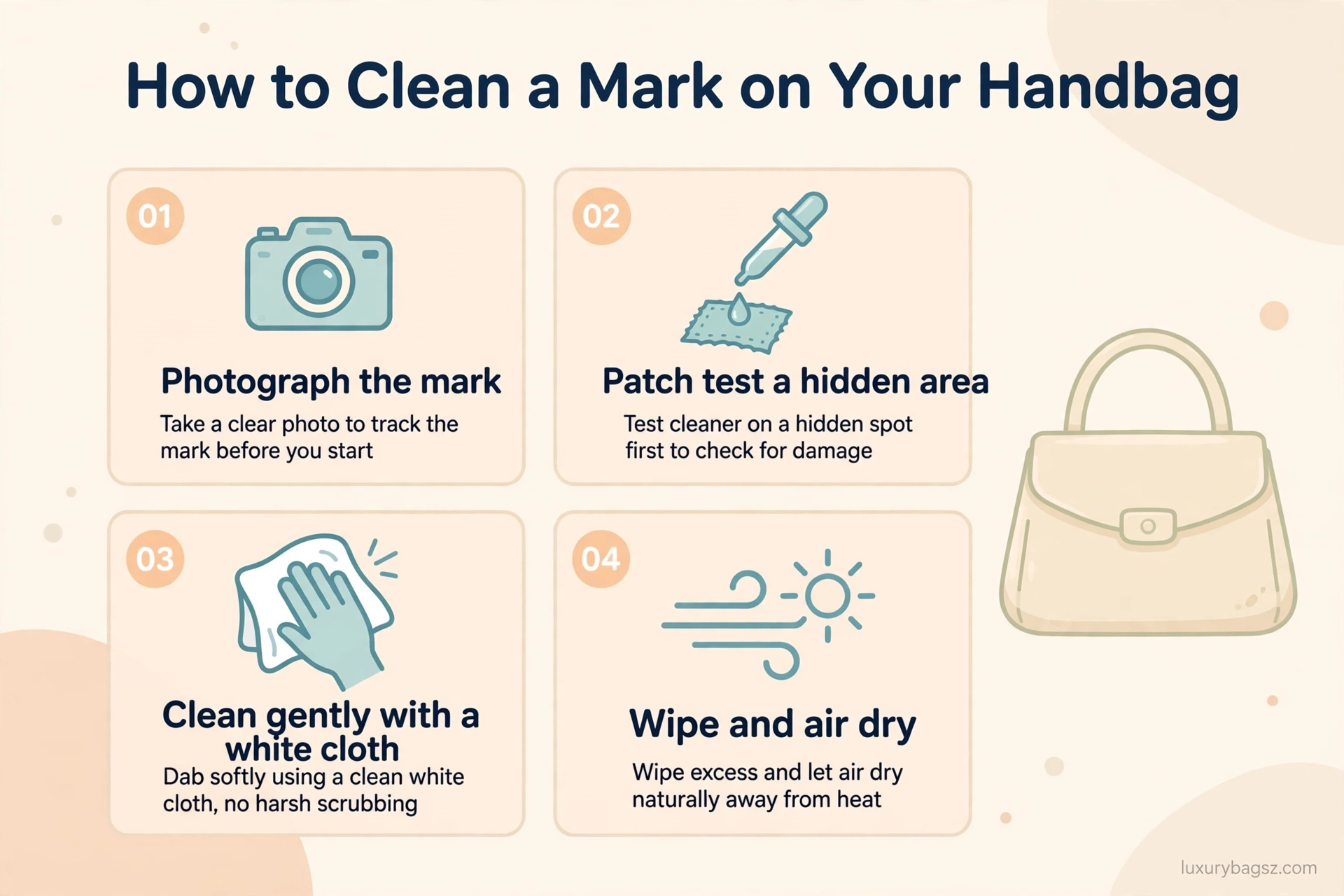
Stop and assess before touching: photograph the mark, note what caused it, and check how widespread it is. Fresh, faint smudging is a home job; a deep, dark patch is already a borderline one.
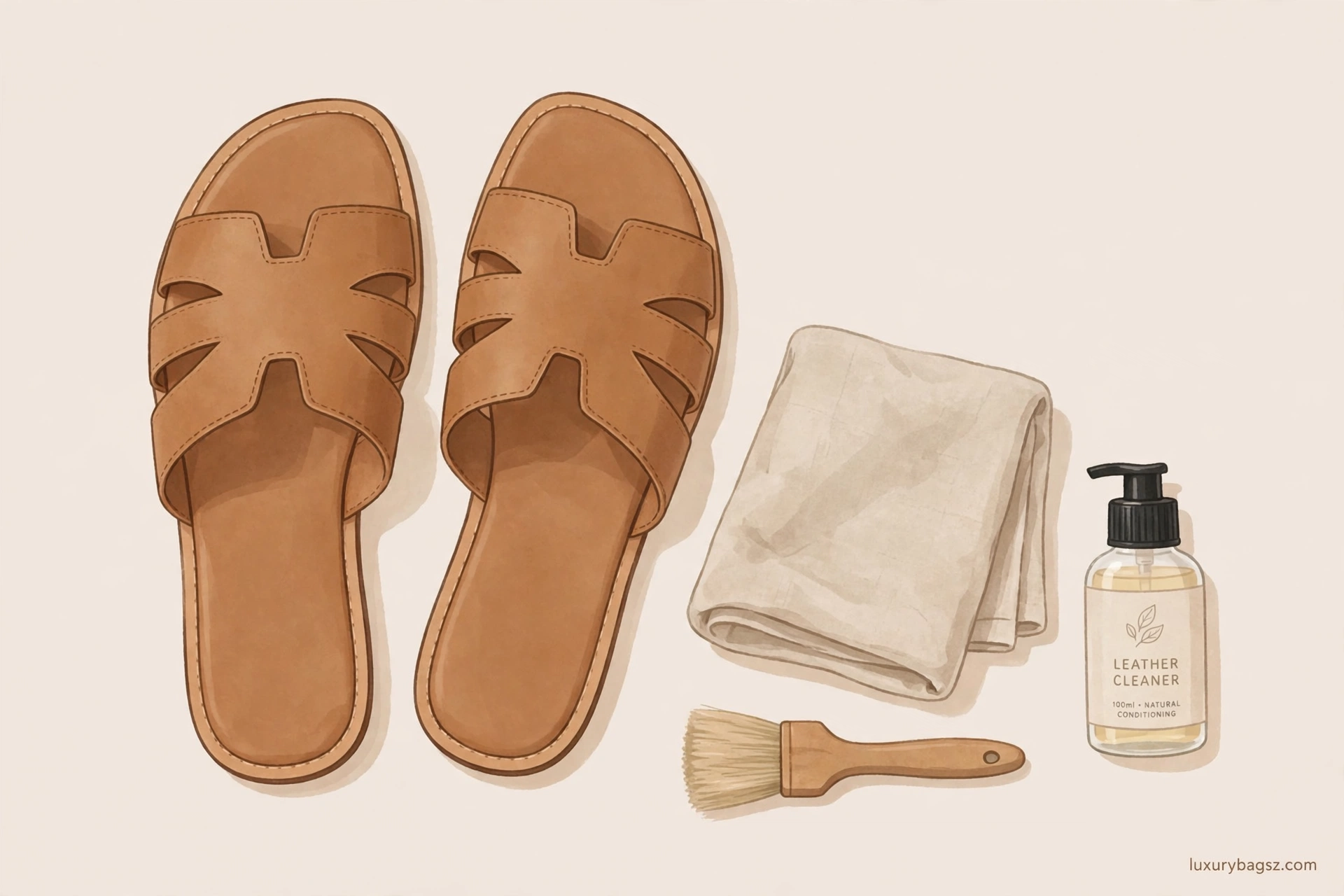
Patch-test your leather cleaner on a hidden area first and let it dry. Then put cleaner on a white cloth, never directly on the bag, and work the mark with small, light strokes, lifting and checking often.
Wipe residue away with a barely damp cloth and let the bag dry at room temperature. One or two gentle rounds shift most fresh transfer; if two rounds change nothing, further rounds will not save it.

What Never to Use on a Dye Mark
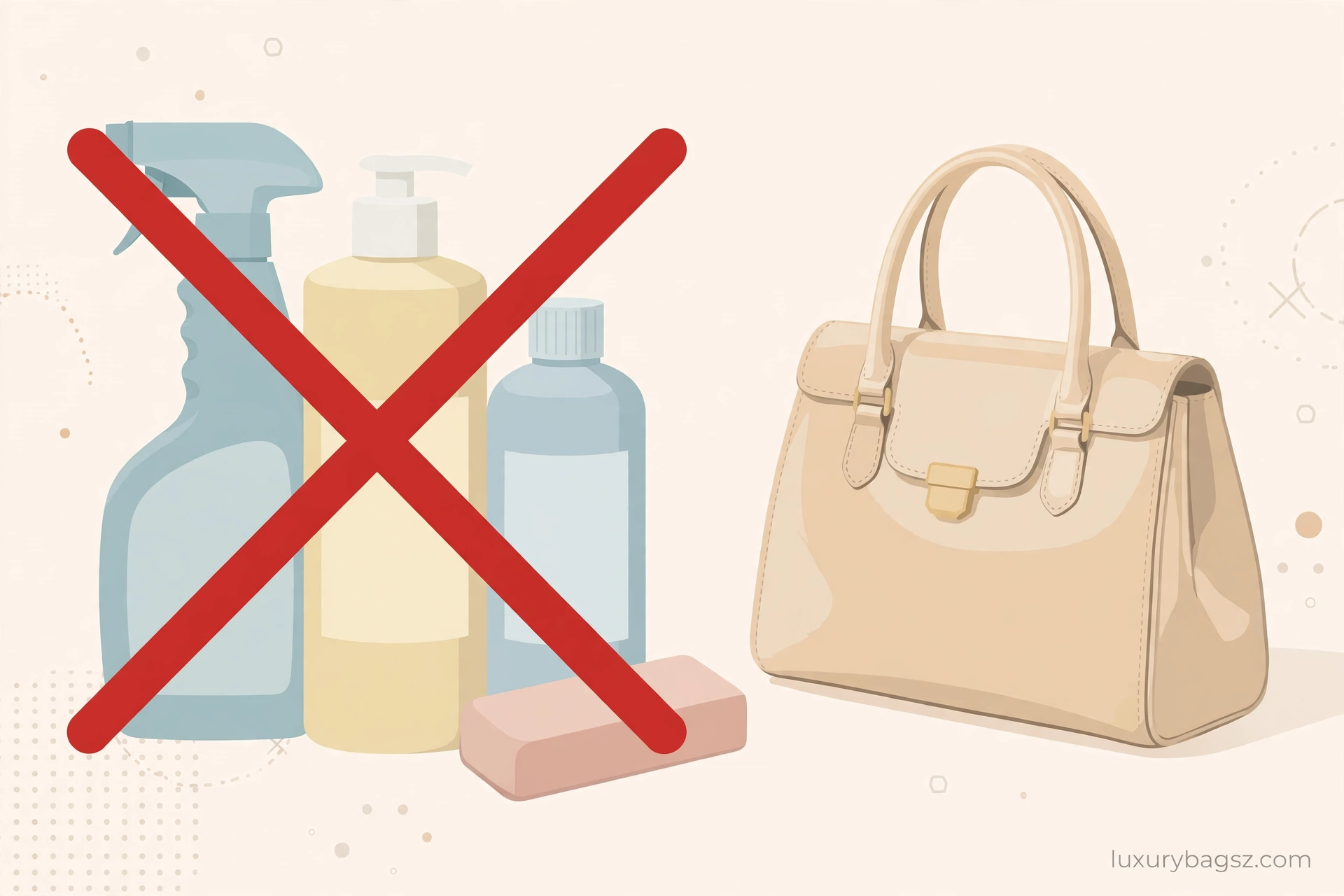
Alcohol and solvent wipes can lift transfer, but they lift the bag's own colour and finish with it, leaving a pale, matte patch. Erasers abrade the surface. Household sprays and dish liquids strip finishes and drive dye deeper.
This is doubly true for delicate leathers. The guidance in our guide to how to clean Chanel lambskin bag is blunt for a reason: on lambskin, home dye removal attempts cause more damage than the denim did.
If a product promises instant dye removal on any leather, treat the promise as the warning. Dye that bonded over weeks does not leave in seconds without taking something of the bag with it.
Set expectations before a restoration quote surprises you. Specialists price the area, the leather and the colour-matching involved, and a full-panel refinish on a pale bag is skilled, slow work.
Ask to see examples of the specialist's colour work on similar leathers. A restorer who shows you honest before-and-after photographs, including jobs that only improved, is the one to trust with your bag.
Set-In Transfer and Professional Options
Once dye has sat through repeated wears, it has bonded into the finish. Home cleaning at that stage polishes the surface around the mark and can make the contrast look worse.
A leather specialist has two real tools: careful dye extraction with professional products, and colour restoration, where the area is cleaned and the bag's colour is rebuilt and refinished over it.
Restoration can be excellent, but it is a repair, not a reversal. Get an honest assessment and price before committing, and weigh it against the bag's value and how much the mark actually shows in wear.
Rotation quietly prevents more transfer than any product. A pale bag carried daily against the same jeans accumulates dye a little at a time; the same bag rested between wears, and wiped after each one, rarely builds a visible mark.
Prevention Habits That Actually Work
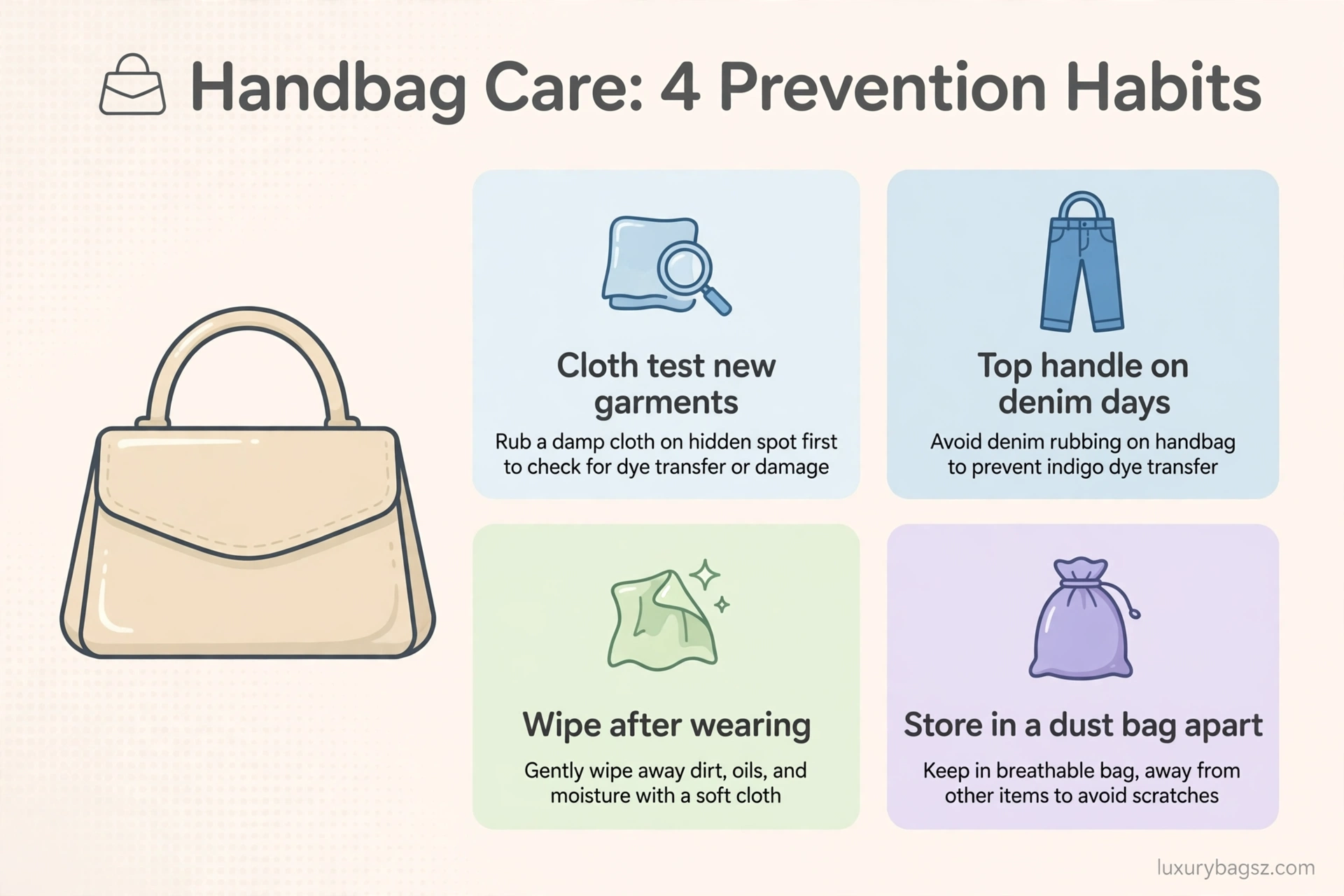
Test new dark garments with a damp white cloth rubbed on a hidden area; colour on the cloth means keep that garment away from pale bags until it has been washed several times.
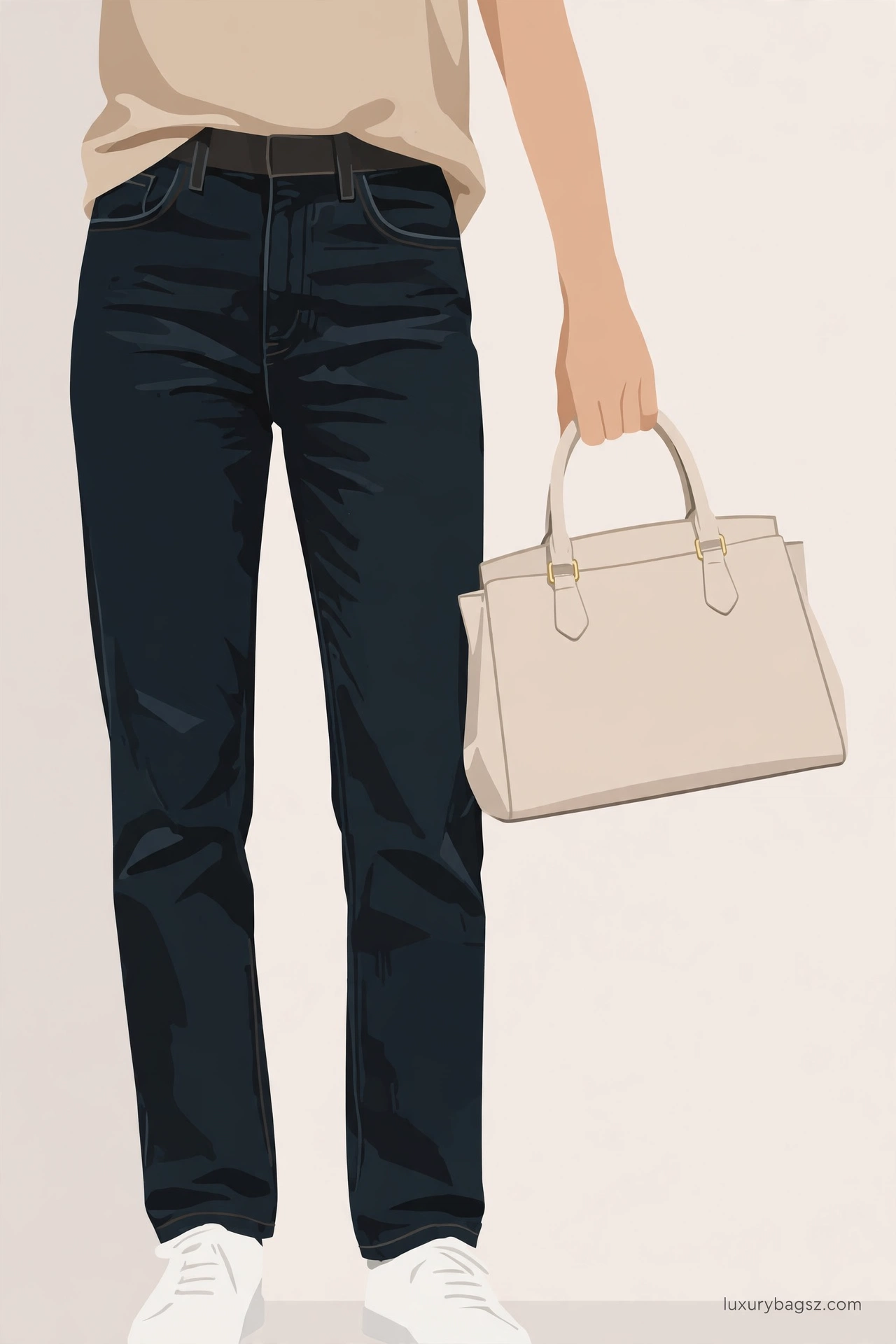
Carry pale bags by the top handle on denim days, or swap to a darker bag. Wipe the contact side of a pale bag with a dry cloth after wearing; that pass catches loose dye before it sets.
General leather habits help too, and our guide to how to take care of leather covers storage and rotation. Store pale bags in their dust bags, never resting against dark leather or suede.
Renting the look first is an underrated test: carry a pale bag for a week, in your real wardrobe, and see whether the care routine suits your life before a major purchase depends on it.
Plenty of owners conclude happily that pale bags are for light-clothing days only. That is not a failure of the bag or the owner; it is the correct, relaxed way to own the most demanding colour leather makes.
Buying Pale Bags with Open Eyes
If you love pale bags, buy them knowing the terms: they are high-maintenance by nature, and transfer is a when, not an if, unless your wardrobe and habits are managed around them.
Finished, pebbled pale leathers are the pragmatic choice; soft pale lambskin is the beautiful, fragile one. Neither is a mistake, provided the price and your expectations match the upkeep.
Second-hand pale bags should be checked panel by panel, especially the back and base corners, under daylight. Existing transfer is a fair reason to negotiate, because lifting it will likely cost money.
Frequently Asked Questions
What causes colour transfer on a leather bag?
Loose dye from dark fabrics, usually new denim, rubs onto paler leather under friction. Heat and moisture speed it up, and soft, pale leathers absorb it fastest.
Can colour transfer be removed completely?
Fresh, faint transfer often lifts well with gentle cleaning. Set-in dye usually only fades at home and may need professional colour restoration to improve properly.
How quickly do I need to act on a dye mark?
The same day is ideal, and within the first wears matters most. Every additional wear presses the dye deeper and moves a mark from liftable to set-in.
Is rubbing alcohol safe on colour transfer?
No, not for finished leather bags. It can strip the bag's own colour and finish, leaving a pale patch that is harder to repair than the transfer was.
Does a leather protector spray prevent transfer?
A patch-tested protector adds a light barrier and can make fresh transfer easier to lift. It reduces risk; it does not make a pale bag denim-proof.
Why does new denim transfer more than old denim?
New denim carries the most loose, unbonded indigo on its surface. Washing and wearing gradually remove that loose dye, so older, well-washed jeans transfer far less.
Can colour transfer happen in storage?
Yes. A pale bag stored touching dark leather, suede or strongly dyed fabric can pick up colour without being worn. Keep pale bags in dust bags, stored apart.
What should I do about transfer on lambskin?
Almost nothing at home beyond a dry cloth. Lambskin absorbs dye deeply and its finish is fragile, so set-in transfer on lambskin is professional work from the start.
Will baby wipes remove denim dye from my bag?
They are a gamble: some contain solvents and conditioners that mark finishes or lift colour. A white cloth with a proper leather cleaner is the controlled choice.
How much does professional colour restoration cost?
Prices vary widely with the bag and the area involved, from modest touch-ups to substantial refinishing work. Always get an assessment and quote before handing the bag over.
Final Verdict
Prevent first, act fast when it happens, and stay honest about set-in dye. A pale bag looked after with a dry cloth, a cloth test on new jeans, and quick gentle cleaning will stay pale far longer than one rescued by scrubbing.