

How to Spot a Fake Cartier Tank Watch
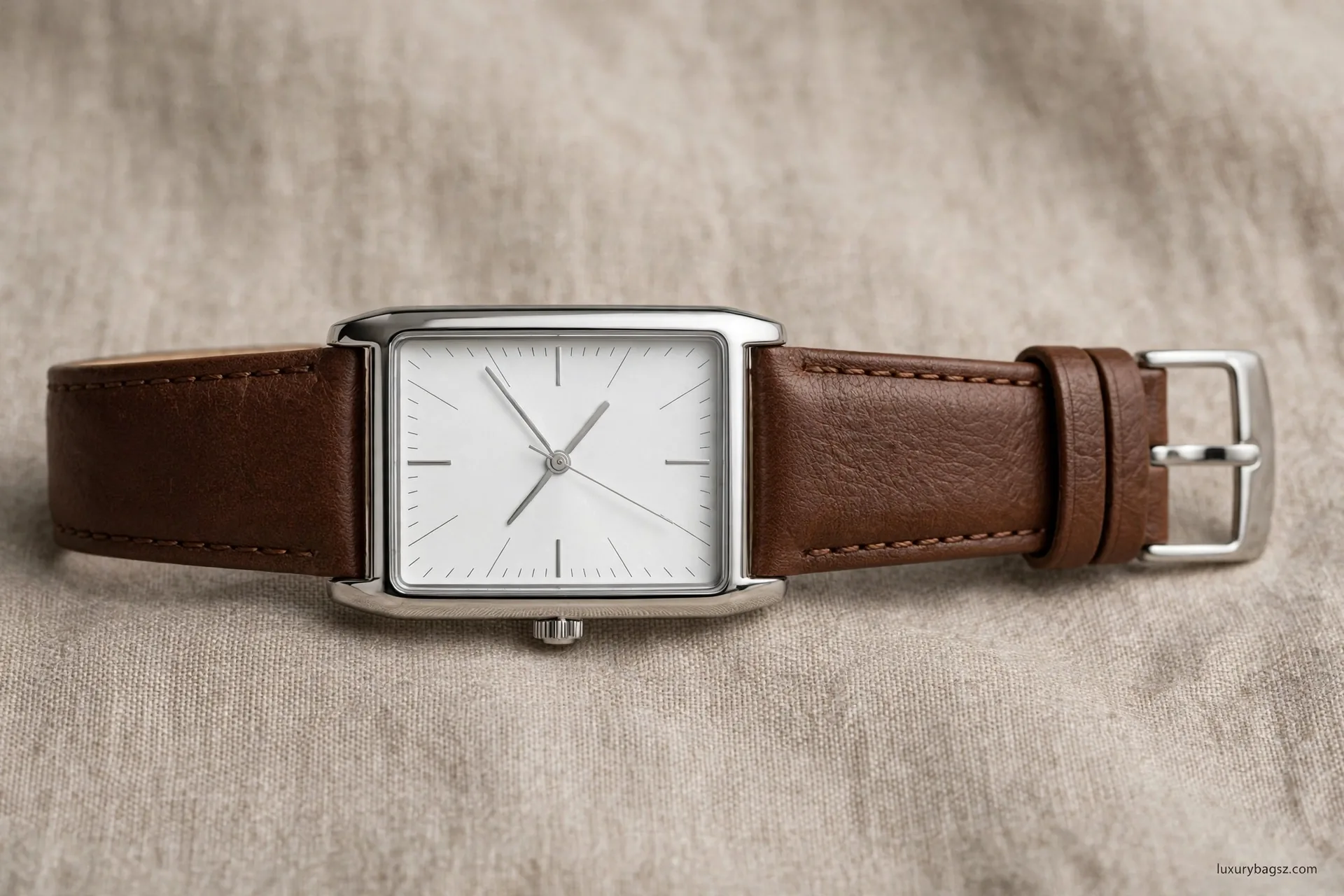
Judge the Tank Against Its Exact Reference
Name the variant and reference before judging anything else, then test the watch against that specification. Louis Cartier, Must, Americaine, Francaise and Anglaise differ in proportions, lugs, crown, strap or bracelet and movement, so a feature borrowed from another variant is already a failure.
Look hardest at the dial, hands, case and crown. Roman numerals should be sharp and evenly formed, the railway minute track clean all the way round, and the blued sword hands show real depth of colour rather than flat paint. The rectangular case needs the right measurements and cleanly formed brancards where fitted.
The cabochon in the crown should look and feel like set sapphire — smooth, secure, with no glue or wobble — and the movement fitted, whether quartz, hand-wound or automatic, must be the one that reference was made with.
The Tank at a Glance
The Cartier Tank, introduced in 1917 and inspired by the Renault FT tank viewed from above, is one of the most copied dress watches in the world. Its rectangular case, Roman-numeral dial, railway minute track, and sapphire cabochon crown look simple, and that simplicity is exactly what makes fakes dangerous: a buyer who judges a Tank by its silhouette alone will pass many fakes, because the silhouette is the easiest part to copy.
The Tank family is also broad: Tank Louis Cartier, Tank Must, Tank Americaine, Tank Francaise, Tank Anglaise, and other variants differ in case proportions, lug design, crown style, bracelet or strap, and movement. A Tank Must is not a Tank Louis Cartier with a different name, and a Tank Francaise bracelet is not interchangeable with a Tank Americaine strap. Reference discipline is therefore the foundation of every check that follows.
This guide gives you twelve Tank-specific checks, from the rectangular case geometry and the Roman dial to the brancard lugs, the cabochon crown, and the movement by reference. As ever, no single check authenticates a watch. The verdict comes from the whole watch, judged against its reference, and confirmed by an independent inspection before a high-value purchase.
Key Takeaways
- The Tank family is broad: Louis Cartier, Must, Americaine, Francaise, Anglaise, and others differ in case, lugs, crown, bracelet, and movement, so every check must be judged against the exact reference.
- The rectangular case must have correct proportions for its reference, with clean, straight sides and correctly formed brancard lugs where fitted.
- Genuine Tank dials show crisp Roman numerals, a clean railway minute track, a correctly rendered Cartier signature, and blued-steel sword hands.
- The sapphire cabochon crown should be smoothly set with no glue, no wobble, and no plastic look; a poor cabochon is a classic fake tell.
- The movement must match the reference, whether quartz, manual-winding, or automatic, and its finishing and markings must be correct.
- Papers, box, and serial numbers must agree with the watch and suit its era; a mismatch anywhere is a hard stop.
Identify the Tank Variant and Reference First
Begin by naming the variant and reference. Tank Louis Cartier models are the classic rectangular dress watches with a leather strap and a sapphire cabochon crown. Tank Must models are the more accessible modern line, often in steel with a variety of dial colours and straps. Tank Americaine models have a curved, elongated case. Tank Francaise models have an integrated metal bracelet with a distinctive link design.
Tank Anglaise models have a crown partially integrated into the case. Each variant has its own case dimensions, lug design, crown, dial layout, and movement.
Obtain the reference number, the serial number, and the production era, and learn the correct specification from Cartier materials and reputable dealer listings. A Tank Louis Cartier dial on a Tank Must case, a Tank Francaise bracelet on a Tank Americaine case, or a Tank Anglaise crown on a Louis Cartier case are all mismatches that fail the check immediately, however attractive the watch looks.
Vintage Tank watches add further variation, including early models with different dial layouts, crowns, and movements, and watches that have been restored or serviced with later parts. Judge vintage watches against other examples from the same era, not against current production, and treat any vintage watch whose combination of features matches no known reference as suspect until a specialist proves otherwise.
The Dial: Roman Numerals, Railway Track, and Signature
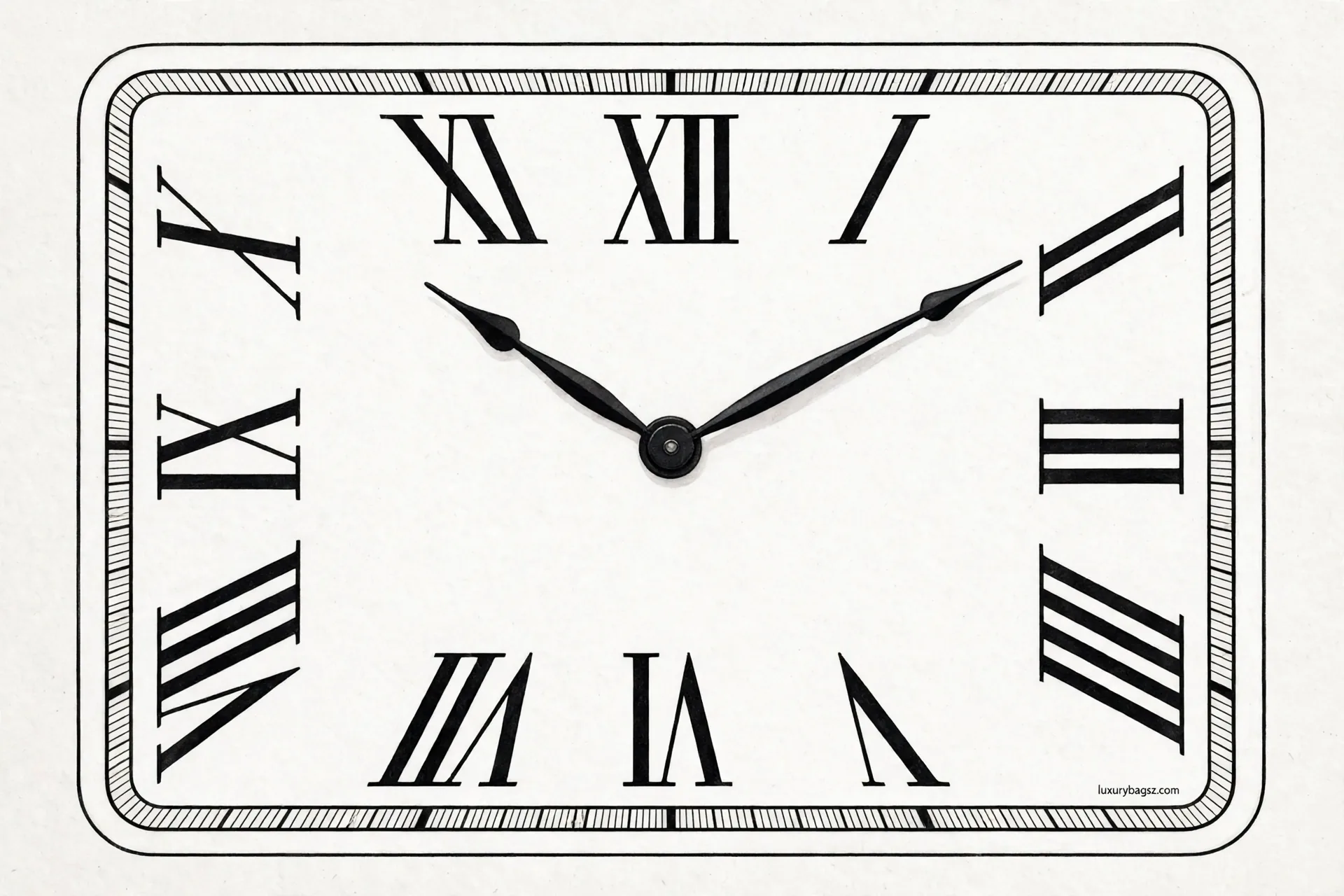
The Tank dial is a study in classical proportion, and its details are precise tests. On a genuine Tank, the Roman numerals are crisp, evenly weighted, and correctly proportioned for the reference, with the familiar Cartier use of IIII rather than IV on many dials. The railway minute track, a defining Tank feature, should be cleanly printed with even ticks and correct spacing around the full dial, with no wobble, gaps, or smudging.
Check the Cartier signature with the same care. It should be correctly spelled, in the right typeface and weight, and placed where it belongs for the reference, usually under the 12 o'clock position, sometimes with additional text such as "Paris" on certain vintage models.
Fakes often get the signature slightly wrong in spacing, weight, or placement, and vintage-style signatures on modern watches, or modern signatures on claimed vintage watches, are era mismatches that need explaining.
Also examine the dial's overall finish and any additional features. The dial surface should be clean and consistent, whether lacquered white, silvered, or another colour for the reference, with no bubbling, discolouration inconsistent with the watch's age, or printing that looks flat and lifeless. Date windows, where fitted on certain Tank variants, should be neatly cut with a centrally aligned date disc.
A date that sits off-centre or a window with rough edges is a warning.
Hands: Blued Sword Hands and Correct Lengths
Tank hands are typically blued-steel sword hands, and their finish is a precise test. Genuine blued hands show a deep, even blue with clean edges and a smooth, polished surface. Fake hands often look painted rather than blued, with a flat or purplish colour, rough edges, or uneven coverage, especially at the tips. Under magnification, painted hands can show tiny bubbles or texture that blued steel never has.
Check hand lengths against the reference and case size. Tank cases come in several sizes, from small to extra-large, and hand lengths vary accordingly. Hands that are too short to reach their markers, too long and overlapping the minute track, or mismatched in style between hour and minute hands all point to a replacement or a fake.
On Tank models with a seconds hand, check that it is the correct style for the reference and that it behaves as the movement requires: stepping once per second on quartz models, sweeping smoothly on mechanical models.
On vintage Tank watches, hand patina and condition should be consistent with the dial. Hands that look freshly blued while the dial shows heavy ageing, or hands that show heavy corrosion while the dial looks pristine, suggest replacement or mismatched assembly. Replacement hands are maintenance when disclosed, but on a watch sold as fully original they must be disclosed and priced accordingly.
The Rectangular Case and Brancard Lugs
The Tank case is rectangular, not square, and its proportions are fixed by reference. Measure the case length, width, and thickness and compare them against the reference specification. Fakes frequently miss on proportions, producing cases that are slightly too square, too long, too thick, or too thin, because a rectangular case with correct proportions and finishing is harder to manufacture than it looks.
A case that is noticeably off-proportion fails the check even if its dial looks right.
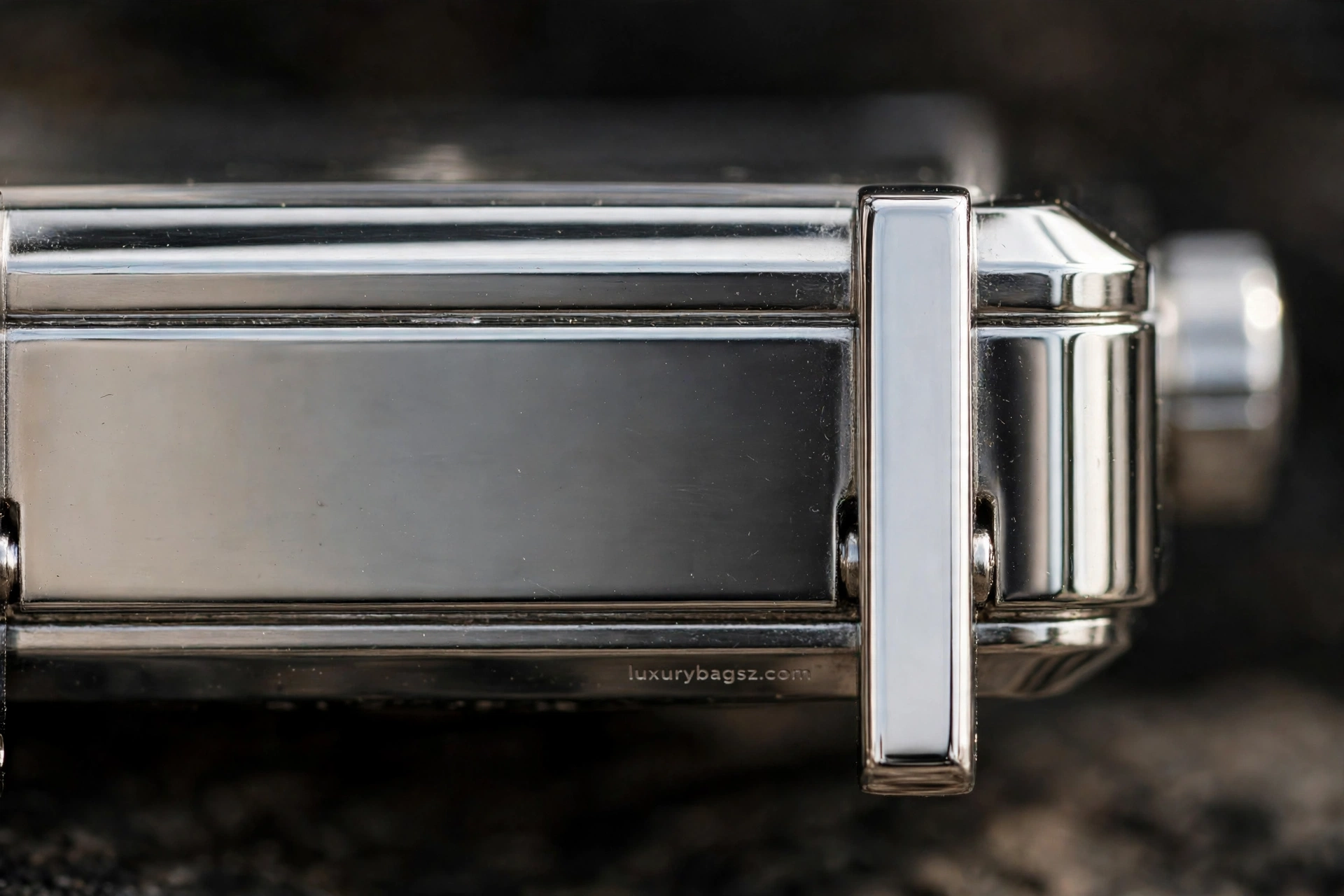
The brancards, the vertical bars that extend the case into the lugs on classic Tank models, are a distinctive test. On a genuine Tank Louis Cartier or Tank Must, the brancards are cleanly formed, with straight, even sides, crisp edges, and finishing consistent with the rest of the case. Brancards that are wavy, uneven, roughly finished, or asymmetrical indicate poor manufacturing.
The transition from case to brancard to lug should be smooth and precise, with no steps, gaps, or rough joints.
Case finishing follows the same standard as other Cartier watches: even polishing or brushing as specified, crisp transitions, and clean edges. Examine the case flanks, the caseback edge, and the lug undersides, where fakes often show rough finishing. A Tank case that is beautifully finished on the front but rough on the sides is telling you where the counterfeiter spent their effort.
Crown and Cabochon: The Sapphire Test
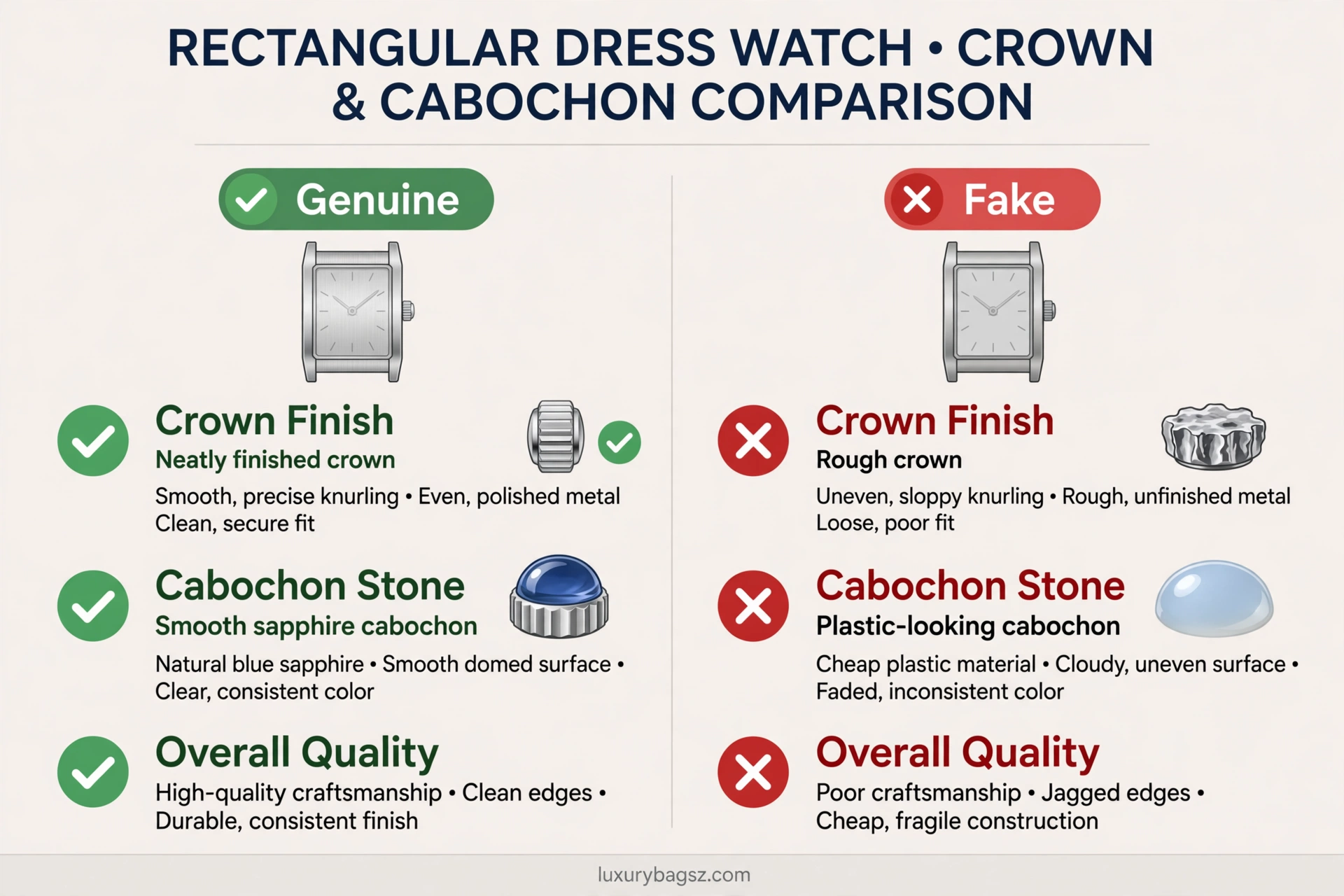
The Tank crown typically carries a sapphire cabochon, and its quality is a classic fake tell. On a genuine Tank, the cabochon is a smooth, well-cut sapphire, usually blue, set securely into the crown with no glue visible, no wobble, and no uneven seating. It should have depth and lustre, catching light like a stone, not like plastic.
A cabochon that looks like plastic, sits crooked, shows glue around its edge, or looks flat and lifeless is a warning.
Crown size, shape, and markings must match the reference. Tank Louis Cartier crowns are typically beaded or fluted as specified, while other variants use different crown profiles, including the partially integrated crown on Tank Anglaise models. A crown that is the wrong size, shape, or profile for the variant is a mismatch tell.
Crown action matters too: the crown should wind or set smoothly, with a precise feel, not a gritty or loose one, and should sit flush against the case when pushed in.
On vintage Tank watches, cabochon condition should be consistent with the watch's age and stated history. A pristine cabochon on a heavily worn vintage case, or a damaged cabochon on a watch sold as unworn, deserves questioning. Cabochon replacement is legitimate maintenance when disclosed, but an undisclosed replacement on a watch sold as fully original must be reflected in the price and investigated alongside everything else.

Strap, Bracelet, and Buckle by Variant
Tank straps and bracelets vary by variant and are precise tests. Tank Louis Cartier and Tank Must models typically use leather straps with a Cartier buckle, while Tank Francaise models use an integrated metal bracelet, and other variants use their own specified straps or bracelets. Whatever the variant, the strap or bracelet must match the reference in material, construction, and finishing.
Leather straps should use quality leather with clean stitching, even edges, and correct markings, and the buckle should be solidly made, correctly marked, and finished to the same standard as the case. A thin, plasticky strap, uneven stitching, or a buckle with shallow or misspelled markings undermines the whole watch.
Note that straps are consumable and often replaced, so a replaced strap alone is maintenance; a replaced strap combined with a poor buckle or bad lug fit is a reason for greater scrutiny.
Metal bracelets, particularly on Tank Francaise models, should articulate smoothly with even gaps and consistent link finishing, and the clasp should close firmly and sit flush with clean markings. End links and lug fit should be snug and even. A bracelet that feels stiff, rattly, or roughly finished, or a clasp that closes loosely, is a warning, just as it is on the Panthere and other Cartier bracelet watches.
The Movement: Quartz, Manual, and Automatic by Reference
Tank movements vary by reference and era, and the movement in the watch must match its reference. Many modern Tank Must models are quartz, many Tank Louis Cartier models are manual-winding, and some Tank variants are automatic. A seller claiming a manual-winding movement in a reference that Cartier only made in quartz, or vice versa, is either mistaken or dishonest, and the watch should not proceed without expert verification.
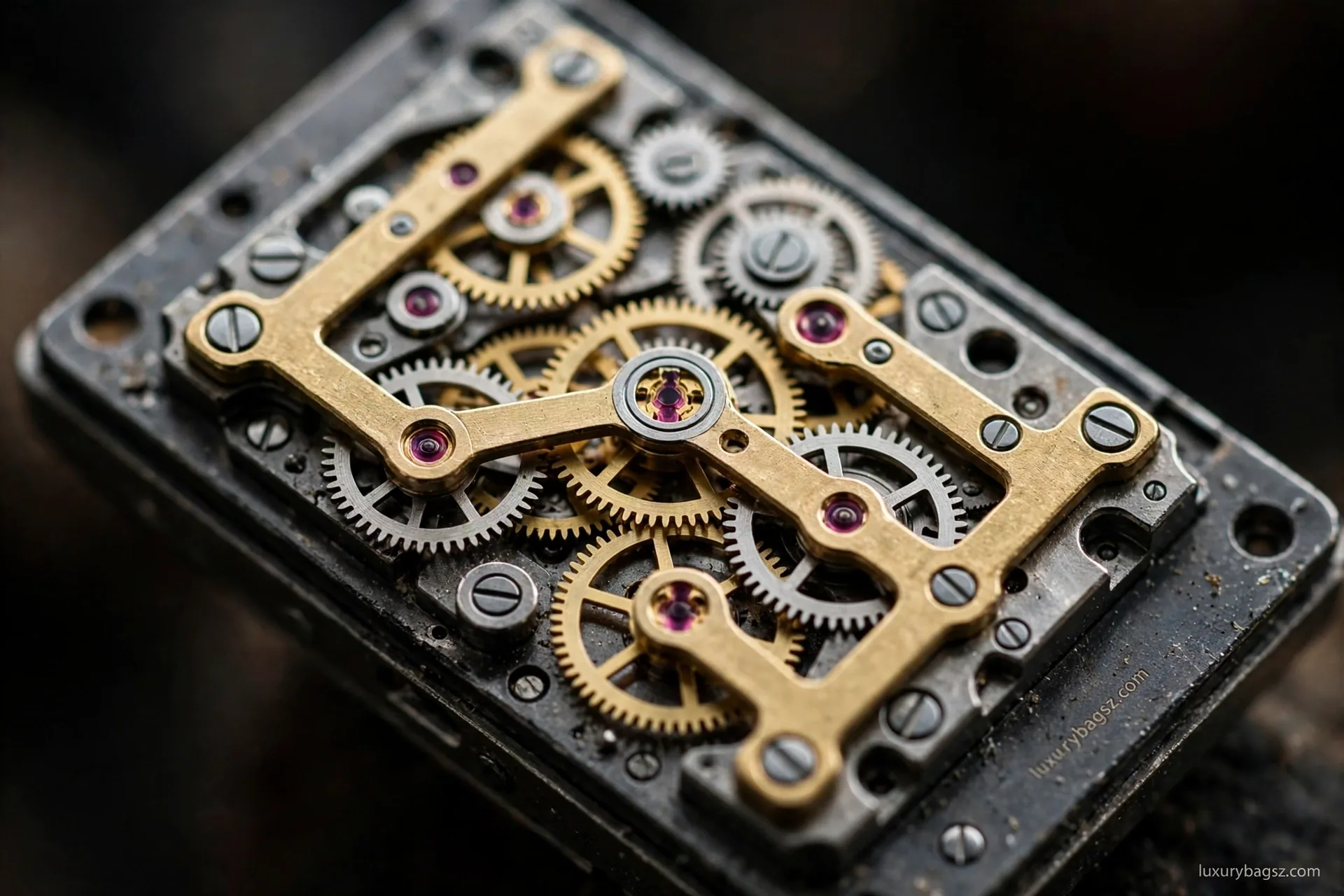
When the case is opened by a qualified watchmaker, a genuine Cartier movement shows clean finishing, correctly marked bridges, and the calibre designation and Cartier markings as specified for the reference and era. Rough bridges, unpolished screws, glue, generic unmarked parts, or a movement that is visibly a cheap generic calibre are hard evidence of fakery.
Tank movements are small, reflecting the rectangular case, and a movement that rattles inside the case, held by a crude spacer, is a classic fake construction.
Movement behaviour is a functional check. Quartz Tank models should step once per second where a seconds hand is fitted, with correct date behaviour where fitted. Manual-winding models should wind smoothly with a consistent feel and run steadily. Automatic models should wind through the rotor and run steadily.
Erratic running, a crown that winds with a gritty feel, or a seconds hand that behaves wrongly for its movement type are all warnings on an unknown watch.
Caseback Engravings and Serial Numbers
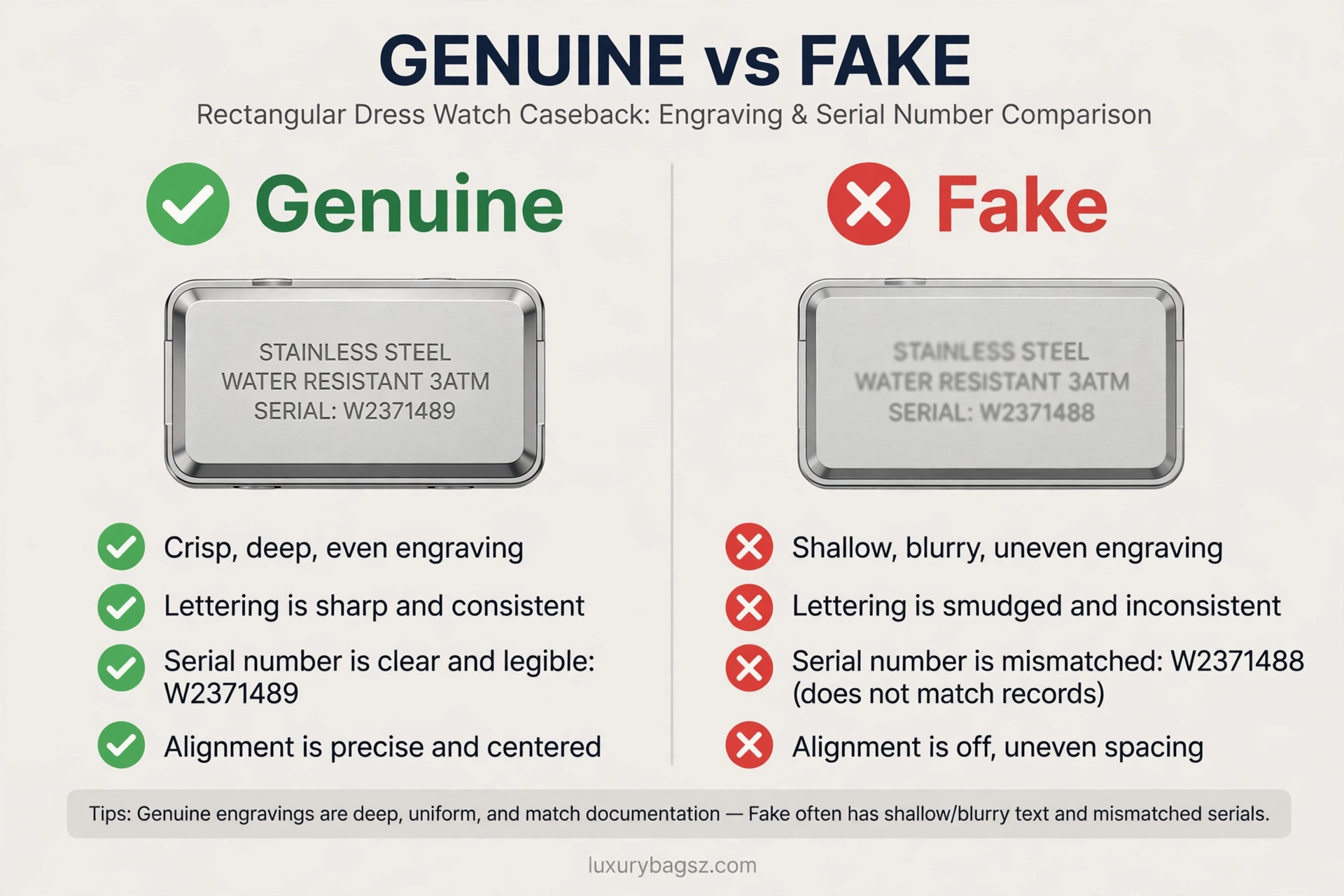
Tank casebacks vary by reference: some are solid with engravings, some are exhibition backs, and some carry special markings. Whatever the configuration, it must match the reference. A solid back where an exhibition back is specified, or vice versa, is a serious discrepancy. Engravings, where present, should be sharp, evenly deep, and correctly spelled, including the Cartier name, the reference, and the serial number.
Serial numbers must agree across the case, the papers, and any other documentation, and must suit the claimed production era. A serial that looks freshly engraved on a worn case, that uses a different font from surrounding engraving, or that belongs to a different era than the watch's design is a warning.
Cartier serial and reference numbering has evolved over the decades, so era-appropriate checking by a dealer or specialist matters more than any single rule of thumb.
Also check the markings between the lugs and on the buckle or clasp, where reference and material information may appear. Genuine markings there are sharp and correctly formatted; shallow, uneven, or oddly formatted markings in hidden areas are warnings, because counterfeiters concentrate on visible surfaces and often neglect the parts only a buyer or watchmaker will see.
Weight, Feel, and Overall Finish
A genuine Tank has a refined, balanced feel: the rectangular case sits comfortably on the wrist, the strap or bracelet drapes naturally, and the crown operates precisely. Gold models feel dense for their size, steel models feel solid, and two-tone models balance evenly. Fakes often feel too light, because of cheaper base metals and hollow construction, or oddly balanced, because the case, movement, and strap weights do not match.
Weight alone never authenticates a watch, but a watch that feels wrong should trigger the full checklist.
Overall finish is the companion test. Examine every surface under good light: case flanks, brancards, bezel, crown, buckle, and clasp. Genuine finishing is consistent, with no rough casting marks, burrs, pitting, or rushed polishing. Fakes often finish the dial and case front well while neglecting the case sides, lug undersides, and buckle interior. Those neglected areas frequently decide the verdict.
Also check the crystal. Tank crystals are typically sapphire on modern references, with a clear, hard surface. A crystal that scratches easily, shows distortion, or sits incorrectly in the case suggests a fake or a poor replacement. A single scratch proves nothing on a vintage piece, but a soft, easily marked crystal on a modern reference does not fit.
Box, Papers, and Provenance
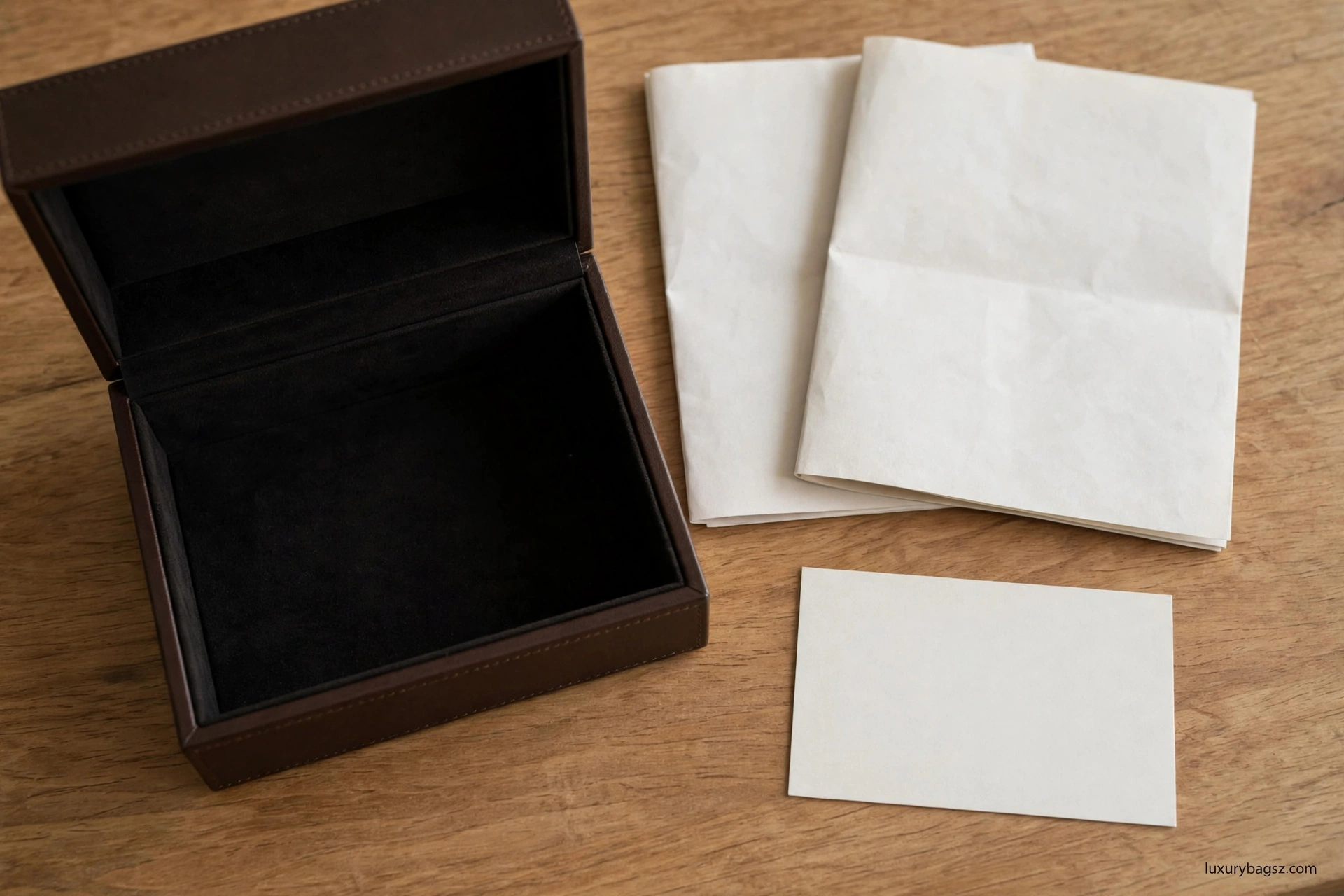
Tank boxes and papers should suit the watch's era and reference. Modern Cartier presentation boxes are well made and correctly branded, and the papers should show the reference, serial number, and purchase details matching the watch exactly. A box style from a different era, papers whose serial differs from the case, or printing that is fuzzy or inconsistent are warnings.
As always, box and papers support but never prove genuineness: fake boxes and papers are common, and genuine watches frequently lose theirs.
Provenance means a verifiable dealer history, service records, or a reputable marketplace trail. Vague stories about inheritances, duty-free purchases with no paperwork, or sellers who refuse additional photographs are not provenance. They are reasons to insist on independent authentication.
Where servicing has occurred, ask for records and check that replaced parts are disclosed; a serviced Tank with a replaced crystal or strap is normal, while an undisclosed replacement dial or movement is a different matter.
Common Traps: What Fools Tank Buyers
The traps that fool Tank buyers are consistent. The first is judging by silhouette alone: a rectangular case with Roman numerals looks like a Tank, but the silhouette is the easiest part to copy. The second is trusting the cabochon alone: counterfeiters fit blue stones that look convincing at a glance but fail on setting quality, lustre, and material. The third is trusting papers without checking the serial match and era style.
The fourth is letting a vintage story override era mismatches: a modern dial on a claimed vintage case, or a vintage signature on a modern watch, needs explaining, not excusing.
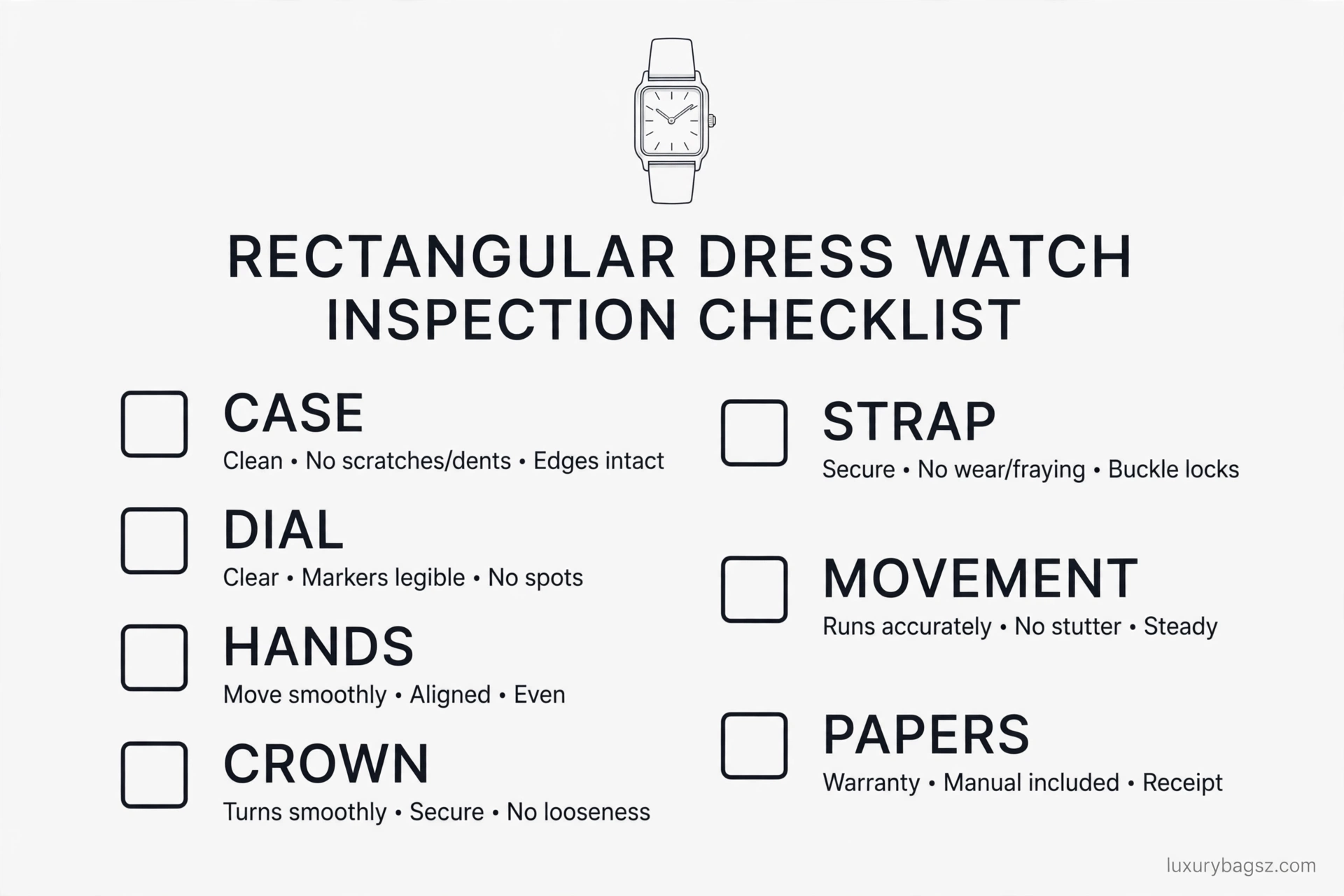
High-grade fake Tank watches copy the dial, case shape, and even the weight reasonably well, and they photograph convincingly. The defence is procedural: variant and reference first, then dial, hands, case and brancards, crown and cabochon, strap or bracelet, movement, caseback, weight and finish, papers, and then an independent inspection.
A seller who welcomes that procedure is behaving like a seller of a genuine Tank; a seller who resists it is providing behavioural evidence that should weigh heavily.
Buying Safely: Inspection, Escrow, and Recourse
Before paying in full for a pre-owned Tank, secure a written return period that allows an independent inspection, including opening the case where appropriate, and agree in writing what happens if the watch is judged fake or not as described. Take the watch to a reputable watchmaker or Cartier specialist, ask them to check the movement, the caseback engravings, and the dial, and get their opinion in writing.
If the seller refuses an inspection window, walk away.
Use payment methods with recourse and avoid irreversible transfers to unknown sellers. Escrow through a reputable marketplace can help, but check what it covers: some services verify only that the watch matches its listing photographs, not that it is genuine in the full sense of this guide. Keep complete records of the listing, the seller's description, correspondence, photographs of the watch and serial number, papers, and the inspection report.
A genuine Tank is a century-old design that still looks modern; the days spent verifying it are a small price for a lifetime of wearing it with confidence.
The same inspection-first approach applies to Cartier jewellery purchases, as the Cartier Love bracelet fake guide and the Cartier Juste un Clou guide both show: check the whole piece, not just its most famous feature, before money changes hands.
Servicing, Straps, and Quartz Battery Care
Tank ownership care varies by movement type, and that variation is worth understanding before purchase. Quartz Tank models need battery changes at intervals, and a battery change is not merely a battery swap: a watchmaker should check the gaskets, the crown, and the movement condition at the same time, because a leaking or exhausted battery can damage a movement, and because opening the case is an opportunity to verify seals.
Never leave an exhausted battery in a quartz Tank for months, and never attempt a battery change yourself unless you know how to open the case and reseal it without damaging the gaskets or the case.
Manual-winding and automatic Tank models need periodic servicing, as with other Cartier watches, with attention to the small rectangular movement, the crown, and the cabochon setting. A Tank with a documented service history is easier to trust and easier to resell, and a Tank whose service history is unknown should be budgeted for service.
Water resistance should never be assumed on a pre-owned Tank without a recent pressure test, particularly for vintage examples, where gaskets have aged and cases may have been opened many times.
Straps are the Tank's consumable, and caring for them preserves both comfort and value. Leather straps wear with water, sweat, sunlight, and flexing, and should be replaced when they show cracking, softening, or stitching failure, rather than worn until they break at an inconvenient moment. Keep spare straps for different occasions, store unused straps flat and away from sunlight, and check buckle pins and strap attachment regularly.
A Tank with a well-maintained strap rotation, documented services, and a fresh battery or service, as its movement requires, is not only a better daily watch; it is a watch whose genuine condition is easy to demonstrate to any future buyer.
Tank Variants in Depth: Americaine, Francaise, and Anglaise
Tank Americaine, Tank Francaise, and Tank Anglaise models each reinterpret the Tank idea, and each needs variant-specific checks. Tank Americaine models have a curved, elongated case that follows the wrist, with a dial that curves with the case and a crown that suits the elongated form.
Check the case curve: it should be smooth and even, with no flat spots or asymmetry, and the dial should sit correctly within the curved case, with printing that follows the curve without distortion. A flat case sold as Americaine, or a dial that does not follow the case curve, is a mismatch. Americaine straps and bracelets should suit the elongated case, with end links or strap attachments that fit the curved lugs precisely.
Tank Francaise models use an integrated metal bracelet with a distinctive link design that flows from the case, and that integration is the test. The bracelet links should taper and articulate smoothly, with the same finishing standard as the case, and the clasp should close firmly and sit flush.
A Francaise bracelet that feels stiff, rattly, or roughly finished, or whose links do not flow from the case, fails the variant test, even if the dial looks right. Francaise dials, typically with Roman numerals and a railway track, should be judged with the same dial checks as other Tanks, but with attention to the smaller, more integrated case proportions.
Tank Anglaise models feature a crown partially integrated into the case, protected by a distinctive crown guard formed from the case itself. Check that integration: the crown should sit securely within its guard, operate smoothly, and carry a correctly set cabochon where specified, with no gaps, wobble, or rough edges around the guard.
An Anglaise crown that sits proud, wobbles, or shows a poorly set cabochon is a warning, as is a guard whose shape differs from verified Anglaise examples.
Across all three variants, the lesson mirrors the Tank family as a whole: learn the variant's defining feature, whether curve, integration, or crown guard, and test the watch against that feature first, because counterfeiters copy the rectangular silhouette easily and the variant-specific detail badly.
Quartz Versus Mechanical Tank: Choosing and Checking
Choosing between a quartz and a mechanical Tank is both a lifestyle decision and an authentication decision, because the movement type must match the reference, and each type has its own ownership profile. Quartz Tank models offer accuracy, low maintenance, and slim cases, with battery changes as their main servicing need, and they suit wearers who want a beautiful watch without winding or setting rituals.
Mechanical Tank models, whether manual-winding or automatic, offer the traditional watchmaking experience, with winding, servicing, and the smooth or stepping behaviour of their movement type, and they suit wearers who value horological craft and are willing to maintain it.
Authentication differs by movement type in practical ways. Quartz models should be checked for correct battery behaviour, correct stepping of any seconds hand, and a movement that matches the reference's quartz calibre, with clean, correctly marked components when inspected.
Mechanical models should be checked for winding feel, running behaviour, power reserve as specified, and a movement that matches the reference's mechanical calibre, with finishing appropriate to Cartier's standards. A quartz movement in a reference that should be mechanical, or a mechanical movement in a reference that should be quartz, is a mismatch that fails the check, however well the watch looks otherwise.
Ownership costs differ too. Quartz ownership costs are mainly battery changes and occasional gasket checks, while mechanical ownership costs include periodic servicing, which is more expensive but preserves the movement for decades. Resale values vary by reference and movement type, with mechanical models often commanding stronger collector interest, though popular quartz Tank Must models also sell well because of their accessibility and design.
Choose the movement type that suits your wearing habits and maintenance willingness, verify it against the reference, and budget for its servicing profile. A Tank chosen on those grounds, and verified on that basis, will be a pleasure to own, whichever movement beats, or ticks, inside it.
Frequently Asked Questions
Can I authenticate a Tank from photographs alone?
Sometimes for crude fakes, but not reliably for good ones. Case proportions, brancard finishing, cabochon setting, and movement details all need the watch in hand or a watchmaker's inspection. Photographs screen; they do not verdict.
What is the most common fake Tank tell?
A plastic-looking or poorly set cabochon combined with painted-looking hands or fuzzy dial printing. Either flaw alone can have innocent explanations, but the combination is a strong warning.
Do all genuine Tank watches have a sapphire cabochon crown?
Most classic Tank variants do, but crown details vary by variant and era, including the partially integrated crown on Tank Anglaise models. Judge the crown against the specific variant, not against a general Tank expectation.
Are Tank Must models faked as often as Tank Louis Cartier models?
Yes, and sometimes more, because Tank Must models are more accessible and sell in higher volumes, which attracts counterfeiters. No Tank variant should be assumed safe from copying.
Does a missing box or papers mean a Tank is fake?
No. Many genuine Tank watches, especially vintage ones, have lost their boxes and papers. Missing papers lower the price and raise the need for inspection, but they do not prove fakery.
Can Cartier authenticate a Tank I already own?
Cartier service centres can inspect and service watches and will generally decline to work on a watch identified as counterfeit. Ask the service centre what inspection options apply to your reference.
Should I buy a Tank from an overseas seller at a big discount?
Only with strong protections: verified seller history, a return window for independent inspection, and a payment method with recourse. A large discount combined with no returns and an irreversible payment method is the classic fake-sale pattern.
How much does professional Tank authentication cost?
It varies by provider and by whether the case is opened, but it is normally a small fraction of the watch's value. Factor it into your budget before purchase.
Do all genuine Tank dials use IIII instead of IV?
Many Cartier dials use IIII, but dial details vary by reference and era. Judge the numeral style against verified examples of the same reference, not against a single folk rule.
Is a Tank with replaced hands or a replaced crown still worth buying?
It can be, if the replacements are correct, disclosed, and reflected in the price. Undisclosed replacements sold as original are a different matter and should end the deal unless an expert advises otherwise.
Conclusion
A genuine Cartier Tank reveals itself in classical details executed without compromise: a rectangular case with correct proportions and clean brancards, a Roman dial with crisp numerals and a clean railway track, blued sword hands with real depth of colour, a sapphire cabochon set like a jewel, and a movement that belongs to its reference. Fakes copy the silhouette; they struggle to sustain that standard across the whole watch.
Check the variant and reference first, run the twelve checks, and buy only with an inspection window. The Tank you bring home will then be what it has been since 1917: quiet, rectangular, and unmistakably Cartier.






