Celine Date Codes: How to Read the Tag Inside Your Bag
Celine Date Codes: How to Read the Tag Inside Your Bag
The Short Answer: A Batch Stamp, Not a Serial Number
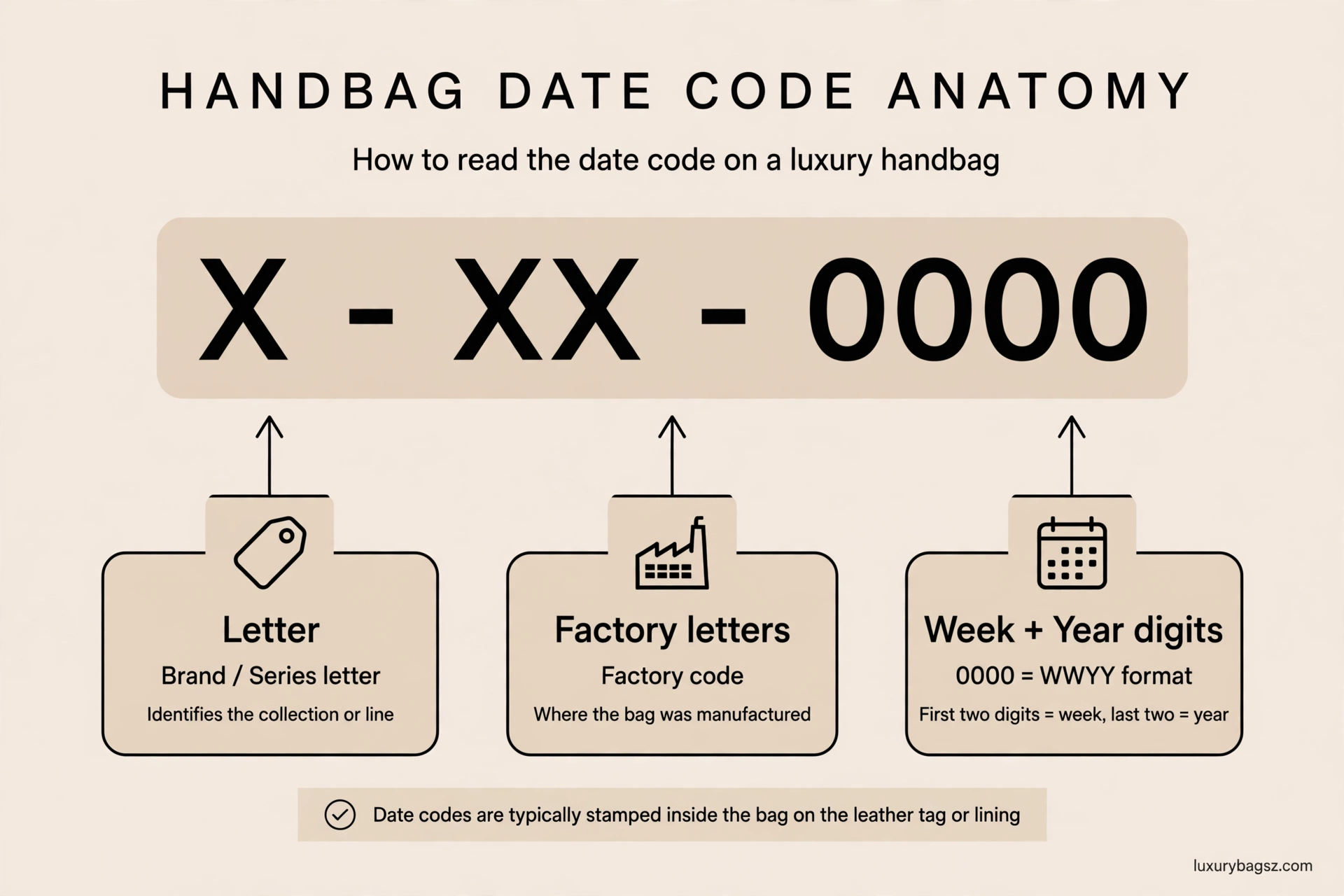
A Celine date code is a short stamp inside the bag, usually in the form of one letter, two letters and four digits, such as S-CU-3196. It is not unique to your bag. Many bags made in the same batch share the same code.
Reputable guides read the letters as a factory or workshop marking and the four digits as a production date. On most modern bags the first and third digits give the week, and the second and fourth digits give the year, so 3196 reads as week 39 of 2016.
Celine has never published an official key, so every reading is a convention built by authenticators from dated bags. Treat the code as a dating and consistency check, never as proof on its own.
Key Takeaways
- Celine uses date codes, not unique serial numbers, and the same code can appear on many genuine bags.
- The usual modern shape is one letter, two letters and four digits, separated by dashes.
- On most bags the digits are read out of order: first and third for the week, second and fourth for the year.
- Placement varies by model: a leather tab on some bags, a stamp straight into the lining on others.
- A code that cannot give a real date, or that predates the model, is a strong warning sign.
- A neat, plausible code proves nothing, because counterfeiters copy genuine codes.
Where the Code Sits, Model by Model
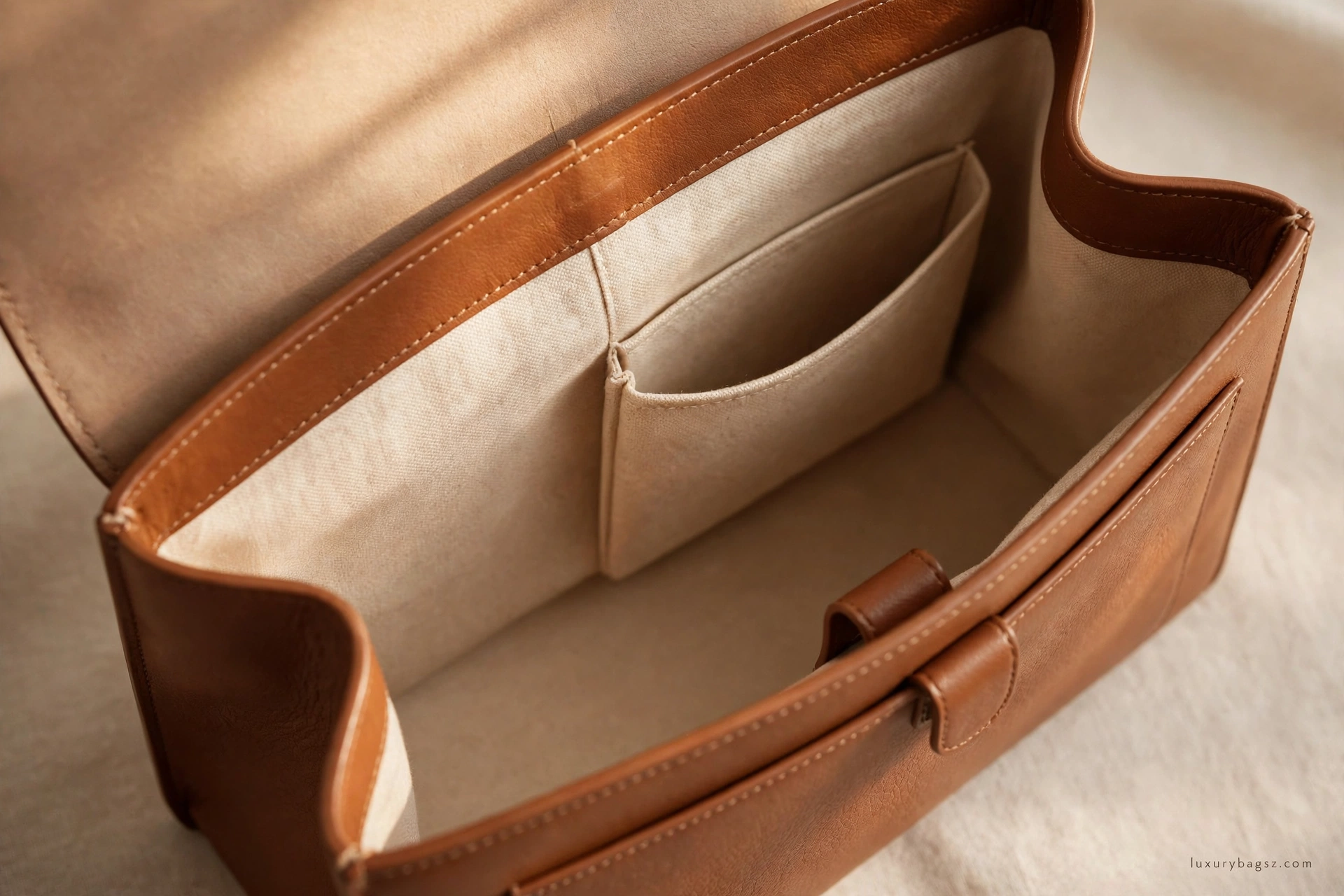
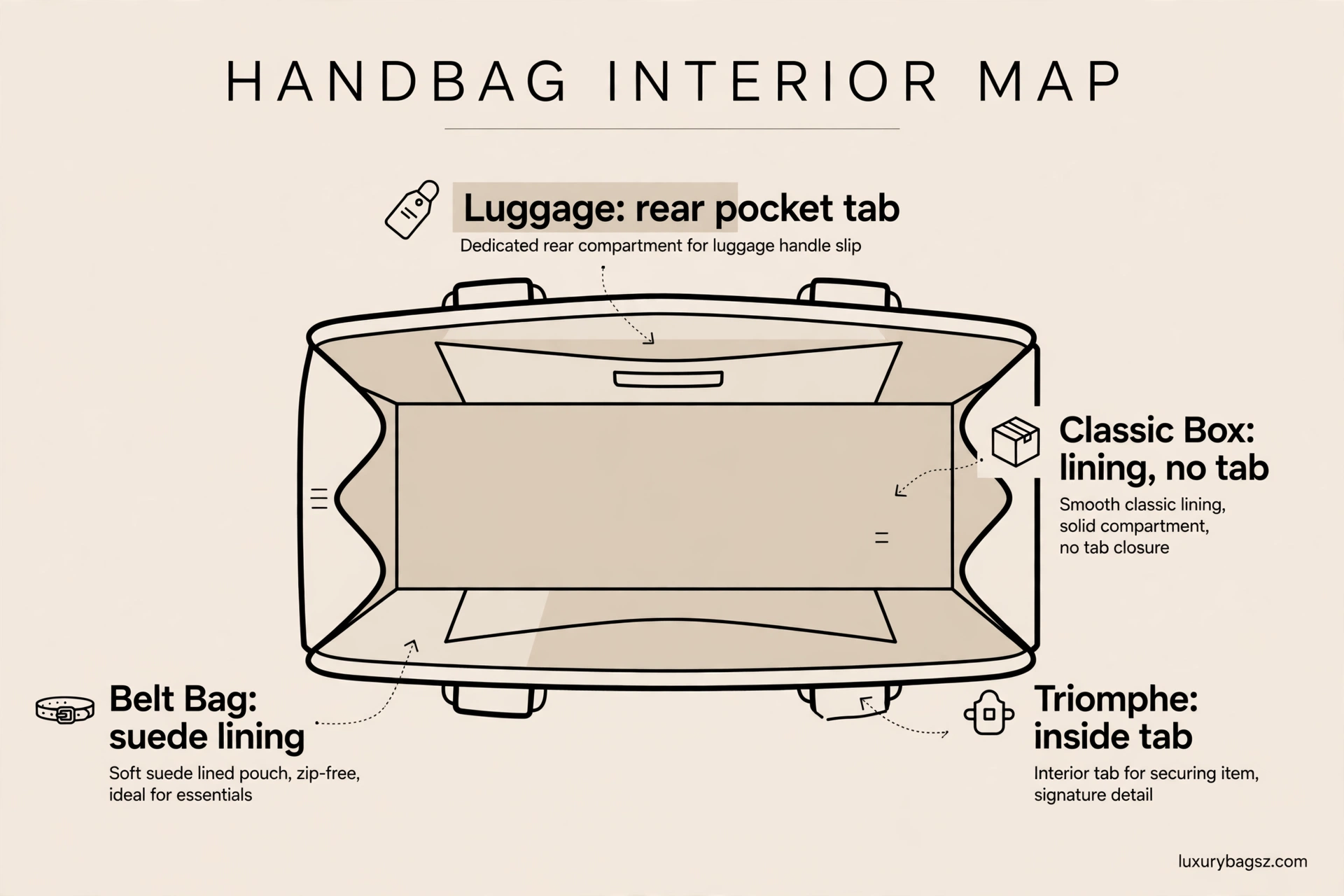
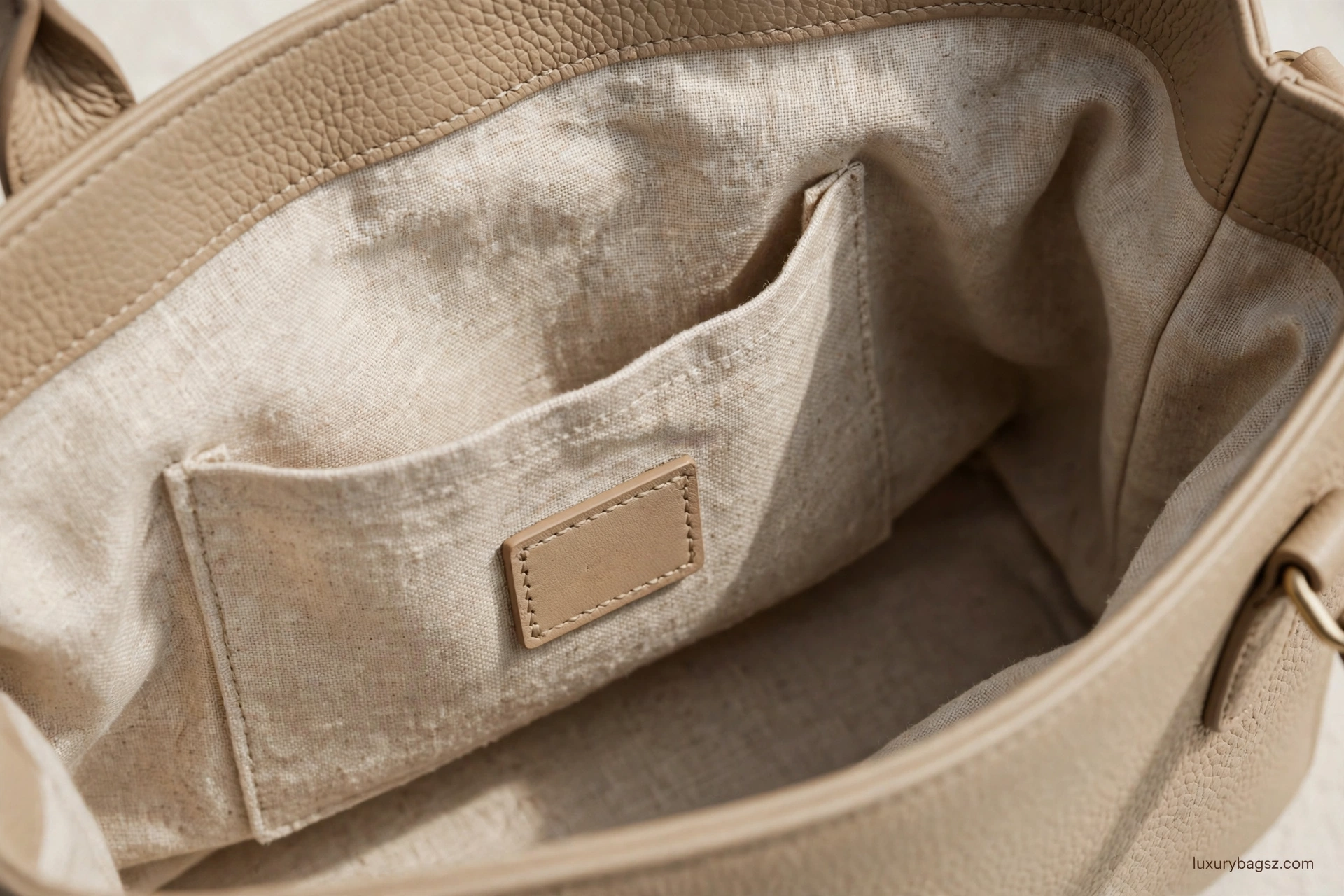
There is no single hiding place. On most bags you will find the code either on a small leather tab sewn inside a pocket, or pressed directly into the lining or a pocket wall. The tab often matches the outside leather, so it is easy to miss at first glance.
Luggage, Nano and Micro Luggage
Look inside the rear interior pocket. The Luggage family usually carries the code on a small leather tab sewn into the lining near the zip pocket, sometimes with Made in Italy stamped nearby. Some tabs carry two lines of code rather than one.
Trapeze and Phantom
Look for a small leather tab at the top of the interior zip pocket. Both styles belong to the same Philo-era family as the Luggage, and guides place the tab in the same area. Feel along the pocket lining too, because a shallow stamp in grained leather can hide in plain sight.
Triomphe
On Triomphe flap bags, guides most often describe the code pressed into the lining. On Triomphe canvas styles and some shoulder styles, look instead for a small leather tab inside. Check every interior pocket before deciding a bag has no code at all.
Belt Bag
The Belt Bag is most often described with the code stamped into the suede lining, frequently as two lines, with no separate tab. Suede takes a shallow impression, so side light helps. A faint stamp on suede is normal and is not, by itself, a fault.
Classic Box
The Classic Box, also called the Box bag, usually has the code embossed straight into the lining, again with no tab. Run a fingertip over the lining inside the pockets and compartments. You may feel the impression before you can read it clearly.
Wallets and Small Leather Goods
Wallets and card holders carry the code inside a card slot or the coin pocket, in the same letter and digit layout as the bags. Shoes, sunglasses and clothing carry no documented date code, so a size, style or care-label number alone there is normal, not a warning sign.
How to Read the Four Digits
Take the last four digits and read them out of order. The first and third digits together give the period, and the second and fourth digits together give the year. So F-SL-2241 gives week 24 of 2021, and S-CU-3196 gives week 39 of 2016.
Work through one code slowly. In 3196, pair the first digit, 3, with the third digit, 9, to make 39, then pair the second digit, 1, with the fourth digit, 6, to make 16. That gives week 39 of 2016. Finish with two checks: the week must sit between 01 and 53, and the year must fit the model.
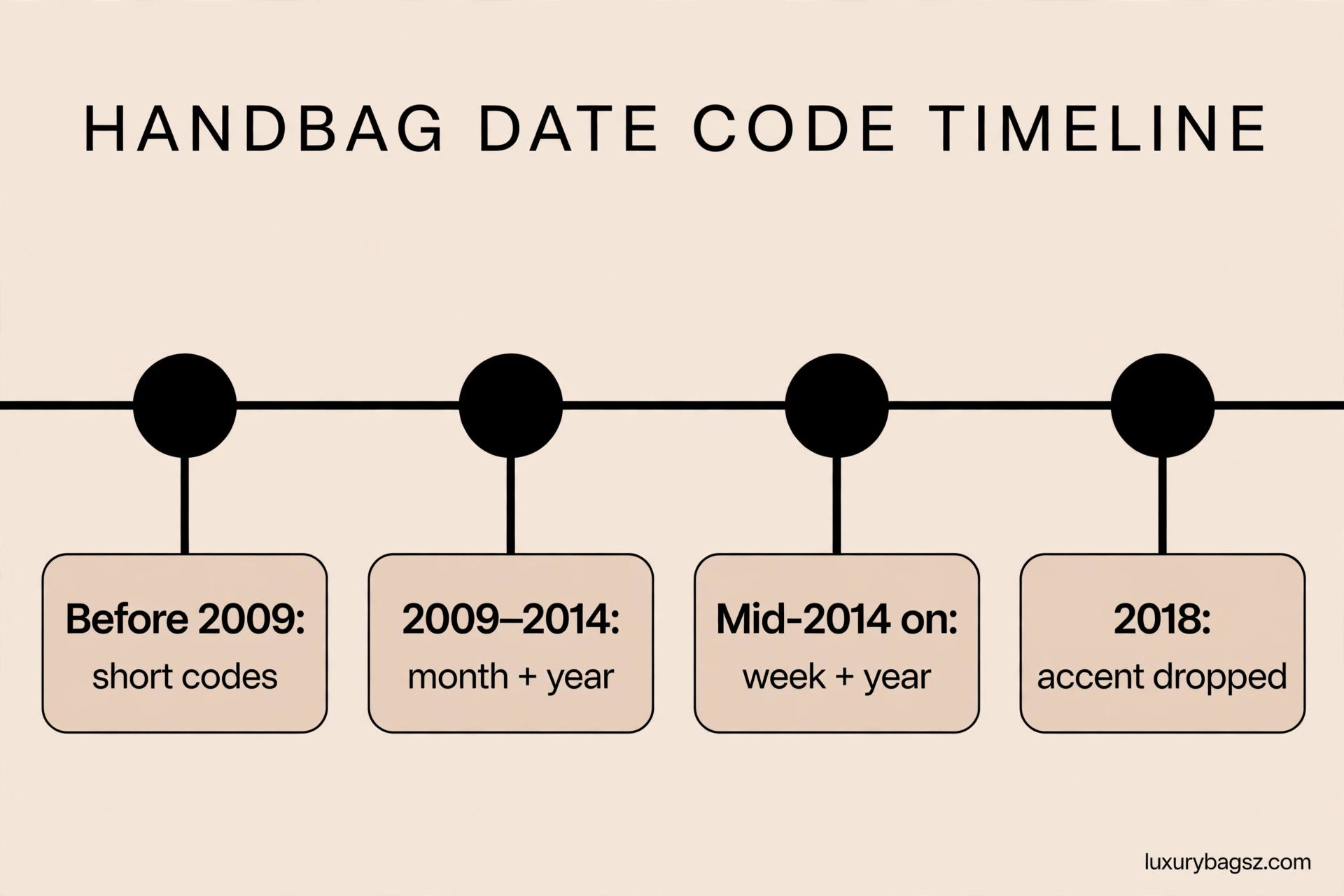
Public information is thinner here than for some other houses, and sources do not fully agree. Several guides say that before about mid-2014 the period was a month rather than a week, so W-PA-0163 is read as June 2013. Others read every code as a week. The year reading is not in dispute.
A small number of guides also mention a plain week-then-year reading on some pieces. If the crossed reading gives nonsense, try the plain reading before judging the bag. Only one reading should give a valid week and a plausible year.
| Code | Digits | Common reading |
|---|---|---|
| S-CU-3196 | 3196 | Week 39 of 2016 |
| F-SL-2241 | 2241 | Week 24 of 2021 |
| W-PA-0163 | 0163 | June 2013 on the month reading |
| F-CU-0154 | 0154 | Period 05 of 2014, the changeover year |
What the Letters Mean, and What Nobody Knows
Most guides describe the two-letter group as a factory or workshop code, linked to the Italian ateliers where Celine bags are made. The single letter in front is less clear. Some writers call it a factory prefix or a season marker, but no reliable public key exists for either part.
Be wary of any site that confidently names a town for every letter pair. Celine has not published a factory map, and authenticators I trust leave the letters alone and read only the date. In more than ten years in the bag industry, I have learned to do the same.
Other houses document their systems far better. Our guide to Chanel serial numbers and microchips shows a system that changed in a recorded way, which is exactly what Celine lacks.
How the Code Changed Across Eras
Bags from before about 2009 do not follow the modern shape. Vintage pieces carry short markings such as M93 or similar brief stamps, and no published key decodes them reliably. On a vintage bag, the model, hardware and leather matter far more than any stamp.
The modern shape settled from around 2009 onwards, through the Phoebe Philo years that produced the Luggage, Trapeze, Phantom and Classic Box. Two-line codes appear in this period too, widely read as a start date on the top line and a completion date below it.
In September 2018, under Hedi Slimane, the house dropped the accent, so stamps read CELINE rather than CÉLINE. The code shape stayed much the same, but the accent became a useful era check: a code placing a bag well after 2018 beside an accented stamp deserves a much closer look.
Allow a little grace at each changeover. A bag coded to 2018 or 2019 can honestly carry either logo form while old and new stamps overlapped, and a 2014 code can honestly be read as a month or as a week. Save the hard questions for clear gaps, such as an accented stamp on a bag coded to 2022.
The Triomphe line arrived in 2018, so any Triomphe carrying a code that reads earlier than that cannot be right. The same logic applies in reverse to older styles. Always test the decoded year against the year the model was launched.
The Tag Itself: Leather, Stitching and Stamping
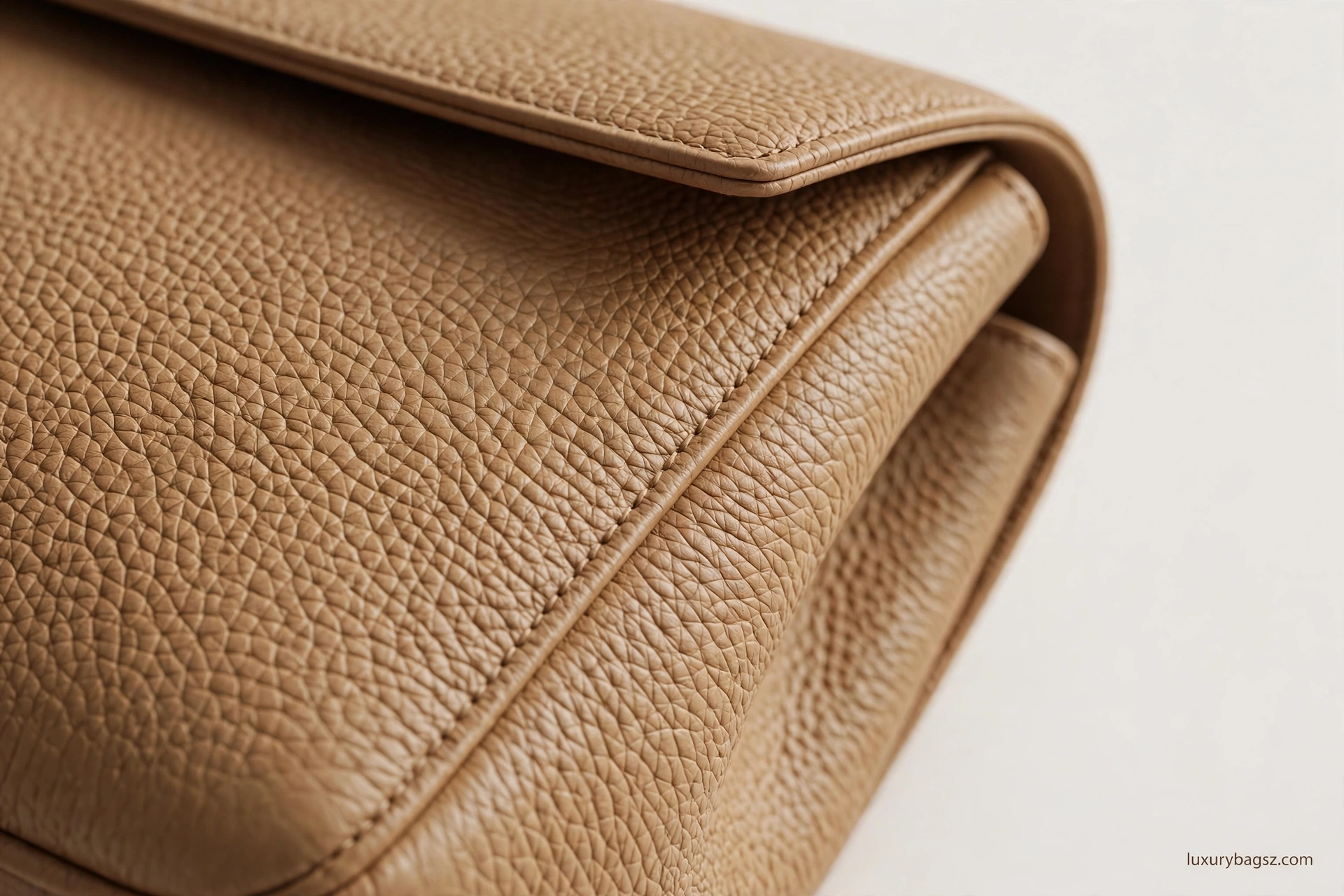
Judge the tab before you judge the digits. A genuine code is debossed, pressed into the leather, never printed or painted on the surface. The characters should be crisp, evenly spaced and evenly deep, with clean dashes between the groups.
The tab itself should feel like real leather with some substance, cut neatly and stitched in cleanly. Thin, curling or roughly cut tabs are common on copies. Having examined more than 500 bags, I still find the feel of the tab tells me as much as the numbers on it.
Depth varies honestly by material. A stamp in pale suede will look softer than one in smooth calfskin, and grained leather can make an impression look uneven. Compare like with like, ideally against a confirmed genuine bag of the same model and era.
Newer Bags and Digital Verification
As a founder and handbag specialist who personally checks bags, I am often asked whether a newer Celine can be verified by phone. On the public record, no. Reputable sources report no microchip, NFC tag or scannable certificate in Celine bags, and no official lookup for the code.
That sets Celine apart from houses that have moved to embedded chips. It also means a seller offering a digital Celine certificate or a chip scan is describing something the house does not provide. A missing authenticity card is normal too, as Celine does not issue numbered cards.
In my own work I use Entrupy, including for microchip checks on brands that carry chips. For Celine, the value sits in the close physical reading: leather, stitching, hardware, stamps and the code agreeing with each other. Our authentication process sets out how those checks fit together.
What a Code Can and Cannot Prove
A code can disprove a story. Digits that give no real date, a week above 53, a future year, or a date before the model existed are all reasons to stop. A code that clashes with the logo era does the same job. These contradiction checks are where the stamp earns its keep.
A code cannot prove a bag is genuine. Because the code is shared across a batch, finding the same code on a known genuine bag proves only that the batch exists. Counterfeiters copy real codes, and many copies carry well-formed codes with believable dates.
There is also honest messiness at the edges. Digits such as 0 and 8, 1 and 7, or 3 and 8 are easy to misread in a pressed stamp, and authenticators note that occasional genuine codes were stamped imperfectly. Photograph the tag in side light and read it twice before drawing any conclusion.
For a useful comparison, our guide to Gucci serial numbers shows another house where the inside number supports the wider check rather than replacing it. The principle is the same across both brands.
If the Tag Is Missing or Unreadable
Search once more, slowly. Empty every pocket, feel along the lining for a shallow impression, and photograph the lining and any tab in low side light, which lifts pressed digits that flat light hides. On suede and grained leather, a genuine stamp can look faint without being wrong.
Then judge the gap in context. A bag from before about 2009 may only ever have carried a short marking, and heavy use can wear a stamp smooth. On a recent bag with no code anywhere, pause, ask the seller for clear side-light photographs, and have the whole bag checked before paying a genuine-bag price.
Fake-Code Red Flags Worth Knowing
- Digits that cannot be read as any real week, month and year, however you arrange them.
- A decoded year before the model launched, such as an early code on a Triomphe.
- An accented CÉLINE stamp on a bag the code places well after the 2018 change.
- Surface printing or painting instead of a pressed impression in the leather.
- Wrong shape for a modern bag: extra characters, missing digits or dots instead of dashes.
- Blurred, uneven or oddly spaced characters, or a tab that feels thin and papery.
- A seller presenting the code alone, or a matching code online, as proof of authenticity.
Frequently Asked Questions
Do Celine bags have serial numbers?
No, not in the sense of a number unique to one bag. Celine uses production date codes instead. Bags made in the same batch can share the same code, so the code cannot be registered or looked up for a single bag.
Where is the date code on a Celine Luggage?
Look on a small leather tab inside the rear interior pocket, near the zip pocket. Some Luggage tabs carry two lines of code, and Made in Italy may be stamped nearby. The tab often matches the outside leather colour.
How do I work out the year my Celine bag was made?
Read the second and fourth digits of the final four together. In 2241, those digits give 21, meaning 2021. Then check the answer against the model launch year and the logo accent, which changed in late 2018.
Why does my bag have two lines of code?
Two lines are normal on some models, including the Luggage and Belt Bag. Guides usually read the top line as the start of production and the lower line as completion, so the two dates normally sit close together.
What if I cannot find a code at all?
Check every pocket, the lining and any small tab, using side light on suede. Bags from before about 2009 may carry only a short vintage marking. A missing code on a recent-looking bag needs a closer look, but it is not proof on its own.
Does a correct date code mean my bag is real?
No. A correct shape and a plausible date are neutral findings, because copies routinely carry copied or well-formed codes. The stamp, leather, stitching and hardware must all agree before a bag earns confidence.
Can I verify a Celine bag with a phone or an app?
There is no official Celine code lookup, and reputable sources report no chip to scan in Celine bags. Third-party authentication can help, but it rests on detailed photographs and physical details, not on the code alone.
Final Verdict
Read a Celine date code for what it is: a small, useful dating stamp inside the bag. Find it, read the digits out of order, and test the result against the model, the logo era and the quality of the tag itself.
Let an impossible or contradictory code stop you, and never let a tidy one reassure you on its own. On Celine, authenticity is the whole bag agreeing with itself, and the code is only one voice in that conversation.