

Best Time to Buy a Luxury Handbag: Sales, Price Rises and Smart Timing
Timing Is a Discount You Give Yourself: The Answer in Brief
The best time to buy a luxury handbag depends on the house. For brands sold in department stores and seasonal collections, the end-of-season sales — late June to July and late December to January — bring real cuts of roughly 30 to 50 per cent. For the houses that never discount bags, including Chanel, Hermès and Louis Vuitton icons, the best time is simply before the next price increase. Timing, not haggling, is the saving.
Key Takeaways
- Seasonal brands discount bags at end of season: summer and winter sales.
- Black Friday suits contemporary and department-store brands best.
- Chanel, Hermès and Louis Vuitton bag icons are never officially on sale.
- Heritage houses raise prices most years; buying before a rise is the discount.
- Pre-owned prices soften when new retail prices and hype cool down.
- The worst time is launch week of a hyped bag, when choice and price peak.
Two Kinds of Houses, Two Kinds of Timing
Luxury handbags split into two markets. Seasonal fashion houses sell through department stores and their own boutiques, and their seasonal colours and shapes are discounted like clothing. Heritage icon houses protect prices absolutely. Their classic bags are never marked down in their own stores, so waiting for a sale that will never come only meets a price rise. Every timing rule in this guide flows from that split. Work out which kind of house makes your bag before you plan when to buy it.
The Sales Calendar for Seasonal Bags
The winter sale, starting around Boxing Day and deepening through January, is the year's biggest window. Autumn and winter bags are cut first by roughly a third, then further as stock thins. The summer sale, from late June into July, does the same for spring collections. Seasonal colours discount first and deepest; black and tan classics discount least, if at all. Department stores and multi-brand retailers run these sales more aggressively than brand boutiques. The same bag can sit at full price in one window and 40 per cent off in another.
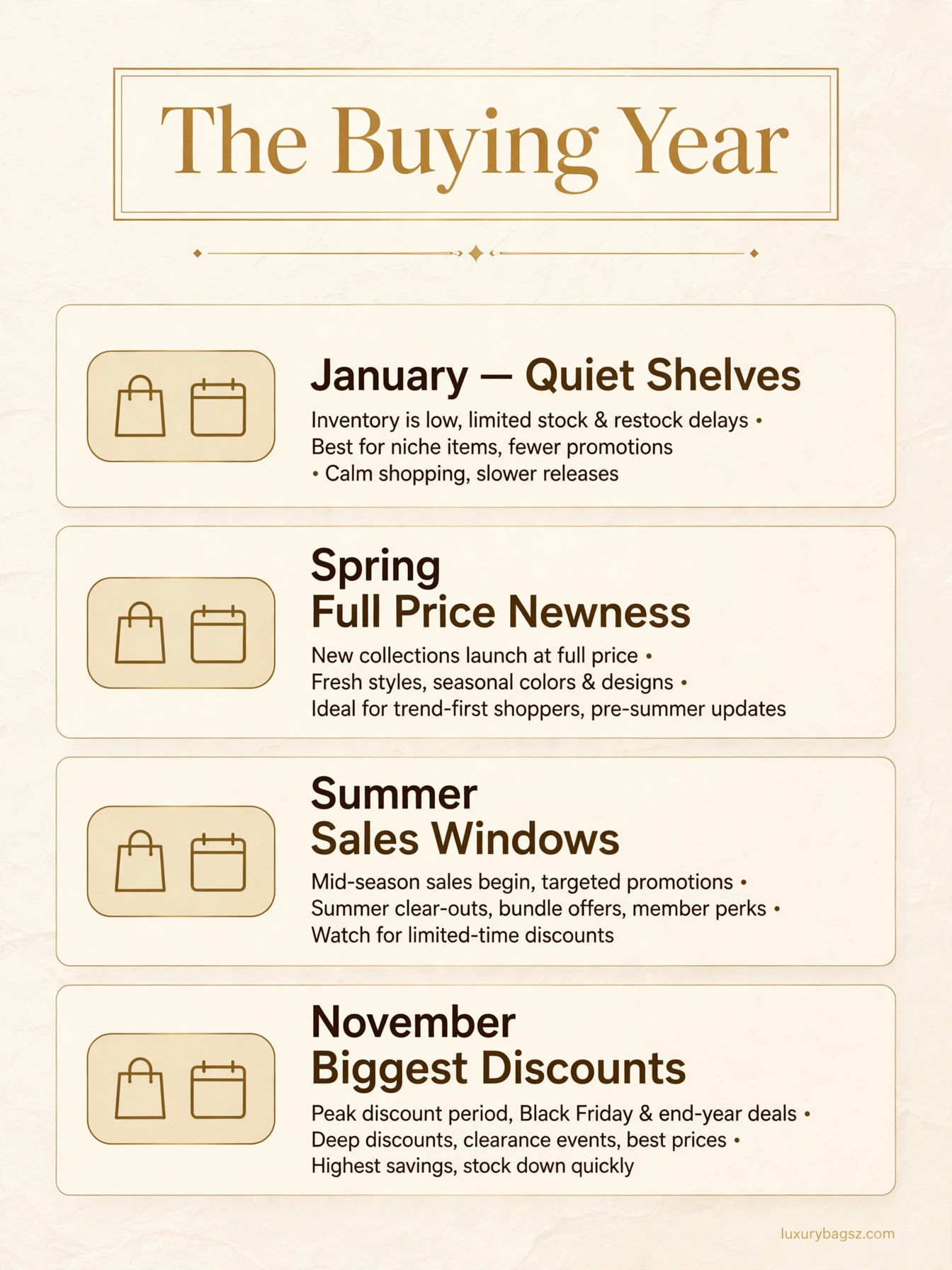
Outlet channels run their own calendar. Designer outlets clear past-season stock steadily, with the deepest extra reductions around the same holiday windows as the main sales.
Sample sales and archive events, announced to mailing lists, are the insider's extra window. Stock is unpredictable, sizes are luck, and prices can be the lowest of the year.
Black Friday, Singles Day and Private Sales
Late November events suit contemporary and premium brands — the Coach, Tory Burch and Michael Kors level — where extra-code promotions can stack on already reduced bags. Top heritage houses largely sit these events out for bags. Their ready-to-wear and shoes may appear in store sales, but the icon handbags stay at full price, by policy. Private and client sales reward relationships. If you buy regularly from one store, ask to be told when the sale preview opens; the best bags go before the public announcement.
The Houses That Never Discount
Chanel does not put its handbags on sale; its seasonal sales cover ready-to-wear, shoes and some accessories through boutiques, not the classic bags everyone queues for. Hermès likewise does not discount its bags, and Louis Vuitton famously does not run sales on its leather goods at all, preferring to protect price integrity year-round. For these houses, ignore the sales calendar entirely. Your levers are price-increase timing, currency and boutique availability, covered in the next part of this guide.
Keep perspective on rises: they are usually single-digit percentages, painful on a large ticket but small beside the cost of buying the wrong bag in a sale rush.
If a rise lands before you buy, do not chase a substitute in panic. Re-save the difference or look pre-owned; the right bag late beats the wrong bag on time.
Beating the Price Increase
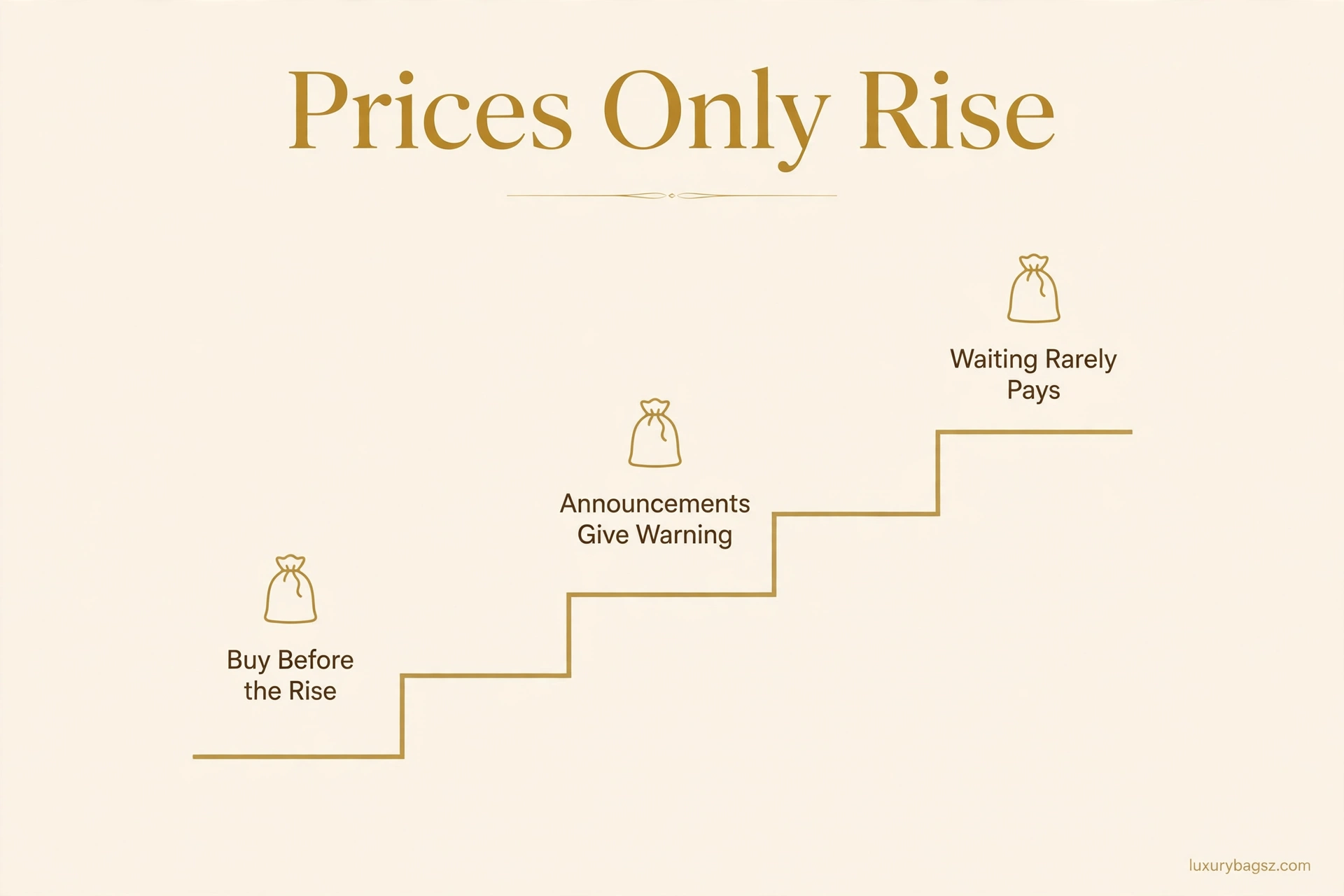
Heritage houses raise bag prices most years, sometimes more than once, often with little or no public warning. A bag bought the month before a rise is, in effect, bought at a discount. Rumours of rises travel through client advisors and shopping communities a few weeks ahead. If your purchase is planned anyway, a credible rumour is a rational reason to move sooner. Currency helps travellers too. Buying in the house's home market, with any applicable tax refund, has historically softened prices, though brands keep narrowing regional gaps.
Pre-Owned Timing: The Quieter Market
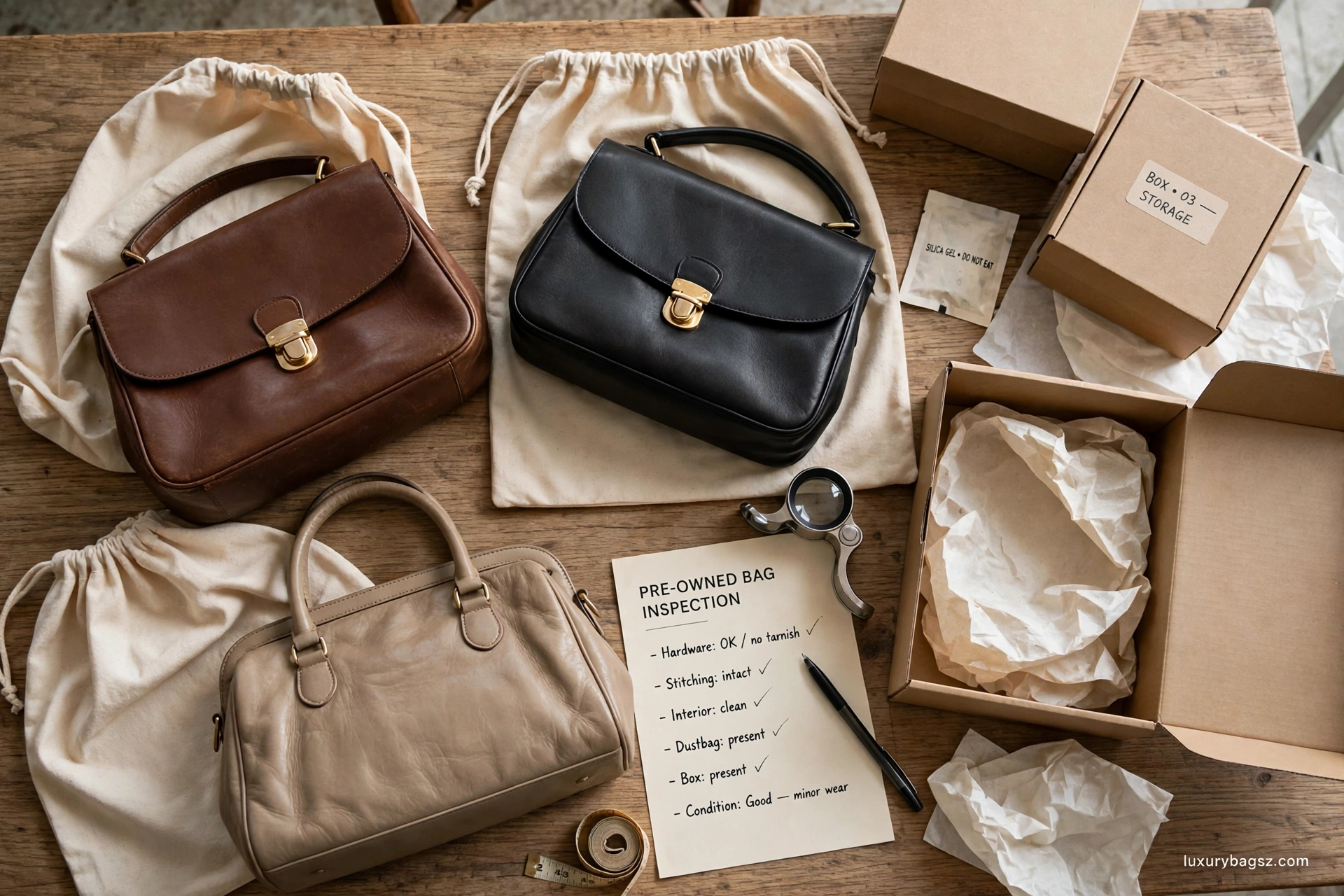
Pre-owned prices follow hype with a lag. A bag is dearest second-hand near its launch fame and cheapest when fashion has moved on and supply from first owners peaks. Our guide on how to buy a pre-owned designer bag safely covers authentication and seller checks, which matter more than any timing trick in this market. Undecided between owning now and later? Our comparison of rent or buy designer bags helps test a shape before timing a purchase around it.
Availability can outrank price entirely. Quota and waitlist bags are bought when offered, not when discounted, and declining an offered icon to chase a saving is usually a false economy.
The same applies to a bag being discontinued in your colour. A confirmed retirement is a deadline no sales calendar can improve on.
When Timing Does Not Matter
If the bag is a true classic in a core colour, its price in five years will almost certainly be higher, so a few months of waiting games rarely change the outcome meaningfully. What changes outcomes is buying the wrong bag cheaply. A discounted bag you half-like is the most expensive purchase in this whole guide, at any percentage off. Use resale logic as a sense check: our explainer on what affects a designer bag resale value shows which choices hold up if you ever sell.
A Simple Buying Plan
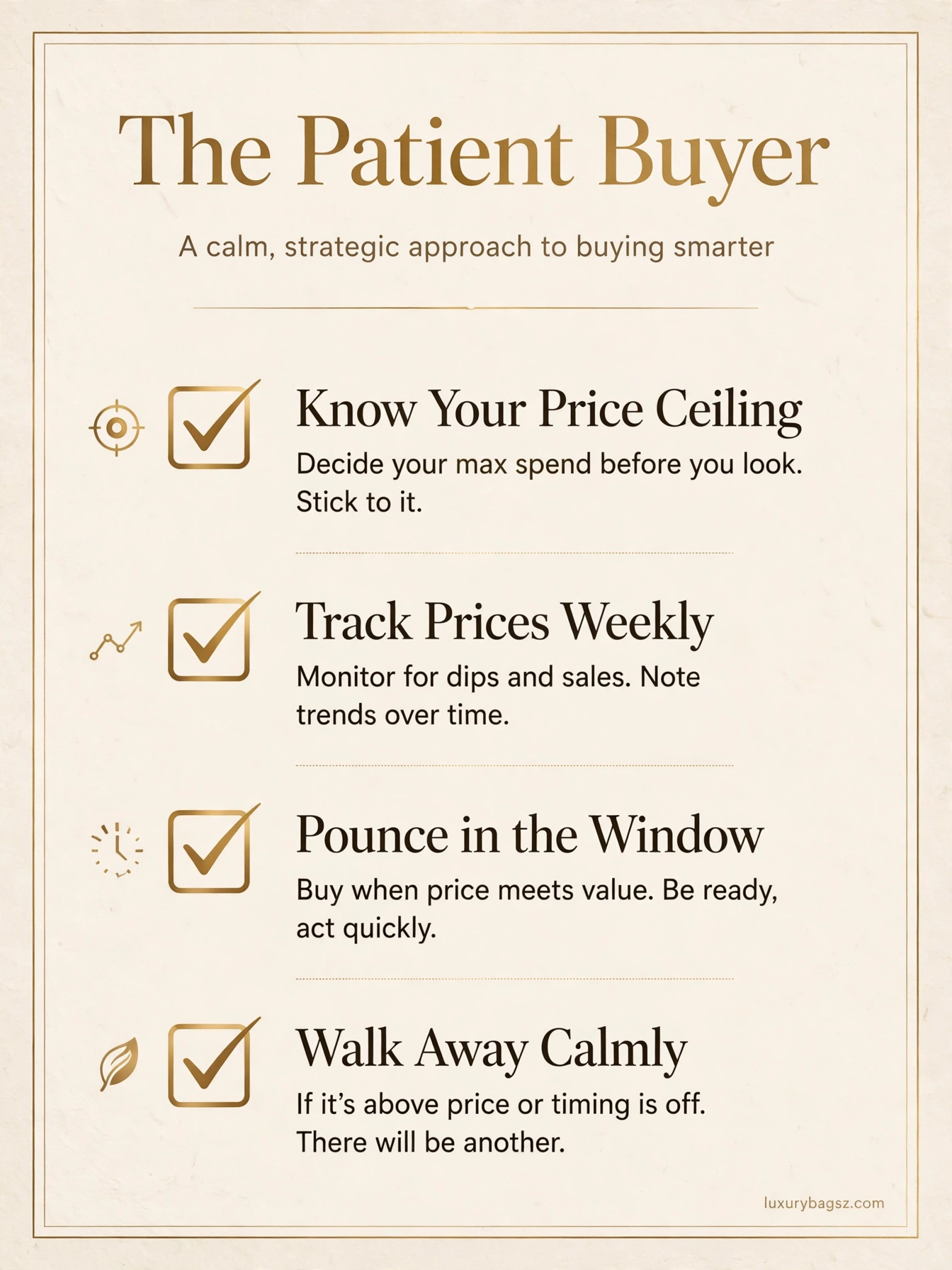
Decide the exact bag first: house, shape, size and colour. Then classify it — seasonal or icon — and let that decide whether you are hunting a sale window or a pre-rise moment. Set alerts with two or three trusted retailers, keep the money ready, and buy in the first days of the right window. Hesitation, not the calendar, loses most good prices. If the budget needs a ceiling, our edit of designer bags under 1500 shows how far a well-timed mid-band budget can stretch.
Track prices quietly across the year on the one bag you want. A simple note of its price each season teaches you more about its house's habits than any general guide can.
That habit turns timing from luck into knowledge, and it takes about a minute a month.
Frequently Asked Questions
What month is cheapest for luxury handbags?
January and July, when winter and summer sales deepen. Seasonal bags from department stores see their largest cuts then, commonly around 30 to 50 per cent.
Do Chanel bags ever go on sale?
Not the handbags. Chanel's seasonal sales cover ready-to-wear, shoes and some accessories in boutiques, while classic bags remain full price as a matter of policy.
Does Louis Vuitton have sales?
No. Louis Vuitton does not discount its bags or leather goods. The realistic saving is buying before a price increase or in a favourable currency market.
Is Black Friday worth it for luxury bags?
For contemporary and premium brands, yes, often with stackable codes. For heritage icon bags, Black Friday changes nothing, because those houses do not take part.
How do I know a price increase is coming?
Advisors and shopping communities usually hear rumours a few weeks ahead, and rises often cluster early in the year. Treat strong rumours as a prompt, not a guarantee.
Should I buy seasonal colours or classics in the sale?
Seasonal colours discount deepest because stores must clear them. Buy one only if you genuinely love it; a classic at a smaller cut usually serves you better.
Is pre-owned cheaper at certain times?
Prices soften once launch hype fades and first owners begin selling, often a year or more after release. Condition and authentication matter more than the month.
Does buying abroad still save money?
It can, where local pricing and tax refunds favour visitors, but brands have narrowed regional gaps. Always compare the final refunded price, not the shelf price.
When is the worst time to buy?
Launch week of a hyped bag: full price, thin choice and pressure to settle for the wrong colour or size. Waiting even one season improves every term.
What if I have saved and the bag rises first?
Re-check the plan, not the dream. A modest rise on the right classic is still cheaper over years of use than a discounted substitute you never quite wanted.
Timing a Bag: Decide First, Then Watch the Calendar
Buy seasonal bags in the January and July sales, contemporary brands around late-November events, and heritage icons whenever you are ready — ideally just before a price rise. Decide the bag first, classify the house, keep the money ready, and timing becomes the easiest discount in luxury shopping.
I watch these windows from the buying side of the counter: interest in a classic spikes just before its price does, and the pre-owned examples I check in those weeks tell the story early. Decide the bag first, as this guide says, keep the money ready, and timing stops being luck.






