

Best Entry-Level Luxury Watches: Where to Start
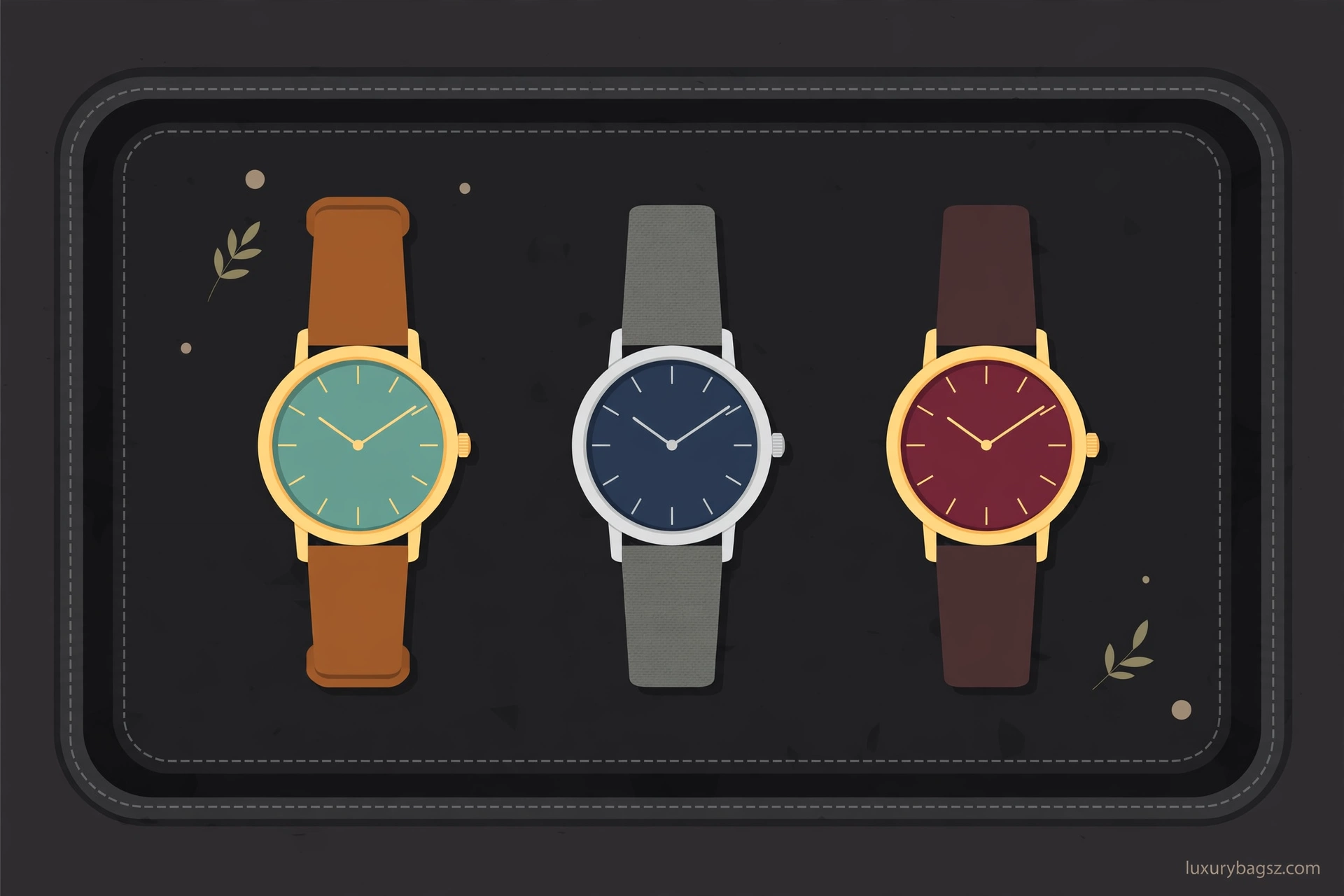
Start With the Watch You Will Actually Wear
The best entry level luxury watches are not the cheapest watches with a famous name. They are the ones with a real movement, a case size that suits your wrist, and a style you will still reach for in five years.
For most first buyers, the honest starting tier sits roughly between $1,000 and $5,000 new, with pre-owned pieces from bigger houses just above it. Below that, you are mostly paying for branding. Above it, you are paying for heritage and finishing.
This guide walks through the tiers, the styles that work as a one-watch wardrobe, the models buyers return to, and the checks that stop a first purchase becoming an expensive lesson.
Key Takeaways
- Set the budget by tier: credible Swiss and Japanese starters begin around $1,000, and the sweet spot for a first piece is often $2,000 to $5,000.
- Case size matters more than brand: 36mm to 40mm suits most wrists and most wardrobes.
- An everyday watch beats a special-occasion watch as a first buy, because you will wear it ten times as often.
- Pre-owned buys from the bigger houses are legitimate, provided papers, service history and seller reputation check out.
- Servicing costs money every few years; budget for it from day one.
- Buy the watch you like looking at, not the one a forum told you would appreciate.
What Entry-Level Luxury Actually Means
Entry-level luxury is a quality threshold, not a price tag. At this level you should expect a mechanical or high-grade quartz movement, sapphire crystal, solid case finishing, and a brand that will service the watch for decades.
What you should not expect is hand-finishing, precious metals, or complicated movements. Those live several tiers up, and chasing them on a starter budget usually means buying old, small, or compromised pieces.
A useful test: if the brand sells the watch mainly through fashion outlets and discount sites, it is a fashion watch, not an entry-level luxury watch, whatever the dial says.
Brand heritage matters here too, but quietly. A starter watch from a house with a century of watchmaking behind it will still have parts, knowledge and servicing available when a fashion-led label has moved on.
Ask who made the watch before you ask what it is worth. Makers with real watchmaking divisions, rather than licensed names, are the ones whose entry models keep their dignity, and their owners, for decades.
The Three Styles That Cover Almost Everything
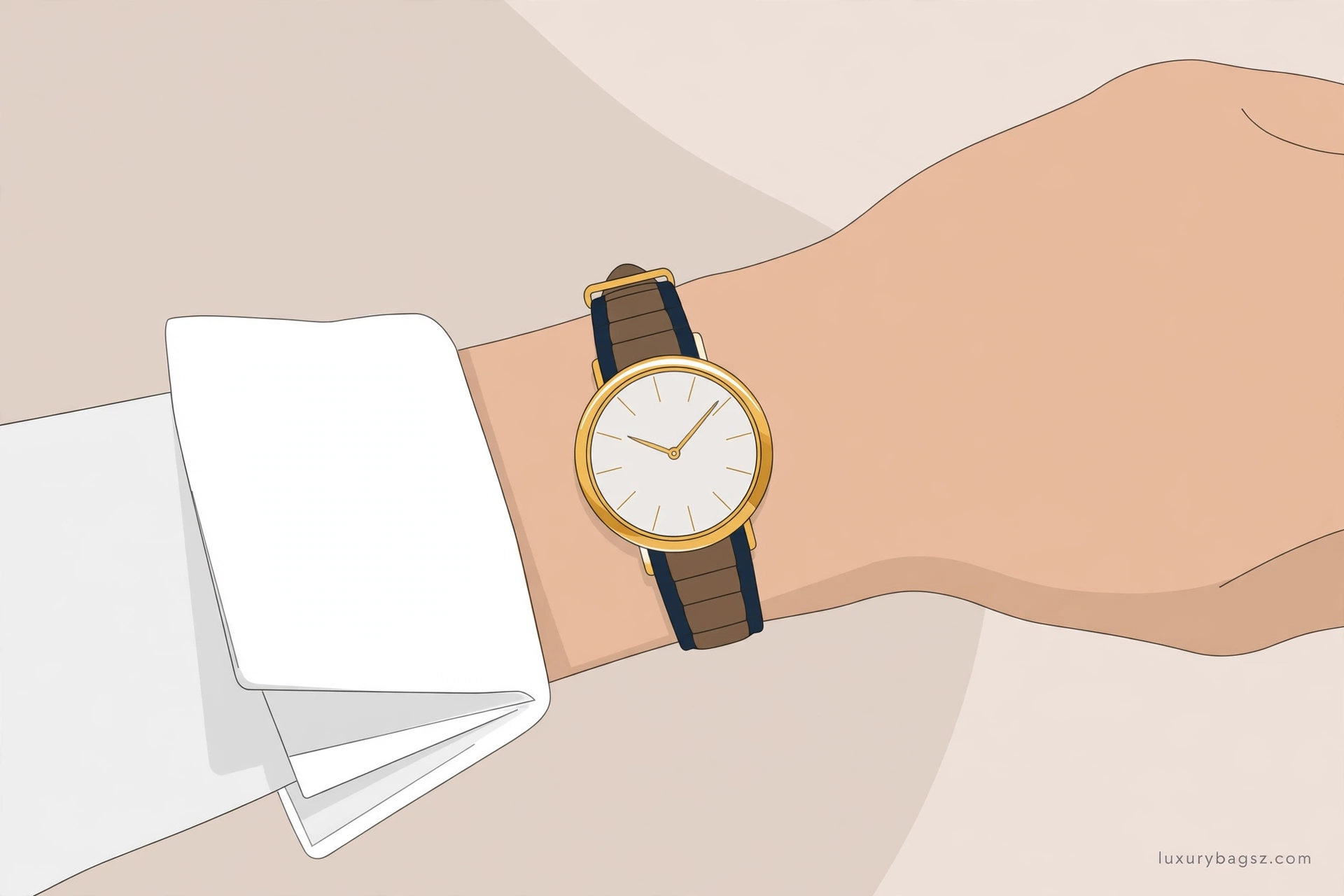
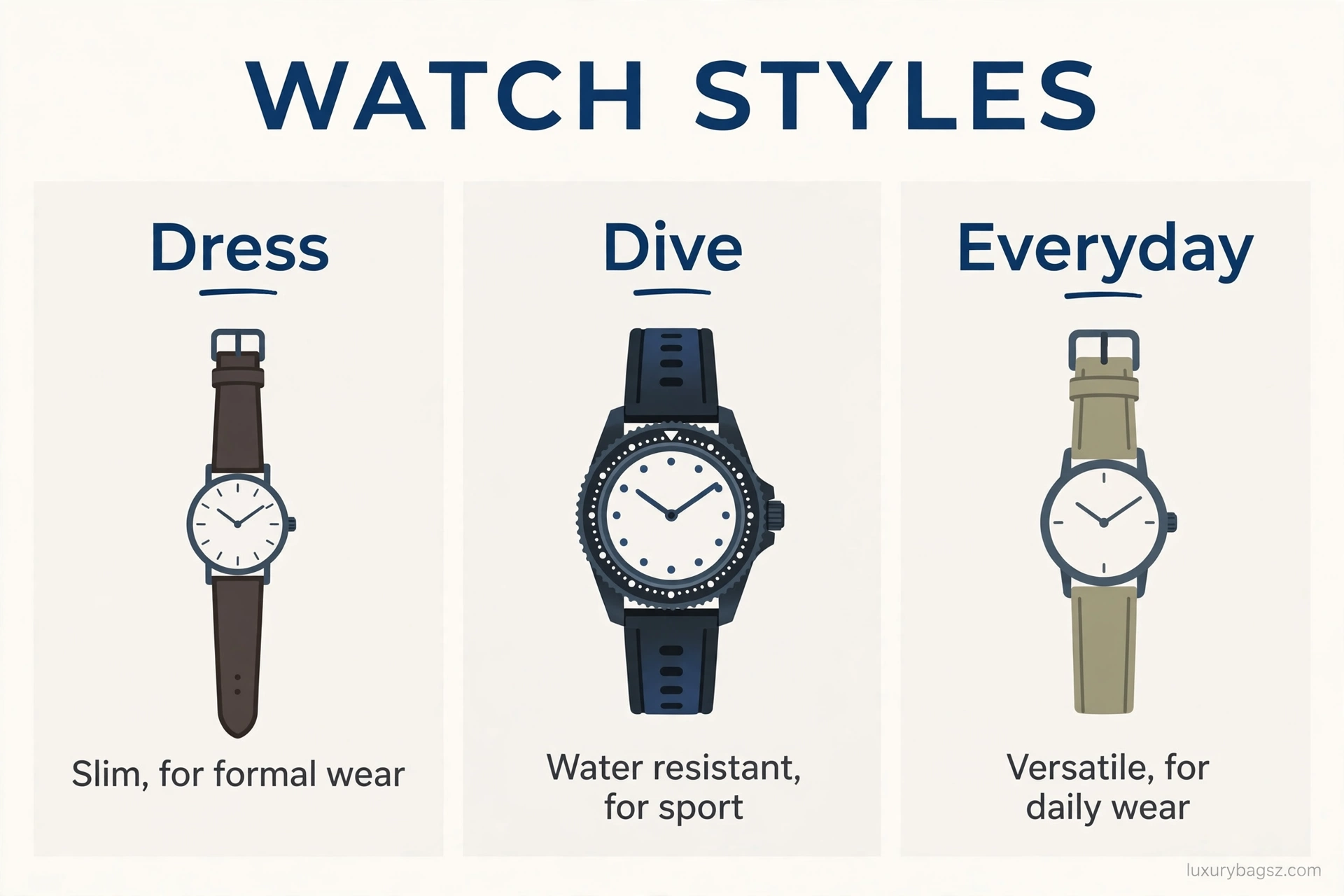
Most first buyers need one of three styles. A dress watch is slim, simple, and sits flat under a cuff. A dive watch is sportier, water-resistant, and works with everything except formal wear. An everyday watch sits between the two.
If you wear tailoring daily, start with the dress or everyday style. If your wardrobe is mostly casual, a dive watch will get the most wrist time. Our round-up of the best designer watches for men shows how the styles sit side by side.
Resist buying for an imagined life. A chronograph you wear twice a year is a poor first watch, however handsome it looks in the cabinet.
Finally, keep the tiers in proportion with the rest of your life. A first watch should be a pleasure worn daily, not a financial event you are still thinking about at every service interval and insurance renewal.
Price Tiers, Honestly Explained
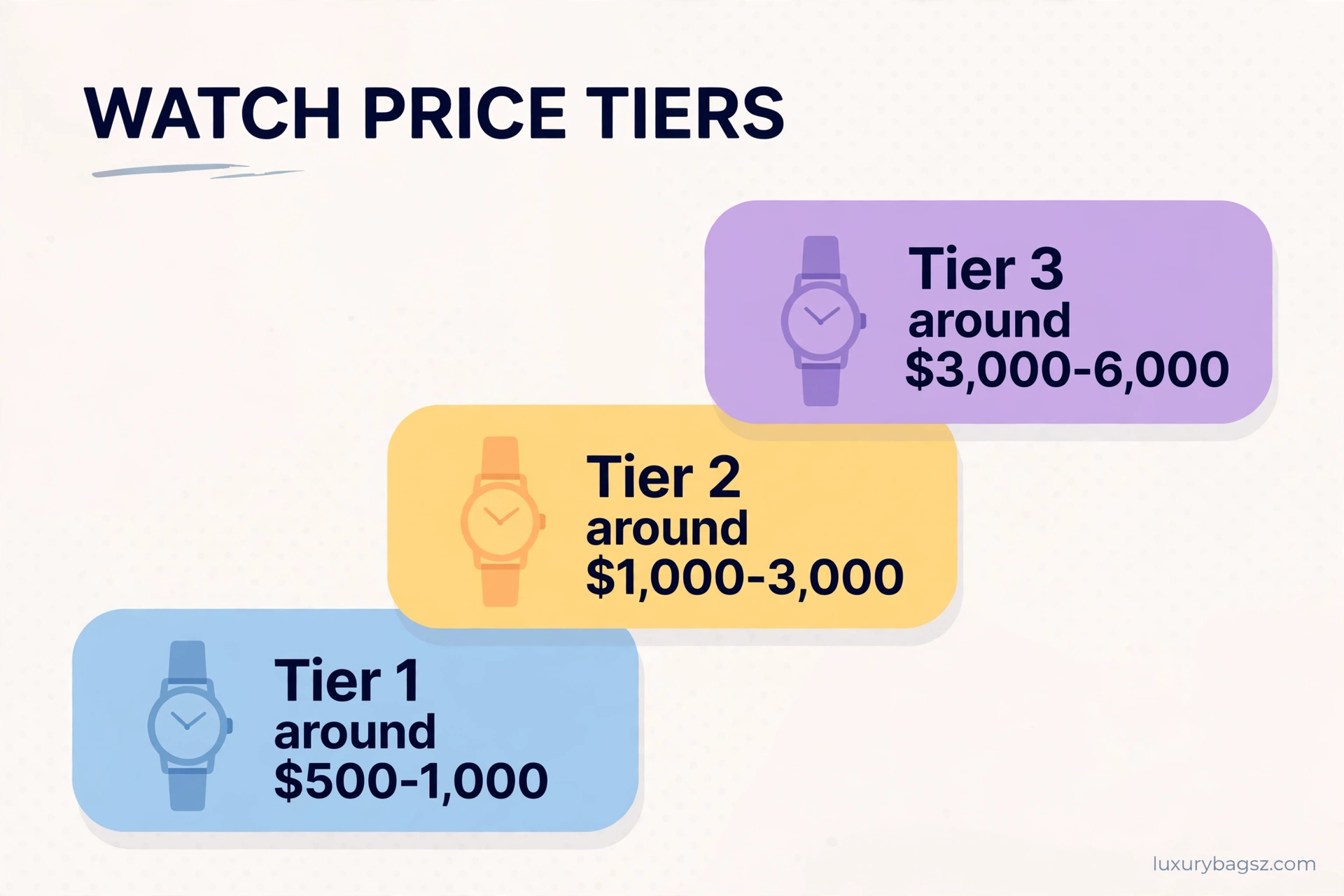
Around $500 to $1,000 buys strong Japanese automatics and Swiss quartz from respected names. The finishing is honest, the movements are proven, and resale is modest but real.
Around $1,000 to $3,000 is where Swiss mechanical watches with in-house or well-specified movements begin, along with the first pieces from heritage brands. This is the tier most buyers should aim for.
Around $3,000 to $6,000 opens the door to the entry models of the famous houses, new or nearly new. Beyond that you are no longer buying entry-level; you are collecting, and the rules change.
Quartz deserves an honest word in this tier as well. A well-made quartz watch from a heritage house is not a lesser purchase; it is a different one, trading mechanical charm for accuracy, thinness and lower running costs.
Several famous dress watches are quartz by design, because quartz allowed the slim case the design needed. Judge the whole object, not the movement type alone, and never apologise for choosing the watch you will enjoy wearing.
Starter Models Buyers Keep Coming Back To
Certain names recur in every serious starter conversation because they have been made for years, are easy to service, and suit many wrists. From Omega, the more accessible Seamaster and De Ville lines are the usual entry points.
Our guide to affordable Omega watches maps which models sit at the lower end and what to check on each. From Cartier, the Tank Must is the classic dress-watch starting point.
Tudor, Longines, TAG Heuer and Grand Seiko all field starter pieces with genuine movements and strong finishing. None is the single right answer; the right answer is the one that fits your wrist and your week.
One more fit point that beginners miss: strap and bracelet choice changes how a watch wears as much as the case does. A watch that feels top-heavy on a bracelet may sit perfectly on leather, and an adjustable clasp is worth real money in summer, when wrists swell by evening.
If you are between sizes, choose the smaller. A slightly small watch reads as taste; a slightly large one reads as borrowed, and you will notice the difference in every photograph you take of it.

Size, Fit and the Wrist Test
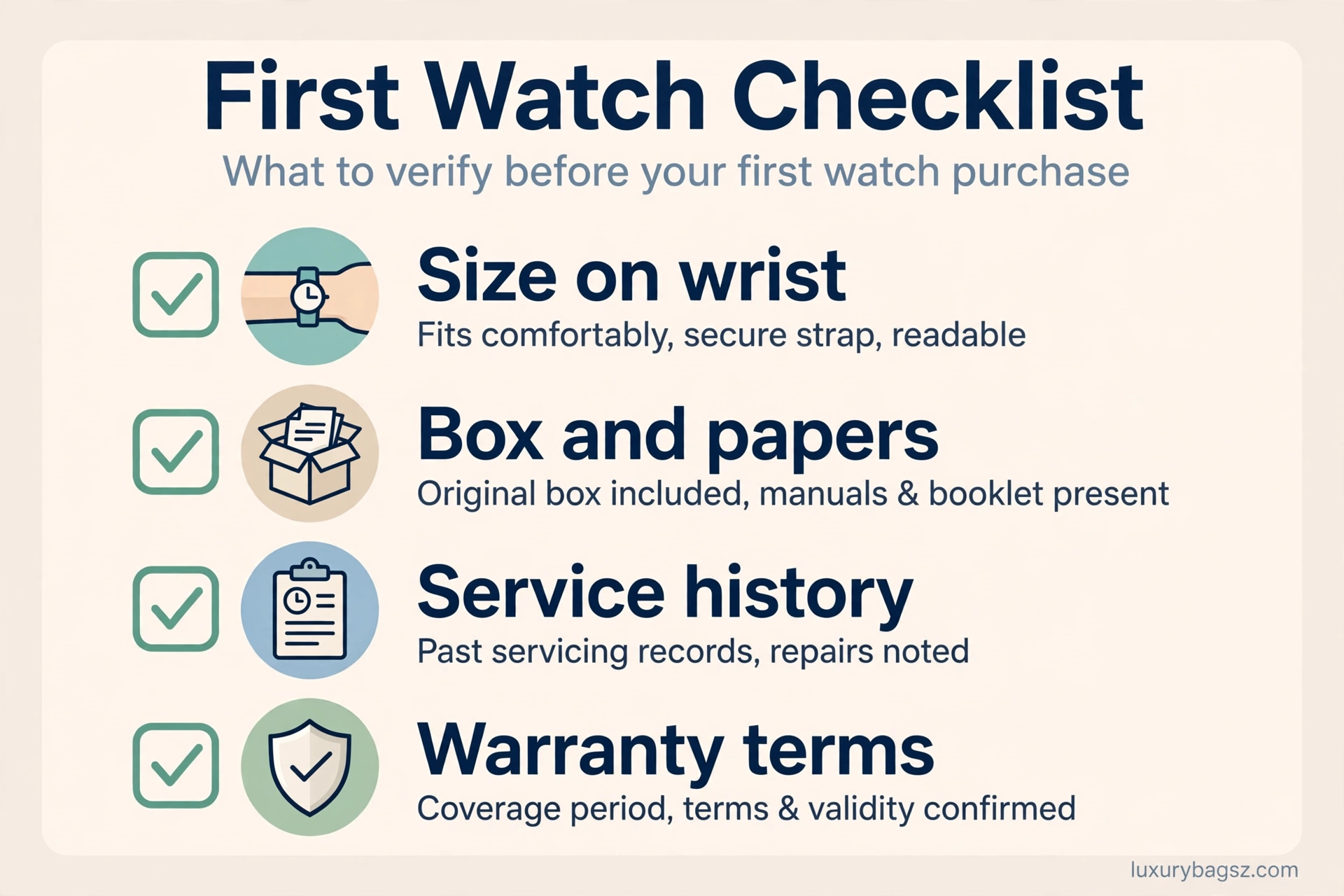
Try before you buy whenever you can. A 36mm watch wears elegantly on a smaller wrist and looks lost on a large one; a 42mm diver can overwhelm a slim wrist and sit perfectly on a broad one.
Lug-to-lug length matters as much as diameter. If the lugs overhang the edges of your wrist, the watch will always look borrowed, whatever the dial size says.
Wear it for a few minutes, check it under your own cuff, and look at it in a mirror at arm's length. Watches are bought in macro photographs and worn at conversational distance.
Heritage Japanese watchmaking deserves a place in any starter conversation. Grand Seiko and the higher Seiko lines offer finishing and accuracy that embarrass many Swiss pieces at the same price.
Their movements include high-beat automatics and unusually accurate quartz, and their dial work is a specialty in itself. A first collection with no Japanese piece in it has usually been chosen from habit rather than from looking.
Movements in Plain Language
Automatic movements wind themselves from your wrist motion. Manual movements need winding every day or two. Quartz movements run on a battery and are the most accurate and the cheapest to own.
In-house means the brand makes the movement itself; bought-in means a specialist supplier does. Both can be excellent. What matters is that the movement is serviceable by independent watchmakers, not only by the brand at brand prices.
Power reserve, the hours a mechanical watch runs off the wrist, of 38 to 80 hours covers most starter pieces. Longer is convenient, not essential.
Warranty paperwork deserves the same scrutiny as the watch. Check the card is stamped or activated correctly, keep the receipt with it, and photograph both. Replacing lost papers ranges from awkward to impossible depending on the brand.
On pre-owned pieces, an independent service or inspection within the return window is money well spent. A watch that keeps time, seals properly and shows no hidden damage is confirmed, not merely hoped, to be a good buy.
Buying New, Grey Market or Pre-Owned
New from an authorised dealer brings a full warranty, correct sizing, and no history questions. It is the calmest route and the right one for a first purchase if the budget allows.
Pre-owned opens the bigger houses at starter money. Buy from established dealers, expect box and papers where promised, and read our pre-owned luxury watches buyer's guide before committing.
If the pre-owned piece is a Rolex, verify its numbers before anything else: our rolex serial number check guide shows how the serial and reference should read and where fakes usually get them wrong.
Grey-market sellers offer new watches below list, usually with their own warranty instead of the brand's. That can be fair value, but read the warranty terms as carefully as the price.
Resale honesty belongs in a starter guide. Most entry-level luxury watches lose value from the shop door, some gently and some sharply, and limited editions are not a beginner's shortcut around that fact.
The financial case for a first watch is use, not appreciation: cost per wear over ten years of daily pleasure is tiny. Buy the piece that earns its place on your wrist and the arithmetic looks after itself.
Owning Costs and Keeping It Worth Having
A mechanical watch typically needs a service every four to seven years, and a service on a starter luxury piece commonly costs a few hundred dollars. Skipping services does not save money; it converts a service into a repair.
Store the watch dry, away from strong magnets, and off the windowsill. Water-resistance ratings fade with age and gaskets, so have seals checked before swimming in an older piece.
Keep the box, papers and receipts. A complete set is worth real money at resale, and it makes any future sale faster and calmer for everyone involved.
Frequently Asked Questions
How much should I spend on my first luxury watch?
Most first buyers do well between $1,000 and $5,000. Below that tier, quality varies widely; above it, you are paying for heritage more than function.
Is a quartz watch a real luxury watch?
Yes, if the case, finishing and brand support match the price. High-grade quartz is accurate and easy to live with, and several famous houses sell it proudly.
Which is the safest first brand to buy?
The safest choice is a long-established house with wide servicing networks and models made for many years. Omega, Cartier, Tudor and Longines all qualify.
Do entry-level luxury watches hold their value?
Most lose some value from new, like cars. Limited or discontinued models can do better, but buy for wearing, not as an investment vehicle.
What size watch should a beginner choose?
For most wrists, 36mm to 40mm is the versatile zone. Try the watch on, check the lug overhang, and judge it in a mirror rather than in close-up photos.
Is pre-owned risky for a first watch?
It carries more homework, not unavoidable risk. Established dealers, verifiable papers and a service history make a pre-owned first watch a sensible buy.
How often does a mechanical watch need servicing?
Typically every four to seven years, depending on the brand and use. Budget a few hundred dollars and treat it as part of the purchase price.
Should my first watch be automatic or manual?
Automatic suits most beginners because it winds itself in daily wear. Manual winding becomes a pleasant ritual for some owners, but it is one more habit to keep.
Can I wear a dive watch with a suit?
With a slim diver under a cuff, often yes. Purists will object, but a tasteful sports watch with tailoring is widely accepted now.
What is the biggest first-watch mistake?
Buying for resale value or for other people's approval. The best first watch is the one still on your wrist, and still liked, five years later.
Final Verdict
Start with a versatile style, a size that truly fits, and a tier you can service without stress. The best entry level luxury watches reward owners who wear them daily, so choose the piece that suits your real life, then enjoy it without watching the resale charts.






