

Best Designer Watches for Men: Dress, Everyday and Sport Picks
The Shortlist That Suits Most Wrists: Men's Watches in Brief
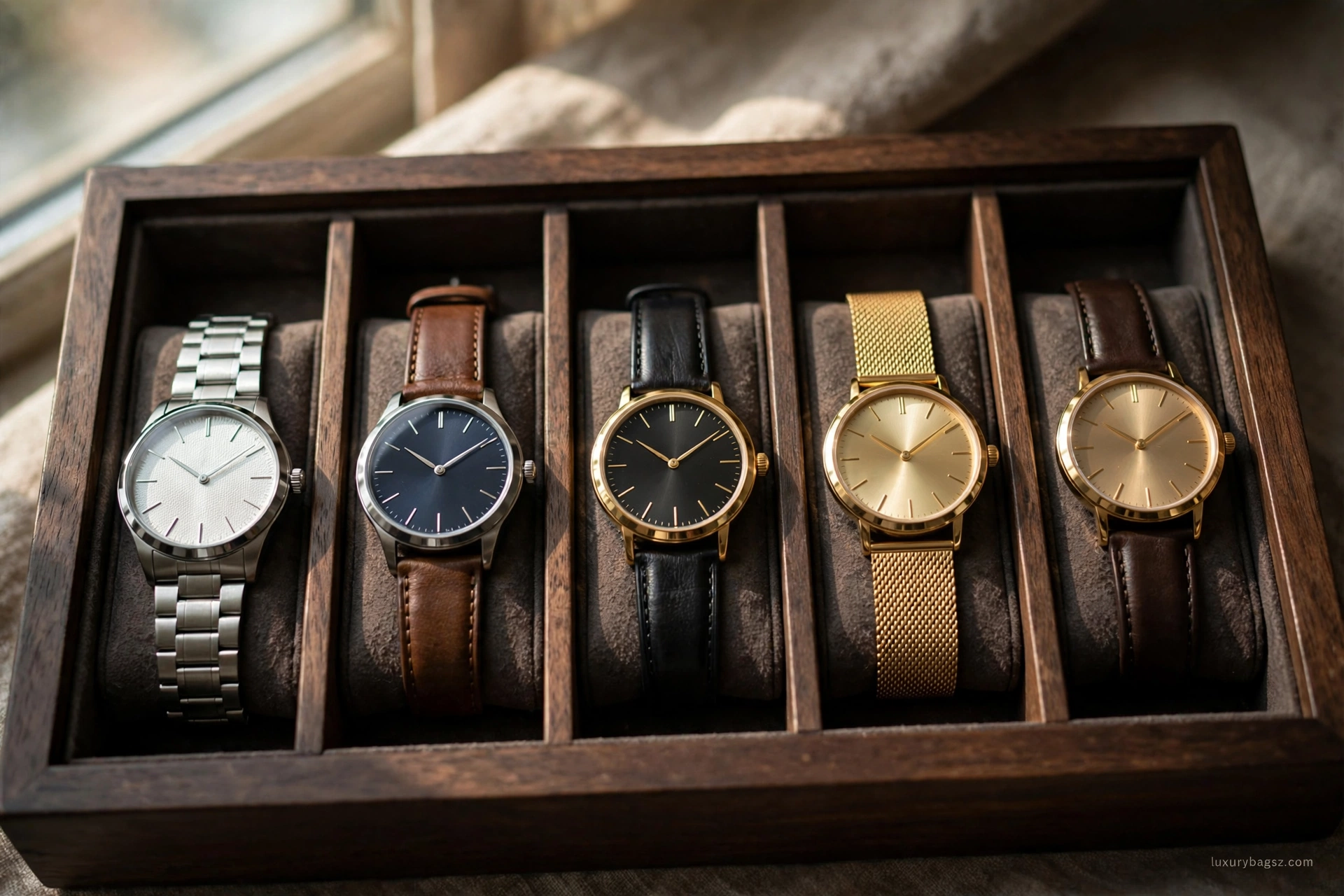
For most men, the best designer watch is a 38 to 40mm steel everyday piece from a respected maker, bought once and worn daily. Add a slim dress watch later if your diary demands it. Everything else is taste: dive watches for sportier dress, chronographs for those who love dials, and precious metal only when the budget is genuinely comfortable.
Key Takeaways
- Case size decides fit more than price: 36 to 38mm dresses up, 40mm does everything.
- A steel everyday watch around typical mid-band prices is the value sweet spot.
- Automatic movements cost more and need servicing; quartz is cheaper and carefree.
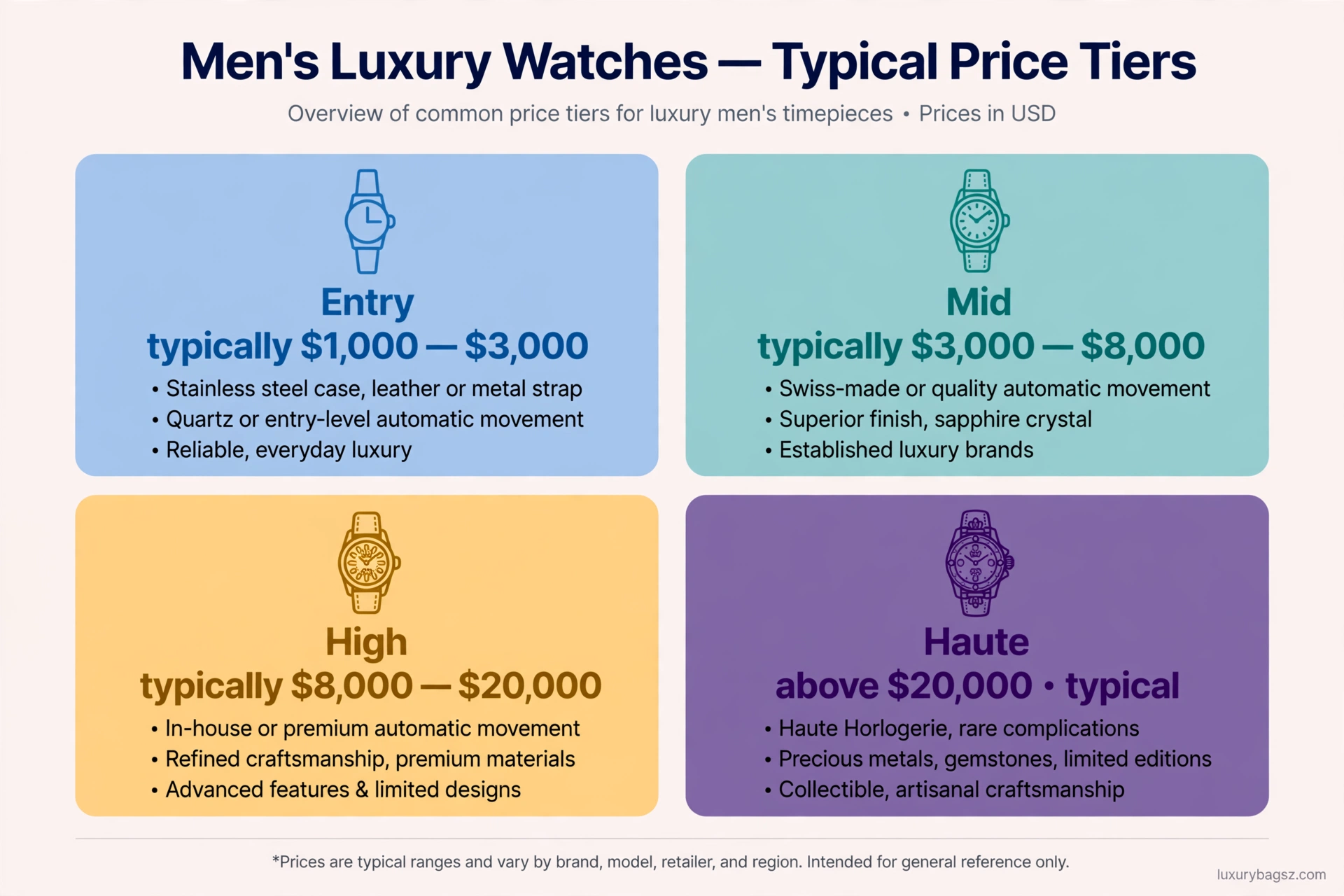
- Typical bands: entry $1,000 to $3,000, mid $3,000 to $8,000, high $8,000 to $20,000.
- Pre-owned from reputable dealers saves heavily on most models.
- Buy the watch you will wear daily; value follows wear, not wishful thinking.
The Three Watches Most Men Actually Need
An everyday watch is the first purchase: steel, water-resistant, legible and sized to slip under a cuff. It should survive rain, desks and weekends without thought. A dress watch is the second: slim, simple, on leather, worn when the suit comes out. Many men skip it happily for years, and that is fine. Our broader ranking of the top luxury men's watches covers the iconic models in detail if you want the famous names compared. A sport watch is the third and the most fun: dive bezels, chronograph dials and rubber straps. Buy it because you love it, not because a list insists.
Most men end up wearing one of the three for ninety percent of the year. Knowing which one your life demands most is the whole secret of buying well.
Budget honestly across all three. Most men serve themselves best by spending seventy percent of the watch fund on the everyday piece and splitting the rest, rather than starving the daily watch for a dress piece worn twice a year.
Case Size: The First Decision
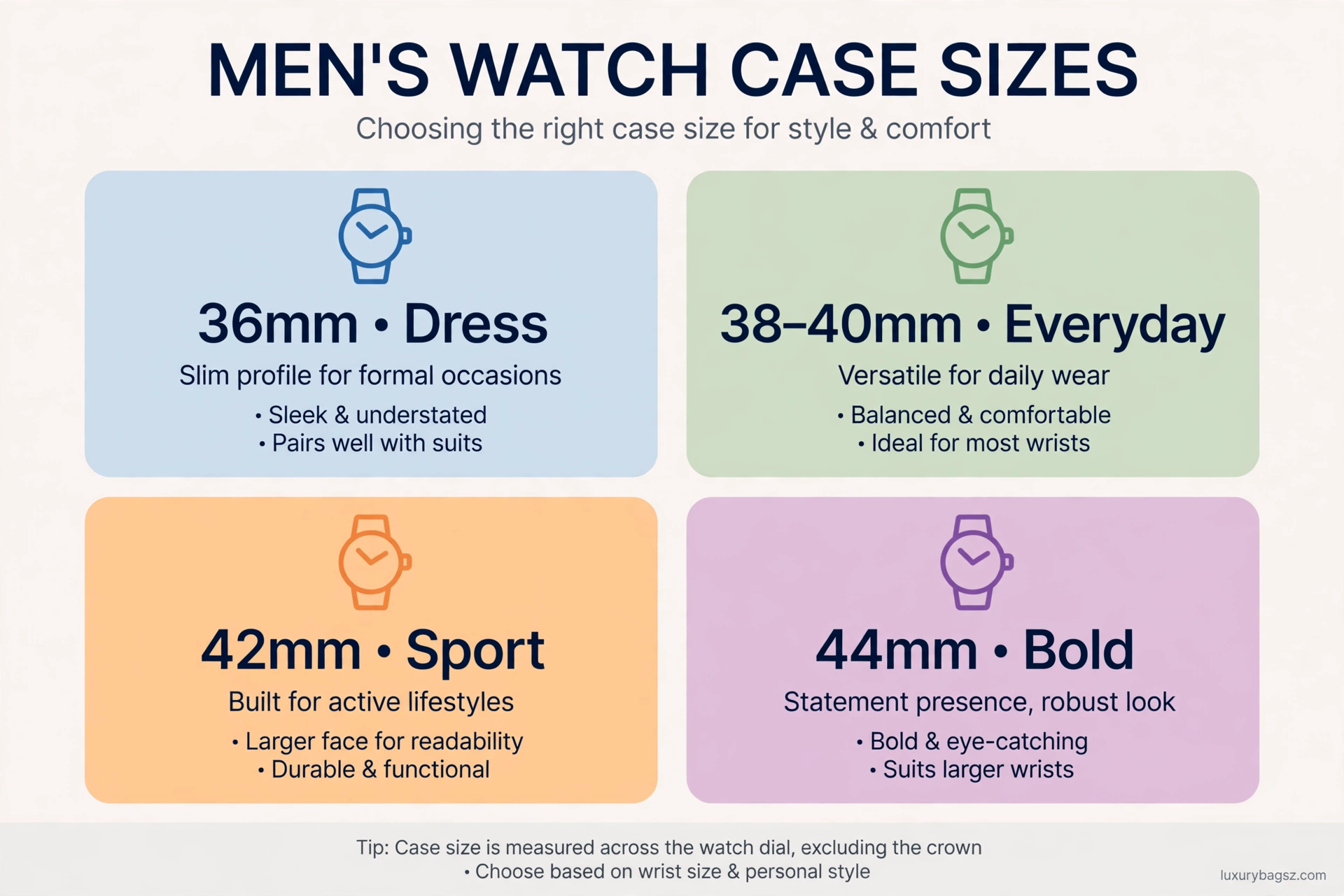
Measure your wrist, then be honest about proportion. A 36mm case on a slim wrist looks elegant; the same case can vanish on a broad wrist. Everyday sweet spot is 38 to 40mm for most men. It reads clearly, fits under cuffs and suits both shirts and knitwear. Sport models at 42mm and above make a deliberate statement. Try before buying; photographs hide how tall a case sits. Vintage sizing runs smaller, which is why older dress watches feel refined. Diameter is only half the story; case height matters just as much.
Lug-to-lug length is the measurement nobody quotes and everybody feels: a watch whose lugs overhang your wrist will never sit right, whatever the diameter says.
Try watches on with your own shirt cuff, not the shop's. Cuff clearance is where diameters stop being numbers and become comfort or irritation.
Dress Watches: Slim and Simple
A dress watch has a plain dial, slim case, few or no complications and a leather strap. Its job is to disappear gracefully until someone notices. White, cream and silver dials are the classics. Black dials dress up well too, especially with a suit in the evening. Typical respected dress watches run from around $1,500 in the entry band to well beyond $20,000 in precious metal. Gold cases are beautiful and unmistakably formal. Steel dress watches split the difference and get worn far more often.
A thin case is the dress watch's real luxury, because it slides under a cuff without catching. Anything under ten millimetres thick behaves beautifully with tailoring.
Everyday and Sport Watches
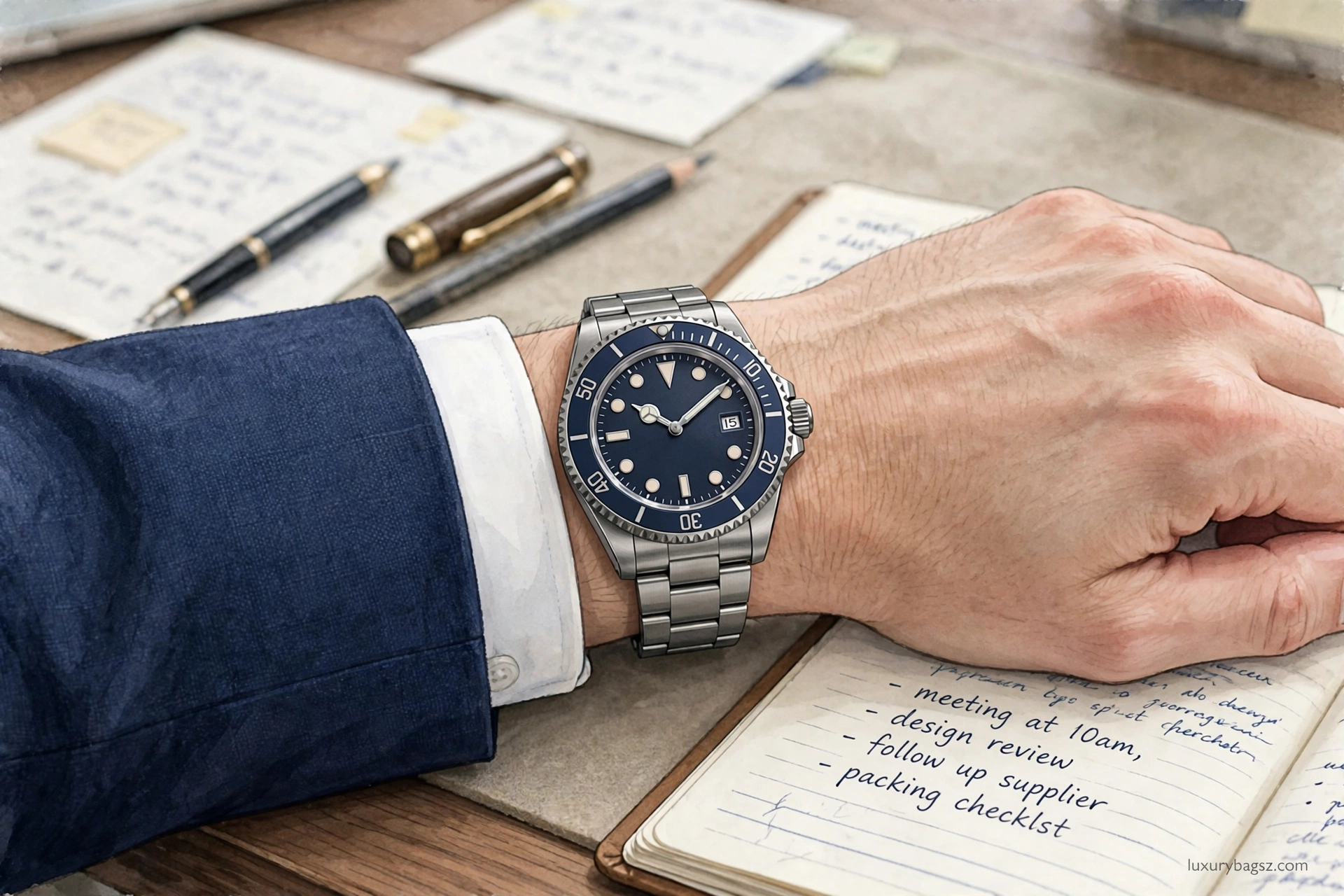
The everyday champion is the steel watch on a bracelet: a date window, decent water resistance and a dial you can read at a glance. Dive watches add a rotating bezel and stronger water resistance, and they pair with everything short of black tie. They are the most popular style for a reason. Chronographs suit men who enjoy machinery on the wrist. The extra dials are mostly decorative in daily life, and there is nothing wrong with that. GMT models earn their keep for travellers, showing a second time zone. If you cross zones monthly, it is the most useful complication here.
Bracelet fit decides daily happiness: micro-adjustments at the clasp let the watch breathe with your wrist across a warm day, a detail worth more than another complication.
A metal bracelet can be swapped for leather or rubber in minutes, effectively giving one watch three personalities. Buy the bracelet version; straps are cheap, bracelets are not.

Movements Without the Jargon
Quartz movements run on a battery, keep superb time and cost less. There is no shame in quartz; several great houses built icons on it. Automatic movements wind themselves from wrist motion and appeal to men who love mechanics. They need servicing every few years, which costs money. Hand-wound movements are the traditionalist's choice, usually in dress watches. Winding becomes a small daily ritual owners genuinely enjoy. Accuracy differences between good quartz and good automatic are seconds a month. Choose by feeling and budget, not by stopwatch.
In-house movements attract collectors and raise prices; bought-in movements from the great specialist makers are equally honest engineering. Judge the finishing and the service network, not the label alone.
Typical Prices by Band
Entry band, typically $1,000 to $3,000: respected names, mostly quartz or simpler automatics, excellent finishing for the money. Mid band, $3,000 to $8,000: the sweet spot. In-house or high-grade movements, steel icons and watches that anchor a collection. High band, $8,000 to $20,000: precious metals, famous movements and finishing you can see under a loupe. Above that, haute pieces are art purchases. Straps and bracelets change prices within a model. The same watch on steel usually costs more than on leather, and both cost less than gold.
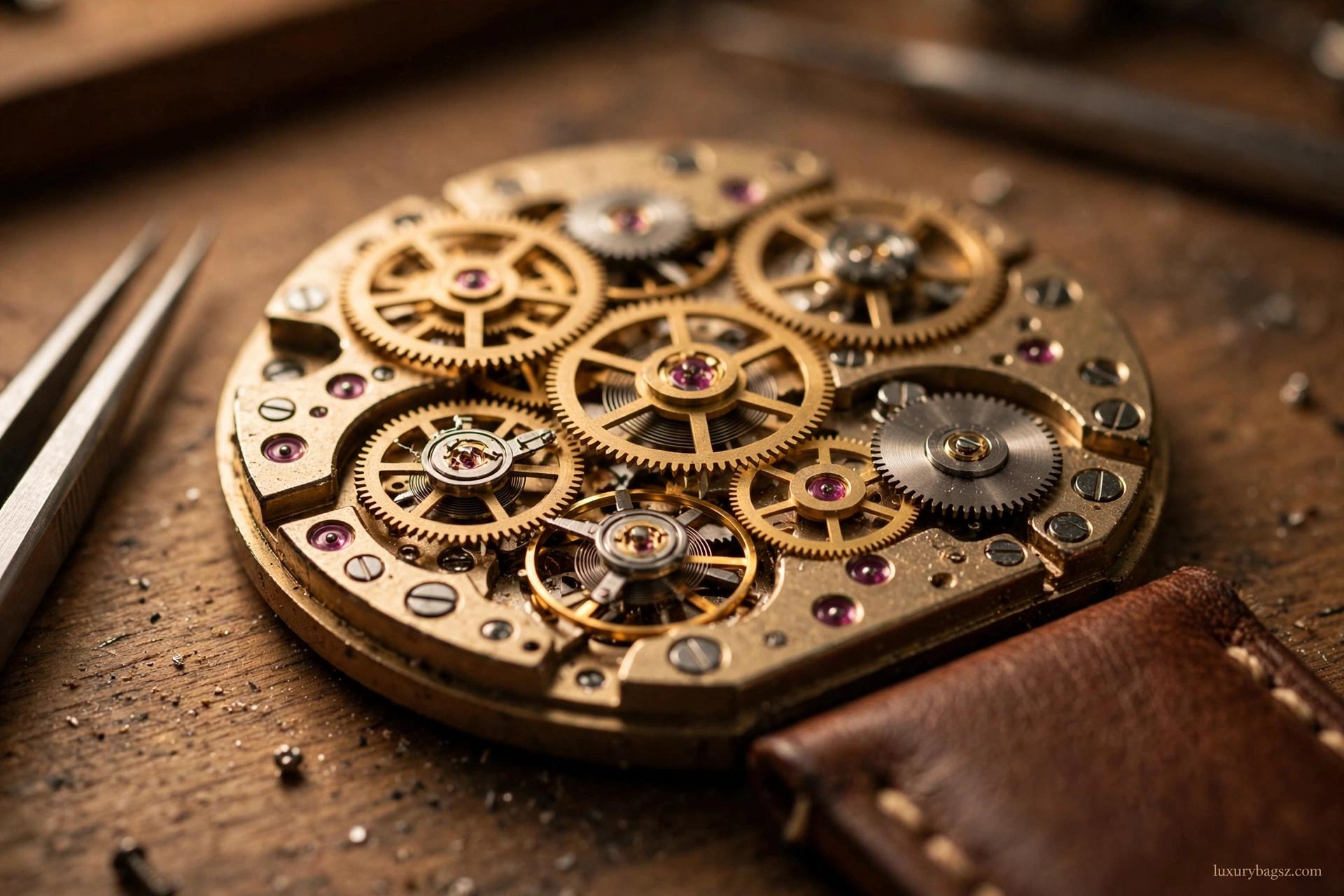
Servicing belongs in the band maths: an automatic at the top of the entry band plus a decade of services can cost what a mid-band watch costs outright.
Gift pricing has its own logic: the mid band is where a giver's generosity and a wearer's daily comfort meet, which is why so many milestone watches live there.
Buying Pre-Owned and Keeping It Well
Pre-owned is where value lives for most models. Our pre-owned luxury watches buyer's guide covers dealer checks, papers and pricing in depth. Buy the seller first: established dealers with returns policies and serviced stock cost slightly more and sleep far better. Daily care is simple, and our notes on how to clean a watch cover safe wiping, water checks and strap care. Budget for servicing an automatic every four to six years. A watch that stops is not broken, merely overdue, but the bill belongs in your planning.
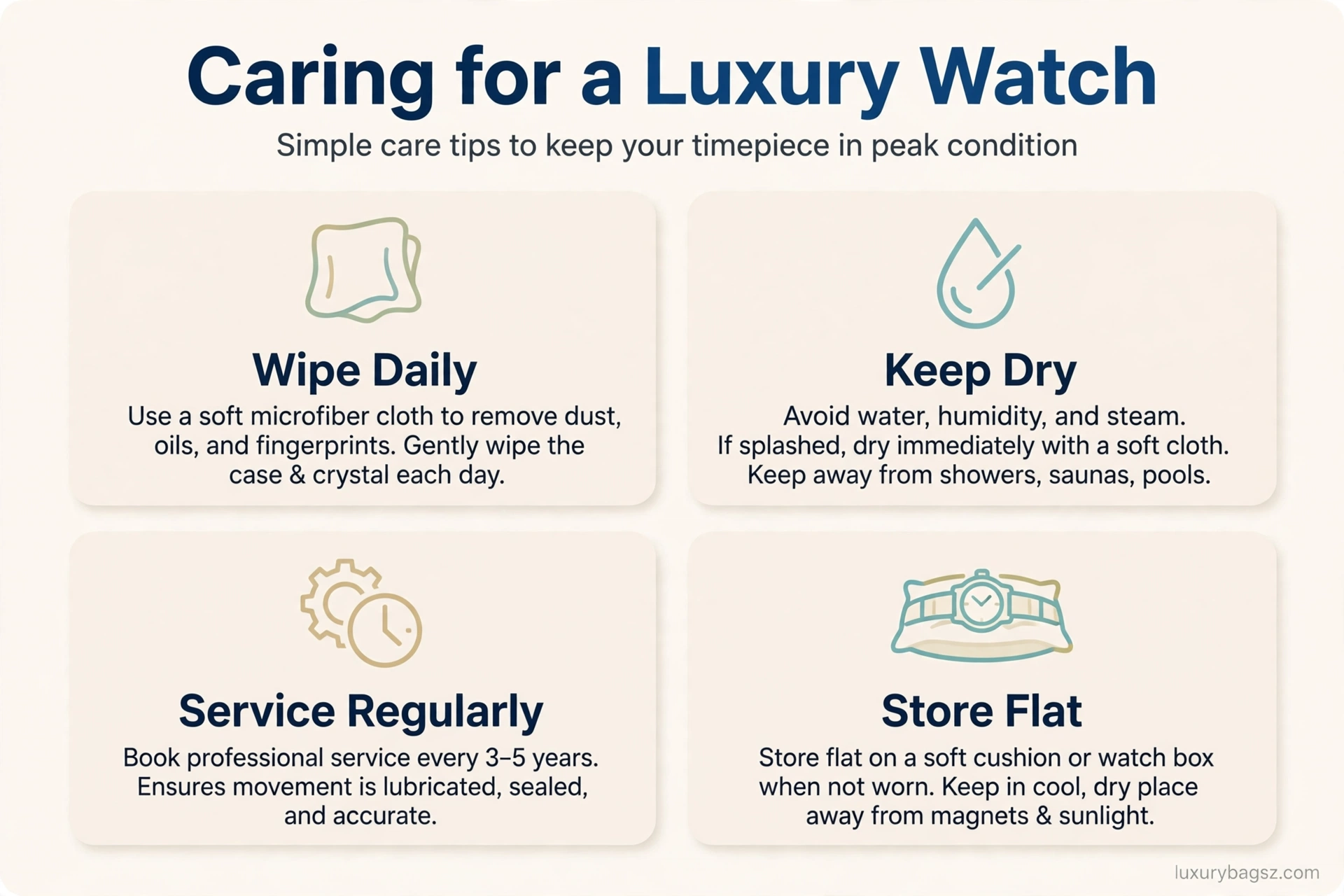
Keep the full set together: box, papers, spare links and receipts in one place. The day you sell or gift the watch, that folder is worth real money.
Will It Hold Value?
Most watches depreciate; a small set of steel icons from the most demanded makers hold value unusually well. Treat any purchase as consumption first. Our analysis of investing in luxury watches explains which models behave like assets and why most do not. Condition and completeness drive resale: box, papers, service history and an unpolished case all add money at sale time. The safest financial advice in watches is boring: buy mid-band, buy pre-owned, buy what you love, and wear it for a decade.
Passing a watch on is the quiet end of this logic: a mid-band piece worn for twenty years and handed over carries more value than any price chart records.
Finally, insure anything in the high band. It is a dull sentence that has saved more collections than any investment strategy in this article.
Frequently Asked Questions
What size watch should most men buy?
A 38 to 40mm case suits most wrists for everyday wear. Slim wrists dress best at 36 to 38mm; broad wrists can carry 42mm comfortably. When between sizes, choose the smaller; watches wear larger than their numbers suggest, especially with steel bracelets.
Is quartz a bad choice?
No. Quartz is accurate, slim and low-maintenance, and respected houses offer fine quartz models. Choose automatic for the mechanics, not from snobbery. Several respected houses now offer excellent automatic entry pieces, so the quartz-versus-automatic choice is about preference, not permission.
How much should a first luxury watch cost?
The mid band, typically $3,000 to $8,000 new or less pre-owned, buys a watch that can serve for decades. Entry-band pieces are also perfectly respectable. Pre-owned widens this band considerably, putting respected mid-tier models within reach of an entry budget.
Can I wear a dive watch with a suit?
With most suits, yes; steel dive watches are widely accepted. For formal evening wear, a slim dress watch on leather remains the correct choice. Keep the leather-strap rule for weddings and formal dinners, where the dive watch's bulk fights the cuff.
Do watches need servicing if they run fine?
Automatics benefit from servicing every four to six years as oils age. Quartz needs battery changes and seal checks to keep water resistance honest. Seals are checked or replaced at service, which is what keeps an older watch honestly water-resistant.
Is pre-owned risky?
From established dealers with returns and serviced stock, the risk is low and savings are real. From unknown private sellers, budget for authentication and a service. Ask whether the watch has been serviced and whether the dealer guarantees authenticity in writing before you pay.
Which metal is most practical?
Steel. It resists scratches better than gold, suits every outfit and costs least. Gold is for dressing up and for men certain they will wear it. Gold-plated cases are the exception to avoid; wear shows at the edges in a way solid metals never do.
What does water resistance really mean?
Ratings are tested in still water, not swimming. Treat 30m as splash-proof, 100m as swim-safe and 200m dive watches as the true all-purpose choice. Vintage pieces should be treated as dry-land watches whatever their dials claim, since aged seals cannot be trusted.
Should I buy for investment?
Buy to wear. A few steel icons hold value, but most watches fall in price, and enjoyment is the only guaranteed return. If investment matters, the disciplined route is the documented steel icon bought pre-owned, not the limited piece bought on hope.
How many watches does a man need?
One good everyday watch covers most lives. A dress watch and a sport watch complete the classic trio when budget and interest allow. A fourth, in precious metal or a high complication, is a pleasure purchase for later, when the trio already earns its keep. Collections usually stop growing there, because the trio covers every diary entry a normal life produces.
Conclusion: One Great Watch, Worn Daily
The best designer watch is the one matched to your wrist, your diary and your budget, then worn without ceremony for years. Start with a mid-sized steel everyday piece, add dress or sport only when life asks, and let cost per wear make you smug.






