What Is Slubby Denim? What Is Neppy Denim, and How to Tell Them Apart
Slubby and Neppy Denim in Brief
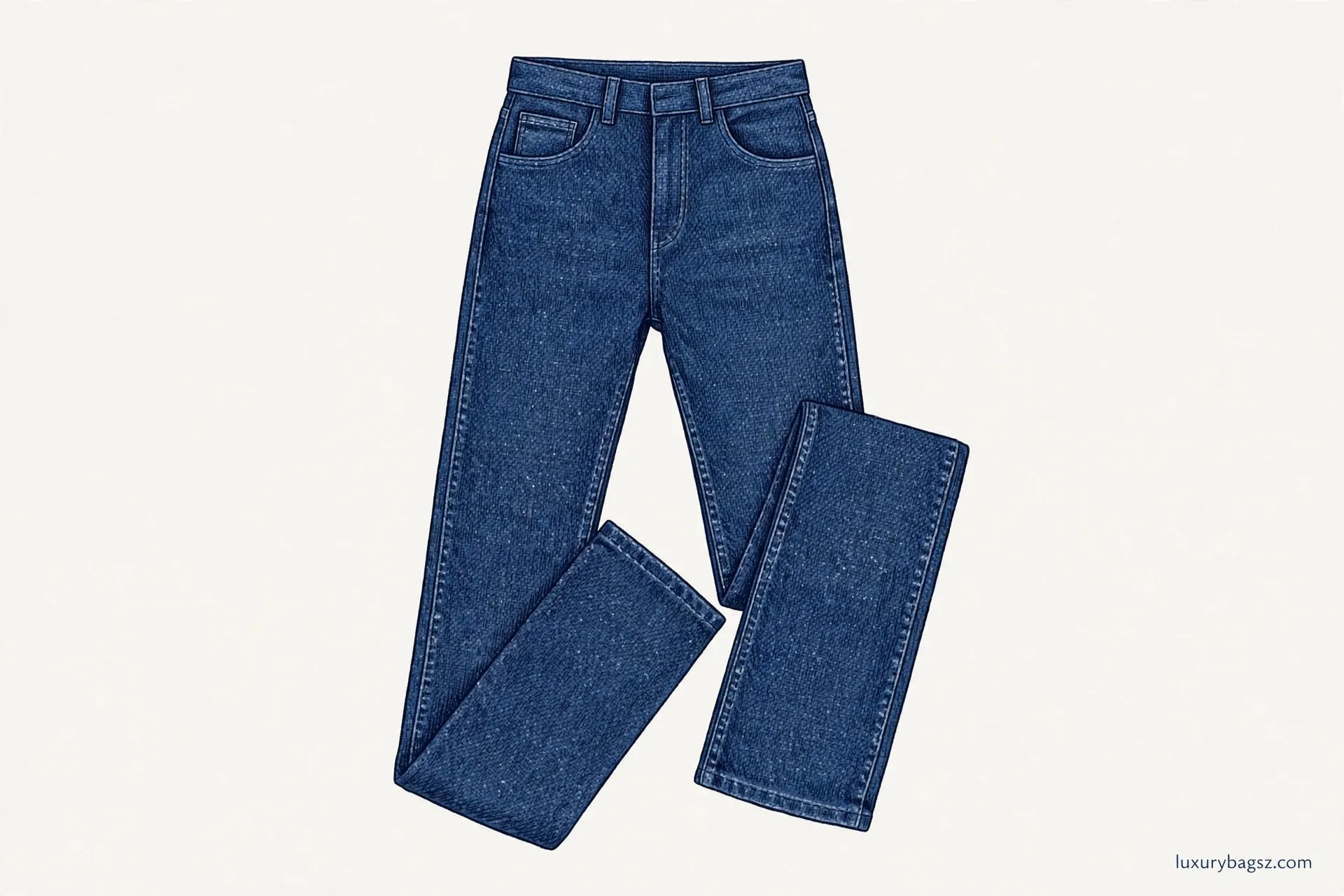
Slubby denim is denim woven with yarn that varies in thickness, creating an uneven, textured surface. Neppy denim is denim where short cotton fibres stick out from the surface, giving a snowy, speckled look. Both are deliberate textures, not defects, and both come from how yarn is spun and woven.
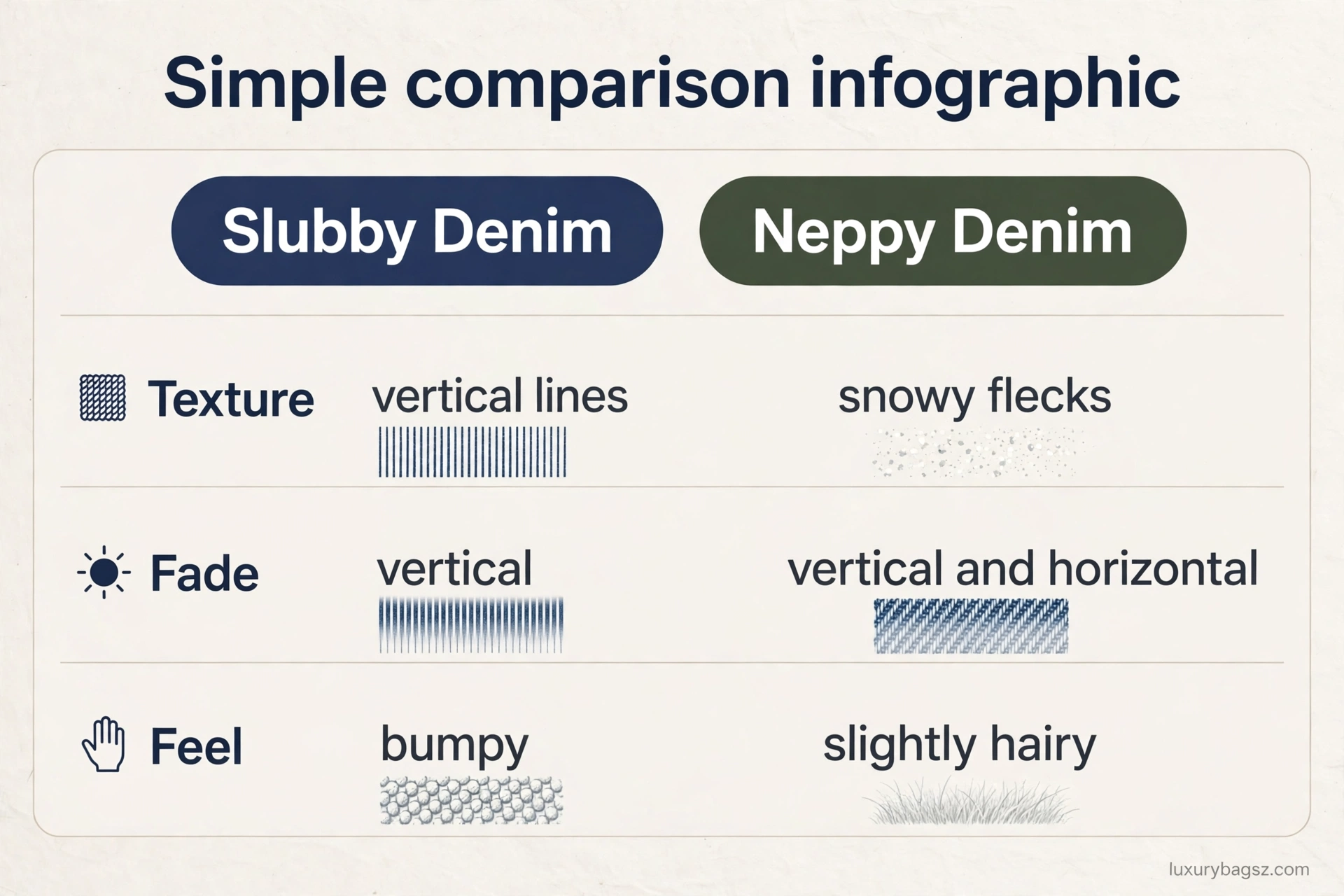
The simplest distinction is direction and surface. Slub shows as thick and thin lines running vertically along the fabric, since slub yarn is usually in the warp. Nep shows as tiny white flecks sitting on the surface, since broken fibres poke out of the weave.
Both textures affect fading. Slubby denim fades in strong vertical lines, while neppy denim fades both vertically and horizontally, with the white flecks becoming more pronounced over time. If you love character in your jeans, either texture rewards patience.
Key Takeaways
- Slub is uneven yarn thickness, usually in the warp, creating vertical texture and vertical fades.
- Nep is short fibres and knots that protrude from the surface, creating a snowy, speckled look.
- Loom chatter, low loom tension that shakes the loom, makes both textures more pronounced.
- Slubby denim is about yarn thickness; neppy denim is about fibre ends on the surface.
- Many Japanese artisan denims are both slubby and neppy at once, for maximum texture.
- Neither texture relates to weight: slubby denim can be light or heavy, and so can neppy denim.
What Slub Actually Is
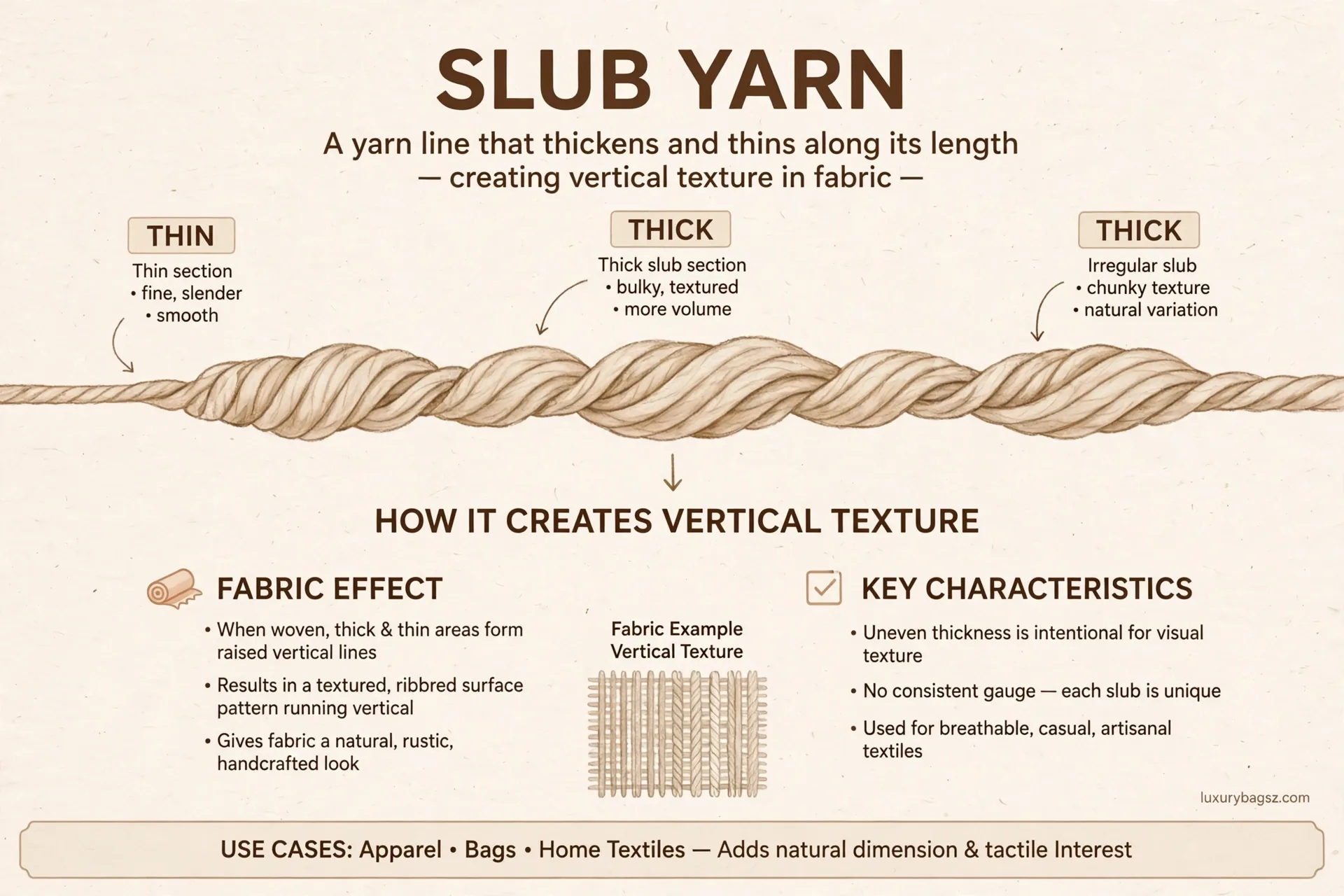
Slub refers to a lump or thicker place in yarn. In denim, slub yarn is spun so its thickness varies along its length, rather than staying perfectly even. Woven into fabric, those thick and thin parts create an irregular surface.
Slub is usually in the warp, the lengthwise yarns, which is why slub texture runs vertically down a jean leg. Hold a pair of slubby jeans to the light and you will see vertical dotted lines and uneven ridges, like a subtle code running through the indigo.
The feel varies with cotton. Some slubby denims feel soft and relaxed, especially with a loose, low-tension weave, while others feel rough and rugged. Softness depends on fibre and weave, not on slubbiness alone.
How Slubby Denim Is Made
Slub yarn starts at spinning, where the yarn is deliberately allowed to vary in thickness. Shorter and medium-staple cottons, often American or Australian, suit slub spinning, since their fibres create natural unevenness.
Weaving adds a second layer of texture through loom chatter. On vintage shuttle looms set to low tension, the loom literally shakes as it weaves, which disturbs the yarn further and makes the finished fabric even more irregular.
That combination, uneven yarn plus shaking loom, is why artisan slub denim looks almost handwoven. Each pair carries a slightly different texture, which is the point: no two pairs fade or feel exactly alike.

What Nep Actually Is
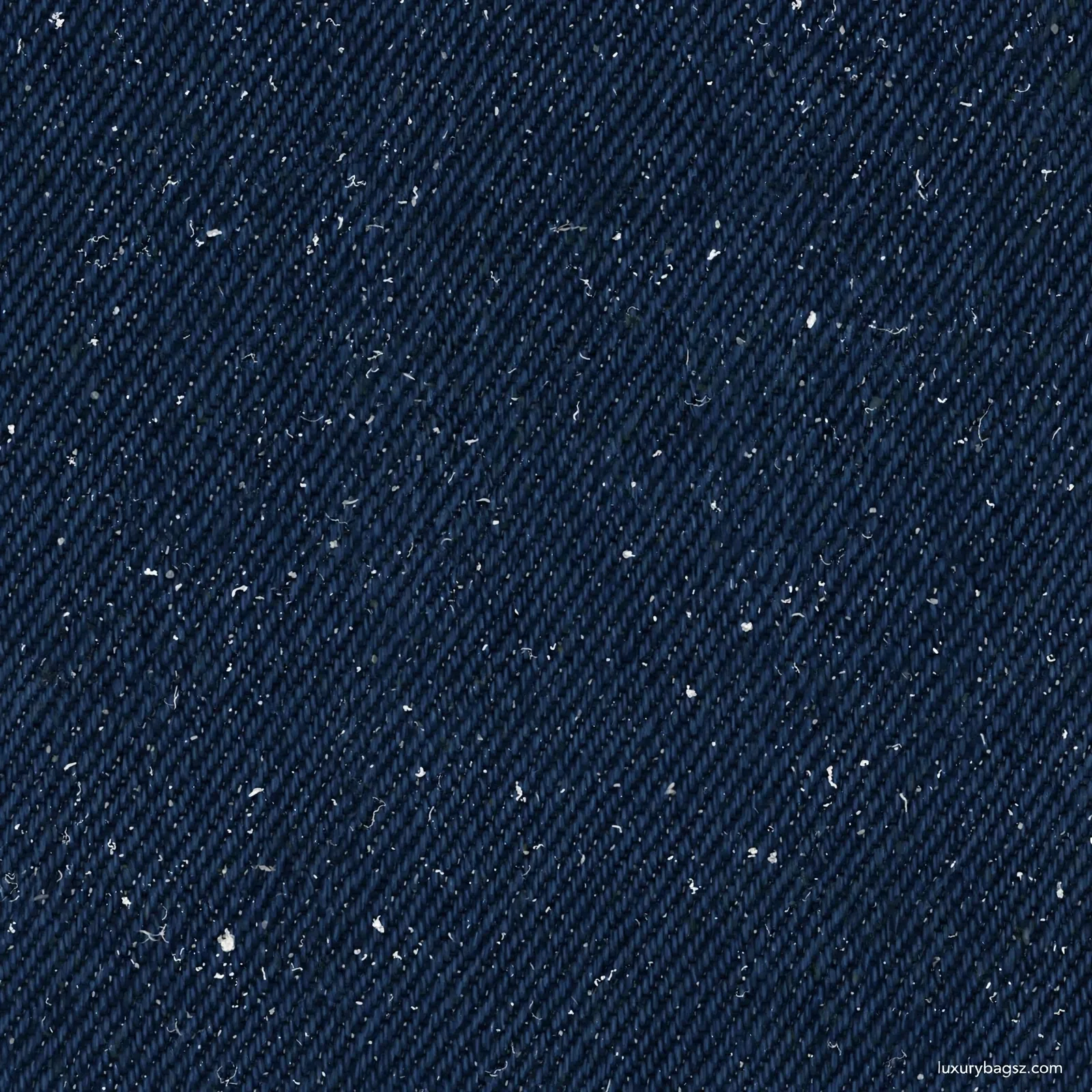
Nep, also spelled neps, refers to small knots and broken fibres in yarn that end up sticking out of the finished fabric. When a garment is neppy, cotton fibres extend and protrude from the main surface, rather than lying flat in the weave.
With a contrasting white weft, those protruding fibres look like fresh snow sitting on dark indigo. That snowy effect is the signature of neppy denim, and it becomes more pronounced with wear, as fibres work further out of the weave.
Nep is often confused with slub because both create texture, but the mechanism differs. Slub changes yarn thickness; nep adds fibre ends on top of the weave. One is a property of the yarn's body, the other of its loose ends.
How Neppy Denim Is Made
Nep starts during spinning, when knots and broken fibres are allowed to remain in the yarn instead of being combed out. Those knots survive weaving and sit on the fabric surface as tiny tufts.
Loom chatter helps here too. Low tension shakes and tangles the yarn as it weaves, agitating fibres and leaving them more exposed. The result is a fabric that looks slightly hairy or furry, even when new.
Some makers control nep precisely, aiming for a light dusting of white flecks, while others push it hard for a heavily snowed look. Japanese makers like Oni Denim are famous for combining heavy slub with heavy nep in the same fabric, such as their Crushed Concrete series.
Slubby vs Neppy: Side by Side
Look at the surface first. Slubby denim shows lines and ridges running up and down, with a bumpy, uneven hand feel. Neppy denim shows speckles and flecks sitting on the surface, with a slightly hairy feel.
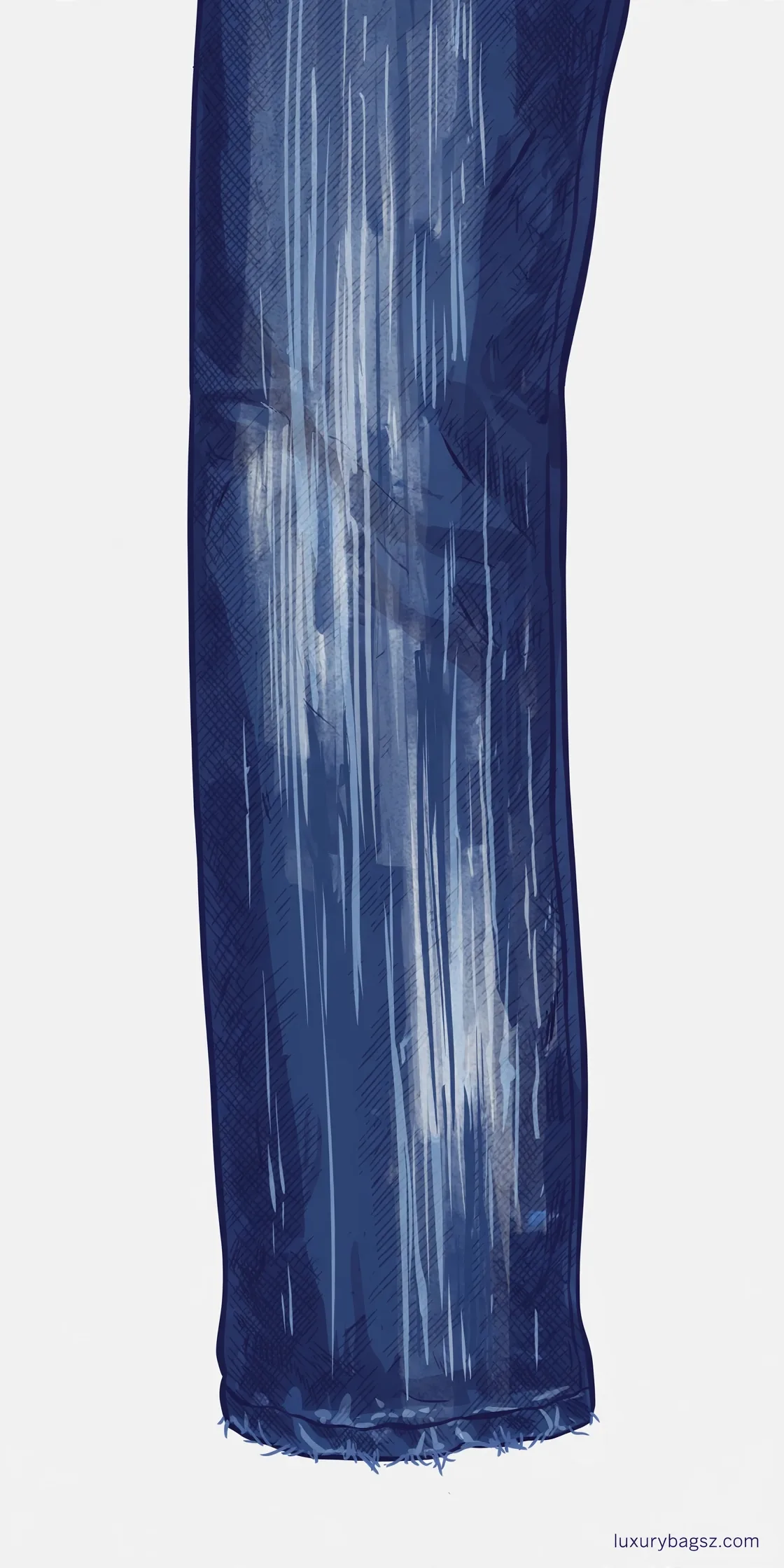
Look at the fade second. Slubby denim fades vertically, in a pattern Japanese enthusiasts call tate-ochi, or vertical falls, because the warp yarns wear unevenly. Neppy denim fades both vertically and horizontally, and its white flecks grow more visible as indigo wears away.
Look at the yarn third, if you can see a cut edge or a close-up photo. Slub yarn visibly thickens and thins; nep yarn looks fairly even but carries tiny knots and loose fibre ends. Together, those three checks separate the two textures reliably.
How Each Texture Ages and Fades
Slubby denim rewards long wear with dramatic vertical fading. After six months to a year, the thick yarn areas hold indigo longer, while thin areas fade faster, creating high-contrast vertical streaks that smooth denim cannot copy.
Neppy denim ages differently. Its flecks become furrier and more pronounced, giving jeans a softer, almost frosted look over time. Fading runs in both directions, so the overall pattern looks more mottled than striped.
Both textures soften with wear and washing, though low-tension slub denim often starts softer than stiff smooth denim. Wash sparingly if you want maximum fade contrast, and wash cold to slow indigo loss overall.
What to Buy, and What to Watch For
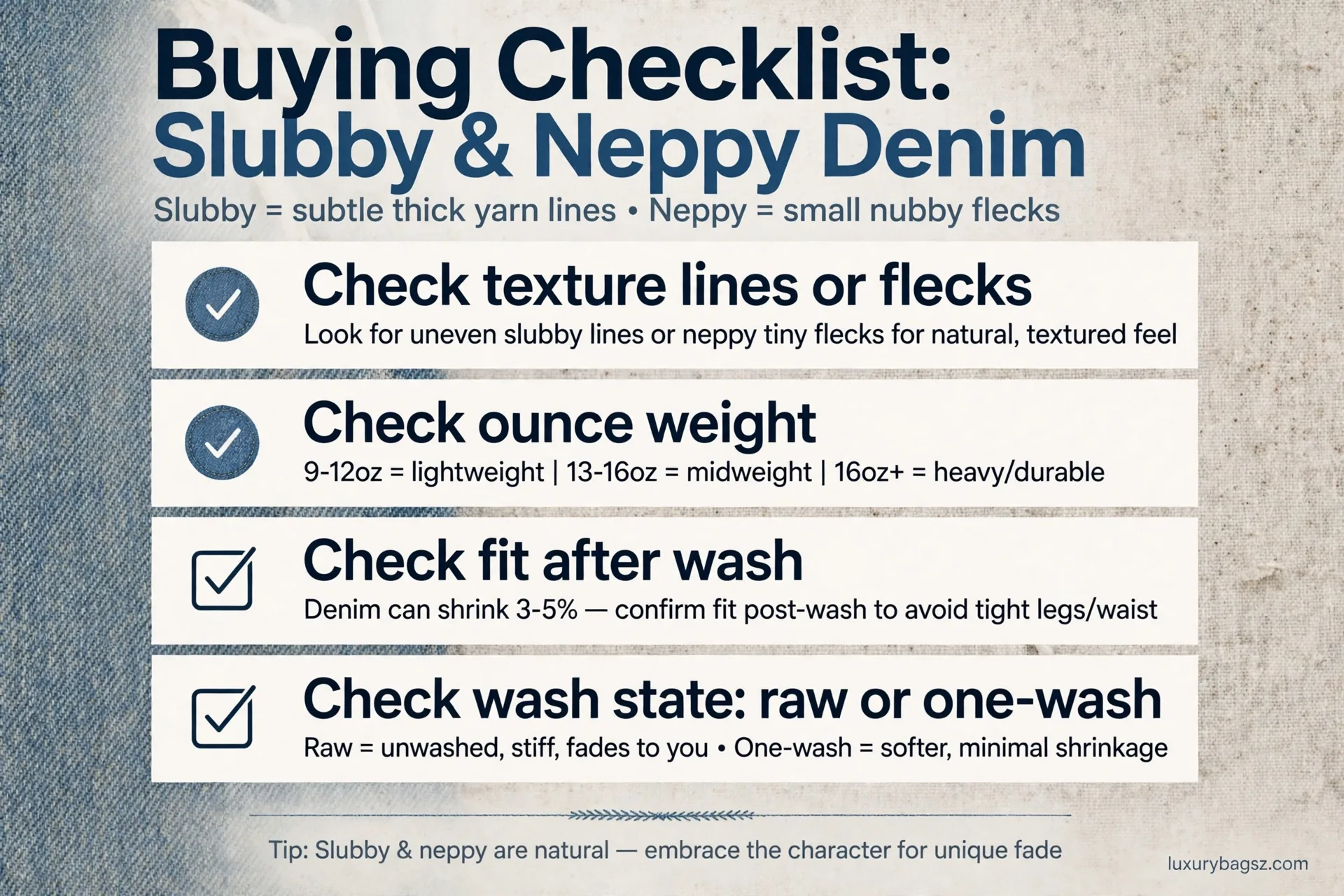
Decide which texture you actually like before buying, since photos can mislead. Slub reads as lines and ridges; nep reads as snow. If a listing says slubby but the photo shows speckles, it may be neppy, or both, and the seller may be using the terms loosely.
Check weight separately from texture. Slubby and neppy denims come in light summer weights and heavy 19 to 20 ounce winter weights alike. A heavy slub jean will still be stiff at first, while a light slub jean will drape from day one.
Check fit and wash state too. Many artisan slub and nep jeans are sold raw or one-washed, which affects shrinkage and initial stiffness. Buy the fit you want after the first wash, not the fit you see on the hanger.
Styling Slubby and Neppy Denim
Slubby denim suits casual, textured outfits where the jean is the star. Pair it with simple tees, plain shirts, and work boots, and let the vertical texture do the talking without competing patterns.
Neppy denim suits a similar casual role, but its snowy surface pairs well with darker, plainer tops that let the flecks stand out. Avoid pairing heavy nep denim with other heavily textured fabrics, or the outfit can look busy.
Both textures dress down automatically, so they suit weekends, workwear-inspired outfits, and creative offices far better than formal settings. For smarter days, choose a smoother, darker denim and save slub and nep for off-duty wear.
Frequently Asked Questions
What is slubby denim?
Slubby denim is denim woven with yarn that varies in thickness, usually in the warp, creating an uneven, textured surface with vertical lines and more interesting fades.
What is neppy denim?
Neppy denim is denim where short cotton fibres and knots protrude from the surface, creating a snowy, speckled look that becomes more pronounced with wear.
What is the difference between slub and nep?
Slub is uneven yarn thickness that creates vertical texture, while nep is loose fibre ends on the surface that create white speckles. Slub is about the yarn body; nep is about fibre ends.
What is loom chatter?
Loom chatter is the shaking of a shuttle loom set to low tension while weaving. It disturbs yarn further, making slub and nep textures more pronounced and irregular.
Does slubby denim fade differently?
Yes. Slubby denim fades mainly vertically, in a pattern called tate-ochi or vertical falls, because thick and thin warp yarns wear at different rates.
Does neppy denim fade differently?
Yes. Neppy denim fades both vertically and horizontally, and its white flecks become more visible over time, giving a furrier, frosted look.
Is slubby denim a defect?
No, in artisan denim it is deliberate. Makers spin uneven yarn and weave at low tension on purpose to create texture and unique fading, though in cheap fabric unevenness can signal poor quality control.
Can denim be both slubby and neppy?
Yes, and many Japanese artisan denims are. Makers like Oni combine heavy slub yarn with heavy nep fibres for maximum texture in a single fabric.
Is slubby denim heavier than normal denim?
Not necessarily. Slub refers to texture, not weight, so slubby denim ranges from light summer weights to heavy 20 ounce fabrics. Always check the ounce weight separately.
How should I wash slubby or neppy denim?
Wash sparingly, inside out, in cold water, and air dry to preserve fade contrast and texture. Frequent hot washing flattens texture and washes indigo out faster.
Conclusion
Slub and nep are the two textures that give artisan denim its character, and telling them apart is simpler than the jargon suggests. Slub is thick-and-thin yarn making vertical lines; nep is loose fibres making snow. Learn to spot both, choose the texture you actually like, check weight and wash state separately, and your next pair of jeans will fade into something no smooth denim can copy.