Stella McCartney Luxury and Eco-Friendly Fashion: How the House Proved Both Can Coexist
Fashion Without Compromise: The Stella McCartney Proposition
Stella McCartney's claim is unusually simple to state and unusually hard to copy: luxury fashion that has never used leather, fur, feathers or exotic skins, from the day the house launched in 2001 to today. The short answer to whether it works is yes, commercially and creatively. The Falabella became a genuine It bag, the tailoring sells at full luxury prices, and the house now leads the industry on next-generation materials. This guide explains how that was built: the founding promise, the materials that replaced leather, the proof products, the honest limits, and what a thoughtful buyer should actually purchase first.
Key Takeaways
- Stella McCartney launched in 2001 as the first luxury house never to use leather or fur.
- The Falabella, launched in 2009, proved a vegan bag could become a true It bag.
- Material innovations include Mylo from mushrooms, plastic-free MIRUM and grape-based VEGEA.
- Recent collections report very high shares of responsible and recycled materials.
- Honest limits remain, including plastic-based vegan fabrics in parts of the range.
- Buy core, verifiable pieces first: a Falabella, sharp tailoring or a vegan trainer staple.
The Founding Promise: No Leather, No Fur, Ever
When Stella McCartney launched her house in 2001, the industry assumption was that luxury meant animal materials. She rejected that from day one, and the ban has never been softened for a bestseller. The stance came from upbringing as much as strategy. Raised vegetarian by Paul and Linda McCartney, she treated animal-free design as a design brief, not a marketing line added later. That consistency is the brand's real asset. Shoppers do not have to decode labels line by line: if it says Stella McCartney, no leather, fur, feathers or skins were used, including in glue. The contrast with the wider industry is stark, as our history of fast fashion shows. Volume-led fashion externalises its costs; this house built its name on refusing to.
The Materials That Replaced Leather
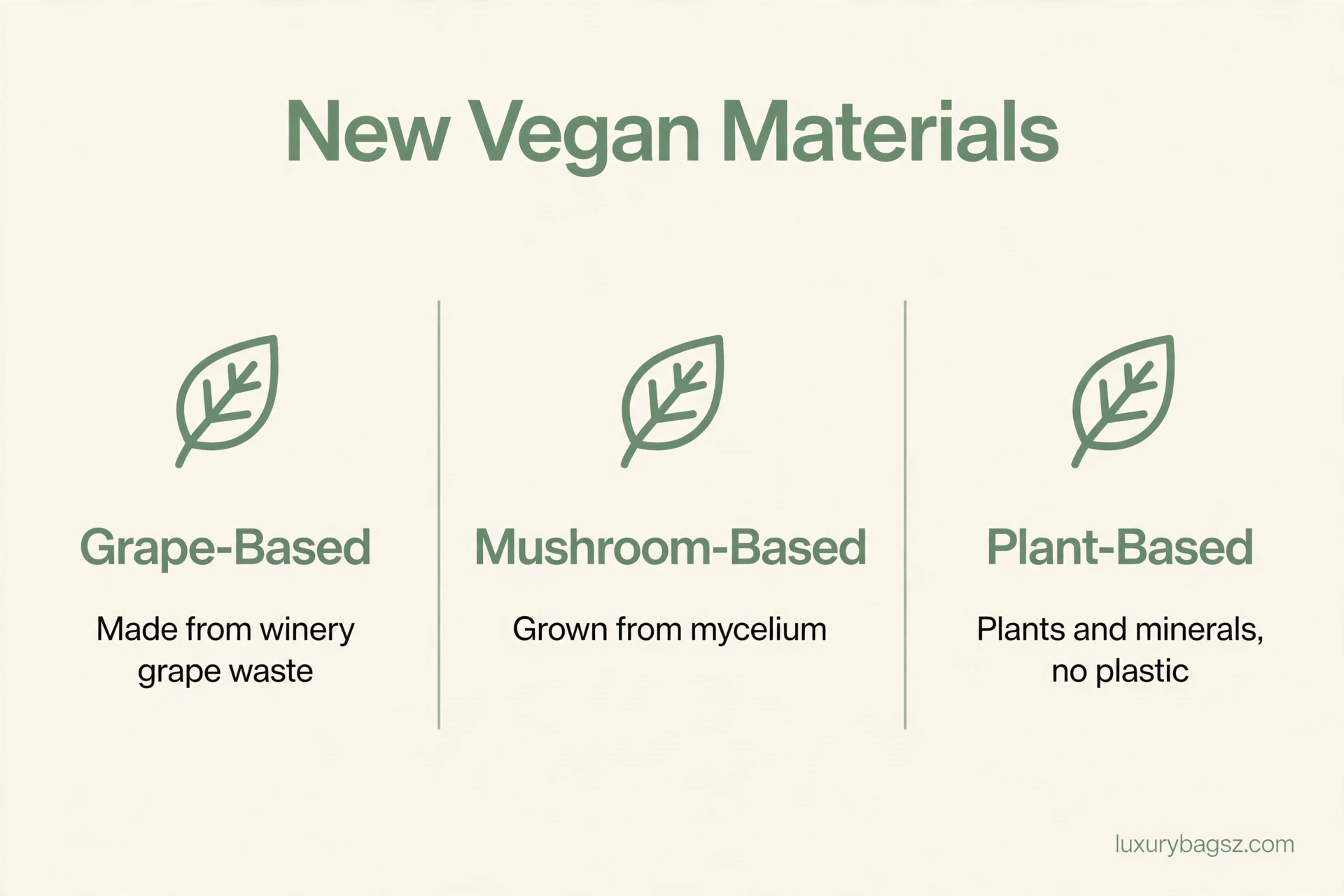
Replacing leather credibly took two decades of material work. The workhorse is Shaggy Deer, a grained vegan fabric with a matte, suede-like feel, backed by Alter Mat on smoother styles. The headline innovations go further. Mylo, developed with Bolt Threads, is grown from mushroom mycelium, and the house made the first commercially available Mylo handbag with the Frayme. MIRUM, made with Natural Fiber Welding, is a plastic-free, plant-based alternative, used on the first luxury runway accessories of its kind. VEGEA turns grape waste from Italian wine-making into a leather alternative. Supporting fibres include GOTS-certified organic cotton, forest-friendly viscose, ECONYL regenerated nylon and recycled metals. Our sustainable materials in luxury fashion guide compares these fibres in depth. Later additions widened the palette further: UPPEAL from apple waste, Bananatex from abaca banana fibres, and Kelsun yarn spun from seaweed. Each began as an experiment and reached shoppers through this house first.
The Falabella: Proof That Vegan Could Be Desirable
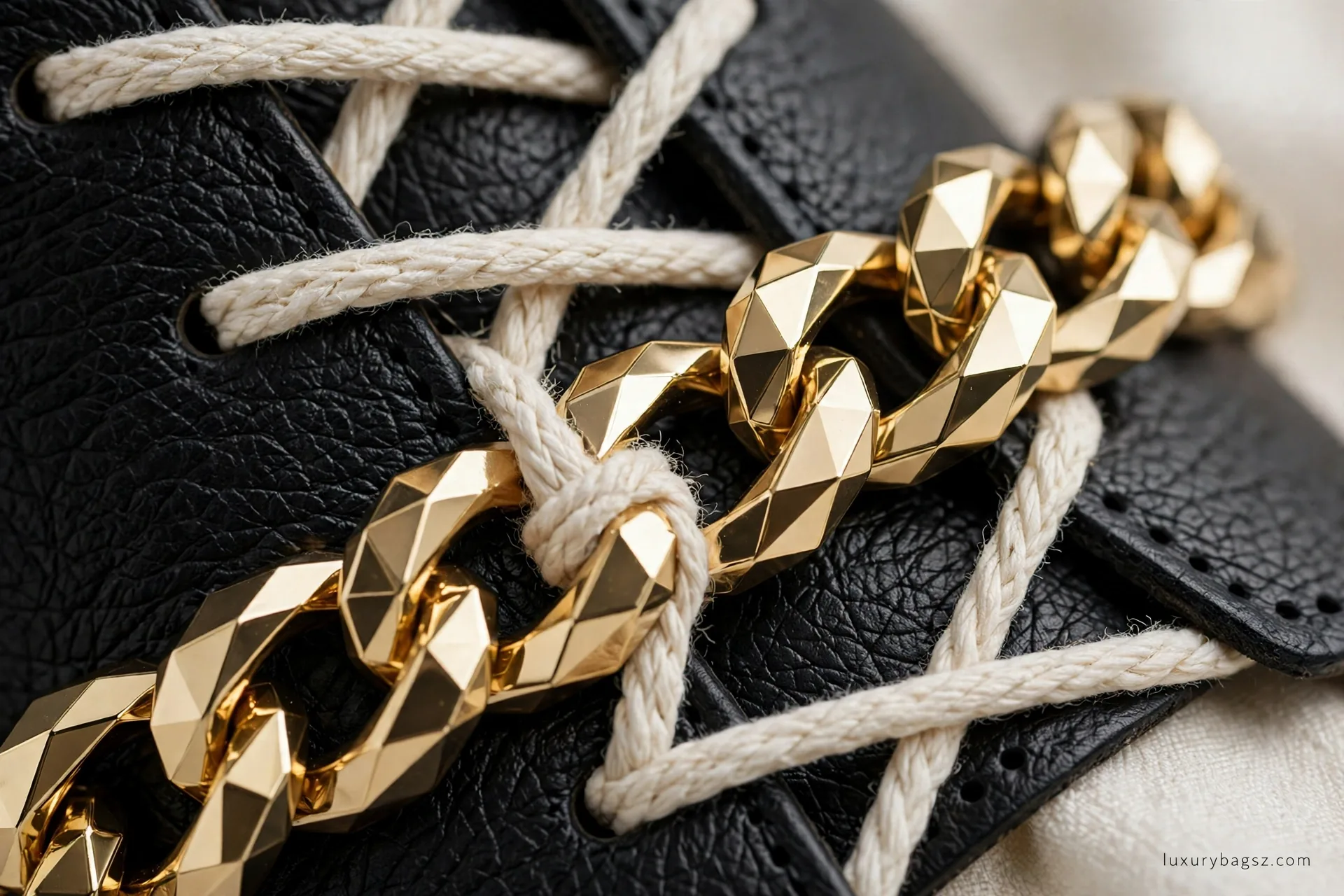
Materials alone persuade nobody at luxury prices. The Falabella, launched in 2009 and named after the designer's favourite miniature horse breed, was the product that proved desire could follow ethics. Its formula was distinctive rather than apologetic: a slouchy body, a diamond-cut chain hand-laced with organic cotton cord, and a silhouette that worked from school run to red carpet. The chain alone makes the point about craft. The house says each chain is laced by hand through individually punched holes, taking over three hours, and linings give ocean plastics a second life. Our Stella McCartney Falabella tote guide covers sizes and styles. Sixteen years on, the bag remains a bestseller, which is the only market proof that matters.
Beyond Bags: Tailoring, Knitwear and the Wider Wardrobe
The eco-friendly claim would be thin if it stopped at handbags. Tailoring is the house's second pillar, with sharp, Savile Row-influenced cuts made from responsible wool and forest-friendly fibres. Knitwear leans on recycled cashmere and responsible wool from traceable sources, which the house notes carries a far lower impact than virgin cashmere. Organic cotton anchors shirting and denim. Recent seasonal fact sheets report collections made entirely or almost entirely from responsible materials, including deadstock fabrics repurposed through LVMH's Nona Source platform. Footwear tells the same story, from the first vegan Stan Smith trainers with adidas to platform styles in bio-based materials. The wardrobe is a system, not a single hero product. The adidas by Stella McCartney line deserves credit here too. It carried the same animal-free rules into performance clothing at accessible prices, proving the principles scale beyond the luxury runway.

The Honest Limits Every Buyer Should Know
Credibility requires admitting the gaps. Some vegan leathers in the wider range have historically relied on polyurethane coatings, which are plastic-based and carry their own footprint. The house addresses this directly by shifting volume towards plant-based and plastic-free options such as MIRUM, VEGEA and UPPEAL, made from apple waste, but the transition is a journey, not a finished state. Prices are a second limit. Innovation at small scale costs money, so these pieces sit at true luxury levels, and sustainability messaging should never be used to excuse weak construction. Judge each piece on its merits. Our leather types guide helps here, and our piece on why upcycling clothes is taking off shows the wider repair-and-reuse culture this house supports.

Milestones That Built the Reputation
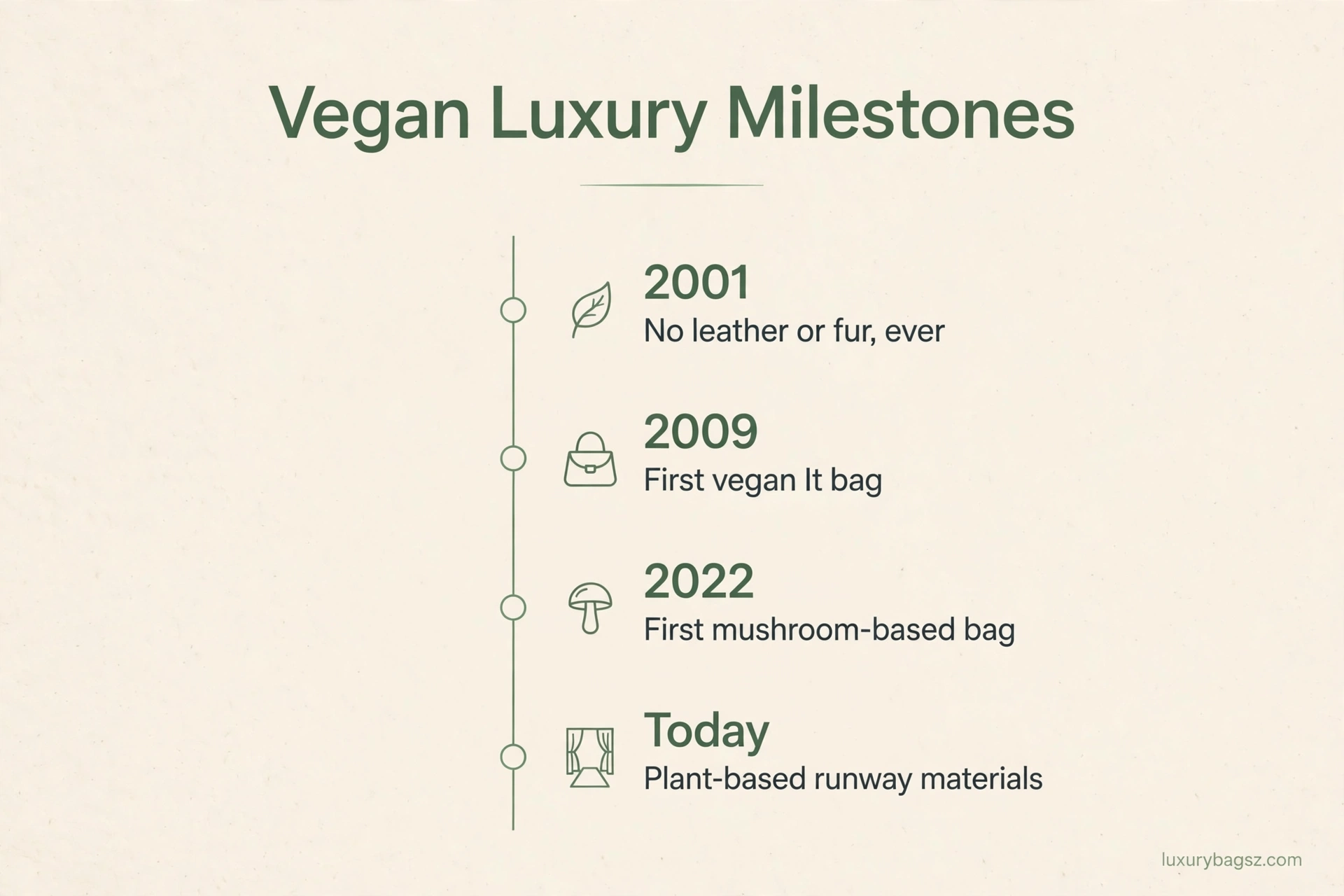
The timeline explains the trust. The house went PVC-free early, launched Fur Free Fur as a statement material, and released the first vegan Stan Smith trainers with adidas in the late 2010s. In the early 2020s came the first garments and first commercially available handbag made from Mylo, followed by grape-based VEGEA pieces and the first luxury bag crafted from plant-based MIRUM. Air-purifying Airlite coatings on Falabella bags and sequins made from plant-based Sequinova show the experimentation continuing into decoration, not just base materials. The house has also committed to net zero by 2040 under science-based targets. Milestones matter less than the pattern: each year adds a material the rest of the industry later adopts. Its Sustainable Market showcases made the supply chain visible, presenting innovators stall by stall so buyers could meet the makers behind the fibres. Transparency became part of the show, not a footnote to it.
Buying Well: What to Choose First
Start with a piece you will use weekly. A Falabella in black Shaggy Deer is the classic entry: versatile, repairable in spirit through careful use, and strong on the pre-owned market. Tailoring is the second smart buy. A well-cut blazer in responsible wool outlasts trend pieces and shows the house's design skill at its purest, beyond the sustainability story. On the pre-owned market, check chain weight, stitching and lining as you would with any luxury bag, and favour complete sets with dust bags. Vegan fabrics wipe clean and store well with basic care. Buy fewer, better pieces and keep them in use. That habit, more than any single material, is what eco-friendly luxury actually asks of its customers. Repairs and resale extend the story further. The house has supported resale partnerships for years, and a Falabella that passes through three owners has a far smaller footprint per wear than three new bags.
What This House Changed for the Whole Industry
The deepest impact is the example set for competitors. Once a vegan bag had It status, every major house had to answer questions about leather alternatives it had previously ignored. Material start-ups gained a luxury launchpad. Mylo, MIRUM and VEGEA all reached consumers first or fastest through this house's runway, which de-risked them for other brands. Regulators and retailers now ask for traceability that this house practised early: certified fibres, audited suppliers and published impact reporting each season. You do not have to buy the whole wardrobe to support the shift. Buying one well-made, animal-free piece, and keeping it for years, is the consumer version of the same idea. The standard has also changed what shoppers ask every brand. Where was this made, from what, and by whom are now ordinary luxury questions, and houses that cannot answer them look dated beside one that publishes its data.
Frequently Asked Questions
Has Stella McCartney really never used leather or fur?
Yes. Since launching in 2001, the house has never used leather, fur, feathers or exotic skins, and it states that its products are vegan down to the glue.
What is the Falabella and why does it matter?
Launched in 2009, the Falabella is the original luxury vegan It bag, with a hand-laced diamond-cut chain. Its lasting success proved animal-free bags could lead the market.
What is Mylo?
Mylo is a leather alternative grown from mushroom mycelium, developed by Bolt Threads. Stella McCartney made the first commercially available Mylo handbag, a version of the Frayme.
What are MIRUM and VEGEA?
MIRUM is a plastic-free, plant-based leather alternative made with Natural Fiber Welding. VEGEA is made from grape waste from the Italian wine industry. Both appear in recent collections.
Are all Stella McCartney materials plastic-free?
Not yet. Some vegan fabrics have used polyurethane coatings, and the house is shifting towards plant-based, plastic-free options. It discusses this openly in its sustainability reporting.
Is Stella McCartney clothing fully sustainable?
Collections now report very high shares of responsible materials, including organic cotton, recycled fibres and deadstock fabrics. No large fashion house is impact-free, and this one publishes its data.
Why do Stella McCartney pieces cost luxury prices?
Italian handcrafting, small-scale innovative materials and certified supply chains cost more than conventional production. Buyers are paying for construction and traceability, not only a label.
What should I buy first from the house?
A black Falabella for bags, or a tailored blazer for clothing. Both are core, versatile and long-lived, and both hold up well on the pre-owned market.
How do I care for vegan Stella McCartney pieces?
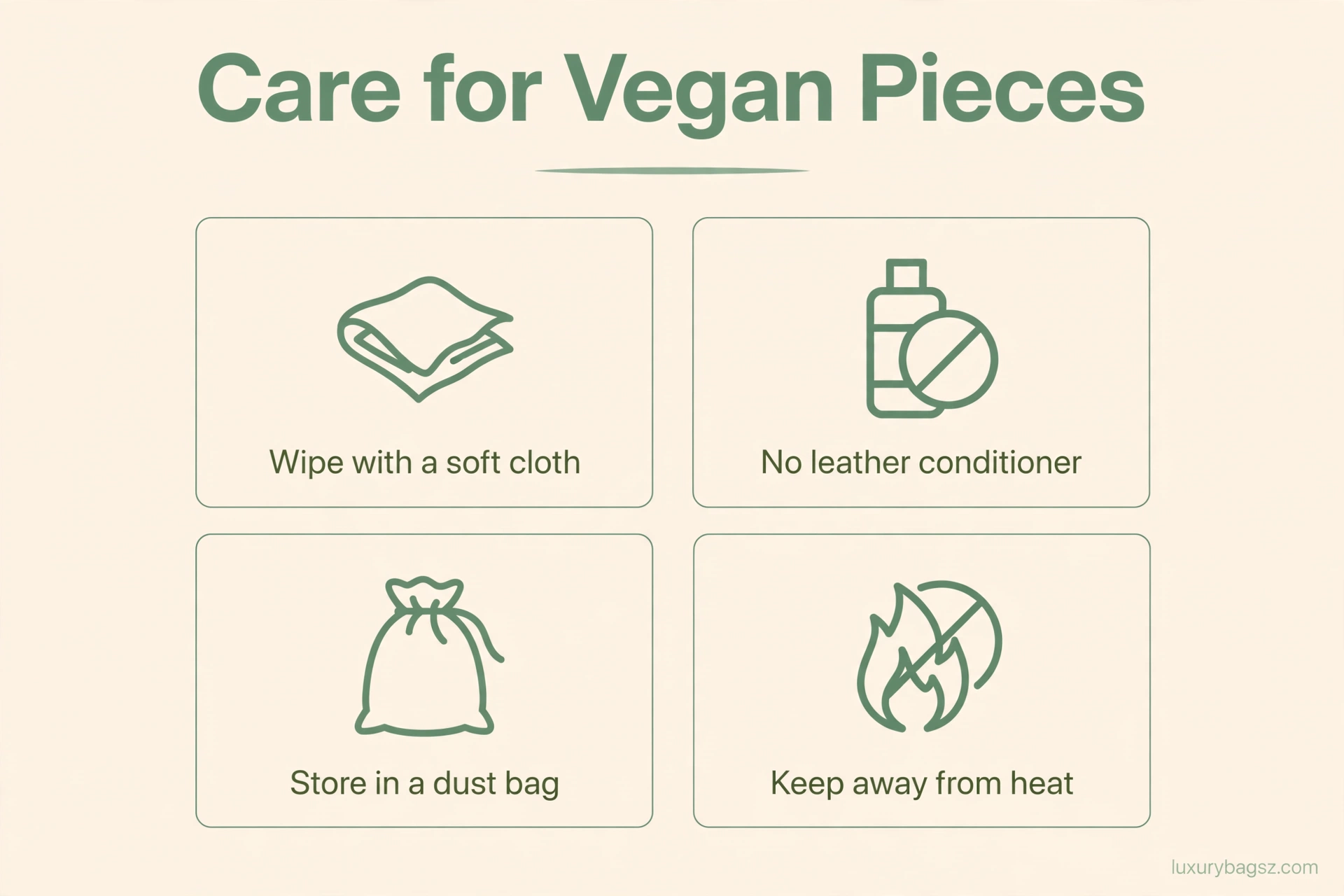
Wipe bags with a soft, dry or slightly damp cloth, avoid leather conditioners, and store pieces stuffed in dust bags away from heat and direct sun.
Has the house influenced other luxury brands?
Yes. Its material partnerships and the Falabella's success pushed rivals to trial leather alternatives and publish traceability data, shifting expectations across luxury fashion.
Summary: Luxury That Treats Ethics as a Design Brief
Stella McCartney's achievement is not a single bag or fibre. It is twenty-five years of refusing the industry's easiest assumption, and building the materials, products and proof to make that refusal desirable. For buyers, the guidance is simple: choose core pieces, check construction as rigorously as with any luxury house, and keep what you buy in use for years. That is eco-friendly fashion working as it should.