Luxury Sale Picks: How to Shop Seasonal Sales Without Wasting a Pound
Shop the Sale Like a Planner, Not a Sprinter: Sale Picks in Brief
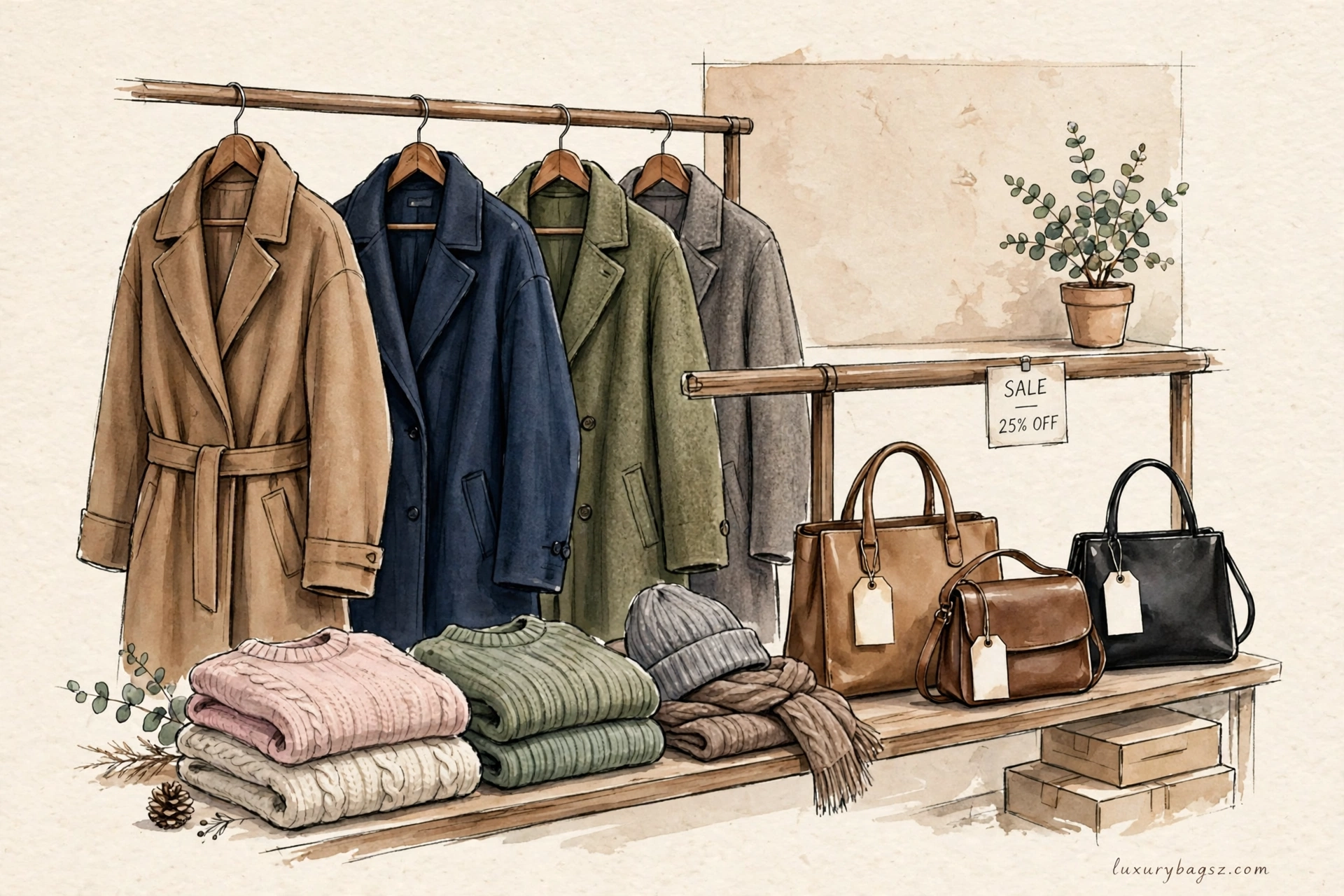
The best luxury sale picks are planned before the sale starts: classic coats, knitwear, boots and plain leather bags, bought at the second markdown. First markdowns reward speed on rare sizes; final reductions reward patience on common ones. Knowing which game your piece plays decides what you should pay. This guide covers timing, discount depth and category value, with the traps that turn a 40 percent saving into a wardrobe ornament you never wear.
Key Takeaways
- Write the list before the sale; discounts should follow your plan, not write it.
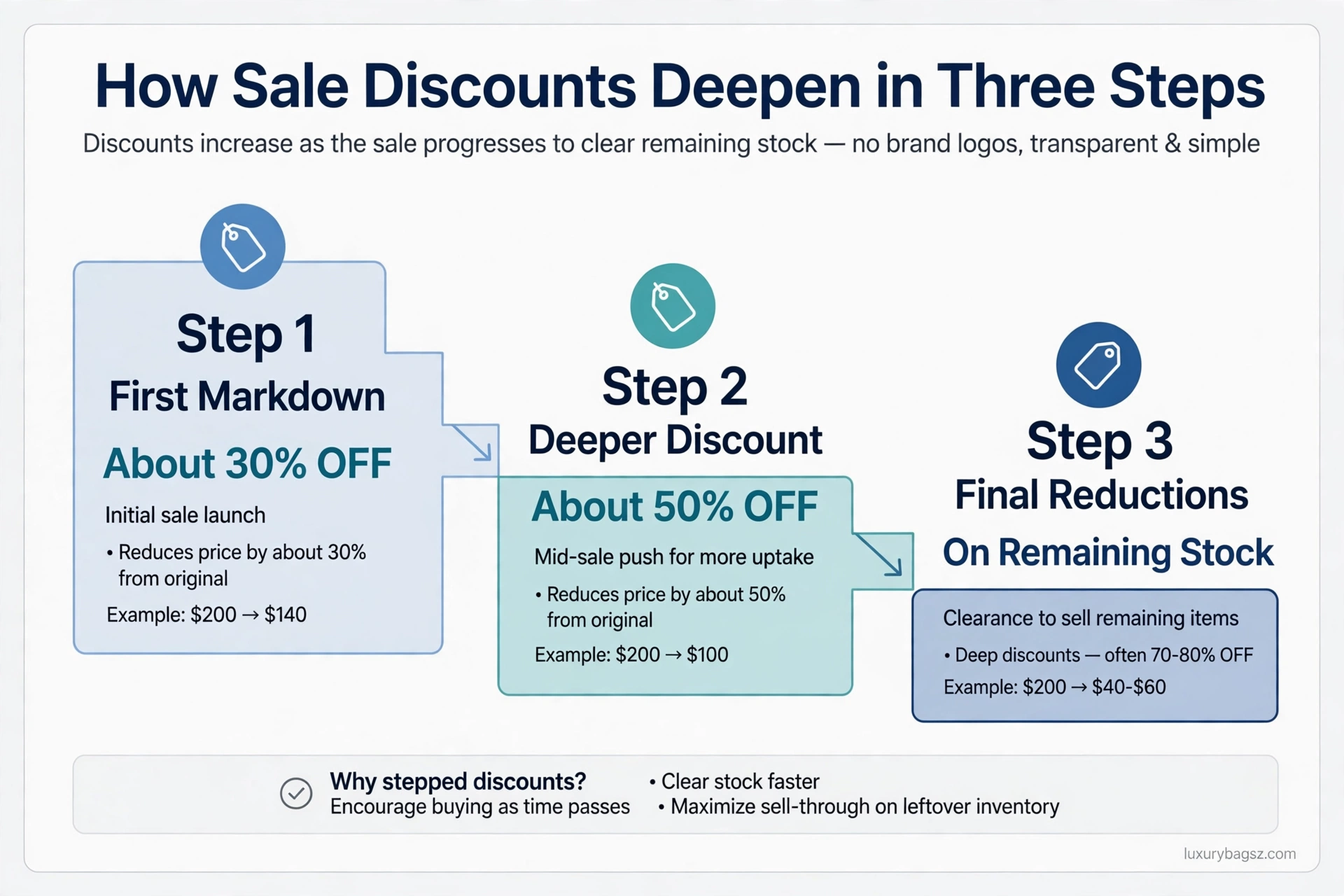
- First cuts are typically around 30 percent; deeper cuts follow for leftover stock.
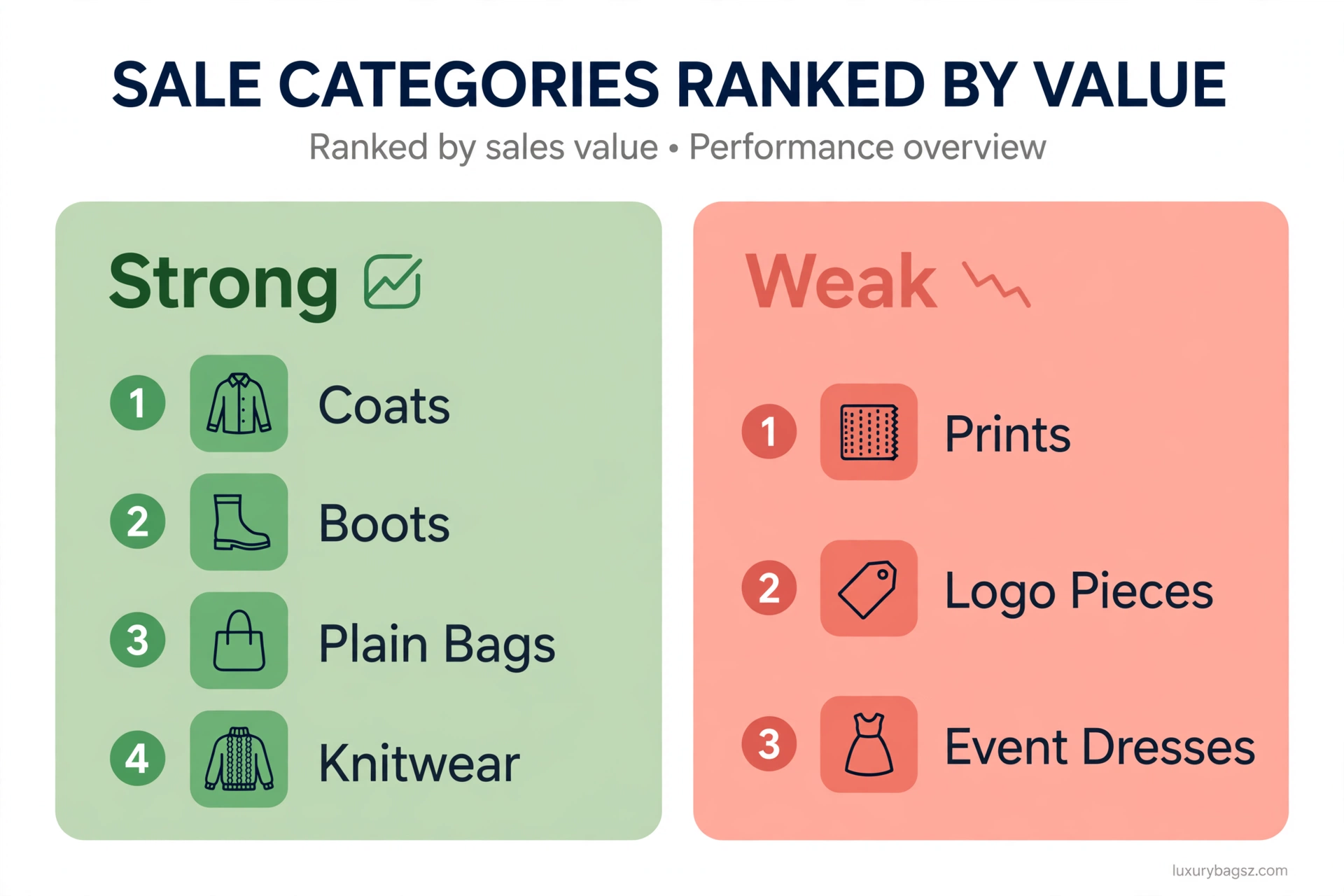
- Coats, boots, knitwear and plain bags hold value best among sale buys.
- Trend shapes and loud colours are cheap for a reason: they date fastest.
- Check returns terms on sale goods; final-sale rules change the risk completely.
- Compare sale price against pre-owned price before paying for anything big.
The Planner's Rule: A List Written in Advance
Every good sale outcome starts a week early, with a short list of named pieces, sizes and a ceiling price for each. Vague intentions are what sales eat. Rank the list. The top two items justify full attention on day one; the rest are opportunistic and should only be bought at deeper cuts. Keep the list on your phone with your sizes in each house you target. Luxury sizing varies enough that a bargain in the wrong fit is simply a loss. If a piece was not wanted at full price, a discount does not create the want. It only lowers the price of a mistake you were already avoiding.
Timing: How Discounts Deepen Across a Sale
Most luxury sales open with cuts around 30 percent, move to around 40 or 50 percent, and end with final reductions on what remains. Private previews and client lists get first sight of stock, which matters for coats and core sizes that rarely reach the final round. Plan your season around this rhythm with our seasonal shopping edits, so sale buying plugs gaps instead of duplicating them. The deepest cut is only a bargain if the piece survives your list test. A final-reduction trend piece at 70 percent off is still money out for most wardrobes.
Give the list a shape: item, colour, size, and the most you will pay. "Black ankle boots, 39, up to £300" survives contact with a sale rail; "boots, maybe" does not. The ceiling matters as much as the item — a perfect piece at the wrong price is still the wrong purchase, and deciding the number at home, calmly, is what keeps the sale from deciding it for you.
Categories That Hold Value in the Sale
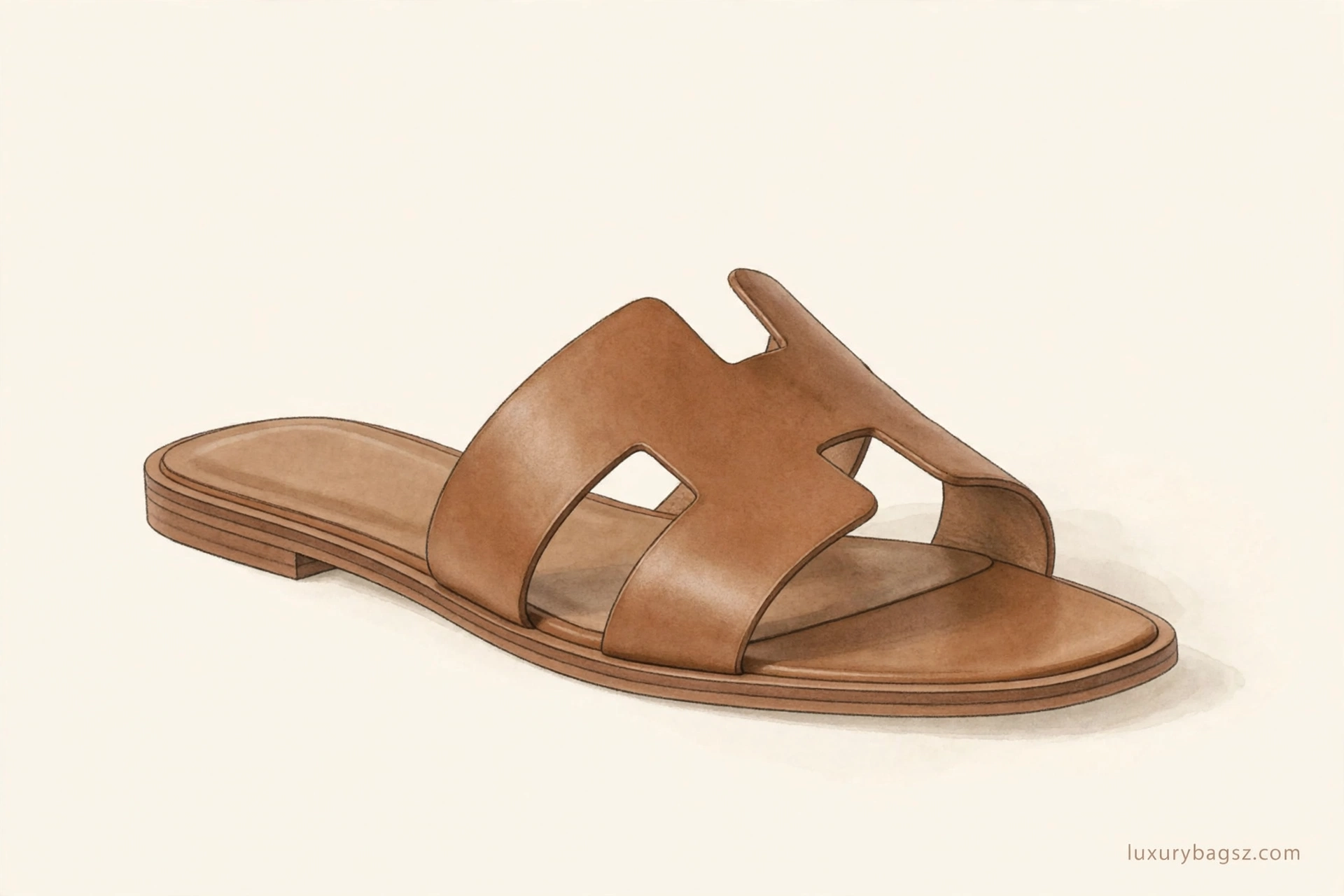
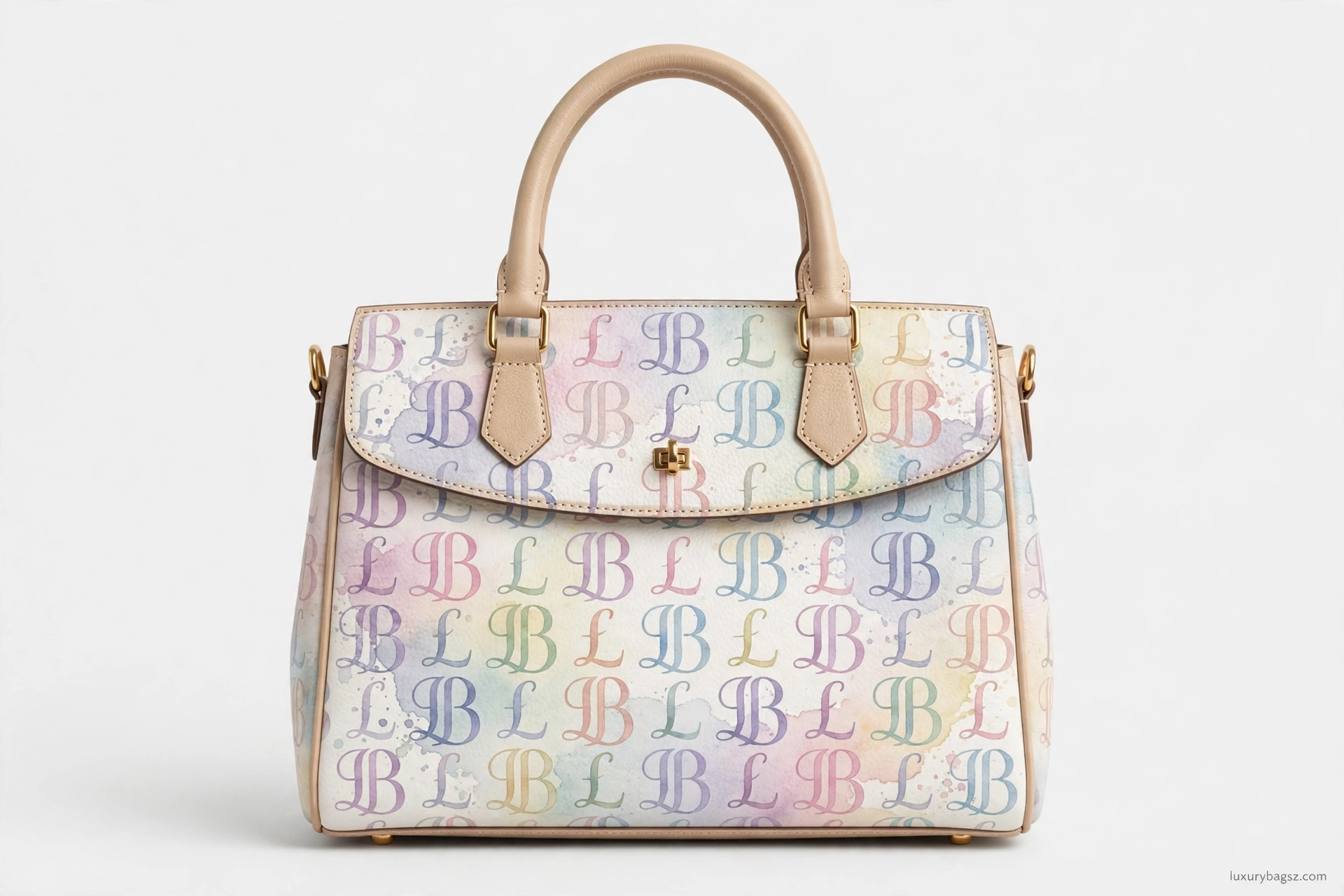
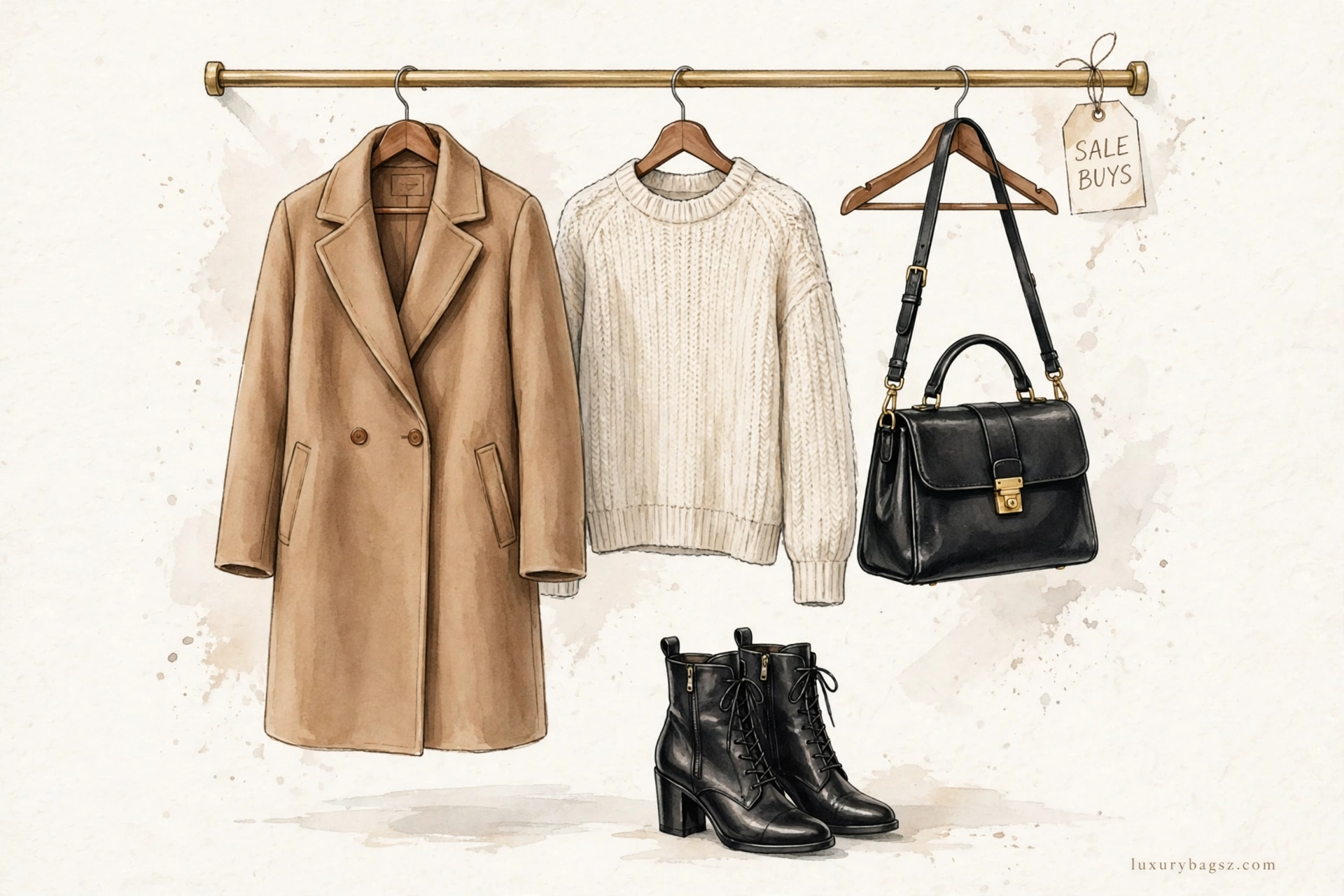
Coats lead: a classic wool coat at a second markdown is the single most reliable sale buy in luxury, worn for years at a fraction of its first price. Boots and plain leather bags follow, especially in black, tan and chocolate. Knitwear in plain colours and fine gauges also holds up well. Jewellery and watches appear in sales less often and usually through retailer events rather than house markdowns, so patience and verification matter more. At the weak end sit prints, logos, runway shapes and event dresses. They fill sale rails precisely because full-price buyers passed on them. Footwear sits in the middle of the value table. Classic pumps, loafers and boots in plain leather reward sale buying; seasonal colours and extreme heel shapes do not. Small leather goods are the quiet overachievers of any sale: cardholders, pouches and belts in core colours, bought at a cut, get daily use for years.
Access is part of timing. Many houses and department stores open their sales to registered clients a day or two before the public launch, and the good sizes vanish in that window. Being on the list costs nothing but a purchase history and an email address. If you buy from a retailer anyway, join its programme before sale season, not during it.
Where to Hunt: Retailers, Outlets and House Sales
Multi-brand retailers run the deepest and broadest sales, and their final rounds are where patient buyers find core pieces at startling prices. House boutiques discount more quietly, often through client outreach. Being known to a store, even as a small regular buyer, changes what you are shown. Outlets sell a mix of past-season stock and made-for-outlet lines. Learn to tell them apart by labels, lining quality and hardware weight in hand. Online, filter by size and category before browsing. Sale pages are designed to wander you into extras; filters keep the list in charge.
Shoes and knitwear are the two categories where sales genuinely change the maths. Both wear out on a schedule, both are made in deep size runs that fragment by sale time, and both are excluded from the icon pricing that protects bags. A planned buyer replaces worn knitwear at 40% off as routine — the same purchase, unplanned in October, costs full price.

Sale Price vs Pre-Owned Price: Always Compare
Before paying a sale price for a big piece, check what the same item costs pre-owned in excellent condition. The gap is often smaller than expected. Our explainer on how luxury consignment works shows why nearly-new pieces reach resale so quickly after each season. If pre-owned wins by a wide margin and condition is verified, the sale premium buys little beyond a shopping bag and a first-owner feeling. If the gap is narrow, buy new in the sale: full set, full guarantees and no condition questions are worth a modest premium every time.
Outlet pricing needs translating. Some outlet stock is past-season boutique merchandise, and some is made for the outlet channel at a lower specification, with a "compare at" price that never existed in a boutique. Check the quality in your hands — cloth, lining, hardware — rather than trusting the ticket. A genuine transfer at 40% off beats a made-for-outlet piece at a fantasy 70%.
The Traps That Fill Wardrobes With Regrets
Wrong-size optimism is the classic trap. Tailoring fixes hems and waists, not shoulders, rises or shoe lasts, so know what can and cannot be altered. Almost-right colours are the second trap. A coat in a shade you must style around will lose to the right colour every morning, whatever it cost. Our finds in designer bags under 1000 show the safer pattern: plain shapes and colours that join a wardrobe without conditions. Final-sale terms are the third trap. On final sale, fit and condition checks must happen before money moves, because there is no way back. Basket pressure is a manufactured trap of its own: countdown timers and low-stock warnings push speed precisely where judgement should slow down. A cooling rule helps. Leave any unplanned sale find for a full day where the terms allow it. Most traps fail the overnight test; genuine finds survive it.
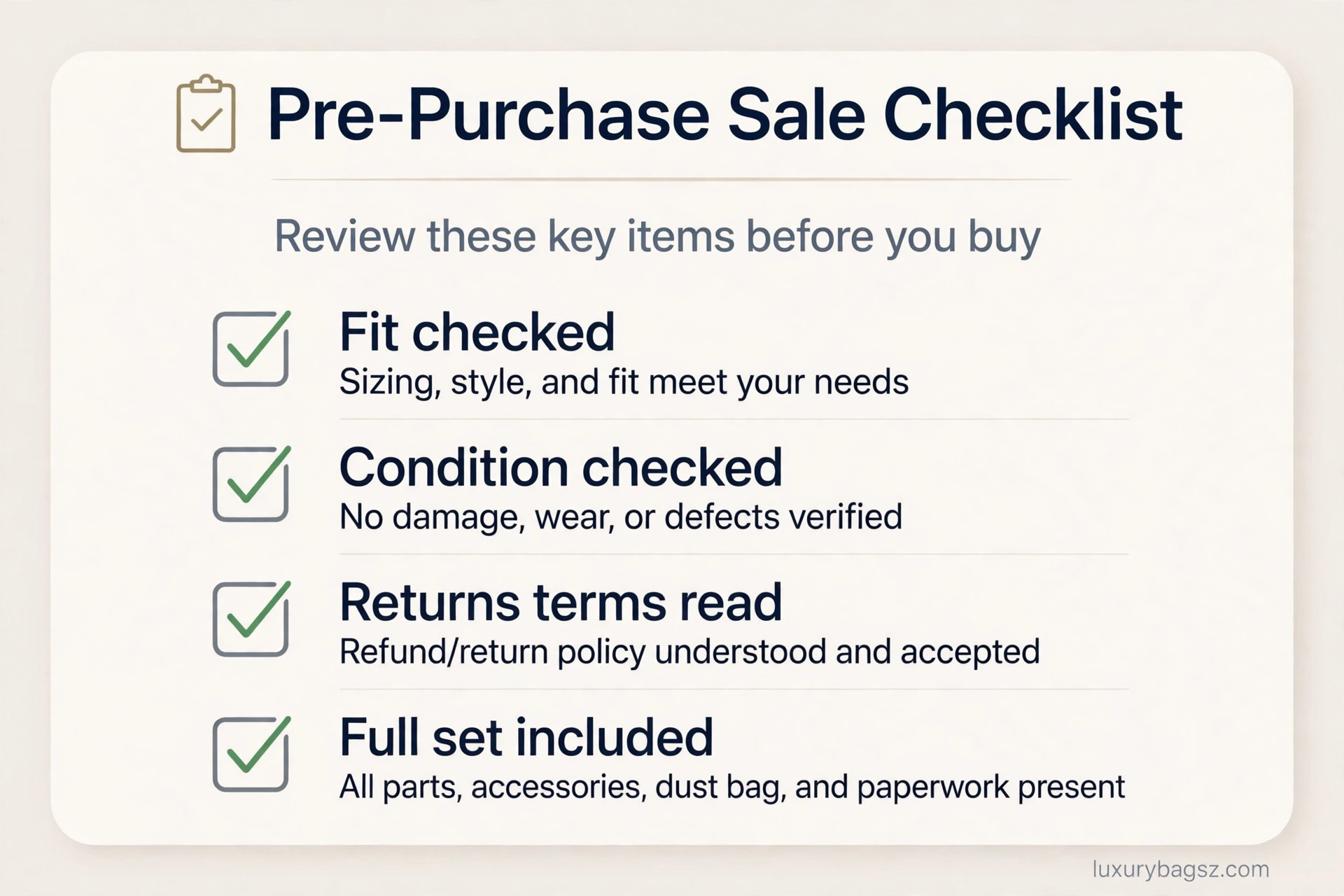
Read the sale terms as carefully as the price. Final-sale and exchange-only conditions cluster at the deepest discounts, precisely where sizing guesses get expensive. A returnable piece at 40% off can be better value than a final-sale piece at 60% if there is any doubt about fit. Note the terms on your list next to each target, so the decision is already made at the till.
Checks Before You Pay, Every Single Time
Inspect sale stock as strictly as full-price stock: seams, zips, corners, soles and any shop-soiling from weeks on a crowded rail. Use the grading language in pre-owned luxury condition grades explained to judge display wear honestly before deciding. Confirm the full set: dust bag, box, cards and spare buttons or straps should all be present on bags and tailored pieces, even in the sale. Try on with the clothes the piece must serve. A knit judged over a thin top behaves differently over the shirts it will actually meet.
Learn your sizes before you need them. An afternoon in store in a quiet month, trying the brands you actually buy, writes the size column of your list for years. Sale shopping then becomes ordering rather than gambling — you know the 39 in one house and the 40 in another, and you can buy in the first hour while your size still exists.
Building a Year of Sale Buying
Two main sales and a couple of retailer events cover most needs. Plan the year's list across them rather than spending the whole budget in January. Keep a simple record of what was bought, at what cut, and how often it is worn. Within two years the record names your best and worst categories plainly. Leave a small reserve for the unexpected perfect piece, but define perfect in advance: right category, right colour, right size, genuine gap. That discipline is the difference between a wardrobe built at a discount and a pile of discounts looking for a wardrobe.
Frequently Asked Questions
When do luxury sales usually start?
Winter sales typically begin around late December and summer sales around June, with private previews a few days earlier for known clients.
How deep do luxury discounts go?
First cuts are commonly around 30 percent, rising to around 50 percent, with final reductions beyond that on leftover stock. Classics are cut least and latest.
What is the best thing to buy in a luxury sale?
A classic coat, plain boots, fine knitwear or a plain leather bag. These hold use and value best, and the saving on a high first price is real money.
Why are some brands never on sale?
Some houses protect pricing by never discounting in their own stores. Their stock still appears in retailer sales and, later, in pre-owned channels.
Is outlet stock the same as boutique stock?
Not always. Outlets mix genuine past-season pieces with lines made for the outlet channel. Check cloth, lining and hardware quality in hand.
Should I buy final-sale items?
Only when fit is certain and you have inspected the piece thoroughly. Final sale removes your safety net, so the discount must pay for the risk.
Is pre-owned ever better than a sale buy?
Often, for nearly-new classics. Compare both prices for the same item; buy new when the gap is small, pre-owned when the saving is large and verified.
How do I get into private previews?
Register with retailers, join house mailing lists and buy occasionally so you are a known client. Preview access usually follows a purchase history.
What sale buys date fastest?
Prints, logo-heavy pieces, extreme shapes and event dresses. They dominate final reductions because demand fell once the moment passed.
Can sale items be returned?
It varies by retailer and by sale stage. Standard sale goods often keep returns; final-sale goods usually cannot be returned. Read the terms before paying.
Final Verdict: The List Decides, the Discount Only Prices It
Luxury sales reward the prepared: a ranked list, knowledge of how cuts deepen, and strict checks on fit, condition and returns. Buy coats, boots, knitwear and plain bags at the right markdown, compare against pre-owned, and let everything not on the list stay on the rail.