

Kate Spade Brand History: From Six Nylon Bags to a Global Lifestyle Brand
Kate Spade in Brief: Joyful Bags That Changed American Fashion
Kate Spade New York began in 1993 with six simple handbags and one clear idea: a bag should be stylish, practical, and fun, without being intimidating or impossibly expensive. Founder Kate Brosnahan Spade, a former accessories editor at Mademoiselle magazine, could not find the bag she wanted, so she designed it herself from paper prototypes made in her New York apartment.
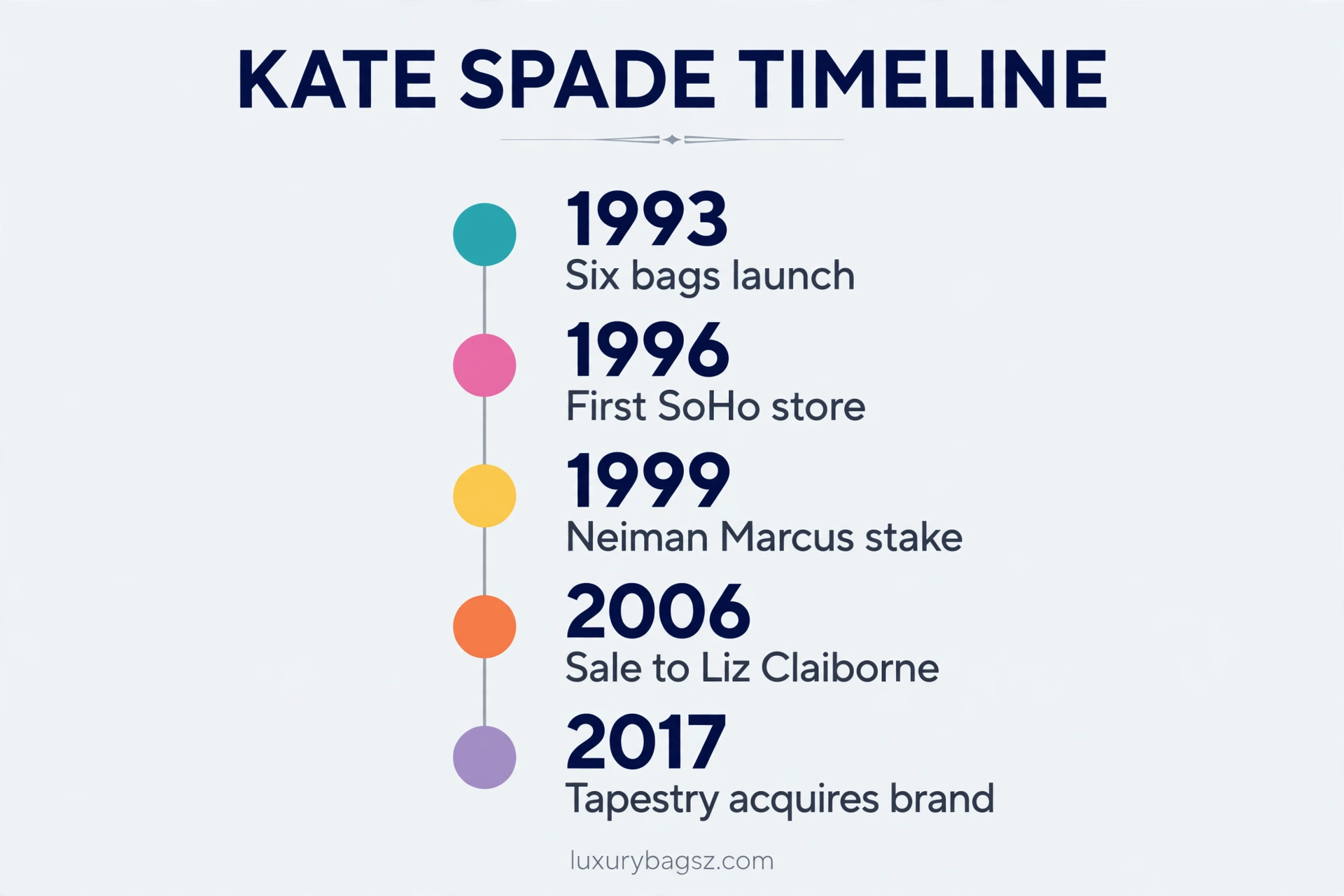
The first collection, built around a boxy shape later known as the Sam bag, used sturdy nylon rather than leather and carried a small lowercase label on the outside. That combination of clean lines, bright colour, and honest practicality struck a nerve. Within a few years Kate Spade had grown from a trade-show curiosity into one of the defining American accessories brands of the 1990s.
Today the brand is owned by Tapestry, Inc., alongside Coach and Stuart Weitzman, and sells handbags, clothing, shoes, jewellery, and home goods around the world. Its story also carries a sadder chapter: Kate Spade left the company in 2006, later founded the label Frances Valentine, and died in 2018. The brand that bears her name continues, but its early spirit — colour, wit, and usefulness — remains its most recognisable asset.
Key Takeaways
- Kate Spade New York launched in January 1993 with six handbag styles, co-founded by Kate Brosnahan Spade, Andy Spade, Elyce Arons, and Pamela Bell.
- The debut Sam bag used practical nylon, a boxy shape, and a small external label, at prices far below traditional European luxury bags.
- Neiman Marcus bought a majority stake in 1999 and the rest in 2006, then sold the company to Liz Claiborne later that year.
- Coach, Inc. acquired Kate Spade for $2.4 billion in 2017 and later renamed itself Tapestry, Inc.
- Pre-owned Kate Spade bags are widely available, so checking labels, hardware, and stitching matters more than chasing a single "tell".
The Woman Behind the Brand
Katherine Noel Brosnahan was born in Kansas City, Missouri, in 1962 and grew up far from the fashion world. She studied journalism at Arizona State University, graduating in 1985, and moved to New York, where she worked her way up to senior accessories editor at Mademoiselle magazine. That job gave her a sharp eye for what women actually carried every day, and a growing frustration with what the market offered.
The handbags she saw fell into two camps: very expensive European luxury bags, or forgettable budget bags with little design thought. Nothing in between felt both smart and fun. Kate Spade later described wanting a simple tote that was stylish but not silly, practical but not dull. It was a gap she understood as a shopper first and a designer second, and that shopper-first instinct shaped everything the brand did next.
She had no formal design training, which turned out to be an advantage rather than a handicap. Unburdened by fashion-school rules, she thought in shapes and uses rather than in trends. She cut and taped large sheets of paper into bag shapes at home, shortening, widening, and re-proportioning them until the silhouette looked right. Only then did she take the paper models to a pattern maker found through an advertisement in Women's Wear Daily.
Six Bags, Paper Prototypes, and the Sam
The brand launched in January 1993 with just six styles, made in sturdy black nylon. The choice of material was deliberate and, at the time, quietly radical. Nylon was associated with utility, not luxury, yet it made the bags lighter, harder-wearing, and more affordable than leather equivalents. For a young professional carrying a bag through a New York working day, that practicality was the point.
The best-known early shape was the Sam, a boxy, structured tote with clean lines and minimal hardware. Prices for the debut bags were reported in the region of $150 to $450, which placed them well below the big European houses while still feeling considered and well made. The small label, reading "kate spade new york" in lowercase on the outside of the bag, became a signature in itself: confident enough to be visible, modest enough not to shout.
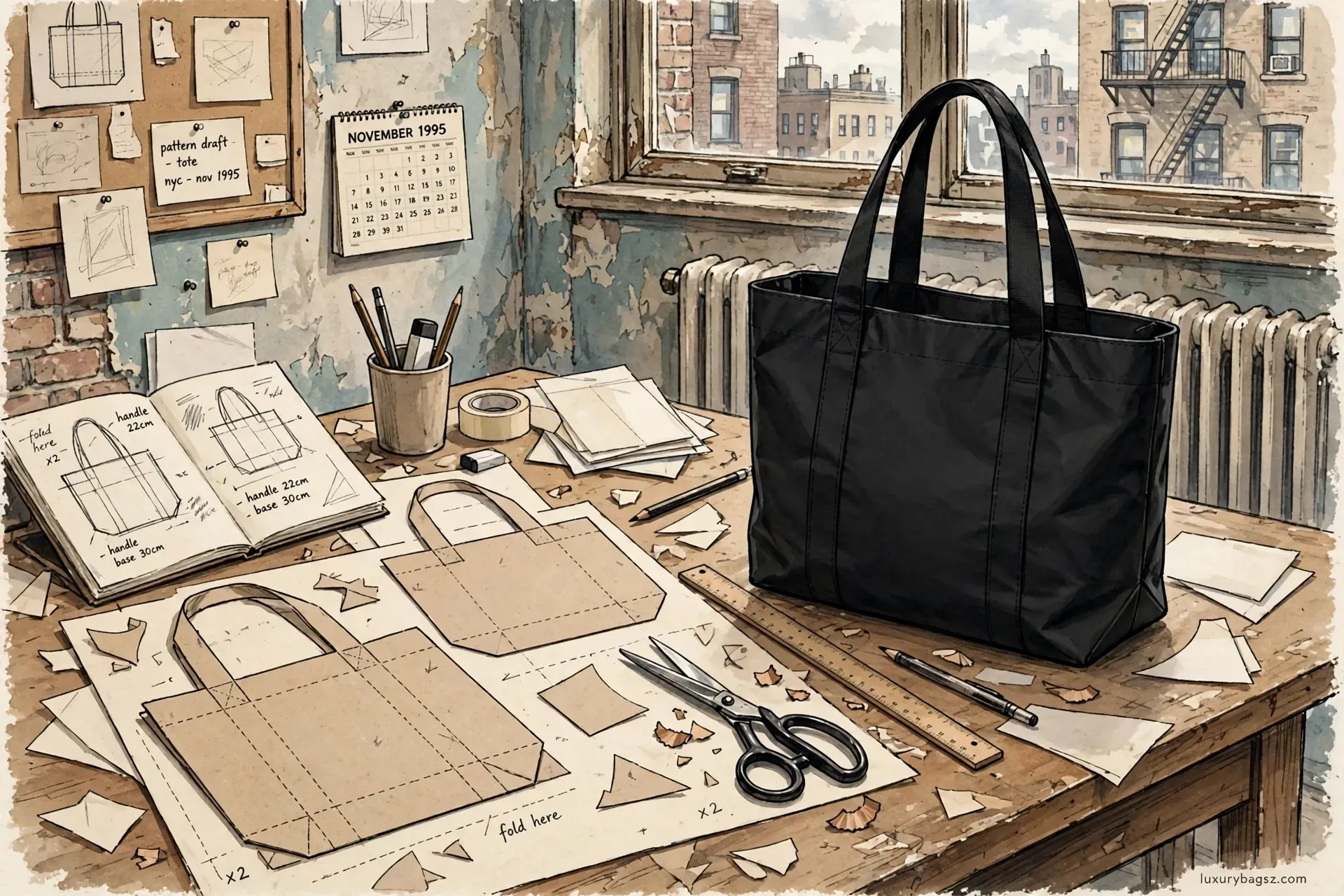
Early orders came from the trade show circuit, including a pivotal early order from Barneys after a show at New York's Javits Center. Kate Spade famously spent a night re-sewing labels onto the outside of the bags before that breakthrough, a last-minute decision that defined the brand's look. Word spread quickly among New York women who wanted a bag that worked with a suit, a weekend outfit, and everything in between, and the label's reputation grew by recommendation rather than by advertising blitz.
The SoHo Store and the 1990s Breakthrough
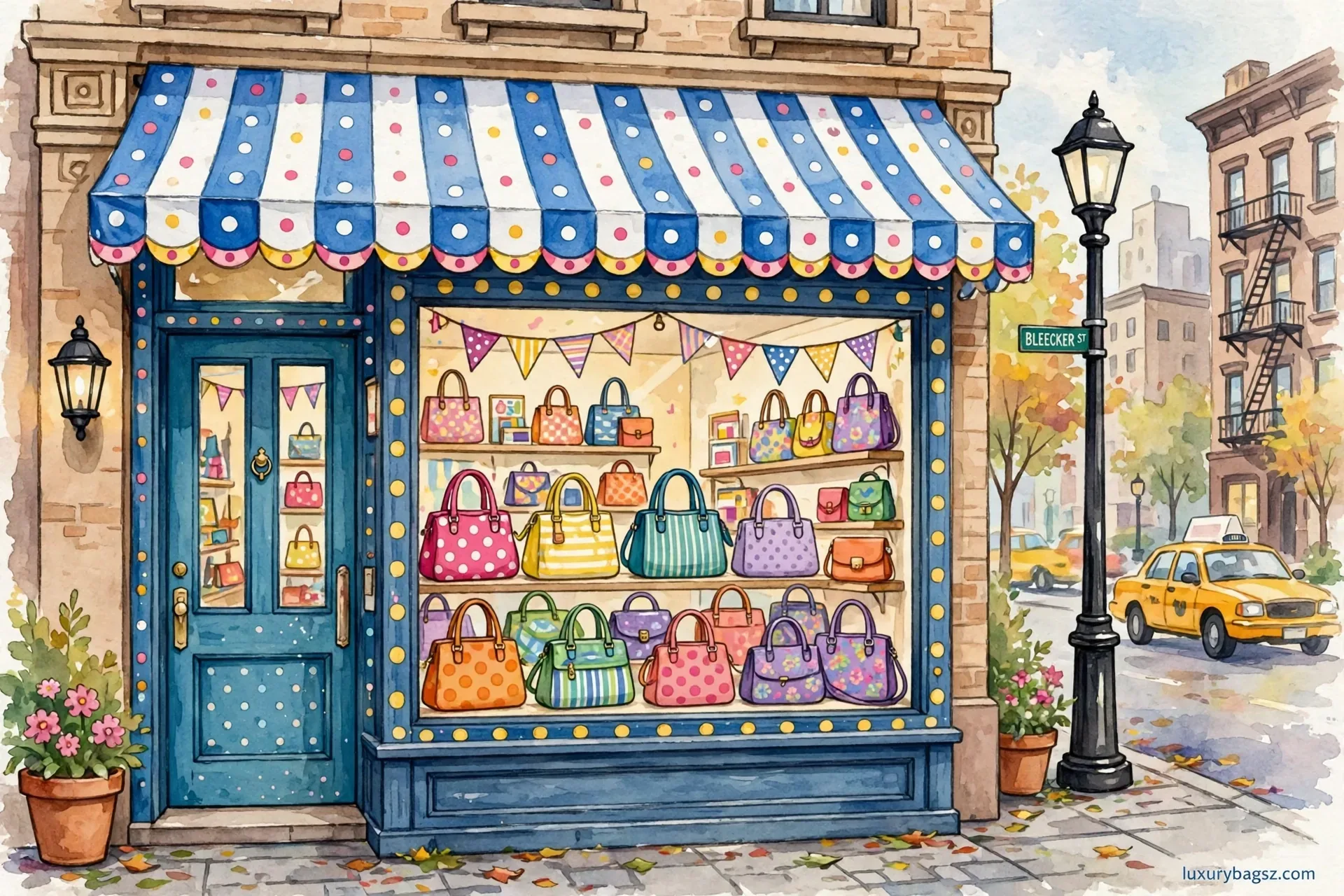
By the mid-1990s, Kate Spade was no longer a cult find. The Council of Fashion Designers of America named Kate Spade an emerging talent in accessories in 1995 and gave her its Accessory Designer of the Year award in 1997, industry recognition that confirmed the brand had moved beyond novelty. Sales climbed, and in 1996 the brand opened its first standalone store in SoHo, Manhattan, a neighbourhood that perfectly matched its creative, downtown energy.
The store mattered because Kate Spade was selling more than bags: it was selling a mood. The shops were bright, witty, and welcoming, with colour used boldly and humour never far away. Where traditional luxury retail could feel hushed and intimidating, Kate Spade felt like a friend's flat — clever, colourful, and easy to enjoy. That tone, repeated across stationery, shoes, eyewear, and eventually clothing and home goods, turned a handbag label into a lifestyle brand before "lifestyle brand" became a cliché.
Expansion followed the same logic. The brand licensed and launched new categories carefully, keeping the visual language consistent: crisp shapes, playful colour pairings, polka dots, stripes, and a sense of optimism. For many women who came of age in the late 1990s and early 2000s, a Kate Spade bag was a first "proper" designer purchase — a milestone that felt joyful rather than solemn. That emotional link explains why vintage Kate Spade pieces still inspire such affection today.

Ownership Changes: Neiman Marcus, Liz Claiborne, and Tapestry
Success brought suitors. In February 1999, Neiman Marcus Group paid $33.6 million for a 56 per cent stake in the company, attracted by its growth and its appeal to younger luxury shoppers. The Spades stayed involved, and the brand kept expanding under Neiman Marcus's backing. In 2006, Neiman Marcus acquired the remaining 44 per cent, and later that year sold the whole company to Liz Claiborne Inc. for $124 million.
The founders stepped back after the 2006 sale. Kate and Andy Spade took time away from fashion to raise their daughter, and the company they had built entered a corporate phase. Liz Claiborne restructured as Fifth & Pacific Companies in 2012 and renamed itself Kate Spade & Company in 2014, a sign of how central the brand had become to the group. Under creative director Deborah Lloyd, who led design from 2007 to 2018, sales reportedly grew from roughly $100 million to more than $1.3 billion as the label pushed further into apparel, jewellery, and home goods.
The next chapter came in May 2017, when Coach, Inc. acquired Kate Spade & Company for $2.4 billion. Coach later renamed itself Tapestry, Inc., and Kate Spade New York remains a Tapestry brand today alongside Coach and Stuart Weitzman. For shoppers, the practical effect was continuity: the same stores, the same playful identity, but with the backing of a much larger American luxury group. For the industry, the deal confirmed Kate Spade as one of America's most valuable fashion names.
What Made the Design Different
Kate Spade's design language is easy to recognise once you know what to look for. Shapes stay simple and structured rather than slouchy or over-decorated. Colour does the talking: a red bag, a pink lining, a striped interior, or a bold colour-blocked pair of shoes. Hardware stays minimal, and logos stay small or absent, which is why the bags age gracefully — they do not depend on a single season's monogram or trend.
That restraint also explains the brand's broad appeal. A Kate Spade tote works in an office, at a wedding, or on a weekend trip, because it is not trying to signal wealth or fashion insider status. It signals taste and cheerfulness instead. The brand's later collections kept that formula while adding more categories, from the "Sam" descendants and crossbody bags to wallets, sunglasses, and homeware such as mugs, bedding, and stationery, all carrying the same bright, graphic sensibility.
One detail worth noting is the lowercase wordmark. For years the brand wrote its name in small lowercase letters, a quiet design choice that matched its unpretentious tone. Later branding moved to a more conventional capitalised look, and collectors sometimes use these label changes to help date older pieces. Label style alone never proves authenticity, but it is a useful clue when combined with other checks, as explained below.
The Icons Shoppers Still Hunt For
The Sam bag remains the founding icon, and early nylon versions are now collectible precisely because they capture the brand at its freshest. Later icons include the brand's structured satchels, colourful crossbody bags, and the novelty bags — shaped like picnic baskets, pineapples, or books — that showed Kate Spade's sense of humour at full stretch. These playful pieces rarely suit every occasion, but they are the ones collectors remember and photograph.
Beyond bags, the brand's stationery and small leather goods built a loyal following of their own. A Kate Spade planner or wallet was often a gift purchase, which meant the brand reached people who might never buy a full handbag. That gifting culture helped the label survive fashion cycles: even when bag trends moved towards minimalism or logomania, there was always a Kate Spade notebook, umbrella, or pair of ballet flats ready to catch a shopper's eye.
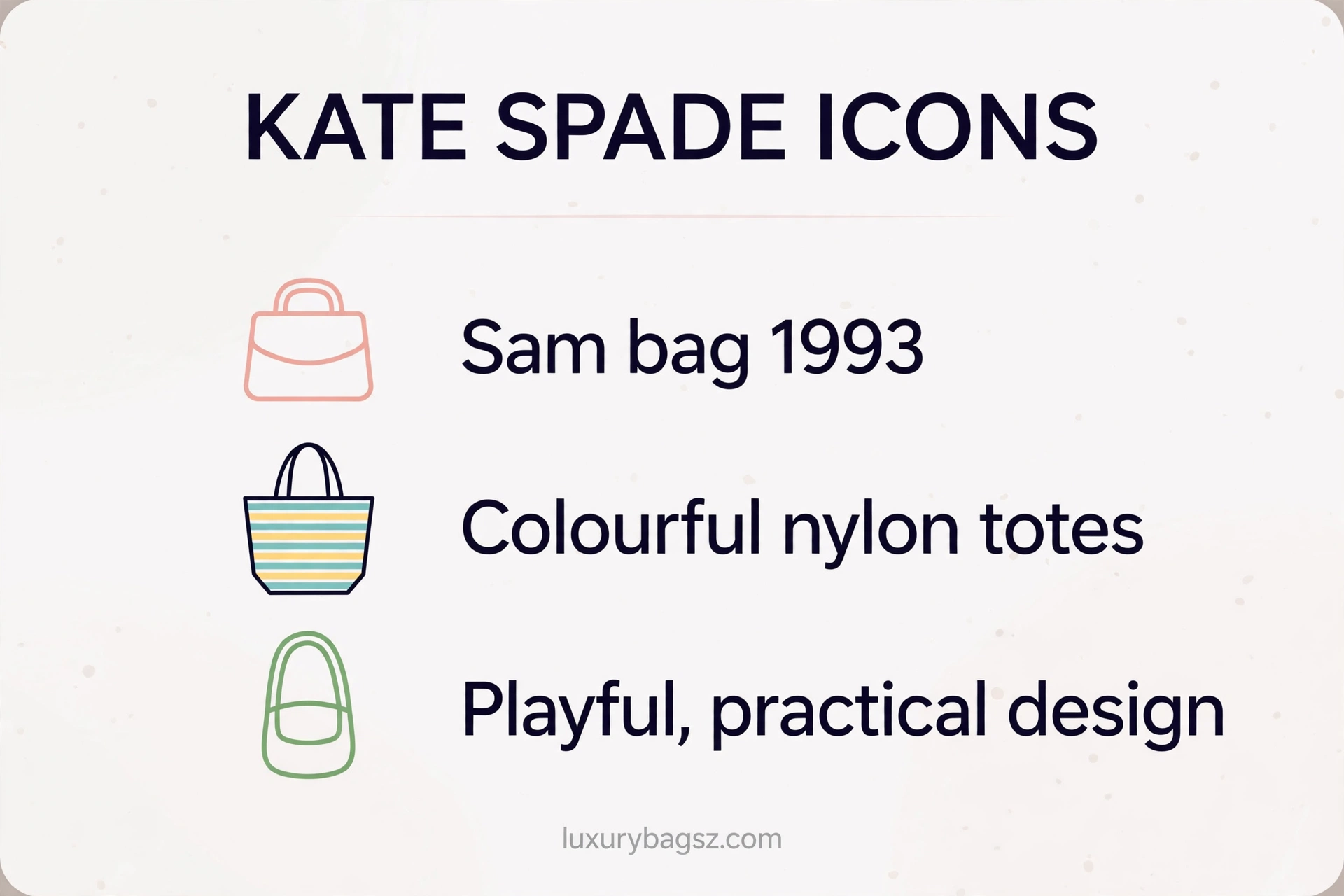
If you are hunting for an older icon, condition matters more than rarity alone. Nylon can stain and fray at corners, light colours show wear quickly, and novelty shapes are harder to repair than plain totes. Buy the piece you will actually carry, not just the piece that photographs well, and check that zips, clasps, and straps all work smoothly before paying a premium for a "rare" colour.
Buying Pre-Owned Kate Spade Safely
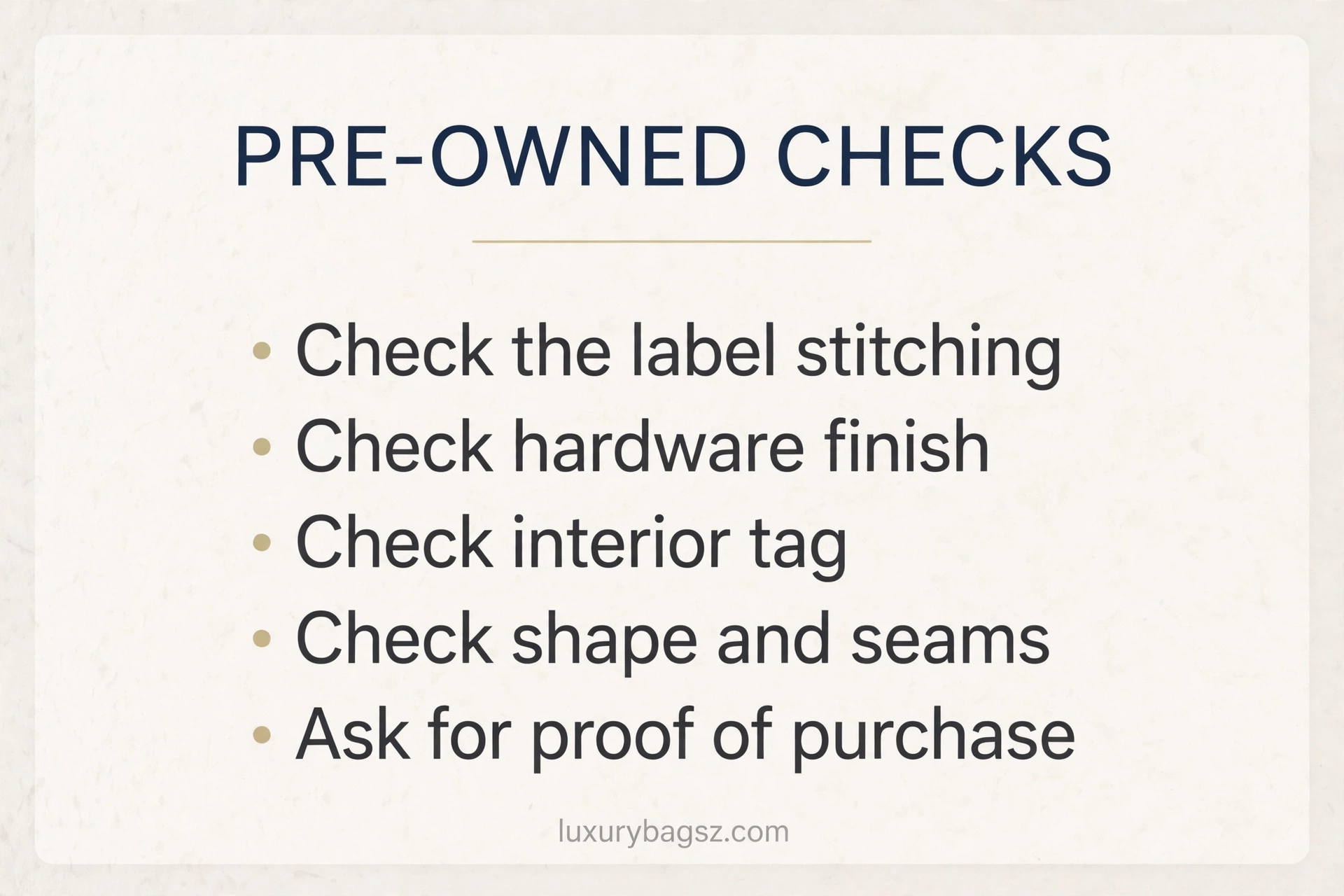
Pre-owned Kate Spade bags are plentiful, which is good news for buyers: prices stay reasonable, and there is usually no need to rush. It also means fakes and misdescribed pieces circulate, so a few checks are worth your time. Start with the label: genuine labels are neatly stitched, evenly spaced, and consistent with the era of the bag. Compare the font and wording with verified examples from the same period, and be wary of labels that look glued, crooked, or oddly thick.
Next, inspect the hardware and stitching. Real Kate Spade hardware feels solid and evenly finished, with no flaking, bubbling, or rough edges. Stitching should be straight, even, and tight, especially around handles and corners where stress concentrates. Check the interior lining for clean seams and a matching interior tag, and look for signs of heavy wear, odour, or repairs that the seller has not mentioned. Ask for clear photos of all of these details, not just a front view.
Price is its own check. If a supposedly rare vintage piece is listed far below every comparable listing, ask why. Genuine sellers can usually explain pricing — wear, missing dust bag, or a less popular colour — while vague answers are a warning sign. Think about value in the round, too: if you are weighing whether to rent or buy a designer bag, a pre-owned Kate Spade tote you will carry weekly usually beats a rented statement bag you carry once. And if you are building a collection, our guide to vintage designer bags explains how condition and rarity affect long-term value.
Kate Spade After Kate, and the Legacy Today
Kate and Andy Spade left the company after the 2006 sale and later returned to fashion with Frances Valentine, a separate accessories label launched in 2016. Kate Spade died in June 2018, at the age of 55, a loss that shocked the fashion world and the many women who had grown up with her bags. The brand marked her passing with tributes, and later dedicated collections to her spirit, while Tapestry continued to run Kate Spade New York as a going concern.
It is worth being clear about what changed and what did not. The company after 2006 was run by professional managers and creative directors, not by its founder, and some long-time fans feel later collections are glossier and less offbeat than the early ones. Others argue the brand had to grow up to survive, and that its core — colour, practicality, and joy — remains intact. Both views have merit, and the truth probably sits between them: the label evolved, as all long-lived brands must, but its founding idea still explains why people buy it.
Today, Kate Spade New York operates stores worldwide and sells through department stores and online channels, with regular collections plus collaborations and seasonal novelty pieces. For a new shopper, the best entry point remains a simple structured bag in a colour you love, in nylon or leather according to your lifestyle. For a collector, the early pieces tell the purest version of the story. Either way, the brand's history is a reminder that great design often starts not with a trend forecast, but with one person failing to find the bag she wanted — and deciding to make it herself. If you enjoy hunting for older pieces, our advice on how to buy vintage clothing online covers the same safe-buying habits for fashion beyond bags.
Frequently Asked Questions
When was Kate Spade founded?
Kate Spade New York was founded in January 1993 by Kate Brosnahan Spade, Andy Spade, Elyce Arons, and Pamela Bell, launching with six handbag styles.
Who founded Kate Spade?
Kate Brosnahan Spade co-founded the brand with her husband Andy Spade and friends Elyce Arons and Pamela Bell. Kate was a former accessories editor at Mademoiselle magazine.
What was the first Kate Spade bag?
The debut collection centred on a boxy, structured shape known as the Sam bag, made in sturdy black nylon with a small lowercase label on the outside.
Why did Kate Spade use nylon?
Nylon was lighter, harder-wearing, and more affordable than leather, which made the bags practical for everyday use and accessible to younger shoppers.
Who owns Kate Spade now?
Kate Spade New York is owned by Tapestry, Inc., which acquired Kate Spade & Company for $2.4 billion in 2017, when it was still called Coach, Inc.
When did Kate Spade leave the company?
Kate and Andy Spade sold their remaining shares in 2006, when Neiman Marcus sold the company to Liz Claiborne Inc., and stepped back from the brand.
What is Frances Valentine?
Frances Valentine is a separate accessories label founded by Kate and Andy Spade in 2016, after they had left Kate Spade New York. It is not the same company as Kate Spade.
Are vintage Kate Spade bags worth anything?
Early and novelty pieces in good condition can hold collector interest, but most pre-owned Kate Spade bags sell at accessible prices, so buy for enjoyment and use rather than as an investment.
How can I tell if a Kate Spade bag is real?
Check label stitching and font, hardware finish, stitching quality, interior tag, and overall condition against verified examples from the same era, and buy from a reputable seller.
Where was the first Kate Spade store?
The first standalone Kate Spade store opened in SoHo, Manhattan, in 1996, after early success through department stores such as Barneys.
Final Verdict: A Small Idea That Stayed Joyful
Kate Spade's history is the story of a practical frustration turned into a global brand: six paper-prototype bags, a brave choice of nylon, and a belief that fashion should be fun rather than frightening. Ownership changed, founders moved on, and the label grew far beyond its first tote, yet the original idea still fits in a single sentence — a good bag, in a happy colour, that works hard every day. That is why the brand endures, and why its earliest bags remain so fondly remembered.






