How to Choose a Suit: Fit, Cloth, Canvas and Tailoring Checks
The Short Answer: Fit First, Cloth Second, Label Last
Choose a suit by fit first: the shoulders must sit exactly on your own shoulders, the jacket must button without pulling, and the trousers must sit at your waist without a belt doing the work. Next, pick cloth for your climate and calendar, then construction. A half-canvas jacket in a mid-weight wool will out-dress and outlast a famous label in a fused, shiny cloth. Buy the best fit you can find off the rail, then spend a small sum on tailoring. Sleeves, trouser hems and a nipped waist turn a good suit into your suit.
Key Takeaways
- Shoulders are the one fit point a tailor cannot easily fix — get them right in the shop.
- The jacket should button with no X-shaped pull across the front.
- Mid-weight wool, around a four-season weight, is the safest first cloth.
- Half-canvas is the sweet spot for most buyers; full canvas is a longevity buy.
- Navy and charcoal cover almost every event a first suit will face.
- Budget for tailoring from the start — small tweaks make the biggest difference.
Start With the Job the Suit Must Do
Decide where this suit will actually be worn. A suit for weekly office days, interviews and weddings needs a different cloth and colour from a suit bought for one gala. For most men, one versatile suit beats two narrow ones. Our office wardrobe essentials edit builds around that same idea of hard-working staples. Write down your three most likely events before you shop. If two of them are daytime and work-based, a matte mid-tone suit will serve you better than black. Black suits read as evening or funeral wear in daylight. Navy and charcoal are more forgiving, easier to pair, and kinder to most skin tones.
Think about frequency too. A suit worn twice a week needs a tougher cloth and a second pair of trousers. A suit worn six times a year can be finer and lighter. If you travel in your suit, prioritise crease resistance over softness. High-twist wools spring back after a flight in a way that soft flannels do not.
Fit Checks: Shoulders, Chest and Length
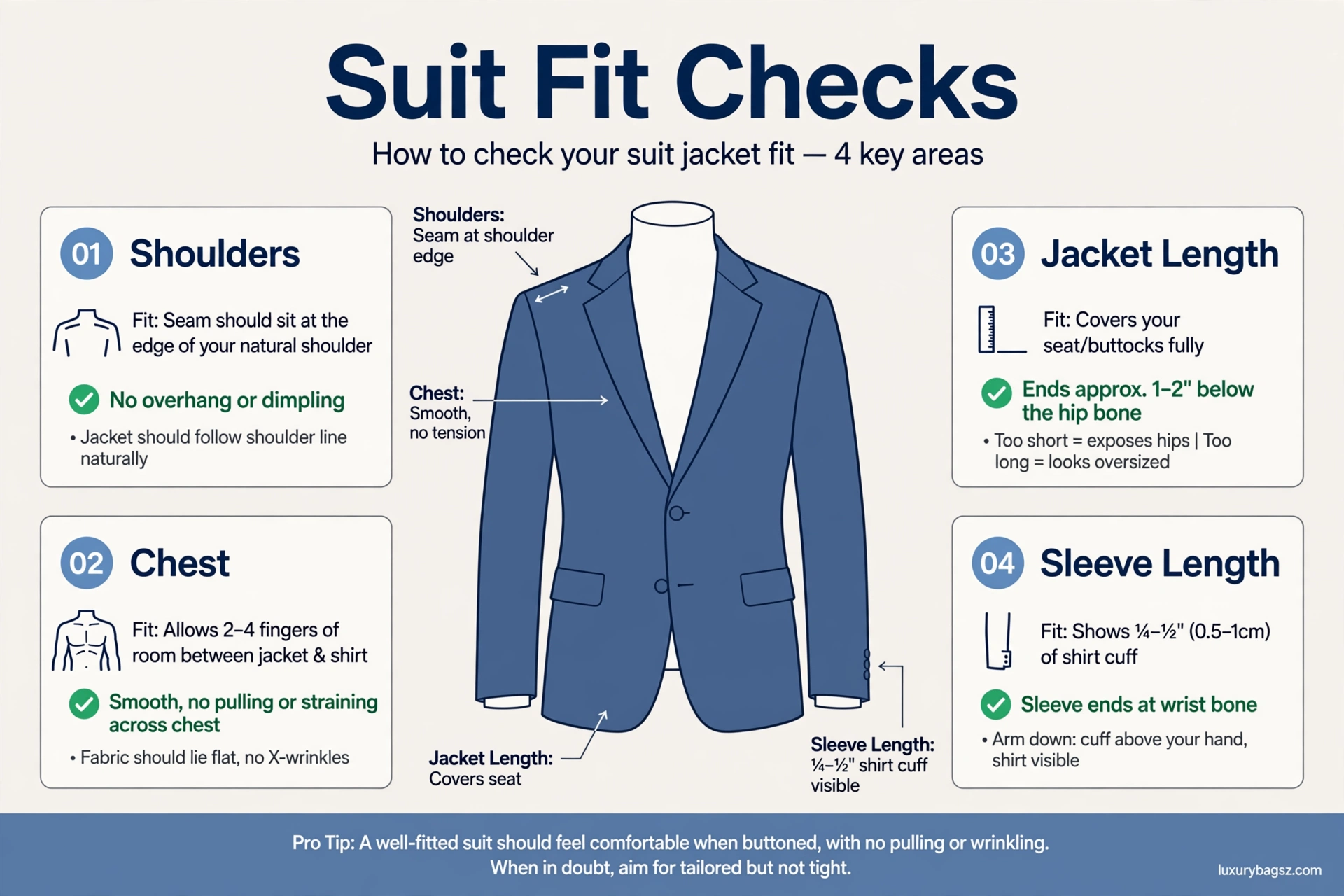
Start at the shoulders. The jacket shoulder seam should end where your own shoulder ends, with no overhang and no dent where the sleeve begins. Button the jacket and look for pulling. An X crease at the button means the chest or waist is too tight, whatever the shop assistant says about stretch. Jacket length should roughly cover your seat. A much shorter jacket looks fashionable for a season and dated for a decade. Sleeves should show a sliver of shirt cuff, roughly a centimetre. Trousers should touch the shoe with a slight break, not pool over it.
Check the collar from behind in a mirror. It should sit against your neck with no gap, and the back should fall cleanly without horizontal creases. Sit down, reach forward and cross your arms in the fitting room. A suit that only works while you stand still for a photograph will annoy you daily. Trouser rise matters more than taper. The waistband should sit comfortably at your natural waist and stay there when you sit.

Cloth: Wool Weights and Weaves That Work
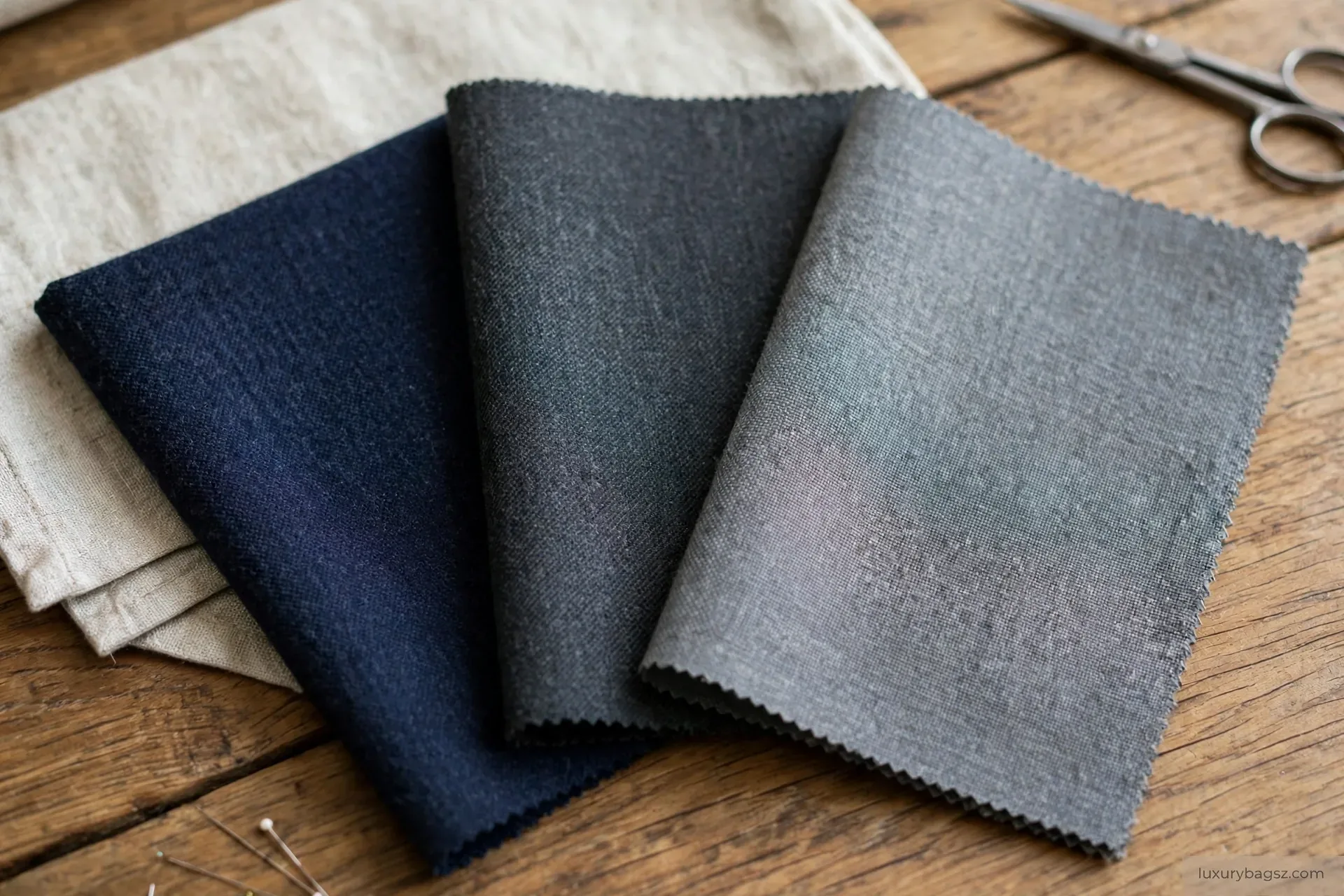
Wool is the default for good reason. It breathes, resists odour, drapes well and recovers from creases better than most alternatives. Cloth weight decides warmth. Light cloths suit summer and heated offices; heavier flannels suit winter. A mid weight covers the widest range of days. The Super number describes fibre fineness, not quality on its own. Very high numbers feel silky but can wear faster with heavy use. Plain weaves look smooth and formal. Twills add a faint diagonal and a little hardiness, while herringbone and birdseye add quiet texture for daytime.
Linen and cotton suits are warm-weather specialists. They crease by design, so choose them for relaxed events rather than boardrooms. Mohair blends add a slight sheen and crispness that flatters evening wear. Keep the sheen subtle if the suit must also work at midday. Always check the cloth in daylight near a window. Shop lighting flatters shiny cloth that can look cheap outdoors.
Construction: Fused, Half-Canvas and Full Canvas
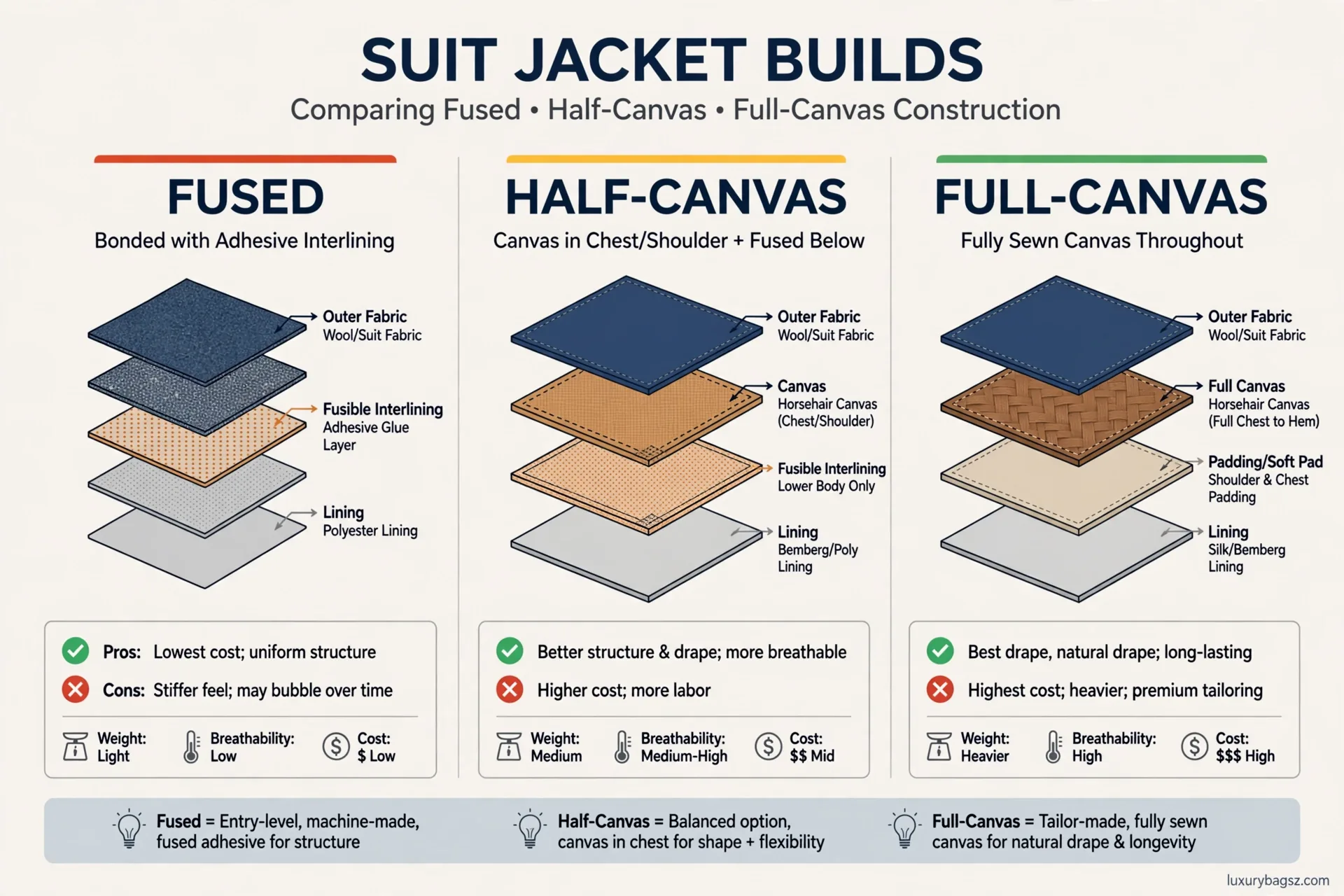
Inside the jacket front sits a layer that gives it shape. In a fused jacket that layer is glued; in a canvas jacket it is stitched and floats. Fused fronts are cheaper and can bubble after dry cleaning or years of wear. They are acceptable at entry prices if the fit and cloth are good. Half-canvas means the chest is canvassed and the lower front is fused. It gives a natural chest shape at a mid price, and suits most buyers well. Full canvas runs the length of the front. It moulds to your body over time, rolls the lapel softly and usually lasts longest with proper care.
Pinch the jacket front below the button. On a canvassed jacket you can feel a separate middle layer moving between the cloth and the lining. Ask about trouser construction too. A waistband with a proper curtain and a split back seam allows small alterations as your waist changes. Half-lined jackets feel cooler in summer and show off good internal finishing. Fully lined jackets slide on more easily over knitwear in winter.
Style Details: Lapels, Buttons and Pockets
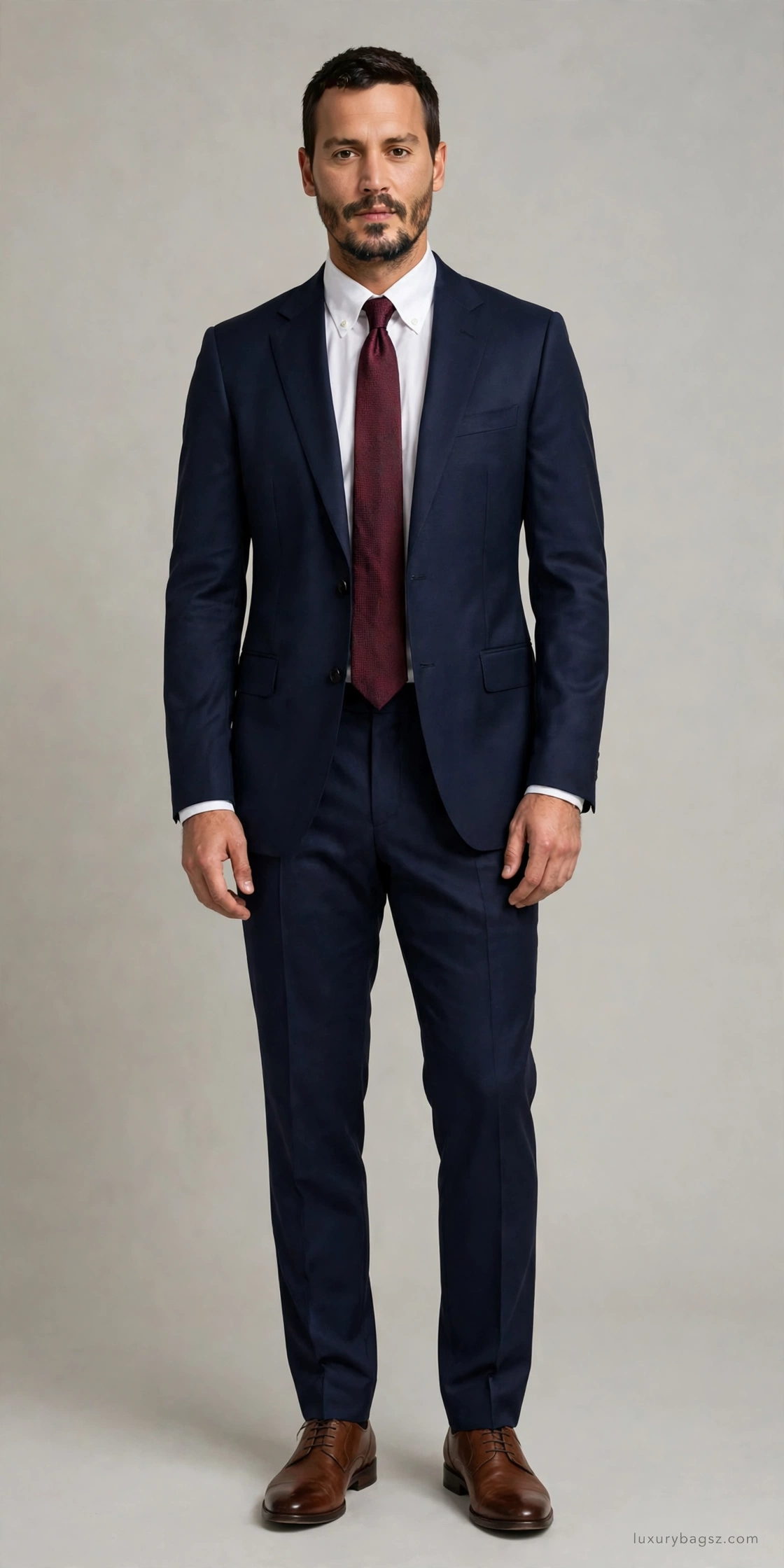
A two-button, single-breasted jacket in a notch lapel is the most versatile starting point. It suits almost every body and almost every invitation. Peak lapels feel dressier and broaden the chest visually. Shawl collars belong to evening jackets rather than everyday suits. Lapel width should echo your build and tie width. Very skinny lapels date quickly; a moderate width stays current for far longer. Side vents suit most men and allow easy movement and pocket access. A centre vent is a classic American option; no vent is the most formal and least forgiving.
Flap pockets are the safe default. Jetted pockets look sleeker and dressier, while patch pockets push a jacket towards casual blazer territory. Working buttonholes on the cuff signal higher making, but they make sleeve shortening costly. On a first suit, simple closed cuffs alter more easily. Pick lining and buttons you will still like in five years. Horn-look buttons and a quiet lining age better than novelty prints.
Trousers, Shirts and Shoes That Complete It
Trousers should share the jacket's cloth and sit as a pair. A flat front suits most men now; a single pleat adds room and a classic feel. Keep the leg clean rather than skinny. Cloth that grips the calf will crease, pull and wear shiny at the seat far sooner. A white or pale blue shirt covers nearly every suit colour. Our guide on how to wear loafers with a suit shows the relaxed end of smart footwear pairing. For formal wear, choose Oxford shoes in black or dark brown, well polished. Derby shoes are a touch more relaxed and suit wider feet.
Belts should match the shoes in colour and finish when worn. With a properly fitted waistband, braces are a comfortable and classic alternative. Keep the tie width near the lapel width. A four-in-hand knot suits most collars and avoids the oversized knots that fight the jacket. Socks should cover the calf when you sit. Bare ankle skin with a formal suit still reads as a mistake in conservative rooms.
Prices and Where the Money Goes
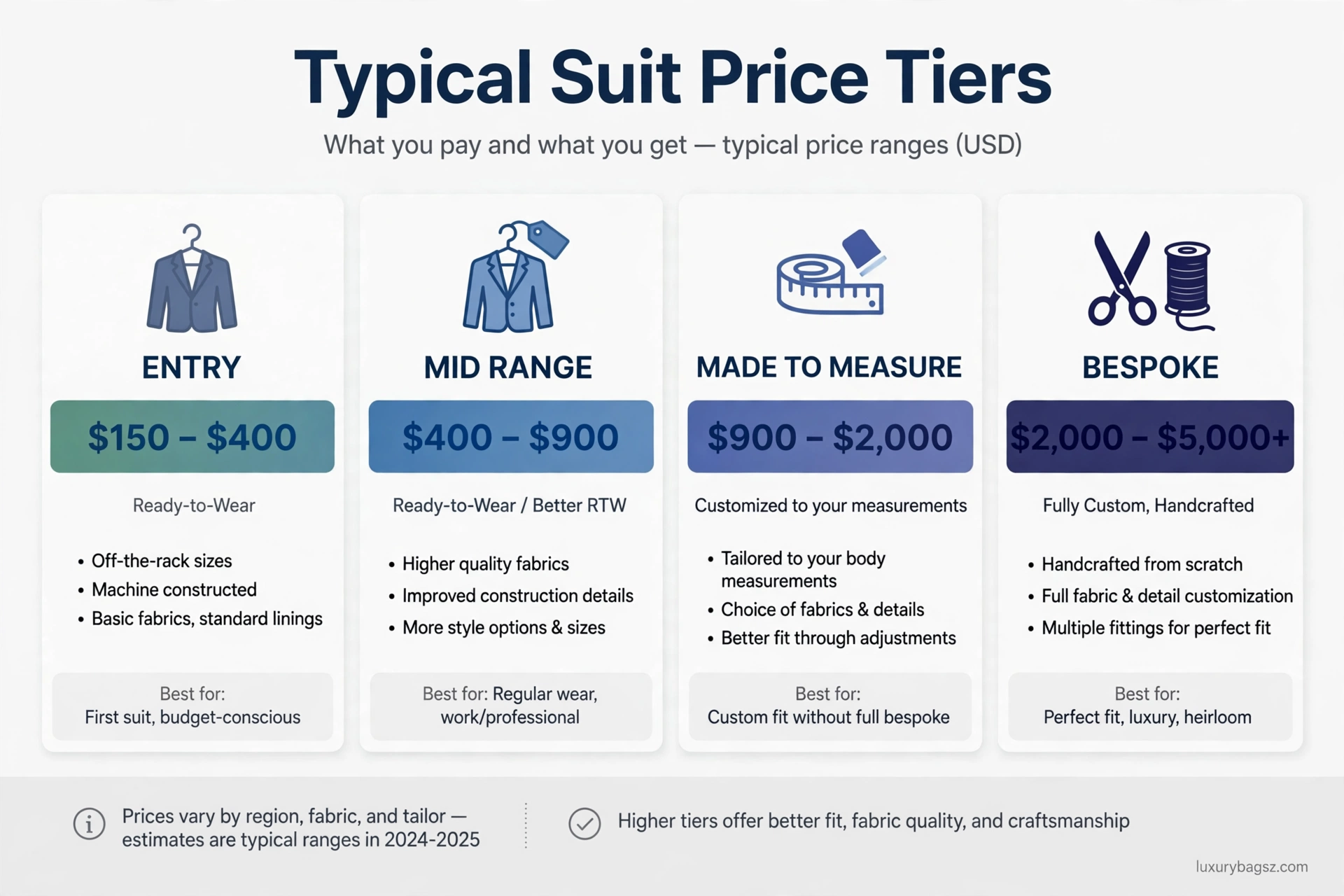
Entry ready-to-wear suits typically start in the low hundreds. At this level you pay for cloth and fit basics, and construction is usually fused. Mid-range suits, often half-canvas, typically cost several hundred more. The jump buys better cloth, a softer chest and cleaner finishing. Made-to-measure adds a pattern adjusted to you, with prices above good ready-to-wear. Bespoke, cut from a personal pattern, sits at the top in the thousands. If your budget is fixed, spend on fit and cloth before branding. Our explainer on what is smart casual dress code for men helps place the suit among looser codes too.
Pre-owned tailoring can be excellent value. Check for shine at the seat and elbows, moth damage in the cloth and enough hem allowance to adjust lengths. Sales reward patience if your size is common. Buy the suit you would want at full price, not a louder one simply because it is reduced. Always add tailoring costs to the ticket price when comparing. A cheaper suit plus good alterations often beats a dearer suit worn unaltered.
Tailoring Tweaks and Care That Keep It Sharp
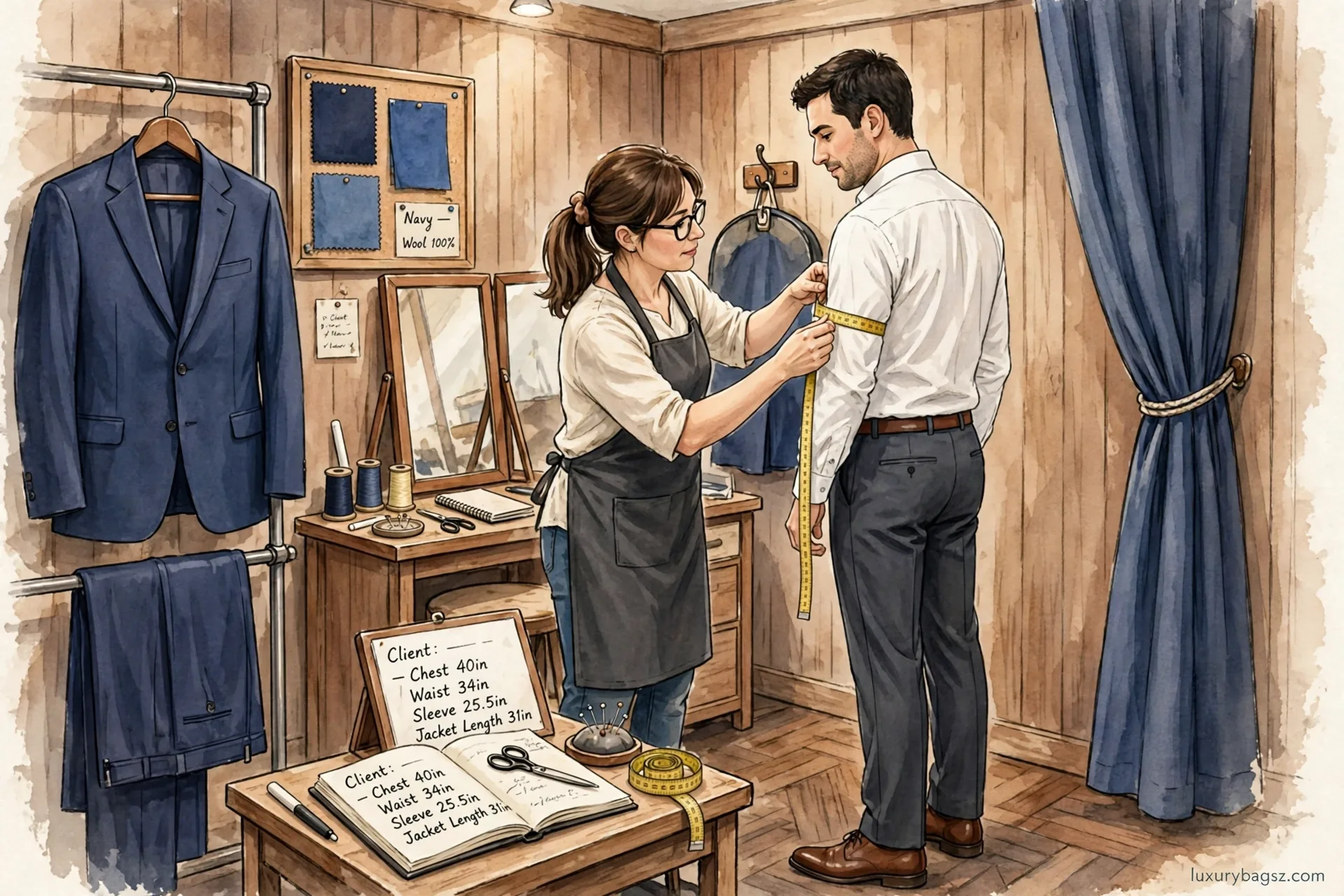
The common tweaks are simple: hem the trousers, shorten or lengthen sleeves, and take in the jacket waist for a cleaner line. Shoulders, chest size and jacket length are hard or impossible to change well. Never buy a suit hoping a tailor can rebuild those areas. Rest a wool suit for at least a day between wears. Airing on a wide hanger does more for freshness than frequent cleaning. Brush the cloth after wear and store the suit in a breathable cover. Moths prefer dirty cloth, so clean a suit before long storage.
Steam eases creases; pressing needs care. A heavy press at home can shine the cloth and flatten the lapel roll a good tailor created. Dry clean sparingly, typically a few times a year unless stained. Each clean ages cloth and fused fronts a little, so spot clean small marks. Rotate two suits if you wear one daily. Rotation doubles the life of both and gives canvassed fronts time to recover their shape.
Frequently Asked Questions
What colour suit should I buy first?
Navy is the most versatile first suit, with charcoal a close second. Both work for office days, interviews, weddings and most evening events.
How should a suit jacket fit on the shoulders?
The seam should end at your natural shoulder edge. Overhang looks sloppy and a seam that bites in cannot be fixed well by tailoring.
Is half-canvas worth paying extra for?
For most buyers, yes. It gives a more natural chest shape and better longevity than a fully fused front, without bespoke-level prices.
What does the Super number on wool mean?
It describes how fine the wool fibres are. Higher numbers feel softer and smoother, but very fine cloths can wear faster with daily use.
Can a tailor make a suit a size smaller?
A tailor can nip the waist and adjust lengths, but cannot rebuild shoulders or chest well. Buy the correct shoulder and chest size first.
Should suit trousers have a break?
A slight break, where the cloth just touches the shoe, is the most versatile choice. No break looks sharper; a full break looks more traditional.
How much should I budget for tailoring?
Plan a modest sum for hems, sleeves and waist tweaks. Prices vary by tailor and town, so ask for a quote when you buy the suit.
Is a black suit a good first suit?
Usually not. Black reads as evening or mourning wear in daylight. Navy or charcoal will cover more of your calendar with less effort.
How often should I dry clean a suit?
Only when it needs it, typically a few times a year. Brush and air the suit after each wear and spot clean small marks promptly.
What shoes work best with a first suit?
Polished Oxford shoes in black or dark brown are the safest start. Clean loafers work for relaxed settings, and trainers rarely suit a tailored suit.
Final Verdict: Buy the Fit, Then Let a Tailor Finish It
A good suit is chosen in a set order: shoulders and chest first, cloth for your climate second, construction third and label last of all. Pick navy or charcoal in a mid-weight wool, allow for small tailoring tweaks, and rest the suit between wears. That formula rarely disappoints.