

Hermès Saddles and Equestrian: What the Original Métier Sells Today
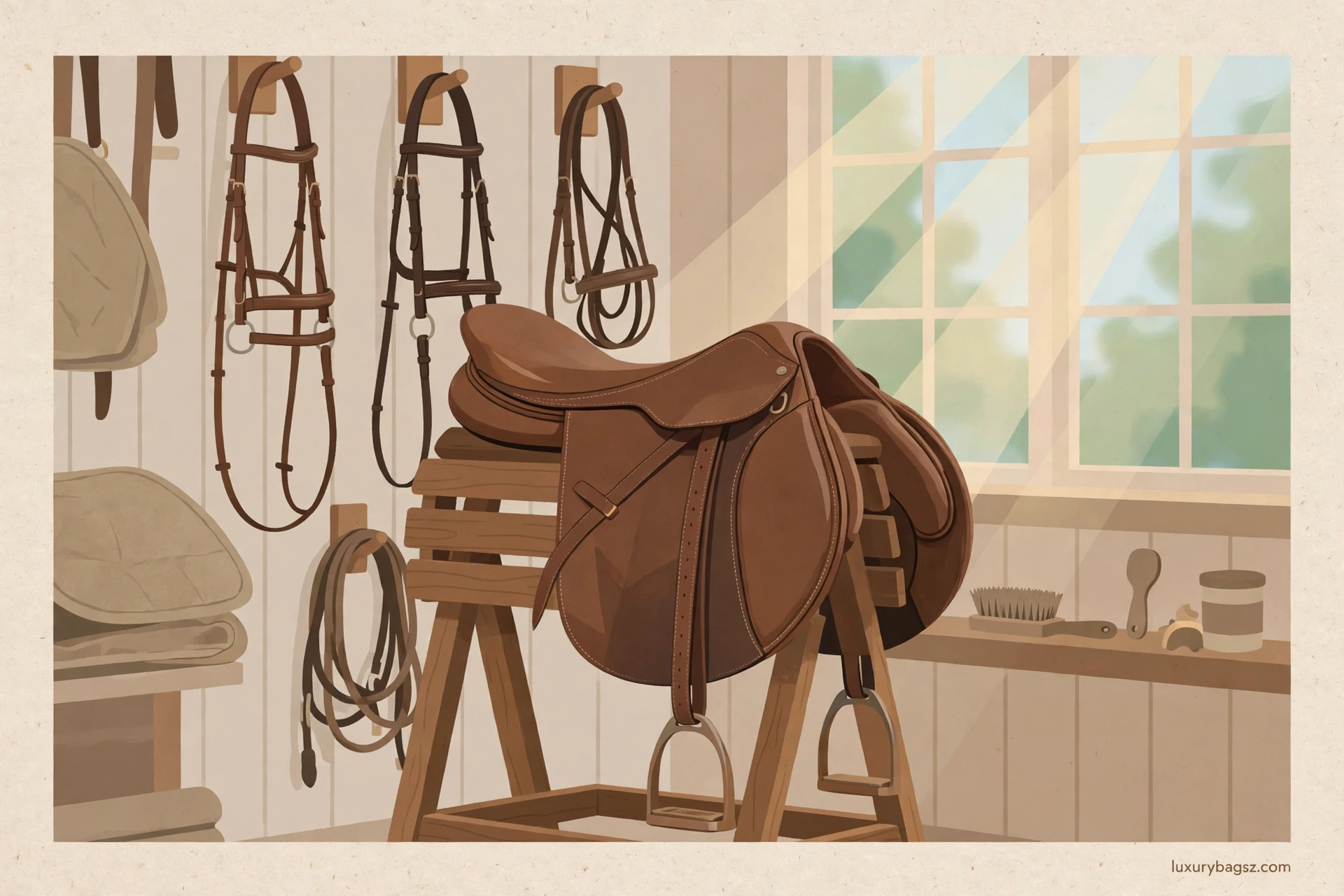
Four Bespoke Saddles, Made for Horse and Rider
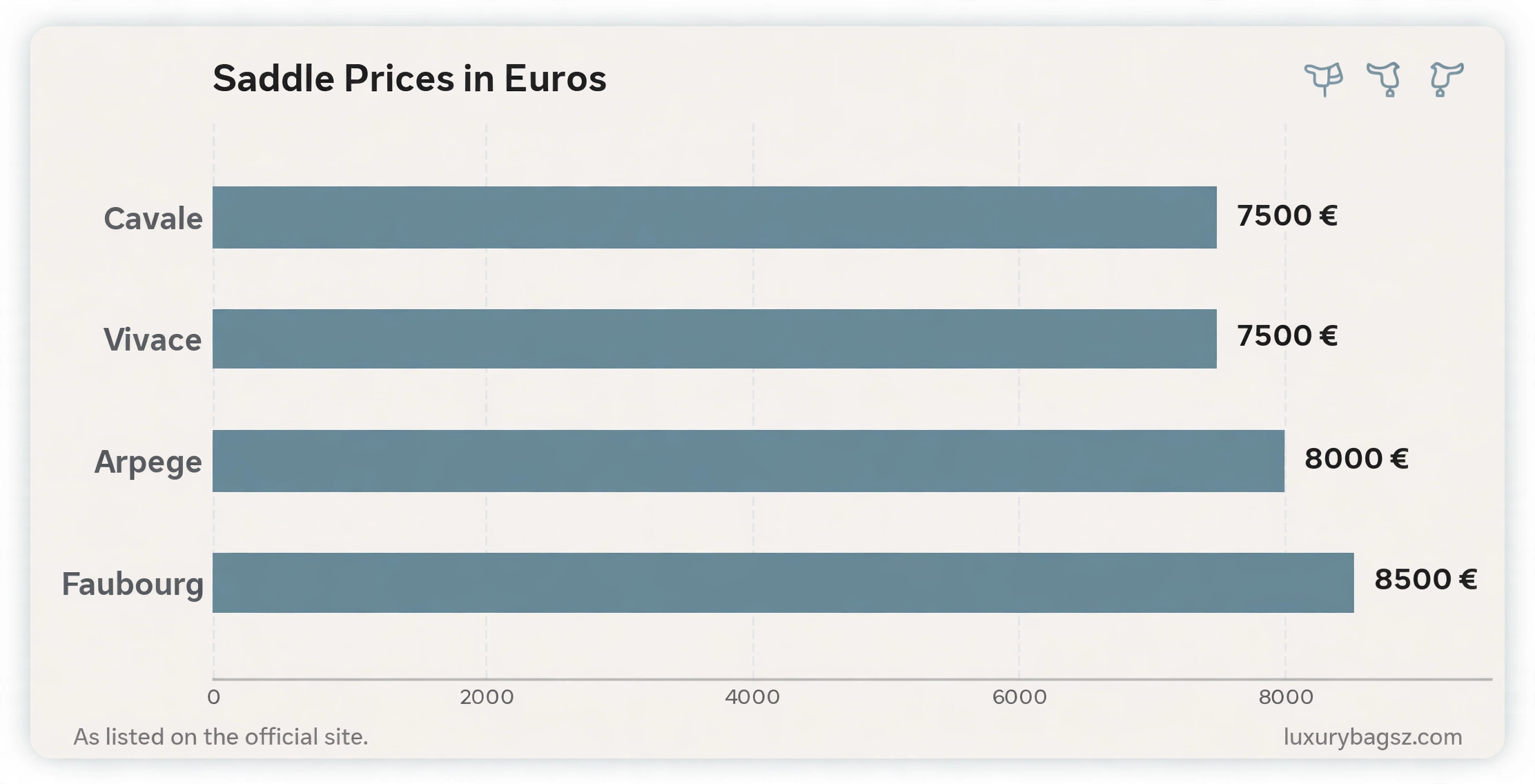
Hermès still sells bespoke saddles today: four models costing €7,500 to €8,500 on its official site. The Cavale and Vivace are each €7,500, the Arpège is €8,000, and the Faubourg tops the range at €8,500.
The Faubourg, Cavale and Vivace are jumping designs, while the Arpège is built for dressage with a particularly deep seat. Each one is then built by a single artisan to fit the rider’s posture and the contours of the horse underneath.
Alongside the saddles sits a complete stable and rider range, including bridles, girths, pads, blankets and clothing. Orders begin by contacting the house’s saddle specialists for measuring and fitting, rather than buying off the shelf.
The Craft the House Was Built On
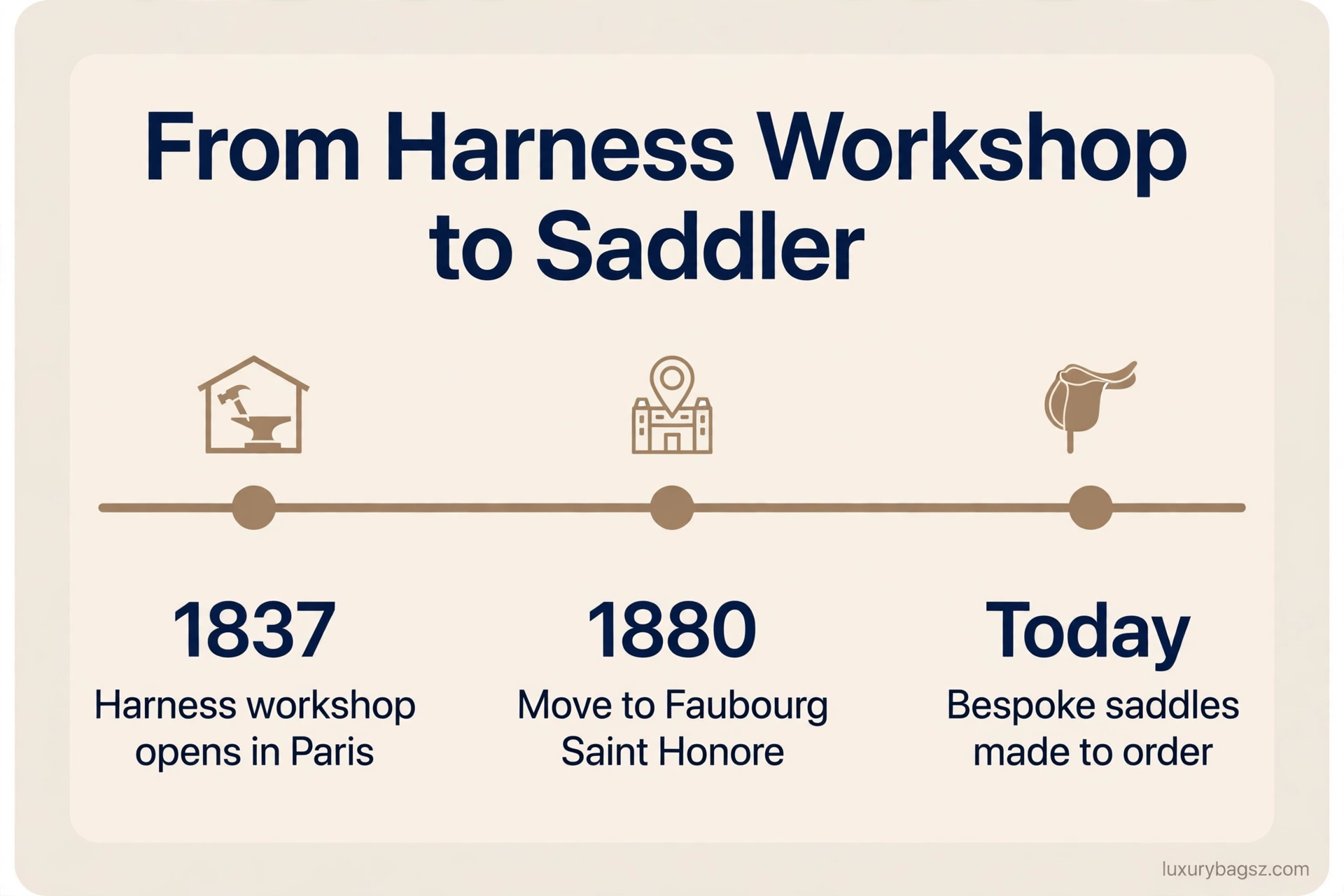
Every Hermès object descends from the hermes saddle. Thierry Hermès opened a harness workshop in Paris in 1837, and nearly two centuries later the house still makes bespoke saddles to order, each built by a single master saddler for one horse and one rider.
This guide explains what the original métier sells today, what it costs and how commissioning a saddle actually works.
Key Takeaways
- Hermès began in 1837 as a harness and saddle workshop; saddlery remains a living métier, not a heritage display.
- The current bespoke saddle range: Faubourg and Arpège at the top, Cavale and Vivace below, all made to measure.
- Official euro prices found on hermes.com: Cavale €7,500, Vivace €7,500, Arpège €8,000, Faubourg €8,500.
- Each saddle is doubly custom: fitted to the horse's back and the rider's seat, and built by one artisan.
- The house supports around 14 international riders across jumping, dressage, eventing and para-equestrian sport.
- Around the saddles sits a full equestrian world: bridles, girths, saddle pads, blankets and rider clothing.
From 1837 to the Faubourg
Thierry Hermès founded his workshop in 1837 making harnesses for carriage horses, winning prizes for their quality within his lifetime. Saddles followed as the business grew.
In 1880 the family moved to 24 rue du Faubourg Saint-Honoré, the Paris address the house still occupies, and the saddle became central to the young firm's identity.
The fuller story sits in our history of Hermès; the point here is continuity. The métier never stopped, even as bags and silk made the house famous.
How a Bespoke Hermès Saddle Is Made
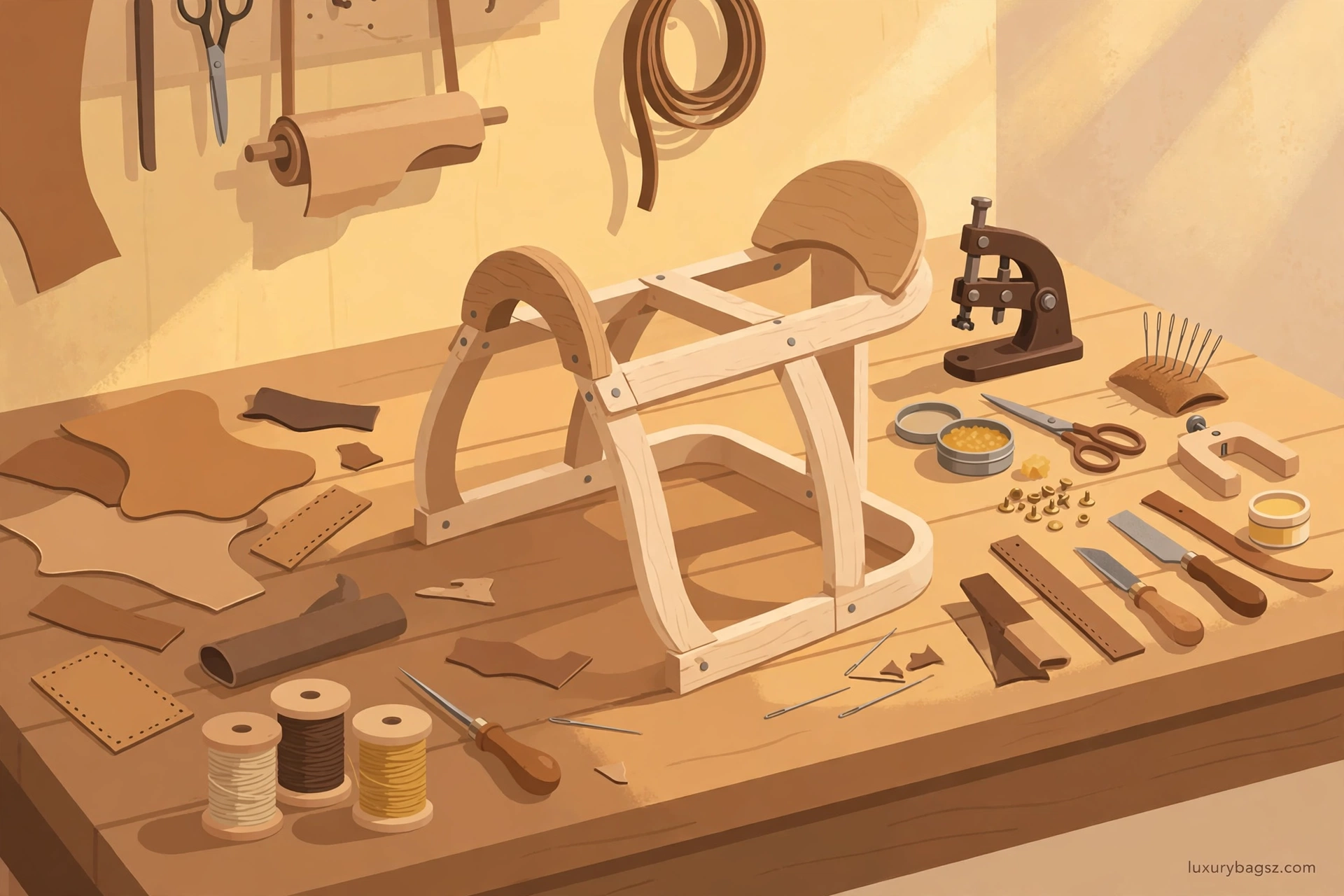
Hermès describes each saddle as doubly custom-made: measurements are taken of the horse and of the rider, and the saddle is shaped around both, with its own identity.
A single master saddler builds the piece in the house's workshops in Faubourg, Paris and Normandy, working over a wooden tree with the saddle stitch the house is named for in craft circles.
Balance is the obsession: tree, seat, flaps and girths tuned so horse and rider move as one. It is slow work, and the waiting list reflects it.

The Four Models Explained
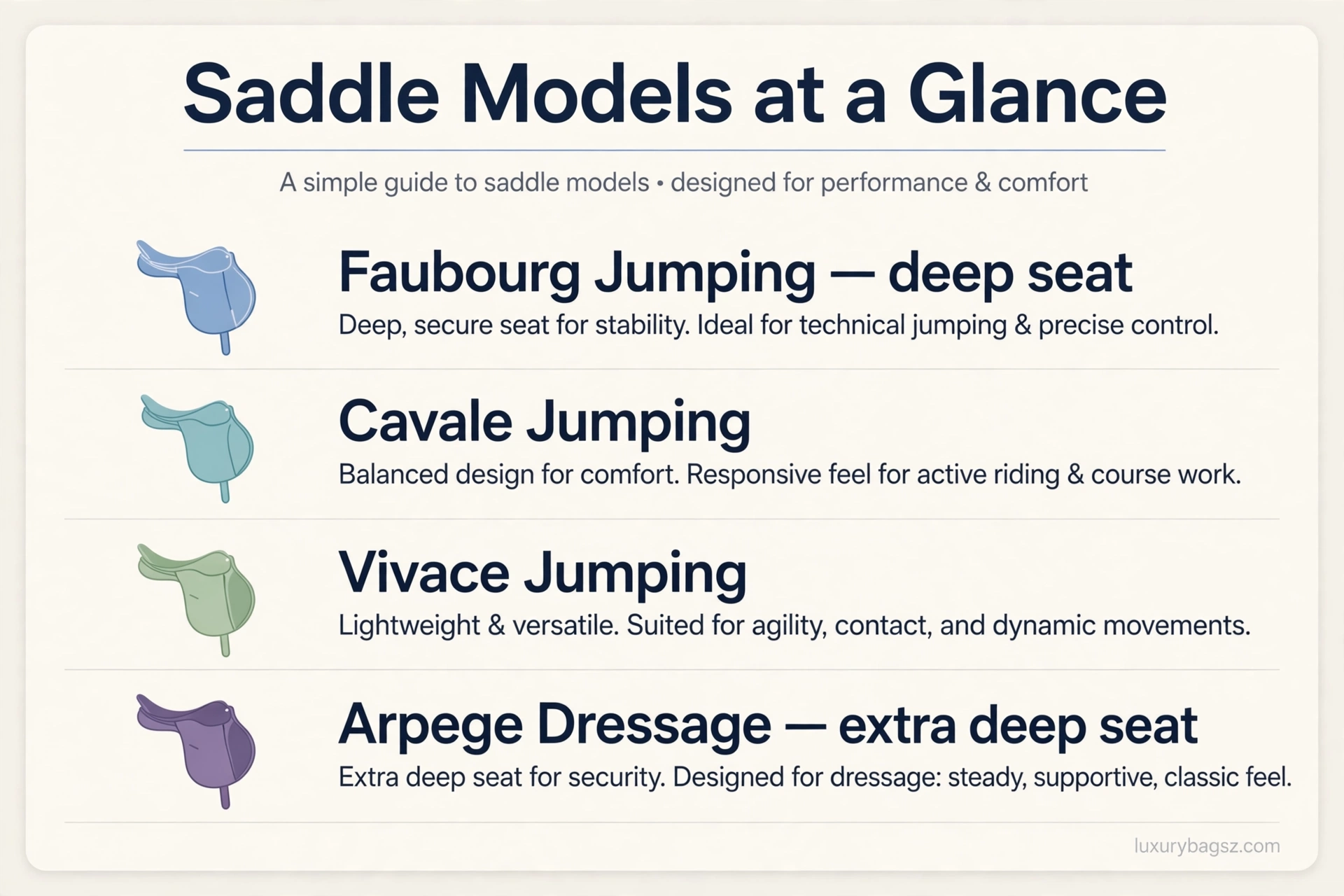
The Faubourg is the flagship jumping saddle with a deep seat, priced at the top of the range. It is the model most associated with the house's partner riders.
The Cavale and Vivace are the other jumping saddles, lighter in feel and priced a step below. Riders choose between them by discipline, horse shape and personal balance.
The Arpège is the dressage saddle, with an extra-deep seat developed in collaboration with German dressage champion Jessica von Bredow-Werndl, as the house's own film recounts.
The fitting philosophy deserves a sentence of its own. Hermès builds around balance: the saddle should disappear between horse and rider, distributing the rider's weight without pinning the horse's shoulder.
Riders coming from mass-produced saddles usually describe the bespoke difference less as comfort and more as communication: aids arrive clearer because less equipment sits in the way.
What a Hermès Saddle Costs
On the official Hermès site, the euro prices read clearly: Cavale €7,500, Vivace €7,500, Arpège €8,000 and Faubourg €8,500, with regional equivalents such as £6,760 to £7,660 in the UK.
Those figures buy the bespoke process, not an off-the-shelf saddle: measurement, fitting and one artisan's work from tree to finish are all inside the number.
For context, that is Birkin-adjacent money for a working tool, which tells you exactly how the house ranks its founding craft.
Beyond Saddles: Bridles and Tack
The equestrian range extends across the stable: bridles and bits, girths and stirrup leathers, saddle pads and horse blankets, plus grooming and stable equipment.
Materials follow the house's leather logic, covered in our Hermès leathers and materials guide: bridle leathers chosen to soften with work and age gracefully under sweat and weather.
Everything is working equipment first. The famous polish is a by-product of making tack that must perform at the top of the sport.
The Rider Side of the Range
Hermès also dresses the rider: jackets, breeches-adjacent tailoring, boots, helmets partnerships and casual stable clothing carrying the house's equestrian codes.
The house states it is represented by around 14 international riders across the four Olympic disciplines: jumping, dressage, para-equestrian and eventing.
That sponsorship is research and development as much as marketing: partner riders test saddles in competition, and their feedback shapes the next trees and seats.
The Arpège story shows the loop plainly: a champion's feel for seat depth became a named model any rider can now commission, with von Bredow-Werndl recounting the collaboration in the house's own film.
Hermès has backed riders since the sport's early international era, and the current roster keeps the métier honest: saddles that fail in competition do not survive in the catalogue.
Caring for a Hermès Saddle
A bespoke saddle is maintained like the investment it is: cleaned after rides, fed with appropriate leather care, stored on a proper stand away from damp and heat.
Bridle leather darkens and deepens with correct care; neglect dries it and cracks the surface. The habits in our guide on how to care for Hermès leather boots apply almost unchanged.
Hermès offers repair through its after-sales service, and a well-kept saddle holds strong value: provenance and condition decide resale, as with all the house's craft.
Non-riders meet this métier too, more often than they expect: saddle stitch finishes the house's bags, bridle leathers wrap its watch straps, and equestrian prints carry its silk.
That is why the equestrian department is never a museum corner. It is the reference library every other Hermès designer quietly borrows from.
How to Commission One
You do not add a bespoke Hermès saddle to a basket. The house invites riders to contact its saddle experts, who arrange measurement and fitting through selected stores and equestrian events.
Expect a process, not a purchase: horse and rider assessments, model selection, a build period in the workshop, then fitting and adjustment once the saddle meets the horse.
Riders who cannot wait buy second-hand, where Hermès saddles circulate through specialist tack dealers. Verify tree size, flocking condition and provenance before paying.
Riders should also budget for fitting follow-ups: a young horse's back changes shape as it muscles up, and a bespoke saddle earns its price only while it still fits perfectly.
Second-hand buyers should ask for the saddle's full measurement card; bespoke pieces were built for one horse, and the card tells you whose.
Frequently Asked Questions
How much is a Hermès saddle?
On the official site, euro prices are €7,500 for the Cavale and Vivace, €8,000 for the Arpège and €8,500 for the Faubourg. Regional prices vary.
What saddle models does Hermès make?
Four bespoke models: the Faubourg, Cavale and Vivace jumping saddles, and the Arpège dressage saddle with an extra-deep seat.
Are Hermès saddles made to measure?
Yes. Hermès describes each saddle as doubly custom-made, fitted to both the horse and the rider, and built by a single master saddler.
Where are Hermès saddles made?
In the house's workshops in Faubourg, Paris and in Normandy, according to Hermès. The Paris atelier sits above the flagship at 24 Faubourg Saint-Honoré.
Who rides in Hermès saddles?
The house supports around 14 international riders across jumping, dressage, eventing and para-equestrian sport, including dressage champion Jessica von Bredow-Werndl.
Does Hermès still sell bridles and tack?
Yes. The equestrian range includes bridles, girths, stirrup leathers, pads, blankets and stable equipment alongside the bespoke saddles and rider clothing.
Can I buy a Hermès saddle online?
The bespoke saddles are arranged through the house's saddle experts rather than a simple checkout. Some equestrian accessories are sold on the official site.
Do Hermès saddles hold their value?
Well-kept examples resell through specialist dealers at strong prices. Condition, tree size and provenance matter most, as with any fine saddle.
How long does a bespoke saddle take?
Timelines vary with the workshop's order book and the fitting process. Expect months rather than weeks, and confirm the schedule with the saddle experts when commissioning.
Why is the saddle so important to Hermès?
It is the founding craft. The house began as a harness workshop in 1837, and saddle stitch, bridle leather and equestrian design still shape every other métier.
Final Verdict
The Hermès saddle is not merchandising heritage; it is a working, bespoke tool that happens to carry the most famous name in luxury.
If you ride seriously and value fit above all, the four models and their €7,500 to €8,500 prices are the honest starting point of the whole Hermès story.






