

Gucci Jordaan Loafers: Fit, Break-In, Prices and Styling the Horsebit Classic
The Jordaan in Brief: The Slim Horsebit, Softened
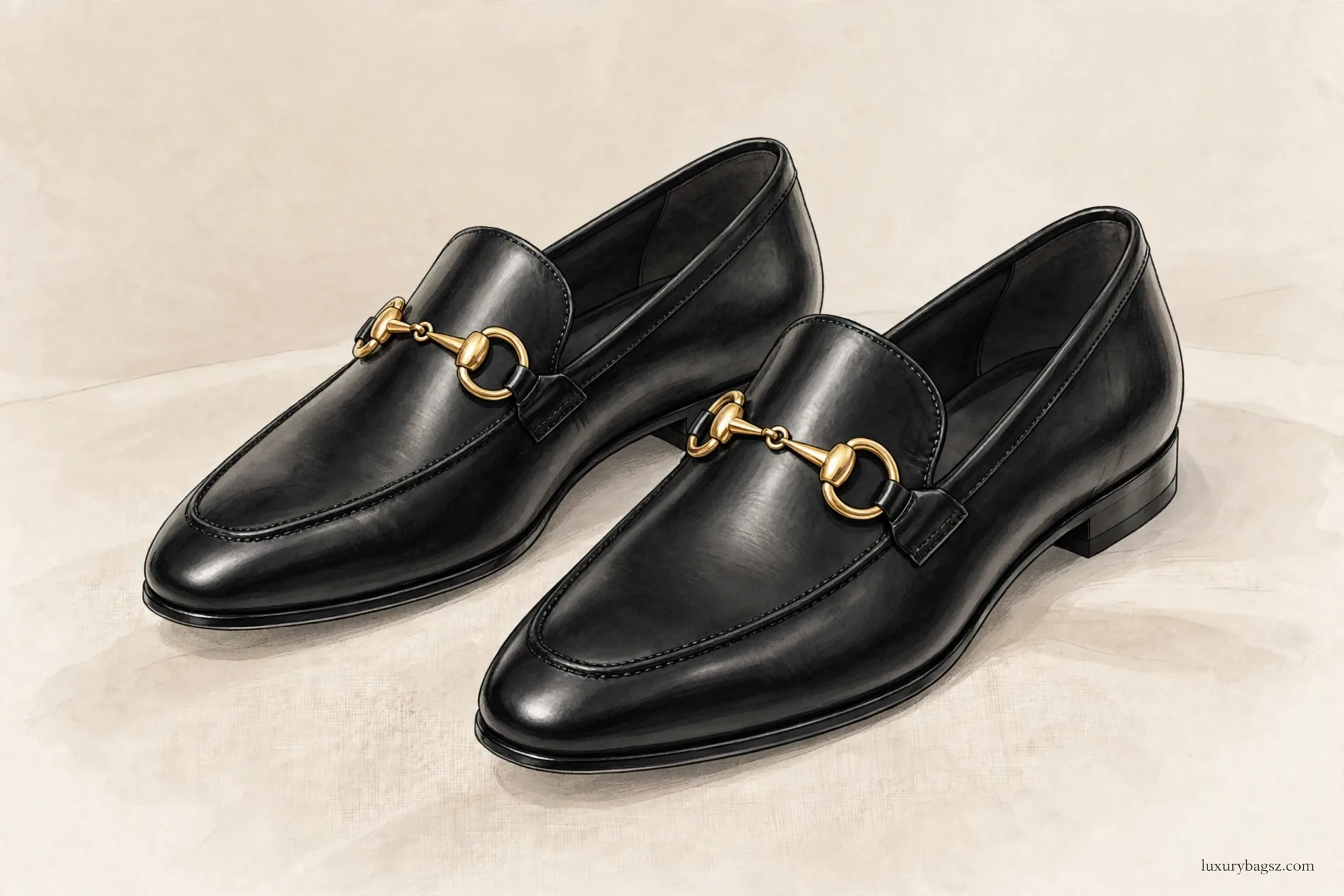
The Jordaan is Gucci's modern horsebit loafer: a slim, elongated shape in notably soft leather, with the house's horsebit bar across the front. It is the relaxed heir to the 1953 original — same icon, gentler construction — designed to mould to the foot rather than hold it rigid. Expect a narrow fit and a short break-in, after which a good pair feels almost like a slipper with a pedigree. Prices sit in the high hundreds.
Key Takeaways
- A slim, soft evolution of the 1953 horsebit loafer, launched in the 2010s.
- The leather is famously supple and moulds to the foot with wear.
- Fit runs narrow; wide feet should try carefully or look at chunkier styles.
- A little heel slip at first is normal and usually settles as the leather gives.
- Leather is the classic; suede, velvet and canvas versions change the formality.
- Thin leather soles wear fast outdoors — protectors extend their life a lot.
From 1953 to the Jordaan
Gucci invented the horsebit loafer in 1953, and our Gucci Horsebit 1953 guide covers that structured original in detail. The Jordaan, introduced under the house's 2010s revival, kept the bit and the elongated toe but rebuilt the shoe in softer leather with a more flexible feel. Think of the 1953 as the formal ancestor and the Jordaan as the version made for modern, sockless, all-day city life. That softness is the whole buying decision. Lovers praise the glove fit; traditionalists sometimes miss the original's structure.
The horsebit itself is a small metal bar joined by rings, set across the vamp. On the Jordaan it is usually gold-toned, neat rather than oversized. Few shoes carry a logo this quietly: the bit is the branding, recognised by anyone who knows loafers and invisible to everyone else.
The Soft Leather: Blessing and Warning
Jordaan leather is thin and pliable, so the shoe wraps the foot instead of armouring it. Straight from the box, it feels more broken-in than most loafers. The trade-off is support. There is little structure at the heel and sides, so feet that need firmness will notice its absence on long days. It also creases quickly and honestly. On this shoe, creasing is character rather than damage, but pristine-shoe lovers should know before buying. Choose colour with that in mind: black and dark brown show a life of creases most gracefully.
The warning side is simple: this is not a shoe for people who polish footwear back to showroom condition. It is meant to look lived in, elegantly. Feet that swell significantly may find the soft upper kind at noon and tight by evening. Try on late in the day if that sounds like you.
Fit and the Break-In Question
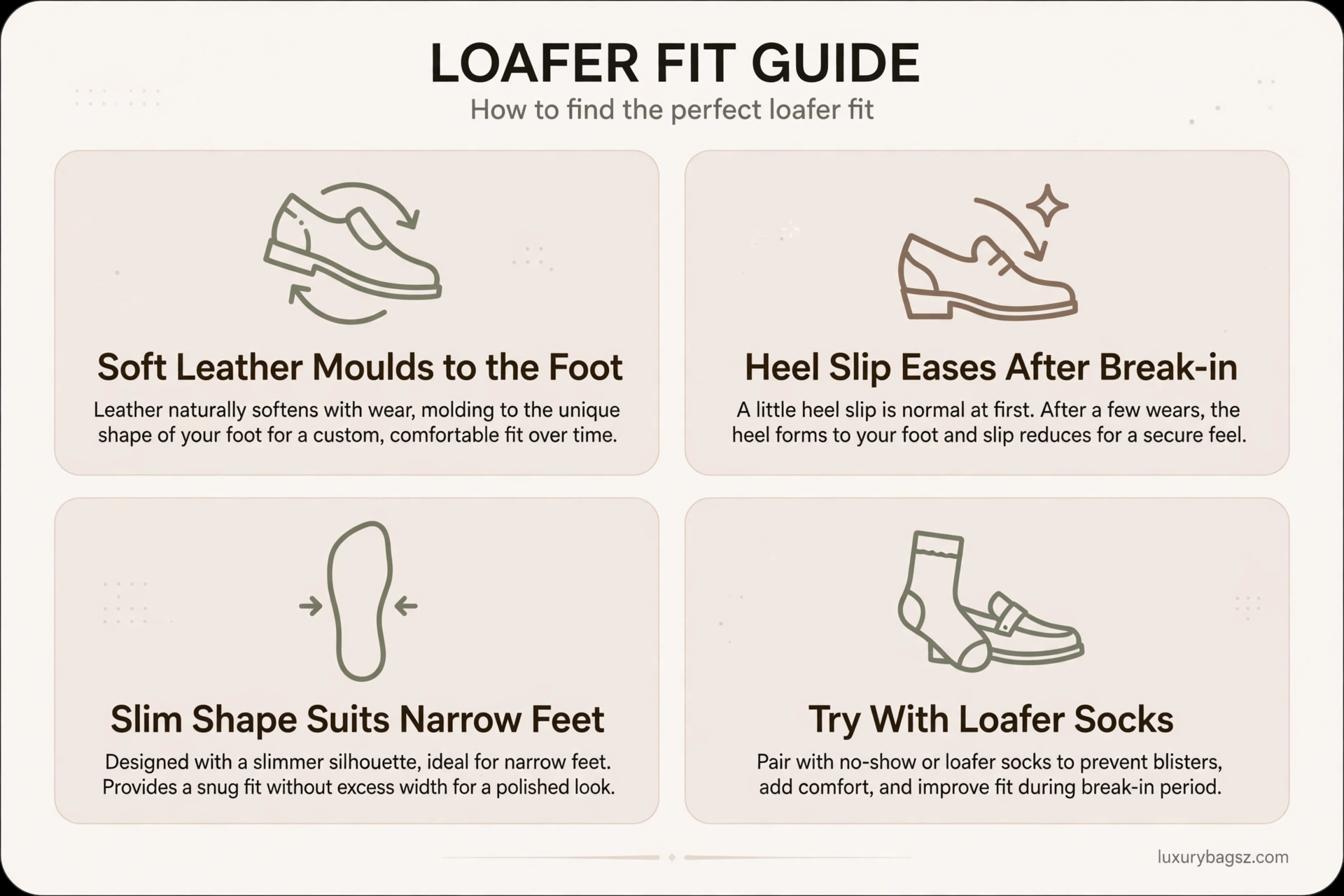
The Jordaan runs narrow and a touch long in feel, thanks to the elongated toe. Many wearers take their usual size; wide feet often struggle. Our how should loafers fit guide gives the general test: snug across the front, toes free, heel held but not gripped. A slight heel slip in the shop is common with new Jordaans and usually reduces as the leather moulds and the sole flexes in. Persistent slip after a week of indoor wear is different — that pair is too big or too wide-cut for you, and grips will only partly help.
Break them in at home on carpet for a few evenings before the first full day out. Soft shoes still benefit from a gentle introduction. Socks change the fit more than in structured loafers, so do your trying-on in the socks — or bare feet — you genuinely plan to wear.
Versions: Leather, Suede, Velvet and More
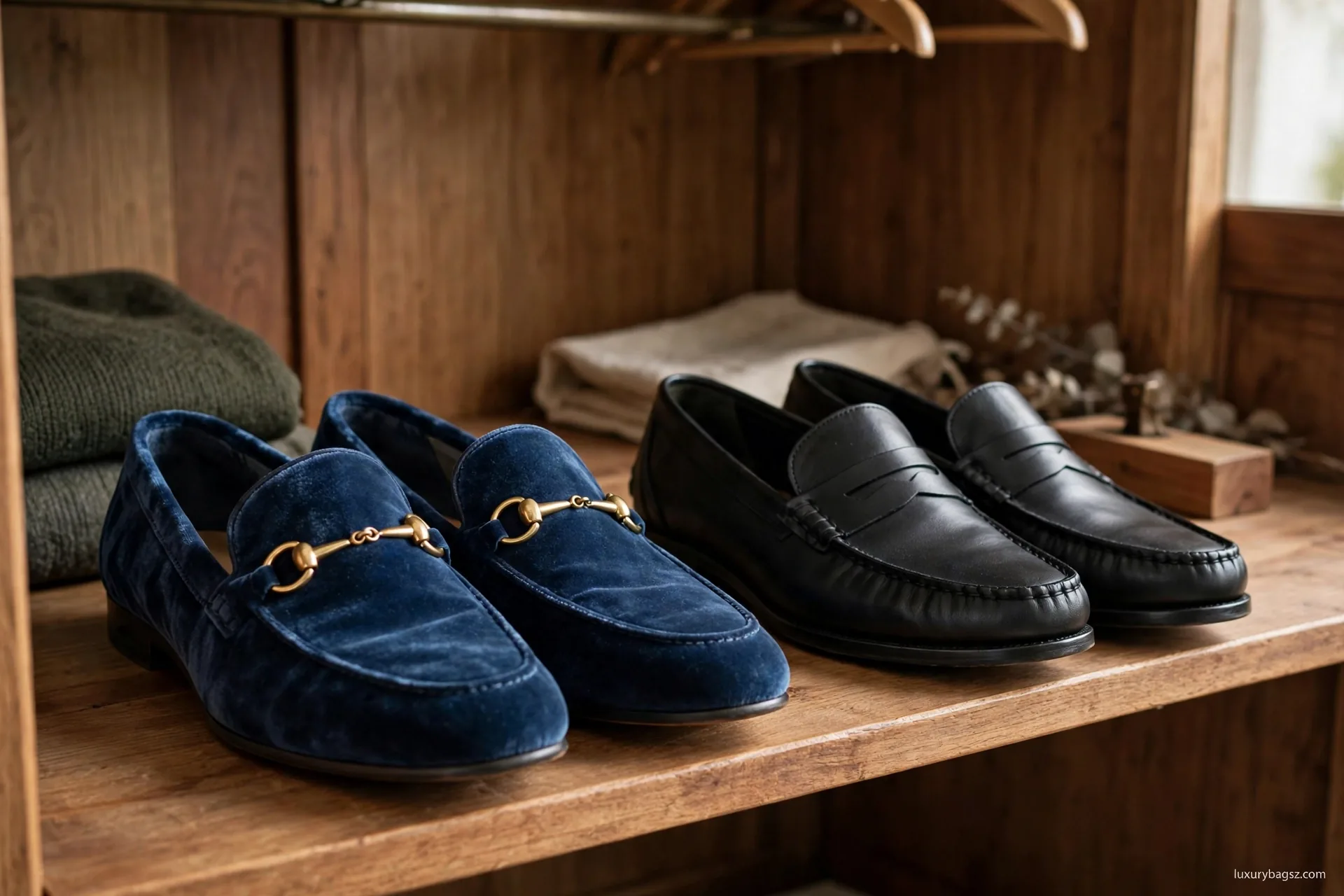
Smooth leather in black or brown is the definitive Jordaan: the pair that works with suits, dresses and denim alike. Suede versions relax the shoe further and suit summer tailoring and weekends; they dislike rain even more than the leather pairs do. Velvet, canvas and embellished versions appear for evenings and warmer months. They are delightful second pairs and poor only pairs. There are men's and women's versions on the same slim idea, plus backless mule variations of the Jordaan in some lines.
Horsebit hardware should sit flat and even on both shoes. A twisted or unevenly angled bit on a new pair is a reason to exchange, not to accept. Princetown-style backless versions trade the heel grip for slip-on ease. They suit home-adjacent and summer wear more than long city days.

Prices and Value
Jordaan prices have typically sat in the high hundreds — around $900 to $1,000 for classic leather versions in recent years, varying by market and material. That buys an icon with everyday usability, which is why the model anchors so many first-Gucci-shoe purchases. Pre-owned pairs are common and often keenly priced, because soft leather shows its life. Inspect creasing and sole wear with clear eyes. Unworn or lightly worn black leather pairs are the value sweet spot: the most versatile version, at the gentlest discount to new.
Styling the Jordaan
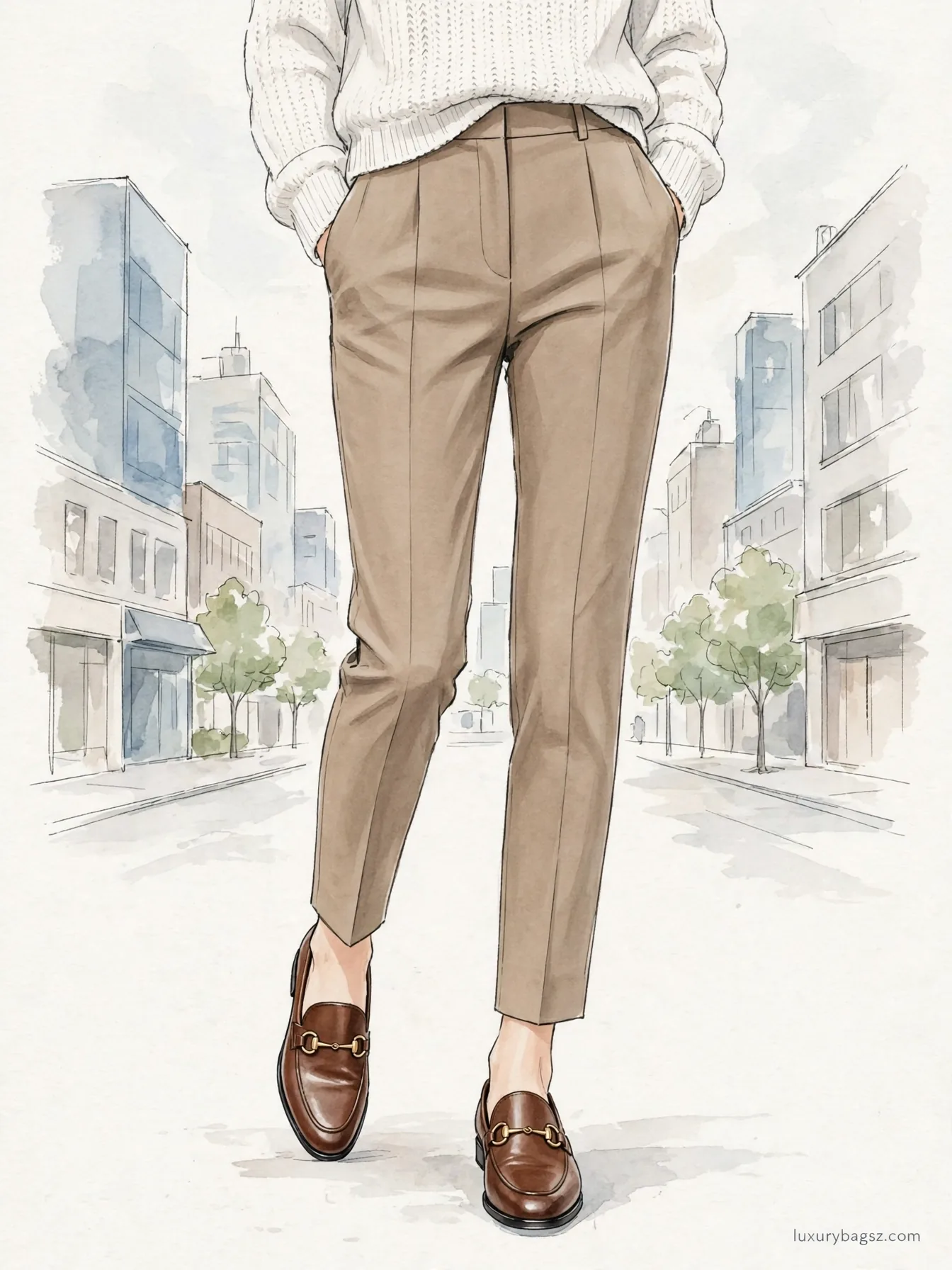
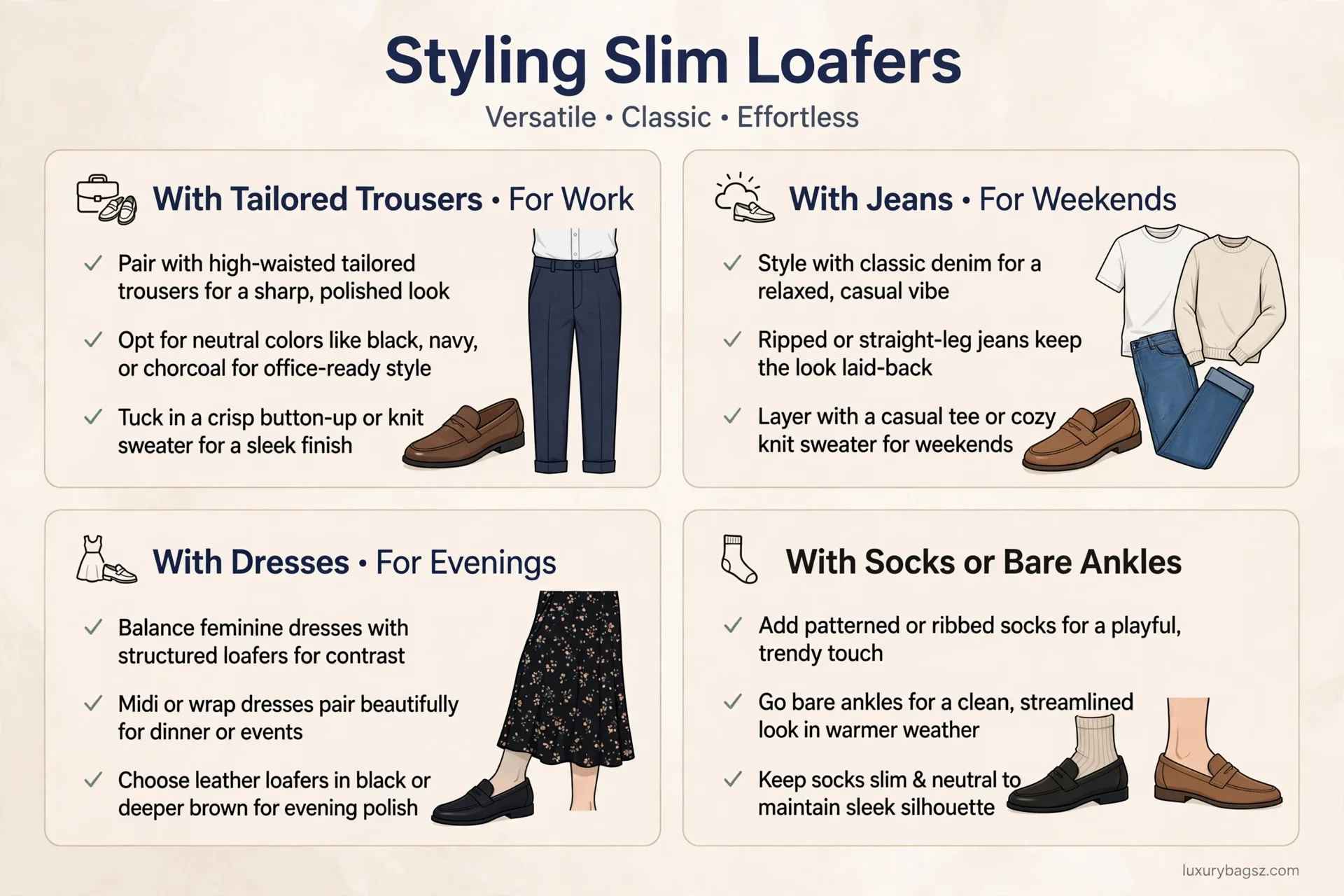
Tailored trousers and a knit are the Jordaan's home ground, as our worn illustration shows — smart, soft and quietly expensive-looking. With denim, follow the lead of our how to wear loafers with jeans guide: cropped or rolled hems keep the slim line visible. Socks are a style lever, not a mistake; our how to wear loafers with socks piece covers ribbed, patterned and invisible options. For dresses, the Jordaan sharpens soft fabrics beautifully. A flowing dress with a structured bit of hardware at the ankle is a proven formula.
Celebrity wear keeps proving the range: the same black pair appears with tailoring at airports and with knits and trousers at weekend events. That repeat-wear quality is the real luxury here. The Jordaan is bought to be lived in, not to be saved for best.
Care: Soles First
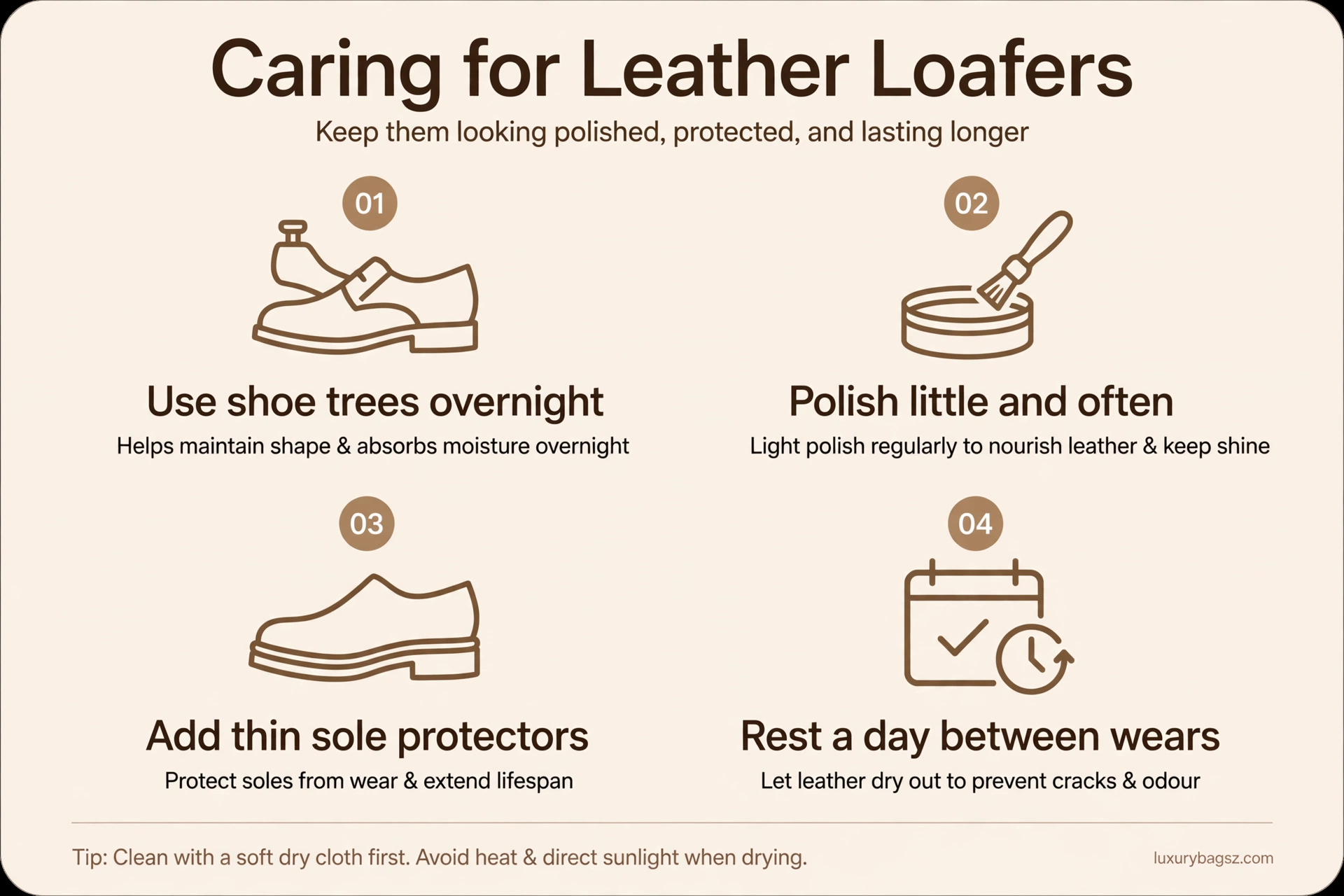
The thin leather sole is the wear point. Many owners add a thin rubber protector sole early, which transforms outdoor longevity. Polish leather little and often with a soft cloth, following the habits in our how to care for leather bags and shoes guide. Use shoe trees overnight. Soft loafers without trees collapse into their creases and age twice as fast on the shelf. Rest pairs between wears and keep them from radiators. Supple leather dries and cracks at exactly the folds you love it for.
Who Should Buy the Jordaan?
Buy it if you want the definitive designer loafer in its softest, most wearable form, and your feet are standard or narrow. Choose black leather for a first pair; add suede or velvet once the shape has proved itself in your wardrobe. Wide feet or structure-seekers should try the chunkier horsebit styles or the 1953 instead — the Jordaan will not change its nature for you. Judged as what it is — an icon rebuilt for comfort — the Jordaan is one of the easiest luxury shoes to justify wearing daily.
Compare cost per wear, not cost per purchase. A loafer worn two hundred times under tailoring, denim and dresses outperforms a cheaper pair worn twice. If you buy one Gucci shoe for a working wardrobe, this is the strongest candidate the house makes.
Frequently Asked Questions
Do Gucci Jordaan loafers run narrow?
Yes. The last is slim, and many wearers describe them as narrow. Standard feet usually take their usual size; wide feet should try before buying.
How much do Jordaan loafers cost?
Classic leather versions have typically cost around $900 to $1,000 in recent years, varying by market and material. Pre-owned pairs often cost notably less.
Is heel slip normal in new Jordaans?
A little, yes. The soft leather moulds and the sole flexes in over the first wears. Slip that persists beyond a week suggests the wrong size.
Are they suitable for all-day wear?
For city days with moderate walking, yes — the softness is the point. For very long distances, a more structured shoe will tire feet less.
Should I add sole protectors?
Many owners do, and it is the single best life-extending step for the thin leather sole. A good cobbler fits them without changing the slim profile.
Jordaan or the 1953 horsebit?
The 1953 is structured and formal. The Jordaan is softer, slimmer-feeling and more casual in spirit. Choose by how you actually dress most days.
Can I wear them without socks?
Yes — sockless wear is part of the design's modern appeal. Use invisible socks if you want the look with more comfort and less moisture.
How do I care for suede Jordaans?
Brush gently when dry, use a suede protector, and keep them out of rain. Store with trees so the soft uppers hold their shape.
Do they hold their value?
Classic black and brown leather pairs resell steadiest. Heavily creased or worn-soled pairs drop in price, which makes them good pre-owned buys.
Are there women's and men's versions?
Yes, the Jordaan exists for both, on the same slim, soft pattern, with finishes varying between the ranges.
The Jordaan: Fit the Last Honestly
The Jordaan succeeds because it respects the 1953 icon while admitting how people actually live now: softer, longer, sockless days. Fit the narrow last honestly, protect the sole early, and it becomes the loafer equivalent of a favourite jacket — reached for without thinking.
The horsebit is hardware I know well: on bags it is where I start, because a bit either sits true and moves cleanly or it does not. The Jordaan asks for the same reading — bit, stitching, sole — fitted honestly to a narrow last. Get those right and the 1953 idea does the rest, sockless or not.






