

Hermès Skunk Bags: The Legend of Odour, Explained
Yes, the Skunk Bags Were Real
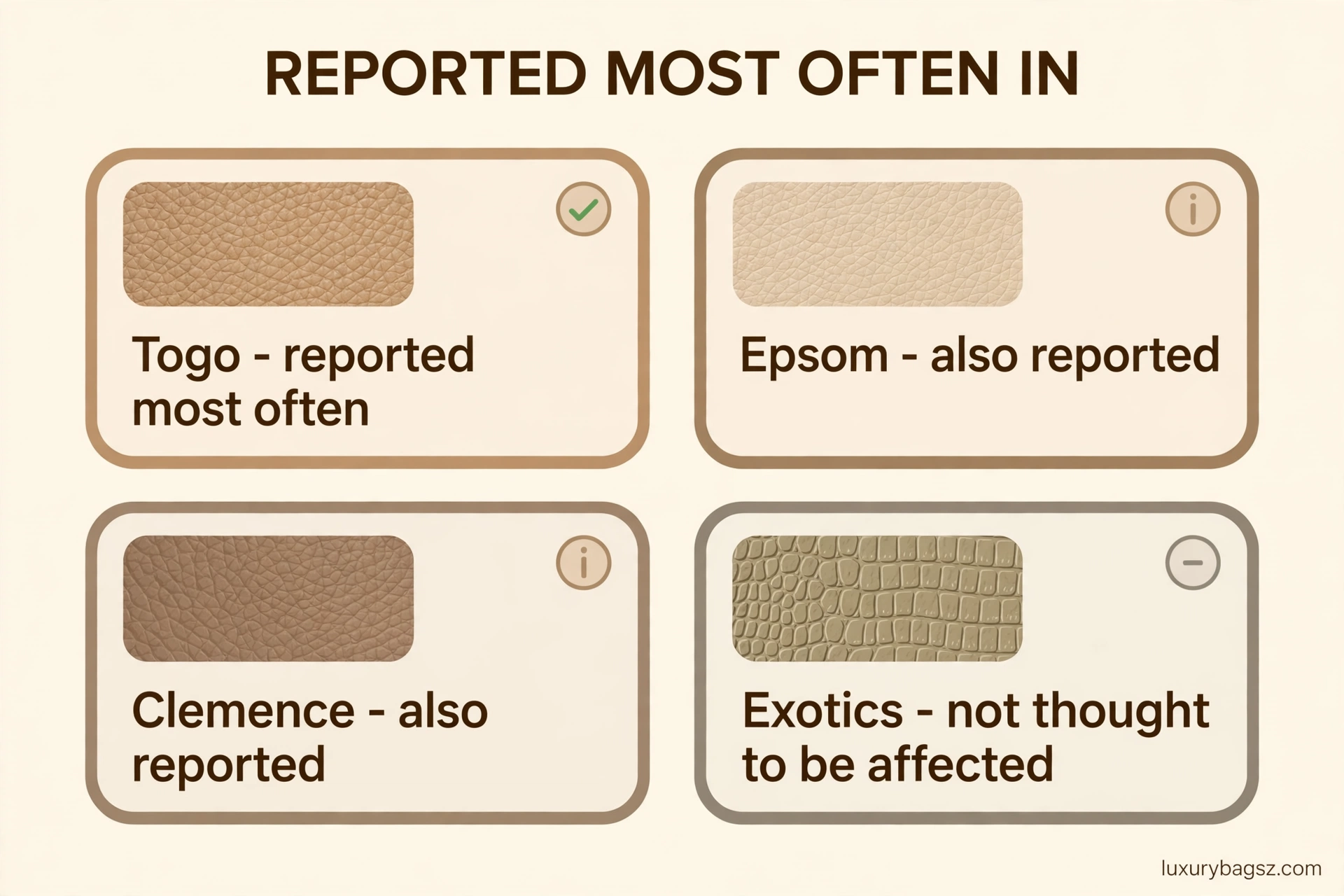
In 2013 and 2014, a batch of Hermès bags — Birkins, Kellys and other models — developed a strong skunk-like odour whenever they warmed up, and owners returned them in growing numbers.
Hermès reportedly traced the problem to a badly tanned batch of leather from a supplier. The fix was drastic: affected bags went back to Paris to have the panels removed and the bag rebuilt.
The story sounds like an urban legend, which is why it refuses to die. Here is what was actually reported, which bags were involved, and what it means if you buy a bag from those years today.
Key Takeaways
- The odour appeared mainly in bags sold in 2013 and 2014, and bloomed with heat and sunlight.
- Owners described the smell as skunk-like, and some compared it to cannabis.
- Reports pointed to Togo most often, with Epsom and Clemence also named; exotics were not thought to be affected.
- The reported cause was a badly tanned leather batch — the smell lived in the leather, not on it.
- Airing out did not fix affected bags; Hermès took bags back for rebuilding in Paris.
- Buying a 2013–2014 bag today? Run the sunlight test before you commit.
Smell is a legitimate check, and the skunk-bag years are why I use it without embarrassment. When a Hermès from 2013 or 2014 reaches me, I do what owners learned to do: let the bag warm up — in sunlight, gently — and smell it again, because that faulty tanning batch hid at room temperature and bloomed with heat. A clean bill at a cool desk means little for those years. I have examined more than 500 bags, and this episode is my standing reminder that leather is a chemical product as well as a beautiful one: when the tanning fails, the nose finds out first.
How the Story Broke
The first reports surfaced on owner forums in late 2013. Bags that smelled fine in a cool boutique filled a warm car with a pungent, skunky smell.
Through 2014 the returns became news. Owners described opening windows at home after a bag sat in the sun, and boutiques began sending bags back to Paris.
Hermès, famously quiet, gave little public comment. Staff reportedly told customers the cause was a badly tanned batch of leather from a supplier.
That combination — a secretive house, an embarrassing defect and a very funny nickname — turned a quality problem into a legend.
What the Smell Was Actually Like
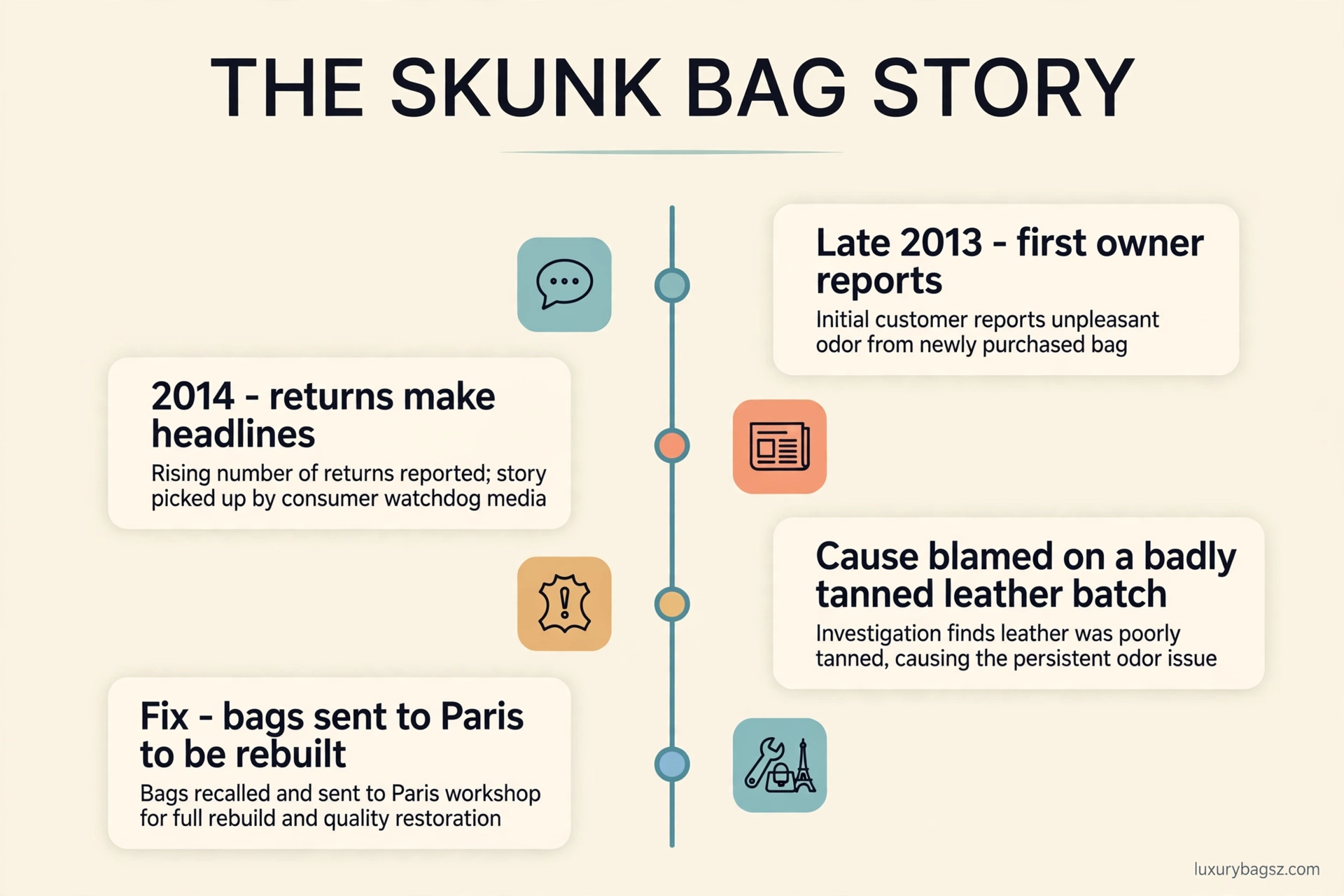
This was not the normal new-leather scent. Owners described a sharp, animal, skunk-like odour, strong enough to fill a room or a car.
Heat was the trigger. A bag could seem acceptable in the morning and become unbearable after half an hour in a warm car or direct sun.
Crucially, the smell did not behave like a surface problem. It returned after airing, because it was in the material itself.
Think of it as a tanning fault with a thermostat: cool leather kept the secret, warm leather told everyone.
Why Heat Brought It Out
Leather is tanned and finished with oils and compounds that respond to temperature. Warm them, and volatile compounds leave the material more readily.
Contemporary reporting pointed at the tanning or finishing stage — some accounts mentioned the fatliquor or finish — rather than at anything owners had done.
That is why home remedies failed. You cannot wipe a smell out of leather when the smell is part of how that leather was made.
It is also why the reported remedy was rebuilding the bag with different leather, not cleaning the leather it already had.
Which Bags and Leathers Were Reported
The famous names were the Birkin and the Kelly, with clutch styles also mentioned in reporting. Any model made from the affected leather could, in principle, carry the fault.
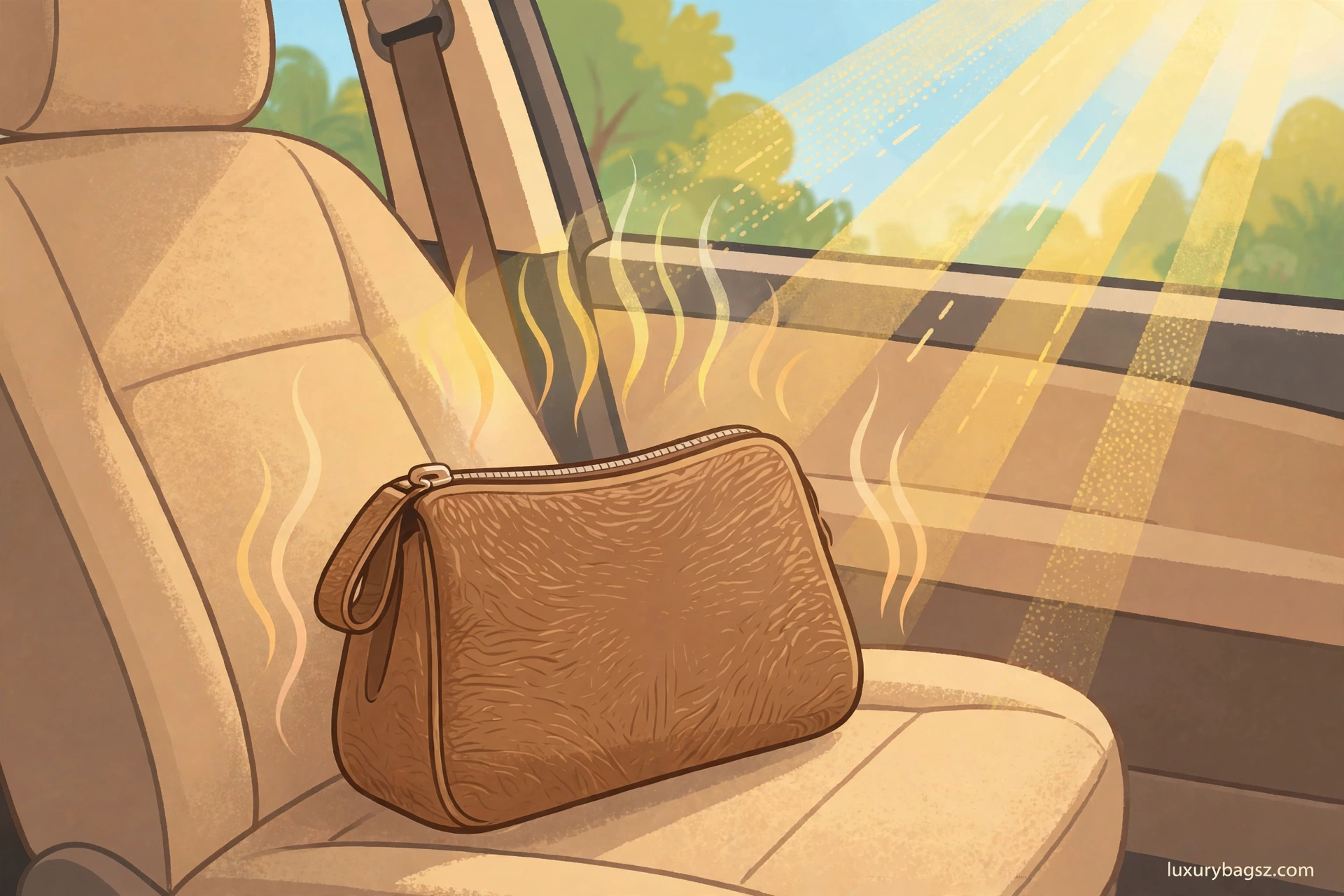
Togo was named most often, simply because so many bags of the era were made in it. Epsom and Clemence were also identified by owners.
Crocodile and other exotic versions were not thought to be affected, which fits a fault tied to one tanned calf leather supply.
Our Hermès leathers and materials guide explains how these leathers differ, and why a tanning batch matters so much.
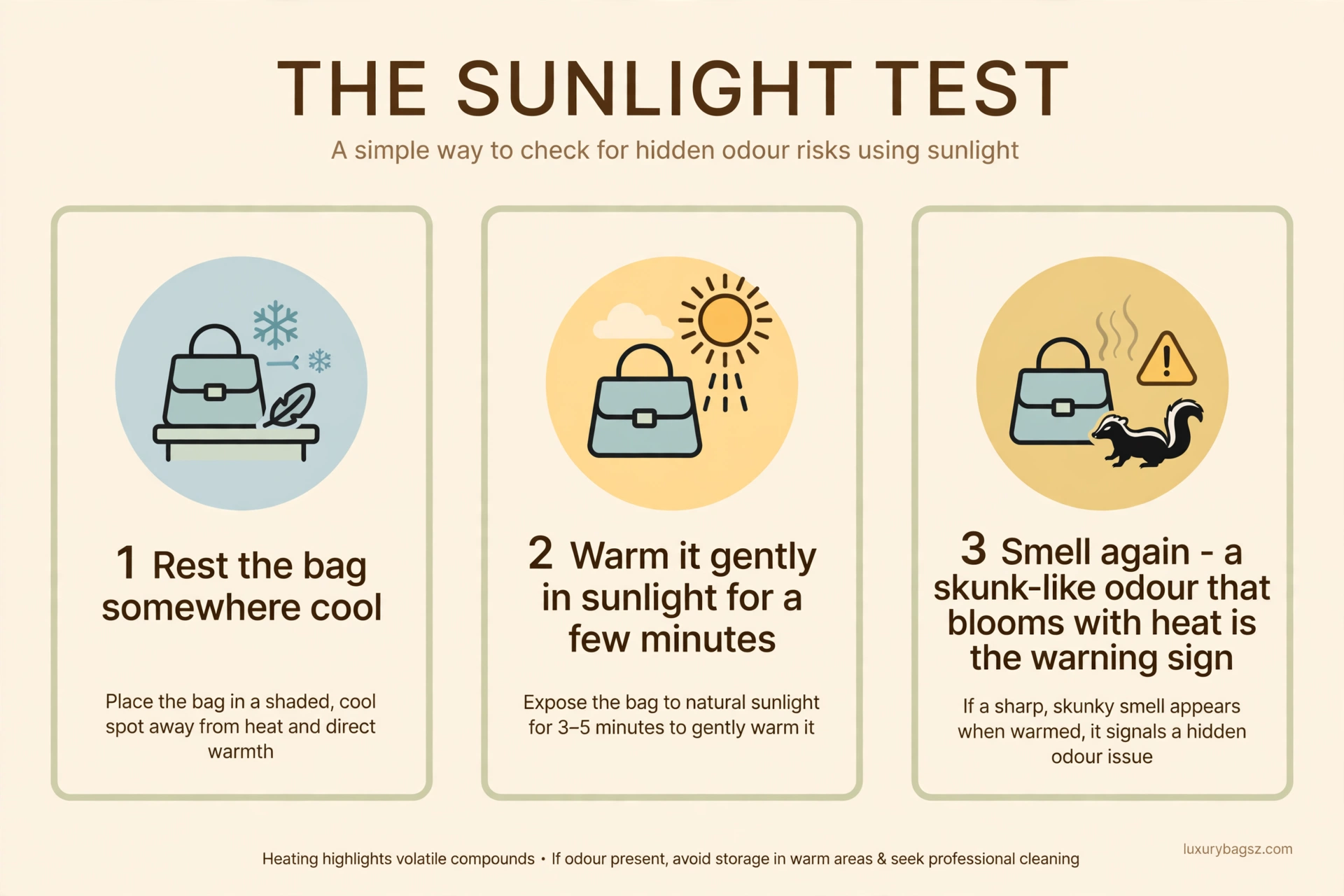
The Sunlight Test Owners Used
Forum members landed on a simple test, and sellers of era-correct bags still expect it. It takes minutes and needs no equipment.
First, let the bag rest somewhere cool and smell it. Then set it in gentle sunlight for a few minutes so the leather warms.
Smell it again. A bag from the affected production that carries the fault will bloom with that sharp, skunk-like odour as it warms.
Do the test before purchase whenever you can, and agree it with a private seller in advance. A clean result is genuinely reassuring; a bad one ends the negotiation.
What Did Not Work
Airing did not work. Owners who left bags out for days reported the smell returning with the next warm day.
Scented products did not work either; they layered perfume over the problem and sometimes added a second problem to the leather.
Home cleaning was never the answer, because the fault sat inside the panels. Our guide to how to clean a Hermès Birkin bag covers normal care — this defect was never normal care territory.
Professional spas could improve many things about a bag, but a tanning fault in the leather itself was beyond a surface treatment.
How Hermès Handled Returns
Reporting at the time described a consistent pattern: boutiques accepted affected bags and sent them to Paris.
There, the faulty panels were to be removed and the bag rebuilt in sound leather — a process measured in months, not weeks.
Owners were not simply handed a refund and sent away; the house treated it as a manufacturing fault to be corrected at the source.
Later forum accounts suggest experiences varied by boutique and by whether the claimant was the original buyer, so outcomes were never perfectly uniform.
Buying a 2013–2014 Bag Today
Most era bags are perfectly fine — the fault hit one leather batch, not a whole production run. Do not let the legend put you off a good bag.
Do buy with your nose involved. Ask the seller directly whether the bag has ever shown a heat-related odour, and get the answer in writing.
Check the date stamp era, the leather type and the price. A suspiciously cheap Togo bag from those years deserves the sunlight test twice.
If a bag does prove affected, a reputable seller should take it back. That is a defect, not a matter of taste.
Frequently Asked Questions
Were Hermès skunk bags real, and what caused the smell?
Yes. In 2013 and 2014 owners returned bags whose leather gave off a strong skunk-like odour when warm, and the story was widely reported at the time.
Hermès reportedly blamed a badly tanned batch of leather from a supplier. The odour lived in the leather itself, which is why cleaning could not fix it.
Which leathers were affected?
Togo was reported most often, with Epsom and Clemence also named by owners. Exotic skins were not thought to be affected.
Does the smell go away over time, and can a bag spa remove it?
Owner reports said no. Airing helped briefly, but the odour returned with heat. The accepted fix was rebuilding the bag in Paris with sound leather.
No. A spa treats surfaces and condition; this fault sat inside the tanned leather itself. That is why the remedy was new panels, not cleaning.
How can I test a bag before buying?
Use the sunlight test: smell the bag cool, warm it gently in sunlight for a few minutes, then smell again. A sharp odour that blooms with heat is the warning sign.
Are all 2013–2014 Hermès bags skunk bags, and should you avoid Togo from 2014?
No. The fault was tied to a leather batch, not to every bag of those years. Most era bags are fine, which is why testing beats assuming.
Not automatically. Togo was named most often because it was so widely used. Test the individual bag, in warmth, before you decide.
What did Hermès do for affected owners?
Boutiques accepted the bags and sent them to Paris, where the faulty panels were reportedly removed and the bags rebuilt. The process took months.
Does a skunk history affect resale value?
An affected bag is very hard to sell honestly without disclosure, and the disclosure lowers the price. A tested, unaffected bag from the era carries no such penalty.
Summary
The skunk bags were a real, narrow and faintly comic chapter in Hermès history: one badly tanned leather batch, an odour that bloomed in the heat, and a fix that meant rebuilding the bag.
For today's buyer the lesson is simple and cheap — if a bag dates from 2013 or 2014, warm it up and use your nose before you use your card.






